
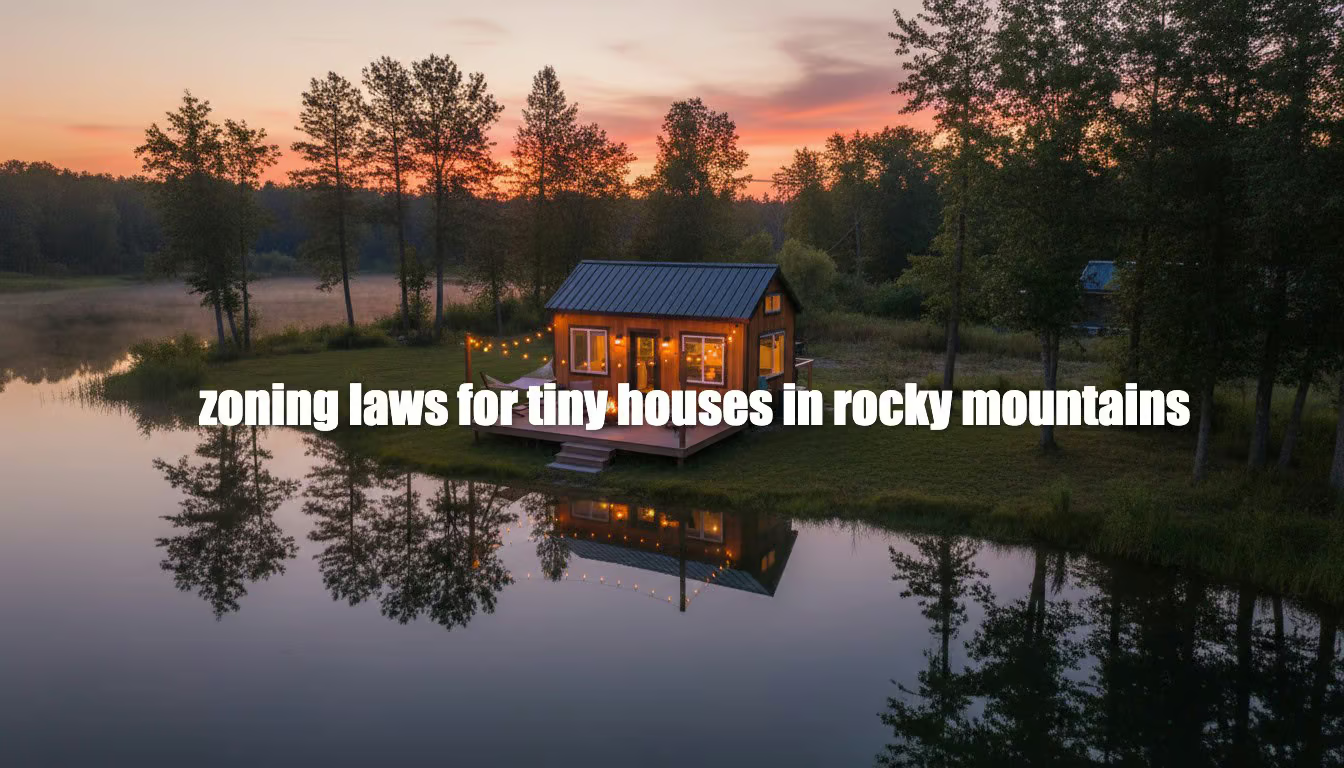
Understanding Zoning Laws for Tiny Houses in the Rocky Mountains
When it comes to tiny houses in the Rocky Mountains, we understand that navigating the complex web of zoning regulations can be overwhelming. Tiny houses, typically defined as dwellings under 400 square feet, have surged in popularity across the mountain states due to their affordability, minimal environmental footprint, and alignment with the region’s appreciation for natural simplicity.
Throughout Colorado, Wyoming, Montana, Idaho, and Utah, regulations vary dramatically not just between states, but even between neighboring counties and municipalities. What’s permitted in Boulder County might be prohibited just miles away in Jefferson County.
At Great Lakes Tiny Homes, we’ve seen firsthand how proper zoning research can make the difference between a smooth tiny house journey and a frustrating regulatory roadblock. While we specialize in tiny home solutions across the country, we recognize the Rocky Mountain region presents unique challenges and opportunities for tiny house enthusiasts.
Types of Tiny Houses and How They’re Classified
Understanding how different types of tiny houses are classified is crucial when navigating Rocky Mountain zoning laws.
Tiny Houses on Wheels (THOWs)
In most Rocky Mountain jurisdictions, we classify THOWs as recreational vehicles (RVs) or mobile homes rather than permanent dwellings:
- Many mountain counties restrict full-time living in RVs outside of designated RV parks
- Some areas limit how long you can stay in a THOW on your property (often 30-180 days)
- THOWs typically don’t need to meet residential building codes but must comply with RVIA standards
- In places like Colorado counties that allow tiny houses, THOWs may require special permits
Permanent Tiny Houses
When we build tiny houses on permanent foundations, they’re generally subject to residential building codes:
- Must comply with local building codes, including the International Residential Code (IRC)
- Subject to minimum square footage requirements (which can be prohibitive in some areas)
- Required to meet snow load requirements, which are particularly stringent in high-elevation communities
- Often need to connect to utilities or have approved alternative systems
Accessory Dwelling Units (ADUs)
Many Rocky Mountain homeowners are interested in placing tiny houses as ADUs on existing properties:
- ADUs are secondary housing units on the same lot as a primary residence
- Regulations typically specify maximum size, height, and setback requirements
- Some mountain communities encourage ADUs to address housing shortages
- Others restrict them due to concerns about density, parking, or infrastructure capacity
For instance, we’ve seen Teton County, Wyoming and Boulder, Colorado implement progressive ADU policies to help address workforce housing shortages.
Tiny House Zoning in Northeast Rocky Mountain States
Wyoming
Wyoming’s approach to tiny houses reflects its tradition of independence and minimal government intervention:
State-level regulations: Wyoming has no statewide tiny house-specific legislation, leaving most decisions to county and municipal authorities.
Tiny house-friendly areas: We’ve found that Teton County and parts of Albany County have more accommodating regulations for tiny homes, particularly in rural areas.
ADU regulations: Jackson has progressive ADU policies to address workforce housing shortages, allowing ADUs up to 800 square feet on properties with single-family homes.
For those interested in tiny houses for sale in Jackson, Wyoming, we recommend checking the specific regulations in your target neighborhood.
Montana
Montana’s vast landscapes and independent spirit have created some opportunities for tiny house living:
Tiny house-friendly areas: Missoula County, Ravalli County, and parts of Gallatin County have shown more flexibility toward tiny houses, especially on rural properties.
ADU regulations: Bozeman and Missoula have updated their ADU regulations to be more permissive, allowing detached units that could accommodate tiny houses on foundations.
Those looking for counties in Montana that allow tiny houses will find the most flexibility in rural areas with minimal zoning restrictions.
Idaho (Northern)
Tiny house-friendly areas: Bonner County, Boundary County, and parts of Kootenai County have fewer restrictions for tiny houses, especially in unincorporated areas.
ADU regulations: Coeur d’Alene and Sandpoint have updated their ADU policies in recent years, potentially allowing tiny houses as ADUs under certain conditions.
For those considering tiny house builders in Coeur d’Alene, Idaho, we recommend verifying local regulations before proceeding with construction plans.
Tiny House Zoning in Mid-Rocky Mountain States
Colorado
Colorado stands out as one of the more progressive Rocky Mountain states regarding tiny house regulations:
Tiny house-friendly areas: Park County, Weld County, and Huerfano County have emerged as more accommodating to tiny houses. The town of Durango has specific provisions for tiny houses, and Walsenburg was one of the first municipalities to explicitly allow tiny houses on foundations.
ADU policies: Denver, Boulder, and several mountain towns have updated their ADU regulations to help address housing shortages, potentially allowing tiny houses as ADUs.
For those interested in best tiny home communities in Colorado, we recommend looking at communities like Sprout Tiny Homes in Salida and Simply Tiny Development in Colorado Springs.
Utah
Tiny house-friendly areas: Summit County, Grand County (Moab area), and parts of Washington County have shown more flexibility toward tiny houses.
ADU policies: Salt Lake City and Park City have updated their ADU regulations in recent years, potentially creating opportunities for tiny houses as ADUs.
Those looking for tiny houses for sale in Park City, Utah should be aware that regulations can vary significantly between neighborhoods.
Idaho (Central)
Tiny house-friendly areas: Custer County, Lemhi County, and parts of Valley County have minimal zoning restrictions in unincorporated areas.
ADU policies: McCall and Ketchum have updated their ADU regulations to help address workforce housing shortages.
For those interested in tiny house builders in Ketchum, Idaho, we recommend consulting with local planning departments about specific requirements for your property.
Tiny House Zoning in Southern Rocky Mountain States
Southern Colorado
Tiny house-friendly areas: Huerfano County (including Walsenburg), Costilla County, and parts of Pueblo County have more accommodating regulations for tiny houses.
Minimum square footage: Walsenburg famously reduced its minimum to 120 square feet, while other areas typically require 400-600 square feet for permanent dwellings.
Those interested in tiny houses for sale in Pueblo, Colorado should note that regulations can vary between the city and the surrounding county.
New Mexico
Tiny house-friendly areas: Taos County, Rio Arriba County, and parts of Santa Fe County have shown more flexibility toward alternative housing, including tiny houses.
ADU regulations: Santa Fe and Taos have progressive ADU policies that can accommodate tiny houses under certain conditions.
For those looking at what counties in New Mexico allow tiny houses, the northern mountain counties generally offer more flexibility.
Arizona (Northern)
Tiny house-friendly areas: Coconino County (outside Flagstaff), Apache County, and parts of Navajo County have fewer restrictions for tiny houses, especially in unincorporated areas.
Those considering tiny house builders in Flagstaff, Arizona should be aware of the city’s specific requirements for permanent dwellings.
Tiny House Communities in the Rocky Mountains
Across the Rocky Mountain region, we’ve seen the emergence of dedicated tiny house communities that have successfully navigated zoning challenges.
Sprout Tiny Homes (Salida, Colorado)
One of the most established tiny house communities in the Rockies:
- Zoning solution: Worked with the city to create a Planned Unit Development (PUD) specifically for tiny houses
- Community structure: Mix of rental and owner-occupied units with shared community spaces
- Price range: $60,000-$120,000 for purchase, with rental options also available
Walsenburg Tiny House Community (Walsenburg, Colorado)
After Walsenburg changed its zoning laws to accommodate tiny houses, several small developments have emerged:
- Zoning solution: Benefited from the city’s decision to reduce minimum square footage requirements to 120 square feet
- Community structure: Individual lots with tiny houses on foundations
- Price range: $30,000-$80,000 depending on lot size and house specifications
WeeCasa (Lyons, Colorado)
WeeCasa operates as a tiny house hotel but has helped establish precedents for tiny house acceptance:
- Zoning solution: Classified as a lodging business rather than residential development
- Impact: Has helped familiarize local officials and the public with tiny houses
Tiny House Community (Jackson, Wyoming)
A small but growing tiny house community has developed near Jackson:
- Zoning solution: Located in an area zoned for mixed housing types with variances for smaller units
- Price range: $150,000-$300,000 (reflecting Jackson’s high property values)
This community shows how tiny houses can help address housing affordability even in expensive resort communities like Jackson, Wyoming.
How to Navigate Zoning Laws for Your Tiny House
1. Research Local Zoning Codes
Before purchasing land or a tiny house, we strongly recommend conducting thorough research:
- Visit the county or city planning department’s website to review zoning ordinances
- Look specifically for minimum square footage requirements
- Check if the jurisdiction has adopted the IRC’s Appendix Q for tiny houses
- Research whether THOWs are permitted for full-time living or only temporary stays
- Investigate ADU regulations if you plan to place your tiny house on a property with an existing home
2. Questions to Ask Local Planning Departments
We’ve found that direct communication with planning officials is essential. Here are key questions to ask:
- “What is the minimum dwelling size in this zone?”
- “Has your jurisdiction adopted Appendix Q of the International Residential Code?”
- “Are tiny houses on wheels permitted for full-time residence in any zones?”
- “What are the requirements for connecting to utilities or using alternative systems?”
- “Are there any pending changes to regulations that might affect tiny houses?”
3. Understanding Building Codes vs. Zoning Ordinances
In our experience, many tiny house enthusiasts confuse these distinct regulatory frameworks:
- Zoning ordinances determine where you can place your tiny house and for what purpose
- Building codes specify how your tiny house must be constructed
In the Rocky Mountains, both present challenges. Zoning may restrict placement, while building codes may require features difficult to incorporate in a tiny space, such as minimum room dimensions and ceiling heights.
4. Options for Seeking Variances or Special Permits
When regulations don’t accommodate your tiny house plans, we often recommend exploring these options:
- Variance: A legal exception to existing zoning requirements
- Conditional Use Permit: Permission to use land in a way not normally allowed in that zone
- Planned Unit Development: A special zoning designation that allows for more flexible development
The application process typically involves:
- Submitting detailed plans
- Paying application fees ($200-1,000 depending on jurisdiction)
- Attending public hearings
- Demonstrating that your proposal won’t negatively impact the neighborhood
5. Working with Local Officials
We’ve found that a collaborative approach with local officials often yields the best results:
- Schedule in-person meetings rather than relying solely on email or phone
- Bring visual aids showing your tiny house design and how it will fit into the surroundings
- Emphasize benefits like affordability, sustainability, and reduced environmental impact
- Be prepared to compromise on certain aspects of your plan
6. Common Workarounds
When direct approaches aren’t successful, we’ve seen these strategies work in various Rocky Mountain communities:
- RV Classification: Registering a THOW as an RV and placing it in areas where RVs are permitted
- Agricultural Exemptions: In rural areas, placing a tiny house on agricultural land where residential building codes may be less restrictive
- Temporary Structure Permits: Obtaining permits for temporary use while working toward permanent solutions
- Joining Established Communities: Placing your tiny house in communities that have already navigated zoning challenges
Future Trends in Rocky Mountain Tiny House Zoning
States Considering Tiny House-Friendly Legislation
Several Rocky Mountain states are exploring legislation that could make tiny houses more accessible:
- Colorado: Multiple counties are considering adopting specific tiny house ordinances following the success of early adopters like Park County and Walsenburg
- Montana: State legislators have introduced bills to create statewide standards for tiny houses
- Idaho: Some jurisdictions are reviewing minimum square footage requirements in response to housing affordability concerns
We’re particularly encouraged by Colorado’s leadership in this area, with organizations like the Colorado Tiny House Association advocating for statewide standards.
Impact of Housing Shortages on Zoning Flexibility
The acute housing shortage across Rocky Mountain resort communities is driving regulatory changes:
- Communities like Jackson, Wyoming; Bozeman, Montana; and Summit County, Colorado are revising ADU regulations specifically to address workforce housing needs
- Some jurisdictions are creating special zoning designations for “workforce housing” that could accommodate tiny houses
- The high cost of traditional housing is compelling even reluctant officials to consider alternative housing models
Growing Acceptance of ADUs
Accessory Dwelling Units represent one of the most promising pathways for tiny houses:
- Denver, Boulder, Salt Lake City, and other major Rocky Mountain cities have recently liberalized their ADU regulations
- Some jurisdictions are waiving impact fees for ADUs to encourage their development
- ADU-specific financing options are emerging, making tiny house ADUs more accessible
Advocacy Groups and Their Impact
Organized advocacy is making a difference across the region:
- The American Tiny House Association has state chapters in Colorado, Idaho, and Montana
- Local groups like the Colorado Tiny House Association are working directly with officials to craft appropriate regulations
- Tiny house festivals and tours throughout the Rockies are educating the public and officials about tiny house living
Conclusion: Making Your Tiny House Dream a Reality in the Rocky Mountains
Throughout our exploration of tiny house zoning laws in the Rocky Mountains, we’ve discovered that while navigating the regulatory landscape can be challenging, it’s increasingly possible to legally place tiny houses in many locations across this beautiful region.
The key insights we’ve gathered include:
- Regulations vary dramatically between states, counties, and municipalities, making location-specific research essential
- Different types of tiny houses (on wheels, on foundations, or as ADUs) face different regulatory challenges
- Several Rocky Mountain communities have emerged as pioneers in accommodating tiny houses
- Working collaboratively with local officials often yields better results than confrontational approaches
- The housing affordability crisis is gradually pushing more communities to consider tiny houses as legitimate housing options
For those serious about pursuing tiny house living in the Rockies, we encourage you to:
- Be thorough in your research of local regulations before purchasing land or a tiny house
- Build relationships with local planning officials and approach them as partners rather than obstacles
- Consider joining or supporting tiny house advocacy groups working to change restrictive laws
- Explore established tiny house communities that have already navigated zoning challenges
- Stay informed about evolving regulations, as the landscape is changing rapidly
The tiny house movement represents more than just a housing trend—it embodies a shift toward more sustainable, intentional living that resonates deeply with the independent spirit and environmental consciousness of the Rocky Mountain region. As advocates for thoughtful housing solutions, we believe that tiny houses have an important role to play in addressing housing challenges while preserving the natural beauty that makes the Rockies so special.
For those interested in exploring tiny house options in specific Rocky Mountain locations, resources like best tiny home communities in Colorado and what counties in Montana allow tiny houses can provide valuable starting points for your journey.
Frequently Asked Questions About Tiny House Zoning in the Rocky Mountains
What is the minimum size requirement for a tiny house in the Rocky Mountains?
Minimum size requirements vary widely across Rocky Mountain jurisdictions. In our research, we’ve found:
- Some progressive areas like Walsenburg, Colorado have reduced minimum requirements to as low as 120 square feet
- Many jurisdictions that have adopted the IRC’s Appendix Q allow tiny houses as small as 400 square feet
- More restrictive areas maintain minimum requirements of 700-1,000 square feet for permanent dwellings
Specific examples include:
- Park County, Colorado: 250 square feet minimum
- Summit County, Utah: 400 square feet minimum
- Teton County, Wyoming: 750 square feet minimum in many zones
- Missoula County, Montana: 450 square feet minimum for permanent dwellings
Is it easier to get approval for a tiny house on wheels or on a foundation?
Based on our experience across the Rocky Mountains, the answer depends on your specific circumstances and location:
Tiny Houses on Wheels (THOWs):
- Advantages: Can be classified as RVs, avoiding some building code requirements; offer mobility; may be permitted in areas where permanent tiny houses aren’t allowed
- Disadvantages: Often not permitted for full-time living outside RV parks; may have time limits for parking (typically 30-180 days)
Tiny Houses on Foundations:
- Advantages: Can be permitted as permanent dwellings; qualify for traditional mortgages; build equity; no time limits on occupancy once permitted
- Disadvantages: Must meet all building codes (including snow loads in mountain areas); subject to minimum square footage requirements
Which Rocky Mountain states are most tiny house-friendly?
Based on our research and experience, we rank the top tiny house-friendly states in the Rockies as follows:
1. Colorado
- Has multiple counties with specific tiny house ordinances (Park, El Paso, Huerfano)
- Home to pioneering tiny house communities and developments
- Several municipalities have adopted the IRC’s Appendix Q
- Notable areas: Walsenburg, Salida, Park County, and parts of unincorporated El Paso County
2. Montana
- Rural areas with minimal zoning restrictions
- Growing acceptance of alternative housing due to housing shortages
- Notable areas: Missoula County, Ravalli County, and parts of Gallatin County
3. Idaho
- Rural northern and central regions with limited zoning restrictions
- Some progressive cities updating ADU regulations
- Notable areas: Bonner County, Boundary County, and parts of Valley County
For those interested in exploring specific options in Colorado, resources like what counties in Colorado allow tiny houses can provide valuable guidance.