
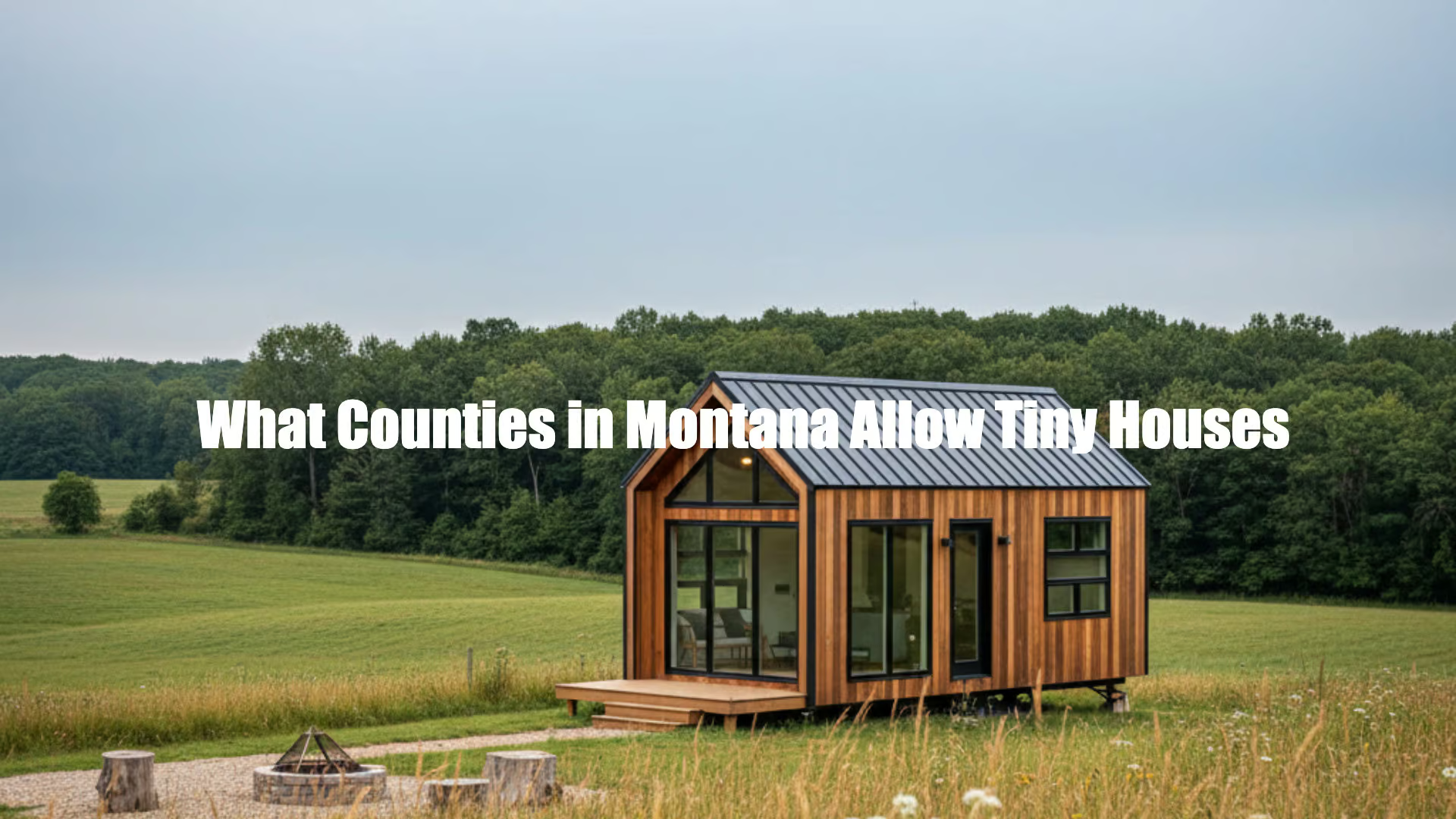
Montana permits tiny houses statewide under Appendix Q of the International Residential Code for dwellings 400 square feet or less on permanent foundations. Counties such as Missoula and Gallatin are particularly accommodating, allowing them as accessory dwelling units (ADUs) with size limits around 350-600 sq ft and specific setbacks. Tiny houses on wheels (THOWs) are typically classified as RVs, restricted to temporary use in RV parks or designated areas, with local variations applying.
When it comes to living in a tiny home in Montana, understanding the complex web of state and local regulations is essential before making any investment decisions. Montana has adopted progressive tiny house legislation at the state level, but individual counties and municipalities maintain their own zoning laws and building codes that can significantly impact where and how you can place your tiny home.
This comprehensive guide explores which counties in Montana allow tiny houses, the specific rules and regulations governing their placement, and the practical considerations you need to know before embarking on your tiny home journey. We’ll cover everything from permanent foundation requirements to temporary placement options, helping you navigate Montana’s regulatory landscape with confidence.
Great Lakes Tiny Homes is a full-service manufacturer of modular, park model, and tiny homes, delivering turnkey builds to all 48 lower U.S. states. We offer options with or without wheels, with or without RVIA certification—models with RVIA certification are often called Park Models. Our expertise in Montana’s regulations ensures your project meets all local requirements. Book a call with our experts to discuss your Montana tiny home project.
Disclaimer: This article is for informational purposes only and does not constitute legal advice. Laws, regulations, and zoning rules vary by location and may change over time. Always consult your local zoning office or a qualified land use/zoning attorney before making decisions based on this information.
Montana Statewide Tiny House Regulations
Montana has adopted Appendix Q of the International Residential Code (IRC), which establishes comprehensive guidelines for tiny houses 400 square feet or less on permanent foundations. This statewide adoption provides a consistent framework, though local jurisdictions retain authority to implement additional requirements or restrictions.
The state’s approach recognizes tiny houses as legitimate dwelling units when they meet specific construction and safety standards. According to the Montana Residential Code 2021, the regulatory landscape varies significantly between counties and municipalities, making local research essential for any tiny house project.
Disclaimer: This article is for informational purposes only and does not constitute legal advice. Laws, regulations, and zoning rules vary by location and may change over time. Always consult your local zoning office or a qualified land use/zoning attorney before making decisions based on this information.
What Counties in Montana Allow Tiny Houses?
Most Montana counties permit tiny houses in some capacity, but the specific allowances, size requirements, and placement restrictions vary considerably. The following table provides an overview of key counties and their tiny house regulations
| County/City | Min Sq Ft | Zoning Type | Key Requirements | Source | Verified |
| Missoula County | 320 sq ft | ADU/Primary Dwelling | Permanent foundation required; exterior must match main dwelling; 10 ft setbacks | Missoula County Zoning Regulations | Yes (2026) |
| Gallatin County | No minimum | ADU/Primary Dwelling | ADUs limited to 600 sq ft; off-street parking required; building code compliance | Gallatin County Planning | Yes (2026) |
| Yellowstone County | 400 sq ft | Primary Dwelling | IRC Appendix Q compliance; permanent foundation; utility connections required | Yellowstone County Planning Division | Yes (2026) |
| Flathead County | 400 sq ft | Primary Dwelling/ADU | Appendix Q compliance; septic system required; zoning district restrictions apply | Flathead County Planning & Zoning | Yes (2026) |
| Lewis & Clark County | 400 sq ft | Primary Dwelling | IRC compliance; permanent foundation; rural areas more flexible | Lewis & Clark County Community Development | Yes (2026) |
| Cascade County | 400 sq ft | Primary Dwelling/ADU | Building permit required; Appendix Q standards; utility hookups mandatory | Cascade County Planning | Yes (2026) |
Disclaimer: This article is for informational purposes only and does not constitute legal advice. Laws, regulations, and zoning rules vary by location and may change over time. Always consult your local zoning office or a qualified land use/zoning attorney before making decisions based on this information.
Missoula County
Missoula County stands out as one of Montana’s most tiny house-friendly jurisdictions. The county was among the first to formally adopt Appendix Q and has developed comprehensive guidelines for both primary dwellings and accessory dwelling units (ADUs). According to the Missoula County Zoning Regulations, any residential building on a permanent foundation with a floor area of 320 square feet or more qualifies as a tiny home under their regulations.
For those interested in building in established communities, Best Tiny Home Communities in Montana can provide valuable insights into approved developments in the Missoula area.
Key requirements for tiny houses in Missoula County include:
- Permanent foundation required for all tiny houses
- Exterior materials must match the primary dwelling when built as an ADU
- Maximum height of 22 feet or height of main structure, whichever is lower
- Minimum 10-foot setback from property lines
- ADUs cannot exceed 50% of the rear yard area
- Building permit required from Development Services Department
- Structures under 120 square feet may be exempt from zoning compliance permits
Gallatin County
Gallatin County, home to Bozeman, takes a flexible approach to tiny house regulations. According to the Gallatin County Planning Department, the county does not impose minimum square footage requirements for residential buildings, provided they comply with building code standards. This makes it particularly attractive for those seeking smaller dwelling options.
Recent developments in Gallatin County include:
- ADUs limited to 600 square feet maximum
- Off-street parking requirements for all dwelling units
- Ongoing code revisions to accommodate moveable tiny homes
- Streamlined utility connection processes for tiny house developments
- Enhanced support for tiny house communities and villages
Major Cities in Montana
Bozeman
As Gallatin County’s largest city, Bozeman has embraced tiny house development with progressive zoning policies. According to the City of Bozeman Building Department, the city allows tiny houses as both primary dwellings and ADUs, with no minimum square footage requirements as long as structures meet building codes.
For those considering professional construction services, Tiny House Builder Bozeman offers insights into local contractors familiar with city requirements.
Bozeman-specific regulations include:
- ADUs limited to 600 square feet
- Parking requirements: one space per dwelling unit
- Utility connections required for all permanent structures
- Design review may be required in historic districts
Missoula
The city of Missoula operates under county regulations but has additional urban-specific requirements. According to the City of Missoula Development Services, the city actively promotes affordable housing solutions, including tiny houses, as part of its housing strategy.
City-specific considerations:
- Urban design standards apply in certain districts
- Enhanced fire safety requirements in dense areas
- Expedited permitting for affordable housing projects
- Support for tiny house village developments
Billings
Billings, Montana’s largest city, follows Yellowstone County regulations with additional municipal requirements. The City of Billings Community Development Department has shown increasing openness to tiny house development, particularly for addressing housing affordability challenges.
Municipal requirements include:
- 400 square foot minimum for primary dwellings
- Comprehensive plan compliance required
- Infrastructure impact assessments for developments
- Special provisions for transitional housing projects
Great Falls
Great Falls operates under Cascade County jurisdiction but maintains additional city standards. According to the City of Great Falls Planning Department, the city has been exploring tiny house villages as solutions for workforce housing and homelessness.
Key city policies:
- Building permit required for all structures
- Utility master plan compliance
- Special zoning considerations for tiny house communities
- Streamlined approval process for affordable housing
Helena
As the state capital, Helena follows Lewis & Clark County regulations with additional considerations for historic preservation and urban planning. The City of Helena Community Development Department provides guidance on tiny house regulations within city limits.
Helena-specific factors:
- Historic district design review requirements
- Enhanced environmental review processes
- State government employee housing initiatives
- Support for innovative housing solutions
Tiny House Regulations And Rules In Montana
Montana’s tiny house regulations are structured around three primary categories: permanent structures, temporary structures, and transitional housing. Understanding these distinctions is crucial for compliance and successful project development.
Disclaimer: This article is for informational purposes only and does not constitute legal advice. Laws, regulations, and zoning rules vary by location and may change over time. Always consult your local zoning office or a qualified land use/zoning attorney before making decisions based on this information.
Permanent Structure Rules
Tiny houses on permanent foundations are governed by Montana’s adoption of IRC Appendix Q, which provides specific standards for dwellings 400 square feet or less. According to the Montana Residential Code 2021, these structures are considered legitimate residential buildings and must meet all applicable building codes.
Key permanent structure requirements include:
- Compliance with IRC Section R310 emergency escape and rescue opening requirements
- Minimum ceiling heights: 6 feet 8 inches in living areas, 6 feet 4 inches in kitchens and bathrooms
- Loft specifications: minimum 35 square feet with 5-foot horizontal dimensions
- Stairway requirements: minimum 17-inch width above handrails, 20 inches below
- Riser heights between 7 and 12 inches for loft access
- Full compliance with local setback, height, and foundation requirements
- Connection to approved water, sewer, and electrical systems
Temporary Structure Rules (THOWs)
Tiny Houses on Wheels (THOWs) occupy a regulatory gray area in Montana. While not explicitly prohibited, they are typically classified as recreational vehicles, which limits their use for permanent residence in most jurisdictions.
THOW placement options include:
- Licensed RV parks and campgrounds
- Private property with landowner permission (time limits may apply)
- Designated tiny house communities
- Temporary housing during construction of permanent dwelling
For those exploring mobile options, Tiny House For Sale Montana provides information on available THOW models suitable for the state’s regulations.
Transitional Structure Rules
Montana recognizes the potential of tiny houses to address housing shortages and homelessness. Several cities, including Great Falls, Bozeman, and Livingston, are developing transitional housing programs that incorporate tiny house villages.
Transitional housing considerations:
- Special zoning designations for tiny house villages
- Reduced regulatory barriers for affordable housing projects
- Potential property tax incentives for transitional housing
- Streamlined permitting processes for qualified developments
Building Codes and Safety Requirements
All tiny houses in Montana must comply with applicable building codes, which vary based on the structure type and intended use. Understanding these requirements is essential for successful project completion and occupancy approval.
IRC Appendix Q Compliance
For permanent tiny houses, IRC Appendix Q provides modified building standards that recognize the unique challenges of small-space design while maintaining safety requirements.
Key Appendix Q provisions include:
- Alternative egress requirements for lofts
- Modified stairway and ladder specifications
- Reduced ceiling height allowances in specific areas
- Alternative compliance pathways for unique designs
Utility and Infrastructure Requirements
All permanent tiny houses must connect to approved utility systems or provide equivalent alternatives that meet health and safety standards.
Required utilities include:
- Potable water supply
- Approved wastewater disposal system
- Electrical service meeting NEC standards
- Heating system appropriate for Montana’s climate
Permitting and Approval Process
The permitting process for tiny houses in Montana varies by jurisdiction but generally follows established building permit procedures with some modifications for tiny house-specific requirements.
Required Documentation
Typical permit applications require:
- Completed building permit application
- Architectural plans and specifications
- Structural engineering calculations (if required)
- Site plan showing setbacks and utilities
- Zoning compliance verification
- Septic system design (for rural properties)
Inspection Requirements
Building inspections typically include:
- Foundation inspection
- Framing and structural inspection
- Electrical rough-in inspection
- Plumbing rough-in inspection
- Insulation and vapor barrier inspection
- Final inspection and certificate of occupancy
Zoning Considerations
Zoning regulations significantly impact where tiny houses can be placed and how they can be used. Understanding local zoning is crucial for site selection and project planning.
Residential Zoning Districts
Most tiny houses are permitted in residential zoning districts, but specific allowances vary:
- Single-family residential: Primary dwellings typically allowed
- Multi-family residential: ADUs and tiny house communities often permitted
- Rural residential: More flexible regulations, larger lot sizes
- Mixed-use districts: Commercial/residential combinations possible
Special Use Permits
Some jurisdictions require special use permits for:
- Tiny house communities or villages
- Commercial tiny house developments
- Transitional housing projects
- Non-conforming lot development
Tiny House Prices in Montana
Tiny house prices in Montana vary significantly based on size, foundation type, RVIA certification, utility hookups, and local code compliance requirements. Costs typically range from $60,000 for basic models to over $200,000 for custom builds with premium finishes and full utility connections.
Factors affecting pricing include:
- Size and square footage
- Foundation vs. wheels configuration
- RVIA certification requirements
- Utility hookup complexity
- Local code compliance costs
- Site preparation and access
- Permit and inspection fees
Great Lakes Tiny Homes offers comprehensive builds in the $100,000–$150,000 range, providing full-service, turnkey delivery specifically designed to meet Montana’s regulatory requirements. Our experienced team handles all aspects of compliance, from initial design through final inspection.
Our model options include:
- Modular Homes – Permanent foundation designs ideal for Montana’s climate
- A-Frame – Distinctive designs that meet IRC Appendix Q requirements
- Cabin – Traditional Montana styling with modern efficiency
- Park Models – RVIA-certified options for flexible placement
- Tiny House on Wheels – Mobile solutions for temporary or transitional use
Choosing the right model depends on your specific zoning situation—permanent foundation models work best for counties like Missoula and Gallatin with established ADU programs, while RVIA-certified options provide flexibility for rural properties or temporary placements. Book a call with our experts to determine the best approach for your Montana project and ensure full regulatory compliance.
Disclaimer: This article is for informational purposes only and does not constitute legal advice. Laws, regulations, and zoning rules vary by location and may change over time. Always consult your local zoning office or a qualified land use/zoning attorney before making decisions based on this information.
Where Can I Build A Tiny House in Montana?
Location selection is critical for tiny house success in Montana. The state offers diverse options, from urban infill lots to rural acreage, each with distinct regulatory considerations.
Urban and Suburban Options
Urban areas typically offer:
- Established utility infrastructure
- Proximity to employment and services
- More restrictive zoning requirements
- Higher land costs but lower development expenses
Rural Property Considerations
Rural locations provide:
- Greater design and placement flexibility
- Lower land costs
- Potential need for well and septic systems
- Longer utility runs and higher connection costs
Tiny House Communities
Planned tiny house communities offer:
- Pre-approved zoning and utilities
- Shared amenities and services
- Community support and resources
- Streamlined approval processes
Do I Need a Certified Builder?
While Montana doesn’t require certified builders for all tiny house projects, working with experienced professionals offers significant advantages, particularly for regulatory compliance and quality assurance.
Benefits of certified builders include:
- Expertise in local building codes and regulations
- Established relationships with local inspectors
- Quality assurance and warranty protection
- Insurance and financing advantages
- Professional project management
Great Lakes Tiny Homes maintains RVIA certification and extensive experience with Montana’s regulatory environment. Our team ensures your project meets all applicable codes while delivering the quality and craftsmanship you expect. Professional construction also facilitates insurance coverage and financing options that may not be available for DIY builds.
Property Taxes and Ownership Considerations
Property tax treatment for tiny houses in Montana depends on several factors, including foundation type, size, and local assessment practices.
Permanent Foundation Tiny Houses
Tiny houses on permanent foundations are typically assessed as real property, subject to standard property tax rates. The assessed value depends on size, construction quality, and local market conditions.
Tiny Houses on Wheels
THOWs are generally classified as personal property, similar to RVs or mobile homes. This classification may result in different tax treatment and registration requirements.
ADU Considerations
Accessory dwelling units typically increase the overall property value and assessment, but the impact varies by jurisdiction and local assessment practices.
Disclaimer: This article is for informational purposes only and does not constitute legal advice. Laws, regulations, and zoning rules vary by location and may change over time. Always consult your local zoning office or a qualified land use/zoning attorney before making decisions based on this information.
Frequently Asked Questions
Can You Make a Tiny House in Montana Your Main Residence?
Yes, it is possible to live in a tiny home permanently in Montana, provided the structure meets local building codes and zoning requirements. Permanent foundation tiny houses that comply with IRC Appendix Q are generally acceptable as primary residences in most jurisdictions.
However, regulations vary by location, so it’s essential to verify compliance with your specific county and municipal requirements. Contact your local zoning office and building department to confirm that your proposed tiny house meets all applicable standards.
Does My Tiny Dwelling Need to Pay Property Taxes?
Property tax obligations depend on the tiny house type and local assessment practices. Permanent foundation tiny houses are typically subject to real property taxes, while THOWs may be classified as personal property with different tax implications.
Montana does not impose a state sales tax, which can provide savings compared to other states. However, local option taxes may apply in some jurisdictions.
Do I Need a Permit to Build a Tiny House in Montana?
Most Montana jurisdictions require building permits for tiny houses, particularly those on permanent foundations. Permit requirements vary by county and municipality, but generally include plan review, inspections, and compliance verification.
Some very small structures (typically under 120 square feet) may be exempt from permitting requirements, but it’s essential to verify local rules before beginning construction.
What About Utilities and Infrastructure?
Permanent tiny houses must connect to approved utility systems, including water, sewer, and electrical service. Rural properties may require well and septic systems, which involve additional permitting and costs.
THOWs may use temporary utility connections or self-contained systems, depending on local regulations and the intended duration of placement.
Future Trends and Developments
Montana’s tiny house landscape continues to evolve, with several trends shaping future development:
Legislative Developments
Recent legislative sessions have considered bills to further clarify tiny house regulations and reduce barriers to development. These efforts focus on:
- Standardizing definitions across jurisdictions
- Streamlining permitting processes
- Supporting affordable housing initiatives
- Clarifying THOW regulations
Community Development
Growing interest in tiny house communities is driving new development models:
- Public-private partnerships for affordable housing
- Innovative financing mechanisms
- Shared infrastructure and amenities
- Sustainable development practices
Technology Integration
Advances in building technology are making tiny houses more viable in Montana’s climate:
- Improved insulation and energy efficiency
- Smart home systems for small spaces
- Off-grid utility solutions
- Sustainable building materials
Frequently Asked Questions
What counties in Montana allow tiny houses?
Most counties in Montana allow tiny houses under certain conditions, following Appendix Q of the International Residential Code (IRC) for structures 400 square feet or less. Missoula County and Gallatin County are among the most accommodating, permitting tiny homes as primary dwellings or accessory dwelling units (ADUs) with minimum sizes starting at 320 square feet in Missoula and no minimum in Gallatin. Other counties like Yellowstone, Flathead, Lewis & Clark, and Cascade also allow them, but with specific zoning requirements, permanent foundations, and setbacks. Always check local zoning laws, as regulations vary by county and city in MT.
Are tiny homes legal in Montana?
Yes, tiny homes are legal in Montana statewide, thanks to the adoption of IRC Appendix Q, which provides standards for residential structures up to 400 square feet. However, local counties and cities enforce their own zoning and building codes. Permanent tiny houses on foundations are generally allowed in residential areas, while tiny houses on wheels (THOWs) are often classified as RVs and restricted to temporary use in RV parks, campgrounds, or designated locations.
What are the building code requirements for tiny houses in Montana?
Tiny houses in Montana must comply with the International Residential Code (IRC), including Appendix Q for homes 400 square feet or less. Key requirements include minimum ceiling heights of 6 feet 8 inches in living areas and 6 feet 4 inches in bathrooms, loft areas of at least 35 square feet with 5-foot dimensions, and emergency escape openings. Permanent structures need approved foundations, utility connections (water, sewer, electrical), and building permits. THOWs require RV certification for mobility and are subject to recreational vehicle standards.
Can tiny houses on wheels (THOWs) be permanent residences in Montana?
Tiny houses on wheels (THOWs) are typically treated as recreational vehicles (RVs) in Montana and cannot serve as permanent residences in most counties. They are allowed for temporary stays in RV parks, campgrounds, or private rural areas with time limits (often 6-12 months). For permanent living, THOWs must be placed on a foundation and reclassified as a tiny home under local building codes. Check county zoning for specific rules on wheels and mobility.
What is the minimum size for a tiny house in Montana?
Montana follows IRC Appendix Q, defining tiny houses as 400 square feet or less of habitable space, excluding lofts. Some counties impose additional minimums: Missoula County requires 320 square feet for ADUs, while Gallatin has no minimum if codes are met. Rural areas may be more flexible, but all must meet residential standards for ceiling height (6 feet 8 inches minimum), room sizes, and safety features like egress windows.
Do I need a permit to build a tiny house in Montana?
Yes, building permits are required for most tiny houses in Montana, especially permanent structures on foundations. Permits ensure compliance with IRC codes, Appendix Q, and local zoning requirements. You’ll need site plans, structural drawings, and utility approvals. Structures under 120 square feet may qualify for exemptions in some areas, but always verify with your county’s planning department. THOWs may need RV certification instead of building permits.
Where can I place a tiny house in Montana?
Tiny houses can be placed in residential zoning districts across Montana counties, including rural areas, urban lots as ADUs, or within tiny house communities. Permanent homes require approved foundations and utility hookups; THOWs are limited to RV parks, campgrounds, or private land with permission. Popular locations include Missoula, Bozeman, and rural MT counties. Check local setbacks (often 10 feet), lot size minimums, and community guidelines for approved sites.
Are there tiny house communities in Montana?
Yes, Montana has emerging tiny house communities and villages, particularly in counties like Gallatin and Missoula. Examples include developments in Bozeman and near Missoula that offer shared utilities, zoning approvals, and amenities. These communities allow both permanent tiny homes and THOWs under specific regulations. For guidance, contact local planning offices or explore options in rural housing areas focused on affordable, sustainable living.
How to Verify Tiny House Rules in Your County
Navigating tiny house regulations in Montana requires verifying local rules, as they can differ significantly from state guidelines. Follow this step-by-step process to ensure compliance and avoid costly mistakes when planning your tiny home project.
- Access the County Zoning Code: Start by visiting your county’s official website or the Montana Department of Commerce’s planning resources. Search for the zoning ordinance or land use code, which outlines permitted structures and districts where tiny houses are allowed. Download the latest PDF version to review sections on residential dwellings.
- Check Minimum Dwelling Size Requirements: Within the zoning code, locate provisions for single-family homes or accessory units. Note any minimum square footage mandates, such as 400 sq ft for primary dwellings under IRC Appendix Q, and see if exceptions apply for tiny homes on permanent foundations.
- Review ADU Provisions: Look for accessory dwelling unit regulations, which often allow tiny houses as secondary structures on the same lot as a primary residence. Pay attention to size caps (e.g., 600 sq ft in some areas), setback distances, and owner-occupancy rules.
- Determine Treatment of Tiny Houses on Wheels (THOWs): Search for RV or mobile home classifications in the code. THOWs are frequently treated as recreational vehicles, limiting them to temporary stays in RV parks rather than permanent residency, unless converted to fixed foundations.
- Contact the Local Planning Department: For personalized guidance, call or email your county’s planning and zoning office. Provide details about your project, such as location and structure type, to get specific advice. Schedule an in-person consultation if needed, and request written confirmation of any verbal information.
By systematically following these steps, you’ll gain a clear understanding of applicable rules. This process typically takes a few hours to a day, depending on available online resources.
Important Note: The steps in this section offer general guidance for verifying tiny house rules in Montana counties. Local procedures and interpretations may vary, so directly consult your county’s planning department for official verification tailored to your property.
Conclusion
Montana offers significant opportunities for tiny house living, with progressive state-level adoption of IRC Appendix Q and generally supportive local jurisdictions. Success depends on understanding the specific requirements in your target location and working with experienced professionals who can navigate the regulatory landscape.
Whether you’re considering a permanent foundation tiny house in Missoula County, exploring ADU options in Gallatin County, or planning a tiny house community development, careful planning and professional guidance are essential. The state’s diverse geography and varying local regulations require tailored approaches for each project.
For expert guidance on your Montana tiny house project, book a call with Great Lakes Tiny Homes experts. Our team’s extensive experience with Montana’s regulations ensures your project meets all requirements while delivering the quality and functionality you desire.
Last Updated: January 23, 2026