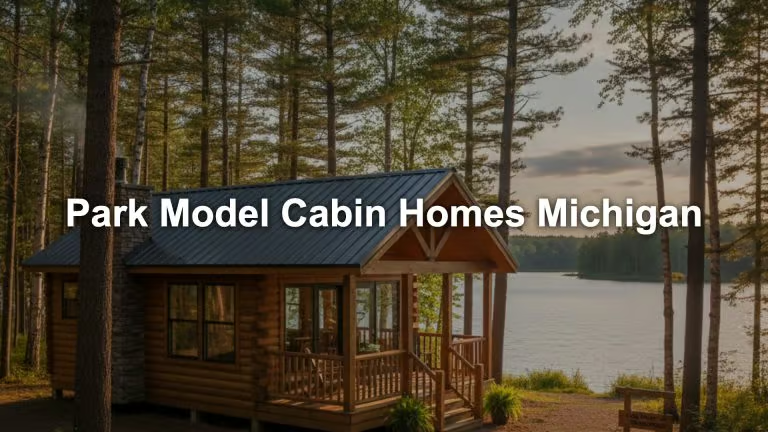


Colorado permits tiny houses as permanent residences in various counties, including El Paso County, Park County, Delta County, and Larimer County, in line with House Bill 22-1242, which legalized factory-built homes under 400 square feet starting July 2023. Tiny houses on wheels are typically categorized as recreational vehicles and limited to temporary occupancy, while permanent installations require foundations and adherence to local zoning laws. Prospective owners should always verify county-specific rules regarding minimum sizes, permits, and site placements to guarantee compliance and avoid potential issues.
Colorado remains at the forefront of innovative housing solutions, with its stunning array of landscapes—from the majestic Rocky Mountains to bustling urban hubs—drawing in tiny house advocates seeking affordable and eco-friendly lifestyles. Recent regulatory advancements have expanded opportunities for such dwellings, promoting both cost savings and environmental responsibility. This refreshed guide offers a comprehensive look at counties that allow tiny houses, essential regulations, and actionable advice for navigating Colorado’s zoning complexities in 2024 and beyond.
For those eyeing a tiny home in Colorado, whether in serene mountain settings or near dynamic cities like Denver, grasping local ordinances is vital for success. Great Lakes Tiny Homes stands out as a comprehensive manufacturer of modular, park model, and tiny homes, providing complete builds delivered to all 48 contiguous U.S. states. Our offerings include wheeled and non-wheeled options, with RVIA-certified park models tailored to diverse zoning requirements throughout Colorado.
If you’re exploring a tiny home opportunity in Colorado, consider scheduling a consultation with our specialists for customized insights: Book a call.
Disclaimer: This article serves informational purposes only and does not provide legal advice. Zoning laws and regulations can vary by location and evolve over time. Consult your local zoning authority or a qualified land use attorney before proceeding based on this content.
What Counties in Colorado Allow Tiny Houses?
Numerous counties across Colorado now support tiny houses under defined guidelines, showcasing the state’s forward-thinking approach to addressing housing affordability. Areas such as El Paso, Park, Delta, and Larimer Counties have integrated policies that complement recent state legislation, accommodating both fixed and mobile structures. Each area enforces distinct zoning frameworks, size thresholds, and approval procedures that builders must navigate carefully. Urban-proximate counties often stress harmonious neighborhood integration, whereas rural districts prioritize essential services like sewage and water supply. Starting with thorough research can avert expensive errors and promote smooth compliance from the planning phase.
The enactment of House Bill 22-1242 in 2023 represented a landmark shift, clarifying the status of factory-built tiny homes up to 400 square feet as legitimate permanent dwellings throughout the state. This measure resolved earlier uncertainties, especially concerning wheeled tiny houses previously confined to 180-day stays. Counties have progressively revised their development codes to reflect these updates, spurring the emergence of tiny home enclaves. Nevertheless, differences remain; certain locales mandate compliance with the International Residential Code (IRC) Appendix Q, while others add climate-specific protections given Colorado’s fluctuating weather patterns. Reaching out to county planning offices remains indispensable for precise, location-based recommendations.
Disclaimer: As regulations continue to develop, always confirm details with local officials for the latest updates.
El Paso County
El Paso County has emerged as a leader in tiny house adoption, recognizing eligible units as full-time homes rather than transient RVs. This recognition permits indefinite occupancy following rigorous inspections that uphold construction norms. The county’s development code allows a single tiny house per residential lot, contingent on satisfying dimensional and foundational criteria. Surging interest near Colorado Springs has accelerated approvals for prefabricated models, accommodating the area’s expanding populace. Additionally, residents must manage utilities, either by linking to public networks or establishing private sources in outlying regions.
Building on House Bill 22-1242, these provisions have eliminated former occupancy caps, fostering stable living arrangements. Tiny homes in this county generally span 120 to 400 square feet, incorporating robust energy-saving elements to withstand elevation-related temperature swings. County planners advise early engagement with the planning office to address setbacks and subdivision constraints. Such foresight facilitates the thoughtful incorporation of tiny houses into existing residential fabrics.
Park County
Park County’s vast rural expanses present inviting prospects for tiny house dwellers, tempered by rigorous standards to safeguard the region’s distinctive appeal. State-level reforms have eased pathways for enduring setups, though elevated building expenses and isolation complicate infrastructure like roadways and electricity. Tiny homes must conform to size minima and rural zoning designations, frequently requiring specialized evaluations for independent systems. Collaborating with regional sustainability organizations can prove beneficial for applicants.
It’s crucial to liaise with the planning department to ascertain parcel-specific permissions, as certain districts restrict supplementary buildings. Park County’s focus on autonomy inspires features such as solar energy and alternative sanitation, suited to its rugged topography. While endorsing the tiny home trend, the county insists on comprehensive site evaluations that consider fire hazards and ecological pathways. This methodical evaluation secures enduring sustainability in one of Colorado’s most picturesque locales.
Delta County
Delta County weaves tiny houses into its regulatory framework, permitting them as main or secondary units in farming and residential districts. A 2021 revision to the code formally acknowledged tiny homes, advancing economical choices in this western Colorado haven famed for its fruit groves and recreational pursuits. Permanent builds begin at 200 square feet, with leeway for accessory units on expansive lots. Developers need agricultural permits and utility integrations, commonly using private water and waste solutions in countryside spots.
The county’s strategy harmonizes expansion with conservation, enforcing state codes for resident safety. Tiny homes flourish in green-oriented villages here, where elements like water collection systems are commonplace. Officials underscore the need for ecological assessments, especially proximate to aquatic resources. This structure advances Delta’s commitment to unobtrusive, environmentally sound housing.
Tiny House Regulations And Rules In Colorado
Tiny house rules in Colorado exhibit considerable variation across counties and cities, forming a mosaic of possibilities and limitations. Although state efforts toward uniformity have progressed, municipal zoning frequently governs practicality, encompassing everything from floor area minima to service obligations. Metropolitan zones might favor compactness and cohesion, while countryside areas emphasize land harmony and nature safeguards. Mastering these subtleties is essential to sidestep infractions that might result in penalties or forced removals. Owners are wise to select locations where tiny homes support overarching aims like housing accessibility programs.
On a state level, IRC Appendix Q sets foundational guidelines for tiny homes below 400 square feet, addressing durability, access, and utilities. Implementation differs, with adaptations for Colorado’s earthquake and snowfall demands in some places. Movable units encounter extra obstacles, often falling under RV classifications that bar full-time habitation. Fixed bases broaden prospects but entail thorough authorizations. This bifurcated framework spurs versatile architectures that shift from portable to stationary per site needs.
Disclaimer: For precise, property-tailored direction, reach out to local zoning entities, noting potential post-publication revisions.
Permanent Structure Rules
Effective July 1, 2023, House Bill 22-1242 greenlights factory-built residences of 400 square feet or smaller as lasting homes in Colorado communities. The legislation standardizes criteria for construction, bases, and protections, allowing counties like Larimer to lift prior 180-day restrictions. Seekers must procure construction licenses aligning with zoning and usage codes, typically including layouts and technical analyses. Municipalities including Durango, Leadville, Lyons, and Woodland Park have warmly adopted these shifts, expediting endorsements for conforming prototypes. Emphasis persists on livability amid Colorado’s climatic diversity, spanning dry plateaus to snowy highlands.
Approval workflows generally encompass audits of wiring, sanitation, and framework aspects, with checks at critical junctures. Bases demand permanence, via concrete pads or pilings, to achieve dwelling classification. This configuration separates tiny homes from RVs, affording tax advantages and loan access. Permanent configurations frequently embed intelligent systems for optimization, matching energy mandates. Architects versed in IRC Appendix Q can hasten clearances and bolster resilience.
Temporary Structure Rules
Wheeled tiny houses deliver portability and reduced startup expenses, attracting those lacking owned land in Colorado. Deemed RVs, they sidestep certain construction rules yet confront habitation caps, usually disallowing continuous residency. RVIA endorsement is commonplace, affirming ANSI safety measures. Verifications and paperwork affirm components like gas setups and storage capacities. Practically, these serve intermittent purposes, like seasonal escapes in upland counties.
Siting choices encompass RV facilities or consented private grounds, though city bylaws might restrict durations to 180 days. Colorado’s diverse geography calls for sturdy frames and thermal barriers for transit and short-term placements. Though exempting base costs, THOWs challenge coverage and services, depending on portable power or connections. This segment draws wanderers sampling the state prior to settling. Advancing to fixed use entails wheel detachment and base licensing.
Transitional Structure Rules
Transitional tiny homes merge portable and fixed traits, with removable bases enabling sporadic relocation. These configurations offer adaptability for moves while meeting residential criteria in numerous counties. Absent uniform state directives, oversight falls to local inspectors, assessing via IRC norms and terrain appropriateness. Prevalent in locales with variable employment, they employ prefabricated parts validated for reconfiguration. Beneficiaries gain from staggered licensing, initiating with interim nods.
Early dialogue with city coordinators elucidates takedown methods and re-verification protocols. These units commonly feature adaptable connections for effortless service shifts. Within Colorado’s fluid market, they enable experimental phases in prospective areas. Strength assessments confirm soundness during transports, averting regulatory breaches. This blended paradigm broadens entry for trialing minimalism before permanence.
County-by-County Breakdown
| County/City | Min. Sq Ft | Zoning Allowed | Key Requirements | Source | Last Verified |
| El Paso County | 120 sq ft | Residential zones | Building permit required, permanent foundation, inspections | El Paso County Land Development Code Resolution | Oct 2024 |
| Park County | 400 sq ft | Rural residential | Septic system, well water, setback requirements | Park County FAQ on Mobile Homes and Residences | Oct 2024 |
| Delta County | 200 sq ft | Agricultural zones | Agricultural use permit, utilities connection | Delta County Planning FAQs | Oct 2024 |
| Larimer County | 300 sq ft | Limited zones | Special use permit, 180-day limit removed | Larimer County Tiny Houses Guide | Oct 2024 |
Disclaimer: Information in this table is illustrative; always cross-check with county departments for the newest details.
In Colorado Where Can I Build A Tiny House?
Opportunities for constructing tiny houses in Colorado range from city-driven projects to secluded rural escapes, with educational institutions even building prototypes to tackle affordability crises. Initiatives in Denver for tiny home villages exemplify municipal backing for creative remedies. The Western Slope, dotted with thermal springs, experiences rising interest in overnight tiny accommodations, merging leisure with living. Alignment with the Building Codes and Standards division confirms conformity to statewide protocols. These varied venues highlight Colorado’s versatility for compact habitation.
Programs like FutureForward involve learners in practical tiny home assembly, cultivating expertise for green vocations. Western Slope ruralities furnish broad tracts perfect for disconnected constructions, assuming ecological clearances. City growth targets interstitial sites, embedding tiny homes as supplementary units. This spectrum empowers constructors to pair locations with personal tastes, spanning metropolitan ease to natural isolation. Preliminary zoning reviews forestall discrepancies between ambitions and realizability.
Major Colorado Cities Tiny House Requirements
Denver
Contact: Denver Community Planning & Development – (720) 865-2915
In Denver, stationary tiny homes are regarded as single-family homes, demanding conventional building licenses and zoning observance. Mobile counterparts necessitate auxiliary permits and siting in approved mobile districts or developments. The metropolis advances tiny house collectives for economical lodging, with accessory units authorized across the city to enhance population density. Updated bylaws simplify hurdles for sub-400-square-foot builds, advancing green city expansion. Services must interface with urban grids, featuring rebates for efficient configurations.
Builders ought to scrutinize the Denver Zoning Code for buffer and elevation caps. Community strategizing prioritizes blending, mitigating aesthetic disruptions. This structure bolsters Denver’s pursuit of equitable shelter against escalating prices. Pre-submission sessions from the planning unit furnish in-depth support.
Colorado Springs (El Paso County)
Contact: Colorado Springs Planning Department – (719) 385-5905
Consistent with El Paso County, Colorado Springs authorizes tiny houses through fitting licenses and audits, reinforced by House Bill 22-1242. Accessory units are viable in every zone, encompassing standalone variants below 400 square feet on stable bases. The city backs ready-made tiny homes as supplements, assuming fire-resilient specs in boundary zones. Licensing engages Pikes Peak Regional Building Department for framework validations. This innovative policy nurtures the area’s tiny home surge.
Residents handle parking and entry, sans lot size floors for supplements. The approval sequence incorporates adjacent alerts for substantial endeavors. Colorado Springs’ affordability drive weaves tiny homes into suburban weaves. Department outreach resolves property-unique exceptions.
Fort Collins (Larimer County)
Contact: Fort Collins Planning Services – (970) 221-6750
Fort Collins follows Larimer County’s tenets, endorsing lasting tiny house occupancy after HB 22-1242. IRC norm adherence is obligatory for base-constructed units, including thermal codes for frosty seasons. Tiny homes serve as supplements in dwelling zones, with exceptional licenses for independent ones. The city promotes aesthetics-boosting, sustainable blueprints. Construction licenses oversee wiring and sanitation verifications.
Zoning stresses accord, capping elevations to align with environs. Fort Collins’ growth audit includes communal feedback for societal harmony. This organized method guarantees tiny homes enrich lodging variety. Services supply application inventories for efficiency.
Durango (La Plata County)
Contact: Durango Planning Department – (970) 375-4850
Durango welcomes tiny house enclaves like Hermosa Orchards Village, sanctioning sub-400-square-foot units in dwelling zones via licenses. Supplements have been lawful since 2014, with fresh directives countering lodging surges. Tiny homes fulfill codes for quake and snow pressures, typical in San Juan ranges. The city champions micro-dwellings via blueprint accolades, spurring superior fabrication. Services link to public or individual networks.
Strategizing targets infill to conserve expanses. Durango’s supplement initiative guides adaptations and fresh constructs. This nurturing milieu cultivates lively tiny neighborhoods. Units aid in accolade nominations.
Boulder (Boulder County)
Contact: Boulder Planning & Development Services – (303) 441-1880
Boulder requires tiny houses to satisfy dwelling construction codes, with supplements allowed in most zones as linked or separate units. Ordinance 8571 refinements optimize supplement workflows, easing sub-400-square-foot barriers. Blueprints must embed green traits like solar gain, matching civic eco-goals. Licensing demands terrain layouts tackling runoff and vistas. Tiny homes augment Boulder’s economical lodging reserves.
Zoning bars brief rentals for supplements to favor enduring stays. The planning guide specifies submission elements. Boulder’s fairness focus assures tiny homes meet broad requirements. Sessions navigate code shifts.
How to Legally Build a Tiny House in Colorado
Step 1: Research Local Zoning Laws
Initiate by connecting with your county planning unit to unpack zoning particulars, spanning area thresholds and allowable sectors. Colorado’s distributed framework implies broad rule disparities, from city compactness premiums to rural land floors. Peruse usage charts digitally or onsite to pinpoint feasible tracts. This phase reveals subtleties like overlay areas for inundation or heritage sites. Prompt inquiry conserves effort and unveils green build stimuli.
Interact with parties like adjacents or associations if pertinent, as some seek endorsements. County digital aids enable zoning inquiries. This base effort synchronizes initiatives with societal benchmarks from start.
Step 2: Choose Your Tiny House Type
- Foundation-built: Lasting constructs adhering to IRC protocols, suited for dwelling zoning.
- RVIA-certified THOW: Satisfies RV norms for interim or bridging use in facilities.
- Park model: Prefab for collectives, usually sub-400 sq ft with validation.
Decision pivots on longevity aims and terrain limits, with base kinds fitting extended intents. THOWs proffer economy yet constrain venues. Park models equilibrate movement and adherence. Factor weather tweaks like barriers for Colorado chills. Expert input hones selections to zoning match.
Step 3: Obtain Required Permits
Lasting tiny houses call for construction licenses detailing blueprints and details, whereas interim may seek RV or exceptional nods. Tender intricate sketches to area units like Pikes Peak for scrutiny. Charges differ by magnitude, frequently $500-$2000 upfront. Durations range 4-12 weeks per intricacy. Monitor bids through web interfaces for progress.
Tackle deviations if blueprints stray from norms. Licenses secure safety and coverage. This administrative phase shields assets enduringly.
Step 4: Meet Utility Requirements
Procure water, waste, and power entry, with rural spots demanding bores, treatments, and panels. Colorado’s parched climate insists on thrifty setups, matching health protocols. Expenses mount for detached, yet incentives alleviate. Liaise with suppliers promptly for viability probes. Unified blueprints lessen interferences.
Services sway zoning clearances, demonstrating independence. Engineer pros affirm configurations. This base infrastructure enables fluid routines.
Step 5: Schedule Inspections
After erection, audits affirm wiring, sanitation, and framework alignment pre-occupancy. Arrange sequentially: base, skeleton, prelim, ultimate. County agents perform terrain probes, granting endorsements on success. Redos correct flaws swiftly. Files chronicle for transactions or credits.
Ready via plan fidelity. Audits sustain caliber, averting perils. Ultimate clearance bestows lawful dwelling.
Colorado Tiny House Communities
Colorado’s tiny house collectives furnish prepped avenues for communal existence amid awe-inspiring scenery. These locales proffer collective perks like paths and plots, smoothing shifts to compact realms. Collective zoning permits tighter arrays, nurturing ties. Probing choices uncovers lifestyle alignments, from stream tranquility to peak panoramas. For insights on premier Colorado tiny collectives, see Best Tiny Home Communities in Colorado.
Hermosa Orchards Village
Hermosa Orchards Village covers seven acres in Durango’s Animas Valley, with 22 spots for tiny houses and park models sub-400 square feet. Rented parcels from 3600 to exceeding 6000 square feet host patios, beds, and depots. The locale stresses exterior routines and camaraderie, suiting nature aficionados. Perks encompass stream entry and shared zones, enriching existence. This arrangement backs green habits in a scenic milieu.
Dwellers relish Durango proximity with seclusion. The blueprint favors low-impact fabrics, with directives for materials. Oversight aids service establishments. It models equilibrated tiny existence in Colorado.
Peak View Park
Peak View Park in Woodland Park sits beneath Pikes Peak, hosting prolonged RV and park model stays with perpetual peak sights. Geared for extended residencies, it supplies exterior pursuits and Colorado Springs proximity. Spots back wheeled tiny homes or models, with service links. The calm ambiance fits pensioners and explorers. Nearby health services add ease.
Pursuits span trails and celestial views, using altitude. Bylaws assure serene, courteous shared use. This locale epitomizes reachable tiny existence in Rockies.
Tiny House Prices in Colorado
Tiny house costs in Colorado vary widely due to factors like geography and oversight, mirroring the state’s terrain diversity. Dimensions from 100 to 400 square feet sway supply and effort outlays. Base vs. wheeled status shapes type: fixed adds groundwork but residency, mobile cuts initials yet flexes sites. RVIA validation raises tags for rule-fit park models but eases collective zoning. Service ties, key in isolates, may twin budgets via treatment and bore setups. Area codes might exact additions like snow bracing, lifting norms in peaks.
Anticipate $50,000 to $150,000 for full assembly, per tailoring and prep. City closeness hikes land, rural saves but transport premiums. Credit paths widen for validated, home-like. Factor persistents like levies, nil for THOWs but for fixed. Trends indicate demand uptick, steadying amid shortages. Quote contrasts from fabricators align worth to wants.
For Colorado tiny houses available, browse at Tiny House For Sale Colorado.
Great Lakes Tiny Homes Pricing
Great Lakes Tiny Homes delivers ready builds from $100,000 to $150,000, spanning blueprint, assembly, and Colorado transport. This span embraces customizations to area codes, sans concealed charges. All-encompassing aids site probes and license help, optimizing for acquirers. Remote delivery accounts logistics, with onsite joining choices. These outlays yield sturdy, optimized homes for Colorado weathers.
Planning add-ons like fixtures or panels merges smoothly. Clear tags dodge shocks, stressing craft. Patrons value post-set warranty.
Great Lakes Tiny Homes Model Options
- Modular Homes: Plant-joined for swift base setup, prime for lasting zoning. Modular Homes
- A-Frame: Signature form space-maxing in angled roofs, adaptable for peaks. A-Frame
- Cabin: Countrified with timber sheens, ideal for rural Colorado looks. Cabin
- Park Models: RVIA-endorsed sub-400 sq ft, for collectives and interim. Park Models
- Tiny House on Wheels: Portable for adaptability, RV-typed but base-upgradable. Tiny House on Wheels
Form pick sways zoning fit; base like modular shine in dwelling, THOWs in RV. Weigh land—cabins take snow, A-frames views. Validation aids credit, resale. For Colorado fabricators, view Tiny House Builder Colorado.
Zoning sways form choice, lasting unlocks sites but licenses. If zoning fits aims, schedule with Great Lakes Tiny Homes pros: Book a call
Tiny House Builders Near Me
Colorado’s draw of nature quests and peak vistas lures tiny seekers to cities, fields, collectives, or slope abuts. Great Lakes Tiny Homes, top Colorado tiny fabricator, enables city, rural, collective, or ski-near sites. National delivery skips local hunts. As RVIA-endorsed, we maintain strict plant norms for safety, compact compliance. This pledge assures endurance in Colorado forces.
Diverse blueprints suit tastes, modern lofts to snug cabins. Delivery bears pro setup, cutting onsite fuss. For nearby fabricators, check Tiny House Builder Colorado.
Do I Need a Certified Builder?
Selecting a validated fabricator is prudent to counter DIY pitfalls, yielding uneven yields. An RVIA-endorsed ally like Great Lakes Tiny Homes vows rule stick, safe, lasting constructs. Premium supplies boost span, calming in Colorado rigors. Validation eases coverage, credit, habitability proof.
Beyond rules, endorsed pros proffer locale tweaks, like altitude barriers. Guarantees span flaws, easing upkeep. This pro path locks solid outlay. Teamwork assures zoning, life custom fits.

How to Verify Tiny House Rules in Your County
Deciphering tiny house rules demands straight confirmation from area overseers, as variances span states. Use these phases to affirm county allowances and stipulations. This method yields exact, fresh data suited to your holding.
- Review the County Zoning Code: Commence at county site or planning gateway. Hunt zoning decree or usage code, detailing allowed builds in sectors. Seek dwelling, farm, or rural parts for tiny nods or supplement tags.
- Check Minimum Dwelling Size Requirements: Probe code for area mandates on livable spaces. Counties often cap at 400 square feet per state, but locals vary 120-300. Note supplement or prefab waivers.
- Investigate ADU Provisions: Gauge if tiny qualify as Accessory Dwelling Units. Scan lot, buffer, detached/attached rules. Some allow one per main, with elevation, cover limits.
- Assess Treatment of Tiny Houses on Wheels (THOWs): View if THOWs RV-rule rather than lasting. This curbs to interim (e.g., 180 days) in parks or land, sans base shift. Confirm RVIA for rule.
- Contact the Local Planning Department: Message or ring county planning/zoning for custom aid. Give holding address or ID for spot counsel. They detail waivers, licenses, shifts—log replies scripted.
This sequence evades shocks, building assured. Recall, rules shift, so refresh routinely.
Tiny House FAQs
Do Tiny Houses Pay Taxes in Colorado?
Tiny owners in Colorado typically dodge property levies for units and RVs missing standard home marks. Yet, wheeled may draw vehicle duties if logged thus. Fixed on bases face usual value, spot assessments. Query county appraisers for waivers or math.
Can You Make a Tiny House in Colorado Your Main Residence?
Yes, post House Bill 22-1242 from July 2023, sub-400-square-foot factory units can be lasting homes. This act lets cities, counties craft enduring tiny paths. Earlier, some 3,000 units lingered in ambiguity with 180-day caps. House Bill 22-1242 clears, local zoning holds. For tiny units, see tiny homes.
Can I Build a Tiny House in Denver in My Backyard?
Yes, non-wheeled tiny homes are single-family, needing build licenses in Denver. Wheeled seek auxiliary in mobile zones or plans. Supplements ok citywide, aiding yard sites. Scan zoning for buffers, services. Disclaimer: Affirm with Denver planning for fresh rules.
What Are the Minimum Size Requirements for Tiny Houses in Colorado?
State caps tiny at sub-400 per HB 22-1242, counties minima like El Paso’s 120 sq ft. IRC Appendix Q sets 70 sq ft for rooms. Zoning differs, rural smaller if coded. Check area usage codes always. This leeway backs varied blueprints.
Where Can I Place a Tiny House on Wheels in Colorado?
THOWs as RVs go in parks, consented lots, or interim zones, not lasting sans shift. Caps frequent at 180 days out RV. Spots like Peak View host prolonged. Zoning bars solo stays. For collectives, probe Best Tiny Home Communities in Colorado.
What Permits and Utilities Are Needed for a Tiny House in Colorado?
Licenses span build for lasting, RV for wheeled, plus zoning okays. Services need ties or detached okays like bores, treatments. Costs site-vary, audits rule. Rural seek health okays. Pro aid steers mazes.
Conclusion
Tiny homes offer an enticing route to streamlined, economical existence in Colorado’s captivating environs, from city pockets to distant summits. Still, triumph relies on conquering the rule labyrinth, spanning zoning exceptions and norm fidelity. Meticulous inquiry and pro counsel chart compliant, rewarding paths. Prioritizing these assures sustainable dwellings matched to dreams.
For pro view on Colorado tiny ventures, schedule with Great Lakes Tiny Homes: Book a call