
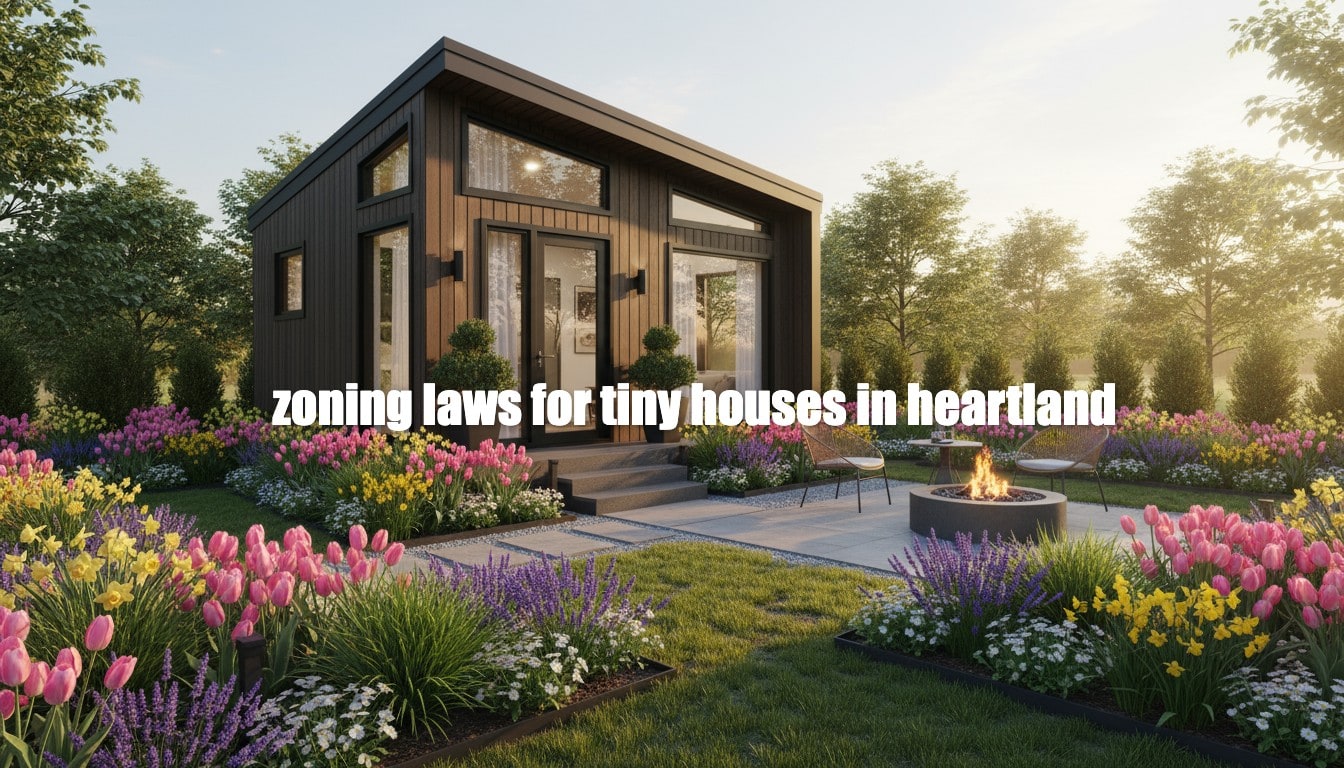
When it comes to tiny houses in America’s heartland, we’ve found that navigating the complex web of zoning regulations can be challenging but essential. Tiny houses—typically defined as dwellings under 400 square feet—have surged in popularity across the Midwest and Great Plains states due to their affordability, minimal environmental footprint, and alignment with minimalist lifestyles. However, before investing in a tiny home in heartland states like Iowa, Missouri, Kansas, Nebraska, or Oklahoma, we need to understand the zoning laws that govern where and how these compact dwellings can be placed.
Zoning regulations in the heartland vary dramatically not just from state to state, but even between neighboring counties and municipalities. This regulatory patchwork makes research an essential first step for anyone considering joining the tiny house movement in America’s heartland.
At Great Lakes Tiny Homes, we understand the importance of navigating these complex regulations. We’ve created this comprehensive guide to help tiny house enthusiasts understand the legal landscape across the heartland states, providing the information needed to make informed decisions about tiny home placement and compliance.
Types of Tiny Houses and How They’re Classified
Understanding how different types of tiny houses are classified is crucial when navigating zoning laws in the heartland. Local authorities typically categorize tiny homes in several distinct ways, each with its own set of regulations and placement restrictions.
Tiny Houses on Wheels (THOWs)
Tiny houses on wheels represent one of the most popular options in the tiny house movement, offering flexibility and mobility. In most heartland states, THOWs are typically classified as:
- Recreational Vehicles (RVs): Many jurisdictions classify THOWs as RVs, especially if they’re certified by the Recreation Vehicle Industry Association (RVIA). This classification means they’re generally not approved for permanent living in residential zones but may be permitted in RV parks or campgrounds.
- Mobile Homes: Some areas classify larger THOWs as mobile homes, subjecting them to regulations under the Department of Housing and Urban Development (HUD) codes.
In states like Missouri and Kansas, THOWs are primarily allowed in designated RV parks or on private rural property with fewer restrictions. However, they typically cannot be placed permanently in residential neighborhoods unless specific variances are obtained.
Permanent Tiny Houses
Tiny houses built on permanent foundations face a different set of challenges in the heartland:
- Residential Building Codes: These structures must comply with local residential building codes, including minimum square footage requirements that often exceed typical tiny house dimensions.
- Minimum Size Requirements: Many heartland counties enforce minimum dwelling size requirements ranging from 600-1,000 square feet, well above the typical tiny house size of 100-400 square feet.
Rural areas in Nebraska, Iowa, and Oklahoma often have more flexible building codes than their urban counterparts, making them potentially more accommodating to permanent tiny houses.
Accessory Dwelling Units (ADUs)
ADUs represent a promising pathway for tiny house enthusiasts in many heartland communities:
- Secondary Structures: ADUs are secondary housing units located on the same property as a main dwelling, sometimes called granny flats, in-law suites, or backyard cottages.
- Growing Acceptance: We’re seeing increasing acceptance of ADUs across heartland cities as housing affordability concerns grow.
Cities like Kansas City, Missouri, and Des Moines, Iowa have recently updated their zoning codes to be more ADU-friendly, though specific requirements regarding size, setbacks, and design still apply. In rural heartland areas, ADU regulations may be less defined, sometimes creating opportunities for tiny house placement through this classification.
The classification of your tiny house significantly impacts where you can legally place it in heartland states. For those looking at Tiny House Builders in Missouri or considering What Counties In Kansas Allow Tiny Houses, understanding these distinctions is essential to ensuring compliance with local regulations.
Tiny House Zoning in Midwest States
The Midwest heartland offers varying degrees of tiny house friendliness, with each state presenting its own regulatory landscape. We’ve researched the specific zoning considerations across the major Midwest states to help you understand where tiny houses are most welcome.
Iowa
Iowa’s approach to tiny houses reflects a mix of traditional zoning with emerging acceptance in certain areas:
- State-level regulations: Iowa follows the International Residential Code (IRC) but has not widely adopted Appendix Q, which specifically addresses tiny houses.
- Tiny house-friendly areas: Rural counties like Winneshiek and Clayton tend to have fewer restrictions on minimum house size.
- ADU regulations: Cities like Iowa City and Des Moines have recently updated ordinances to allow ADUs, creating opportunities for tiny houses as secondary dwellings.
In Iowa, THOWs face significant challenges in urban areas but may find acceptance in rural communities with less stringent enforcement of building codes. For those interested in Tiny House For Sale Iowa options, rural properties often provide the most flexibility.
Missouri
Missouri offers some promising opportunities for tiny house enthusiasts:
- State-level approach: Missouri has no statewide tiny house policy, leaving regulations to local jurisdictions.
- Notable tiny house-friendly areas: St. Charles County has been relatively accommodating to tiny houses, while the city of Branson has specific provisions for tiny house communities.
- Minimum square footage: Requirements vary widely, from as low as 320 square feet in some rural areas to 700+ square feet in suburban communities.
Missouri’s tiny house movement is growing, particularly in the Ozarks region where several tiny house communities have been established. The Best Tiny Home Communities in Missouri tend to be located in areas that have either created specific tiny house zoning or have minimal residential building restrictions.
Kansas
Kansas presents a mixed landscape for tiny house enthusiasts:
- State-level regulations: Kansas has no statewide tiny house-specific legislation, though some jurisdictions have adopted the IRC’s Appendix Q.
- Tiny house-friendly counties: Douglas County and parts of Sedgwick County have shown more flexibility toward tiny houses.
- Minimum requirements: Many Kansas municipalities maintain minimum dwelling sizes of 600-900 square feet, though rural areas often have reduced requirements.
Wichita has emerged as a relatively tiny house-friendly city in Kansas, with specific provisions for tiny houses in certain zoning districts. For those exploring Tiny House Builder Kansas options, understanding which counties allow tiny houses is essential for planning purposes.
Nebraska
Nebraska’s approach to tiny houses varies significantly between urban and rural areas:
- State-level stance: Nebraska follows the IRC but implementation varies by jurisdiction.
- Tiny house acceptance: Lincoln and Omaha maintain relatively strict minimum size requirements, while rural counties like Cherry and Dawes often have more flexibility.
- ADU progress: Lincoln has recently updated its ADU ordinances, potentially creating pathways for tiny houses as accessory dwellings.
Nebraska’s western counties tend to be more accommodating to alternative housing, including tiny houses, compared to the more densely populated eastern regions of the state.
Oklahoma
Oklahoma offers some promising opportunities for tiny house placement:
- State-level regulations: Oklahoma has no statewide tiny house policy, with regulations determined at the local level.
- Tiny house-friendly areas: Tulsa has implemented specific tiny house zoning in certain districts, while Oklahoma City has updated its ADU regulations.
- Rural opportunities: Counties like Pottawatomie and McClain have fewer restrictions on minimum dwelling size in unincorporated areas.
Tulsa stands out as one of the more progressive cities in the heartland regarding tiny houses, having created specific urban tiny house districts that allow homes as small as 400 square feet. Those looking for Tiny House For Sale Oklahoma options will find varying levels of regulatory support depending on the specific county and municipality.
Tiny House Zoning in Great Plains States
The Great Plains region of the heartland presents its own unique regulatory landscape for tiny houses. We’ve researched the specific considerations across these states to provide a comprehensive overview.
North Dakota
North Dakota’s approach to tiny houses reflects its largely rural character:
- State-level regulations: North Dakota follows the IRC but has not widely adopted Appendix Q for tiny houses.
- Minimum requirements: Many jurisdictions maintain minimum dwelling sizes of 700-900 square feet, though enforcement varies in rural areas.
- Tiny house opportunities: Counties like McKenzie and Williams, experiencing housing pressures from energy development, have shown more flexibility toward alternative housing solutions.
North Dakota’s harsh climate creates additional challenges for tiny houses, particularly THOWs, as local building codes emphasize insulation and structural requirements to withstand extreme weather conditions.
South Dakota
South Dakota offers varying levels of tiny house acceptance:
- State-level approach: South Dakota has no statewide tiny house policy, with regulations determined locally.
- Tiny house-friendly areas: The Black Hills region, including parts of Pennington County, has shown more openness to alternative housing.
- ADU regulations: Sioux Falls has updated its ADU ordinances, potentially creating opportunities for tiny houses as secondary dwellings.
In South Dakota, THOWs face significant regulatory challenges in most municipalities but may find acceptance in rural areas and certain tourist-oriented communities in the western part of the state.
Minnesota
While geographically part of the Upper Midwest, Minnesota borders the heartland and offers some progressive tiny house policies:
- State-level regulations: Minnesota has adopted the IRC, including Appendix Q in some jurisdictions.
- Tiny house-friendly areas: Duluth and Rochester have updated zoning codes to be more accommodating to tiny houses and ADUs.
- Minimum requirements: Requirements vary from 300 square feet in some progressive communities to 800+ square feet in more traditional suburbs.
Minneapolis has emerged as one of the more tiny house-friendly cities in the region after eliminating single-family zoning and updating its ADU regulations. For those considering Best Tiny Home Communities in Minnesota, the Twin Cities metro area offers several promising options.
Wisconsin
Wisconsin presents a mixed landscape for tiny house enthusiasts:
- State-level stance: Wisconsin follows the Wisconsin Uniform Dwelling Code, which includes minimum room size requirements that can challenge tiny house designs.
- Tiny house acceptance: Madison and Milwaukee have updated ADU regulations that can accommodate tiny houses in certain circumstances.
- Rural opportunities: Northern counties like Bayfield and Ashland often have more flexibility for alternative housing.
Wisconsin’s tiny house movement is growing, particularly in the western and northern regions of the state where several intentional communities have been established. Those interested in What Counties In Wisconsin Allow Tiny Houses will find varying levels of acceptance across the state.
Tiny House Communities in the Heartland
Across the heartland, we’re seeing the emergence of dedicated tiny house communities that have successfully navigated zoning challenges. These communities offer valuable models for how tiny houses can be legally established in the region.
Simply Home Community (Missouri)
Located near Springfield, Missouri, the Simply Home Community represents one of the heartland’s pioneering tiny house villages:
- Zoning solution: The community worked with Greene County officials to establish the property as a planned development with specific provisions for tiny houses.
- Community structure: It operates on a land-lease model where residents own their tiny homes but lease the land.
- Shared facilities: The community features common gardens, gathering spaces, and shared utilities infrastructure.
Simply Home Community demonstrates how collaborative approaches with local officials can create legal pathways for tiny house developments in the heartland.
LuxTiny Community (Kansas)
Located near Wichita, Kansas, this developing community showcases a higher-end approach to tiny living:
- Zoning solution: The developers worked with Sedgwick County to establish a planned unit development specifically for tiny houses.
- Community structure: It features individually owned lots with tiny houses on foundations.
- Amenities: The community includes shared green spaces, community buildings, and full utility hookups.
LuxTiny demonstrates how upscale tiny house communities can gain acceptance in suburban heartland settings through careful planning and collaboration with local authorities.
Prairie Schooner Tiny Village (Nebraska)
This emerging community near Lincoln, Nebraska offers a rural tiny house option:
- Zoning approach: Located in an unincorporated area with minimal building restrictions, the community operates under agricultural zoning with special permits.
- Community structure: It features a mix of tiny houses on wheels and on foundations with a cooperative ownership model.
- Shared resources: The community emphasizes sustainable living with shared gardens, renewable energy systems, and water conservation.
Prairie Schooner demonstrates how rural heartland locations can offer greater flexibility for establishing tiny house communities.
Tiny Town Oklahoma (Oklahoma)
Located near Oklahoma City, this community showcases a commercial approach to tiny house development:
- Zoning solution: The development was established under RV park zoning but with specific accommodations for long-term tiny house placement.
- Community structure: It operates as a monthly rental model where residents own their THOWs but pay for lot rental.
- Amenities: The community features full hookups, community buildings, and shared recreational facilities.
This community demonstrates how existing RV park zoning can be adapted to accommodate tiny houses on wheels in heartland states.
How to Navigate Zoning Laws for Your Tiny House
Successfully placing a tiny house in the heartland requires a methodical approach to navigating zoning laws. We’ve developed a step-by-step guide based on our research and experience with tiny house regulations across the region.
Step 1: Research Local Zoning Codes
Before purchasing land or a tiny house, we recommend conducting thorough research on local regulations:
- Identify the governing jurisdiction: Determine whether your desired location is within city limits, an unincorporated county area, or a township, as each may have different regulations.
- Access zoning codes: Most counties and municipalities now publish their zoning ordinances online. Search for terms like “minimum dwelling size,” “accessory dwelling units,” and “residential requirements.”
- Check for tiny house-specific provisions: Some progressive heartland communities have adopted specific tiny house ordinances or the IRC’s Appendix Q.
Rural areas in states like Missouri, Kansas, and Oklahoma often have less restrictive zoning requirements than suburban or urban areas, making them potentially more accommodating to tiny houses.
Step 2: Questions to Ask Local Planning Departments
Direct communication with local officials is essential:
- Schedule a meeting: Contact the local planning or zoning department to discuss your tiny house plans.
- Specific questions to ask:
- What is the minimum square footage requirement for a permanent dwelling?
- Are tiny houses on wheels permitted for full-time residence?
- Does the jurisdiction allow ADUs, and what are the requirements?
- Has the jurisdiction adopted Appendix Q of the IRC?
- Are there any areas zoned for alternative housing or planned developments that might accommodate tiny houses?
The attitude of local planning officials can vary dramatically across heartland communities. Some may be enthusiastic about tiny houses as affordable housing solutions, while others may strictly enforce traditional minimum size requirements.
Step 3: Understanding Building Codes vs. Zoning Ordinances
Recognizing the distinction between these two regulatory frameworks is crucial:
- Zoning ordinances: Determine where you can place your tiny house and how the land can be used.
- Building codes: Establish how your tiny house must be constructed to ensure safety and habitability.
Even when zoning allows for tiny houses, building codes may present additional challenges through requirements for minimum room sizes, ceiling heights, stairways, and emergency exits. Understanding both sets of regulations is essential for compliance.
Step 4: Exploring Variances and Special Permits
When existing regulations don’t accommodate tiny houses, these options may help:
- Zoning variances: These are formal exceptions to zoning requirements that can be requested when strict application of the code would create undue hardship.
- Conditional use permits: These allow for uses not typically permitted in a zoning district under specific conditions.
- Application process: Typically involves submitting detailed plans, paying fees, and attending public hearings.
We’ve seen successful variance applications in heartland communities when tiny house owners have presented well-researched proposals that address potential concerns about property values, neighborhood character, and infrastructure impacts.
Step 5: Common Workarounds
When direct approaches aren’t successful, these alternatives may be worth considering:
- RV classification: In many heartland jurisdictions, registering a THOW as an RV can allow placement in areas zoned for recreational vehicles.
- Agricultural exemptions: Some rural heartland counties exempt farm structures from certain building requirements.
- Temporary dwelling permits: Some jurisdictions allow temporary dwellings during the construction of a primary residence.
While these approaches can provide legal pathways for tiny house placement, we emphasize the importance of working within the law rather than attempting to fly under the radar, as non-compliance can lead to significant penalties and forced removal.
For those considering Tiny House For Sale Illinois or exploring options in other heartland states, understanding these navigation strategies is essential to finding a legal path to tiny living.
Future Trends in Heartland Tiny House Zoning
The regulatory landscape for tiny houses in the heartland is evolving, with several emerging trends that may shape future opportunities. We’ve identified key developments that tiny house enthusiasts should monitor.
Pending Legislation and Policy Changes
Several heartland states are considering changes that could impact tiny house zoning:
- Missouri: Legislation has been proposed to create statewide standards for tiny houses, potentially overriding restrictive local ordinances.
- Kansas: Several counties are considering adopting the IRC’s Appendix Q, which provides building code standards specifically for tiny houses.
- Iowa: State lawmakers have introduced bills to encourage affordable housing solutions, including provisions that could facilitate tiny house development.
We’re also seeing growing interest among heartland municipalities in updating comprehensive plans to address alternative housing types, including tiny houses, as part of broader affordable housing strategies.
Housing Shortages and Affordability Pressures
Economic factors are driving regulatory reconsideration across the heartland:
- Rural revitalization: Many heartland communities facing population decline are becoming more open to tiny houses as a way to attract new residents.
- Workforce housing: Areas with strong employment but housing shortages are exploring tiny houses as workforce housing solutions.
- Affordable housing crisis: Rising housing costs in heartland cities are prompting reconsideration of minimum size requirements.
These economic pressures are creating incentives for local governments to become more flexible regarding tiny house regulations, particularly in areas struggling to provide affordable housing options.
Growing Acceptance of ADUs
Accessory Dwelling Units represent one of the most promising pathways for tiny houses in the heartland:
- Urban ADU reforms: Cities including Kansas City, Des Moines, and Indianapolis have recently updated ADU regulations to allow smaller units with simplified approval processes.
- Aging-in-place solutions: As the heartland population ages, ADUs are gaining acceptance as solutions for multigenerational living and elder care.
- Income generation: Economic pressures are leading more heartland communities to view ADUs as acceptable ways for homeowners to generate supplemental income.
We expect ADU regulations to continue liberalizing across the heartland, creating more opportunities for tiny houses to be legally placed as secondary dwellings on existing residential properties.
Conclusion: Making Your Tiny House Dream a Reality in the Heartland
Navigating the complex landscape of zoning laws for tiny houses in America’s heartland presents challenges, but with thorough research, strategic planning, and persistence, legal tiny house living is increasingly possible across the region. Throughout this guide, we’ve explored the varied regulatory environments across heartland states, identified promising pathways to compliance, and highlighted emerging trends that suggest a more accommodating future for tiny houses.
Key takeaways from our research include:
- Regulatory variation: Zoning laws for tiny houses vary dramatically across heartland states, counties, and municipalities, making location-specific research essential.
- Classification matters: How your tiny house is classified—whether as an RV, ADU, or permanent dwelling—significantly impacts where it can be legally placed.
- Rural advantages: Rural areas throughout the heartland generally offer more flexibility for tiny houses than urban or suburban locations.
- Community options: Established tiny house communities provide pre-approved pathways to legal tiny living across several heartland states.
- Positive trends: Housing affordability concerns, sustainability goals, and growing advocacy efforts are gradually shifting regulations in favor of tiny houses.
We encourage prospective tiny house owners in the heartland to be thorough in their research, proactive in engaging with local officials, and patient in navigating the regulatory process. Joining forces with local advocacy groups can amplify your voice and contribute to broader regulatory change that benefits the entire tiny house movement.
For those considering specific locations, resources like Tiny House Builder Iowa directories or guides to Best Tiny Home Communities in Michigan can provide valuable starting points for your journey.
While the path to legal tiny house living in the heartland may not always be straightforward, the growing tiny house movement across the region demonstrates that it is increasingly possible. With each successful tiny house placement, each updated ordinance, and each new tiny house community, the regulatory landscape becomes more accommodating to this affordable, sustainable housing option.
Frequently Asked Questions About Tiny House Zoning in the Heartland
What is the minimum size requirement for a tiny house in the heartland?
Minimum size requirements vary widely across heartland states and local jurisdictions. Many cities and suburbs maintain minimum dwelling size requirements between 600-1,000 square feet, while some rural counties have minimums as low as 300-400 square feet. Jurisdictions that have adopted the IRC’s Appendix Q generally allow homes as small as 400 square feet if they meet other building requirements.
Is it easier to get approval for a tiny house on wheels or on a foundation?
The “easier” option depends on your specific location and goals. THOWs can often be classified as RVs, avoiding some building code requirements, but most municipalities prohibit living in an RV full-time in residential areas. Foundation-based tiny houses can qualify as permanent dwellings but must comply with local building codes, including minimum square footage requirements. For permanent living in residential areas, foundation-based tiny houses generally offer a clearer legal pathway, despite the building code challenges.
Can I place a tiny house as an ADU on my property in the heartland?
ADU regulations vary significantly across heartland states and municipalities. Most jurisdictions require a primary dwelling on the property, minimum lot sizes, and adherence to setback requirements. Progressive areas like Minneapolis, Kansas City, and Madison have relaxed ADU regulations, while many suburban communities throughout Iowa, Nebraska, and Kansas either prohibit ADUs entirely or impose restrictions that effectively prevent tiny houses from qualifying.
Which heartland states are most tiny house-friendly?
Based on our research, the most tiny house-friendly heartland states are: 1) Missouri, with its permissive state-level building codes and several counties with minimal enforcement; 2) Oklahoma, with its tradition of property rights and progressive policies in certain municipalities; 3) Minnesota, with some of the most progressive tiny house policies in the Midwest; and 4) Kansas, with its relatively permissive rural regulations and growing acceptance in certain municipalities.
What are legal workarounds for tiny house zoning restrictions in the heartland?
When facing restrictive zoning, several legal strategies have proven successful: 1) Applying for variances and special use permits; 2) Registering a THOW as an RV for placement in appropriate zones; 3) Purchasing land in unincorporated rural areas with minimal restrictions; 4) Joining established tiny house communities that have already navigated zoning challenges; 5) Working with officials to create new ordinances; and 6) Exploring alternative classifications such as agricultural buildings or workshops in rural areas.