
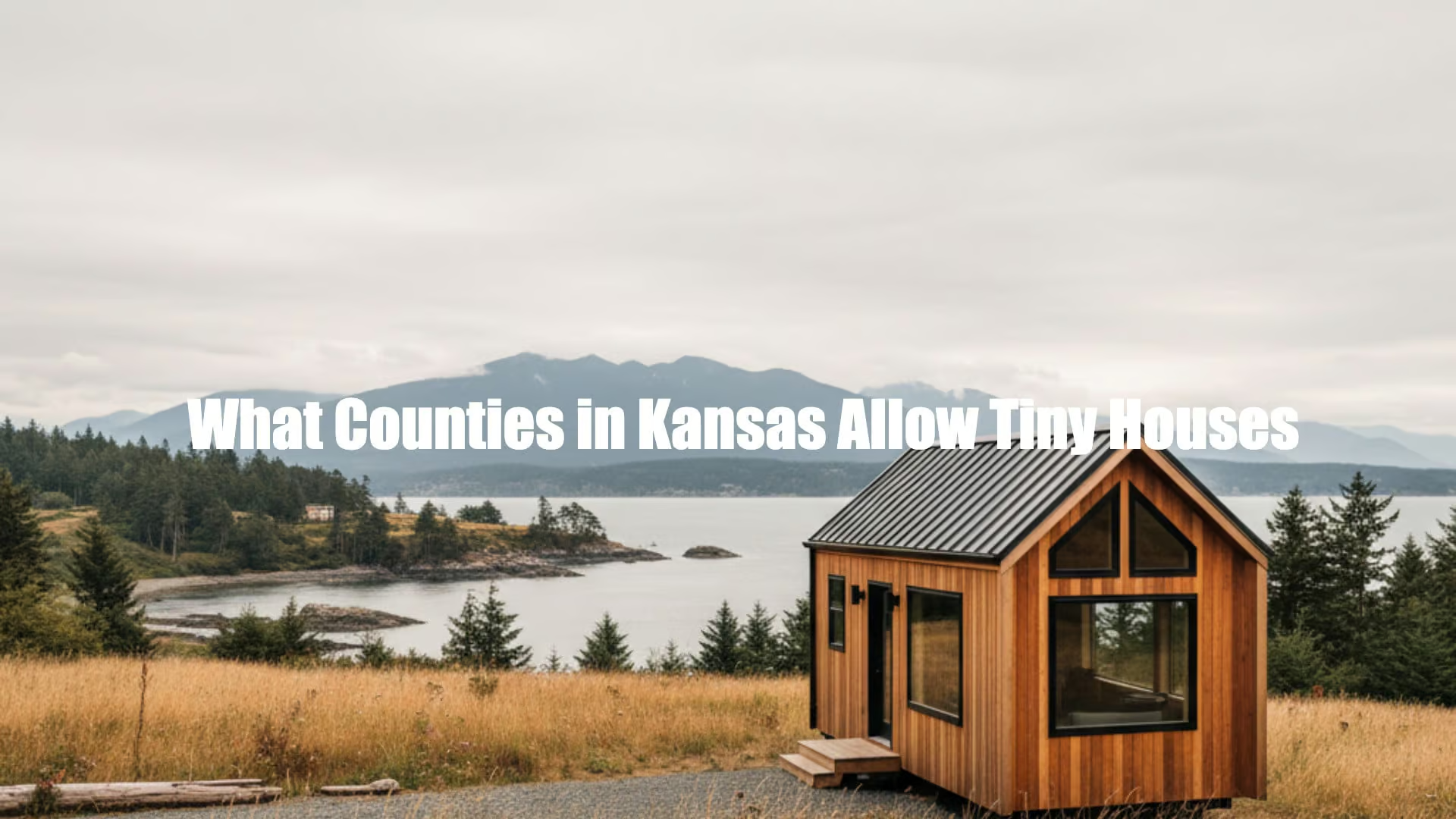
Kansas lacks statewide regulations specifically prohibiting tiny houses, but local zoning laws in counties and cities govern their construction and placement. Counties such as Douglas, Sedgwick, and Miami permit tiny houses, often as accessory dwelling units (ADUs) on permanent foundations meeting the International Residential Code (IRC), with sizes typically limited to 400-600 square feet. Tiny houses on wheels are generally classified as recreational vehicles (RVs) and restricted from permanent residency, requiring registration and placement in approved RV parks or campgrounds.
The tiny house movement continues to gain momentum across the United States, providing an affordable and eco-friendly housing option for individuals and families embracing minimalism. In Kansas, the appeal of tiny houses has grown steadily, driven by escalating housing prices and a desire for sustainable living amid environmental challenges. However, successfully establishing a tiny house in the Sunflower State demands a clear grasp of local zoning ordinances, building codes, and permitting procedures, which differ markedly across counties and municipalities. This updated guide examines the counties in Kansas that allow tiny houses, outlining essential rules and regulations to assist potential owners in making well-informed choices.
Whether opting for a mobile tiny house on wheels for flexibility or a fixed foundation-built model as a long-term home, adhering to local regulations is vital to prevent penalties or disputes. Elements such as minimum square footage, foundation specifications, and utility integrations are pivotal in assessing viability. For those exploring possibilities, Great Lakes Tiny Homes stands out as a comprehensive manufacturer of modular, park model, and tiny homes, offering complete solutions delivered to all 48 contiguous U.S. states. Our portfolio features models with or without wheels and RVIA certification—commonly known as park models when certified—crafted to align with Kansas’s diverse zoning demands.
If you’re assessing your tiny house initiative in Kansas, scheduling a consultation with our specialists can provide customized insights on models and regulatory alignment.
Disclaimer: This article serves informational purposes only and does not provide legal advice. Zoning laws, regulations, and ordinances vary by location and are subject to change. Consult your local zoning office or a qualified land use attorney before acting on this information.
What Kansas Counties Allow Tiny Houses?
Identifying counties in Kansas that permit tiny houses requires a detailed examination of local zoning codes, since the state entrusts housing oversight to individual counties and cities. Although no overarching state policy exists, numerous counties have integrated elements of the International Residential Code (IRC) to support compact dwellings, especially those on permanent foundations. Aspiring tiny house owners should confirm the latest ordinances, as revisions often respond to housing demands and public input. Counties including Jefferson, Shawnee, and Douglas are recognized for their accommodating policies, though limitations on mobile units persist widely.
Rural locales generally provide greater leniency, permitting tiny houses as accessory structures on expansive lots, while urban settings may enforce rigorous minimum size criteria to uphold neighborhood character. Early outreach to the county planning office is recommended to evaluate site suitability. This step addresses critical issues like setback distances, utility availability, and environmental factors distinctive to Kansas’s diverse terrain, ranging from the rolling Flint Hills to the expansive western prairies.
| County/City | Min Sq Ft | Zoning Type | Key Requirements | Source | Verified |
| Douglas County (Lawrence) | 400 sq ft | ADU in residential zones | Permanent foundation required; max 33% of primary dwelling size or 960 sq ft; separate entrance and utilities; no separate sale | Residential Accessory Dwelling Units – City of Lawrence, Kansas | Yes |
| Sedgwick County (Wichita) | 500 sq ft | Appendix Q IRC in residential districts | On foundation; meets IRC standards for tiny houses; emergency escapes and ceiling heights; no wheels for permanent use | Wichita-Sedgwick County Unified Building & Trade Code | Yes |
| Miami County (Paola) | 400 sq ft | THO Overlay District | Height max 18 ft (25 ft pitched roof); permanent foundation; utility connections; setbacks per district | LDO Text Amendment Tiny Homes – City of Paola | Yes |
| Leavenworth County (Leavenworth) | 400 sq ft | Residential districts | Permanent foundation; follows district standards; no specific size min beyond IRC Appendix Q | Article 1. General Provisions – City of Leavenworth Kansas | Yes |
| Saline County (Salina) | 600 sq ft | Residential zones | Adopts 2018 IRC; excludes lofts from floor area; building permit required | Ordinance 25-11267 Adopting 2018 International Residential Code | Yes |
| Jefferson County | Varies (typically 400 sq ft) | Rural residential | No minimum room sizes; permanent foundation preferred; check with planning for ADU approval | N/A | Pending local verification |
| Shawnee County (Topeka) | 400 sq ft | Outside city limits, residential | Stable foundation required; no mobile tiny houses; utility connections mandatory | N/A | Pending local verification |
Disclaimer: Table data reflects public records as of the latest available updates. Regulations evolve; always confirm with local authorities for current details.
Jefferson County
Jefferson County creates an inviting setting for tiny houses, especially in rural expanses where land abounds and rules remain relatively relaxed. Absent requirements for rigid foundations or prescribed room dimensions in numerous zones, residents can more readily incorporate tiny dwellings as main homes or ADUs. This adaptability arises from the county’s focus on agricultural and low-density applications, fostering creative housing on sizable properties. Nonetheless, all builds must satisfy fundamental safety protocols under Kansas’s IRC adoption, encompassing adequate sanitation and electrical setups. Those eyeing opportunities here might explore tiny houses for sale in Kansas suited to rural zoning.
The planning office promotes preliminary discussions to tackle property-unique matters like floodplain positioning or utility reach. Jefferson’s nearness to the Kansas River enhances its draw for green tiny home configurations, yet flood zone mandates could influence sites. In summary, the county’s framework suits off-grid or semi-rural tiny lifestyles, contingent on environmental evaluations.
Shawnee County
Shawnee County, encompassing Topeka, implements targeted zoning overlays for tiny houses, typically approving them beyond urban boundaries with foundation and utility stipulations. Wheeled mobile tiny houses are barred from ongoing occupancy, underscoring the importance of secure, enduring bases for dwelling status. These guidelines seek to blend tiny homes into established communities without straining resources. Mandatory links to municipal water, sewer, and power guarantee security and viability. Near Topeka, extra assessments for heritage areas might affect positioning.
The development workflow entails plan submissions to the planning commission for endorsement, spanning weeks based on intricacy. This methodical system upholds communal benchmarks while addressing rising affordable housing needs. For constructor suggestions in this vicinity, review tiny house builders in Topeka.
Douglas County
Douglas County’s zoning curtails backyard ADUs on private parcels but permits one main dwelling per tract, with fresh modifications enabling supplementary housing like tiny homes in chosen residential zones.Douglas County Code Chapter 12, Article 6: Use Specific Standards Tiny houses need to fulfill IRC Appendix Q criteria for units below 400 square feet, covering lofts and escape routes. The county favors family or caregiver applications for ADUs, disallowing standalone sales or leases absent subdivision clearance. This approach aids intergenerational arrangements while safeguarding land patterns in locales like Lawrence.
Building authorizations demand thorough site layouts, and checks confirm conformity with wind load and seismic factors pertinent to Kansas. The zoning director’s advance sanction is essential, expediting suitable initiatives. Douglas County’s equilibrium of progress and oversight renders it fitting for city-edge tiny habitation.
Tiny House Regulations And Rules In Kansas
Kansas’s oversight structure for tiny houses prioritizes municipal authority, with the state embracing the IRC as a foundation yet delegating Appendix Q to counties and cities. This distributed method renders tiny homes feasible in various locales when regarded as fixed structures over vehicles. Adherence encompasses securing building permits, zoning exceptions, and health guidelines to affirm livability. Even in tolerant counties, ecological elements like tornado-vulnerable regions call for fortified constructions. Grasping these directives from the outset averts expensive revisions and juridical obstacles.
The state’s absence of a tiny house-dedicated law affords versatility, but it necessitates vigilance in probing locale-specific edicts. For example, composting toilets face statewide prohibition, compelling dependence on conventional septic arrangements. As tiny habitation advances, additional counties are refining codes to encompass eco-elements like solar arrays, limited to 35 feet tall.
Permanent Structure Rules
Permanent tiny homes in Kansas qualify as ADUs in zones such as RS7, RS10, RS20, and RS40, excluding denser RS5 or RS3 districts, in line with 2012 IRC norms. Spaces must feature one at minimum 120 square feet, others 50 square feet excluding baths and kitchens. Safety essentials like emergency exits, ceiling elevations, and loft entry through stairs or ladders are compulsory. Propane application adheres to the International Fire Code, and alternative energy installations are allowable sans surpassing height caps. These provisions confirm tiny houses function as valid abodes rather than interim refuges.
Foundation-anchored tiny homes undergo stringent examinations to validate robustness against Kansas’s harsh weather, including gusts to 115 mph in select regions. Landholders gain from tax evaluations akin to standard residences, encouraging enduring commitment. In Appendix Q-adopting counties like Sedgwick, the upper limit reaches 500 square feet, expanding family alternatives.
Temporary Structure Rules
Wheeled tiny houses are deemed temporary in Kansas, barring ongoing residency and necessitating RV enrollment for portability. They suit camping in authorized parks or as provisional lodging amid main home erection, with durations usually six months. This categorization safeguards public welfare by requiring expert checks for road fitness and core facilities. Proprietors must obtain interim authorizations, frequently extendable, yet cannot shift them to stationary without base modifications.
In countryside counties, short-term arrangements on personal land might garner exceptions for brief applications, like visitor quarters, though utility attachments stay constrained. This group fits itinerant ways but requires strategic foresight for advancing to fixed condition if sought. Recognition of these boundaries aids in evading infractions that might prompt removal directives.
Transitional Structure Rules
Transitional tiny houses, encompassing container or prefabricated units, want specific statutes but must satisfy all IRC norms and secure engineer-endorsed clearances in Kansas. The Department of Transportation restricts mobile home measurements to 13.5 feet high and 8.3 feet broad for conveyance, easing transport to venues. These forms link temporary and fixed utilizations, perfect for staged constructions or shifts. Endorsement workflows involve zoning panels assessing neighbor and infrastructure effects.
Unconventional outlines demand bolstered records to demonstrate endurance, notably in seismic locales. Counties like Douglas supply routes for transitional ADUs, backing versatile land reuse. This pliancy spurs novelty while sustaining safety benchmarks.
In Kansas, Where Can I Build A Tiny House?
Choosing a site for a tiny house in Kansas depends on zoning harmony, with countryside parcels affording the greatest liberty versus city limitations. Involve a licensed constructor promptly to oversee permits and code observance, easing the path from idea to settlement. Prevalent spots encompass RV parks for wheeled variants and private estates for bases, but state decree limits mobile stationing to sanctioned campgrounds. National parks in the Flint Hills yield periodic choices, though enduring builds necessitate land tenure confirmation.
Utility nearness sways practicality, as independent systems must align with health office directives. For group-focused builds, investigate nascent ventures in eastern Kansas. Picking a tiny house builder in Kansas guarantees adept handling of these site subtleties.
Tiny House Communities in Kansas
Although Kansas presently features limited dedicated tiny home enclaves owing to zoning barriers, drive is mounting with endeavors like Eden Village in Kansas City targeting supportive dwellings. These clusters stress shared conveniences such as communal plots and utilities, nurturing viable living. Rural zones near Lawrence indicate potential for upcoming growths, as counties amend codes to host grouped tiny homes. Advocacy from green groups propels bids for zoned communities in counties like Douglas.
Interim villages for veterans and unhoused, such as the Veterans Community Project, integrate tiny homes as paradigms for respect and autonomy. As policies progress, anticipate more purposeful communities in central Kansas. For perspectives on prospective locales, peruse the best tiny home communities in Kansas.
Major Cities for Tiny Houses in Kansas
Wichita (Sedgwick County)
Wichita’s zoning via the Unified Building Code integrates Appendix Q, outlining tiny houses to 500 square feet on bases in residential sectors.Wichita-Sedgwick County UBTC Vital stipulations cover anchors for wind defiance and distinct metering for utilities. The city’s planning unit furnishes pre-submission sessions to elucidate exceptions for ADUs. Locale groups might sway endorsements, favoring visual melding. Wichita’s economical land renders it enticing for novice tiny proprietors.
Fresh edicts back tiny homes in multifamily sectors, tackling lodging deficits. Reach the Metropolitan Area Planning Department for venue assessments. This city nexus equilibrates chance with oversight adeptly.
Topeka (Shawnee County)
Topeka sanctions tiny houses beyond city edges as ADUs, demanding enduring bases and complete utility conformity. Lacking distinct Appendix Q embrace, IRC norms apply, with bases around 400 square feet. The planning assembly scrutinizes submissions for harmony with adjacent employs. Floodplain edicts near the Kansas River append strata for streamside venues. Topeka’s renewal pushes encompass stimuli for accessory units to elevate density.
Owners must garner building clearances through the development aid arm. Locale input molds verdicts, inclining toward kin-centered placements. For area constructor selections, see tiny houses for sale in Topeka.
Lawrence (Douglas County)
Lawrence bolsters ADUs to 960 square feet or 33% of the chief home, on bases with committed portals.City of Lawrence ADU Guidelines Parking decrees two slots per parcel, and distinct sales are vetoed sans subdivision. The metropolitan planning bureau supplies lists for adherence. University closeness spurs need for pupil or faculty lodging via tiny units. Heritage safeguarding overlays might confine outlines in elder locales.
Submissions entail public forums for grander ventures. Lawrence’s forward policies sync with viable growth aims. This positions it as a top locale for novel tiny living.
Kansas City, KS (Wyandotte County)
Wyandotte County views wheeled tiny houses as RVs, confining enduring employ, but bases permit ADUs in residential sectors under IRC. Base sizes heed state norms, stressing city density. The unified regime planning unit manages clearances, requiring engineer probes for prefab builds. Nearness to Missouri sways cross-edge zoning thoughts. Ventures like Eden Village spotlight group paradigms for tiny homes.
Flood perils from the Missouri River demand raised bases. Touch the zoning assembly for exception workflows. Kansas City’s assortment backs sundry tiny house employs.
Tiny House Prices in Kansas
Tiny house costs in Kansas vary influenced by aspects like total dimensions, foundation or wheel setup, RVIA endorsement, essential utility ties, and local code observance. Compact models below 400 square feet commence near $50,000 for elemental constructs, whereas grander, bespoke units with upscale completions can surpass $120,000 pre-land outlays. Base selections escalate costs via site readiness and clearances, frequently 20-30% above wheeled peers. Zoning observance shapes picks, as endorsed park models might suit more locales. Kansas delivery charges average $2,000-$5,000, hinging on maker distance.
Locale material expenses, swayed by Kansas’s farm economy, sustain competitive lumber and steel rates, but workforce differs by city vs. countryside spots. Independent grid traits like solar boards hike initial outlays but trim enduring fees. Purchasers ought budget for clearances ($500-$2,000) and probes, which affirm code sync. Browsing tiny houses for sale in Wichita unveils market drifts and stocked goods.
Great Lakes Tiny Homes Pricing
At Great Lakes Tiny Homes, our constructs span $100,000 to $150,000 for ready solutions, covering blueprint, erection, and Kansas delivery. This costing mirrors premium substances, RVIA endorsement as fitting, and tailoring to locale zoning. Base-merged models lean upper due to permanence engineering, while wheeled grant affordability and portability. We oversee all clearance talks to match county details, curbing shocks.
Our forthright costing encompasses guarantees and after-delivery aid, assuring enduring worth. Aspects like inner schemes and vigor-thrifty tools sway the end bid. This span situates our homes as reachable yet robust stakes in Kansas’s sundry weathers.
Great Lakes Tiny Homes Model Options
- Modular Homes – Suited for base builds in zoning-amiable counties like Douglas, yielding swift assembly and expandability.
- A-Frame – Tight and firm for gusty Kansas spots, apt as ADUs with slight imprint.
- Cabin – Countrified outlines fitting rural Jefferson County parcels, stressing innate fusion.
- Park Models – RVIA-endorsed for interim employs in RV-lenient zones like near Wichita.
- Tiny House on Wheels – Portable choice for trial phases pre-committing to land.
Model picking ought weigh locale zoning, as base kinds enable enduring stay in more counties. Wheeled suit probing stages ere pledging to terrain.
Zoning deeply sways model workability in Kansas, where enduring bases unbar ADU rank in spots like Sedgwick County. If zoning counsel needed for favored model, schedule a session with our pros.
Tiny House Builders Near Me
Finding trustworthy tiny house constructors in Kansas needn’t involve exhaustive nearby hunts, as Great Lakes Tiny Homes supplies countrywide delivery of varied blueprints attuned to state edicts. Our RVIA-recognized erection maintains top standards in security, caliber, and code sync, easing the construct flow for Kansas holders. From starting talks to end probes, we direct zoning matches to assure smooth melding.
Teaming with endorsed constructors lessens perils tied to self-made tries, warranting frame resilience versus Kansas weather pinnacles. Entry to funding and coverage betters with pro constructs. For regional savvy, delve tiny house builders in Lawrence.
Do I Need a Certified Builder?
Indeed, hiring an endorsed constructor is strongly advised for tiny house endeavors in Kansas to traverse intricate edicts and attain prime results. Though self-made lures crafty fans, it frequently yields code clashes, lags, and steeper enduring costs from redo. Endorsed experts, like Great Lakes Tiny Homes staff, stick to RVIA norms, assuring your home hits security and dwellability marks.
Endorsement eases clearance in counties like Shawnee, where officials eye non-standard builds. It likewise uplifts coverability and resale merit, granting solace. Caliber substances and adept craft endure Kansas’s cyclone perils and temp shifts aptly.
Choosing endorsement hastens reach to pledges and aid post-erect.
How to Verify Tiny House Rules in Your County
Traversing tiny house edicts in Kansas initiates with meticulous probe into locale rules, as they diverge broadly betwixt counties. Heeding a framed method assures you fathom the details for your zone, aiding dodge pricey jolts. Below sits a phased manual to probing the rules, zeroing on core facets like zoning, size bounds, and beyond. This tack usually spans hours to a day, per online aid availability.
- Identify and Access Your County Zoning Code: Commence by pinning your county’s formal site via a swift hunt like ‘Kansas [Your County] zoning ordinances.’ Most counties, such as Douglas or Sedgwick, host their zoning codes online via the planning or development services department. Download or review the comprehensive zoning document, which outlines permitted structures in residential, agricultural, or rural districts. Look for sections on single-family dwellings or alternative housing to see if tiny houses are addressed.
- Check Minimum Dwelling Size Requirements: Within the zoning code, search for ‘minimum square footage’ or ‘habitable space’ rules. Many counties adopt the International Residential Code (IRC) Appendix Q for tiny houses, allowing structures as small as 400 square feet if on a permanent foundation. Note any variances for rural vs. urban zones, as urban areas often enforce stricter limits to preserve aesthetics.
- Review ADU (Accessory Dwelling Unit) Provisions: Scan for ADU regulations, which treat tiny houses as secondary units on properties with an existing primary residence. Key details include size caps (e.g., no more than 50% of the main house), separate utilities, and prohibitions on independent sale. Counties like Jefferson may permit ADUs in agricultural zones with fewer restrictions.
- Determine Treatment of Tiny Houses on Wheels as RVs: Search terms like ‘recreational vehicles’ or ‘mobile homes’ in the code. Tiny houses on wheels are often classified as RVs, limiting them to temporary use in designated parks or campgrounds rather than permanent residency. Check for registration requirements and bans on skirting or foundation additions that could reclassify them.
- Contact the Local Planning Department: For clarification or site-specific advice, call or email your county’s planning and zoning office—contact info is usually on their website. Prepare questions about your property’s zoning district, permit processes, and any recent updates. They can guide you on variances, inspections, and utility hookups, often providing free consultations to prospective builders.
By following these steps, you’ll gain a clear picture of feasibility. Remember, regulations evolve, so verify the latest versions directly from official sources.Conclusion
Kansas offers a varied array of prospects for tiny house aficionados, with counties like Douglas and Sedgwick at the forefront in supportive edicts under the IRC structure. By emphasizing locale zoning inquiry and pro counsel, persons can fulfill their aim of eased, viable living. As the state refines its lodging policies, tiny homes furnish a sound route to affordability and eco-guardianship. For bespoke counsel on Kansas-tailored builds, mull scheduling a session with Great Lakes Tiny Homes pros.
FAQs
Can You Make a Tiny House in Kansas Your Main Residence?
Yes, tiny houses can serve as primary residences in Kansas where zoning permits, particularly on foundations in residential districts. Compliance with local minimum size and safety codes is crucial, varying by county. Consult zoning authorities for inspections and approvals to confirm eligibility. This setup enables full-time living with property tax obligations similar to conventional homes. Sustainable features enhance appeal for long-term residency.
Does My Kansas Tiny Home Require Me to Pay Property Taxes?
Permanent tiny homes on foundations in Kansas incur property taxes at approximately 1.37% of assessed value annually. Additional levies from municipalities cover schools, infrastructure, and services like flood control. Zoning districts may add fees for sidewalks or lighting. Mobile units may qualify as personal property with different taxation. Accurate valuation through county appraisers ensures fair assessments.
- District fees for sidewalks, flood control, and street lighting.
- Funding for K–12 public schools via parcel tax.
- Additional taxes for community colleges, water, and other city operations.
In Kansas, How Tiny Can a Home Be?
Kansas zoning boards set guidelines without statewide minimums, but most counties require one room of 120 square feet and others 50 square feet. In RS3 districts, lots need at least 3,000 square feet for builds. IRC Appendix Q in adopting areas allows down to 400 square feet total. These standards balance space efficiency with livability. Variances can adjust for unique sites.