
Understanding Zoning Laws for Tiny Houses in the Great Lakes Region
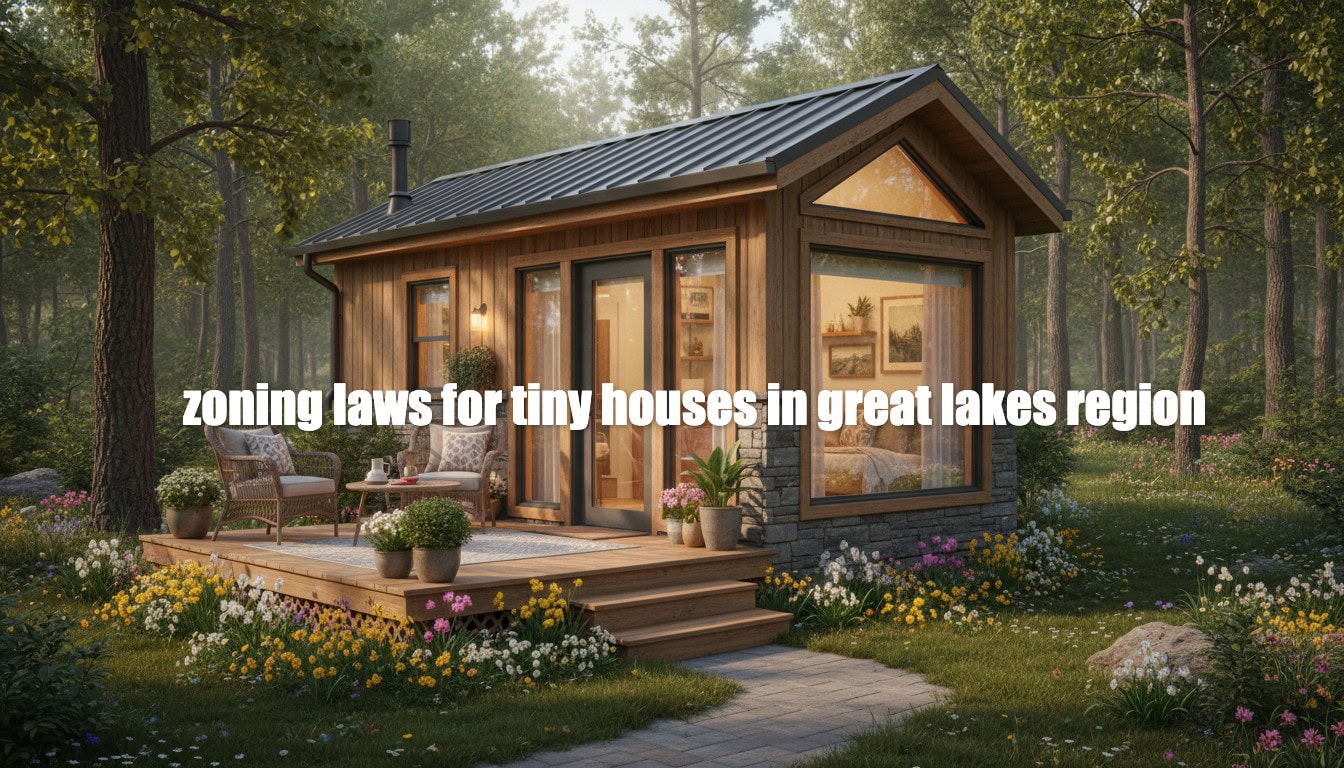
Tiny houses, typically defined as residential structures under 400 square feet, have captured the imagination of many Americans seeking affordable, sustainable, and minimalist living options. As the tiny house movement continues to grow across the Great Lakes region, understanding the complex web of zoning laws has become essential for prospective tiny homeowners.
In our experience, zoning regulations vary dramatically across Michigan, Wisconsin, Minnesota, Illinois, Indiana, Ohio, Pennsylvania, and New York—the states surrounding the Great Lakes. Each state has its own approach to tiny houses, and even within states, counties and municipalities often have wildly different rules.
At Great Lakes Tiny Homes, we’re passionate about helping people understand the regulatory landscape for tiny houses in our region. We’ve researched the various zoning requirements across the Great Lakes states to provide accurate, up-to-date information for those considering joining the tiny house movement.
Types of Tiny Houses and How They’re Classified
1. Tiny Houses on Wheels (THOWs)
Tiny houses on wheels are compact dwellings built on trailer frames with wheels. In most Great Lakes jurisdictions, these structures are classified as:
- Recreational Vehicles (RVs): Many municipalities consider THOWs to be RVs, especially if they’re certified by the Recreation Vehicle Industry Association (RVIA).
- Mobile Homes: Some jurisdictions classify THOWs as mobile homes, subject to regulations for manufactured housing.
This classification often means THOWs cannot be used as permanent residences in residential zones across Michigan, Wisconsin, and other Great Lakes states. Instead, they’re typically restricted to areas zoned for RV parks, campgrounds, or mobile home communities. For example, in Detroit, Michigan, THOWs are generally not permitted as permanent dwellings in residential neighborhoods.
2. Permanent Tiny Houses
Tiny houses built on permanent foundations are usually classified as:
- Single-Family Dwellings: These must comply with local residential building codes, including minimum square footage requirements.
- Cottage Housing: Some progressive communities in the Great Lakes region have created specific zoning for small cottage developments.
Foundation-based tiny houses face significant challenges in many Great Lakes communities due to minimum size requirements. For instance, in many Ohio counties, minimum dwelling sizes range from 700-1,000 square feet, effectively prohibiting tiny houses.
3. Accessory Dwelling Units (ADUs)
ADUs are secondary housing units located on the same property as a main dwelling. They may be:
- Attached ADUs: Connected to the main house (like basement or garage apartments)
- Detached ADUs: Separate structures (often where tiny houses fit in)
ADU regulations have been relaxing across parts of the Great Lakes region, particularly in urban areas facing housing shortages. Cities like Chicago, Illinois and Minneapolis, Minnesota have updated their zoning codes to be more ADU-friendly.
Tiny House Zoning in Northeast States
New York
New York’s approach to tiny houses varies significantly across the state:
- State-level regulations: New York follows the International Residential Code (IRC), which now includes Appendix Q for tiny houses, though local jurisdictions must adopt it separately.
- Tiny house-friendly areas: The Adirondack region and parts of western New York near Lake Erie tend to have more flexible zoning. Ithaca, New York has been particularly progressive.
- ADU regulations: New York City recently expanded ADU permissions, but upstate regulations vary by locality.
Pennsylvania
Pennsylvania’s approach to tiny houses is generally more conservative:
- State-level regulations: Pennsylvania has not adopted the IRC’s Appendix Q statewide, leaving tiny house regulation largely to local jurisdictions.
- Tiny house-friendly areas: Rural counties in northwestern Pennsylvania near Lake Erie tend to have fewer restrictions. Erie County, Pennsylvania has some of the more flexible regulations.
- Minimum square footage: Many Pennsylvania municipalities require 700-900 square feet for permanent dwellings.
Tiny House Zoning in Mid-Atlantic States
Ohio
As the southernmost Great Lake state that borders Lake Erie, Ohio presents a mixed picture for tiny house enthusiasts:
- State-level regulations: Ohio follows the Residential Code of Ohio (RCO), which is based on the International Residential Code but has not widely adopted Appendix Q for tiny houses.
- Tiny house-friendly areas: Rural counties in northeast Ohio tend to have fewer restrictions. Several counties in Ohio have begun allowing tiny houses, particularly in rural areas.
- ADU policies: Cleveland and Columbus have recently updated ADU regulations to be more permissive.
We’ve noticed that Cleveland tiny house builders have been working with local officials to create demonstration projects that may lead to zoning reforms.
Tiny House Communities in the Great Lakes Region
One of the most successful approaches to navigating zoning challenges has been the development of dedicated tiny house communities. These planned developments often work with local authorities to create special zoning designations.
Detroit Tiny Homes
Location: Detroit, Michigan
Zoning solution: This community worked with the city to create a Planned Development (PD) designation specifically for tiny houses between 250-400 square feet.
Community structure: A rent-to-own model helping low-income residents achieve homeownership. The development includes 25 tiny homes with shared community gardens.
This innovative project demonstrates how Detroit tiny house builders and nonprofits can work with municipal authorities to create affordable housing solutions.
Boiceville Cottages
Location: Ithaca, New York
Zoning solution: Developed as a Planned Unit Development (PUD) with special approvals from the Town of Caroline.
Community structure: A rental community of 140 colorful cottages ranging from 300-1,200 square feet with shared amenities.
This established community near the Finger Lakes demonstrates how tiny house developments can become highly desirable housing options when thoughtfully designed.
Circle City Tiny Homes
Location: Indianapolis, Indiana
Zoning solution: Utilized urban infill lots with special variances for reduced minimum square footage.
Community structure: A pocket neighborhood of foundation-based tiny homes between 250-400 square feet with shared green space.
This urban infill project shows how Indianapolis tiny house builders are creating affordable housing options in urban settings.
How to Navigate Zoning Laws for Your Tiny House
Based on our research and experience with tiny house regulations across the Great Lakes region, we’ve developed a step-by-step approach to help you navigate the complex zoning landscape.
1. Research Local Zoning Codes
Before purchasing land or a tiny house, thoroughly investigate the zoning regulations in your target location:
- Start online: Most counties and municipalities now have their zoning ordinances available online.
- Look for: Minimum square footage requirements, definitions of “dwelling unit,” and permitted housing types in different zones.
- Check multiple levels: Regulations may exist at the state, county, township, and municipal levels.
For example, if you’re interested in Grand Rapids, Michigan, you’ll need to check both Kent County and City of Grand Rapids regulations.
2. Questions to Ask Planning Departments
Local planning officials are your best resource for specific information. Call or visit your local planning department and ask:
- “What is the minimum dwelling size in residential zones?”
- “Does your jurisdiction allow accessory dwelling units (ADUs)?”
- “Has your jurisdiction adopted Appendix Q of the International Residential Code for tiny houses?”
- “Are there any zones where smaller dwellings are permitted?”
- “What is the process for requesting a variance if my proposed home doesn’t meet minimum size requirements?”
We recommend documenting who you spoke with and what they told you, as interpretations can sometimes vary between staff members.
3. Understanding Building Codes vs. Zoning Ordinances
In the Great Lakes region, you’ll need to navigate both:
- Zoning ordinances: Determine where you can place your tiny house and how the land can be used.
- Building codes: Establish construction standards for safety and habitability.
For example, Michigan has adopted the 2015 Michigan Residential Code statewide, but zoning is determined locally, creating a complex regulatory landscape.
4. Options for Seeking Variances or Special Permits
If standard zoning doesn’t allow your tiny house, consider these options:
- Variance: A formal request for an exception to zoning requirements, typically requiring a demonstration of “hardship” or special circumstances.
- Conditional Use Permit: Permission to use land in a way not normally allowed in that zone, subject to specific conditions.
- Planned Unit Development (PUD): A special zoning designation that allows more flexible development standards.
In Duluth, Minnesota, several tiny house owners have successfully obtained variances by demonstrating how their projects align with the city’s sustainability goals.
5. Working with Local Officials
Building positive relationships with planning officials can make a significant difference:
- Be transparent: Clearly explain your plans rather than trying to fly under the radar.
- Educate respectfully: Many officials are still unfamiliar with tiny houses—bring examples of successful projects elsewhere.
- Propose solutions: Come prepared with suggestions for how your tiny house can meet the intent of regulations, if not the letter.
- Involve professionals: Working with local architects, builders, or zoning consultants familiar with the jurisdiction can help navigate the process.
6. Common Workarounds
If traditional pathways aren’t available, consider these alternatives that have worked in various Great Lakes communities:
- RV certification: For tiny houses on wheels, RVIA certification can allow placement in areas zoned for RVs.
- Agricultural exemptions: Some rural areas in Michigan, Wisconsin, and Minnesota have agricultural zoning with fewer restrictions on additional structures.
- Join existing communities: Established tiny house communities have already navigated zoning hurdles.
Future Trends in Great Lakes Tiny House Zoning
As we monitor the evolving regulatory landscape across the Great Lakes region, we’re seeing several promising trends that may make tiny house living more accessible in the coming years.
States Considering Tiny House-Friendly Legislation
Several Great Lakes states are exploring statewide approaches to tiny house regulation:
- Michigan: Legislation has been proposed to create a statewide framework for tiny houses, potentially standardizing regulations across municipalities.
- Minnesota: The state is considering amendments to its residential building code to better accommodate tiny houses.
- Wisconsin: State lawmakers have begun exploring tiny house legislation focused on affordable housing solutions, particularly in rural areas.
These initiatives suggest a growing recognition of tiny houses as a legitimate housing option. For example, several Wisconsin counties are already working with state officials to develop model tiny house ordinances.
Impact of Housing Shortages on Zoning Flexibility
The affordable housing crisis is driving regulatory change across the Great Lakes region:
- Urban areas: Cities like Chicago, Detroit, and Minneapolis have begun relaxing ADU restrictions specifically to address housing shortages.
- Rural communities: Smaller towns facing population decline are increasingly open to innovative housing solutions, including tiny houses.
- Workforce housing: Tourist-dependent communities around the Great Lakes are exploring tiny house developments as solutions for seasonal workforce housing.
Growing Acceptance of ADUs
Accessory Dwelling Units represent one of the most promising pathways for tiny houses:
- Expanding permissions: Cities across the Great Lakes region are increasingly permitting ADUs, including Chicago, Minneapolis, Detroit, and Cleveland.
- Simplified processes: Many jurisdictions are streamlining permitting for ADUs, reducing barriers to tiny house placement.
- Pre-approved designs: Some municipalities are creating pre-approved ADU designs, potentially including tiny house models.
This trend is particularly strong in university towns across the region, such as Ann Arbor, Michigan and Madison, Wisconsin, where housing pressures are acute.
Advocacy Groups and Their Impact
Organized advocacy is driving regulatory change:
- Regional tiny house associations: Groups like the Great Lakes Tiny House Association are working with officials across the region to develop model ordinances.
- Housing advocacy coalitions: Broader affordable housing coalitions are increasingly including tiny houses in their policy recommendations.
- Builder associations: Some Ohio tiny house builders and others across the region have formed associations to advocate for consistent regulations.
Conclusion: Making Your Tiny House Dream a Reality
Throughout this exploration of tiny house zoning in the Great Lakes region, we’ve uncovered both challenges and opportunities. While navigating the complex regulatory landscape can seem daunting, we’ve seen that with persistence, research, and strategic planning, legal tiny house living is increasingly possible across the region.
The key insights we’ve gathered include:
- Classification matters: How your tiny house is classified dramatically affects where you can legally place it.
- Regional variations: Regulations vary not just between states but between counties and municipalities within the same state.
- Promising trends: ADU reforms, affordable housing initiatives, and growing environmental concerns are creating more openings for tiny houses.
- Community approaches: Established tiny house communities have successfully navigated zoning challenges and offer models for future developments.
For those serious about pursuing tiny house living in the Great Lakes region, we recommend a methodical approach:
- Research thoroughly before purchasing land or a tiny house
- Build relationships with local planning officials
- Consider joining or supporting advocacy organizations
- Explore existing tiny house communities as a simpler entry point
- Be prepared to educate others about the benefits of tiny houses
The tiny house movement represents more than just a housing trend—it embodies a shift toward more sustainable, affordable, and intentional living. As housing costs continue to rise across the Great Lakes region and environmental concerns grow, tiny houses offer a compelling alternative that more communities are beginning to embrace.
Frequently Asked Questions About Tiny House Zoning
What is the minimum size requirement for a tiny house in the Great Lakes region?
Minimum square footage requirements vary widely across the Great Lakes region. In many municipalities, minimum requirements for permanent dwellings range from 700-1,000 square feet, effectively prohibiting tiny houses. However, we’re seeing positive changes:
- IRC Appendix Q adoption: Several Great Lakes states have adopted the International Residential Code’s Appendix Q, which creates standards for houses as small as 400 square feet.
- Progressive municipalities: Cities like Grand Rapids, Michigan and Duluth, Minnesota have reduced minimum requirements to 200-400 square feet in certain zones.
- ADU exceptions: Many jurisdictions that allow ADUs have lower minimum size requirements for these structures, sometimes as low as 150-200 square feet.
Is it easier to get approval for a tiny house on wheels or on a foundation?
The answer depends largely on where in the Great Lakes region you’re looking to place your tiny house and how you plan to use it:
Tiny Houses on Wheels (THOWs):
- Advantages: THOWs can often be classified as RVs, allowing placement in campgrounds and RV parks. This classification can bypass some building code requirements.
- Challenges: Most residential zones prohibit living in an RV full-time. THOWs typically cannot be financed with traditional mortgages.
Foundation-Based Tiny Houses:
- Advantages: Permanent tiny houses can qualify as legal dwellings, allowing full-time occupancy in residential zones. They can appreciate in value and qualify for traditional financing.
- Challenges: Must comply with all building codes and minimum square footage requirements, which are often prohibitive in many jurisdictions.
Can I place a tiny house as an ADU on my property in the Great Lakes region?
Accessory Dwelling Unit (ADU) regulations vary significantly across Great Lakes states and municipalities, but this pathway is becoming increasingly viable. Typical requirements include:
- Primary dwelling requirement: The property must have an existing primary residence.
- Lot size minimums: Many jurisdictions require minimum lot sizes ranging from 5,000-10,000 square feet to add an ADU.
- Owner-occupancy rules: Many municipalities require the property owner to live in either the primary dwelling or the ADU.
Progressive areas with relaxed ADU regulations:
- Minneapolis, Minnesota has eliminated single-family zoning citywide and created flexible ADU regulations.
- Ann Arbor, Michigan recently updated its ADU ordinance to allow detached units in most residential zones.
- Madison, Wisconsin has streamlined ADU permitting to address housing shortages.
Which Great Lakes states are most tiny house-friendly?
Based on our research and experience, the most tiny house-friendly states in the region are:
1. Michigan
- Why it’s friendly: Michigan has several counties with flexible rural zoning, a growing number of municipalities allowing ADUs, and pioneering tiny house communities like Detroit Tiny Homes.
- Welcoming areas: Detroit, Traverse City, and many Upper Peninsula counties have created pathways for tiny houses.
2. Minnesota
- Why it’s friendly: Minnesota has been progressive with ADU regulations in its major cities and has several rural counties with minimal restrictions.
- Welcoming areas: Minneapolis, Duluth, and counties in the northern part of the state tend to be more accommodating.
3. Wisconsin
- Why it’s friendly: Wisconsin has several counties with minimal square footage requirements and a growing tiny house movement in both rural and urban areas.
- Welcoming areas: Madison, Door County, and the northwestern counties tend to have more flexible regulations.