

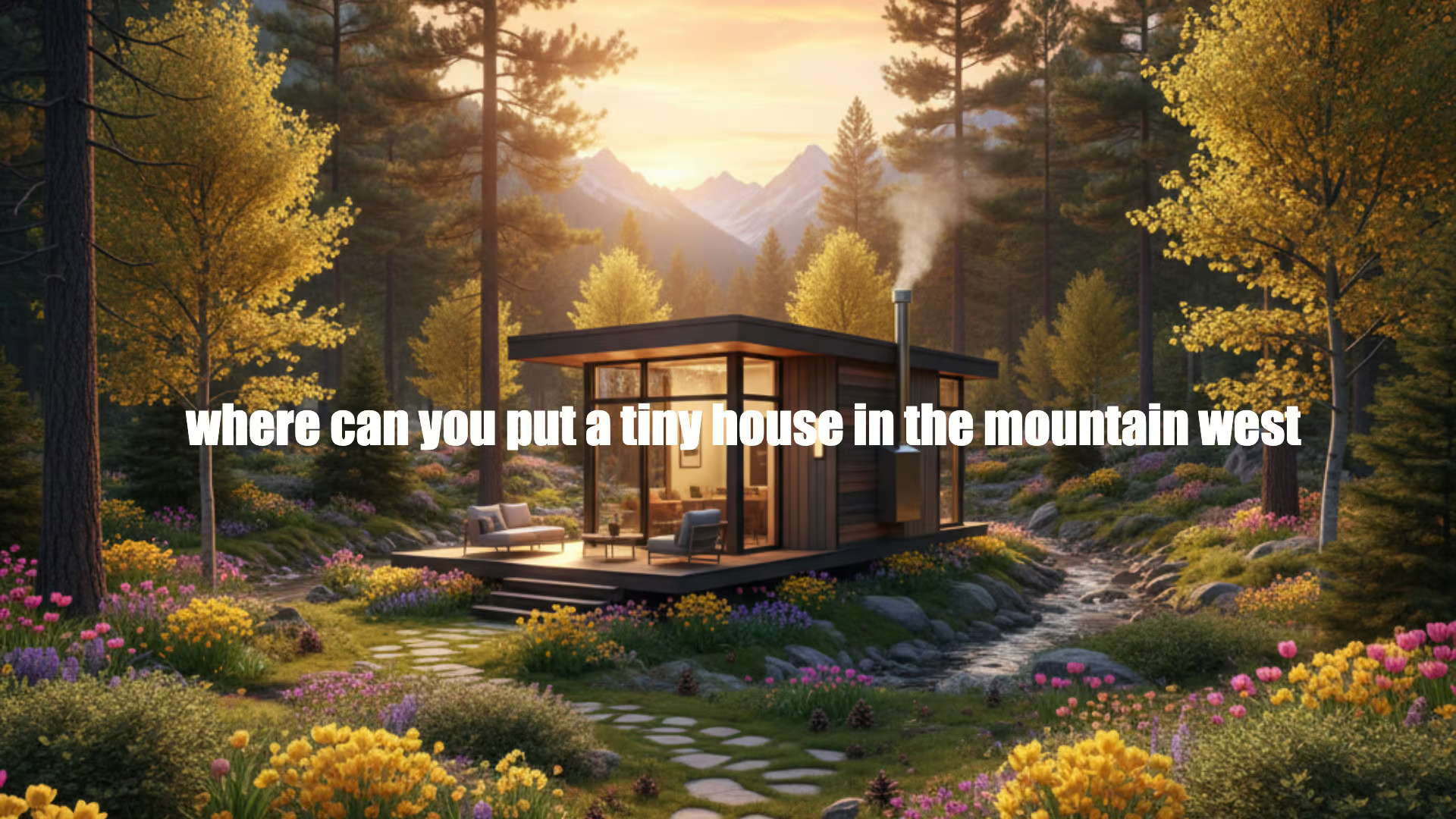
Where Can You Put a Tiny House in the Mountain West? Your Complete Guide
The Mountain West has become a hotbed for the tiny house movement, offering stunning landscapes, affordable land options, and increasingly progressive zoning laws. From the red rocks of Utah to the alpine meadows of Colorado, more people are discovering excellent opportunities for tiny house living.
This comprehensive guide explores where you can legally place your tiny house across six key Mountain West states: Colorado, Utah, Nevada, Arizona, New Mexico, and Wyoming. We’ll address common concerns about legality and zoning while providing practical solutions. Whether you’re seeking established tiny house communities, private land opportunities, or RV park options, we’ll cover everything you need to know.
At Great Lakes Tiny Homes, we understand the unique challenges of tiny house placement in the Mountain West. As a full-service manufacturer of modular and park model homes, we deliver turnkey builds to all 48 lower U.S. states. Our expertise includes both wheeled and foundation-based options, with or without RVIA certification, ensuring we can meet your specific location requirements.
Ready to start your tiny house journey?
Book a call with our experts who have helped hundreds of customers make their tiny home dreams a reality.
Legal Placement Options for Tiny Houses in the Mountain West
The Mountain West offers several viable legal placement options, each with distinct advantages and requirements.
Tiny House Communities and Villages represent the most straightforward option, offering established infrastructure, clear regulations, and supportive environments. They typically provide utilities, community amenities, and simplified permitting processes.
Private Land with Proper Zoning offers the most freedom and privacy. Rural and agricultural zones often allow tiny houses as accessory dwelling units or primary residences, depending on local regulations.
RV Parks That Accept Tiny Homes provide immediate solutions for RVIA-certified units. Many parks in the Mountain West welcome tiny houses, especially those built to RV standards.
Backyard ADUs on Family Property have become increasingly popular as states update their accessory dwelling unit laws.
Rural Agricultural Land often provides the most affordable placement option. Many agricultural zones permit tiny houses as farm worker housing or caretaker residences.
Temporary Camping Permits can provide short-term solutions while establishing permanent placement.
State-by-State Tiny House Regulations in the Mountain West
Each Mountain West state has developed its own approach to tiny house regulation, creating a navigable landscape for prospective owners.
Colorado Tiny House Regulations
Colorado leads the Mountain West in tiny house acceptance. The state requires a minimum of 120 square feet for permanent residences. Foundation-based tiny houses must meet International Residential Code standards, while wheeled units can qualify under RV regulations with proper certification. Permits typically range from $500-2,000. Explore the best tiny home communities in Colorado for established placement options.
Utah Tiny House Regulations
Utah has embraced tiny houses through progressive ADU legislation and rural placement opportunities. The state requires a minimum of 100 square feet for sleeping areas and allows tiny houses on wheels in many RV-designated areas. Building permits typically cost $300-1,500. Learn which counties in Utah allow tiny houses to find the best placement opportunities.
Nevada Tiny House Regulations
Nevada offers significant opportunities for tiny house placement, particularly in rural areas. The state has no statewide minimum size requirement, leaving regulations to local jurisdictions. Many counties allow tiny houses on agricultural land with minimal restrictions. Permit costs vary from $200 in rural areas to $2,000 in urban zones.
Arizona Tiny House Regulations
Arizona’s warm climate and affordable land make it attractive for tiny house living. The state requires a minimum of 200 square feet for permanent residences in most areas. RV parks throughout the state welcome RVIA-certified tiny houses. Find tiny houses for sale in Arizona to see available options.
New Mexico Tiny House Regulations
New Mexico provides excellent opportunities for off-grid tiny house living with minimal regulatory barriers in rural areas. The state has no minimum size requirement for rural residential structures, and many counties allow tiny houses on agricultural land. Permit costs are generally under $500 in rural counties.
Wyoming Tiny House Regulations
Wyoming offers some of the most permissive tiny house regulations in the Mountain West. Many counties have no minimum size requirements and allow tiny houses on agricultural and residential land. Permit costs typically range $200-800.
Best Tiny House Communities in the Mountain West
The Mountain West hosts innovative and well-established tiny house communities offering turnkey solutions for community-oriented living.
WeeCasa Tiny House Resort – Lyons, Colorado
Located in the Rocky Mountain foothills, WeeCasa offers both short-term rentals and long-term community living. The community features 22 tiny houses with full utilities, community gardens, and mountain views. Monthly lot rental ranges from $800-1,200, including utilities and amenities.
Escalante Village – Durango, Colorado
This master-planned community offers 200 lots with full utilities near Mesa Verde National Park. Residents enjoy hiking trails, community gardens, and a clubhouse. Lot rental starts at $650 monthly, with purchase options available.
Beloved Community Village – Moab, Utah
This intentional community near Arches National Park focuses on sustainable living and community cooperation. Monthly costs range from $400-600, with work-trade opportunities available.
Desert Bloom Tiny House Community – Phoenix, Arizona
Designed for desert climate, this community offers 50 lots with desert landscaping and solar-ready infrastructure. Monthly lot rental ranges from $500-750, including utilities and amenities like a pool and community center.
Placing Your Tiny House on Private Land
Placing your tiny house on private land offers the greatest freedom and long-term stability but requires careful navigation of zoning laws and infrastructure requirements.
Zoning Verification is your first critical step. Contact local planning departments to verify compliance with current zoning. Request written confirmation to avoid future complications.
Utility Connections represent significant considerations. Water connections may require drilling wells ($3,000-15,000) or municipal connections ($1,000-5,000). Electrical service typically costs $1,000-10,000 depending on distance from existing lines.
Septic System Requirements apply to most rural placements. Conventional systems cost $3,000-8,000, while alternative systems may cost $1,500-5,000. Some areas allow composting toilets and greywater systems.
Building Permits are required in most jurisdictions. Permit costs range from $200 in rural counties to $2,000 in urban areas. The process typically takes 2-8 weeks.
Understanding Zoning Laws and Permit Requirements
Successfully navigating zoning laws requires understanding the regulatory framework and building relationships with local officials.
Residential Zoning typically allows single-family homes but may have minimum size requirements. Many jurisdictions now allow tiny houses as accessory dwelling units (ADUs).
Agricultural Zoning often provides the best opportunities, allowing farm worker housing or caretaker residences with minimal size requirements.
RVIA Certification Benefits cannot be overstated for wheeled tiny houses. RVIA-certified units are legally considered recreational vehicles, allowing placement in RV parks without building permits.
Foundation vs. Wheels Implications significantly impact regulatory requirements. Wheeled tiny houses are personal property subject to vehicle regulations, while foundation-based units are real property subject to building codes.
RV Parks and Campgrounds That Accept Tiny Houses
RV parks provide immediate placement solutions for RVIA-certified tiny houses with established infrastructure.
Arizona Options include Desert Trails RV Park in Tucson, welcoming tiny houses for extended stays. Monthly rates range from $400-600, including utilities and amenities.
Colorado Opportunities feature Tiger Run RV Resort near Breckenridge, accepting tiny houses year-round with monthly rates from $800-1,200.
Utah Locations include Moab Valley RV Resort, welcoming tiny houses with monthly rates from $500-800, providing access to national parks.
Nevada Parks such as Las Vegas RV Resort offer year-round accommodation with monthly rates from $600-900.
Costs and Financial Considerations for Tiny House Placement
Understanding the full cost structure helps you budget effectively and choose the most economical option.
Land Purchase Costs vary dramatically. Rural land in Wyoming or New Mexico may cost $1,000-5,000 per acre, while Colorado mountain property can exceed $50,000 per acre.
Land Rental Options provide lower upfront costs. Community lots range from $200-1,200 monthly, while private land rental typically costs $100-500 monthly.
Utility Connection Costs can be substantial. Budget $5,000-20,000 for complete utility installation in rural areas.
At Great Lakes Tiny Homes, we offer a variety of park models, cabins, and tiny homes on wheels designed for comfort and style. Prices start around $61,000 for smaller models like The Pinnacle Tiny House on Wheels, while larger park models like the A-Frame Luxe start at about $155,000. All homes can be customized with finishes and features to fit your lifestyle.
View our portfolio of completed projects to see the quality and variety of our work.
Ready to discuss your tiny house investment?
Book a call with our experts who have helped hundreds of customers make their tiny home dreams a reality.
Utilities and Infrastructure Requirements
Proper utility planning is essential for comfortable and legal tiny house living in the Mountain West’s diverse environments.
Water Connections include municipal service ($1,000-5,000 to connect, $30-100 monthly), well water ($3,000-15,000 drilling costs), or hauled water systems ($50-200 monthly).
Electrical Hookups vary significantly. Connection to existing service costs $1,000-3,000, while extending service to remote locations can cost $5,000-15,000. Solar power systems range from $8,000-20,000 but provide energy independence.
Sewage Systems include conventional septic ($3,000-8,000), composting toilets ($1,000-3,000), or greywater systems for reduced environmental impact.
Mountain West Climate Considerations for Tiny House Living
The Mountain West’s diverse climate zones present both challenges and opportunities requiring careful planning.
Extreme Temperature Management is crucial. Winter temperatures can drop below -20°F in mountains, while summer temperatures exceed 110°F in deserts. Superior insulation and efficient heating/cooling systems are essential.
Heating Costs in northern locations include propane ($100-300 monthly), electric ($150-400 monthly), or wood stoves ($50-150 monthly in fuel costs).
Solar Power Benefits are exceptional throughout the region. Most areas receive 250-300 sunny days annually. A 4-6 kW solar system can provide complete energy independence with 6-10 year payback periods.
Common Challenges and How to Overcome Them
Several common challenges require proactive solutions and careful planning.
Navigating Complex Zoning Laws
Contact local planning departments early and request written confirmation of zoning compliance. Many jurisdictions are updating regulations to accommodate tiny houses.
Finding Suitable Land or Communities
Network with local tiny house groups, attend events, and connect with specialized real estate agents. Drive rural areas to identify potential opportunities.
Meeting Building Code Requirements
Work with designers familiar with tiny house codes and consider RVIA certification for maximum flexibility. The IRC Appendix Q provides a framework for code compliance.
Securing Financing
RV loans work for RVIA-certified units, personal loans can finance smaller projects, and some credit unions offer tiny house-specific products.
Frequently Asked Questions About Tiny House Placement in the Mountain West
These common questions address frequent concerns about Mountain West tiny house placement.
Can I live in a tiny house year-round in the Mountain West?
Yes, with proper planning and climate-appropriate design. Mountain areas require excellent insulation and reliable heating, while desert areas need efficient cooling and water conservation.
What’s the difference between tiny houses and RVs legally?
RVIA-certified tiny houses are legally recreational vehicles and can be placed in RV parks without building permits. Non-certified tiny houses are typically considered structures subject to building codes.
How much does it cost to place a tiny house?
Community lots range from $200-1,200 monthly. Private land placement can cost $5,000-25,000 for utilities plus land costs. RV parks cost $300-900 monthly.
Do I need special insurance?
RVIA-certified units typically qualify for RV insurance ($300-800 annually). Foundation-based tiny houses may need homeowner’s or specialized insurance ($400-1,200 annually).
Your Next Steps to Tiny House Living in the Mountain West
The Mountain West offers exceptional opportunities for tiny house living, from established communities to vast rural landscapes. Your journey begins with research and planning.
Start by identifying preferred states and regions, considering climate, cost of living, and proximity to work or family. Contact local planning departments to understand regulations. Visit potential communities and land options.
Consider your long-term goals when choosing placement options. Communities offer immediate solutions and support networks but higher costs. Private land provides freedom and stability but requires more investment. RV parks offer flexibility but may have stay restrictions.
Financial planning is crucial. Budget for all placement costs including land, utilities, permits, and ongoing expenses. Consider financing options early, as tiny house financing differs from traditional home loans.
Ready to take the next step?
Book a call with our experts who have helped hundreds of customers make their tiny home dreams a reality.
How Great Lakes Tiny Homes Supports Mountain West Placement
Successfully placing a tiny house in the Mountain West requires working with experienced professionals who understand the unique requirements of this diverse region.
At Great Lakes Tiny Homes, we’ve developed deep expertise in Mountain West placement requirements. Our team understands building codes across Colorado, Utah, Nevada, Arizona, New Mexico, and Wyoming, ensuring your tiny house meets all local requirements.
We work with you to determine whether wheeled or foundation-based design best serves your needs, considering local zoning laws, climate conditions, and long-term plans. Our RVIA-certified options provide maximum placement flexibility, while foundation-based designs offer permanent solutions.
The Mountain West’s extreme climate variations require specialized design considerations we’ve mastered through experience. Our homes handle everything from Wyoming’s harsh winters to Arizona’s intense summer heat, incorporating appropriate insulation, efficient systems, and climate-specific features.
Our support extends beyond manufacturing to include placement guidance, permit processes, and connecting you with local resources. This experience allows us to anticipate challenges and provide solutions that save time, money, and frustration.
Ready to start your Mountain West tiny house journey?
Book a call with our experts who have helped hundreds of customers make their tiny home dreams a reality.