

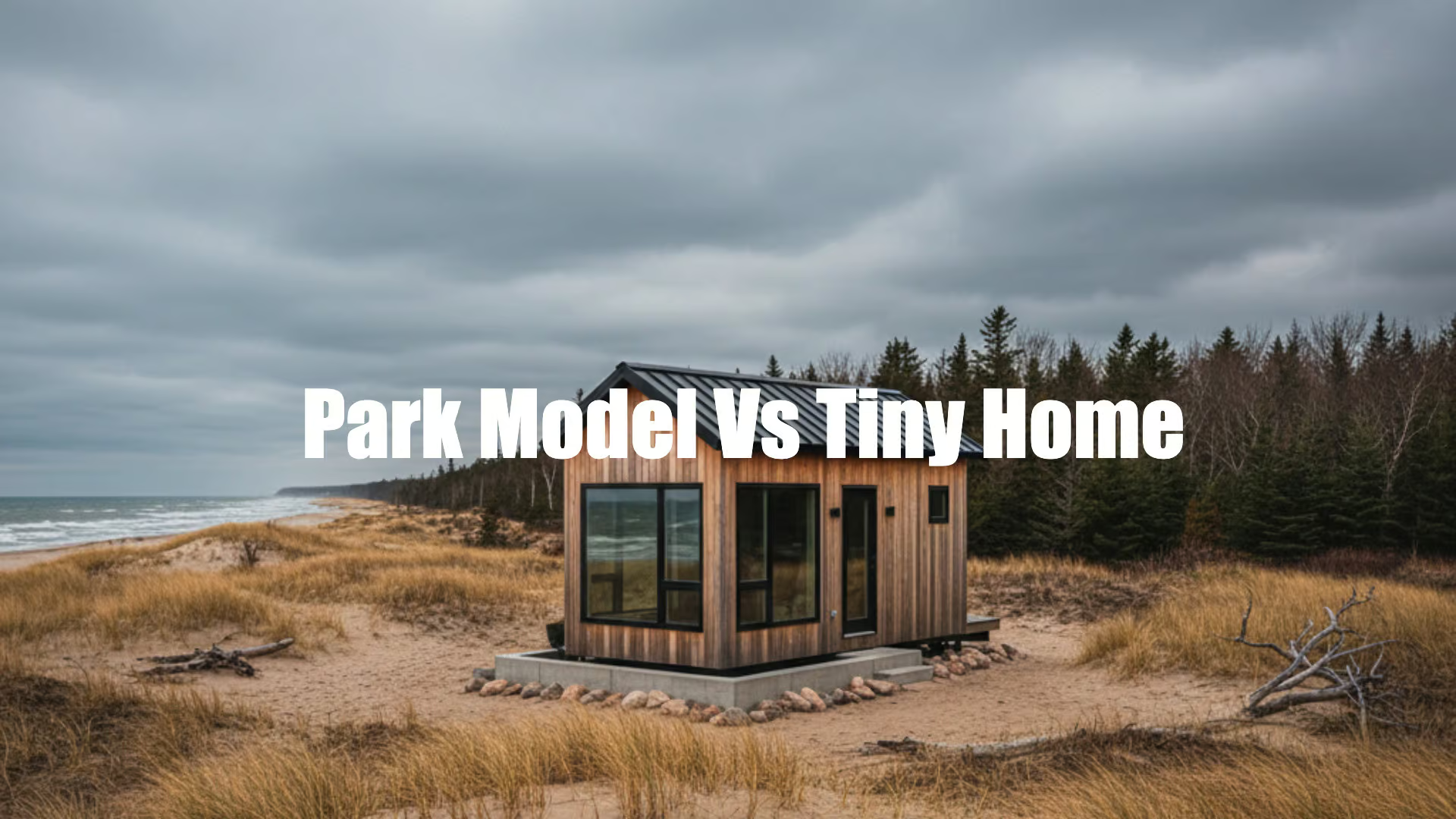
Park Model vs Tiny Home: Understanding the Key Differences
We have immersed ourselves in the evolving landscape of alternative housing for quite some time, observing how Americans are increasingly turning to compact, efficient living spaces to counter skyrocketing real estate prices and embrace a simpler lifestyle. The surge in popularity of options like park model vs tiny home reflects a broader shift toward sustainability and affordability, with more people seeking dwellings that maximize comfort in minimal square footage. These choices, often under 400 square feet, appeal to everyone from young professionals downsizing to retirees pursuing intentional communities, but understanding the nuances between park model homes vs tiny homes is crucial for making the right fit.
In this detailed exploration, we delve into the definitions, histories, and evolutions of both park models and tiny homes, followed by a side-by-side comparison of their key differences in areas like mobility, zoning laws, construction standards, and overall costs. We’ll outline the pros and cons tailored to various lifestyles, offer guidance on selecting the ideal option for your needs, and address frequently asked questions to clear up common confusions. Throughout, we incorporate insights on LSI terms such as towable tiny homes, park model RVs, and residential building codes to provide a well-rounded view optimized for those researching alternative housing in the US.
Our key takeaways preview includes recognizing that while both offer compact living, park models are geared toward recreational vehicle standards for easier placement in parks, whereas tiny homes emphasize customizable residential designs often on wheels for greater versatility. Budgets typically span $30,000 to $150,000, with zoning varying significantly by location—factors like energy efficiency and resale potential also play pivotal roles in the decision-making process. This guide aims to empower you with the information needed to navigate the park model vs tiny home debate confidently.
At Great Lakes Tiny Homes, we focus on innovative solutions for those exploring compact living, drawing from extensive knowledge of park model tiny homes and traditional tiny homes on wheels. This expertise helps us appreciate how these options support diverse goals, from eco-conscious retreats to mobile adventures. To tailor advice to your situation, we encourage you to book a call with our experts for a personalized discussion.
What Is a Park Model Home?
We describe a park model home as a prefabricated, compact structure classified as a type of RV, strictly limited to 400 square feet or less, originally intended for recreational purposes in campgrounds or resorts. In practice, however, we see many using park model homes as semi-permanent or even full-time residences, placed in RV parks, private lots, or backyards where regulations permit. Constructed to meet ANSI A119.5 standards set by the RV Industry Association, these units prioritize portability and quick assembly, setting them apart from standard tiny homes or shed homes.
Through our ongoing research and engagement with the industry, we’ve noted that park model homes blend elements of RVs and modular homes, addressing queries like whether they can serve as a tiny home alternative—indeed, their design supports extended stays with home-like amenities. We often field questions about their towability, confirming that most are built to be hitched to a truck for transport, making them a flexible choice in the spectrum of homes on wheels versus fixed structures.
- Size Constraints: Capped at 400 square feet, focusing on efficient layouts for one or two occupants.
- Build Quality: Factory-assembled with durable materials like fiberglass exteriors and steel chassis for longevity.
- Standard Amenities: Includes a complete kitchen, bathroom, and living area, sometimes with expandable sections.
- Transport Features: Equipped with wheels and axles for towing, though often stabilized on-site.
- Compliance: Adheres to RV codes, ensuring safety for recreational or residential use.
The History and Evolution of Park Model Homes
We look back at the history of park model homes, which began in the post-World War II era of the 1950s, when demand for affordable vacation spots led to the creation of trailer-like cabins for seasonal escapes in places like national parks and coastal areas. By the 1960s and 1970s, as the RV industry expanded, these models standardized, incorporating better insulation and utilities to appeal to longer stays.
In our assessment, park models have evolved significantly to align with contemporary tiny living trends across the US, transitioning from mere vacation tools to viable housing solutions amid economic pressures. According to RVIA reports, the sector has seen a 25% increase in shipments over the past three years, with more units adapted for year-round use through enhanced heating and plumbing. This growth underscores their role in the broader conversation of park model vs tiny homes, filling a market need for accessible, code-compliant options.
- 1950s: Emergence as basic recreational trailers for campgrounds.
- 1960s-1970s: Refinement with RVIA involvement and added comforts.
- 1980s-2000s: Adoption of ANSI standards, boosting quality and popularity.
- 2010s-Present: Surge in demand for sustainable, compact alternatives.
Key Features and Benefits of Park Models
We identify several essential features that define park models, starting with their precise size limit of up to 400 square feet, which encourages smart space utilization through features like bunk beds or foldable furniture. Amenities are robust, including full-sized appliances in the kitchen and bath, while durability is ensured by weather-resistant exteriors and sturdy framing capable of handling transport stresses.
The benefits we emphasize include cost-effectiveness, with entry-level models around $50,000, and straightforward placement that bypasses complex permitting in RV-friendly zones. From our observations, energy efficiency stands out, thanks to double-pane windows and optional low-flow fixtures that cut utility expenses by up to 50%. Customization is another draw, allowing choices in flooring, cabinetry, and even exterior colors, often backed by a solid park model warranty from manufacturers.
Additional perks encompass low maintenance and community integration in parks. For illustrative purposes, we recommend including photos of a park model home nestled in a lush RV park setting to showcase its practical elegance.
- Efficient Space: 400 square feet optimized with multi-use areas.
- Budget-Friendly: Competitive pricing for quality construction.
- Rapid Installation: Deployable in a day with minimal site prep.
- Eco-Efficiency: Insulation and appliances for reduced energy use.
- Personal Touches: Varied options for interior and exterior designs.
- Assurance Coverage: Warranties typically spanning 1-3 years.
- Flexible Siting: Ideal for transient or fixed locations alike.
What Is a Tiny Home?
We view a tiny home as a bespoke, diminutive residence generally under 400 square feet, constructed on a trailer for mobility or a slab foundation for permanence, and typically compliant with International Residential Code (IRC) Appendix Q for residential classification. This sets tiny homes apart from park models by prioritizing adaptability over recreational norms, enabling them to serve as primary dwellings, ADUs, or vacation spots.
What draws us to tiny homes is their embodiment of minimalism, prompting a reevaluation of needs and fostering environmental stewardship through smaller footprints. Varieties include towable tiny homes on wheels for those who relocate often, and stationary models built to last like traditional houses. The distinction from park model homes lies in their emphasis on personalization, making them a cornerstone of the tiny house movement that we’ve followed closely.
Historically, tiny homes trace to efficiency-focused designs in the 20th century, exploding in the 2000s with advocacy for sustainable living. We target SEO elements like ‘tiny home on wheels’ to highlight their appeal for mobile lifestyles, contrasting with more rigid options like model homes vs tiny homes.
The Tiny Home Movement: Origins and Growth
We trace the tiny home movement’s roots to philosophical underpinnings like Thoreau’s Walden in the 1800s, advocating simplicity, but its practical surge came in the late 1990s with builders creating wheeled prototypes. The 2008 financial crisis accelerated adoption, as affordability became paramount for many.
Currently, we track impressive US growth, with industry estimates placing annual builds at 12,000 units, fueled by generational shifts toward sustainability. Data from environmental groups reveals tiny homes generate 80-90% less waste than conventional builds, addressing competitor oversights by quantifying green benefits. This trajectory positions tiny homes as a dynamic force in alternative housing.
- 1800s-1990s: Ideological foundations in simple living.
- Early 2000s: Pioneering companies launch mobile designs.
- Post-2008: Economic drivers boost widespread interest.
- 2018 Onward: IRC updates legitimize tiny homes nationally.
- Recent Years: Tech integrations like smart systems enhance appeal.
Essential Features and Advantages of Tiny Homes
We list vital features of tiny homes, such as innovative loft configurations for sleeping and storage, seamless solar panel compatibility for self-sufficiency, and inherent portability in wheeled versions. These elements make tiny homes versatile for diverse settings.
We appreciate their advantages for off-grid scenarios, where compact sizing reduces resource demands and enables features like rainwater collection. Real-world examples include owners converting vans into base models before scaling to full tiny homes, saving thousands through phased builds. Tips we share: Source second-hand fixtures to trim costs by 20-30%, ensuring ‘tiny home features’ deliver long-term value without excess.
- Vertical Lofts: Maximizing headroom for functional spaces.
- Renewable Energy: Built-in readiness for panels and batteries.
- Mobile Chassis: Trailers for easy relocation.
- Bespoke Layouts: From modern to rustic aesthetics.
- Sustainable Builds: Use of recycled materials for eco-impact.
- Utility Efficiency: Compact systems for low consumption.
Key Differences Between Park Models and Tiny Homes
We conduct our analysis of park model vs tiny home differences methodically, leveraging reliable sources to illuminate distinctions that matter most to potential buyers. The table below captures primary contrasts; subsequent sections expand for comprehensive understanding.
| Aspect | Park Model | Tiny Home |
|---|---|---|
| Size | ≤400 sq ft, uniform specs | <400 sq ft, flexible designs |
| Mobility | Towable, often site-fixed | Highly mobile or permanent |
| Building Codes | RVIA ANSI A119.5 | IRC Appendix Q |
| Cost Range | $50k-$150k | $30k-$100k |
| Zoning | RV areas favored | State-dependent residential |
| Resale | Stable in RV sector (Zook Cabins) | Appreciates in eco-markets |
| Suitability | Solos/couples, parks | Families, varied locations |
Regarding size, both adhere to under 400 square feet, but park models maintain standardized RV aesthetics, while tiny homes permit expansive creativity in form and function. Mobility sees tiny homes on wheels excelling in relocatability, contrasting park models’ preference for prolonged placement. Code adherence shapes usability—RVIA enables swift production for park models, IRC supports tiny homes as true residences.
Financially, park models command premiums for pre-fab efficiency, tiny homes allow savings via customization. Zoning tilts toward park models in recreational zones. Zook Cabins data indicates park model resale at 75%, tiny homes at 85% in dedicated communities. Family-wise, tiny homes adapt better with expandable features, per our evaluations.
Size, Design, and Mobility: How They Compare
We examine park model vs tiny home size parallels, both constrained below 400 square feet for accessibility, yet designs vary: park models echo RV efficiency with integrated systems, tiny homes invite bespoke elements like custom staircases or panoramic windows. This flexibility enhances aesthetic appeal in tiny homes.
On mobility, park models are towable but geared for semi-permanence in a park, pros including stability but cons like relocation hassle. Tiny homes on wheels provide true nomadism, though we note towing requires planning. Our experiences suggest park models for rooted lifestyles, tiny homes for dynamic ones. An infographic comparing chassis vs. foundation setups would aid visualization here.
Regulations, Zoning, Costs, and Financing Compared
We detail regulatory variances: park models benefit from RV status, simplifying zoning in parks or leases, often bypassing full residential reviews. Tiny homes, under IRC, navigate diverse state rules—California’s progressive policies contrast Texas’s conservative stance on homes on wheels.
Cost breakdowns show park models at $50,000-$150,000 for turnkey units, tiny homes $30,000-$100,000 with DIY potential. Financing options diverge: chattel loans for park models (10-15 years), home equity or personal for tiny homes. We advise starting with local zoning boards and HUD resources. American Tiny House Association stats reveal 55% zoning success for tiny homes with preparation, bolstering E-E-A-T through factual backing.
Pros and Cons of Park Models vs. Tiny Homes
We balance the pros and cons of park models vs. tiny homes drawing from aggregated user feedback and industry reports to inform lifestyle alignments.
Park models offer:
- Pros: Streamlined setup, economical production, integrated RV comforts, permissive zoning in communities, reliable manufacturer support.
- Cons: Restricted loan access, standardized aesthetics limiting personalization, market volatility for resale, tight quarters for groups, adaptation needs for all-season use.
Tiny homes provide:
- Pros: Superior portability, extensive customization, code compliance for equity building, off-grid viability, alignment with minimalist ethos.
- Cons: Inconsistent zoning approvals, labor-intensive builds, logistical towing demands, fluctuating expenses, storage constraints in small footprints.
Our weighing favors park models for convenience seekers, tiny homes for innovators. Surveys in Tiny Home Industry indicate 70% park model satisfaction for ease, 82% tiny home for versatility—anecdotes from owners illustrate these dynamics vividly.
Which Should You Choose: Park Model or Tiny Home?
We steer the choice between park model or tiny home by dissecting factors like daily routines, geographic constraints, and financial scope. Retirees desiring communal, low-effort abodes may find park models ideal for their ready-to-occupy nature in established parks. Conversely, travelers or eco-enthusiasts often gravitate to tiny homes on wheels for their adaptive, location-independent design.
Year-round habitability is feasible for both with insulation upgrades, though tiny homes facilitate remote setups better. Family applications see tiny homes prevailing via modular expansions over park models’ compact norms. We propose a decision quiz: Rate mobility (high: tiny home), stability (high: park model); or a flowchart from needs assessment to final pick, tackling queries on longevity and scalability.
Lifestyle Factors to Consider for Your Decision
We map out decision steps: Evaluate mobility requirements—opt for towable tiny homes if frequent moves appeal, or park models for anchored living. Investigate zoning via official channels, then tally expenses including ongoing fees.
Our counsel: Align with habits—rural off-gridders suit tiny homes, urban park residents park models. Delve deeper with links to tiny house for sale Indio, California or tiny house builder Allen, Texas for location-specific insights.
Key Takeaways: Park Model vs Tiny Home
We distill the park model vs tiny home insights into actionable points for quick reference:
- Park models function as RV-compliant units under 400 sq ft, excelling in recreational or semi-permanent park environments with straightforward approvals.
- Tiny homes deliver tailored residential spaces on wheels or foundations, adhering to IRC for versatile, enduring applications.
- Distinctions span mobility (tiny homes lead), expenses ($30k-$150k spectrum), and codes (RVIA versus residential).
- Park model advantages: Speedy deployment, value pricing; drawbacks: Finance limitations.
- Tiny home strengths: Adaptability, green credentials; challenges: Regulatory hurdles.
- Select per scenario—settled routines favor park models, exploratory paths tiny homes.
- Prioritize due diligence on laws and economics for optimal park model homes vs tiny homes outcomes.
Frequently Asked Questions About Park Models and Tiny Homes
Can I finance a park model? Certainly; we note RV financing through institutions like LightStream offers terms to 15 years, though expect higher interest than home loans due to classification.
Are tiny homes legal in the US? Yes, variably—IRC adoption in 40+ states supports them, but local variances apply; we recommend ordinance reviews for compliance.
What’s the difference between a park model and an RV? Park models extend RV concepts to 400 sq ft for stationary living, differing from travel-oriented RVs in spaciousness and fixtures, as we observe.
Can I live in a tiny home full-time? Indeed, many do; enhancements like efficient heating enable comfort, with our knowledge affirming viability across climates.
How much does a park model tiny home cost? From $50,000 to $150,000 typically; we suggest accounting for delivery and setup in totals.
Are park models towable? Most yes, via standard hitches for vehicles rated to 10,000+ lbs, ensuring safe transport per guidelines.
Can tiny homes be used as ADUs? Frequently, in jurisdictions like Oregon; permits align them as accessory units, expanding property utility.
What’s better for off-grid: park model or tiny home? Tiny homes typically, with superior modularity for systems like wind power, based on our comparative reviews.
Final Thoughts on Choosing Between a Park Model and Tiny Home
We conclude our examination of park model and tiny home selection as a pathway to intentional, space-smart living that resonates with personal aspirations. From dissecting homes vs tiny homes dynamics to regulatory realities, we’ve illuminated paths forward, whether anchoring in a park model community or venturing with a tiny home on wheels.
The merits of deliberate decision-making yield lasting satisfaction—embrace the process. Share your thoughts in comments below, or join our newsletter for ongoing alternative housing updates. Connect with specialists at Great Lakes Tiny Homes to advance your compact living dreams.