
Discovering Tiny Houses for Sale in the Southwest: Your Complete Guide
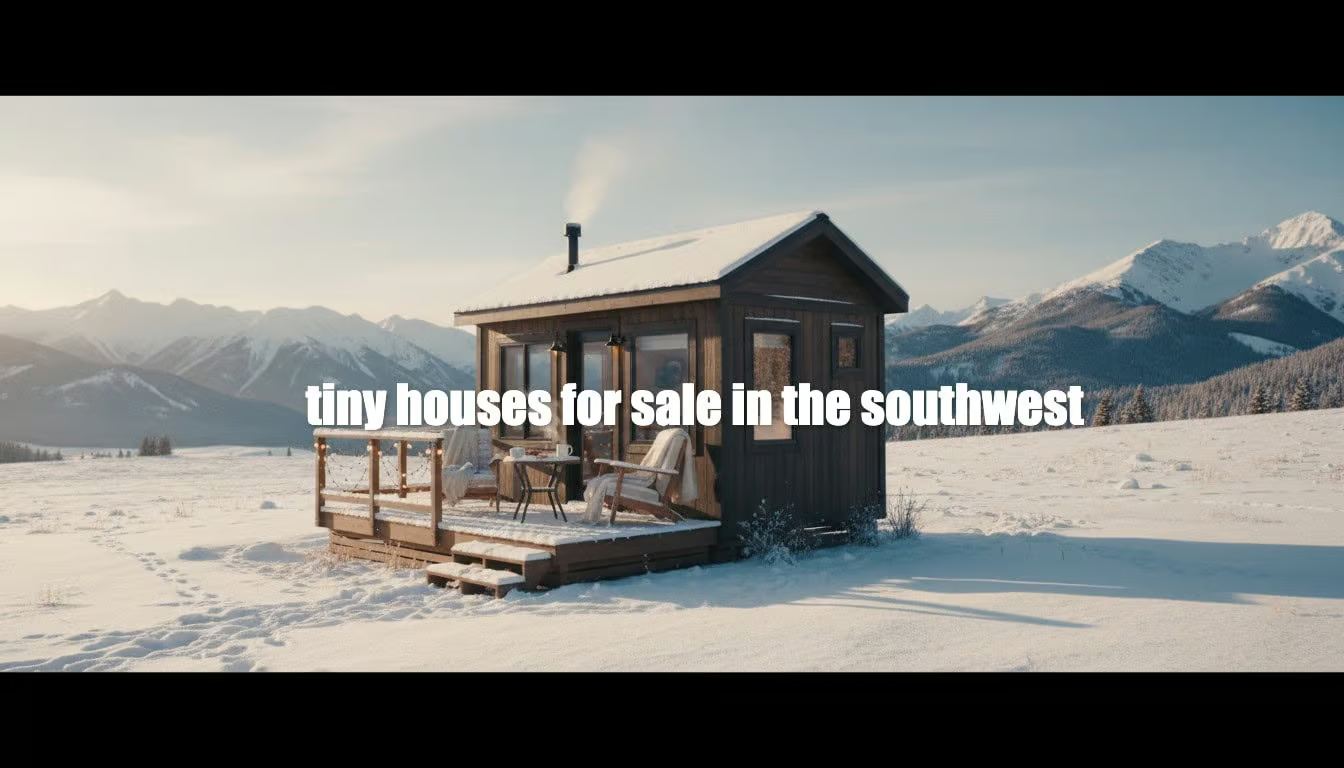
The allure of tiny houses for sale in the southwest continues to captivate those seeking a simpler, more affordable lifestyle amidst the region’s stunning landscapes and warm climate. We’ve seen a remarkable 41% increase in tiny home interest across southwestern states over the past three years, with Arizona, New Mexico, and Texas leading this growing movement. Whether you’re looking to downsize, minimize your environmental footprint, or simply embrace a more intentional way of living, the southwestern United States offers unique opportunities for tiny home enthusiasts.
At Great Lakes Tiny Homes, we understand the unique considerations that come with tiny living in different regions across the country. While our expertise began in the Midwest, we’ve expanded our knowledge to help tiny home enthusiasts nationwide navigate their journey toward simplified, intentional living—including those drawn to the distinctive advantages of southwestern locations.
Why Choose Tiny Houses in the Southwest: Climate and Lifestyle Advantages
When considering tiny houses for sale in the southwestern states, it’s important to understand the unique advantages this region offers for tiny living:
- Ideal Climate Conditions
The southwest’s mild winters and abundant sunshine create perfect conditions for tiny house living. We’ve found that homeowners in Arizona, New Mexico, and southern Nevada enjoy outdoor living nearly year-round, effectively extending their living space beyond their tiny home’s walls. With 300+ sunny days annually in many southwestern locations, solar power becomes an exceptionally viable option, reducing or eliminating electricity costs.
- Significant Cost Advantages
When we compare housing costs across the region, the financial benefits become clear. While the median home price in Phoenix has reached $445,000, a well-appointed tiny home in the same area typically ranges from $60,000 to $120,000—a savings of over 70%. Beyond purchase price, we’ve calculated that tiny homeowners in the southwest save approximately 60-80% on utility costs compared to conventional homes, with cooling costs being the primary expense during summer months. For those seeking affordable tiny living in the Southwest, the financial case is compelling.
- Land Availability and Affordability
The southwest boasts some of the most affordable rural land in the country, with parcels in parts of Arizona, New Mexico, and west Texas available for as little as $5,000-$10,000 per acre. Many southwestern counties have less restrictive zoning regulations for rural properties, making it easier to place a tiny home. For example, what counties in Arizona allow tiny houses is a common question we receive, and we’re pleased to report that Cochise, Mohave, and Yavapai counties are among the most tiny-home friendly in the region.
- Thriving Tiny Home Communities
The southwest has embraced the tiny house movement with enthusiasm, resulting in numerous established communities. Texas leads with over 25 dedicated tiny home communities, including the popular Village Farm near Austin. In Arizona, communities like Luxton Tiny Home Community in Chino Valley offer amenities specifically designed for tiny living. These communities provide built-in social networks, shared amenities, and the security of living among like-minded individuals. For those interested in best tiny home communities in New Mexico, options continue to expand each year.
Most Popular Tiny House Models in the Southwest: Features and Pricing
When exploring tiny houses for sale in the southwest, we’ve identified several standout models that perfectly suit the region’s unique climate and lifestyle:
- The Sonoran by Desert Tiny Homes
This 280-square-foot marvel has become one of the most popular models across Arizona and New Mexico. Built by regional specialists Desert Tiny Homes, The Sonoran features a signature rooftop deck that adds valuable outdoor living space—perfect for stargazing in the clear southwestern skies. Its high-efficiency mini-split HVAC system is specifically calibrated for desert temperature extremes, while the specialized UV-resistant exterior finish maintains its appearance despite intense sunlight exposure. Priced between $75,000-$85,000, this model includes upgraded insulation that significantly reduces cooling costs during hot summers. For those seeking tiny house builders in Phoenix, this model showcases regional expertise.
- The Mesa Verde by Four Corners Tiny Homes
At 320 square feet, this slightly larger model has gained tremendous popularity in the Four Corners region. Priced between $89,000-$99,000, the Mesa Verde features a distinctive split-level design that creates separate living zones despite the compact footprint. What makes this model particularly suitable for southwestern living is its passive solar design with strategically placed windows and thermal mass flooring that naturally regulates temperature. The rainwater collection system integrated into the roof design can capture up to 500 gallons annually—a valuable feature in water-conscious regions.
- The Sedona by Arizona Tiny House Company
This 260-square-foot model has become a bestseller throughout the southwest, particularly in Arizona. Priced accessibly between $65,000-$75,000, The Sedona offers an excellent balance of affordability and quality. Its standout feature is the convertible indoor/outdoor living space with glass doors that fold completely away, creating a seamless connection to nature—perfect for the southwestern lifestyle. The elevated ceiling design creates a spacious feel despite the compact footprint, while the specialized cooling system is designed specifically for desert efficiency.
Tiny House Communities and Developments Across the Southwest
The southwestern United States has embraced the tiny house movement with enthusiasm, resulting in a growing number of dedicated communities and developments. We’ve researched the most established and promising tiny house communities across the region:
Village Farm Tiny Home Community (Austin, Texas)
This premier development has become a model for tiny house communities nationwide. Located just 15 minutes from downtown Austin, Village Farm offers 175 tiny home lots on a 40-acre property. Residents enjoy resort-style amenities including a swimming pool, community center, walking trails, and organic gardens. Lot leases range from $650-$850 monthly, with tiny homes priced from $75,000-$150,000. For those interested in tiny houses for sale in Austin, this community offers an excellent entry point.
Luxton Tiny Home Community (Chino Valley, Arizona)
Located in the high desert near Prescott, this growing community offers 45 tiny home lots on a scenic property with mountain views. Lot purchases range from $55,000-$75,000, with residents owning both their land and their tiny homes. The community features shared amenities including a clubhouse, workshop space, and community garden. What distinguishes Luxton is its focus on energy independence, with the entire community designed for solar optimization. The community has established relationships with several tiny house builders in Prescott who understand the specific requirements for homes in this development.
Tiny House Community ABQ (Albuquerque, New Mexico)
This developing community represents New Mexico’s entry into the tiny house movement. Located on the outskirts of Albuquerque, the community offers 25 tiny home lots with mountain views. Lot purchases range from $45,000-$65,000, with residents owning both land and home. The community features shared water collection systems, community gardens, and solar-optimized lot orientation.
When considering community living versus private property placement, we’ve identified several key considerations:
Benefits of Community Living:
- Simplified zoning and legal compliance (communities have typically navigated these challenges)
- Built-in social connections and support networks
- Shared amenities that would be costly for individual homeowners
- Enhanced security through community presence
Benefits of Private Property Placement:
- Greater privacy and autonomy
- No monthly lot fees or community regulations
- Potential for larger outdoor living spaces
- Opportunity to develop land according to personal preferences
Legal and Zoning Considerations for Tiny Houses in Southwestern States
Navigating the legal landscape for tiny houses in the southwest requires careful research and planning. We’ve compiled this guide to help you understand the essential legal and zoning considerations:
- Research State-Specific Tiny House Regulations
Each southwestern state approaches tiny houses differently, with varying degrees of acceptance and regulation. Arizona has emerged as one of the more tiny house-friendly states, with recent legislation specifically addressing tiny homes in certain jurisdictions. In Pima County, Arizona, for example, tiny houses are explicitly permitted as primary residences if they meet specific building standards. Texas offers a patchwork of regulations, with rural areas generally providing more flexibility than urban centers. For those interested in Georgia, what counties in Georgia allow tiny houses varies widely, with progressive counties like Decatur County offering more flexible regulations.
- Understand Local County and City Zoning Laws
Zoning regulations ultimately determine where you can legally place your tiny house, and these vary dramatically across southwestern jurisdictions. We’ve found that zoning falls into several categories that affect tiny houses: residential, agricultural, rural residential, and special tiny house zoning districts (emerging in some progressive areas). Urban areas typically have more restrictions, though cities like Spur, Texas have famously declared themselves “tiny house friendly” with simplified permitting processes.
- Differentiate Between Tiny Houses on Wheels vs. Foundation Requirements
The legal classification of your tiny house fundamentally affects where and how you can place it. Tiny houses on foundations (THOFs) are typically regulated as permanent structures subject to building codes, while tiny houses on wheels (THOWs) may fall under RV regulations in many jurisdictions. Understanding this distinction is crucial when purchasing a tiny house in the southwest, as it directly impacts your placement options.
Several southwestern states have emerged as particularly tiny house friendly:
Arizona has become increasingly accommodating to tiny houses, with Pima County and Coconino County leading the way in adopting tiny-house-specific regulations. The city of Tucson has created special tiny house zoning provisions, while Flagstaff allows tiny houses as ADUs with streamlined permitting.
Texas offers significant regional variation, with the city of Spur famously declaring itself “America’s first tiny house friendly town” by eliminating minimum square footage requirements. Austin has created specific ordinances for tiny houses as ADUs, while many rural counties exercise minimal regulation of tiny houses on larger parcels.
Financing and Insuring Your Tiny House in the Southwest
Securing appropriate financing and insurance for your tiny house in the southwestern United States presents unique challenges and opportunities. We’ve researched the most current options available:
Financing Options for Southwestern Tiny Houses
RV Loans
For tiny houses on wheels (THOWs) that are RVIA-certified (Recreational Vehicle Industry Association), RV loans offer one of the most straightforward financing options. In the southwest, institutions like Mountain America Credit Union (operating in Arizona, Nevada, and Utah) offer RV loans specifically marketed for tiny houses with terms up to 15 years and rates typically ranging from 5.5-7.5% depending on credit score and down payment.
Personal Loans
Unsecured personal loans remain one of the most common financing methods for tiny houses in the southwest. Regional banks like BBVA (with strong presence in Texas, Arizona, and New Mexico) offer personal loans up to $100,000 with terms up to 7 years. The advantage of personal loans is their flexibility—they can be used for any type of tiny house regardless of certification or placement.
Tiny House-Specific Lenders
Specialized lenders focusing exclusively on tiny houses have emerged in recent years. Companies like Liberty Bank of Utah offer dedicated tiny house loan programs with terms up to 15 years and competitive rates for both THOWs and tiny houses on foundations. These specialized lenders understand the unique aspects of tiny house construction and valuation, often providing more flexible terms than traditional lenders.
Insurance Options for Southwestern Tiny Houses
Insurance for Stationary Tiny Houses
For tiny houses on foundations, traditional homeowner’s insurance may be available if the home meets local building codes and is permanently affixed to a foundation. In the southwest, companies like State Farm and Farmers Insurance offer policies for tiny houses that qualify as permanent dwellings. Premiums for tiny houses on foundations in the southwest average $600-$1,200 annually, depending on location, construction, and coverage limits.
Insurance for Mobile Tiny Houses
For THOWs, specialized RV insurance is often the most appropriate option. Companies like Progressive and Good Sam offer policies specifically designed for tiny houses on wheels, with coverage that can include collision, comprehensive, liability, personal effects, and emergency expenses. These policies typically cost $500-$1,000 annually in southwestern states.
Coverage Considerations for Southwestern Climate Events
The southwestern climate presents specific insurance challenges that tiny house owners should address:
- Hurricane and high wind coverage for Texas and parts of Arizona
- Flash flooding protection, particularly during monsoon season
- Extreme heat protection for systems and materials
- Wildfire coverage in high-risk areas
Step-by-Step Guide to Buying a Tiny House in the Southwest
Purchasing a tiny house in the southwestern United States involves several critical steps that differ from traditional home buying:
- Determine Your Needs and Budget
Create a detailed list of your non-negotiable needs versus desirable features. For southwestern living, prioritize features like efficient cooling systems, adequate insulation for temperature extremes, and outdoor living spaces. Budget considerations should include not just the home’s purchase price (typically $50,000-$150,000 in the southwest) but also land costs if applicable, utility connections, transportation, and setup expenses. Researching tiny houses for sale in Dallas or other southwestern cities will give you a realistic price range for your target area.
- Research Builders and Models
The southwest has developed a robust ecosystem of tiny house builders specializing in designs appropriate for the region’s climate. We recommend researching at least 5-7 builders, evaluating their experience, build quality, customization options, warranties, and customer reviews. Request detailed specifications about insulation values, HVAC systems, and materials—all critical for southwestern climate performance.
- Visit Showrooms and Tiny Home Communities
Experiencing tiny houses firsthand is invaluable for understanding how the space will function for your lifestyle. We recommend visiting both builder showrooms and established tiny house communities throughout the southwest. When visiting display models, test everything—sit in the seating areas, lie on the beds, stand in the shower, and move through the space to assess flow and functionality. Pay particular attention to ventilation and cooling systems, as these are critical for southwestern comfort.
- Choose Land or a Community
Deciding where to place your tiny house is perhaps the most consequential decision in the process. For community placement, evaluate established tiny house communities like Village Farm near Austin or Luxton in Arizona, considering monthly lot costs, amenities, community rules, and lease terms. For private land, research zoning regulations in your target counties, as these vary dramatically across the southwest. Rural areas typically offer more flexibility but may involve significant costs for utility connections and road access.
- Navigate Zoning and Permits
Understanding and complying with local regulations is essential for a successful tiny house placement. We recommend beginning this process at least 3-4 months before your anticipated delivery date. Start by contacting the planning department in your chosen jurisdiction to understand specific requirements for tiny houses. For foundation-based tiny houses, you’ll typically need building permits, which require professional plans showing compliance with local building codes.
Frequently Asked Questions
What makes the Southwest an ideal region for tiny house living?
The Southwest offers mild winters, abundant sunshine with over 300 sunny days annually in many areas, and a warm climate that supports year-round outdoor living. This environment is perfect for tiny homes, enabling effective use of solar power to reduce electricity costs and extending living space outdoors, as seen in states like Arizona, New Mexico, and Texas where tiny home interest has surged by 41% in recent years.
How much do tiny houses typically cost in the Southwest?
Tiny houses for sale in the Southwest generally range from $60,000 to $120,000, offering significant savings compared to median home prices like $445,000 in Phoenix. Homeowners also benefit from 60-80% lower utility costs, though cooling remains a key expense in summer; prices can vary by model and features, such as the Sonoran at $75,000-$85,000 with desert-adapted HVAC.
Which counties or areas in the Southwest are most tiny-home friendly?
Counties like Cochise, Mohave, and Yavapai in Arizona are among the most accommodating due to less restrictive zoning for rural properties, where land can cost as little as $5,000-$10,000 per acre. Texas and New Mexico also feature affordable land and growing communities, making rural placements easier for tiny homes.
Are there established tiny home communities in the Southwest?
Yes, the region has thriving communities such as Village Farm near Austin in Texas with over 25 dedicated spots, and Luxton Tiny Home Community in Arizona’s Chino Valley, offering shared amenities and social networks tailored for tiny living enthusiasts seeking intentional lifestyles.
Conclusion: Key Takeaways for Finding Your Perfect Southwestern Tiny Home
As we’ve explored throughout this comprehensive guide, tiny houses for sale in the southwest offer unique opportunities and considerations for prospective buyers. The southwestern region provides an ideal setting for tiny living, with its favorable climate, abundant land opportunities, and growing acceptance of alternative housing models.
The southwestern states continue to embrace the tiny house movement, with Arizona, Texas, and New Mexico leading the way in developing tiny-house-friendly regulations and communities. The region’s climate advantages—including mild winters, abundant sunshine for solar power, and opportunities for indoor-outdoor living—make it particularly well-suited for tiny house lifestyles.
Key Takeaways:
- The southwestern climate offers unique advantages for tiny living, including energy efficiency, outdoor living opportunities, and solar power potential
- Specialized tiny house designs for the southwest incorporate features like enhanced cooling systems, outdoor living spaces, and heat-resistant materials
- Rural areas typically offer more flexibility for tiny house placement, while established communities provide simplified legal compliance and built-in amenities
- Financing options have expanded significantly, with specialized lenders and programs now available specifically for tiny houses
- Proper insurance coverage is essential, particularly for southwestern climate events like extreme heat, flash flooding, and high winds
- The total investment for tiny house living should account for the home itself, land or lot fees, utility connections, and site preparation
- The tiny house buying process typically takes 6-12 months from initial research to move-in day, requiring careful planning and coordination
The journey to tiny house ownership may involve challenges, but the reward is a home that aligns with your values, fits your budget, and provides the freedom to live intentionally in one of America’s most beautiful regions. We wish you success in finding your ideal tiny house in the southwest and embracing the unique lifestyle it offers.