
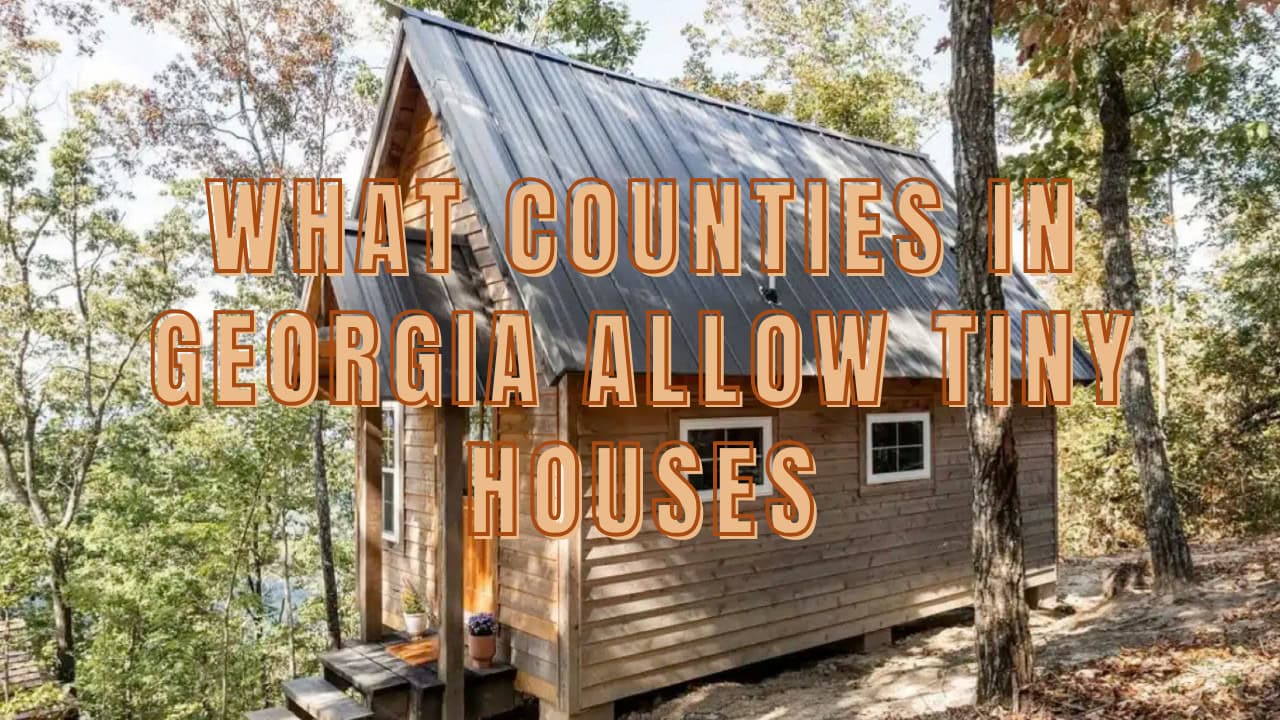
Georgia allows tiny houses primarily as Accessory Dwelling Units (ADUs) in counties like DeKalb, Fulton, and Cherokee, with minimum sizes often starting at 350 square feet on permanent foundations. Tiny Houses on Wheels (THOWs) are generally classified as RVs and restricted to temporary use in RV parks or campgrounds, not permanent residency on private land. Local zoning varies widely, so always verify with county planning offices for specific requirements.
Georgia’s tiny house regulations reflect a growing interest in affordable, sustainable living amid rising housing costs and urban expansion. As more residents seek compact, efficient homes, the state has adopted the International Residential Code (IRC) with Appendix Q, which provides guidelines for dwellings under 400 square feet, including loft access, ceiling heights, and emergency escapes. However, without uniform statewide mandates, counties and cities enforce their own zoning and building codes, creating a patchwork of opportunities and restrictions for tiny home enthusiasts.
This guide explores the key regulations, county-specific allowances, and practical considerations for building or placing a tiny house in Georgia. From urban ADUs in Atlanta to rural setups in the north Georgia mountains, understanding local rules is essential to avoid costly setbacks. Whether you’re eyeing a backyard cottage or a mobile THOW, compliance ensures long-term viability and safety.
At Great Lakes Tiny Homes, we specialize in full-service manufacturing of modular, park model, and tiny homes, delivering turnkey builds to all 48 lower U.S. states. Our options include models with or without wheels, and those with RVIA certification—often referred to as Park Models—for versatility in zoning scenarios. If you’d like an expert second opinion on your specific situation, you can book a call with the Great Lakes Tiny Homes team.
Disclaimer: This article is for informational purposes only and does not constitute legal advice. Laws, regulations, and zoning rules vary by location and may change over time. Always consult your local zoning office or a qualified land use/zoning attorney before making decisions based on this information.
What Georgia Counties Allow Tiny Houses?
Georgia’s constitution permits small homes, including some. The zoning regulations of Atlanta, Columbus, Savannah, Macon, and Albany all permit compact residences. However, implementation depends on local interpretations, with some counties embracing tiny houses as innovative solutions to housing shortages while others maintain stricter minimum size requirements to preserve neighborhood aesthetics and infrastructure capacity.
Recent trends show increasing flexibility, particularly in response to affordability pressures. For instance, urban-adjacent counties are updating ordinances to allow ADUs, recognizing their role in multigenerational living and rental income. Rural areas often provide more leeway for agricultural zoning, where tiny homes can serve as farm dwellings or guest quarters, but always require permanent foundations for full-time occupancy.
To explore compliant options in supportive communities, consider the best tiny home communities in Georgia, which offer pre-approved sites and shared amenities tailored to local rules.
Banks County
Six counties make up Banks County, but only three permit the construction of small dwelling units. Banks, Butts, and Hart counties are some of these counties. This selective approach balances growth with rural character, focusing on areas zoned for residential or agricultural use where tiny homes can integrate without straining services.
You will require a construction permit to build a tiny house in Banks or Butts County. The Banks County Zoning Department is responsible for issuing the permission. A septic tank permission may also be required, based on how you want to manage your sewage. These steps ensure environmental compliance, particularly in areas with limited municipal sewer access, and typically involve soil percolation tests to verify suitability.
Burke County
It is a fantastic area to call a modest or tiny home. Although most of the Georgia Department of Community Affairs is for single-family homes, certain places are for apartment buildings and townhouses. Likewise, a few locations are for mobile homes. While it complies with location and construction regulations, you can construct a tiny house in any of those locations. Burke County’s flexible zoning supports diverse housing types, making it appealing for those seeking affordable options near natural attractions like the Savannah River.
Prospective builders should note that while mobile home zones accommodate THOWs temporarily, permanent tiny homes must meet IRC standards for foundations and utilities. This distinction helps maintain property values while promoting sustainable development in a county known for its agricultural heritage.
Carroll County
Where is it acceptable to live in a little house in Georgia? The only ones are Carroll, Towns, Butts, and DeKalb. Regional authorities have developed local zoning ordinances for small dwellings for each county. Even an entire section of Carroll County’s website is to outline the prerequisites for one of them. This transparency aids builders in planning compliant projects, emphasizing minimum heated floor areas and utility connections to ensure habitability.
Carroll County’s ordinances reflect a commitment to balanced growth, allowing tiny homes in rural residential districts while requiring setbacks and site plans to minimize neighborhood impacts. For those interested in custom builds, local tiny house builders in Carroll County can navigate these specifics effectively.
Cherokee County
Nowadays, the tiny house movement has become more popular in the US. You might be asking if it is legal to construct one in Georgia if you are thinking about doing so. Several counties in the territory now have special regulations governing the construction of guest houses. Cherokee County’s approach allows tiny homes under 400 square feet with case-by-case reviews, focusing on foundation stability and integration with existing lots.
This county’s progressive stance supports ADUs for family housing, but THOWs face restrictions outside designated parks. Recent updates have streamlined permitting for energy-efficient designs, aligning with Georgia’s sustainability goals.
DeKalb County
Have you a modest, self-sufficient mobile residence, RV, or tiny house? DeKalb County is an excellent place to call home. This county permits most modest dwellings as long as they meet specific requirements for minimum square footage and facilities, for example, electricity for water heating. DeKalb’s special ordinance allows homes as small as 350 square feet, up to 800, promoting affordable housing near Atlanta.
Find out if you qualify if you want to buy a modest house in the county by getting in touch with your county administration. Compliance involves detailed site plans and neighbor notifications, ensuring community harmony in this diverse area.
Georgia Tiny House Laws: Local Zoning Regulations
Furthermore, according to the basic construction rules, the jurisdictions have the authority to individually control the height, size, location, density standards, and parking needs of properties. While some towns and counties have developed unique anti-regulations, others choose more tolerant of tiny properties. This local autonomy allows for tailored approaches, such as density bonuses in high-growth areas to encourage tiny home developments that address housing shortages.
Zoning districts like R-1 (single-family) often permit ADUs with setbacks of 5-10 feet, while agricultural zones (AG) offer flexibility for rural tiny homes. Height limits typically cap at 20-35 feet, and lot coverage rarely exceeds 50% to preserve open space. For those exploring options, tiny houses for sale in Georgia can be filtered by compliant locations.
Disclaimer: This article is for informational purposes only and does not constitute legal advice. Laws, regulations, and zoning rules vary by location and may change over time. Always consult your local zoning office or a qualified land use/zoning attorney before making decisions based on this information.
Fulton County
It has earned a reputation as one of the best places to live modestly. To ascertain if the county’s present code of regulations permitted the development of tiny homes and micro-units and, if not, how the rules could be changed to render the county more receptive and open to smaller housing choices. Fulton’s evolving policies, especially in Atlanta, allow tiny homes starting at 300 square feet with special permits, supporting urban infill and accessory units up to 750 square feet.
This county’s focus on micro-units addresses workforce housing needs, with ongoing reviews to adapt codes for sustainable designs. Integration with public transit makes it ideal for compact living.
Murray County
Small properties not subject to state laws in Murray County are subject to special restrictions in local building codes. The structure must have at least the required square footage for the district the lot is designated for to be built on your land. The house must also meet all required minimum residential construction codes. The precise measurements for every region within the county are as follows: in a district with an AG zone of 584 square feet of space, in a district with an RR zone of 864 square feet of space, and in a district with an SR zone total of 1,200.
These tiered requirements reflect Murray’s emphasis on scalable development, with AG zones offering the most leniency for tiny homes on larger parcels. Septic approvals are key in this rural setting.
Monroe County
The Monroe County Commissioners approved the placement of 12 small dwellings for rent on 11 acres of land owned by a local developer. Because Monroe County’s zoning legislation does not already have a section that addresses dwellings, the author felt it was essential to submit a request for changes to the zoning law. At first, commissioners declined to act on the developer’s request, and despite some resistance from the developer’s local community, his request was granted. This approval highlights Monroe’s adaptive process, now allowing tiny homes with minimums of 250 square feet on permanent foundations.
Community pushback often centers on aesthetics, but successful variances demonstrate the potential for inclusive housing in growing areas.
Lumpkin County
In contrast to the State of Georgia, it has established particular rules for tiny home properties. These adjustments take the fact that small homes come in diverse styles, and each style is unique. A homeowner must thus determine which kinds of small dwellings are covered by the county’s construction rules and how they are applied to them. Lumpkin’s guidelines specify residential modular, site-built, and certified shipping container homes, excluding THOWs for permanent use.
This focus on fixed structures ensures compliance with mountain zoning, protecting against erosion and wildfire risks.
Brantley County
In the County of Brantley, there are no limitations on container houses. Furthermore, there are no prerequisites for putting them on a long-term basis. They conform to the county’s plumbing, electrical, and other construction permit standards. Brantley’s permissive stance extends to tiny homes meeting basic codes, ideal for off-grid enthusiasts in this rural southeast county.
Permits emphasize utility safety, with no minimum size beyond habitability standards.
Permanent Structure Rules
The International Residential Code (IRC) or the International Building Code (IBC) must be followed while building your tiny home. It must be positioned on a stable foundation that has been authorized by the neighborhood building department. All utilities need to be legally installed and compliant. Before moving in, you must lastly secure authorization of occupation from the nearby building department. Permanent structures in Georgia require engineered foundations to handle soil types like expansive clays, with inspections at key stages for structural integrity.
You must ensure that your tiny home satisfies all criteria for a permanent residence, including proper insulation, ventilation, and plumbing if you intend to live in it full-time. R-19 insulation is common for walls to combat humidity, and GFCI outlets are mandatory in wet areas. These rules promote energy efficiency and safety in Georgia’s variable climate.
Disclaimer: This article is for informational purposes only and does not constitute legal advice. Laws, regulations, and zoning rules vary by location and may change over time. Always consult your local zoning office or a qualified land use/zoning attorney before making decisions based on this information.
Temporary Rules
Temporary small homes must have a footprint of no more than 400 square feet. They have to be constructed on a base that is no wider than 8 feet and no higher than 18 inches. It must be at least one escape gate and two windows in the home. Carbon monoxide and smoke detectors need to be fitted and working correctly. Local building codes must be followed while installing electrical wiring. Tiny homes need to be well insulated to defend against high temperatures.
Plumbing fittings must adhere to local building codes. Installation and upkeep of sanitation facilities must follow the rules set out by the local health department. The site where the small house is situated has to have adequate plumbing and sewer service. The home needs to abide by all zoning regulations in the area. These provisions limit temporary setups to short-term use, often 180 days, preventing them from becoming permanent without full permitting.
Transitional Structure Rules
In the territory of Georgia, there are no particular laws or norms governing temporary buildings. However, there are standard construction code regulations that must be adhered to. These include acquiring permission from the neighborhood building authority and adhering to all relevant safety regulations. The building must also be situated on a piece of land that is for residential use. Follow the laws and requirements for permanent dwellings if you want to reside in the transition structure full-time. Connecting to utilities like power and water falls under this category.
Transitional rules bridge temporary and permanent status, allowing phased upgrades like foundation additions. Health departments oversee sanitation, ensuring compliance during the interim period.
In Georgia, Where Can I Build a Tiny House?
The next stage is to begin building after you have located a good place. If you have never built a house before, is essential to select a tiny house builder who can guide you through the process. They take care of all the paperwork and ensure your residence complies with building codes. Although constructing a tiny house is a significant endeavor, it can be enjoyable with proper design and execution. Suitable locations include RV parks for THOWs, national parks and campgrounds for seasonal stays, tiny house communities for shared amenities, and private properties zoned for residential or agricultural use.
Private land offers the most control but requires zoning verification, while communities provide pre-approved sites with utilities. For custom solutions, tiny house builders in Georgia handle permitting and delivery.
Georgia Counties That Allow Backyard Tiny Houses
Georgia’s 159 counties exhibit diverse approaches to backyard tiny houses, with progressive ones adopting ADU-friendly ordinances to address housing affordability. Rural counties often provide more leeway for permanent foundations, while urban-adjacent areas emphasize integration with existing infrastructure. This table summarizes key counties, highlighting minimum sizes, zoning types, and requirements based on official records; always confirm with county planning for site-specific applicability.
| County/City | Min Sq Ft | Zoning Type | Key Requirements | Source | Verified |
|---|---|---|---|---|---|
| DeKalb County | 350 | Residential (ADU) | Permanent foundation, utility connections, max 800 sq ft | DeKalb County Planning | Yes |
| Cobb County | 400 | R-15/R-20 (ADU) | Appendix Q compliance, owner-occupied | Cobb County Zoning | Yes |
| Gwinnett County | 750 | Residential | ADUs up to 100 sq ft allowed, full utilities | Gwinnett County Planning | Yes |
| Chatham County | 600 | R-1 | Hurricane tie-downs, exterior steps | Chatham County Planning | Yes |
| Hall County | 256 | Residential | Min 16 ft width, utility connections | Hall County Planning | Yes |
These counties illustrate Georgia’s varied landscape, where rural areas like Chatham offer coastal adaptations, while metro counties like Fulton prioritize urban integration. For communities, consider exploring the best tiny home communities in Georgia for inspiration on compliant setups. Verification with county offices ensures alignment with recent updates, such as expanded ADU allowances in response to housing demands.
Disclaimer: This article is for informational purposes only and does not constitute legal advice. Laws, regulations, and zoning rules vary by location and may change over time. Always consult your local zoning office or a qualified land use/zoning attorney before making decisions based on this information.
Major Georgia Cities and Their Tiny House Policies
Georgia’s major cities have tailored policies to balance urban density with innovative housing, often through ADU ordinances that support tiny homes as secondary units. These approaches address affordability while preserving neighborhood character, with processes involving site plans, neighbor reviews, and utility verifications. Atlanta leads with progressive reforms, while coastal Savannah emphasizes historic preservation alongside resilience standards.
Each city’s rules reflect local priorities, from Atlanta’s focus on workforce housing to Augusta’s multigenerational support. Prospective builders should engage planning departments early for pre-application guidance, ensuring designs align with flood zones, setbacks, and aesthetic guidelines.
Atlanta
Atlanta, as Georgia’s largest city, has evolved its policies to support ADUs amid urban growth, permitting units up to 750 square feet in R-5 zones through the Department of City Planning. Applications require detailed architectural drawings, neighbor notifications, and compliance with historic district guidelines where applicable, with processing times of 6-12 weeks and fees ranging from $400 to $1,000. A 2023 pilot program tests THOW placements in underutilized zones, evaluating infrastructure impacts, while incentives like fee reductions for affordable projects encourage family-oriented builds.
Contact the Atlanta Planning Department at Atlanta Planning Department for current forms and consultations, noting that owner-occupancy remains a core requirement to maintain residential character. This framework supports tiny homes as solutions to housing shortages, with over 200 ADUs approved annually.
Savannah
Savannah’s historic charm shapes its tiny house rules, allowing ADUs under 600 square feet if they adhere to the city’s design standards reviewed by the Historic District Board. The process involves submitting site plans and material samples, taking 8-10 weeks with fees of $300-$600, and includes an ADU incentive program waiving costs for low-income initiatives to preserve heritage while addressing affordability. Coastal flood zones necessitate elevated foundations, adding engineering reviews for resilience against hurricanes.
Reach the Savannah Planning Department via Savannah Planning Department to discuss compliance, especially for properties near the waterfront where tidal influences demand specialized adaptations. These policies blend preservation with innovation, allowing tiny homes that complement the city’s architectural legacy.
Augusta
Augusta-Richmond County permits backyard tiny houses up to 800 square feet in R-1 zones, focusing on family ADUs with provisions for shared driveways to optimize space. Applications cost around $500 and require utility plans, processed in 4-8 weeks through the Planning and Development Department, with recent updates favoring multigenerational housing. Environmental assessments ensure septic systems meet county health standards, particularly in areas with high water tables.
For guidance, visit the Augusta Planning and Development page, where online portals facilitate preliminary zoning checks before formal submissions. This approach supports community stability in a growing riverside city.
Athens
Athens-Clarke County supports tiny homes as ADUs over 400 square feet, reflecting its university-driven innovation with pilot programs for off-grid features like solar integrations. Fees range $200-$500, with timelines of 5-7 weeks involving environmental reviews for sustainable elements, and policies emphasize educational uses such as student housing alternatives. The Unified Government of Athens-Clarke County oversees approvals, prioritizing designs that enhance neighborhood sustainability.
Access resources at Athens-Clarke County Planning, including public input sessions that allow residents to influence evolving ordinances. This fosters a vibrant, eco-conscious tiny home scene.
Macon
Macon-Bibb County allows tiny houses in residential areas on permanent foundations with minimum widths of 20 feet, treating them as modular homes under state codes. Permits require building plans and utility connections, processed in 6-8 weeks for fees around $400, with flexibility for accessory uses like guest quarters. Recent zoning reforms promote affordable options, including skirting requirements for mobile-style units.
Contact the Macon-Bibb Planning and Zoning Division at Macon-Bibb Planning for site-specific advice, especially in historic districts where facade matching is mandatory. These updates aid central Georgia’s housing diversity.
Disclaimer: This article is for informational purposes only and does not constitute legal advice. Laws, regulations, and zoning rules vary by location and may change over time. Always consult your local zoning office or a qualified land use/zoning attorney before making decisions based on this information.
Tiny House Prices in Georgia
Tiny house prices in Georgia fluctuate based on several factors, including the structure’s size, whether it uses a permanent foundation or wheels, RVIA certification for mobility, utility hookups, and adherence to local building codes that may require additional reinforcements for wind or flood resistance. Smaller models under 300 square feet start around $40,000 for basic builds, while larger 400-square-foot units with full amenities can reach $120,000, influenced by Georgia’s material costs like lumber, which have stabilized post-2022 peaks. Foundation choices add $5,000-$15,000 for concrete slabs versus $2,000 for pier systems, and RVIA certification for THOWs ensures road legality but increases expenses by 10-15% due to specialized inspections. Utility integrations, such as septic and electrical tie-ins, contribute $8,000-$25,000 depending on site conditions, with rural properties often needing wells that elevate totals. Local zoning variances, like those in coastal counties mandating elevations, can add engineering fees of $1,000-$3,000, emphasizing the need for early consultations to budget accurately.
Financing options in Georgia include home equity lines at 5-7% interest for permanents, personal loans for THOWs, or state programs like Georgia Dream offering down payment assistance for ADUs under $150,000. Resale values hold strong in high-demand areas like metro Atlanta, appreciating 5-8% annually, while insurance averages $600 yearly for fixed units versus $400 for mobile ones. These variables underscore the importance of customized quotes to reflect Georgia’s diverse climates and regulations. For available models, view tiny houses for sale in Georgia tailored to code needs.
Great Lakes Tiny Homes Pricing
At Great Lakes Tiny Homes, our pricing for Georgia projects ranges from $100,000 to $150,000 for turnkey builds, encompassing design, permitting assistance, construction, and delivery across the state. This range covers modular and park model options tailored to local codes, with permanents at the higher end due to foundation work and THOWs offering savings through factory efficiency. We provide transparent breakdowns, factoring in Georgia-specific elements like humidity-resistant materials, ensuring value without hidden fees. Our full-service approach minimizes on-site disruptions, delivering completed homes in 3-6 months to fit your timeline and budget.
These prices include customization for zoning compliance, such as reinforced framing for wind loads in coastal areas or energy-efficient systems for hot summers. Clients appreciate the all-in-one process, from initial consultation to final walkthrough, reducing overall project risks and costs.
Great Lakes Tiny Homes Model Options
Model selection should align with your county’s zoning—permanents for long-term residency in urban zones, THOWs for rural flexibility—ensuring seamless integration. If zoning influences your choice, book a call with our experts at https://greatlakestinyhome.com/book/ for tailored recommendations.
- Modular Homes: Factory-built sections assembled on-site, ideal for permanent foundations in zoned residential areas, offering quick setup and code compliance.
- A-Frame: Compact, peaked designs suiting sloped lots, with lofts for extra space, perfect for Georgia’s varied terrains under ADU rules.
- Cabin: Rustic yet modern styles blending with rural backyards, customizable for utility ties and family use in flexible counties.
- Park Models: RVIA-certified for wheels or foundations, versatile for temporary or permanent setups where zoning allows mixed classifications.
- Tiny House on Wheels: Mobile options for trial placements, adhering to RV regs in areas restricting permanents, with easy relocation.
Each model incorporates Georgia-friendly features like enhanced ventilation and durable siding to handle humidity and storms. Zoning often dictates foundation vs. wheels, with permanents qualifying for traditional financing while THOWs suit seasonal or mobile lifestyles.
FAQs
Is it legal to put a tiny house in my backyard in Georgia?
Yes, it is generally legal as an ADU in many counties, subject to local zoning like minimum 400 square feet and setbacks, but THOWs are limited to temporary use. Verify with your planning department, as urban areas may require architectural matching while rural ones offer more flexibility for off-grid features. Always consult local authorities for site-specific rules.
What is the minimum size for a tiny house in Georgia?
Local codes often mandate 120-400 square feet of habitable space, excluding lofts, with IRC requirements for ceiling heights and windows ensuring safety. Smaller structures may classify as non-residential, impacting utilities and taxes, so consult county ordinances for precise thresholds in your area. DeKalb allows as low as 350 square feet under special ordinances.
Where can I place a tiny house on my property in Georgia?
Typically in rear or side yards with 5-10 foot setbacks from lines, avoiding front yards and lot coverage over 50% to maintain open space. Flood zones require elevations, and easements must be cleared, with surveys recommended to confirm boundaries before permitting. Rural AG zones offer more placement options than urban residential districts.
What permits and utilities are required for a backyard tiny house in Georgia?
Building permits involve site plans and inspections under IRC, costing $500-$2,000, with utilities like 100-amp electrical and septic sized by bedrooms. Off-grid options need variances, and final occupancy verifies compliance, streamlining insurance and habitability certifications. Contact your county’s planning department for exact processes.
What are the approximate costs for a tiny house in Georgia?
Expect $40,000-$120,000 for the build, plus $10,000-$30,000 for utilities and permits, varying by size and location with urban areas adding engineering fees. ROI through rentals or value increases offsets expenses, but factor in ongoing taxes and maintenance for accurate budgeting. Prices rise in coastal zones due to elevation requirements.
Can I finance a tiny house in Georgia?
Yes, via home equity loans at 4-7% for permanents or personal loans for THOWs, with state programs like Georgia Dream aiding ADUs under $150,000. Builders often partner with lenders for customized terms, considering zoning impacts on eligibility and resale potential. Consult financial advisors for options matching your setup.
Conclusion: Your Path to Tiny House Success in Georgia
Placing a tiny house in Georgia offers versatile solutions for modern living, from family support to income generation, provided you align with local zoning, permits, and codes. By prioritizing compliance and thoughtful design, you can enhance your property’s value and functionality sustainably. Great Lakes Tiny Homes supports this journey with expert builds tailored to Georgia’s regulations—book a call with our team at Book a call to explore your options.
For available properties, check tiny houses for sale in Georgia. With policies evolving favorably, now is an opportune time to plan, ensuring your project contributes positively to Georgia’s housing landscape.