
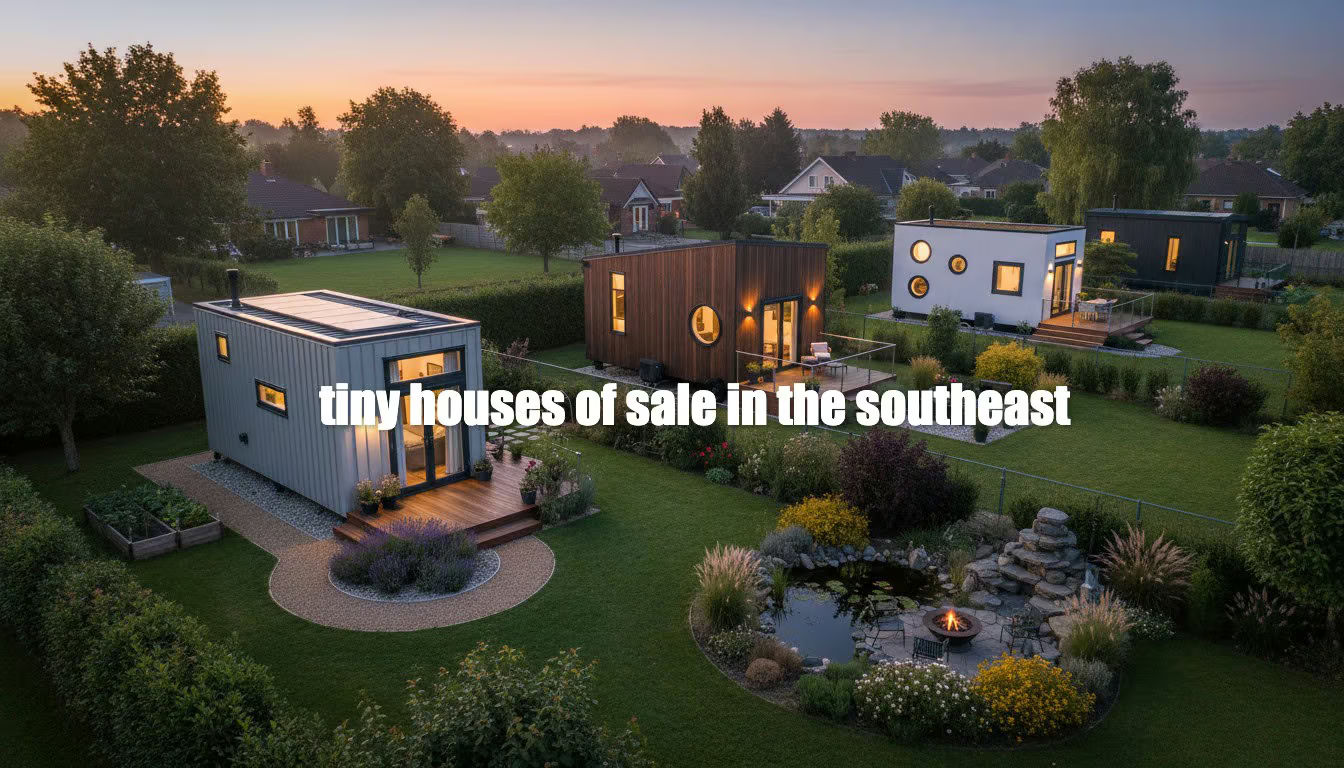
The tiny house movement continues to gain momentum across the United States, and the Southeast region has emerged as a particularly vibrant hub for this lifestyle revolution. When searching for tiny houses for sale in the Southeast, prospective buyers are discovering a world of affordable, sustainable living options perfectly suited to the region’s warm climate and relaxed lifestyle. According to recent industry data, tiny home interest in Southeastern states has grown by over 40% since 2020, with states like Florida, Georgia, and Tennessee leading this regional surge.
At Great Lakes Tiny Homes, we understand the unique appeal of downsized living in the Southeast’s favorable climate. Our experience with tiny home enthusiasts has shown us that buyers in this region have specific needs—from humidity-resistant materials to designs that maximize outdoor living spaces. That’s why we’ve created this resource to help navigate the diverse marketplace of tiny homes for sale across the Southeast.
Why Choose Tiny Houses in the Southeast: Climate and Lifestyle Advantages
When considering tiny houses for sale in Southeastern states, it’s important to understand the unique advantages this region offers for compact living. We’ve compiled the most compelling reasons why the Southeast has become a tiny house haven:
- Year-round mild climate extends your living space
The Southeast’s famously mild winters and extended warm seasons create the perfect environment for tiny living. With average winter temperatures rarely dipping below freezing in most areas, we’ve found that tiny homeowners can effectively use outdoor spaces as extensions of their homes nearly year-round. Covered porches, outdoor kitchens, and garden spaces become natural additions to your living area, effectively doubling usable space without increasing your home’s footprint.
- Significant affordability compared to traditional housing markets
The financial advantages of tiny living are amplified in the Southeast, where traditional housing costs continue to rise in popular areas. We’ve analyzed the numbers: while the median home price in metropolitan areas like Atlanta has reached approximately $375,000, quality tiny houses for sale in the Southeast typically range from $50,000 to $120,000, representing savings of up to 70%. Even in rural areas where conventional housing is more affordable, tiny homes still offer substantial savings on both purchase price and ongoing expenses.
- Abundant land availability and lower property taxes
The Southeast boasts significantly more affordable and available land compared to other regions of the country. We’ve researched property values and found that rural land in states like Alabama, Mississippi, and parts of Georgia can be purchased for as little as $5,000-$10,000 per acre—a fraction of costs in the Northeast or West Coast. Additionally, many Southeastern states offer favorable property tax structures, with states like Tennessee and Florida having some of the lowest property tax rates nationwide.
- Expanding tiny home communities and supportive regulations
The Southeast is experiencing rapid growth in purpose-built tiny home communities. States like Georgia, which is increasingly becoming a haven for tiny home enthusiasts, have seen the development of innovative communities like The Cottages at Glenwood Park in Atlanta and Tiny House Atlanta. Florida has embraced the movement with communities like Orlando Lakefront, while North Carolina features progressive developments such as Acony Bell Tiny Home Village.
- Enhanced sustainability and lower energy costs
The Southeast’s climate creates unique sustainability advantages for tiny homeowners. We’ve calculated that the average tiny home in the Southeast uses approximately 7% less energy for heating compared to identical homes in Northern states, resulting in annual savings of $200-$400. Solar power is increasingly viable in the sun-rich Southeast, with tiny homes requiring far fewer panels to achieve energy independence compared to conventional homes.
- Strategic mobility for exploring diverse Southeastern landscapes
For those choosing tiny houses on wheels, the Southeast offers unparalleled diversity of landscapes and experiences within relatively short distances. We’ve mapped out how tiny homeowners can experience the beaches of Florida, the mountains of Tennessee and North Carolina, and the cultural richness of cities like New Orleans, Charleston, and Savannah—all within a day’s drive of each other.
These advantages have contributed to the Southeast becoming one of the fastest-growing regions for tiny home adoption, with states like Texas, Florida, and North Carolina seeing year-over-year increases in tiny home sales exceeding 30%.
Most Popular Tiny House Models in the Southeast: Features and Pricing
When exploring tiny houses for sale in the Southeast, we’ve found that certain models stand out for their adaptability to the region’s climate, lifestyle, and aesthetic preferences. Our research into the market has identified these standout tiny homes that have gained popularity specifically among Southeastern buyers.
- The Cumberland by Southeastern Tiny Homes
Square Footage: 320 sq ft
Price Range: $65,000 – $75,000The Cumberland has become one of the most sought-after tiny houses in the Southeast due to its exceptional adaptation to the region’s climate challenges. We appreciate its elevated 10-foot ceilings that allow heat to rise away from living spaces, while the wraparound porch (adding 160 sq ft of covered outdoor space) effectively extends the living area during the Southeast’s lengthy outdoor seasons. Built with cypress exterior siding, The Cumberland offers natural resistance to the region’s humidity and insects.
- The Bankhead by Atlanta Tiny Homes
Square Footage: 280 sq ft
Price Range: $78,000 – $89,000Named after Atlanta’s famous Bankhead neighborhood, this model has gained popularity for its sophisticated urban design that doesn’t sacrifice functionality for the Southeast’s climate challenges. Its standout features include a hurricane-rated metal roof system capable of withstanding winds up to 150 mph—essential for coastal areas in Florida, the Carolinas, and the Gulf Coast. The model incorporates a mini-split HVAC system specifically calibrated for high-humidity environments, along with specialized moisture barriers and mold-resistant materials throughout.
- The Sipsey by Alabama Tiny Homes
Square Footage: 240 sq ft
Price Range: $49,000 – $59,000The Sipsey has emerged as one of the most affordable quality tiny houses for sale in the Southeast, making it particularly popular among first-time buyers and those on stricter budgets. Named after Alabama’s Sipsey Wilderness, this model emphasizes connection to nature with large windows and an optional screened porch addition that adds 100 sq ft of bug-free outdoor living space—a practical necessity in the insect-rich Southeast. The Sipsey features a raised foundation design that promotes airflow beneath the structure, reducing moisture issues common in the region.
- The DeSoto by Mississippi Tiny Homes
Square Footage: 400 sq ft
Price Range: $85,000 – $98,000For those seeking a more spacious tiny home option in the Southeast, we’ve found The DeSoto consistently ranks among the most popular larger models. This home features a first-floor master bedroom with a full bathroom, making it accessible and practical for longer-term living. What makes The DeSoto particularly well-suited for the Southeast is its advanced climate control system with dehumidification technology specifically designed for the region’s moisture challenges.
- The Swayback by Tennessee Tiny Homes
Square Footage: 290 sq ft
Price Range: $72,000 – $82,000Named after the distinctive roof design of traditional Appalachian cabins, The Swayback has become one of the most recognizable tiny houses for sale in the Southeast, particularly in mountainous regions. We’ve observed its popularity in areas like eastern Tennessee, western North Carolina, and northern Georgia. Its signature curved roof isn’t just aesthetically pleasing—it serves the practical purpose of shedding heavy rainfall common in the Southeast while creating additional interior loft space.
Tiny House Communities and Developments Across the Southeast
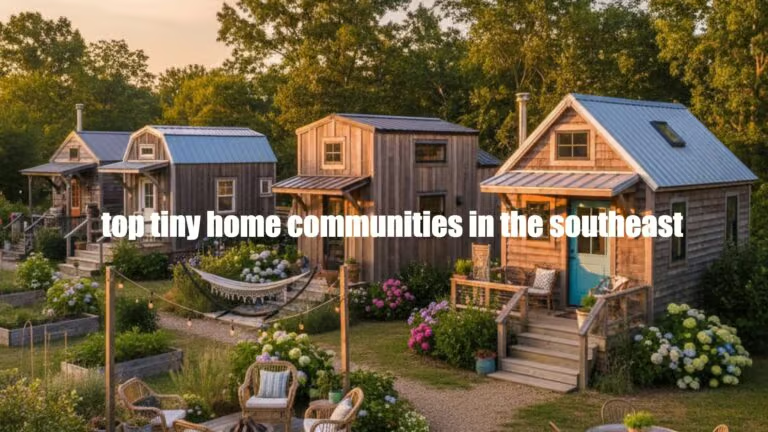
The Southeast has emerged as a leader in the development of intentional tiny house communities, offering residents the benefits of both independent tiny living and supportive community environments. We’ve researched established and emerging tiny house communities throughout the Southeastern states to provide this comprehensive overview.
In Florida, several communities have pioneered the tiny house movement in the Southeast. Orlando Lakefront at College Park stands as one of the region’s most established tiny house communities, offering waterfront living just minutes from downtown Orlando. We’ve found that lots here typically rent for $450-$650 monthly, including water and sewer hookups, with community amenities including fishing docks, community gardens, and regular social events. Further south, Tiny House Siesta in Sarasota offers a different model, focusing on tiny house vacation rentals and seasonal living with proximity to Siesta Key Beach.
Georgia has rapidly emerged as a tiny house hub in the Southeast, with communities developing in both urban and rural settings. The Cottages on Greene in Atlanta represents an urban approach to tiny living, featuring 29 foundation-built tiny homes arranged around shared green spaces. Home prices here typically range from $125,000-$175,000 for 400-500 square foot cottages, with HOA fees of approximately $200 monthly covering maintenance of common areas and community amenities.
In North Carolina, the tiny house community movement has found particular success in the western part of the state. Acony Bell Tiny Home Village near Asheville has developed as a model community with 50 acres of preserved land surrounding approximately 35 tiny home sites. Lot leases range from $400-$600 monthly depending on size and location, with community amenities including organic gardens, hiking trails, and a community center with shared workspaces.
When considering community living versus placing a tiny home on private property, we’ve found several key differences worth noting. Community living typically offers built-in social connections, shared amenities that would be costly for individual homeowners, and often simplified regulatory compliance as many communities have already navigated zoning hurdles. However, these benefits come with monthly costs (lot fees or HOA dues) and community guidelines that may restrict design choices or lifestyle elements.
Legal and Zoning Considerations for Tiny Houses in Southeastern States
Navigating the legal landscape for tiny houses in the Southeast requires understanding the complex and often evolving regulations that vary significantly between states, counties, and municipalities. We’ve researched the current regulatory environment across the Southeastern states to provide this comprehensive guide to legal considerations for placing tiny houses in the region.
- Research state-specific tiny house regulations
Each Southeastern state approaches tiny houses differently within their building codes and zoning regulations. In Florida, we’ve found that the state building code now includes specific provisions for tiny houses, adopting Appendix Q of the International Residential Code (IRC) which provides building standards for homes under 400 square feet. Georgia has emerged as particularly tiny-house friendly, with the state allowing local jurisdictions significant freedom to create their own tiny house regulations, leading to progressive ordinances in places like Decatur and Atlanta.
- Understand local county and city zoning laws
Even within tiny-house-friendly states, local zoning ordinances ultimately determine where and how you can place your tiny home. We’ve identified several Southeastern counties and cities that have created specific tiny house provisions. In Georgia, Chatham County (including Savannah) has created a “Tiny House Overlay District” allowing homes as small as 300 square feet in designated areas. Similarly, Asheville, North Carolina has pioneered Accessory Dwelling Unit (ADU) regulations that explicitly welcome tiny houses on foundations as backyard dwellings.
- Differentiate between tiny houses on wheels vs. foundation requirements
The legal classification of your tiny house significantly impacts where you can place it and what regulations apply. Tiny houses on wheels (THOWs) are typically classified differently from foundation-built tiny homes throughout the Southeast. In most Southeastern jurisdictions, THOWs are regulated similarly to RVs, which limits permanent placement options to RV parks, campgrounds, or specially designated tiny house communities.
- Navigate building codes and minimum square footage requirements
Building codes present one of the most significant hurdles for tiny houses in the Southeast. While the adoption of IRC Appendix Q (specific tiny house building standards) has simplified this in some jurisdictions, many local building departments still maintain their own requirements. Florida’s statewide building code now includes provisions for homes under 400 square feet, addressing specific concerns like ceiling heights, stairway dimensions, and emergency egress requirements for lofts.
- Understand utility hookup regulations
Connecting your tiny house to utilities presents another layer of regulatory considerations in the Southeast. Many rural Southeastern counties require proof of adequate wastewater treatment before issuing occupancy permits, which can be challenging for tiny houses. In areas without municipal sewer access, this typically means installing a septic system, which can cost $5,000-$15,000 depending on soil conditions and local requirements.
The regulatory landscape for tiny houses in the Southeast continues to evolve, with Georgia emerging as perhaps the region’s most progressive state for tiny house regulations. The city of Decatur, Georgia has become particularly notable for its tiny house-friendly ordinances, creating specific provisions for both ADUs and primary residence tiny homes. Similarly, parts of western North Carolina, particularly around Asheville, have embraced the tiny house movement with updated regulations specifically addressing this housing type.
Financing and Insuring Your Tiny House in the Southeast
Securing appropriate financing and insurance for tiny houses presents unique challenges compared to conventional homes, but the Southeast offers several specialized options that have emerged to serve this growing market. We’ve researched the current landscape of tiny house financial services across the region to provide this comprehensive overview of your options.
When it comes to financing tiny houses in the Southeast, several distinct pathways have developed to accommodate different types of tiny homes and buyer situations. For tiny houses on wheels (THOWs), RV loans remain one of the most accessible options, particularly if your home is RVIA (Recreational Vehicle Industry Association) certified. Lenders like Lightstream, a division of Truist Bank with strong presence across the Southeast, offer RV loans for certified tiny houses with terms typically ranging from 5-12 years and interest rates from 4.5-7.5% depending on credit score and loan term.
For non-RVIA certified tiny houses or custom builds, personal loans have become a common financing mechanism throughout the Southeast. Online lenders like SoFi and Marcus offer unsecured personal loans up to $100,000 with terms typically ranging from 3-7 years. While these loans don’t require the home to meet specific certification standards, they generally carry higher interest rates (typically 6-15% depending on creditworthiness) and shorter terms than traditional mortgages or RV loans.
For foundation-built tiny homes on owned land, traditional mortgage options become more viable, though minimum loan amounts often exceed the cost of the tiny house alone. To address this gap, several Southeastern credit unions have developed specialized mortgage products for small homes. For example, Georgia’s Own Credit Union offers a “Tiny Home Mortgage” for homes as small as 400 square feet on permanent foundations, with loan amounts as low as $50,000 and terms up to 30 years.
Insuring tiny houses in the Southeast presents its own set of challenges and specialized solutions. For tiny houses on wheels, we’ve found that RV insurance policies often provide the most comprehensive coverage. Companies like Progressive and Good Sam offer specialized tiny house RV policies that include coverage for both the structure and personal belongings, as well as liability coverage when the home is being transported. These policies typically cost $500-$1,000 annually depending on the value of the home and the coverage limits.
The Southeast’s vulnerability to specific weather events requires special insurance considerations for tiny homeowners. In coastal areas of Florida, Georgia, and the Carolinas, wind and hurricane coverage is essential but often excluded from standard policies, requiring separate windstorm insurance or endorsements. Similarly, flood insurance is critical in many Southeastern locations but never included in standard homeowners or RV policies.
Step-by-Step Guide to Buying a Tiny House in the Southeast
Purchasing a tiny house in the Southeast involves a series of important decisions and actions that differ significantly from the traditional home buying process. We’ve created this comprehensive, step-by-step guide to help navigate the unique journey of acquiring your perfect tiny home in the Southeastern United States.
- Determine your needs, budget, and tiny house type
The first crucial step in your tiny house journey is clearly defining what you need, what you can afford, and what type of tiny house best suits your situation. We recommend creating a detailed list of must-have features versus nice-to-have amenities, considering factors like the number of occupants, lifestyle needs, and whether you require mobility or a permanent location. Your budget consideration should include not just the home purchase price (typically $40,000-$150,000 in the Southeast depending on size and customization), but also land costs if applicable, site preparation, utility connections, and ongoing expenses.
Approximate timeframe: 2-4 weeks for thorough research and budget planning
- Research builders and models available in the Southeast
The Southeast has developed a robust ecosystem of tiny house builders specializing in homes designed for the region’s unique climate and lifestyle. We recommend researching at least 5-7 builders serving your target area, comparing their construction methods, materials, design options, pricing structures, and warranty terms. Look for builders using materials appropriate for the Southeast’s humidity and heat, such as proper moisture barriers, mold-resistant materials, and efficient insulation systems.
Approximate timeframe: 3-6 weeks for comprehensive builder research
- Visit showrooms, tiny home communities, and tiny house festivals
Nothing replaces the experience of physically stepping into tiny houses to understand how the space works for you. The Southeast hosts several major tiny house festivals annually, including the Georgia Tiny House Festival typically held in March and the Florida Tiny House Festival usually in November. These events showcase multiple builders and models in one location, making them efficient research opportunities.
Approximate timeframe: 1-3 months depending on event schedules and travel requirements
- Understand customization options and their impact on timeline and budget
Most tiny house builders in the Southeast offer various levels of customization, from selecting finishes in a standard model to completely custom designs. We’ve found that customization typically adds 15-30% to the base price and extends the build timeline by 4-12 weeks depending on complexity. When considering customizations, prioritize those that address Southeastern climate challenges, such as additional insulation, specialized ventilation systems, or hurricane tie-downs for coastal areas.
Approximate timeframe: 2-4 weeks for finalizing design and customization decisions
- Secure appropriate financing
With your builder and model selected, securing financing becomes the next critical step. As discussed in our financing section, options vary significantly based on your tiny house type and personal financial situation. We recommend applying with at least 3-4 financing sources to compare terms, as interest rates and loan conditions can vary substantially. For THOWs, prepare documentation proving the home meets RVIA or ANSI standards if pursuing RV financing.
Approximate timeframe: 3-6 weeks for loan application, approval, and closing
- Choose your location: land purchase or tiny house community
Deciding where to place your tiny house is perhaps the most consequential decision in the process. If purchasing land, we recommend working with real estate agents familiar with tiny house requirements in your target area. Critical factors include zoning regulations, utility availability, access considerations, and environmental factors like flood zones—particularly relevant in many Southeastern locations.
Approximate timeframe: 1-3 months for land search and purchase; 2-4 weeks for community research and application
- Navigate zoning, permitting, and legal requirements
Understanding and complying with local regulations is essential for a successful tiny house placement in the Southeast. We recommend beginning with a pre-application meeting with the local planning department to understand specific requirements for your jurisdiction. For foundation-built tiny homes, you’ll typically need building permits, which may require engineered plans stamped by professionals licensed in your state.
Approximate timeframe: 1-3 months depending on local regulatory complexity
- Prepare your site and plan for delivery
Proper site preparation is crucial for both types of tiny houses and particularly important in the Southeast’s varied terrain and weather conditions. For foundation-built homes, this typically involves clearing, grading, foundation construction, and utility trenching. For THOWs, site preparation includes creating a level pad (typically gravel or concrete), planning for anchoring systems (especially important in hurricane-prone areas), and establishing utility connections.
Approximate timeframe: 2-6 weeks depending on site conditions and preparation requirements
- Coordinate delivery and setup
The delivery and setup process varies significantly between THOWs and foundation-built homes. For THOWs, professional transport is essential, with costs typically ranging from $2-$5 per mile throughout the Southeast. We recommend hiring transporters with specific tiny house experience rather than general RV transporters, as tiny houses present unique challenges during transport.
Approximate timeframe: 1-3 days for THOW delivery and basic setup; 1-3 months for on-site construction of foundation-built homes
- Connect utilities and complete final inspections
Establishing proper utility connections is crucial for comfortable tiny living in the Southeast’s climate extremes. Electrical connections typically require a licensed electrician and permits from local authorities, with costs ranging from $1,000-$3,000 depending on distance to existing service. Water connections similarly vary based on whether you’re connecting to municipal systems ($500-$1,500) or establishing a well ($5,000-$15,000).
Approximate timeframe: 1-3 weeks for utility connections and inspections
Frequently Asked Questions
What makes the Southeast an ideal region for tiny house living?
The Southeast offers a year-round mild climate that allows for extended use of outdoor spaces, making tiny homes feel larger without expanding the footprint. Additionally, the region provides affordability advantages, with tiny houses typically costing $50,000 to $120,000 compared to median traditional home prices around $375,000 in areas like Atlanta. Abundant land availability, low property taxes in states like Tennessee and Florida, and growing tiny home communities further enhance the appeal for sustainable, mobile living.
How much do popular tiny house models cost in the Southeast?
Popular models like The Cumberland by Southeastern Tiny Homes start at around $80,000 for a 320 sq ft build, featuring humidity-resistant materials and outdoor extensions suited to the region’s climate. Other sought-after options, such as those from Great Lakes Tiny Homes, range from $50,000 for basic models to $120,000 for customized versions with solar integration and energy-efficient designs, offering significant savings over conventional housing.
What are some key tiny house communities in the Southeast?
Communities like The Cottages at Glenwood Park and Tiny House Atlanta in Georgia provide innovative living spaces for tiny homes. In Florida, Orlando Lakefront offers lakefront options, while North Carolina’s Acony Bell Tiny Home Village supports progressive tiny living. These developments cater to the Southeast’s growing interest, with sales increases over 30% in states like Florida and North Carolina.
Are there legal considerations for buying a tiny house in the Southeast?
Regulations vary by state and locality, but many Southeastern areas are becoming more supportive of tiny homes, especially on wheels or in designated communities. States like Georgia and Florida have expanding zoning allowances, though buyers should verify local rules for foundations, utilities, and minimum square footage to ensure compliance before purchase.
How can tiny houses in the Southeast promote sustainability?
The region’s sunny climate makes solar power highly effective for tiny homes, requiring fewer panels for energy independence and reducing heating costs by about 7% compared to northern states, saving $200-$400 annually. Designs emphasizing humidity-resistant materials and outdoor living spaces further lower energy use and support eco-friendly lifestyles amid the Southeast’s natural landscapes.
Conclusion: Key Takeaways for Finding Your Perfect Southeastern Tiny Home
As we’ve explored throughout this comprehensive guide, tiny houses for sale in the Southeast offer unique opportunities and considerations that make this region particularly well-suited for the tiny living lifestyle. The Southeast’s combination of favorable climate, affordable land options, growing tiny house communities, and increasingly accommodating regulations has created a thriving marketplace for those seeking to downsize without sacrificing quality of life.
The climate advantages of Southeastern tiny living cannot be overstated. With mild winters and extended warm seasons, tiny homeowners effectively gain additional living space through outdoor areas for much of the year. This indoor-outdoor lifestyle integration has influenced regional tiny house designs, with features like covered porches, outdoor kitchens, and strategically placed windows and doors that create seamless connections to nature.
Key takeaways for prospective tiny homeowners in the Southeast include:
- Climate considerations should drive design choices, with features like effective ventilation, moisture management, and outdoor living spaces being particularly valuable in the Southeast’s environment
- Location research is critical, as regulations vary dramatically even within the same state or county, creating vastly different experiences for tiny homeowners just miles apart
- The distinction between THOWs and foundation-built tiny homes significantly impacts financing, insurance, and placement options, requiring careful consideration of long-term goals
- Community options provide simplified regulatory compliance and built-in social connections but come with ongoing costs and potential restrictions worth evaluating against private land placement
- Working with Southeastern-based builders familiar with regional climate challenges typically results in homes better adapted to local conditions than generic designs from national manufacturers
- The financial advantages of tiny living are particularly pronounced in the Southeast, where land costs in many areas remain reasonable and climate conditions reduce utility expenses compared to northern regions
We believe that tiny houses represent not just a housing choice but a lifestyle decision that prioritizes financial freedom, environmental responsibility, and intentional living. The Southeast’s unique combination of climate advantages, cultural openness to alternative housing, and growing tiny house infrastructure makes it one of the nation’s most promising regions for this lifestyle. As you embark on your tiny house journey in the Southeast, we wish you success in finding or creating the perfect tiny home for your needs—one that balances the freedom of simplified living with the comfort and functionality necessary for long-term satisfaction.