

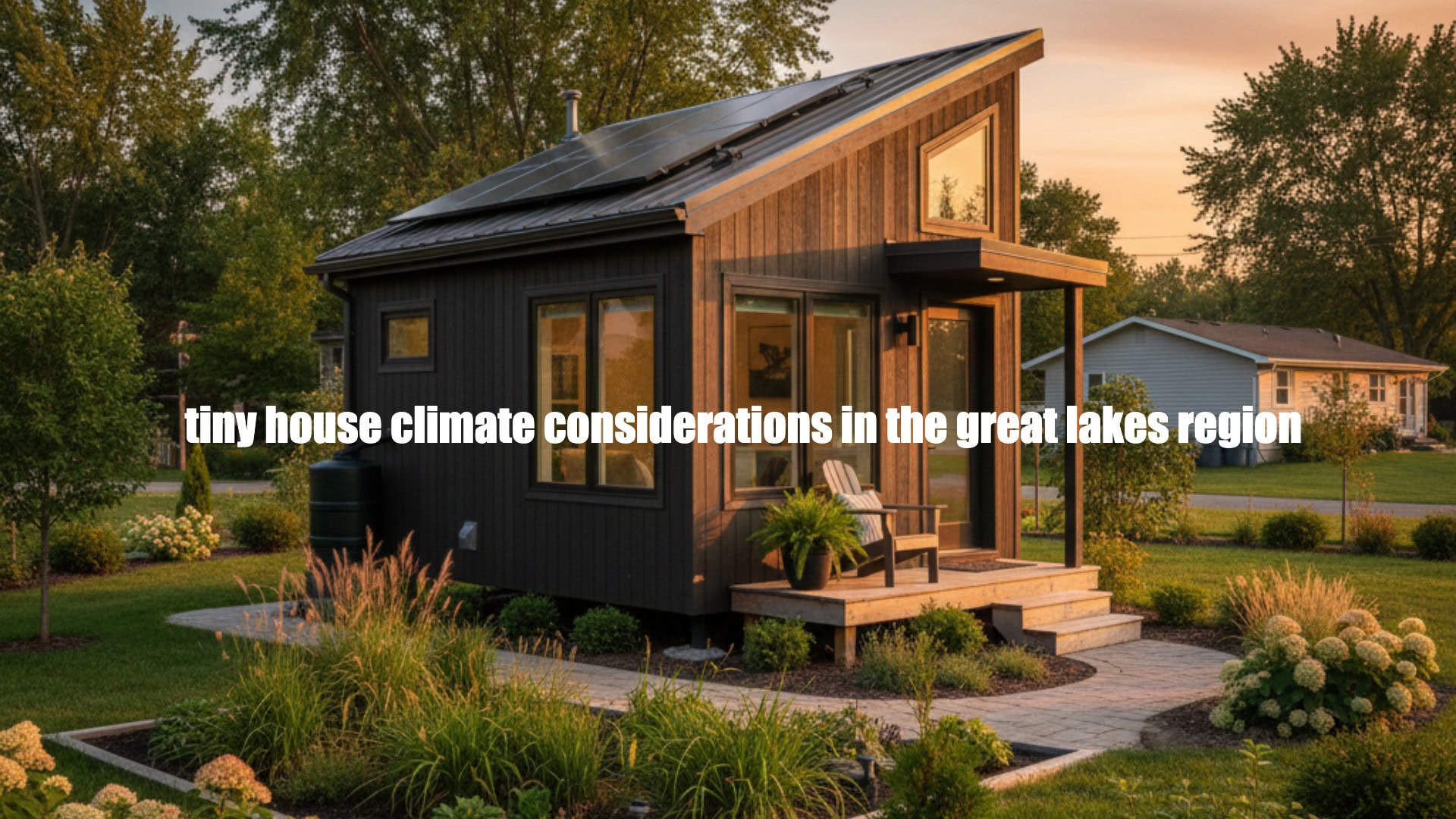
Understanding Climate Considerations for Tiny Houses in the Great Lakes Region
The Great Lakes region presents unique climate challenges that make careful planning essential for successful tiny house living. With temperatures ranging from -20°F in winter to 90°F in summer, humidity levels exceeding 80%, and lake-effect snow that can dump several feet in a single storm, we understand that tiny house owners face some of the most demanding weather conditions in North America.
The region’s continental climate creates extreme seasonal variations that directly impact energy consumption, structural integrity, and daily comfort. Lake-effect weather patterns create microclimates where temperatures and precipitation vary dramatically within just a few miles. These conditions require specialized approaches to insulation, heating systems, moisture control, and building materials.
Proper climate planning can reduce energy costs by up to 40% while ensuring year-round comfort. Strategic design choices – from foundation systems that handle freeze-thaw cycles to ventilation systems that manage humidity – make the difference between a comfortable home and an energy-draining struggle against the elements.
At Great Lakes Tiny Homes, we specialize in creating climate-ready tiny homes that thrive in our region’s challenging conditions. As a full-service manufacturer of modular and park model homes, we deliver turnkey builds to all 48 lower U.S. states, with particular expertise in Great Lakes climate considerations. Whether you choose wheels or a permanent foundation, with or without RVIA certification, we design each home to handle everything from lake-effect snow to summer humidity.
Ready to explore how we can help you build a climate-ready tiny home? Schedule a consultation with our experts to discuss your specific needs and location requirements.
Great Lakes Region Climate Patterns: What Tiny House Owners Need to Know
The Great Lakes region encompasses eight states with dramatically different climate zones, from the continental climate of Minnesota to the humid continental conditions of Ohio. Understanding these patterns is crucial for tiny house success, as each state presents unique challenges that impact everything from foundation design to HVAC sizing.
Temperature Extremes and Seasonal Variations
Winter temperatures typically range from -10°F to 30°F, with some areas experiencing prolonged periods below zero. Minnesota and Wisconsin see the coldest conditions, with average January temperatures of 8°F and 14°F respectively. Summer brings temperatures from 70°F to 90°F, with humidity levels often exceeding 70%. These 100+ degree temperature swings create significant expansion and contraction stresses on building materials.
Precipitation and Lake-Effect Weather
Annual precipitation varies from 24 inches in parts of Minnesota to over 40 inches near the eastern Great Lakes. Lake-effect snow is particularly challenging, with areas like Buffalo receiving over 100 inches annually. This phenomenon can create snow loads exceeding 40 pounds per square foot – a critical consideration for tiny house roof design.
Humidity and Wind Patterns
The Great Lakes create a unique humidity environment, with summer levels often reaching 80-90%. This high moisture content, combined with temperature fluctuations, creates ideal conditions for condensation problems in poorly designed tiny homes. Prevailing westerly winds can reach sustained speeds of 15-25 mph, with storm systems bringing gusts over 60 mph.
Each state within the region presents distinct microclimates. Michigan’s best tiny home communities often cluster in areas with moderated lake effects, while Wisconsin’s tiny house communities focus on cold-weather resilience.
Choosing Durable Building Materials for Great Lakes Region Conditions
Material selection for Great Lakes tiny houses requires balancing durability, thermal performance, and moisture resistance while managing weight constraints. We’ve tested numerous material combinations and identified specific products that consistently perform well in our challenging climate.
Exterior Siding and Roofing
Fiber cement siding has proven most effective for Great Lakes conditions, offering excellent freeze-thaw resistance and minimal expansion. James Hardie ColorPlus technology provides a 15-year warranty against cracking and fading. Cedar siding requires annual maintenance and costs 30% more over a 10-year period when factoring in staining and repairs.
Standing seam metal roofing excels in snow load management and ice dam prevention, with properly installed systems handling snow loads up to 60 pounds per square foot. The initial cost averages $12-15 per square foot but provides 40+ year lifespan with minimal maintenance.
Windows and Insulation
Triple-pane windows with low-E coatings and argon fill are essential for energy efficiency, reducing heat loss by up to 50% compared to double-pane units. We specify windows with U-values below 0.25 and SHGC ratings around 0.30 for optimal year-round performance. Fiberglass frames outperform vinyl in temperature extremes, maintaining structural integrity from -30°F to 120°F.
Working with experienced professionals who understand Great Lakes climate requirements is essential for material selection and installation. At Great Lakes Tiny Homes, we’ve developed specific material specifications and installation techniques based on years of experience in this region. Our understanding of local building codes, combined with our customization options, ensures your tiny home will withstand decades of Great Lakes weather while maintaining comfort and efficiency.
Ready to discuss material options for your specific location and needs? Book a consultation with our building experts to explore the best solutions for your climate-ready tiny home.
Seasonal Preparation and Maintenance Schedules
Successful tiny house living in the Great Lakes region requires proactive seasonal maintenance that addresses extreme temperature swings, heavy snow loads, and high humidity. We’ve developed comprehensive maintenance schedules based on real-world performance data from hundreds of tiny homes across the region.
Spring and Summer Preparation
Spring maintenance focuses on recovering from winter damage and preparing for increased humidity. Inspect roof systems for ice dam damage, checking gutters, downspouts, and flashing for separation or cracking. Clean and test HVAC systems, replacing filters and checking ductwork for condensation issues. Examine exterior caulking around windows, doors, and penetrations, as temperature cycling can cause sealants to fail.
Summer preparation emphasizes cooling efficiency and humidity control. Service air conditioning systems in May, cleaning coils and checking refrigerant levels. Install or clean dehumidification systems, targeting indoor humidity levels between 30-50%. Inspect and clean ventilation systems, including bathroom and kitchen exhaust fans.
Fall and Winter Maintenance
Fall preparation is critical for Great Lakes tiny houses, as early winter storms can arrive in October. Inspect and service heating systems, including furnaces, heat pumps, and backup heating sources. Winterize plumbing systems in areas prone to freezing, installing heat tape on exposed pipes and ensuring adequate insulation around water lines.
Winter maintenance focuses on monitoring systems and preventing ice damage. Check heating system performance monthly, ensuring adequate capacity for extreme cold periods. Monitor indoor humidity levels and inspect for ice dam formation, removing snow from roofs when accumulation exceeds design loads.
Monthly Maintenance Checklist
- Test smoke and carbon monoxide detectors
- Check HVAC filter condition and replace if needed
- Inspect plumbing for leaks or freeze damage
- Clean range hood and bathroom exhaust fans
- Check exterior caulking and weatherstripping
- Monitor indoor humidity levels
- Inspect electrical connections for corrosion
- Test backup heating and power systems
Location-Specific Climate Considerations Across Great Lakes Region States
Each state within the Great Lakes region presents distinct climate challenges that require tailored approaches to tiny house design and maintenance. Understanding these regional differences is crucial for selecting appropriate features and systems for your specific location.
Minnesota and Wisconsin
Minnesota’s continental climate creates the region’s most extreme temperature variations, with winter lows reaching -30°F and summer highs approaching 95°F. The state’s northern regions experience over 180 days below freezing, requiring exceptional insulation and heating system capacity. We recommend R-30 wall insulation and R-50 roof insulation for northern Minnesota installations. Minnesota counties allowing tiny houses often have specific cold-weather building requirements.
Wisconsin’s climate varies significantly from north to south, with northern regions experiencing lake-effect snow from Lake Superior. Door County and areas along Lake Michigan face unique challenges from lake-effect weather that can create localized snow accumulations exceeding 200 inches annually.
Michigan and Eastern States
Michigan’s unique geography creates multiple climate zones within the state. The Upper Peninsula experiences subarctic conditions with heavy lake-effect snow, while southern Michigan has a more moderate continental climate. Lake-effect snow can vary dramatically within short distances – Grand Rapids averages 75 inches annually while areas 30 miles east receive less than 40 inches.
Western Pennsylvania and western New York experience some of the most severe lake-effect conditions in the Great Lakes region. Buffalo and Erie areas can receive over 120 inches of snow annually, with individual storms depositing 3-4 feet in 24 hours.
Microclimate Considerations
Elevation changes of just 100-200 feet can create temperature differences of 3-5°F, affecting heating and cooling requirements. Proximity to large water bodies moderates temperature extremes but increases humidity and precipitation. Urban versus rural locations within the same state can have dramatically different requirements.
Cost Analysis: Investing in Climate-Appropriate Features
Investing in climate-appropriate features for Great Lakes region tiny houses requires careful analysis of upfront costs versus long-term savings. We’ve tracked energy performance and maintenance costs across hundreds of installations to provide realistic cost-benefit projections.
Insulation and Window Investments
Upgrading from standard R-13 wall insulation to R-20 spray foam costs approximately $3,000-4,500 for a typical tiny house but reduces heating costs by 25-35% annually. In Minnesota’s climate, this translates to $400-600 yearly savings, providing payback in 6-8 years.
Triple-pane windows cost 40-60% more than double-pane units but reduce heat loss by 30-50%. For a tiny house with 150 square feet of windows, upgrading to triple-pane costs an additional $2,000-3,000 but saves $200-350 annually in energy costs.
HVAC and Solar Considerations
Properly sized heating systems for Great Lakes conditions typically cost 15-25% more than standard units but operate more efficiently and last longer. Heat pump systems with cold-climate capability cost $3,000-5,000 more than standard units but maintain efficiency down to -15°F.
Solar installations in the Great Lakes region face challenges from snow cover and reduced winter sunlight but can still provide significant value. A 4kW system costs $12,000-16,000 after incentives and typically generates 4,500-5,500 kWh annually in the region.
Great Lakes Tiny Homes Pricing Structure
At Great Lakes Tiny Homes, we offer a comprehensive range of park models, cabins, and tiny homes on wheels designed specifically for our region’s climate challenges. Prices start around $61,000 for smaller models like The Pinnacle Tiny House on Wheels, while larger park models like the A-Frame Luxe start at about $155,000. All our homes can be extensively customized with climate-specific features including upgraded insulation packages, high-efficiency HVAC systems, and premium window selections.
Interested in exploring our available models and customization options? View our portfolio of completed projects to see how we’ve addressed climate challenges across the Great Lakes region.
Expert Tips and Best Practices
After years of building and supporting tiny houses throughout the Great Lakes region, we’ve identified key strategies that separate successful installations from problematic ones. These expert insights can help you avoid common pitfalls and ensure your tiny house thrives in our challenging climate.
Foundation and Moisture Management
One of the most critical mistakes we see is inadequate foundation preparation for freeze-thaw cycles. Permanent foundations must extend below the frost line – typically 42-48 inches in the Great Lakes region. For tiny houses on wheels, we recommend installing permanent tie-down systems rated for 150+ mph winds, with ground anchors extending at least 4 feet deep.
The biggest long-term threat to Great Lakes tiny houses is moisture infiltration and condensation. Install vapor barriers on the warm side of insulation, with careful attention to sealing all penetrations. Use acoustical sealant rather than caulk for electrical boxes and plumbing penetrations. Ensure bathroom and kitchen exhaust fans vent directly outside, never into attic spaces.
Heating and Snow Management
Many tiny house owners underestimate heating requirements for Great Lakes winters. Always size heating systems for the coldest expected temperatures, not average conditions. Install backup heating sources independent of your primary system. Power outages are common during ice storms, and even the best heating systems can fail.
Roof design for snow loads requires understanding both weight and ice dam formation. Design roofs with adequate slope (minimum 4/12 pitch) and install ice and water shield underlayment across the entire roof surface. Install roof heating cables in areas prone to ice dam formation.
At Great Lakes Tiny Homes, we’ve developed specialized expertise in building climate-ready tiny houses that perform reliably in our region’s demanding conditions. Our experience with local codes, material suppliers, and installation techniques helps clients avoid costly mistakes and ensures their homes will provide decades of comfortable living.
Ready to benefit from our expertise in Great Lakes tiny house construction? Schedule a consultation with our team to discuss how we can help you build a tiny house that thrives in our challenging climate.
Frequently Asked Questions About Tiny House Climate Considerations in the Great Lakes Region
Important Note: These FAQ responses offer general insights into Great Lakes tiny house climate challenges based on regional patterns. For personalized advice tailored to your location and build, consult certified builders and local climate data sources.
What are the primary climate challenges for tiny houses in the Great Lakes region?
The Great Lakes region features extreme temperature swings from -20°F in winter to 90°F in summer, high humidity over 80%, and heavy lake-effect snow that can exceed several feet in storms. These conditions demand robust insulation, moisture control, and structural designs to handle freeze-thaw cycles, wind gusts up to 60 mph, and snow loads over 40 pounds per square foot, ensuring year-round comfort and energy efficiency.
How should I select building materials for durability in Great Lakes weather?
Opt for fiber cement siding for its freeze-thaw resistance and low maintenance, paired with standing seam metal roofing to manage snow loads up to 60 pounds per square foot and prevent ice dams. For windows, choose triple-pane units with low-E coatings and U-values below 0.25 to minimize heat loss by up to 50%, while fiberglass frames withstand temperatures from -30°F to 120°F better than vinyl.
What role does proper insulation play in reducing energy costs for tiny houses here?
Strategic insulation can cut energy costs by up to 40% by addressing the region’s 100+ degree seasonal variations and high humidity. Focus on materials that handle moisture and thermal bridging, combined with ventilation systems for humidity control, to maintain comfort without excessive heating or cooling demands in microclimates affected by lake-effect weather.
How do lake-effect snow and humidity impact tiny house foundations and ventilation?
Lake-effect snow requires foundations that resist frost heave from freeze-thaw cycles, such as pier or slab systems designed for heavy loads. High summer humidity (80-90%) necessitates dehumidification and ventilation to prevent condensation and mold; HRV or ERV systems are ideal for exchanging stale air while recovering heat, ensuring indoor air quality in the compact space of a tiny home.
Planning Your Climate-Ready Great Lakes Region Tiny House
Successfully planning a climate-ready tiny house for the Great Lakes region requires systematic attention to the unique challenges our climate presents. We’ve developed a comprehensive approach that ensures your tiny house will provide comfortable, efficient living through decades of extreme weather conditions.
Climate-Ready Planning Checklist
Start with a thorough site analysis that considers local microclimates, prevailing wind patterns, and seasonal sun angles. Prioritize building envelope performance with continuous insulation, high-performance windows, and comprehensive air sealing. Design mechanical systems for peak loads, not average conditions. Size heating systems for the coldest expected temperatures and include backup options for power outages.
Working with Great Lakes Tiny Homes
At Great Lakes Tiny Homes, we understand the complexities of building for our region’s demanding climate. Our experience with local building codes, proven material selections, and climate-specific construction techniques helps ensure your tiny house will perform reliably for decades. We work with each client to optimize the balance between upfront investment and long-term operating costs based on their specific location and usage patterns.
Begin planning at least 6-12 months before construction to allow time for permitting, material selection, and contractor scheduling. Order long-lead-time items like custom windows and specialized HVAC equipment early in the process. Establish relationships with local service providers familiar with tiny house systems before you need them.
The Great Lakes region offers incredible natural beauty and four-season recreation opportunities that make the climate challenges worthwhile. With proper planning and quality construction, tiny house living can provide comfortable, efficient housing that connects you with the region’s unique character while minimizing environmental impact.
Great Lakes Tiny Homes brings extensive experience in creating climate-appropriate tiny homes that thrive in challenging Great Lakes conditions. As a full-service manufacturer delivering turnkey builds across all 48 lower U.S. states, we understand the unique requirements of this region and can help you navigate the complexities of building a truly climate-ready home.
Ready to start planning your climate-ready Great Lakes tiny house? Contact our team to discuss your specific needs and explore how we can help you create a tiny house that thrives in our challenging but rewarding climate.