
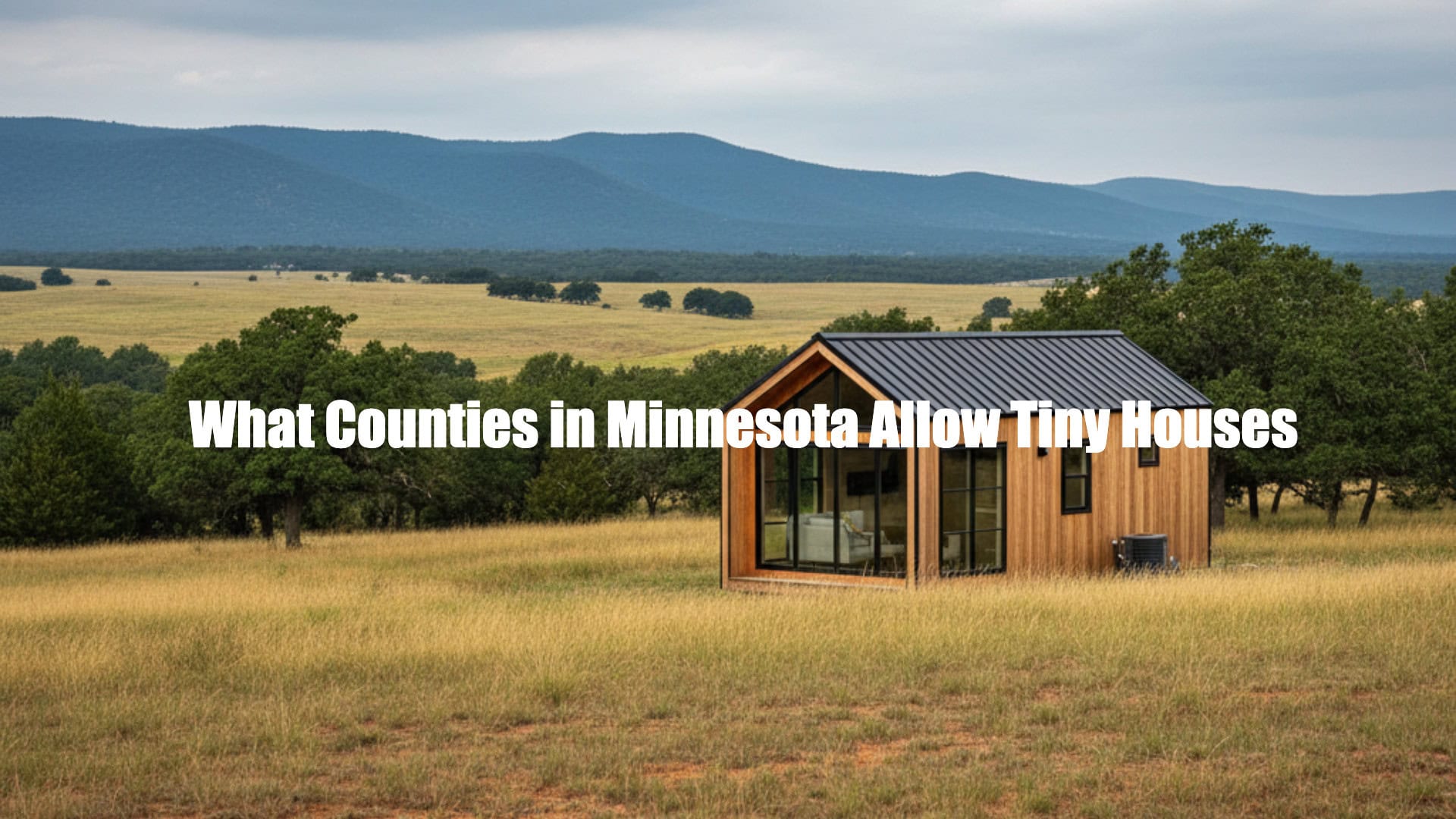
Minnesota allows tiny houses as accessory dwelling units (ADUs) in select counties like Ramsey and Dakota, with minimum 400 square feet requirements for permanent structures. Tiny Houses on Wheels are classified as RVs and face restrictions for permanent residence.
Are you considering buying a tiny house in Minnesota? Understanding the state’s complex zoning codes and building regulations is essential before making this significant investment. Minnesota’s approach to tiny house regulations varies significantly by county, with some areas embracing these compact dwellings as accessory dwelling units (ADUs) while others maintain strict restrictions. As the demand for affordable housing options continues to grow across the Midwest, Minnesota has emerged as a relatively tiny-house-friendly state. However, navigating the patchwork of local zoning laws, building codes, and permit requirements requires careful research and planning. Each county and municipality has adopted its own interpretation of state guidelines, creating a complex regulatory landscape for prospective tiny house owners.
Great Lakes Tiny Homes is a full-service manufacturer of modular, park model, and tiny homes, delivering turnkey builds to all 48 lower U.S. states. We offer comprehensive options with or without wheels and with or without RVIA certification—models with RVIA certification are often called Park Models. Our team understands Minnesota’s regulatory environment and can help guide you through the process. Book a call with our experts to discuss your specific needs and location requirements.
Disclaimer: This article is for informational purposes only and does not constitute legal advice. Laws, regulations, and zoning rules vary by location and may change over time. Always consult your local zoning office or a qualified land use/zoning attorney before making decisions based on this information.
What Counties in Minnesota Allow Tiny Houses?
Building, zoning, and HUD ordinances in Minnesota define the rules and restrictions about tiny dwellings. The Minnesota Residential Code serves as the primary legislation governing small dwellings in the state. Specifically, Appendix Q of the Minnesota Residential Code provides comprehensive guidelines that govern the construction of tiny dwellings throughout Minnesota. These regulations ensure that tiny houses meet safety standards while accommodating the unique challenges of compact living. Counties across the state interpret these guidelines differently, leading to varied opportunities for tiny house placement. Prospective owners must research specific county requirements to determine feasibility and compliance pathways.
| County | Min Sq Ft | Zoning Type | Key Requirements | Source | Verified |
| Ramsey County | 400 sq ft | ADU/Primary | Permanent foundation, utilities, permits required | Ramsey County | 2024 |
| Dakota County | 400 sq ft | ADU/Primary | Building codes compliance, zoning approval | Dakota County | 2024 |
| Cook County | 400 sq ft | Primary/ADU | Foundation required, land use permits | Cook County | 2024 |
| Hennepin County | Varies by city | ADU | Municipal approval, varies by jurisdiction | Hennepin County | 2024 |
| Washington County | 400 sq ft | ADU | Zoning compliance, building permits | Washington County | 2024 |
Disclaimer: County regulations change frequently. Contact your specific county zoning office for the most current requirements and permit processes.
Ramsey County
St. Paul, the state capital, and Ramsey County are home to tiny house advocates. Ramsey County allows tiny dwellings under specific zoning restrictions, despite having a more metropolitan terrain than neighboring counties. The county has embraced progressive housing policies that balance urban density with innovative housing solutions. Residents can enjoy a simplified lifestyle while still experiencing the energy of the Twin Cities metropolitan area. Recent updates to county zoning codes have further clarified pathways for tiny house development, making it easier for owners to secure approvals. This progressive stance positions Ramsey County as a leader in Minnesota’s tiny house movement.
Dakota County
Located in the southeast metro area, Dakota County is renowned for its parks and family-friendly neighborhoods. Tiny home communities in Minnesota often find Dakota County particularly welcoming due to its balanced approach to zoning regulations. The county permits tiny homes under certain building and zoning code restrictions, ensuring that these innovative housing solutions integrate seamlessly with existing neighborhoods while maintaining the area’s visual appeal. Dakota County’s planning department has developed streamlined processes for ADU approvals, reducing wait times for tiny house projects. This efficiency, combined with the county’s abundant green spaces, makes it an attractive location for families considering tiny house living. Ongoing community outreach efforts continue to educate residents about the benefits of diverse housing options.
Major Cities Tiny House Regulations
Minneapolis
Minneapolis has adopted progressive housing policies through its Minneapolis 2040 Comprehensive Plan, which explicitly supports innovative housing types including tiny houses. The city allows tiny houses as accessory dwelling units (ADUs) in most residential zoning districts, with specific requirements for lot size, setbacks, and design compatibility. Recent amendments to the city’s zoning code have expanded ADU allowances, removing previous restrictions on owner occupancy and lot size minimums. This evolution reflects Minneapolis’s commitment to addressing housing affordability challenges through diverse housing solutions. The city’s planning department offers resources and guidance for prospective tiny house owners navigating the permit process. Community workshops and online tools further support residents interested in exploring tiny house options.
Key Requirements:
- Minimum 400 square feet for permanent structures
- Must comply with Minneapolis Building Code
- ADU permit required through the city’s planning department
- Owner occupancy required for either primary or accessory unit
Contact: Minneapolis Community Planning & Economic Development
Phone: (612) 673-2100
Website:
minneapolismn.gov
Saint Paul
Saint Paul permits accessory dwelling units including tiny houses in specific residential zoning districts. The city has established clear guidelines for ADU development while maintaining neighborhood character and ensuring adequate infrastructure. In 2023, Saint Paul updated its ADU regulations to allow up to two ADUs per single-family lot, increasing flexibility for property owners. These changes also raised the maximum unit size to 800 square feet or 75% of the primary dwelling’s size, whichever is greater. The city’s approach emphasizes compatibility with existing architecture and community integration. Saint Paul’s planning resources include detailed ADU handbooks and permit application guides to assist property owners.
Key Requirements:
- Maximum 1,000 square feet for ADUs
- Minimum 400 square feet for habitable structures
- Building permit and zoning compliance required
- Parking requirements must be met
Contact: Saint Paul Department of Safety and Inspections
Phone: (651) 266-8989
Website:
stpaul.gov
Duluth
Duluth has made significant strides in accommodating tiny houses, with the city council approving zoning changes in 2019 to make building tiny homes easier. The city recognizes both foundation-built tiny houses and has provisions for tiny house communities. Recent updates to Duluth’s zoning code have further streamlined the approval process for ADUs and innovative housing types. The city’s planning department actively supports tiny house development through educational resources and technical assistance. Duluth’s approach balances housing innovation with environmental considerations, particularly in its scenic waterfront areas. Community engagement initiatives help address neighborhood concerns and promote acceptance of diverse housing forms.
Key Requirements:
- Compliance with International Residential Code
- Minimum ceiling heights and safety requirements
- Utility connections required for permanent structures
- Zoning approval through planning commission
Contact: Duluth Planning and Development
Phone: (218) 730-5230
Website:
duluthmn.gov
Disclaimer: Municipal regulations are subject to change. Always verify current requirements with the specific city’s planning or building department before proceeding with any tiny house project.
Tiny House Regulations And Rules In Minnesota
The Minnesota State Building Code provides comprehensive guidelines for building both site-built and prefabricated tiny houses. Tiny houses in Minnesota fall under different regulatory frameworks depending on their construction type and intended use. Tiny houses on wheels are classified as recreational vehicles (RVs) and must meet regulations set by the US Department of Housing and Urban Development (HUD) and RVIA standards. Recent updates to the state’s building code have incorporated enhanced energy efficiency requirements, reflecting Minnesota’s commitment to sustainable housing practices. These regulations ensure that tiny houses provide safe, durable living spaces while minimizing environmental impact. Builders must stay informed about ongoing code revisions to maintain compliance throughout the construction process.
The following regulations apply to all tiny houses in Minnesota:
- All livable areas must have ceilings at least 6 feet 8 inches high
- Kitchens and bathrooms may have lower ceilings, but must be at least 6 feet 4 inches
- Construction impediments like beams, ducts, and lighting cannot hang below the minimum ceiling height
- Loft spaces with less than 6 feet 8 inches height must have minimum 35 square feet and horizontal measurements longer than 5 feet
- Loft guards required on open sides with minimum 36-inch height
- Emergency escape and rescue openings must comply with Section R310 of the building code
- Windows in lofts must be at least 44 inches above the loft floor
- Tiny homes on wheels are limited to 400 square feet maximum
- Site-built tiny homes must have minimum 400 square feet
Permanent Structure Rules
Permanent tiny home buildings in Minnesota, whether prefabricated or built on-site, must comply with the Minnesota State Building Code. This includes adherence to the National Electrical Code, Minnesota Energy Code, Mechanical Code, and Plumbing Code. Recent enhancements to the energy code emphasize high-performance insulation and efficient heating systems, crucial for Minnesota’s harsh winters. Builders must demonstrate compliance through detailed plans and professional inspections at various construction stages. The state’s streamlined permitting system, updated in 2020, facilitates faster approvals for compliant projects while maintaining rigorous safety standards. These requirements ensure that permanent tiny homes provide long-term durability and energy efficiency.
Requirements include:
- Structural ability to support various loads and maintain minimum room temperature
- Adequate natural light and ventilation
- Emergency exits and at least one 120-square-foot habitable room
- Safety measures including carbon monoxide detectors and smoke alarms
- Permanent foundation required for all site-built structures
Prefabricated structures require a permanent seal and data plate on each construction module to prove compliance with the State Construction Code. A permit and plan evaluation system introduced in 2020 streamlines the approval process.
Temporary Structure Rules
Tiny houses on wheels (THOWs) are classified as recreational vehicles and subject to strict zoning and building regulations. They must receive certification from RVIA or NOAH and comply with NFPA 1192 Standard for Recreational Vehicles. While THOWs must meet safety standards equivalent to conventional dwellings, they face restrictions on permanent placement and utility connections. Recent regulatory clarifications have defined acceptable temporary uses, such as seasonal camping or short-term housing during construction. Owners should verify local zoning allowances for RV placement, as many municipalities limit duration and location. These rules balance mobility benefits with public safety and infrastructure concerns.
Transitional Structure Rules
Minnesota recognizes tiny dwellings as transitional housing under specific circumstances. Legislation effective January 1, 2024, permits religious organizations to construct communities of microunits for specific populations, subject to building requirements, sewage disposal, and utility access restrictions. These areas must comply with landlord-tenant regulations and require annual certification. This framework supports innovative housing solutions for vulnerable populations while ensuring health and safety standards. Transitional tiny house programs often partner with nonprofits to provide supportive services alongside housing. The state’s approach demonstrates flexibility in addressing housing needs through compact, efficient structures.
Disclaimer: Building codes and regulations are complex and subject to change. Consult with a licensed contractor and local building officials to ensure full compliance with current requirements.
Where Can You Build A Tiny House in Minnesota?
Location selection is crucial for your tiny house project in Minnesota. Working with a tiny house builder in Minnesota can help navigate the complex permitting process, handle documentation, and ensure your home meets all building requirements. Minnesota’s diverse geography offers opportunities in urban, suburban, and rural settings, each with unique advantages and challenges. Urban areas provide access to services but stricter regulations, while rural locations offer more flexibility but may require off-grid solutions. Careful site evaluation ensures your tiny house aligns with local zoning and infrastructure capabilities. Professional site assessments can identify potential issues early, saving time and costs.
Common locations for tiny houses in Minnesota include:
- RV Parks: Many RV parks accept RVIA-certified tiny houses on wheels for temporary or seasonal stays
- Campgrounds: State and private campgrounds may allow tiny houses with proper permits and certifications
- Tiny House Communities: Dedicated developments designed specifically for tiny house living
- Private Properties: Rural properties with proper zoning and utility access
- Accessory Dwelling Units: On existing residential properties where local zoning permits ADUs
Zoning Considerations
Minnesota’s zoning laws vary significantly by municipality, creating a complex landscape for tiny house placement. Rural areas typically offer more flexibility, while urban and suburban areas may have stricter requirements. Key factors include minimum dwelling size requirements, setback requirements from property lines, utility connection mandates, parking and access requirements, and architectural compatibility standards. Recent zoning reforms in several counties have introduced specific provisions for tiny houses, simplifying the approval process. Owners should review comprehensive zoning maps and consult with planning officials to identify suitable districts. This proactive approach helps avoid common pitfalls and ensures project viability.
Utility Requirements
Most permanent tiny house installations in Minnesota require connections to municipal water supply or approved well system, sewage treatment system or septic system, electrical service meeting state electrical code, and natural gas or propane for heating (where applicable). Off-grid systems may be permitted in rural areas with proper permits and approvals, but requirements vary by county. Utility planning should consider Minnesota’s extreme weather, ensuring systems can withstand freezing temperatures. Professional utility assessments help determine the most cost-effective and compliant solutions for each site. Ongoing maintenance plans are essential for long-term reliability and code compliance. These preparations ensure safe, comfortable living year-round.
Tiny House Communities in Minnesota
Minnesota hosts several established tiny house communities that provide legal, permanent housing options for tiny house enthusiasts. These communities offer pre-approved zoning, shared amenities, and supportive environments for tiny house living. As interest in sustainable, compact housing grows, more developments are emerging across the state. These communities often emphasize environmental stewardship, community engagement, and innovative design. Residents benefit from collective resources and shared experiences that enhance the tiny house lifestyle. Ongoing community events and governance structures foster strong social connections among members.
Sanctuary Minnesota Village
The Sanctuary is a tiny home village situated on 80 acres of forested trails near St. Paul, Minnesota. This community provides designated parking spots for tiny dwellings and features common areas within the main building where residents can enjoy shared facilities. The Sanctuary offers a unique blend of privacy and community living, with walking trails, gardens, and recreational spaces. Environmental features include sustainable landscaping and wildlife habitats that enhance the natural setting. Community governance involves resident input on policies and improvements, creating a collaborative atmosphere. This model demonstrates successful integration of tiny house living with Minnesota’s natural beauty.
Features:
- 80 acres of natural setting
- Shared community facilities
- Utilities and infrastructure provided
- Walking trails and outdoor recreation
Avivo Village Community
Located in Minneapolis, the Avivo Village Community provides housing and comprehensive support services for individuals and families experiencing homelessness, mental health challenges, and substance use disorders. This innovative community demonstrates how tiny houses can address housing insecurity while providing wraparound services including case management, vocational training, and life skills development. The village’s design emphasizes dignity, privacy, and community integration for residents. Partnerships with local organizations ensure access to healthcare, employment resources, and educational opportunities. Success stories from Avivo Village highlight the transformative impact of stable, supportive housing. This model serves as a blueprint for addressing broader housing challenges through tiny house solutions.
Services Include:
- Safe and stable housing environment
- Case management and support services
- Vocational training programs
- Life skills development
- Community integration support
Developing Communities
Several additional tiny house communities are in development across Minnesota, particularly in rural areas where zoning regulations are more accommodating. These emerging communities focus on sustainable living, shared resources, and environmental stewardship. Developers often incorporate renewable energy systems, community gardens, and eco-friendly building materials. Public-private partnerships facilitate infrastructure development and regulatory approvals. These projects address Minnesota’s housing needs while promoting resilient, low-impact communities. Prospective residents should monitor development updates through local planning departments and community organizations.
For those interested in tiny home communities in Minnesota, it’s important to research each community’s specific requirements, costs, and available amenities before making a commitment.
Tiny House Prices in Minnesota
Tiny house prices in Minnesota vary significantly based on several key factors including size, foundation type, RVIA certification status, utility hookups, and compliance with local building codes. Understanding these cost variables is essential for budgeting your tiny house project effectively. Market trends show increasing demand driving modest price appreciation, particularly for certified, turnkey models. Location plays a crucial role, with urban-adjacent properties commanding premiums due to infrastructure access. Customization options further influence pricing, allowing owners to balance features with budget constraints. Long-term cost savings from energy-efficient designs often offset higher upfront investments.
State-Level Pricing Context
Minnesota’s tiny house market reflects the state’s diverse geography and regulatory environment. Prices typically range from $30,000 for basic DIY builds to $150,000 for fully custom, turnkey solutions. Key pricing factors include size, foundation vs. wheels, RVIA certification, utility hookups, and local code compliance. Larger tiny houses (300-400 sq ft) cost significantly more than smaller units (150-250 sq ft), while permanent foundation homes require site preparation and utility connections that add to expenses. THOWs offer mobility but face placement restrictions that may necessitate additional skirting or stabilization costs. Recent material price fluctuations have impacted construction budgets, emphasizing the value of experienced builders who optimize costs without compromising quality.
Our Minnesota customers benefit from:
- Full-service design and construction
- Turnkey delivery to your Minnesota location
- Compliance with state and local building requirements
- Professional project management and support
- Warranty coverage and ongoing customer service
Model Options
Great Lakes Tiny Homes offers diverse model options to meet Minnesota’s varied zoning requirements and customer preferences: Modular Homes: Permanent foundation structures ideal for counties requiring traditional residential compliance. A-Frame: Distinctive architectural style popular in Minnesota’s recreational areas. Cabin: Traditional cabin aesthetics perfect for Minnesota’s lake country and rural settings. Park Models: RVIA-certified units offering financing advantages and RV park compatibility. Tiny House on Wheels: Mobile solutions for customers seeking flexibility in placement. Model selection should align with your intended location’s zoning requirements. Counties requiring permanent foundations favor modular homes, while areas permitting RVs may accommodate park models or THOWs. Each model type offers unique advantages for Minnesota’s climate and regulatory landscape. Professional guidance helps match models to specific site conditions and owner preferences.
Planning Your Investment
Minnesota’s diverse regulatory landscape means that zoning compliance significantly impacts both model choice and total project costs. Rural counties may offer more flexibility and lower development costs, while urban areas provide better access to utilities and services but may require more expensive compliance measures. Budgeting should include not only construction costs but also permitting fees, utility connections, and potential site preparation expenses. Long-term operating costs, including energy efficiency and maintenance, should also factor into financial planning. Consulting with financial advisors familiar with alternative housing can optimize financing strategies and tax considerations. This comprehensive approach ensures sustainable investment in tiny house living.
Before finalizing your tiny house investment, consider consulting with local zoning officials and experienced builders who understand Minnesota’s requirements. Book a call with our experts to discuss how different model options align with your target location’s regulations and your budget requirements.
Disclaimer: Prices are estimates and subject to change based on customization, site conditions, and local requirements. Final pricing depends on specific model selection, site preparation needs, and local permit costs.
Building Codes and Permit Requirements
Minnesota’s building code requirements for tiny houses depend on the structure type and intended use. Understanding these requirements early in the planning process helps avoid costly delays and ensures legal compliance. The state’s adoption of the 2020 International Residential Code with Appendix Q provides a solid foundation for tiny house construction. However, local amendments and interpretations create variations that require careful navigation. Professional code consultants can clarify complex requirements and streamline the approval process. Staying current with code updates ensures ongoing compliance and safety.
Permit Requirements
Most tiny house projects in Minnesota require multiple permits: Building Permit: Required for all permanent structures and major modifications. Zoning Permit: Ensures compliance with local land use regulations. Electrical Permit: Required for all electrical installations. Plumbing Permit: Necessary for water and sewage connections. Septic Permit: Required for properties not connected to municipal sewage. Recent digital permitting platforms in several counties have improved efficiency, reducing processing times. Owners should prepare comprehensive documentation, including site plans and engineering drawings, to facilitate approvals. Permit fees vary by county but typically range from $500 to $2,000 depending on project scope.
Inspection Process
Minnesota requires multiple inspections throughout the construction process: Foundation Inspection: Before concrete pour or permanent foundation installation. Framing Inspection: After structural framing completion. Electrical Rough-In: Before insulation and drywall installation. Plumbing Rough-In: Before covering pipes and fixtures. Insulation Inspection: Before interior wall covering. Final Inspection: Before occupancy certificate issuance. Inspections verify compliance with Minnesota’s energy efficiency standards, particularly important for winter performance. Scheduling inspections promptly prevents construction delays and ensures quality workmanship. Digital inspection scheduling systems in progressive counties enhance coordination between builders and inspectors.
- Foundation Inspection: Before concrete pour or permanent foundation installation
- Framing Inspection: After structural framing completion
- Electrical Rough-In: Before insulation and drywall installation
- Plumbing Rough-In: Before covering pipes and fixtures
- Insulation Inspection: Before interior wall covering
- Final Inspection: Before occupancy certificate issuance
Professional Requirements
Minnesota requires licensed professionals for certain aspects of tiny house construction: Licensed electricians for electrical installations, licensed plumbers for plumbing and gas connections, licensed contractors for structural modifications, and professional engineers for custom foundation designs. These requirements ensure safety and code compliance while protecting consumers from unqualified work. Recent licensing reforms have expanded the pool of qualified professionals familiar with tiny house construction. Owners should verify credentials through the Minnesota Department of Labor and Industry. Working with established builders maintains compliance throughout the project lifecycle. Professional involvement also facilitates warranty claims and insurance coverage.
Working with a certified tiny house builder in Minnesota ensures compliance with all professional licensing requirements and building code standards.
Financing and Insurance Considerations
Securing financing and insurance for tiny houses in Minnesota requires understanding how these structures are classified and what options are available for different types of builds. Evolving financial products have improved access to capital for alternative housing, but challenges remain. Lenders increasingly recognize tiny houses as viable investments when properly documented. Insurance providers have developed specialized policies addressing unique tiny house risks. Comprehensive financial planning ensures long-term affordability and protection. Professional advisors can navigate complex requirements and optimize coverage.
Financing Options
Traditional Mortgages: Available for tiny houses on permanent foundations that meet minimum square footage requirements (typically 400+ sq ft in Minnesota). These loans offer competitive rates but require extensive documentation and appraisals. Personal Loans: Common for smaller tiny houses or those that don’t qualify for traditional mortgages. Interest rates are typically higher but approval is often easier, with loan amounts up to $50,000 available. RV Loans: Available for RVIA-certified tiny houses on wheels. These loans typically offer better terms than personal loans but require RVIA certification and vehicle registration. Construction Loans: For custom builds, construction-to-permanent loans can finance both the building process and convert to permanent financing upon completion. These loans provide flexibility during construction but require detailed project plans and timelines.
Insurance Considerations
Homeowners Insurance: Available for tiny houses on permanent foundations that meet local building codes. Policies cover standard perils but may require additional riders for unique features. RV Insurance: Required for tiny houses on wheels, especially those certified by RVIA. Coverage includes liability, collision, and comprehensive protection during travel. Specialty Tiny House Insurance: Some insurers now offer policies specifically designed for tiny houses, covering unique risks and situations like mobility or off-grid features. These policies often provide tailored coverage for construction types and usage patterns. Insurance requirements and availability can vary significantly based on location, construction type, and intended use. Consult with insurance professionals familiar with tiny house coverage in Minnesota. Annual policy reviews ensure adequate protection as regulations and risks evolve.
Frequently Asked Questions
Can You Make a Tiny House in Minnesota Your Main Residence?
Yes, it is possible to live permanently in a tiny dwelling in Minnesota, provided it meets all applicable building codes and zoning requirements. The structure must comply with the Minnesota Residential Code, including minimum square footage requirements (typically 400 sq ft), proper foundation, utility connections, and safety features. However, local laws and ordinances vary significantly across counties and municipalities. Contact your local zoning office and building department to verify that your tiny home complies with all regulations, including inspection requirements and occupancy standards. Recent zoning reforms in several counties have expanded opportunities for primary tiny house residences, particularly in rural areas. Professional guidance ensures smooth navigation of these evolving requirements.
Can I Use My Tiny House as an Accessory Dwelling Unit in My Backyard?
You may be able to place your tiny home in your backyard and use it as an accessory dwelling unit, provided you comply with local zoning and land use regulations. Many Minnesota counties and cities allow ADUs, but requirements vary significantly. Common ADU requirements include minimum lot size requirements, setback requirements from property lines, maximum size limitations for the ADU, owner occupancy requirements, and parking and utility requirements. Check with your local jurisdiction as some areas have restrictions on ADUs in certain zoning districts. Recent legislative changes have liberalized ADU rules in urban areas, facilitating family housing solutions. Site-specific evaluations help determine feasibility and compliance pathways.
Check the local zoning laws in your area, as they tend to vary depending on the location! If you’d like more information it’s best to contact your local zoning department.
Is It Legal to Rent Out My Tiny Home on My Land in Minnesota?
In Minnesota, you can legally rent out your tiny house on your land, provided you comply with local land use regulations, rental licensing requirements, and landlord-tenant laws. Many jurisdictions require rental licenses and regular inspections for rental properties. Key considerations include local rental licensing requirements, zoning compliance for rental use, building code compliance and safety inspections, landlord-tenant law compliance, and tax implications for rental income. Research legal requirements and secure necessary permits before engaging in any rental activity. Short-term rental platforms like Airbnb may have additional platform-specific requirements and local occupancy taxes. Professional property management services can assist with compliance and tenant screening.
Do I Need a Certified Builder for My Tiny House in Minnesota?
While Minnesota doesn’t specifically require certified builders for all tiny house construction, working with an RVIA-certified builder like Great Lakes Tiny Homes offers significant advantages: Guaranteed compliance with building codes and regulations, access to financing options that require professional construction, insurance coverage advantages, quality assurance and warranty protection, and professional project management and permitting assistance. For tiny houses on wheels, RVIA certification is often required for financing, insurance, and placement in RV parks. Certified builders demonstrate expertise in Minnesota’s climate-specific requirements, ensuring durable, energy-efficient construction. Third-party inspections verify quality and compliance throughout the build process. This professional approach minimizes risks and maximizes long-term value. Owner-builders should still consult code officials for guidance on self-construction projects.
What Utilities Are Required for a Tiny Home in Minnesota?
Minnesota typically requires tiny homes to connect to standard utilities for permanent occupancy: Water: Municipal water supply or approved private well, Sewage: Municipal sewage system or approved septic system, Electricity: Connection to electrical grid meeting state electrical code, and Heating: Approved heating system (natural gas, propane, or electric). Off-grid systems may be permitted in rural areas with proper permits and approvals, but requirements vary by county. Utility planning must account for Minnesota’s extreme temperatures, with freeze protection essential for pipes and systems. Professional engineering assessments ensure reliable, code-compliant installations. Alternative energy sources like solar may supplement grid connections in remote locations. Comprehensive utility plans support safe, comfortable year-round living.
How to Verify Tiny House Rules in Your County
Important Note: The verification steps in this section provide a general framework for checking tiny house regulations in your Minnesota county; local rules may evolve, so directly contact officials for the latest details specific to your property.
Navigating tiny house regulations in Minnesota requires verifying local rules to ensure compliance. Follow this step-by-step process to confirm what’s allowed in your county: Access the County Zoning Code: Visit your county’s official website or the Minnesota Association of County Officers portal. Search for the zoning ordinance document, which outlines land use categories and restrictions for residential structures like tiny homes. Review Minimum Dwelling Size Requirements: In the zoning code, look for sections on residential building standards. Minnesota’s Appendix Q sets a 400 sq ft minimum for tiny dwellings, but counties may impose stricter limits—check for any overrides or exceptions. Check ADU Provisions: Examine the accessory dwelling unit guidelines within the zoning code. Determine if tiny houses qualify as ADUs, including lot size requirements, setbacks, and whether they must be attached to a primary residence. Investigate Tiny Houses on Wheels as RVs: Search for RV or recreational vehicle classifications in the code. Many counties treat wheeled tiny homes as temporary RVs, prohibiting permanent residency—verify camping or storage allowances versus full-time living. Contact the Local Planning Department: Call or email your county’s planning and zoning office (find contacts on the county website). Provide your property address for personalized advice, and request a pre-application meeting to discuss your tiny house plans in detail.
By following these steps, you’ll gain clarity on feasibility and avoid costly surprises. This process typically takes a few hours to a day, depending on document availability. Document all communications with officials to create a clear record of approvals and requirements. Consider consulting a local land use attorney for complex zoning interpretations. Regular updates from county planning departments keep you informed of regulatory changes. This thorough verification ensures your tiny house project proceeds smoothly and legally.
Conclusion
Minnesota offers a relatively welcoming environment for tiny house living, with a supportive regulatory framework that scores 7 out of 10 on the tiny-house-friendly scale. The state’s adoption of Appendix Q in the Minnesota Residential Code provides clear guidelines for tiny house construction, while county-level flexibility allows for diverse approaches to zoning and placement. Recent legislative updates, including expanded ADU allowances and transitional housing provisions, demonstrate Minnesota’s evolving commitment to innovative housing solutions. Success in Minnesota’s tiny house market requires thorough research of local zoning regulations, careful planning for building code compliance, and professional guidance through the permitting process. Counties like Ramsey, Dakota, and Cook have established clear pathways for tiny house development, while major cities including Minneapolis, Saint Paul, and Duluth have embraced innovative housing solutions through progressive zoning policies.
For prospective tiny house owners, consulting with structural engineers, building professionals, and experienced builders is essential to ensure compliance with regulations and determine the most suitable foundation and construction approach for local conditions. The investment in professional guidance pays dividends in avoiding costly mistakes and ensuring long-term legal compliance. Minnesota’s natural beauty, from its 10,000 lakes to its expansive rural landscapes, complements the tiny house lifestyle perfectly. Whether you’re interested in a permanent foundation tiny house, an RVIA-certified park model, or a tiny house on wheels, Minnesota’s diverse regulatory landscape offers opportunities for various approaches to compact living. Book a call with our experts to explore how Great Lakes Tiny Homes can help you navigate Minnesota’s requirements and create your ideal tiny house solution.