
As Washington’s population ages and housing costs rise, we’re seeing more families turn to granny pods for caring for elderly loved ones. These compact, purpose-built dwelling units offer aging relatives independence and dignity while keeping them close to family support.
At Great Lakes Tiny Homes, we understand that choosing the right housing solution for aging family members is about more than square footage—it’s about creating a space where our loved ones can thrive with independence while staying connected to family. Our experience building custom granny pods has shown us how these thoughtfully designed spaces can transform family caregiving.
What Are Granny Pods?
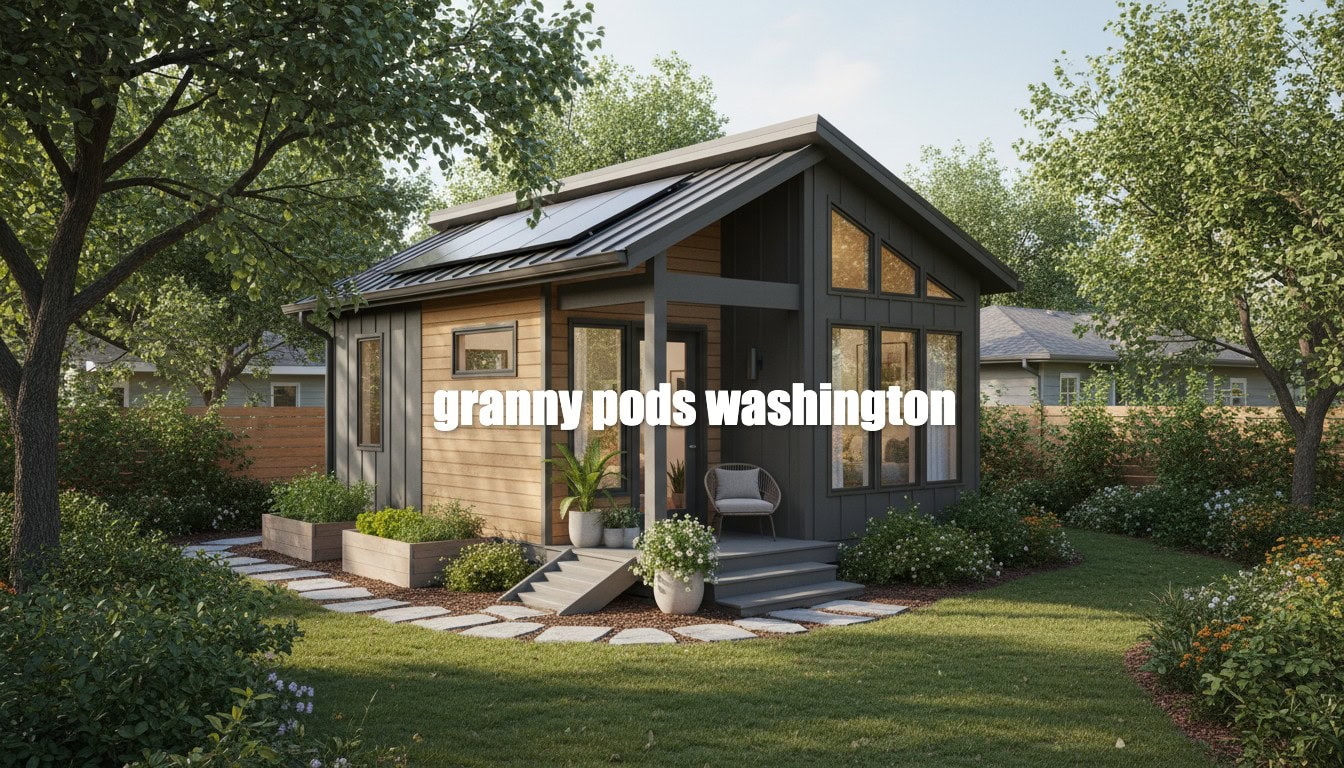
Granny pods are small, detached dwelling units specifically designed to house aging relatives on the same property as their family members. These compact homes, also known as accessory dwelling units (ADUs) or MEDCottages, are becoming increasingly popular across Washington State as families seek alternatives to nursing homes and assisted living facilities.
We’re seeing a significant shift in how Washington families approach elder care. Rather than moving aging parents to distant care facilities, more families are choosing to keep their loved ones close by installing granny pods on their property. This trend reflects both the rising costs of institutional care and a cultural preference for multigenerational living arrangements.
In Washington, granny pods provide a dedicated space where elderly family members can maintain their autonomy, receive medical care when needed, and participate in family life. The popularity has grown alongside the state’s progressive approach to ADU regulations, with cities like Seattle, Spokane, and Tacoma updating zoning codes to make installation easier.
Inside the Modern Granny Pod: Features, Design, and Purpose
Modern granny pods are sophisticated living spaces combining compact design with comprehensive amenities tailored to elderly residents. We typically see these units ranging from 300 to 800 square feet, with most falling between 400 and 600 square feet—large enough for comfortable living while remaining manageable.
The features we incorporate go far beyond standard tiny homes. These units include a full bathroom with accessibility features, compact kitchen or kitchenette, sleeping area, and living space. What sets them apart is the integration of senior-friendly design: zero-step entries, wider doorways (minimum 36 inches) for wheelchairs and walkers, reinforced bathroom walls for grab bars, and non-slip flooring throughout.
We work with three main types of granny pods. Prefabricated units arrive largely complete and can be installed quickly. Custom-built granny pods allow us to tailor every aspect to the specific needs of the resident. Converted structures, such as renovated garages, offer a cost-effective option for families with existing buildings.
What truly distinguishes granny pods from standard tiny houses for sale in Washington is their focus on medical and accessibility features. We often install medical monitoring systems that track vital signs, detect falls, and alert family members to emergencies. Smart home technology allows caregivers to monitor temperature, lighting, and security remotely.
Bathroom design receives particular attention. We install walk-in or roll-in showers with built-in seating, handheld showerheads, and thermostatic mixing valves to prevent scalding. Toilets are installed at comfort height (17-19 inches), with adequate space for caregiver assistance when needed.
Kitchen areas are designed with accessibility in mind. We incorporate lower countertops (32-34 inches), pull-out shelving, lever-style faucets, and appliances positioned for easy reach. For residents with limited mobility, we can install kitchenettes with minimal cooking requirements, while more active seniors might prefer full kitchens.
Benefits of Granny Pods for Washington Families
The advantages of granny pods extend far beyond simple proximity. We’ve seen firsthand how these units transform family dynamics and improve quality of life for both elderly residents and their caregiving family members.
Proximity to family for care and support stands as the primary benefit. When aging relatives live in a granny pod just steps from the main house, family members can check in multiple times daily, assist with medications, provide meals, and respond immediately to emergencies. For Washington families dealing with notorious traffic congestion, having loved ones on-site eliminates stressful commutes to care facilities.
Independence for elderly relatives represents another crucial advantage. Seniors who maintain their own living space experience better mental health outcomes and higher life satisfaction. They can maintain their own schedules, receive visitors privately, and preserve the dignity of having their own home.
The cost savings compared to institutional care are substantial. Washington’s assisted living facilities average $5,500 to $7,000 per month, while nursing homes can exceed $10,000 monthly. In contrast, we’ve helped families install quality granny pods for $80,000 to $150,000—an investment that pays for itself within 1-3 years. Over a decade, families can save hundreds of thousands of dollars.
Property value considerations also factor into the decision. Well-designed granny pods can increase property values by $50,000 to $100,000 or more, particularly in Washington’s competitive real estate markets. In cities like Seattle and Bellevue, where housing demand remains intense, ADUs are highly desirable features.
The emotional benefits of keeping family close cannot be overstated. We’ve witnessed grandchildren developing deeper relationships with grandparents who live in backyard granny pods. Daily interactions, shared meals, and spontaneous visits create bonds that would be impossible with institutional care.
According to recent data, Washington’s population aged 65 and older is projected to increase by 60% between 2020 and 2030, reaching nearly 1.5 million residents. With the median cost of nursing home care exceeding $120,000 annually, families are increasingly recognizing that granny pods offer both financial and emotional advantages.
Legal Considerations for Granny Pods in Washington
Navigating the legal landscape for granny pods in Washington requires understanding multiple layers of regulation. We’ve guided countless families through this process, and while Washington is generally ADU-friendly, specific requirements vary significantly by location.
At the state level, Washington has taken progressive steps to encourage ADU development. The state’s Growth Management Act allows cities to adopt regulations that facilitate ADU construction. However, Washington operates under a strong local control framework, meaning counties and cities maintain significant authority over zoning and building regulations.
Zoning laws represent the first hurdle we help families navigate. Most Washington jurisdictions classify granny pods as either detached ADUs or temporary medical hardship dwellings, each with different requirements. Understanding which classification applies in your area is crucial for planning.
Building codes in Washington follow the International Residential Code (IRC) with state-specific amendments. We ensure all our granny pods meet these standards, including requirements for foundation systems, structural integrity, electrical systems, plumbing, and energy efficiency. Washington’s energy code is particularly stringent, requiring high levels of insulation and efficient heating systems.
Permit requirements vary by jurisdiction but typically include building permits, electrical permits, plumbing permits, and sometimes mechanical permits for HVAC systems. We’ve found that the permitting process in Washington generally takes 4-12 weeks, though complex projects may take longer.
Some Washington counties and cities are notably more accommodating than others. King County has implemented some of the state’s most progressive ADU regulations, allowing detached ADUs on most single-family lots without owner-occupancy requirements. Pierce County and Spokane County have also adopted relatively permissive ADU ordinances.
Recent legislative changes have improved the outlook for granny pods. House Bill 1337, passed in 2019, required cities planning under the Growth Management Act to allow at least one ADU per lot in areas zoned for single-family homes. Subsequent legislation has further reduced barriers, including eliminating owner-occupancy requirements in many jurisdictions.
We always advise families to research their specific municipality’s regulations early in the planning process. Consulting with local planning departments and working with builders experienced in Washington’s county-specific regulations can prevent costly mistakes and delays.
Which Washington Counties Allow Granny Pods?
Understanding which Washington counties permit granny pods and under what conditions is essential for planning your project. We’ve compiled comprehensive information about the state’s most populated counties and their approaches to ADUs and granny pods.
| County Name | Granny Pod Status | Minimum Lot Size | Maximum Size Allowed | Special Notes |
|---|---|---|---|---|
| King County | Allowed | 4,000 sq ft (varies by city) | 1,000 sq ft | Seattle allows ADUs without owner-occupancy requirement |
| Pierce County | Allowed | 6,000 sq ft (unincorporated) | 900 sq ft | Tacoma permits ADUs on lots 4,000+ sq ft |
| Snohomish County | Case-by-Case | 7,200 sq ft (unincorporated) | 800 sq ft | Everett and Lynnwood have more permissive city regulations |
| Spokane County | Allowed | 6,000 sq ft (city limits) | 1,000 sq ft | City of Spokane updated ADU code in 2020 to reduce barriers |
| Clark County | Allowed | 7,000 sq ft (unincorporated) | 800 sq ft | Vancouver allows ADUs on smaller lots (5,000 sq ft) |
| Thurston County | Allowed | 5,000 sq ft (Olympia) | 900 sq ft | Olympia has progressive ADU regulations |
For King County, which includes Seattle, we’ve seen the most progressive ADU regulations in the state. Seattle eliminated owner-occupancy requirements in 2019 and removed parking requirements for ADUs. Bellevue, while requiring larger lots, has streamlined its permitting process significantly.
Pierce County’s regulations, particularly in Tacoma, have become increasingly accommodating. The city reduced lot size requirements to 4,000 square feet and allows ADUs up to 900 square feet. We’ve successfully installed numerous granny pods in Tacoma neighborhoods.
Spokane County, particularly the City of Spokane, has embraced ADUs as part of its housing strategy. The 2020 code updates removed several barriers, including reducing lot size requirements and eliminating design standards that previously made ADUs more expensive to build.
Cost of Building a Granny Pod in Washington
Understanding the complete cost picture is essential for families considering a granny pod in Washington. We break down expenses into several categories to help families budget accurately.
For prefabricated granny pods, we typically see costs ranging from $80,000 to $150,000 for a complete, move-in ready unit. A basic 400-square-foot prefab unit might cost $80,000-$100,000, while a larger 600-800 square foot unit with premium finishes and advanced medical monitoring systems can reach $130,000-$150,000.
Custom-built granny pods offer more flexibility but come with higher price tags. We’ve built custom units ranging from $120,000 to $250,000, depending on size, features, and finishes. The advantage of custom construction is the ability to tailor every aspect to the resident’s specific needs.
Site preparation costs vary significantly based on property conditions. We typically budget $10,000-$30,000 for site work, which includes excavation, foundation preparation, and grading. Washington’s wet climate often requires additional drainage solutions, and properties with slopes may need more extensive foundation work.
Utility connections represent a significant expense. Running electrical service to the granny pod typically costs $3,000-$8,000. Plumbing connections, including water supply and sewer hookups, generally run $5,000-$12,000. We also factor in $2,000-$5,000 for HVAC connections or standalone heating and cooling systems.
Permit costs in Washington vary by jurisdiction but typically range from $3,000 to $8,000 for a complete granny pod project. Some cities, like Seattle, have reduced or eliminated impact fees for ADUs, while others maintain standard fee structures.
When we compare these costs to institutional care in Washington, the savings become clear. The average assisted living facility costs $72,000-$84,000 annually, while nursing homes average $120,000-$140,000 per year. A granny pod with a total installed cost of $150,000 pays for itself in just 2-3 years compared to assisted living.
Financing options include home equity lines of credit (HELOCs), cash-out refinancing, personal loans, and specialized ADU financing programs. We’ve also worked with families who use FHA 203(k) loans, which allow borrowing for both property purchase and ADU construction.
The Granny Pod Installation Process in Washington
We’ve guided hundreds of Washington families through the granny pod installation process. Here’s our step-by-step guide tailored specifically for Washington residents.
Step 1: Research Local Zoning Laws and Restrictions
We always begin by thoroughly researching the specific zoning regulations in your municipality. This involves contacting your local planning department to confirm that granny pods are permitted on your property. We verify lot size requirements, setback distances, height restrictions, and any design standards that must be met.
Step 2: Obtain Necessary Permits
Once we’ve confirmed that your project is feasible, we move to the permitting phase. We prepare detailed plans that meet Washington’s building codes and your local zoning requirements. Our permit packages typically include site plans, floor plans with accessibility features, elevation drawings, and engineering specifications. In our experience, Washington permit reviews take 4-12 weeks.
Step 3: Site Preparation for Washington’s Climate and Terrain
Site preparation in Washington requires special attention to drainage and foundation systems. We begin by clearing and grading the site, ensuring proper slope for water drainage—critical in our wet climate. Foundation options we commonly use include concrete slabs with perimeter insulation, crawl spaces with proper ventilation, and pier foundations for sloped sites.
Step 4: Utility Connections
Utility connections in Washington require careful planning. We run electrical service underground when possible to protect against storm damage, and we ensure all exterior connections are weatherproofed. For plumbing, we install water lines below the frost line (typically 18-24 inches in most of Washington) and ensure proper insulation for any exposed pipes.
Step 5: Delivery and Installation Timeline
For prefabricated units, delivery and installation typically occur over 1-3 days. We coordinate with crane services if needed to position the unit on its foundation. Custom-built units constructed on-site generally take 8-16 weeks from foundation to completion, depending on complexity and weather conditions.
Step 6: Final Inspections
Washington requires multiple inspections throughout the construction process. We schedule foundation inspections before concrete is poured, framing inspections before walls are closed, and final inspections covering all systems. Once we receive final approval, we obtain the certificate of occupancy that allows the granny pod to be legally occupied.
For families interested in exploring tiny home builders in Washington who specialize in granny pods, we recommend researching builders with proven experience in local regulations and climate-appropriate construction.
Design Considerations for Washington Granny Pods
Designing a granny pod for Washington’s unique climate requires thoughtful attention to multiple factors. We’ve developed expertise in creating units that perform beautifully through our wet winters, mild summers, and everything in between.
Weatherproofing for Washington’s Climate
Washington’s climate demands robust weatherproofing strategies. We install high-quality roofing systems with proper pitch (minimum 4:12) to shed our abundant rainfall effectively. Our exterior cladding choices—typically fiber cement siding, engineered wood, or metal panels—are selected for their durability in wet conditions. We pay special attention to flashing details around windows, doors, and roof penetrations.
Energy Efficiency Considerations
Energy efficiency is crucial for keeping elderly residents comfortable while managing utility costs. We exceed Washington’s stringent energy code requirements by using advanced insulation systems—typically R-30 to R-38 in ceilings, R-21 to R-25 in walls, and R-19 to R-21 in floors. High-performance windows (U-factor 0.30 or better) minimize heat loss while providing natural light.
Our heating systems are sized appropriately for Washington’s mild climate. We often install ductless mini-split heat pumps, which provide both heating and cooling efficiently. These systems work well in our moderate climate and offer zone control that allows residents to maintain their preferred temperature.
Accessibility Features for Aging Residents
Accessibility features are at the heart of every granny pod we design. Zero-step entries are standard, with ramps designed at appropriate slopes (1:12 maximum) and equipped with handrails. We ensure all doorways are minimum 36 inches wide, and we design hallways at 42-48 inches to accommodate wheelchairs and walkers comfortably.
In bathrooms, we install curbless showers with slip-resistant flooring, built-in or fold-down seating, and grab bars positioned according to ADA guidelines. Toilets are comfort-height models with adequate clearance for caregiver assistance. Kitchen accessibility includes lowered countertop sections, pull-out shelving, and appliances positioned for easy reach.
Smart Home Technology Options
We integrate smart home technology to enhance safety and provide peace of mind for family caregivers. Voice-controlled systems allow residents to adjust lighting, temperature, and entertainment without physical interaction. Medical monitoring systems we commonly install include fall detection sensors, medication reminder systems, and emergency call buttons positioned in key locations.
At Great Lakes Tiny Homes, we genuinely love meeting the people we build for and understanding their unique needs and dreams. We’ve found that the best granny pods emerge from collaborative relationships where we truly understand the resident’s lifestyle, preferences, and care requirements. We always welcome potential customers to schedule site visits, tour our shop, and see available models in person. We make it easy to book calls or visits directly through our website, and our team is always eager to help customers take the next step toward creating the perfect home for their loved ones.
Making the Right Decision for Your Washington Granny Pod
As we’ve explored throughout this guide, granny pods offer Washington families a compelling solution for elder care that balances independence with proximity, dignity with support, and quality with affordability.
The benefits for aging family members are substantial. We’ve seen how granny pods allow elderly relatives to maintain their independence and privacy while staying connected to family support systems. The ability to age in place, surrounded by family rather than in an institutional setting, contributes to better mental health outcomes and higher life satisfaction.
Legal considerations in Washington, while sometimes complex, are generally favorable for granny pod development. We’ve reviewed how the state’s progressive approach to ADUs, combined with increasingly permissive local regulations, has created an environment where most families can successfully install granny pods.
The financial aspects make compelling sense for most Washington families. When we compare the $80,000-$250,000 investment in a granny pod to the $72,000-$140,000 annual cost of institutional care, the economics are clear. Beyond the direct cost savings, families gain the intangible benefits of keeping loved ones close.
Next Steps in Your Granny Pod Journey
If you’re considering a granny pod for your Washington property, we recommend following these practical steps:
1. Research Local Zoning Laws and Regulations
Begin by contacting your city or county planning department to understand the specific regulations that apply to your property. Ask about lot size requirements, setback distances, height restrictions, and permit processes.
2. Consult with Family Members
We encourage families to have thorough conversations with all stakeholders, including the elderly relative who will live in the granny pod. Discuss care needs, lifestyle preferences, and expectations for daily interaction.
3. Set a Realistic Budget
Develop a comprehensive budget that includes not just the granny pod itself, but all associated costs: site preparation, utility connections, permits, landscaping, and furnishings. We recommend adding a 10-15% contingency for unexpected expenses.
4. Explore Financing Options
Research the financing options available to you, including home equity lines of credit, cash-out refinancing, personal loans, and specialized ADU financing programs. Some Washington credit unions offer particularly favorable terms for ADU projects.
5. Contact Reputable Builders for Consultations
Reach out to experienced granny pod builders who understand Washington’s regulations and climate requirements. Schedule consultations to discuss your specific needs, review their previous projects, and get detailed cost estimates.
Finding Expert Guidance for Your Project
The importance of working with experienced professionals who understand granny pods cannot be overstated. Washington’s unique regulatory environment, climate challenges, and accessibility requirements demand builders who have specific experience in this specialized field.
Great Lakes Tiny Homes has built a reputation as a trusted resource for Washington families seeking quality granny pods that meet both regulatory requirements and the specific needs of aging residents. Our team understands the nuances of Washington’s building codes, from energy efficiency requirements to accessibility standards.
What sets our approach apart is our commitment to customization and personal attention. We recognize that every family’s situation is unique—different care needs, different property constraints, different aesthetic preferences. Our design process begins with listening carefully to understand your specific requirements.
We invite you to schedule a consultation with Great Lakes Tiny Homes to discuss your specific granny pod needs. During this conversation, we’ll review your property, discuss your loved one’s care requirements, explain the regulatory requirements in your area, and provide a detailed cost estimate.
You can easily reach out through our website to book a consultation call or schedule a visit to our facility. We’re always happy to show families our current projects, explain our construction methods, and answer any questions you might have.
Conclusion: Creating a Supportive Home for Your Loved Ones
As we conclude this comprehensive guide to granny pods in Washington, we want to emphasize what we believe is the heart of this decision: creating a supportive, dignified living arrangement for the people who matter most to us. Granny pods represent more than just a housing solution—they embody our commitment to family, our respect for our elders’ independence, and our desire to provide the best possible care as our loved ones age.
The investment you make in a granny pod is an investment in quality of life, family connection, and peace of mind. It’s a statement that your family’s elders deserve to age with dignity, surrounded by love rather than institutional walls.
We understand that this decision comes with questions, concerns, and perhaps some uncertainty. What we’ve learned from helping countless Washington families through this process is that the families who take the time to plan carefully, seek expert guidance, and make decisions based on both practical considerations and family values consistently report satisfaction with their choice.
As you consider your next steps, we encourage you to approach this decision with both your head and your heart. Evaluate the practical factors carefully—the regulations, the costs, the logistics. But also listen to what your values tell you about how you want to care for your aging loved ones.
Your loved ones have spent their lives caring for family, building homes, and creating the foundations on which your family stands. Now it’s our turn to provide them with a home that honors their independence, supports their needs, and keeps them close to the family they love. Granny pods offer us that opportunity, and we’re here to help you make it a reality.
Frequently Asked Questions About Granny Pods in Washington
Are granny pods legal in all parts of Washington?
Granny pods are legal in most parts of Washington, but regulations vary significantly by jurisdiction. Major cities like Seattle, Tacoma, and Spokane have adopted permissive ADU regulations that make granny pods relatively easy to install. However, some smaller municipalities and rural counties have more restrictive requirements. We always recommend checking with your specific city or county planning department before beginning any planning.
How much does a typical granny pod cost in Washington?
The total cost of a granny pod in Washington typically ranges from $100,000 to $250,000, depending on size, features, and site conditions. A basic prefabricated unit of 400-500 square feet might cost $80,000-$120,000, while larger custom-built units with premium accessibility features can reach $180,000-$250,000. While this represents a significant investment, we find that granny pods typically pay for themselves within 2-3 years when compared to the $72,000-$140,000 annual cost of assisted living or nursing home care in Washington.
Can I install a granny pod on any size property in Washington?
Minimum lot size requirements for granny pods vary by jurisdiction in Washington. Many cities now allow granny pods on lots as small as 4,000-5,000 square feet, while others require 6,000-7,200 square feet or more. Beyond lot size, you’ll need to meet setback requirements that dictate how far the granny pod must be from property lines. We recommend researching your specific jurisdiction’s requirements early in the planning process.
Do I need special insurance for a granny pod?
Most homeowners insurance policies can be extended to cover a granny pod, typically for an additional $200-$500 annually. We recommend contacting your insurance agent as soon as you begin planning your granny pod to discuss coverage options. Your policy should cover the structure itself, any personal property inside, and liability for injuries that might occur in or around the granny pod.
How do utilities work for a granny pod in Washington?
Granny pods in Washington typically connect to the main home’s existing utilities. Electrical service usually runs from the main house’s electrical panel or requires a separate meter if the local utility mandates it. Water and sewer connections tap into the main house’s systems, with lines buried below the frost line (18-24 inches in most of Washington) to prevent freezing. We handle all utility coordination as part of our installation process.
How do granny pods handle Washington winters?
We design granny pods to handle Washington’s wet, mild winters comfortably and efficiently. Our construction includes robust insulation (R-30 to R-38 in ceilings, R-21 to R-25 in walls), high-performance windows, and efficient heating systems—typically ductless mini-split heat pumps. We pay special attention to moisture management through proper ventilation, vapor barriers, and drainage systems. The result is a comfortable, energy-efficient living space that performs well throughout Washington’s winter months.