
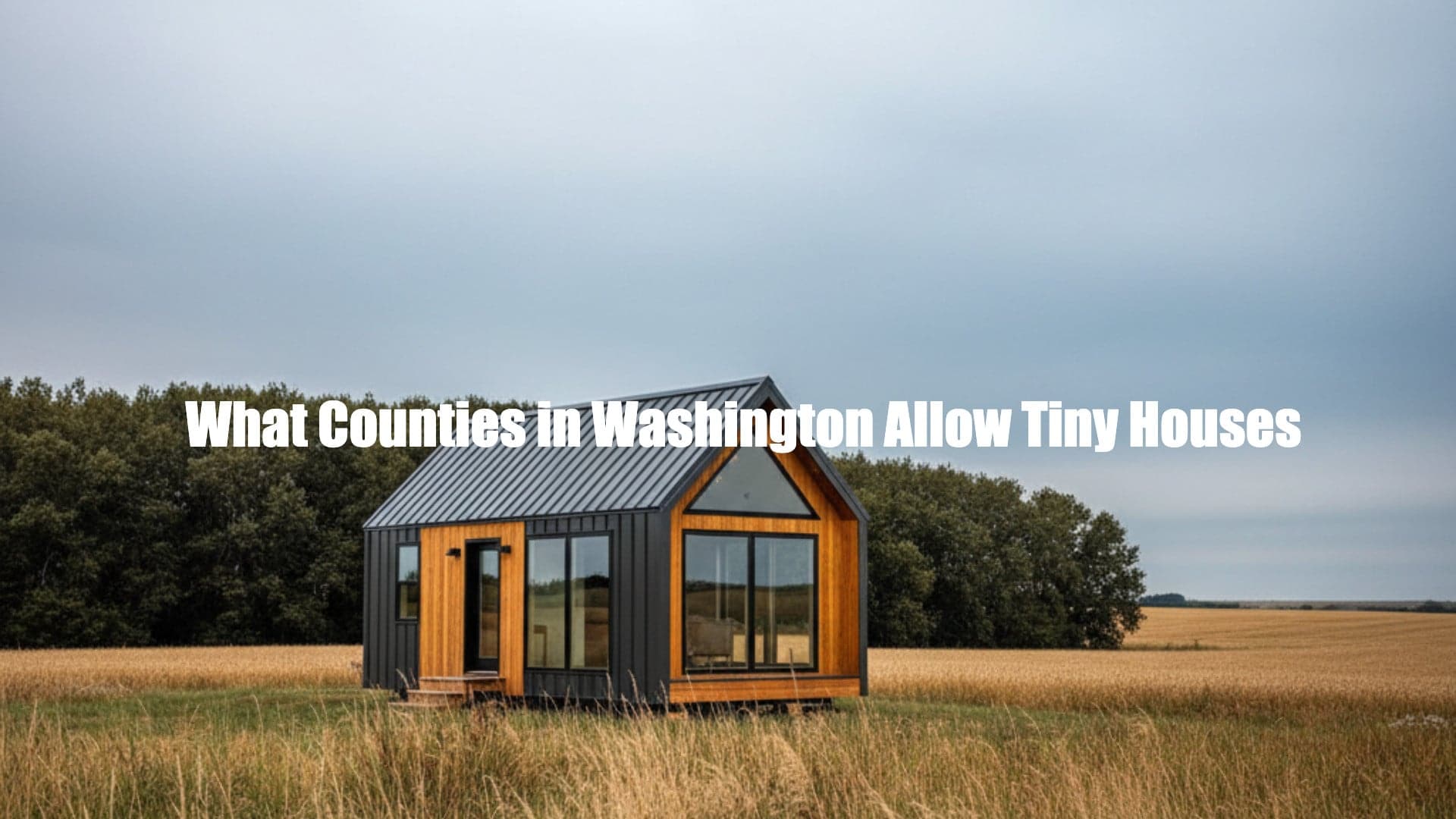
Washington state allows tiny houses as permanent residences when built on foundations and meeting IRC Appendix Q requirements, with a 400 square foot maximum. Tiny Houses on Wheels (THOWs) are permitted in RV parks, mobile home communities, and some designated areas but face restrictions for standalone permanent residential use outside approved zones.
Washington continues to lead as one of the nation’s most welcoming states for tiny house living, blending supportive state-level policies with diverse local opportunities amid its breathtaking landscapes from coastal regions to mountain ranges. The state maintains adoption of the International Residential Code (IRC) Appendix Q for tiny houses, establishing clear construction guidelines while empowering counties and cities to adapt zoning and permitting to their unique needs. This updated guide explores the latest Washington tiny house regulations, highlighting county-specific allowances, zoning nuances, and practical steps for prospective builders and buyers in the Evergreen State.
Navigating Washington’s tiny house landscape requires awareness of how state standards intersect with local variations, ensuring both innovation in affordable housing and adherence to safety protocols. As housing affordability challenges persist, tiny houses offer versatile solutions, from urban accessory units to rural eco-communities. With ongoing legislative support and community growth, opportunities abound for those committed to sustainable, compact living across the state’s varied geographies.
Great Lakes Tiny Homes specializes in modular, park model, and tiny home manufacturing, delivering comprehensive solutions to all 48 contiguous U.S. states. We provide customizable options with or without wheels, including RVIA-certified park models, tailored to Washington’s regulatory requirements. Our experienced team can assist in selecting the ideal configuration for your location and needs. Book a call with our experts to explore your Washington tiny house possibilities.
Disclaimer: This article serves informational purposes only and does not provide legal advice. Regulations and zoning rules differ by locality and evolve over time. Consult your local planning or zoning office, or engage a qualified land use attorney, before proceeding with any tiny house plans.
Washington State Tiny House Laws and Building Codes
Washington upholds the International Residential Code (IRC) Appendix Q for tiny houses, outlining standards for dwellings of 400 square feet or less designed for permanent occupancy. Effective since July 1, 2021, this framework addresses unique aspects of small-scale construction, such as loft configurations, emergency egress, and mechanical systems, promoting safe and efficient living spaces. Appendix Q mandates minimum room sizes of 70 square feet for habitable areas, ceiling heights starting at 6 feet 8 inches in main rooms tapering to 6 feet 4 inches in kitchens and baths, and proper ventilation to mitigate moisture issues common in compact homes.
Local authorities may amend these state standards, often requiring additional compliance with energy codes, seismic considerations given Washington’s earthquake risks, and accessibility features for aging populations. Tiny houses must integrate essential utilities like cooking, sleeping, and sanitation facilities, ensuring they function as complete residences rather than temporary shelters. This balanced regulatory approach supports tiny house proliferation while safeguarding public health and structural integrity across diverse climates from rainy western Washington to drier eastern regions.
Builders should note that while state law provides the baseline, county-level adoption varies; some jurisdictions fully integrate Appendix Q, while others impose supplementary rules on foundations or lot coverage. Early engagement with local building departments helps identify any variances, preventing costly revisions during construction. Washington’s progressive stance, bolstered by 2019’s Senate Bill 5383, also facilitates tiny house eco-villages and relaxes mobile home community restrictions, fostering broader acceptance of alternative housing.
Foundation-Built Tiny House Requirements
Foundation-built tiny houses in Washington qualify as permanent structures, subjecting them to standard residential permitting akin to larger homes, including engineered foundations suited to local soil and seismic conditions. Concrete piers, slabs, or crawl spaces are common, with costs influenced by site preparation needs like grading or drainage solutions in the state’s variable terrain. These homes benefit from real property status, easing access to conventional financing and insurance, though lenders may scrutinize non-traditional sizes for appraisal purposes.
Zoning for foundation builds often permits them in single-family residential districts or as ADUs, but minimum lot sizes—typically 5,000 to 10,000 square feet in urban areas—must be met. Compliance involves submitting detailed plans for review, covering structural integrity, energy efficiency per Washington’s stringent codes, and integration with existing infrastructure. Rural placements may relax some urban constraints but demand self-sufficient utilities, highlighting the need for site-specific assessments to align with environmental regulations.
Tiny Houses on Wheels (THOWs) Regulations
THOWs in Washington are regulated as recreational vehicles or park models under the Department of Labor & Industries (L&I), requiring RVIA certification for mobility and safety features like proper braking and weight distribution. Senate Bill 5383 prohibits blanket bans on THOWs in mobile or manufactured home parks when used as primary residences, provided they connect to utilities and meet occupancy standards. However, standalone THOWs on private land face limits, often capped at 180 days annually in many counties, to prevent unregulated permanent camping.
Placement options include RV parks, campgrounds, or approved communities, where THOWs must undergo L&I inspections for factory-built compliance, costing around $1,500 for initial approval. Removing wheels to create semi-permanent setups doesn’t always reclassify them as dwellings; many jurisdictions still view them as RVs, restricting full-time residency outside designated areas. This mobility advantage suits transitional living or seasonal use but necessitates verifying local ordinances to avoid enforcement actions like relocation orders.
What Counties in Washington Allow Tiny Houses?
Washington’s 39 counties exhibit a spectrum of tiny house policies, with urban areas like King County emphasizing ADUs for density management and rural counties like Klickitat offering flexibility for off-grid setups. Statewide Appendix Q adoption since 2021 has standardized construction, but local zoning dictates placement, from permissive rural residential zones to restrictive urban cores. Recent 2023-2024 updates, including House Bill 1337 expanding ADU allowances, have broadened access, though Pacific County remains an outlier with a 410-square-foot minimum.
Most counties now permit tiny houses on foundations as primary dwellings or ADUs, subject to permits and inspections via L&I for off-site builds. THOWs find homes in mobile parks or eco-villages, with communities like Quixote Village demonstrating successful models for veterans and low-income residents. Prospective owners should cross-reference state guidelines with county planning departments, as policies evolve to address housing shortages while preserving community character.
| County/City | Min Sq Ft | Zoning Type | Key Requirements | Source |
| King County | 400 sq ft max | IRC Appendix Q, ADU | Permanent foundation, zoning compliance, L&I inspections | King County Government |
| Pierce County | 400 sq ft max | Residential, Rural | Foundation required, ADUs up to 800 sq ft, septic approval | Pierce County Planning |
| Snohomish County | 400 sq ft max | ADU, Residential | Foundation, water/sewer connections, site plan review | Snohomish County Development Services |
| Spokane County | 400 sq ft max | IRC Appendix Q, Urban Growth | Permanent foundation, urban zoning preferred, permits required | Spokane County |
| Whatcom County | 400 sq ft max | Residential, ADU | Site-built or manufactured, L&I approval for off-site, setbacks apply | Whatcom County Planning |
| Klickitat County | 400 sq ft max | Mobile Park, Rural | THOWs in parks with utilities, foundation for permanent, planning approval | Klickitat County Planning |
| Clark County | 400 sq ft max | Urban ADU, Rural Attached | Detached ADUs in urban zones, attached in rural, no street improvements | Clark County Community Development |
| Thurston County | 400 sq ft max | Rural ADU, Residential | Zoning compliance, L&I for off-site, density requirements for ADUs | Thurston County Planning |
Disclaimer: This table summarizes general guidelines as of 2024. Tiny house regulations can change; always confirm with the relevant county planning department for the most current requirements specific to your property and project.
King County and Seattle
King County, encompassing Seattle, fully integrates IRC Appendix Q, permitting tiny houses up to 400 square feet on foundations in residential zones as primary homes or ADUs. Recent updates align with state law allowing two ADUs per lot without owner occupancy mandates, though urban density requires careful setback and parking compliance. Seattle supports tiny house villages on public and nonprofit lands, with 10 such communities addressing homelessness through transitional housing models.
Permitting involves L&I for off-site builds and county inspections for on-site, with fees around $1,500 for approvals. THOWs are treated as RVs, limited to 60 days on undeveloped land but allowable in mobile parks per ESSB 5383. For Seattle-specific guidance, experienced tiny house builders in Seattle can streamline compliance with the city’s progressive yet detail-oriented codes.
Pierce County (Tacoma)
Pierce County and Tacoma promote tiny houses for affordability, allowing them under 400 square feet on foundations in residential zones or as ADUs up to 800 square feet. 2019 reforms expedited ADU processes, permitting detached units with one bedroom and off-street parking, while rural areas favor attached designs. The county’s building division handles permits, emphasizing IRC compliance and septic approvals for non-sewered sites.
Tacoma’s growth in tiny house interest includes community integrations, balancing urban access with sustainable design. Proximity to job centers enhances appeal, though higher land costs necessitate budget planning. Explore tiny houses for sale in Tacoma to gauge market trends and available compliant models.
Snohomish County
Snohomish County enforces Appendix Q for tiny houses up to 400 square feet, distinguishing on-site builds under local codes from off-site modulars via L&I oversight. Permanent foundations and utility ties are mandatory, with site plans verifying setbacks, access, and environmental buffers. The county’s 2023 ADU expansions allow up to 1,200 square feet in unincorporated areas, supporting middle housing initiatives.
Inspections cover energy code adherence and structural safety, with fees scaling by project complexity. This structured approach facilitates tiny house adoption while ensuring integration with surrounding developments. Snohomish’s guidelines promote clear pathways for both individual and community-scale projects.
Spokane County
Spokane County permits tiny houses in urban growth areas under Appendix Q, favoring foundations and compliance with NEC for electrical systems. Minimum lot sizes apply, often one acre in rural zones, alongside septic and well requirements for off-grid viability. The county updated codes in 2024 to accommodate tiny homes in residential districts, aligning with state affordability goals.
Spokane’s emphasis on neighborhood compatibility includes design reviews for visibility and impact. This framework supports sustainable growth, particularly in eastern Washington’s drier climate. Budget for infrastructure in rural placements to meet health and safety standards.
Major Cities and Municipal Regulations
Seattle
Seattle integrates tiny houses into its housing strategy, permitting ADUs up to 1,000 square feet without size caps below state minima, and fostering villages for transitional needs. 2023 ordinances eased parking mandates near transit, allowing zero spaces within half-miles of major stops. The Department of Construction and Inspections oversees permits, prioritizing equity in affordable options.
Nonprofit-led villages demonstrate community benefits, with shared amenities enhancing viability. Contact (206) 684-8600 for tailored advice on zoning overlays and historic district considerations.
Spokane
Spokane’s codes embrace tiny houses in residential zones, with 2024 updates streamlining ADU approvals to boost supply. Sustainability focus includes energy-efficient designs near the river and mountains. Building services at (509) 625-6300 guide compliance.
Growth in tiny home communities in Washington highlights eco-friendly integrations. Affordable land supports outdoor-oriented living.
Bellingham
Bellingham allows tiny houses as ADUs or in communities, with university proximity aiding student housing. 2024 zoning distinguishes self-contained units, easing site-built and manufactured approvals. Planning at (360) 778-8300 details setbacks and utilities.
Border location attracts diverse residents, with codes balancing growth and preservation.
Zoning Considerations and Special Districts
Washington zoning spans residential (R-1 to R-4) for primary tiny houses, agricultural/rural for flexible lots, and urban growth areas for ADUs under RCW 36.70A.680. Special districts like PUDs enable clustered developments, waiving some standards for innovative layouts. Overlay zones address environmental concerns, such as critical areas near waterways.
State law mandates two ADUs per lot in urban areas, prohibiting restrictive setbacks or aesthetics beyond principal units. Rural zones offer acreage-based flexibility but require infrastructure plans. Early zoning verification prevents variances or appeals.
Accessory Dwelling Unit (ADU) Regulations
ADUs up to 1,000 square feet are standard, with 2023 HB 1337 allowing non-owner-occupied units and sales as condos. Detached ADUs suit tiny houses, needing shared or independent utilities and minimal parking. Impact fees cap at 50% of principal unit costs.
Common interest communities can’t ban ADUs via CC&Rs post-2023. This pathway expands housing without density increases.
Rural and Agricultural Zoning
Rural zones permit tiny houses on larger lots with fewer neighbors, ideal for off-grid solar or farming adjuncts. Agricultural classifications allow accessory structures, but water rights and soil conservation apply. Challenges include access roads and fire safety in remote spots.
These areas offer affordability, with counties like Okanogan streamlining for sustainable builds.
Utilities and Infrastructure Requirements
Permanent tiny houses need potable water via municipal ties or tested wells (minimum 5 gpm flow), with sewage through sewers or engineered septics per DOH rules. Costs for rural installs range $10,000-$30,000, including percolation tests. Electrical demands 100-amp service, licensed by L&I.
Heating/ventilation meets state energy codes, crucial for damp western climates. Greywater systems may supplement in eco-zones.
Electrical and Heating Systems
NEC-compliant wiring requires permits ($100-$300), with inspections ensuring GFCI outlets and smoke detectors. Heating options include heat pumps for efficiency, sized via Manual J calculations. Ventilation prevents condensation, vital in rainy areas.
Renewables like solar qualify for incentives, reducing grid reliance.
Permitting Process and Building Inspections
Permitting starts with applications including engineered plans, site surveys, and fees ($300-$1,200). L&I handles off-site reviews ($775 initial), sending notifications to locals. On-site builds follow county timelines, 4-8 weeks average.
Inspections span foundation to final, with re-inspections at $200+. Digital submissions speed processes in tech-savvy counties.
Timeline and Cost Considerations
Full permitting averages 1-3 months, construction 3-6 months. Total costs $1,000-$3,000, plus professional stamps. Expedites available for $500+ in urgent cases.
Budget buffers cover delays from weather or corrections.
Financing and Insurance Considerations
Foundation tiny houses access mortgages via Fannie Mae guidelines, with loans from $50,000 up. THOWs use RV loans (5-15% rates) or personal financing. USDA rural loans aid off-grid projects.
Chattel loans for mobiles offer quick approval but higher costs.
Insurance Requirements and Options
Homeowners policies cover foundation builds ($800-$1,500/year), including wind/hail in prone areas. RV policies for THOWs ($500-$1,000) add transit coverage. Specialists like Foremost handle alternatives.
Bundle for discounts, ensuring loft and custom features are specified.
Tiny House Prices in Washington
Prices reflect location: urban builds $120,000-$180,000, rural $80,000-$140,000 including utilities. Foundation adds $15,000-$25,000; THOWs save on site work but incur park fees. Material costs rose 10% in 2024 due to supply chains.
Custom features like lofts or solar boost values 20-30%.
Great Lakes Tiny Homes Pricing
Our turnkey models range $95,000-$160,000, covering design to delivery. This includes compliant builds for Washington codes, with options for RVIA or modular certification. Value stems from durable materials and expert support.
Financing partnerships ease payments for qualified buyers.
Great Lakes Tiny Homes Model Options
We provide versatile models for Washington’s needs:
- Modular Homes – Foundation-ready for permanent zoning
- A-Frame – Scenic appeal for rural sites
- Cabin – Rustic fit for natural settings
- Park Models – Certified for community placements
- Tiny House on Wheels – Mobile for parks or transitions
Selections match zoning: modulars for urban, THOWs for rural mobility. Our advisors optimize for compliance and lifestyle.
Making the Right Choice for Your Washington Project
Model choice hinges on zoning—foundations for urban permanence, wheels for rural flexibility. Washington’s variances demand location-specific planning. Experts clarify options.
Consult locals early; our team aids navigation. Book a call with our experts for personalized guidance.
Tiny House Communities and Developments
Communities like Quixote Village in Olympia offer 144-square-foot homes for veterans, with shared greens and workshops. Lost Lake Resort near Seattle provides lakeside THOW lots with amenities. Leavenworth Tiny House Village features trail access year-round.
These handle zoning, fostering connections. Explore tiny home communities in Washington for ownership or rentals.
Future Outlook and Legislative Developments
2024 sessions focus on affordability, potentially standardizing ADU fees and THOW pathways. Counties like Island pilot villages, influencing state policy. National groups advocate uniform certifications.
Washington’s evolution supports tiny houses amid shortages, with local pilots driving change.
Frequently Asked Questions
Q: Are tiny houses legal in Washington?
A: Yes, foundation-built tiny houses up to 400 square feet are legal under IRC Appendix Q statewide. THOWs are allowed in parks and communities but restricted for permanent private land use, per local zoning.
Q: What utilities are required for a tiny house in Washington?
A: Permanent setups need approved water (municipal/well), sewage (sewer/septic), and NEC-compliant electrical. Rural sites often require L&I-permitted wells and septics, with testing for potability and capacity.
Q: How much does it cost to build a tiny house in Washington?
A: Builds range $80,000-$180,000, plus $15,000-$50,000 for utilities/permits. Urban areas cost more due to connections; rural saves on land but adds infrastructure.
Q: Do tiny houses qualify for traditional mortgage financing in Washington?
A: Foundation models do as real property, via standard loans. THOWs use RV/personal financing, with some specialty options emerging for certified units.
Q: Are there tiny house communities in Washington?
A: Yes, including Quixote Village, Lost Lake Resort, and Leavenworth, offering shared amenities and zoning compliance for rentals or ownership.
Conclusion
Washington’s tiny house framework, via Appendix Q and supportive bills, creates viable paths amid diverse county policies. From Seattle’s ADUs to rural eco-villages, options suit various needs. Research and professional input ensure success.
The state’s commitment to affordability evolves regulations favorably. Great Lakes Tiny Homes supports your journey. Book a call with our experts to begin in the Evergreen State.