
Vermont allows granny pods as accessory dwelling units (ADUs) on single-family lots in most municipalities, as encouraged by state law under 24 V.S.A. § 4412. Regulations vary by county and town, with typical size limits of 400 to 900 square feet and minimum lot sizes ranging from 0.5 to 5 acres depending on location. Local zoning offices must be consulted for specific requirements, permits, and compliance to ensure legal installation.
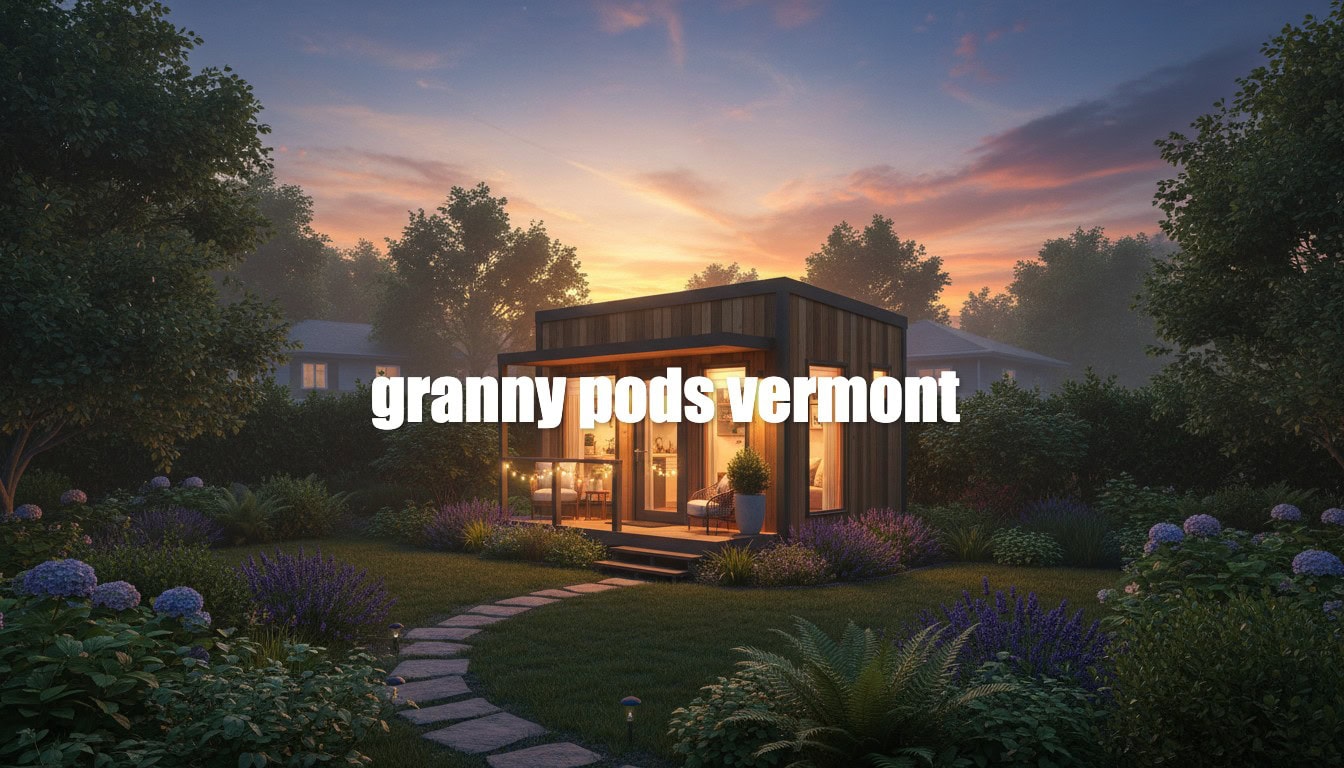
As you consider options for caring for aging family members in Vermont, granny pods offer a practical and heartfelt solution. These compact living spaces allow your loved ones to stay independent yet nearby, blending modern design with family closeness. In Vermont’s picturesque landscapes, from the Green Mountains to lakeside communities, granny pods are gaining traction as a way to address the growing needs of an aging population. You can envision how these units fit into the state’s rural homesteads or suburban backyards, providing a seamless extension of your home while respecting personal space. With Vermont’s commitment to sustainable living, granny pods often incorporate eco-friendly materials like reclaimed wood or energy-efficient windows, reducing your environmental footprint and long-term costs.
In the context of Vermont’s emphasis on sustainable and community-focused living, granny pods align perfectly with your desire for affordable, eco-friendly housing solutions. Their relevance becomes clear when you think about the state’s harsh winters and rural charm, where keeping family close can provide both emotional and practical support. Great Lakes Tiny Homes specializes in crafting these spaces as full-service manufacturers of modular, park model, and tiny homes, delivering turnkey builds to all 48 lower U.S. states. They offer options with or without wheels and with or without RVIA certification, where models with RVIA certification are often called park models. If you’re ready to explore your options, you can book a call with our experts for personalized guidance.
Disclaimer: This article is for informational purposes only and does not constitute legal advice. Laws, regulations, and zoning rules vary by location and may change over time. Always consult your local zoning office or a qualified land use/zoning attorney before making decisions based on this information.
What Are Granny Pods?
You might wonder what exactly granny pods are and why they’re catching on in Vermont. Granny pods are small, detached dwelling units designed specifically for aging relatives, allowing them to live close to your family while enjoying their independence. Often built as tiny houses or accessory dwelling units (ADUs), they provide a private space on your property without the full commitment of a larger addition to your home. These units typically feature open floor plans that maximize space efficiency, with multifunctional furniture like Murphy beds or foldable tables to accommodate daily activities without feeling cramped. According to Vermont state law, municipalities must permit at least one ADU per single-family lot as a permitted use, promoting affordable housing options statewide24 V.S.A. § 4412.
In Vermont, their popularity is rising due to the state’s aging demographic and the desire for multigenerational living amid rising healthcare costs. With Vermont’s focus on green building and self-sufficiency, granny pods fit seamlessly into rural and suburban lifestyles. Great Lakes Tiny Homes offers a type of granny pod in the form of tiny houses, giving you choices like models with wheels for mobility or without for permanent placement. You can also opt for RVIA certification, which classifies them as park models, making them versatile for various zoning needs. For instance, if you’re in a more remote area like the Northeast Kingdom, a wheeled model allows easier relocation if family circumstances change, while a stationary one provides stability on sloped terrain common in the region. Exploring tiny houses for sale in Burlington can help you see available options tailored to local needs.
Imagine placing one in your backyard in Burlington or near your farm in Rutland—it’s a way to honor your family’s traditions while adapting to modern challenges. As you explore tiny house options, you’ll see how these pods can integrate into Vermont’s scenic properties. Consider how a granny pod might include local touches, such as maple wood accents or views of autumn foliage, enhancing the emotional comfort for your loved one during seasonal transitions. For communities where such setups thrive, check out the best tiny home communities in Vermont.
Inside the Modern Granny Pod: Features, Design, and Purpose
When you delve into granny pods, also known as accessory dwelling units or ADUs, you’ll find they’re more than just small homes—they’re thoughtfully designed for comfort and care. Typically ranging from 300 to 800 square feet, these units include essential amenities like a bedroom, bathroom, kitchenette, and living area, all scaled to promote ease of use. The layout often prioritizes a central living space that flows into the kitchenette, allowing for social interaction with family while maintaining privacy through sliding doors or partitions. In Vermont, designs must comply with the state’s building code, which adopts international standards with local amendments for energy efficiency and seismic considerations.
You have several types to choose from: prefab options that arrive ready-to-install, custom-built units tailored to your specifications, or even converted structures like sheds turned into livable spaces. What sets granny pods apart for elderly relatives is their focus on accessibility—think zero-step entries, non-slip flooring, and lever-style door handles that make navigation simple as mobility changes. Additional features might include adjustable-height counters in the kitchen for seated preparation and wide hallways to accommodate walkers or wheelchairs, ensuring long-term usability as needs evolve. These elements align with Vermont’s emphasis on aging in place, supported by programs like the Vermont Housing and Conservation Board.
Senior-friendly elements include medical monitoring capabilities, such as built-in alert systems or smart devices for remote health checks, distinguishing them from standard tiny homes that prioritize minimalism over specialized care. In Vermont, where you face snowy winters, designs often incorporate insulated walls and radiant floor heating to keep your loved one warm and safe. You could integrate solar-powered backups for essential systems, aligning with Vermont’s renewable energy incentives and providing reliability during power outages from storms. For inspiration, consider linking to best tiny home communities in Vermont, where similar features enhance communal living.
Exploring these communities might reveal how granny pods can connect to shared green spaces, fostering a sense of neighborhood while keeping your family unit intact. Builders experienced in local codes, such as those offering services like tiny house builders in Burlington, can ensure your design meets all accessibility and durability standards.
Benefits of Granny Pods for Vermont Families
For you and your family in Vermont, granny pods bring a host of advantages that resonate with the state’s close-knit communities and variable climate. The primary benefit is proximity: your aging relative stays nearby for daily support, reducing travel time during Vermont’s long winters when roads can be treacherous. This closeness allows for quick responses to needs, like medication reminders or shared meals, strengthening bonds without the strain of distant caregiving. Financially, it’s a smart move; nursing homes in Vermont average over $10,000 monthly, while assisted living costs around $4,500, making a granny pod a cost-effective alternative over time.
Independence remains key—your loved one enjoys their own space, fostering dignity and autonomy. A granny pod, built for $100,000 to $150,000 by builders like Great Lakes Tiny Homes, offers long-term savings without ongoing facility fees. Over five years, this could save you upwards of $200,000 compared to institutional options, freeing resources for other family priorities like education or travel. Property value increases too—adding a granny pod enhances your home’s appeal, recouping your investment through retained value, unlike the cumulative expense of institutional care.
Emotionally, keeping family close aligns with Vermont’s cultural emphasis on intergenerational bonds, providing peace of mind amid the state’s 17% population over 65, per recent census data. Studies show that such arrangements reduce isolation and improve mental health outcomes for seniors, a vital consideration in Vermont’s spread-out geography. In colder months, the pod’s insulation protects against Vermont’s freezes, and culturally, it supports the tradition of multi-family homesteads. As you weigh options, explore what counties in Vermont allow tiny houses to see how this fits your location. You might also appreciate how these pods encourage sustainable practices, like rainwater harvesting, fitting Vermont’s eco-conscious ethos and potentially qualifying for green building rebates. For available properties, consider searching for tiny houses for sale in Rutland.
Legal Considerations for Granny Pods in Vermont
Navigating the legal side of granny pods in Vermont requires your attention to state and local rules, as regulations vary widely. At the state level, Vermont encourages ADUs through Act 76 and 24 V.S.A. § 4412, promoting affordable housing, but zoning laws differ by county and municipality. You’ll need to check building codes under the Vermont Building Code, which aligns with international standards, and secure permits for electrical, plumbing, and structural work. This process often involves submitting detailed blueprints and environmental impact assessments, especially in ecologically sensitive areas near wetlands or forests. Disclaimer: This article is for informational purposes only and does not constitute legal advice. Always consult your local zoning office or a qualified land use/zoning attorney before making decisions based on this information.
More accommodating areas include Chittenden County (home to Burlington), where urban zoning often allows ADUs with fewer hurdles, and Washington County, supportive of rural installations. Stricter spots like parts of Windsor County may require variances. Recent changes, such as 2023 updates to statewide ADU guidelines and ongoing 2025-2029 housing plans, ease approvals in many towns, but pending bills could further liberalize rules for tiny homes. For example, proposed legislation aims to standardize minimum size requirements across municipalities, potentially allowing units as small as 200 square feet in more locations. RVIA certification shines here—park models with this seal comply easier with RV codes, bypassing some foundation requirements and simplifying permitting in mobile-friendly zones. This can save you time and money on legal compliance, as it leverages existing recreational vehicle ordinances rather than full residential building permits.
To get started, book a call with our experts who’ve helped hundreds of customers make their tiny home dreams a reality. For broader context, review tiny house builder in Burlington to understand compliant builds. Engaging early with a local attorney or planner can uncover nuances, like how historic district overlays in towns like Brattleboro might impose aesthetic restrictions on exterior designs. In areas like Rutland, consulting with tiny house builders in Rutland can provide insights into local permitting processes.
Which Vermont Counties Allow Granny Pods?
To help you decide where to place your granny pod, here’s a comprehensive table of Vermont counties’ stances on ADUs. This focuses on populated areas with clear policies; always verify with local authorities as rules evolve. Understanding these variations allows you to strategically choose a site that minimizes red tape and maximizes feasibility for your project. Disclaimer: Regulations can change; consult official sources for the latest information.
| County Name | Granny Pod Status | Minimum Lot Size Requirements | Maximum Size Allowed | Special Notes | Source |
|---|---|---|---|---|---|
| Chittenden (Burlington) | Allowed | 1 acre | 800 sq ft | Burlington city code permits ADUs in residential zones; no owner-occupancy required. Check for setbacks. | Burlington ADU FAQ Guide |
| Rutland | Case-by-Case | 2 acres | 600 sq ft | Rural-friendly but requires planning board approval; easier in unincorporated areas. | Vermont ACCD Accessory Dwelling Units |
| Washington (Montpelier) | Allowed | 0.5 acres | 900 sq ft | State capital supports ADUs via zoning ordinance; Montpelier offers streamlined permits. | Vermont ACCD Accessory Dwelling Units |
| Franklin | Restricted | 5 acres | 400 sq ft | Limited to agricultural zones; variances needed for smaller lots. | Vermont ACCD Accessory Dwelling Units |
| Windsor | Case-by-Case | 1 acre | 700 sq ft | Supportive in towns like Woodstock, but stricter in urban pockets; environmental reviews common. | Vermont ACCD Accessory Dwelling Units |
| Addison | Allowed | 1 acre | 800 sq ft | Lake Champlain proximity aids approvals; focus on septic compliance. | Addison Zoning Regulations |
For major counties like Chittenden, Burlington’s regulations allow up to one ADU per lot, with height limits at 20 feet. In Rutland, city-specific rules may add utility connection mandates. This table equips you to target feasible locations. For instance, if you’re in Addison County near Middlebury, the emphasis on septic systems means budgeting for soil percolation tests early. In Washington County, the streamlined process in Montpelier can cut approval times by half compared to more bureaucratic areas, giving you faster access to family support setups. Always cross-reference with the linked sources for the most current details.
Granny Pods in Major Vermont Cities
Burlington (Chittenden County)
Burlington, Vermont’s largest city, supports granny pods through progressive zoning that permits ADUs in residential districts to address housing shortages. Local ordinances allow detached ADUs up to 800 square feet on lots of at least one acre, with requirements for setbacks of 10 feet from side and rear property lines. The city emphasizes compatibility with neighborhood aesthetics, often requiring designs that match the primary home’s style. Utility connections must tie into existing systems, and septic approvals are needed for properties not on municipal sewer. For official guidance, contact the Burlington Community and Economic Development Office at (802) 865-7177 or visit their planning department website. Builders familiar with urban installations can help navigate these rules efficiently.
In Burlington’s vibrant lakeside setting, granny pods provide ideal solutions for multigenerational families facing high housing costs. Recent updates in 2024 streamlined permitting, reducing review times to 30-60 days for compliant projects. Environmental considerations, such as stormwater management, are key due to proximity to Lake Champlain. Homeowners should also explore state incentives for energy-efficient builds, which can offset costs. If considering a build here, reviewing options from tiny houses for sale in Burlington can provide practical examples. Overall, Burlington’s policies make it one of the most ADU-friendly cities in Vermont.
Rutland (Rutland County)
Rutland City handles granny pod approvals on a case-by-case basis, requiring planning board review for ADUs in rural and suburban zones. Minimum lot sizes are typically two acres, with maximum unit sizes capped at 600 square feet to preserve open space. Applications must demonstrate adequate sewage disposal and water supply, often necessitating percolation tests for septic systems. The city’s zoning emphasizes minimal visual impact, with height restrictions at 20 feet and coverage limits of 25% of the lot. Contact the Rutland City Planning Department at (802) 773-2532 for permit applications and variance requests if needed. These measures ensure granny pods integrate well into Rutland’s historic and agricultural landscape.
For families in Rutland, granny pods offer a way to maintain independence amid the area’s challenging terrain and winter weather. Recent zoning amendments in 2025 have eased restrictions for attached ADUs, allowing conversions of existing garages or basements. Financial assistance through Vermont’s Housing Improvement Program may cover up to 50% of construction costs for qualifying projects. Septic compliance is particularly scrutinized due to the region’s geology, so early soil testing is advisable. Exploring builder expertise via tiny house builders in Rutland can streamline the process. Rutland’s approach balances growth with community character effectively.
Montpelier (Washington County)
As the state capital, Montpelier permits granny pods as ADUs on lots as small as 0.5 acres, with a maximum size of 900 square feet under its unified development regulations. The city requires a zoning permit and compliance with floodplain rules, given its location along the Winooski River. Detached units must maintain 15-foot setbacks and connect to public utilities where available. The planning commission reviews applications within 45 days, prioritizing projects that support affordable housing goals. Reach out to the Montpelier Planning and Zoning Office at (802) 223-9500 for detailed ordinances and application forms. Montpelier’s policies reflect a commitment to sustainable, family-oriented development.
Montpelier’s compact urban-rural mix makes granny pods practical for keeping elders close without sacrificing city amenities. Updates in the 2024 subdivision regulations have incorporated state ADU standards, simplifying approvals for prefab units. Energy efficiency is encouraged through rebates for solar installations and high-insulation builds. Homeowners should note historic preservation overlays in downtown areas, which may require design reviews. For community insights, the best tiny home communities in Vermont include options near Montpelier. This framework supports Montpelier’s role as a hub for innovative housing solutions.
Essex (Chittenden County)
Essex Town allows granny pods in residential zones with a minimum lot size of one acre and units up to 800 square feet, focusing on integration with existing neighborhoods. Zoning requires owner-occupancy of the primary dwelling and shared driveway access to reduce impervious surfaces. Septic systems must meet state health code standards, with designs approved by the environmental health officer. The town’s development review board handles variances for unique sites, such as sloped lots common in the area. Contact Essex Planning and Zoning at (802) 879-0102 for checklists and fee schedules. Essex’s regulations promote density without overwhelming suburban character.
In Essex, granny pods address the growing need for elder care in a commuter-friendly location near Burlington. The 2023 zoning updates aligned with state law to permit one ADU per lot without special exceptions in most cases. Flood zone considerations apply to riverside properties, requiring elevated foundations. Local incentives for green building can lower costs for accessible features like ramps. Considering tiny houses for sale in Essex can highlight compliant models. Essex provides a balanced environment for such family-focused additions.
Barre City (Washington County)
Barre City supports ADUs on 0.75-acre lots minimum, limiting sizes to 750 square feet to fit its working-class neighborhoods. Permits involve site plan reviews emphasizing traffic safety and utility capacity. Detached granny pods must be set back 20 feet from streets and include fire separation from the main house. The city’s building inspector coordinates with state codes for structural integrity against snow loads. Call the Barre Planning Department at (802) 476-6243 for guidance on conditional uses. Barre’s policies facilitate affordable expansions for aging residents.
Barre’s industrial heritage influences its practical approach to granny pods, allowing conversions of accessory buildings with minimal hurdles. The 2025 housing plan incorporates ADU incentives tied to workforce housing goals. Quarry-adjacent sites may need geological assessments for stability. Community programs offer low-interest loans for accessibility modifications. For builder recommendations, look into tiny house builders in Barre. This setup enhances Barre’s resilience for multigenerational living.
The Granny Pod Installation Process in Vermont
Installing your granny pod in Vermont follows a structured process to ensure compliance and durability. First, research local zoning: use Vermont’s municipal websites or consult planners to confirm ADU allowances in your town. This step involves reviewing ordinances for lot coverage ratios and height restrictions, which can differ even within counties. Next, obtain permits—submit plans to your regional office, including site drawings; this takes 4-8 weeks. Disclaimer: Always verify with local authorities for current requirements.
Site preparation accounts for Vermont’s rocky soil and winters: clear and level the area, install frost-proof foundations if foundation-based, costing extra for wheeled vs. stationary units. You might need geotechnical surveys for steep sites, adding $1,000-$3,000 but preventing future settling issues. Utility connections are vital—hire licensed pros for septic (common in rural Vermont) and insulated lines to prevent freezing. Delivery and installation span 1-2 weeks; prefab units arrive via truck, set by crane. Final inspections verify code adherence, addressing any Vermont-specific seismic or wind load requirements. Post-installation, test all systems thoroughly, from heating to emergency exits, to ensure safety.
Challenges include seasonal delays—avoid winter starts—and navigating Act 250 for larger projects. Practical tip: start in spring for smoother progress. Coordinating with neighbors early can also preempt any community concerns, smoothing the approval path. For professional assistance in areas like Barre, tiny houses for sale in Barre listings often include installation details.
Design Considerations for Vermont Granny Pods
Designing your granny pod for Vermont means prioritizing resilience against the four seasons, from humid summers to heavy snows. Weatherproofing includes metal roofing and high R-value insulation to handle 20-foot drifts and temperature swings from -20°F to 80°F. Opt for durable siding like fiber cement to resist moisture and pests, common in the state’s forested areas. Energy efficiency shines with passive solar designs and Energy Star appliances, reducing your utility bills in a state with high heating costs. For accessibility, incorporate zero-step entries, 36-inch doorways, grab bars in bathrooms, and lever faucets to support aging in place.
Thoughtful additions like motion-sensor lighting in pathways can prevent nighttime accidents, especially during power flickers from winter storms. Smart home tech, like voice-activated lights and fall-detection sensors, adds safety. At Great Lakes Tiny Homes, the team loves meeting folks like you, understanding your story to personalize builds. You’re welcome to schedule site visits, tour the shop, or see models—book via their website to chat with the crew eager to guide your next steps. Utility connections should tie into your main home’s septic or grid, and aesthetically, match siding and colors to blend with Vermont’s vernacular architecture.
This ensures your pod feels like an extension of your property. Incorporating natural light through skylights or large windows not only boosts mood but also leverages Vermont’s daylight for passive heating, further cutting energy use. In communities like those in Essex, designs often include shared patios for family interaction. Exploring best tiny home communities in Vermont can inspire layout ideas that enhance connectivity.
Granny Pod Prices in Vermont
Granny pod prices in Vermont vary significantly based on several key factors that influence overall costs and feasibility. Size plays a major role, with smaller units around 300 square feet costing less than larger 800-square-foot models due to material and labor differences. Foundation choices, such as permanent concrete slabs versus wheeled chassis, can add $10,000 to $25,000, especially on Vermont’s uneven terrain where frost heave protection is essential. RVIA certification for park models simplifies zoning in some areas but may increase upfront expenses by 10-15% for compliance testing and labeling. Utility hookups, including septic, water, and electrical connections, range from $8,000 to $20,000, higher in rural spots without municipal services. Local codes and zoning also impact pricing, as stricter environmental reviews in sensitive areas like near Lake Champlain can require additional engineering fees of $2,000 to $5,000.
These variables make budgeting a detailed process, but understanding them helps align your project with Vermont’s regulatory landscape. For example, in counties with streamlined ADU approvals like Chittenden, you might avoid variance costs that could add thousands elsewhere. Off-grid options, such as solar panels and composting toilets, can reduce hookup expenses but involve initial investments in sustainable tech suited to Vermont’s renewable incentives. Permits and inspections average $2,000 to $5,000 statewide, with potential rebates for energy-efficient designs lowering net costs. Overall, these factors ensure your granny pod not only meets legal standards but also withstands the state’s climate challenges effectively.
Great Lakes Tiny Homes Pricing
Great Lakes Tiny Homes provides turnkey granny pod solutions priced between $100,000 and $150,000, covering full customization, delivery, and setup across Vermont. This range accommodates various sizes and features, from basic accessible layouts to advanced smart home integrations, all built to exceed state building codes. Their modular approach minimizes on-site disruption, ideal for Vermont’s weather-variable construction seasons, and includes options for both wheeled and stationary units. Delivery to all lower 48 states ensures accessibility, with Vermont-specific adaptations like enhanced insulation for winter durability. Transparent pricing breaks down costs for materials, labor, and certifications, helping families plan without surprises. This investment often pays off quickly compared to long-term care alternatives, offering substantial savings over time.
Great Lakes Tiny Homes Model Options
- Modular Homes – Prefab sections assembled on-site for quick installation, ideal for permanent foundations in zoning-friendly areas.
- A-Frame – Steep-roof designs that shed snow easily, perfect for Vermont’s heavy winters and sloped lots.
- Cabin – Rustic styles blending with rural aesthetics, suitable for agricultural zones requiring minimal visual impact.
- Park Models – RVIA-certified for easier permitting as recreational vehicles, great for case-by-case approvals.
- Tiny House on Wheels – Mobile options for flexibility, bypassing foundation rules in restricted counties.
Choosing a model depends on your local zoning; for instance, wheeled units suit areas like Franklin County with larger lot mandates, while modular fits urban spots like Burlington. This selection ensures compliance while meeting family needs for accessibility and comfort.
Zoning impacts model choice significantly, so reviewing county specifics early guides your decision. If you’d like guidance on selecting the right option for your property, book a call with our experts to discuss Vermont regulations and custom fits.
Finding Expert Guidance for Your Project
When embarking on a granny pod project in Vermont, partnering with experienced professionals ensures you navigate the nuances effectively. Local expertise matters for adhering to varying county codes and Vermont’s environmental standards. Professionals can help you interpret complex zoning maps and recommend design tweaks that align with both your budget and regulatory demands. Great Lakes Tiny Homes emerges as a trusted option, with deep knowledge of building quality granny pods that comply with state regulations.
Their grasp of local building codes allows for seamless customization, from accessibility ramps to energy-efficient layouts, all aimed at crafting cozy spaces for your aging family members. They emphasize modular construction techniques that speed up timelines while maintaining high standards for insulation and durability. Consider scheduling a consultation with them to explore your specific needs—they’re there to provide informative guidance as a helpful resource. To move forward, book a call with our experts who’ve helped hundreds of customers make their tiny home dreams a reality.
Their insights into material sourcing, like using Vermont-sourced lumber, can add a personal touch while supporting local economies. For projects in areas like Montpelier, their experience with tiny house builders in Montpelier ensures smooth integration. This collaborative approach turns regulatory challenges into opportunities for tailored, lasting solutions.
Conclusion: Creating a Supportive Home for Your Loved Ones
As you reflect on granny pods in Vermont, remember they’re a bridge to keeping your family connected while honoring independence. This choice goes beyond shelter—it’s an investment in care, dignity, and cherished time together, tailored to Vermont’s unique way of life. By choosing this path, you contribute to a legacy of family resilience, adapting to life’s changes with grace and foresight. With local expertise like that from Great Lakes Tiny Homes, the journey feels less daunting and more rewarding.
As a company experienced in delivering turnkey modular and park model homes across the lower 48 U.S. states, they offer practical reliability for your project, ensuring compliance and quality no matter your location. Take that first step today; your loved ones deserve the warmth of home, close to you. If you’d like an expert second opinion on your specific situation, you can Book a call.
FAQ
Are granny pods legal in all parts of Vermont?
Granny pods are legal as ADUs in most Vermont municipalities under state law, but local zoning varies by county and town. Areas like Chittenden and Washington Counties generally allow them with standard permits, while Franklin may restrict to larger agricultural lots. Always check with your local planning office for current ordinances, as rules can evolve with housing initiatives. Disclaimer: Consult a zoning attorney for site-specific advice.
Do granny pods on wheels face different regulations than those on foundations?
Wheeled granny pods, often classified as RVs or park models with RVIA certification, may bypass some foundation requirements but must still comply with ADU zoning for permanent residency. Foundation-based units require full building permits and inspections under Vermont’s code, suitable for stable, long-term placements. In restrictive counties like Windsor, wheels offer more flexibility for relocation. Verify with local authorities to match your setup to zoning allowances.
What is the minimum size for a granny pod in Vermont?
Vermont state guidelines suggest no strict minimum beyond habitability standards, but local rules often set 200-400 square feet as practical thresholds for ADUs. Towns like Burlington cap maximums at 800 square feet, implying smaller units are feasible if they meet health codes. Efficiency designs under 300 square feet work well for singles, but consult zoning for lot coverage impacts. This flexibility supports diverse family needs across the state.
Where can I place a granny pod on my Vermont property?
Placement must adhere to setbacks, typically 10-20 feet from boundaries, and avoid floodplains or wetlands per local ordinances. Rear or side yards are common, ensuring visibility from the main house for safety. In rural Addison County, septic placement dictates location, requiring soil tests. Urban spots like Montpelier prioritize utility access. Review site plans with your town planner to optimize positioning.
What permits and utilities are needed for a granny pod?
A zoning permit is required statewide, plus building permits for construction, often taking 4-8 weeks. Utilities involve licensed connections for water, septic or sewer, and electricity, with rural areas needing independent systems. Environmental reviews apply in sensitive zones. Costs for permits range $2,000-$5,000. Engage professionals early to coordinate approvals smoothly.
How much do granny pods cost in Vermont?
Costs range from $80,000 for basic prefabs to $200,000 for custom builds, influenced by size, features, and site prep. Turnkey options from builders like Great Lakes Tiny Homes fall in the $100,000-$150,000 range, including delivery. Factor in $10,000-$25,000 for foundations and utilities. Savings come from avoiding institutional care fees, with potential state rebates for eco-features. Budget comprehensively for long-term value.