
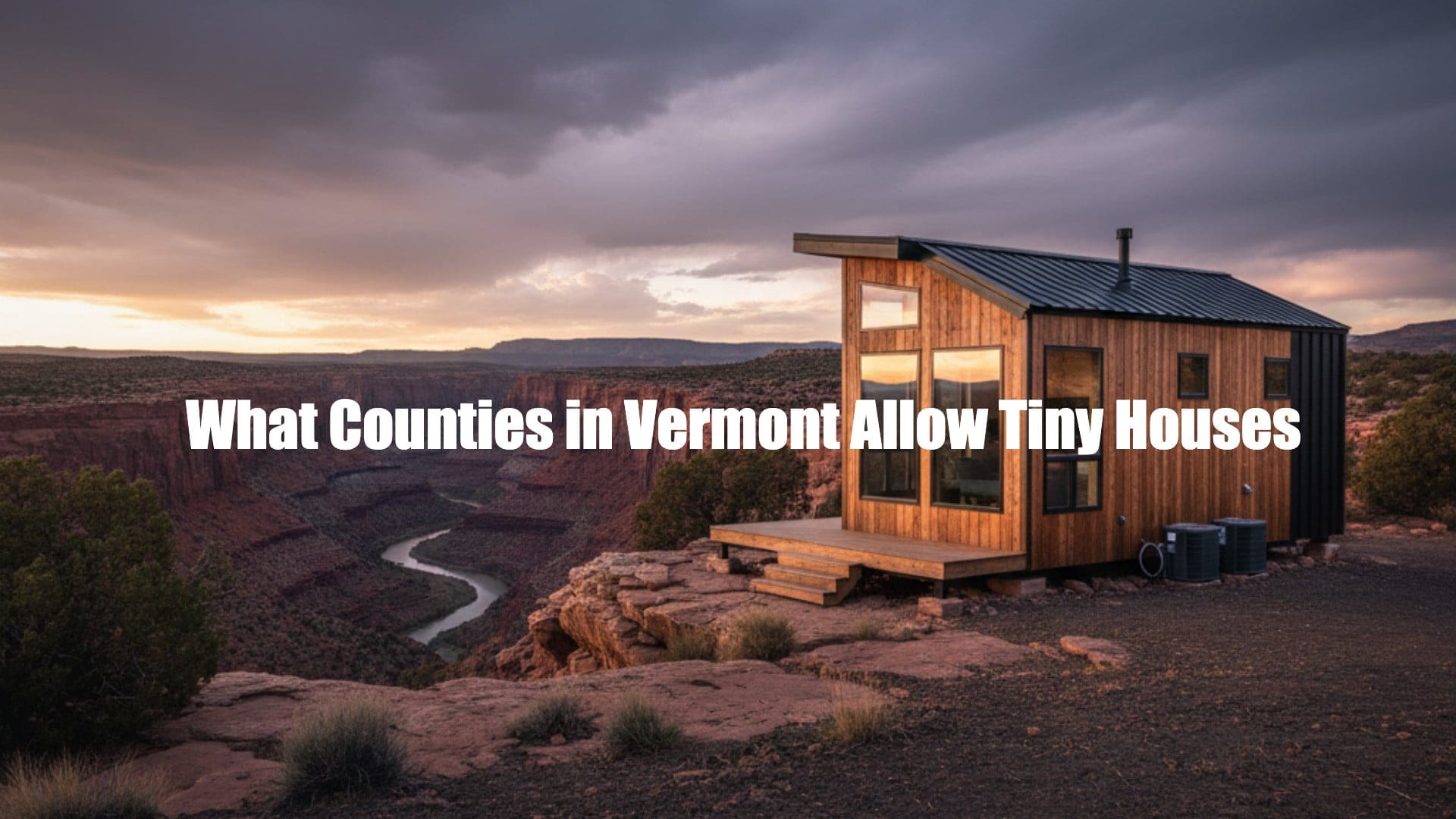
Vermont does not have uniform county-level regulations for tiny houses; instead, decisions are primarily made at the municipal level across all 14 counties. Tiny homes must generally comply with the state’s building code, requiring at least one room of 120 square feet, additional rooms of 70 square feet, and 7-foot ceilings. Park model tiny homes on wheels may be allowed as permanent residences in certain towns if placed on foundations, but always verify with local zoning offices as rules vary widely by municipality.
In this comprehensive guide, explore the landscape of tiny house regulations across Vermont’s counties and municipalities, understanding the rules that govern this sustainable housing option in the Green Mountain State. Vermont’s picturesque valleys, serene lakes, and lush mountains continue to attract those seeking a minimalist, eco-friendly lifestyle through tiny home living. As interest in tiny houses grows, the state has seen evolving local guidelines that balance innovation with safety and community standards.
While Vermont lacks statewide tiny house legislation, local governments handle zoning and building requirements, leading to a patchwork of rules that demand careful research. This decentralized approach empowers towns to tailor regulations to their unique needs but requires prospective owners to engage directly with municipal offices. Navigating these variations is essential for anyone planning to build or place a tiny home, ensuring compliance while embracing Vermont’s natural beauty and progressive housing ethos.
Great Lakes Tiny Homes specializes in modular, park model, and tiny homes delivered across the lower 48 states, offering customizable builds with or without wheels and RVIA certification. Our Park Model options meet ANSI 119.5 standards, ideal for Vermont’s regulatory landscape. With expertise in state-specific codes, we guide clients through permitting and placement. For personalized advice on Vermont tiny house rules and suitable models, book a call with our experts.
Disclaimer: This article provides informational guidance only and is not legal advice. Zoning laws and building codes change frequently and vary by location. Consult local zoning authorities or a qualified land use attorney for decisions based on this content.
What Counties in Vermont Allow Tiny Houses?
Vermont’s 14 counties do not impose blanket prohibitions on tiny houses; instead, regulations are determined at the municipal level, allowing flexibility but requiring location-specific verification. This local control means that while no county outright bans tiny homes, permissibility depends on town bylaws, which often align with state building codes for residential structures. Counties like Windsor and Chittenden offer more supportive environments through progressive municipal policies, while rural areas in Essex or Orleans may defer entirely to individual towns.
The state’s approach emphasizes safety and habitability, with tiny homes treated as either permanent dwellings or accessory units depending on foundation and use. Prospective owners should prioritize counties with established tiny house precedents, such as those hosting communities or ADU programs, to streamline approvals. This municipal focus creates opportunities in diverse landscapes, from urban-adjacent Chittenden to rural Windsor, but underscores the need for direct contact with town planners.
Understanding county contexts helps identify starting points, though ultimate approval rests with towns. For instance, counties without dedicated websites, like Grand Isle or Lamoille, rely heavily on local officials for guidance. This structure supports Vermont’s community-driven governance, encouraging tiny house advocates to build relationships with municipal leaders early in the process.
| County | Min Sq Ft | Zoning Type | Key Requirements | Source |
| Windsor County | Varies by municipality (state min: 120 sq ft primary room) | Single-family residential/ADU | Comply with state building codes; municipal approval for foundations and utilities | Vermont Agency of Commerce and Community Development – ADU Regulations |
| Windham County | Varies; some towns 500-650 sq ft | Residential with ADU options | Local bylaws govern; ADUs common workaround for smaller sizes | Windham Regional Commission – Local Zoning |
| Chittenden County | Varies by municipality | RV parks/private property/ADU | Wheeled homes in designated areas; permanent via foundations | Chittenden County Regional Planning Commission – Zoning |
| Washington County | Varies by municipality | Permitted with conditions | Zoning approval and building permits required; ADU-friendly | Central Vermont Regional Planning Commission – Zoning |
Windsor County
Windsor County remains a leader in tiny house-friendly policies, with municipal bylaws often supporting small dwellings through clear safety and zoning frameworks. Towns like Woodstock and Windsor explicitly allow tiny homes as ADUs or primary residences when meeting state codes, treating them equivalently to single-family homes for tax and regulatory purposes. This progressive stance recognizes tiny houses’ role in addressing housing affordability amid Vermont’s rising costs.
Whether on wheels or foundations, tiny homes here must adhere to measurements like 120 square feet for primary rooms, ensuring habitability without excessive restrictions. The county’s rural charm and established communities make it ideal for off-grid or semi-rural setups, though utility connections remain key for permanent status. Owners benefit from streamlined processes in supportive towns, reducing uncertainty in planning phases.
Windsor’s regulatory clarity attracts tiny house builders in Windsor, fostering growth in sustainable living options. Early consultation with town offices ensures projects align with local visions, enhancing community integration and long-term viability.
Windham County
Windham County maintains cautious yet feasible regulations for tiny houses, with some towns enforcing 500-650 square foot minimums for primary structures while allowing smaller ADUs on existing lots. This balanced approach accommodates innovative housing through accessory units, particularly in areas like Brattleboro where land use rules support secondary dwellings. Despite challenges, creative placements via ADUs enable tiny living without full primary residence compliance.
Prospective owners often navigate these rules by partnering with primary homes, leveraging ADU flexibility to bypass stricter size limits. The county’s scenic appeal draws enthusiasts, but thorough town-specific research is vital given varying bylaws. Communities here emphasize environmental harmony, aligning tiny homes with sustainable development goals.
Windham’s framework encourages tiny home communities in Vermont, providing models for compliant living. Engaging local planners early helps tailor projects to specific requirements, turning potential hurdles into opportunities for unique, eco-conscious homes.
Tiny House Regulations And Rules In Vermont
Vermont’s tiny house rules blend state building standards with local zoning, classifying homes as RVs, mobile units, or permanent structures to facilitate accessible yet regulated living. The absence of dedicated tiny house laws means reliance on the Vermont Building Code (VBC) and municipal ordinances, covering materials, sizes, and placements comprehensively. This system promotes safety while adapting to tiny homes’ unique needs, from mobility to minimalism.
Regulations distinguish permanent, temporary, and transitional categories, each with tailored guidelines ensuring habitability across Vermont’s seasons. Local variations reflect community priorities, with urban areas focusing on integration and rural ones on environmental impact. This nuanced framework supports tiny living’s growth, provided owners verify compliance through official channels.
The VBC, based on international standards, mandates essentials like proper ventilation and structural integrity, adaptable to small footprints. Ongoing legislative discussions aim to clarify rules further, potentially easing adoption statewide. For now, this blend of state oversight and local autonomy creates a dynamic environment for tiny house innovation.
Permanent Structure Rules
Permanent tiny houses in Vermont follow full VBC compliance, akin to traditional homes, including zoning, health, and safety mandates for year-round residency. Anchored foundations and durable roofs are required to withstand harsh winters, with connections to approved utilities essential. Municipalities like Burlington permit ADUs without size minimums, fostering affordability through flexible secondary units.
These rules ensure tiny homes provide safe, insulated spaces, often incorporating energy-efficient features suited to Vermont’s climate. Wastewater and electrical systems must meet state approvals, preventing environmental issues. This rigorous yet supportive framework validates tiny houses as legitimate residences, promoting sustainable development.
Owners gain security from standardized processes, though site-specific evaluations confirm feasibility. Professional builders familiar with VBC streamline adherence, avoiding common pitfalls in foundation and utility planning.
Temporary Structure Rules
Temporary tiny homes, often on wheels, offer recreational flexibility under VBC and VMA guidelines, bypassing full permits if under size thresholds. VIN requirements and trailer weight limits ensure safe mobility, with Brattleboro equating them to residential developments for placement. These rules suit seasonal use, like in campgrounds, while limiting permanent residency outside designated zones.
Size caps vary, such as Williston’s 1,500 square feet, reflecting local preferences for controlled growth. Wheeled units must prioritize transportation durability, complementing Vermont’s outdoor lifestyle. This category enables experimentation with tiny living before committing to permanence.
Verification with VMA confirms roadworthiness, while zoning checks placement viability. Such structures appeal to adventurers, bridging temporary escapes and potential upgrades to fixed homes.
Transitional Structure Rules
Transitional tiny homes bridge temporary and permanent use, requiring permits for residential intent and adherence to size, location, and safety standards. Stationary units need ground securing, septic/sewer links, and insulated roofing for Vermont’s weather variability. These guidelines ensure viability during housing transitions, balancing flexibility with protection.
Utility and waste management approvals are critical, often involving environmental assessments. This category supports those in flux, like job relocators, while upholding community standards. Clear documentation aids smooth progression to permanent status if desired.
Local planning input refines applications, addressing site-specific concerns. Transitional rules exemplify Vermont’s adaptive housing policies, aiding diverse life stages.
Major Cities Tiny House Regulations
Vermont’s key cities craft distinct tiny house policies, blending urban density with innovative housing needs through detailed zoning and permitting. These areas often lead in ADU adoption, addressing affordability amid population pressures. Variations highlight local priorities, from Burlington’s progressiveness to Brattleboro’s structured approach.
City regulations evolve with state influences, incorporating feedback from residents and developers. This results in clearer pathways for tiny homes, enhancing urban sustainability. Engagement with city planners is key to aligning projects with community visions.
These urban frameworks demonstrate tiny houses’ integration potential, offering models for statewide adoption while preserving neighborhood character.
Burlington Tiny House Regulations
Burlington leads with no minimum square footage for ADUs, enabling compact tiny homes in residential zones while upholding VBC safety standards. 2020 reforms streamlined permitting, eliminating extra parking mandates and capping ADUs at 900 square feet or 30% of primary homes. This fosters affordability, with utilities and setbacks ensuring integration.
The city’s walkable vibe suits tiny living, supported by community development offices guiding applicants. Exemptions for lot coverage aid small-lot projects, promoting dense, eco-friendly housing. Burlington’s model attracts diverse residents seeking urban minimalism.
Early zoning checks confirm feasibility, with tiny houses for sale in Burlington thriving under these supportive rules. This environment balances innovation with livability, setting a progressive tone.
Montpelier Tiny House Regulations
Montpelier’s capital status informs measured tiny house rules, aligning with VBC and zoning for safe, compliant structures. ADUs up to 40% of primary homes are permitted, exempt from lot minimums if owner-occupied, supporting multi-generational living. Historic preservation influences designs, ensuring aesthetic harmony.
Planning collaboration aids navigation, with utilities and setbacks standard requirements. The compact layout favors tiny homes for state workers valuing proximity. This approach evolves with housing needs, maintaining capital integrity.
Montpelier’s guidelines provide clarity, enabling tiny projects that enhance community resilience and affordability.
Brattleboro Tiny House Regulations
Brattleboro’s land use rules encompass tiny homes under residential frameworks, requiring foundations, utilities, and safety compliance for integration. Mobile units face parking and setback limits, with ADUs offering pathways for smaller builds. Recent updates propose easing occupancy rules, reflecting housing evolution.
Planning services detail processes, addressing neighborhood compatibility. The artsy community welcomes sustainable options, aligning with cultural ethos. Brattleboro’s clarity aids developers in creating viable tiny dwellings.
These regulations support diverse housing, preserving the town’s vibrant, inclusive character while adapting to modern needs.
In Vermont, Where Can I Build A Tiny House?
Selecting a tiny house site in Vermont involves assessing zoning, utilities, and lifestyle fit, as placement dictates regulatory paths and daily living. Professional builders assist with paperwork and compliance, mitigating risks in this multi-step process. Options range from mobile-friendly RV parks to rooted private lands, each with pros and regulatory nuances.
Site evaluation covers access, environmental impact, and services, often requiring permits for utilities or foundations. Rural spots offer seclusion but may need septic/well installations, while communities provide ready infrastructure. This planning ensures enduring satisfaction in Vermont’s varied terrains.
Common sites include RV parks for mobility, national campgrounds for seasonal stays, dedicated tiny communities for support, and private properties for customization. Each demands local verification, balancing freedom with feasibility in the state’s regulatory mosaic.
Tiny Home Communities in Vermont
Vermont’s tiny home communities blend affordability with camaraderie, slashing costs through shared amenities and fostering bonds among sustainability-focused residents. These enclaves tackle isolation via events and resources, embodying Vermont’s communal spirit. Growth in such models highlights tiny living’s social viability.
Communities integrate eco-practices like solar and gardening, aligning with state values. They navigate zoning collectively, easing individual burdens. This setup enhances quality of life, proving tiny homes’ communal potential.
Tiny home communities in Vermont like Ten Stones exemplify balanced living, offering blueprints for expansion and inspiring broader adoption.
Ten Stones
Ten Stones in Charlotte pioneers intergenerational co-housing on 87.4 acres, blending woods, meadows, and farms with 16 half-acre plots for tiny builds. Founded by 17 families, it harmonizes privacy and participation via consensus governance. This setup preserves nature while nurturing connections in Champlain Valley.
Diverse tiny structures showcase sustainable designs, with shared gardens and orchards promoting self-sufficiency. Residents engage in land care, reflecting rural Vermont’s agricultural roots. The community’s democratic process ensures inclusive evolution.
Ten Stones models tiny living’s scalability, drawing those seeking rooted, eco-conscious community in Vermont’s heartland.
Headwaters Garden & Learning Center
Headwaters in Cabot merges tiny housing with education on an ecovillage featuring eight varied dwellings from yurts to treehouses, plus expansion lots. It promotes sustainability through workshops on farming and building, serving residents and visitors alike. Work-sharing covers maintenance and programming, building collective resilience.
This intentional setup educates on green practices, integrating living, learning, and labor seamlessly. Diverse structures demonstrate adaptive tiny options, inspiring eco-innovation. Community contributions foster purpose and interconnection.
Headwaters advances Vermont’s sustainable ethos, offering immersive tiny living with outreach impact.
Tiny House Prices in Vermont
Vermont tiny house costs hinge on size, type, certifications, and site prep, ranging $30,000-$100,000 amid regulatory and climate demands. Foundations and utilities inflate rural builds, while wheeled models suit flexible budgets. Local codes influence expenses, with ADUs often more affordable than primaries.
Market dynamics reflect quality needs for insulation and durability against winters. Financing options grow for certified units, easing entry. Budgeting accounts for ongoing costs like permits and maintenance in Vermont’s variable climate.
Great Lakes Tiny Homes Pricing
Great Lakes Tiny Homes delivers turnkey solutions at $100,000-$150,000, encompassing Vermont-compliant builds with premium materials and services. Pricing covers regulatory navigation, ensuring seamless delivery and setup. This investment yields durable, efficient homes tailored to local challenges.
Options accommodate wheels or foundations, with RVIA certification enhancing financing access. Expertise minimizes surprises, providing value through longevity and compliance. Customers receive comprehensive support from design to occupancy.
Great Lakes Tiny Homes Model Options
Great Lakes offers versatile models suiting Vermont’s rules, from modulars for permanent sites to wheeled units for mobility. Selections consider zoning, use, and aesthetics, optimizing for climate resilience. Each prioritizes quality and customization.
- Modular Homes – On-site assembly for code-heavy areas, ideal for foundations.
- A-Frame – Snow-shedding design maximizing space in winter-prone spots.
- Cabin – Rustic integration with Vermont’s landscapes.
- Park Models – Certified for RV-friendly zones.
- Tiny House on Wheels – Mobile compliance for temporary rules.
Model selection aligns with local bylaws, avoiding pitfalls via expert input. This ensures functional, appealing homes. For Vermont-specific guidance, book a call with our experts.
Do I Need a Certified Builder?
Certified builders are vital in Vermont for meeting stringent codes and climate demands, guaranteeing compliance and quality. RVIA certification, like Great Lakes’, upholds ANSI standards, vital for safety and financing. Professionals handle permits, reducing risks in variable regulations.
Benefits include durable materials and insurance eligibility, essential for Vermont’s weather. Expertise in local nuances saves time and costs. Certified work ensures reliable, code-adherent homes.
Great Lakes Tiny Homes exemplifies this, providing end-to-end support for successful projects.
Additional Considerations for Vermont Tiny House Living
Vermont’s winters demand superior insulation and heating in tiny homes, combating sub-zero temps and snow loads effectively. Moisture control prevents issues in humid summers, with dehumidifiers common. These adaptations ensure comfort year-round.
Rural utilities often require wells/septics, adding costs but enabling off-grid options. Internet and emergency access vary, favoring connected sites. Environmental rules protect sensitive areas, guiding placements.
Community buy-in via town meetings builds support, aligning tiny homes with local values. This holistic planning yields resilient, integrated living.
Frequently Asked Questions
Q: Can You Make a Tiny House in Vermont Your Main Residence?
A: Yes, tiny houses can serve as primary residences if compliant with local zoning and VBC, often as permanent structures or ADUs. Verify with municipal offices for site-specific approvals, including utilities and foundations. This setup supports full-time living, embracing Vermont’s minimalist ethos.
Q: What Are the Benefits of Living Tiny in Vermont?
A: Tiny living cuts costs to $30,000-$60,000 initially, far below traditional homes, while minimizing energy use via solar/wind. It offers mobility and low maintenance, suiting Vermont’s outdoorsy lifestyle. Environmentally, it reduces footprints, aligning with state sustainability goals.
Q: In Vermont, How Small Can a Home Get?
A: Sizes range 100-1,000 square feet, with state minimums at 120 square feet primary room, varying by town. Rural flexibility contrasts urban caps, allowing customization. Location dictates limits, favoring compact designs in supportive areas.
Q: Do I Need a Permit for a Tiny Home in Vermont?
A: Permits are typically required for zoning and building compliance, varying by type and use. Contact departments early for specifics on documentation and fees. This ensures safe, legal habitation.
Q: Are There Tiny Home Communities in Vermont?
A: Yes, communities like Ten Stones and Headwaters provide zoned, amenity-rich settings for tiny living. They offer social and practical support, easing regulatory navigation. These hubs exemplify collaborative sustainability.
How to Verify Tiny House Rules in Your County
Important Note: Regulations evolve; always consult current official sources for your location’s specifics.
Verifying rules demands systematic checks given Vermont’s local focus. Start with county/town websites or ACCD resources for bylaws on dwellings and ADUs. Review size, foundation, and utility mandates, noting variances for tiny homes.
Examine wheeled unit classifications under RV rules, confirming parking durations. Contact planning departments for tailored advice and pre-application reviews. This diligence prevents issues, ensuring compliant projects.
- Review the County Zoning Code: Access bylaws via official sites, focusing on residential/ADU sections for tiny allowances.
- Check Minimum Dwelling Size Requirements: Identify state-aligned minimums and local exceptions for efficiency.
- Investigate ADU Provisions: Confirm lot, setback, and occupancy rules for secondary units.
- Determine Treatment of Tiny Houses on Wheels: Assess RV equivalency and placement limits.
- Contact the Local Planning Department: Seek direct guidance with project details for feasibility.
This process, spanning hours to days, equips you for informed tiny house pursuits in Vermont.
Conclusion
Vermont’s tiny house scene thrives on municipal diversity, offering pathways in supportive counties like Windsor despite varying rules. State codes provide baselines, but town engagement unlocks opportunities amid affordability pushes. Evolving policies signal growing acceptance for sustainable options.
Success hinges on research, experts, and community ties, turning regulations into enablers. Great Lakes Tiny Homes aids this journey with Vermont-savvy builds. To explore your options, book a call with our experts today.