
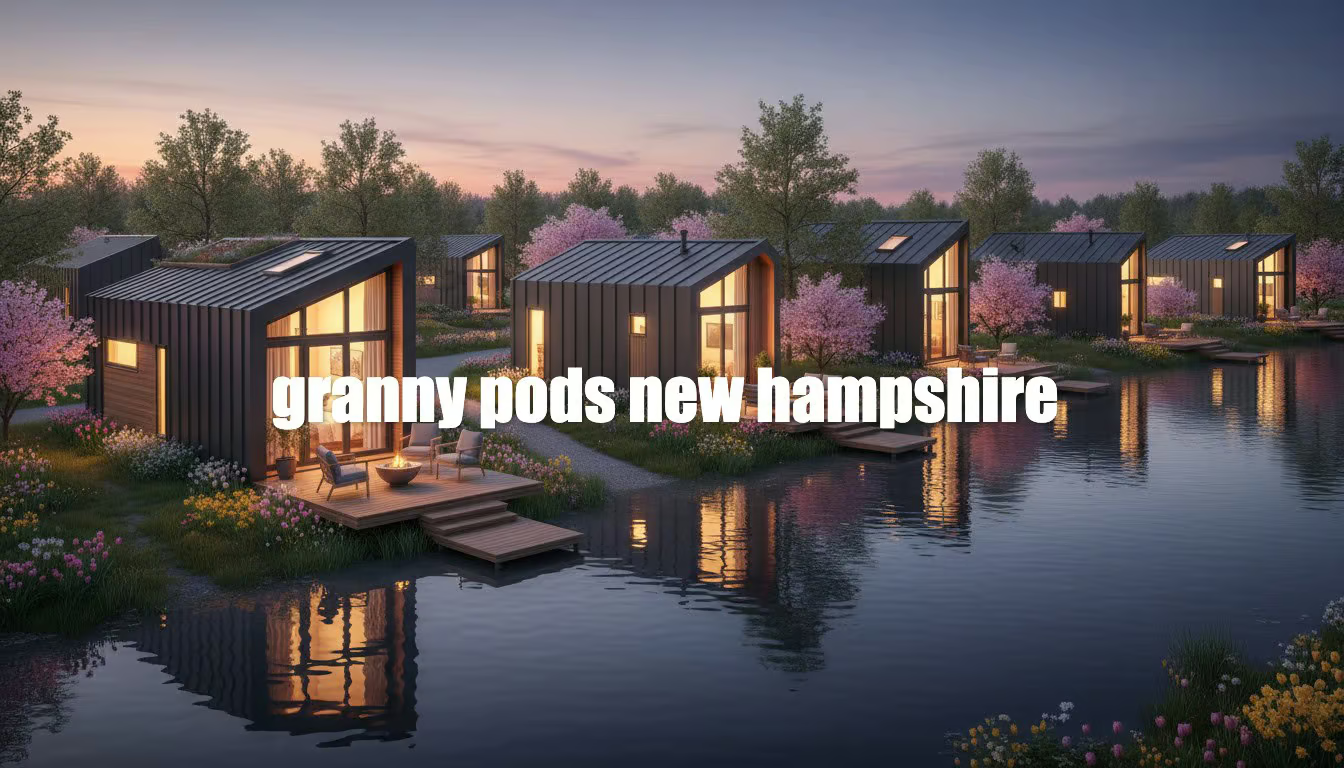
As you consider ways to support your aging relatives while preserving their independence, granny pods emerge as a thoughtful option in New Hampshire. These compact dwelling units allow your loved ones to live nearby, fostering close family ties without the need for institutional care. In the Granite State, where family values run deep and harsh winters demand resilient housing, granny pods offer a blend of convenience and autonomy that aligns with your lifestyle.
Whether you’re navigating the rolling hills of the White Mountains or the coastal charm of Portsmouth, integrating a granny pod into your property can transform how you care for family. This guide walks you through everything you need to know, from legalities to design, ensuring you make an informed decision for your home.
In the context of New Hampshire’s growing need for flexible housing solutions amid an aging population, granny pods provide a relevant way to balance family care with personal space. Great Lakes Tiny Homes brings credibility through their focus on modular and park model homes designed for such needs, offering options that adapt to various state regulations and climates.
What Are Granny Pods?
You might wonder what exactly granny pods are and why they’re gaining traction in New Hampshire. Granny pods, also known as backyard cottages or in-law suites, are small, detached dwelling units designed specifically for aging relatives. They allow your loved ones to live close to you, enjoying the benefits of family proximity while retaining their own space and independence. Typically, these units range from 300 to 800 square feet, offering a cozy yet functional living area separate from your main home.
In New Hampshire, where the population is aging—with over 18% of residents aged 65 and older as of recent census data—granny pods address a growing need. The state’s rural landscapes and tight-knit communities make them ideal for multigenerational living. Harsh winters and variable terrain here amplify their appeal, as these pods can be engineered for energy efficiency and accessibility, helping you keep family safe and comfortable year-round. If you’re exploring broader options, consider checking out the best tiny home communities in New Hampshire for inspiration on integrated living spaces.
Granny pod-style tiny houses can be customized with or without wheels. If you opt for wheels, the unit becomes more mobile and potentially easier to permit as an RV. Without wheels, it requires a permanent foundation, integrating more fully with your property. Models with RVIA certification qualify as park models, which often simplify zoning compliance in recreational or accessory dwelling contexts. This flexibility lets you tailor the pod to your New Hampshire property’s specifics, whether you’re in urban Manchester or rural Conway. For those interested in professional construction, look into tiny house builders in New Hampshire who specialize in such adaptable designs.
The popularity of granny pods in New Hampshire stems from rising elder care costs and a desire for personalized solutions. Unlike traditional nursing homes, these pods let you maintain oversight without sacrificing privacy. As you explore options, consider how a granny pod could enhance your family’s dynamic, providing peace of mind amid the state’s beautiful but challenging seasons. You might also review what counties in New Hampshire allow tiny houses to align your plans with local rules.
Inside the Modern Granny Pod: Features, Design, and Purpose
When you delve into the world of modern granny pods, you’ll find they’re far more than simple sheds—they’re accessory dwelling units (ADUs) crafted for comfort and care. In New Hampshire, these pods typically span 300 to 800 square feet, featuring essentials like a bedroom, bathroom, kitchenette, and living area. Amenities often include energy-efficient appliances, ample natural light, and storage solutions optimized for smaller spaces.
You have several types to choose from: prefab granny pods arrive ready-to-assemble, saving you time and labor; custom-built ones allow personalization to match your aesthetic; and converted structures, like shipping containers or garages, offer eco-friendly repurposing. What sets granny pods apart for elderly relatives is their focus on accessibility. Unlike standard tiny homes, which prioritize minimalism, granny pods incorporate senior-friendly elements such as zero-step entries to prevent falls, wider doorways for wheelchair access, and non-slip flooring.
Medical monitoring capabilities add another layer of reassurance. You can integrate smart systems for remote health checks, like fall detection sensors or automated medication dispensers, ensuring your loved one’s safety without constant supervision. In New Hampshire’s variable climate, designs often include insulated walls for winter warmth and ventilation for humid summers, distinguishing them from generic tiny homes that might not withstand nor’easters.
Purposefully, granny pods support aging in place, a concept gaining momentum as New Hampshire’s senior population grows. With features like grab bars in bathrooms, lever-style handles, and adjustable-height counters, they promote dignity and ease. As you plan, envision a space where your relative enjoys hobbies or hosts grandchildren, all while staying connected to your daily life. This thoughtful design not only meets practical needs but also enriches family bonds in the Granite State.
Exploring prefab options, you can select layouts that emphasize these features, ensuring the pod feels like a true home extension rather than an afterthought.
Benefits of Granny Pods for New Hampshire Families
Installing a granny pod on your New Hampshire property brings numerous advantages, tailored to the state’s family-oriented culture and seasonal demands. First, proximity to family enhances care and support—you can check in easily during snowy winters or vibrant falls, providing emotional reassurance without full-time cohabitation.
For your elderly relatives, independence remains key. They enjoy their own entrance, routines, and privacy, fostering a sense of autonomy that combats isolation common among New Hampshire’s 220,000-plus seniors. Cost savings are significant: average annual nursing home fees in the state exceed $100,000, while assisted living runs $5,000 monthly. A granny pod, built for $100,000 to $150,000, offers long-term affordability, potentially paying for itself in under two years compared to facility costs.
Your property value could rise too—adding a versatile ADU appeals to future buyers in New Hampshire’s housing market, where multigenerational homes are increasingly sought. Regardless of whether you spend $100k or $150k, this investment retains value, unlike the ongoing expenses of assisted living that can total hundreds of thousands over time.
Emotionally, keeping family close aligns with New Hampshire’s community spirit, reducing stress and improving well-being. The state’s aging demographic, projected to reach 25% seniors by 2030, underscores this need. Culturally, in areas like the Seacoast or Lakes Region, granny pods suit the independent Yankee ethos, allowing you to weatherproof against cold snaps while enjoying summer gatherings. For available properties, you may want to search for tiny house for sale New Hampshire options that include similar setups.
Statistically, elder care costs in New Hampshire have risen 20% in the last decade, making granny pods a prudent choice. You gain peace of mind knowing your loved ones are safe from blizzards in a heated, accessible space, all while strengthening familial ties in this picturesque state.
Legal Considerations for Granny Pods in New Hampshire
Navigating the legal landscape for granny pods in New Hampshire requires understanding state regulations, which treat them as ADUs under RSA 674:72. You must comply with local zoning laws, building codes based on the International Residential Code (IRC), and permit requirements that vary by county and municipality.
Statewide, New Hampshire encourages ADUs to address housing shortages, but enforcement differs. More accommodating areas include Rockingham County towns like Portsmouth, where ADUs are permitted in residential zones with owner-occupancy rules. Hillsborough County, encompassing Manchester, often allows them case-by-case, requiring setbacks and utility ties. Stricter spots, like parts of rural Coos County, may prohibit detached units or demand variances.
Major cities: In Concord (Merrimack County), you can build up to 800 sq ft with planning board approval; Nashua (Hillsborough) favors attached ADUs but permits detached with conditions. Recent changes include 2022 legislation easing ADU approvals in rural areas, and pending bills aim to standardize permits statewide, potentially simplifying your process by 2025.
RVIA certification benefits you greatly—park model RVs under 400 sq ft can bypass some foundation rules, classifying as temporary structures in zoning disputes. This mobility aids compliance in restrictive areas, reducing legal hurdles and installation costs.
To ensure success, consult local officials early. For more on county-specific rules, refer to resources like what counties in New Hampshire allow tiny houses.
Which New Hampshire Counties Allow Granny Pods?
To help you decide where to install your granny pod, here’s a comprehensive table of New Hampshire counties’ stances on ADUs. Focus is on populated areas with clear guidelines; always verify with local authorities as regulations evolve. For an in-depth guide, see what counties in New Hampshire allow tiny houses.
| County Name | Granny Pod Status | Minimum Lot Size Requirements | Maximum Size Allowed | Special Notes |
|---|---|---|---|---|
| Hillsborough (Manchester, Nashua) | Allowed | 1 acre | 800 sq ft | Manchester requires owner occupancy; Nashua allows detached with 10-ft setbacks. Ties to main home utilities mandatory. |
| Rockingham (Portsmouth, Exeter) | Allowed | 0.5 acres | 1,000 sq ft | Portsmouth permits in R-1 zones; environmental reviews for coastal properties. Favorable for park models. |
| Strafford (Dover, Rochester) | Case-by-Case | 1 acre | 600 sq ft | Dover approves via variance; Rochester stricter on foundations. Recent zoning updates support family ADUs. |
| Merrimack (Concord, Hooksett) | Allowed | 0.75 acres | 750 sq ft | Concord streamlines permits; must match main home architecture. No short-term rentals. |
| Cheshire (Keene) | Restricted | 2 acres | 400 sq ft | Keene limits to attached units; detached need special use permit. Focus on historic preservation. |
This table highlights key counties; for full details, check municipal codes. In urban hubs like Manchester, city regs often mirror county but add parking requirements. As you review, note how RVIA-certified options can ease approvals in case-by-case scenarios.
Cost of Building a Granny Pod in New Hampshire
Building a granny pod in New Hampshire involves various costs, but understanding them helps you budget effectively. Prefab units start at $80,000 for basic 300 sq ft models, while custom-built ones range $120,000-$200,000 depending on size and finishes. Quality levels vary: entry-level with standard appliances at lower end, premium with smart tech up to $250,000 for 800 sq ft.
Builds in the $100,000-$150,000 range offer value with durable materials suited to NH winters. Site preparation costs $5,000-$15,000, including grading for the state’s rocky soil. If your unit lacks wheels, add $10,000-$20,000 for a concrete foundation to handle frost heave; wheeled versions skip this but may need anchoring.
Utility connections run $8,000-$20,000 for septic, water, and electric ties—crucial in rural NH where municipal hookups vary. Permits average $2,000-$5,000, plus inspections. Ongoing maintenance, like snow removal and insulation checks, adds $1,000 yearly due to the climate.
Compared to NH nursing homes ($110,000/year) or assisted living ($60,000/year), a $150,000 pod saves substantially over a decade. Financing options include home equity loans at 5-7% interest or state grants for aging-in-place. Insurance: Add $500-$1,000 annually to homeowners; tax implications may include property value reassessments, but ADUs often qualify for exemptions if primary residence.
As you calculate, factor in long-term ROI—your investment appreciates, unlike facility fees that escalate with inflation. If seeking builders, explore tiny house builder New Hampshire services for cost-effective solutions.
The Granny Pod Installation Process in New Hampshire
Installing a granny pod in New Hampshire follows a structured process, adapted to the state’s terrain and weather. Step 1: Research local zoning—use town websites or NH Planning resources to confirm ADU allowances in your municipality, avoiding fines from non-compliance.
Step 2: Obtain permits—submit plans to your building department, including site surveys. Expect 4-8 weeks; coastal areas may need wetlands approval. Practical tip: Hire a local surveyor for accurate lot assessments.
Step 3: Site preparation—clear and level your chosen spot, considering NH’s granite bedrock and slopes. Budget for erosion control; in winter-prone zones, plan for spring starts to beat freeze-thaw cycles. Challenges include hidden ledge rock, raising costs.
Step 4: Utility connections—link to your main septic or well, vital for NH’s cold snaps to prevent pipe bursts. Insulate lines and use frost-proof hydrants; electric upgrades might cost extra in remote areas.
Step 5: Delivery and installation—prefab units arrive via flatbed; cranes handle placement. Timeline: 1-2 weeks post-delivery. Wheeled models install faster without foundations.
Step 6: Final inspections—ensure code compliance for occupancy. NH’s variable weather can delay, so schedule buffers. Overall, from planning to move-in takes 3-6 months; consult pros to navigate hurdles like permit backlogs in growing towns.
Design Considerations for New Hampshire Granny Pods
Designing your granny pod for New Hampshire means prioritizing the four seasons’ impacts. Weatherproofing is essential: use high R-value insulation (R-40 walls) to combat sub-zero winters and humidity in summer, with metal roofing for snow shedding.
Energy efficiency saves on heating bills—opt for solar panels or high-efficiency HVAC, qualifying for NH rebates. Accessibility features like zero-step entries, 36-inch doorways, and grab bars ensure safe navigation for aging residents, preventing slips on icy paths.
Smart home tech, such as voice-activated lights and remote thermostats, lets you monitor from afar. You can craft designs that feel personal, focusing on layouts that enhance daily living.
Utility connections demand planning: bury lines below frost depth (4-5 feet in NH) and ensure septic compatibility. Aesthetically, match siding and colors to your main home for seamless integration, enhancing curb appeal in neighborhood settings.
These elements create a resilient, inviting space where your loved one thrives amid New Hampshire’s natural beauty. For community ideas, visit the best tiny home communities in New Hampshire.
Finding Expert Guidance for Your Project
When embarking on a granny pod project in New Hampshire, partnering with experienced professionals ensures compliance and quality. Local experts understand the nuances of state codes, from seismic considerations in the north to flood zones along the Merrimack River.
Options like Great Lakes Tiny Homes provide knowledge of New Hampshire regulations. They offer customization like accessibility ramps or energy-efficient windows, committed to building spaces that support aging family members comfortably.
Their team navigates permits and designs tailored to your property, making the process straightforward. For personalized advice, consider scheduling a consultation to explore your needs—it’s a helpful step toward realization.
Conclusion: Creating a Supportive Home for Your Loved Ones
In New Hampshire, granny pods represent more than an addition—they’re a commitment to family, independence, and dignity. By keeping your loved ones close yet autonomous, you nurture bonds while addressing practical care needs in a state that values self-reliance.
This choice invests in quality of life, far beyond housing, offering emotional security amid life’s changes. Local expertise streamlines your path, turning vision into reality. Take that first step today; your family deserves this supportive haven.
As you weigh your options, Great Lakes Tiny Homes emerges as a reliable choice, drawing on their experience in delivering turnkey modular and park model homes across the lower 48 U.S. states. Their focus on quality and regulatory compliance makes them a practical resource for creating a granny pod that fits your New Hampshire lifestyle.
Frequently Asked Questions About Granny Pods in New Hampshire
How Can Great Lakes Tiny Homes Help Me On My Granny Pod Journey
Great Lakes Tiny Homes supports you throughout your granny pod project in New Hampshire with end-to-end guidance. From initial consultations where you discuss your vision—whether a wheeled park model or foundation-based unit—they provide tailored designs meeting local codes.
Their builders, familiar with NH’s climate, incorporate features like superior insulation and accessibility. You benefit from transparent pricing in the $100k-$150k range, plus help with permits and installations. Clients appreciate the personal touch: ongoing support ensures your pod fits seamlessly.
Whether navigating zoning in Hillsborough or customizing for Rockingham, their expertise demystifies the process. Start by booking a call to guide your next steps toward enhancing family life.
Are granny pods legal in all parts of New Hampshire?
No, granny pods aren’t legal everywhere in New Hampshire—regulations vary widely. State law (RSA 674:72) permits ADUs, but local zoning dictates specifics. Urban areas like Manchester and Portsmouth generally allow them with permits, while rural towns in Coos County may restrict or require variances.
You’ll need to check municipal ordinances; detached units often face setback rules (e.g., 10 feet from property lines). Recent laws ease approvals, but historic districts or floodplains add hurdles. RVIA-certified park models can skirt some issues by classifying as RVs. Always consult your town planner to confirm legality for your site. For more, see what counties in New Hampshire allow tiny houses.
Can I install a granny pod on any size property in New Hampshire?
Not on every property size—New Hampshire localities set minimum lot requirements, typically 0.5 to 2 acres for ADUs. In Hillsborough County, 1-acre lots suffice for detached pods, but smaller urban parcels might limit to attached units.
Consider setbacks, utilities, and septic capacity; rocky terrain in northern NH may restrict small lots further. If your property is under the threshold, seek a variance or opt for a compact park model. Survey your land early to assess feasibility, ensuring the installation enhances rather than overcrowds your space.
Do I need special insurance for a granny pod?
Yes, you’ll likely need to adjust your insurance in New Hampshire. Standard homeowners policies may cover a granny pod as an outbuilding, but for habitable ADUs, add endorsements for liability and contents—expect $500-$1,500 extra annually.
If it’s a separate structure, a dwelling fire policy applies, especially for detached units. Factors like location (e.g., wildfire risk in Grafton County) influence premiums. Notify your insurer early; non-disclosure could void coverage. For wheeled models, RV insurance might suffice, but consult agents for NH-specific riders on flood or wind damage.
Can I rent out my granny pod in New Hampshire?
Renting out a granny pod in New Hampshire is possible but regulated. State law allows ADUs for family use, but short-term rentals (e.g., Airbnb) require local approval and may be banned in residential zones. Long-term leases are more feasible, especially if you occupy the main home.
Towns like Portsmouth permit with business licenses, while others like Keene restrict to relatives. Zoning often mandates no commercial use; violations lead to fines. If RVIA-certified, it might qualify under recreational rules. Check ordinances and consider tax implications—rental income is taxable, but deductions apply for maintenance.