
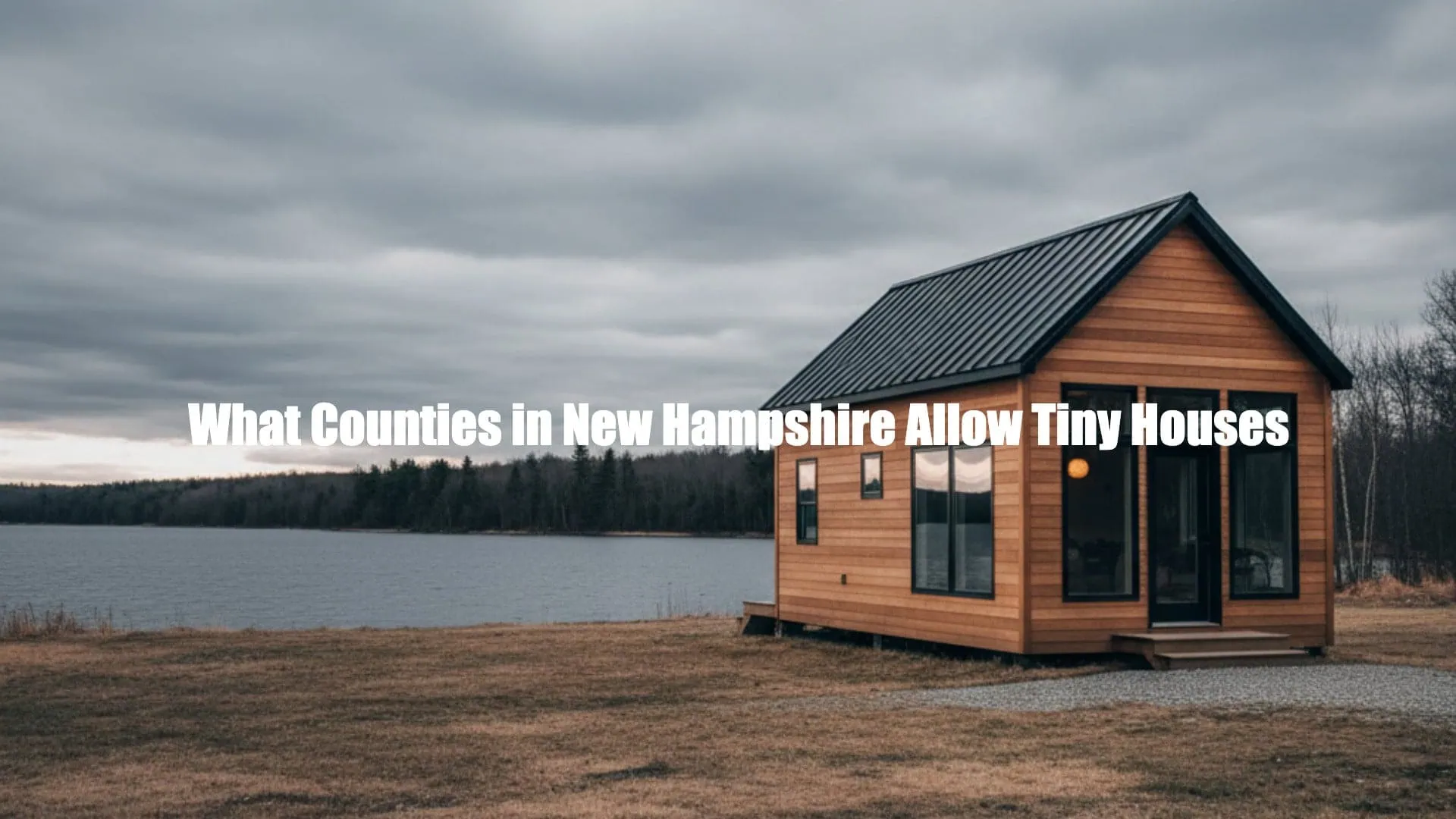
New Hampshire allows tiny houses as permanent structures in all counties when compliant with the 2021 International Residential Code (IRC) Appendix Q, typically limited to 400 square feet excluding lofts. Tiny houses on wheels (THOWs) are classified as recreational vehicles (RVs) and generally restricted from permanent residency, though recent legislation like House Bill 588 (2024) and HB 577 (2025) provides clearer pathways for ADUs and innovative housing. Local zoning varies by municipality, so always verify with town offices for site-specific rules.
Are you dreaming of downsizing to a tiny house in the Granite State? New Hampshire’s evolving regulations make it an increasingly viable option for affordable, sustainable living. While the state embraces tiny homes through updated building codes, success hinges on understanding county and municipal variations. This guide breaks down the latest rules, helping you navigate zoning, permits, and placement to turn your vision into reality.
At Great Lakes Tiny Homes, we specialize in modular, park model, and tiny home builds delivered across New Hampshire and beyond. Our turnkey solutions ensure compliance with local codes, from foundation setups to RVIA-certified wheels. Whether you’re eyeing rural land or an urban ADU, our expertise streamlines the process. Book a call with our experts to explore options tailored to NH’s regulations.
Disclaimer: This article provides general guidance and is not legal advice. Regulations change frequently, and local rules vary. Consult your municipal zoning office or a land use attorney for personalized advice before starting any project.
New Hampshire Tiny House Laws and Regulations
New Hampshire’s tiny house framework is guided by the 2021 International Residential Code (IRC) Appendix Q, which sets standards for safe, permanent tiny dwellings up to 400 square feet. The state has no blanket bans on tiny homes, but enforcement occurs at the local level through zoning ordinances and building permits. Recent laws like House Bill 588 (effective 2024) define tiny houses explicitly and mandate municipalities to allow them in single-family zones, promoting housing innovation amid affordability challenges.
This progressive stance reflects New Hampshire’s commitment to diverse housing while prioritizing safety and environmental standards. For instance, all tiny homes must include essential facilities like sleeping, cooking, and sanitation areas, plus connections to approved utilities. HB 577 (2025) further bolsters accessory dwelling units (ADUs), enabling tiny houses as secondary structures on existing lots. Prospective builders should review both state codes and local amendments to avoid surprises during permitting.
Regulatory Disclaimer: Codes evolve with legislative updates. Always confirm the latest requirements via the New Hampshire Office of the Fire Marshal and local planning departments before proceeding.
Permanent Structure Requirements
Permanent tiny houses in New Hampshire must comply with IRC Appendix Q, emphasizing structural integrity and habitability. Key mandates include a maximum floor area of 400 square feet (excluding lofts), with ceiling heights of at least 6 feet 8 inches in living spaces and 6 feet 4 inches in kitchens and bathrooms. Emergency features like rescue openings per Section R310 and roof access windows are non-negotiable for safety. Utilities must tie into public systems or approved private wells and septics, ensuring reliable water and waste management.
Under HB 588, municipalities cannot outright prohibit compliant tiny houses in residential districts, though they may impose lot size or setback rules. This creates opportunities in both urban and rural settings, but foundation designs must account for New Hampshire’s freeze-thaw cycles to prevent settling. Builders often recommend frost-protected shallow foundations for cost efficiency and durability in the state’s variable climate.
Tiny Houses on Wheels Regulations
THOWs face more restrictions, classified as RVs under state law, limiting them to temporary use in most areas—typically no more than 14 days per spot without relocation. HB 588 requires a licensed, inspected chassis and third-party certification (RVIA or NOAH) to verify safety, energy efficiency, and structural standards. Seals from authorized inspectors must be permanently affixed, with local engineers confirming chassis connections. While not ideal for year-round living, THOWs suit transitional housing or recreational parks with proper permits.
Municipalities may allow longer stays in designated RV zones, but full-time residency often requires conversion to a permanent foundation. This hybrid approach appeals to mobile enthusiasts testing tiny living before committing to a fixed site. Always secure parking permits for public land and register with state DMV for road-legal transport.
New Hampshire Counties Tiny House Regulations
New Hampshire’s 10 counties handle tiny houses through a mix of state oversight and local control, with no county-wide bans but varying municipal stringency. Counties without zoning defer to town rules, offering flexibility for compliant builds. HB 588 ensures tiny houses are permitted alongside single-family homes statewide, though details like minimum lot sizes differ. For those scouting tiny house for sale New Hampshire, starting with county planning resources is crucial.
Rural counties like Sullivan and Carroll stand out for their lack of overarching zoning, easing permanent tiny home placement on private land. Urban-adjacent areas, such as Hillsborough, rely on town-specific ordinances that often align with ADU allowances. Across the board, all require adherence to IRC Appendix Q for safety, with recent 2025 updates emphasizing equitable access to innovative housing. This patchwork encourages site-specific research to match your build with local feasibility.
| County | Min Sq Ft | Zoning Type | Key Requirements | Source | Verified |
| Sullivan County | 400 sq ft max | No county zoning | Town ordinances apply; IRC Appendix Q compliance; permanent foundation preferred; ADUs encouraged under HB 577 | NH State Building Code | 2026 |
| Carroll County | 400 sq ft max | No county zoning | Minimal restrictions; easy for compliant tiny homes; local town rules; supports THOWs in RV areas | NH State Building Code | 2026 |
| Belknap County | Varies by town | Municipal zoning | Allows tiny houses; ADUs permitted; check town for setbacks/utilities; HB 588 compliance | Belknap County Government | 2026 |
| Cheshire County | Varies by town | Municipal zoning | Tiny homes allowed as dwellings; foundation required in most towns; ADU flexibility | Cheshire County | 2026 |
| Coös County | 400 sq ft max | County planning board | Zoning for unincorporated areas; tiny homes ok with permits; rural exemptions | Coös County Planning | 2026 |
| Grafton County | Varies by town | Municipal zoning | Supports tiny living; ADU options in rural towns; HB 588 alignment | Grafton County | 2026 |
| Hillsborough County | Varies by town | No county-wide zoning | Tiny houses allowed; municipal ordinances govern; urban ADU focus | Hillsborough County | 2026 |
| Merrimack County | Varies by town | Municipal zoning | Permits tiny homes as ADUs; local rules apply; state law compliance | Merrimack County | 2026 |
| Rockingham County | Varies by town | Municipal zoning | ADUs and tiny homes allowed in many towns; coastal considerations | Rockingham County | 2026 |
| Strafford County | Varies by town | Municipal zoning | Tiny houses permitted; check for foundation rules; ADU expansions | Strafford County | 2026 |
Table Disclaimer: Local rules update regularly. Verify with county or town planning offices for the most current details before any tiny house project.
Major New Hampshire Cities Tiny House Rules
New Hampshire’s key cities have refined tiny house policies, often integrating them with ADU frameworks to address housing needs. These urban centers balance innovation with infrastructure demands, requiring ties to municipal utilities. For tiny house builder New Hampshire projects, city-specific compliance is vital to secure approvals efficiently.
Recent HB 577 expansions have made cities more accommodating, allowing detached ADUs up to 950 square feet in many cases. This shift supports multigenerational living and rental income while maintaining neighborhood character. Builders must navigate design reviews to ensure aesthetic harmony with surrounding homes.
Manchester Tiny House Regulations
Manchester treats tiny houses as ADUs in residential zones, capping them at 900 square feet with up to two bedrooms. Owner-occupancy is required via deed restriction, and connections to city water/sewer are mandatory. THOWs are limited to RV parks, not permanent urban sites. The city’s progressive stance aligns with HB 588, facilitating accessory units for workforce housing.
Planning staff assists with applications, emphasizing setbacks and parking. This framework helps address Manchester’s housing crunch while upholding safety standards.
Contact: Manchester Planning Department – (603) 624-6505
Nashua Tiny House Regulations
Nashua caps ADU tiny houses at 750 square feet, smaller than the primary dwelling, with a focus on single-family appearance. HB 577 now permits detached units by right, expanding from prior attached-only rules. Utilities must connect to municipal systems, and two-bedroom limits apply in some districts. This setup suits families adding guest spaces or rental income.
The planning department reviews for zoning fit, often approving eco-friendly designs. Nashua’s approach balances growth with community standards.
Contact: Nashua Planning Department – (603) 589-3090
Concord Tiny House Regulations
Concord allows tiny houses as ADUs or primary dwellings on permanent foundations, following IRC Appendix Q. Up to two bedrooms are permitted, with shared walls or detached options under HB 577. All units require utility hookups and owner-occupancy proof. As the capital, Concord’s ordinances promote sustainable housing, including tiny parks in select zones.
Applications involve detailed site plans, with staff guidance for compliance. This makes Concord a hub for tiny living innovation.
Contact: Concord Planning Division – (603) 225-8515
Dover Tiny House Regulations
Dover permits tiny houses as ADUs in residential areas, with size limits tied to the primary home (typically 40%). Parking and utility connections are required, alongside design standards for neighborhood integration. HB 588 ensures allowance in single-family zones, supporting Dover’s growth. THOWs are restricted to seasonal use in approved parks.
The planning team collaborates on variances, favoring energy-efficient builds. Dover’s rules foster compact, vibrant communities.
Contact: Dover Planning Department – (603) 516-6008
Rochester Tiny House Regulations
Rochester allows ADU tiny houses up to 950 square feet in compliant zones, with setbacks mirroring single-family homes. Municipal utilities are essential, and HB 577 mandates at least one per lot. Foundation builds are preferred for permanence, while THOWs suit recreational spots. This flexibility aids Rochester’s affordable housing initiatives.
Permit processes emphasize environmental reviews for septic suitability. Rochester’s policies evolve with state law for broader access.
Contact: Rochester Planning Department – (603) 335-1350
Accessory Dwelling Unit (ADU) Regulations
HB 577 (2025) revolutionized ADUs in New Hampshire, requiring all municipalities to permit at least one per single-family lot—attached or detached—without special exceptions. Tiny houses qualify if they include independent living facilities like kitchens and baths, capped at 950 square feet or the primary home’s size. This law overrides prior restrictions, enabling tiny homes as viable secondary units for aging parents, rentals, or guests.
Municipalities retain control over setbacks, parking (up to one extra space), and owner-occupancy, but cannot impose ADU-specific hurdles. Septic and water approvals from the Department of Environmental Services are mandatory, often requiring larger lots in rural areas. ADUs boost property values by 20-30% on average, per state housing reports, while addressing shortages.
Popular in counties like Merrimack and Rockingham, ADUs now include multi-bedroom options (up to two), broadening appeal. This framework positions tiny houses as practical solutions in New Hampshire’s tight market.
ADU Size and Design Requirements
- Maximum 950 square feet or 75% of primary dwelling, whichever is smaller
- Full facilities: kitchen, bathroom, sleeping area, and separate entrance
- Compliance with IRC Appendix Q for tiny-scale builds
- Parking: Up to one additional space; owner-occupancy often required
- Design: Must blend with neighborhood aesthetics; no external stairs in some towns
Tiny House Communities in New Hampshire
New Hampshire’s tiny house communities thrive in scenic spots, offering pre-zoned lots, shared utilities, and social vibes. These developments comply with HB 588, spacing units for fire access and integrating sustainable features like community gardens. They appeal to those seeking connection without isolation, with lot fees covering maintenance.
From Lakes Region retreats to mountain co-ops, communities emphasize eco-living and minimalism. Nubanusit exemplifies this with its farm-focused ethos, while Tuxbury blends glamping with rentals. Emerging spots in the White Mountains cater to seasonal dwellers, adapting to NH’s tourism boom.
Exploring best tiny home communities in New Hampshire reveals options for full-time or vacation use, all vetted for code compliance.
Nubanusit Neighborhood & Farm
In Hancock, Nubanusit spans 29 homes around a thriving farm, promoting sustainability and cohousing. Tiny houses fit seamlessly, with shared spaces fostering intergenerational bonds—from infants to seniors. Residents commute, work remotely, or retire here, attending local schools. The community’s light-footed ethos aligns with HB 588’s tiny house provisions.
Ownership or rental options include greenhouses and common houses, enhancing daily life. This model proves tiny living’s scalability in rural NH.
Tuxbury Tiny House Village
South Hampton’s Tuxbury features 180-275 square foot homes at Tuxbury Pond RV Resort, ideal for relaxation. Amenities like pools, beaches, and nearby orchards create a vacation haven, 30 minutes from Massachusetts attractions. While rental-focused, it models permanent tiny setups under local zoning.
HB 577’s ADU expansions could inspire similar owned communities. Tuxbury showcases tiny living’s recreational potential in coastal NH.
Emerging Tiny House Developments
New projects dot the Lakes Region and White Mountains, like pocket neighborhoods with clustered tiny homes around shared spaces. These follow HB 588 for group parks (minimum four units, 10,000 sq ft lots), incorporating solar and composting systems. Developers prioritize fire access and utilities, appealing to eco-conscious buyers.
Initiatives in Keene and Laconia test micro-housing pilots, blending affordability with community. As NH’s housing needs grow, these developments expand tiny options statewide.
Building Permits and Inspection Requirements
Tiny house permits in New Hampshire involve multi-stage approvals to verify code adherence, starting with zoning clearance. Submit plans showing compliance with IRC Appendix Q, including structural details and utility schematics. Fees range from $500-$5,000, covering reviews by building officials. Inspections occur at foundation, framing, mechanical, and final stages, ensuring safety.
HB 1681 (2026) allows third-party inspections for off-site builds, speeding modular projects. Rural areas may require environmental reviews for septics. This rigorous process protects residents while enabling innovative designs.
Permit Application Process
- Submit site plans, elevations, and code compliance docs to local building dept
- Secure zoning approval and pay fees
- Schedule phased inspections (foundation, rough-in, final)
- Address any corrections promptly
- Obtain certificate of occupancy for legal residency
Required Documentation
- Detailed site plan with setbacks, utilities, and access
- Foundation, framing, and roofing engineering plans
- Electrical, plumbing, and HVAC schematics
- Energy code calculations and insulation specs
- Septic/well designs approved by DES
Permit Disclaimer: Processes and costs vary by town. Engage early with building departments to map timelines and avoid delays.
Utility Connections and Infrastructure
Permanent tiny houses must link to reliable utilities, per state health codes, prioritizing public systems where available. In rural spots, private wells (drilled to 100+ feet) and septics (sized for 2-4 bedrooms) are common, costing $10,000-$30,000 installed. Electrical service needs 100-200 amps for heating, with GFCI outlets mandatory in wet areas.
HB 588 permits self-contained systems like rainwater harvesting or composting toilets in off-grid setups, provided no discharge occurs. Propane tanks fuel backups, while solar panels gain traction for sustainability. These requirements ensure resilience against NH’s harsh winters.
Water and Sewer Requirements
The Department of Environmental Services mandates approved sources: municipal hookups in cities or private systems in unincorporated areas. Septics follow soil tests for percolation, with variances for tiny lots. Community systems serve some developments, reducing individual costs.
Water quality testing is annual for wells, safeguarding health. This infrastructure focus prevents environmental issues in sensitive watersheds.
- Municipal connections where available
- Private wells and septics in rural zones
- Community utilities in parks
Electrical and Safety Systems
National Electrical Code compliance includes arc-fault protection and proper grounding for tiny spaces. Smoke/CO detectors, egress windows, and fire-rated materials are standard. Mini-splits or wood stoves handle heating, rated for efficiency.
Inspections verify overload prevention in compact layouts. These systems promote safe, comfortable living year-round.
- 100-200 amp service with GFCI
- Smoke/CO alarms and emergency lighting
- Fire escape routes per R310
- Ventilation for moisture control
Financing and Insurance Considerations
Tiny houses challenge traditional financing due to size, but options like personal loans ($20,000-$100,000) or RV loans for THOWs fill gaps. Construction-to-permanent loans suit site builds, while cash remains popular for simplicity. Credit unions like Service Credit Union offer flexible terms for green homes.
Insurance varies: homeowners policies for foundations ($500-$1,500/year), RV coverage for wheels ($300-$800). Specialty providers like American Modern handle unique risks. HB 588’s real estate taxation clarifies ownership costs.
Financing Options
- Personal/unsecured loans for quick funding
- RV loans for certified THOWs (5-15% rates)
- Construction loans convertible to mortgages
- Cash or owner-financing for custom builds
- Tiny-specific lenders like Tiny Home Loans
Insurance Requirements
- Foundations: Standard dwelling coverage
- THOWs: RV or mobile home policies
- Add-ons for liability, flood in lakeside areas
- Off-grid: Extra for solar/battery systems
Financial Disclaimer: Rates and availability shift; consult lenders and agents specializing in alternative housing.
Tiny House Prices in New Hampshire
Costs in New Hampshire range $80,000-$200,000, influenced by size, features, and compliance needs like foundations ($5,000-$15,000). THOWs start lower at $50,000-$120,000 but add transport fees. Utilities and permits inflate totals by 20-30%, especially in zoned areas.
Modular options from Great Lakes Tiny Homes ($100,000+) include delivery and setup, saving time. Rural sites cut land costs ($3,000/acre), while lakeside premiums rise. Energy-efficient upgrades yield long-term savings on NH’s variable utilities.
ROI shines via ADU rentals ($1,000+/month) or downsizing equity. Budget holistically for a sustainable investment.
Great Lakes Tiny Homes Pricing
Our NH builds span $100,000-$150,000 for full-service projects, covering design to occupancy. We coordinate with locals for seamless permitting under HB 588. Customizations like solar add value without excess cost.
Site assessments ensure regulatory fit, minimizing surprises. This approach delivers quality within budget.
Model Options for New Hampshire
Choose based on zoning: modulars for permanents, park models for flexibility.
- Modular Homes – IRC-compliant foundations
- A-Frame – Scenic, code-ready designs
- Cabin – Rustic rural appeal
- Park Models – RVIA for communities
- Tiny House on Wheels – Mobile starters
Align with HB 577 for ADUs. Book a call with our experts for tailored advice.
Zoning Impact on Model Choice
Unzoned counties favor THOWs; urban spots need foundations. HB 588 eases residential fits. Evaluate early to optimize.
Our guidance prevents mismatches, ensuring smooth placement.
Environmental and Sustainability Considerations
NH’s DES regulates impacts, requiring septic percolation tests and well protections. Tiny homes’ small footprint aids compliance, but frost lines demand deep foundations. Solar incentives via state rebates cut energy costs by 30%.
Composting toilets and greywater systems suit off-grid, per HB 588. Rain gardens manage runoff in rainy regions. These practices align with NH’s green ethos.
Septic and Water Systems
Systems must handle 300-500 gallons daily, with soil evaluations. Costs vary by geology; shared setups save in communities. Annual testing ensures purity.
Alternatives like advanced treatments fit tight lots. This safeguards lakes and rivers.
Energy Efficiency Requirements
IECC mandates R-30 roofs, R-19 walls for winters. LEDs and heat pumps optimize. Net-zero designs qualify for credits.
These reduce bills 40-50%, enhancing livability.
Future Outlook for Tiny Houses in New Hampshire
With housing shortages, NH eyes tiny expansions via 2026 pilots for micro-communities. HB 588’s success spurs uniform standards, easing rural-urban divides. Sustainability grants may fund green builds.
Advocates push for THOW permanency, potentially reclassifying them. This trajectory promises broader access, blending tradition with innovation.
Frequently Asked Questions
What counties in New Hampshire allow tiny houses?
All counties permit compliant tiny houses under IRC Appendix Q, but Sullivan and Carroll’s lack of zoning offers easiest entry. Belknap, Cheshire, and others allow via towns, with ADUs common. HB 588 mandates residential inclusion; verify municipally for details.
Are tiny homes legal in New Hampshire?
Yes, as permanent dwellings up to 400 sq ft per 2021 IRC Appendix Q. THOWs are RVs for temporary use, but HB 588 and 577 enable ADU conversions. No statewide bans exist; local compliance is key.
Do I need a permit for a tiny home in New Hampshire?
Absolutely—zoning, building, and utility permits are required, with inspections at key stages. HB 1681 allows third-party for modularity. Start with town offices; fees and timelines vary.
What is the smallest house you can legally build in New Hampshire?
IRC Appendix Q caps at 400 sq ft (lofts excluded), with 6’8″ ceilings minimum. No smaller statewide limit, but towns may add via zoning. Safety features ensure viability.
Does a tiny house need a foundation in New Hampshire?
Yes for permanency under Appendix Q; THOWs skip but limit residency. Conversions to foundations enable full-time use per HB 588. Rural flexibility exists.
Are there tiny house communities in New Hampshire?
Yes—Nubanusit and Tuxbury lead, with Lakes Region spots emerging. They offer zoned, amenity-rich living compliant with state law. Best tiny home communities in New Hampshire suit various lifestyles.
What are the rules for accessory dwelling units (ADUs) in New Hampshire?
HB 577 requires one per lot up to 950 sq ft, detached/attached, with utilities and entrances. Up to two bedrooms; owner-occupancy possible. Tiny houses fit as ADUs seamlessly.
Can I live full-time in a tiny house on wheels in New Hampshire?
Limited—RVs cap at short stays, but foundation conversion allows permanency via HB 588. Check zoning; parks offer seasonal options.
How to Verify Tiny House Rules in Your County
Verification Note: These steps provide general guidance; local procedures differ, so consult official sources for accurate, current information tailored to your location.
Confirming rules prevents pitfalls in New Hampshire’s varied landscape. Begin with online resources, then engage officials for clarity. This diligence pays off in approvals.
- Research the County Zoning Code: Access your county/town website’s zoning section for ordinances on dwellings and ADUs. Note districts allowing tiny homes, like agricultural zones, and HB 588’s residential mandates. Download PDFs for offline review.
- Check Minimum Dwelling Size Requirements: Cross-check IRC Appendix Q’s 400 sq ft cap against local minimums. Urban towns may require 600 sq ft; rural ones align with state. Identify amendments post-HB 577.
- Review ADU Provisions: Locate ADU sections for size (up to 950 sq ft), setbacks, and utilities. HB 577 guarantees one per lot; note parking or occupancy rules. Tiny houses often qualify directly.
- Assess Tiny Houses on Wheels as RVs: Find RV regs for stay limits (14-180 days). HB 588 exceptions for certified units; verify park allowances. Conversions to foundations bypass restrictions.
- Contact the Local Planning Department: Email or call for pre-application meetings, sharing plans. Request written rulings on compliance. Follow up on HB 588 interpretations.
This process, spanning 1-3 weeks, builds a solid foundation. Document everything for your records.
Conclusion
New Hampshire’s tiny house scene flourishes with IRC Appendix Q and HB 588/577 paving legal paths across counties. From flexible rural spots to urban ADUs, options abound for sustainable living. Local nuances demand research, but rewards include affordability and simplicity.
Partnering with pros ensures smooth navigation of permits and builds. Great Lakes Tiny Homes delivers compliant solutions statewide. Book a call with our experts to start your NH tiny journey confidently.