
As you consider options for caring for aging relatives in Maine, granny pods offer a practical solution that balances independence with proximity to family. These compact living spaces allow your loved ones to maintain their autonomy while staying close to you, especially valuable in a state known for its tight-knit communities and challenging winters.
In the context of Maine’s growing emphasis on multigenerational living, granny pods align perfectly with the needs of families navigating elder care. Their relevance becomes clear when you think about the state’s rural landscapes and coastal properties, where space is often at a premium but family bonds run deep. For credibility, companies like Great Lakes Tiny Homes specialize in customizable tiny house solutions that can serve as granny pods, ensuring they meet local standards and your specific requirements without compromising on quality.
What Are Granny Pods?
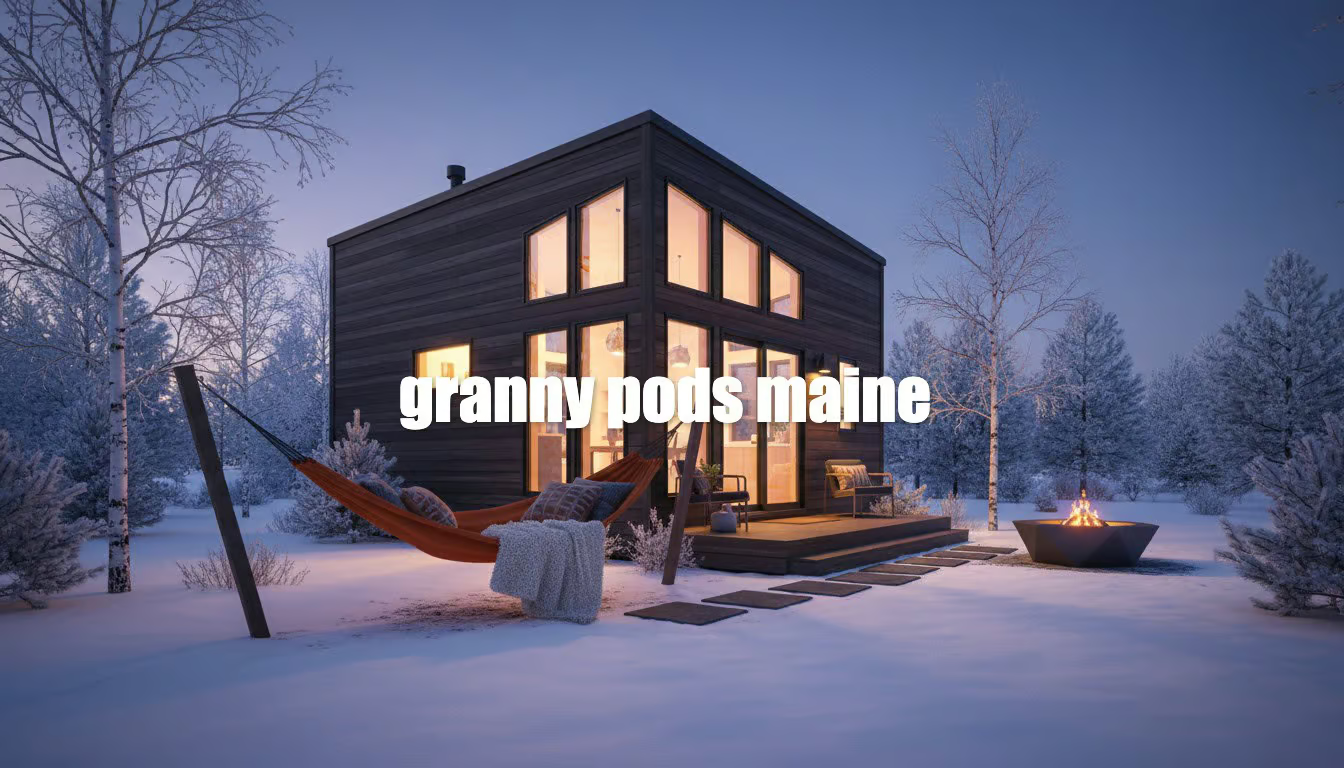
You might be wondering what exactly granny pods are and why they’re gaining traction in Maine. Granny pods are small, detached dwelling units designed specifically for aging relatives, allowing them to live close to your family home while enjoying their own independent space. Often referred to as accessory dwelling units (ADUs), these structures provide a private retreat equipped with essentials like a bedroom, bathroom, and kitchenette, all within a footprint that’s easy to manage.
In Maine, their popularity is surging due to the state’s aging population and the desire to avoid the isolation of traditional senior living facilities. With harsh winters and a culture that values family closeness, granny pods let you keep an eye on your loved ones without invading their privacy. They’re becoming a go-to choice for Maine families looking to age in place gracefully.
Great Lakes Tiny Homes offers a type of granny pod in the form of tiny houses, which you can customize with or without wheels for mobility. If you opt for RVIA certification, these models qualify as park models, making them versatile for various zoning scenarios in Maine. Whether you choose a wheeled version for easier relocation or a stationary one, these options fit seamlessly into your property plans.
Imagine installing one in your backyard in Portland or Bangor—it’s a way to honor your family’s traditions while adapting to modern needs. As you explore this option, consider how a granny pod can transform your approach to elder care, providing peace of mind amid Maine’s scenic but demanding environment.
Inside the Modern Granny Pod: Features, Design, and Purpose
When you delve into the world of modern granny pods, you’ll find they’re more than just tiny homes; they’re thoughtfully designed accessory dwelling units (ADUs) tailored for comfort and functionality. Typically ranging from 300 to 800 square feet, these pods include essential amenities like full bathrooms, compact kitchens, and cozy sleeping areas, all optimized for one or two occupants.
What sets granny pods apart is their focus on senior-friendly features. You can expect accessibility elements such as zero-step entries, wider doorways for wheelchairs, and grab bars in key areas like the bathroom and hallways. Many designs incorporate medical monitoring capabilities, including built-in alert systems or smart devices that connect to your home network, allowing you to respond quickly if needed.
Available in various types, prefab granny pods arrive ready-to-assemble, saving you time and labor. Custom-built options let you personalize everything from layout to finishes, while converted structures—like shipping containers or sheds—offer budget-friendly alternatives. Unlike standard tiny homes, which prioritize minimalism for adventurers, granny pods emphasize safety and ease, with non-slip flooring, ample natural light, and energy-efficient appliances to reduce your utility bills.
In Maine’s context, these designs often include insulated walls to combat cold snaps and durable materials to withstand coastal humidity. As you plan your granny pod, think about integrating voice-activated controls for lights and thermostats, ensuring your relative’s daily life remains as independent as possible. This purposeful design not only supports physical needs but also fosters emotional well-being, making the pod a true extension of your home.
Exploring models from builders like Great Lakes Tiny Homes, you can see how these features come together in practical, high-quality builds. Their tiny houses, adaptable as granny pods, highlight the blend of innovation and reliability that makes this living arrangement so appealing.
Benefits of Granny Pods for Maine Families
For Maine families, granny pods bring a host of advantages that resonate with the state’s unique lifestyle. One key benefit is the proximity they provide, enabling you to offer daily care and support without the full-time commitment of cohabitation. Your aging relative enjoys their own space, complete with privacy, while you remain just steps away for assistance.
Independence is at the heart of this setup—your loved one can maintain routines, hobbies, and autonomy, which is crucial for mental health. Financially, granny pods shine compared to nursing homes or assisted living, where annual costs in Maine average $100,000 or more. A one-time investment in a pod, often $100,000 to $150,000 from builders like Great Lakes Tiny Homes, offers long-term savings and avoids ongoing facility fees.
Property value considerations are another plus: adding a granny pod to your Maine property inherently boosts its worth. Whether you spend $100k to $150k on a tiny house-style pod, it’s an investment that retains value, unlike the cumulative expense of assisted living paths that can exceed hundreds of thousands over years. In Maine, where home values are rising, this addition can make your property more attractive to future buyers seeking multigenerational options.
Emotionally, keeping family close aligns with Maine’s community-oriented culture, reducing loneliness amid long winters. Statistics underscore this: Maine’s population over 65 is projected to grow by 20% by 2030, with elder care costs rising 5-7% annually. Granny pods address these trends, providing a dignified alternative that enhances quality of life for everyone involved.
Consider Maine’s climate benefits too—pods with proper insulation mean your relative stays warm without excessive heating costs, and the fresh air promotes health. As you weigh options, these benefits make granny pods a smart, heartfelt choice for your family’s future.
To learn more about tiny house options in Maine, check out our guide on Best Tiny Home Communities in Maine. If you’re curious about regulations, see What Counties in Maine Allow Tiny Houses.
Legal Considerations for Granny Pods in Maine
Navigating the legal landscape for granny pods in Maine requires careful attention, as regulations vary widely. At the state level, Maine encourages ADUs through its housing policies, but implementation falls to counties and municipalities. Zoning laws typically classify granny pods as accessory structures, requiring them to be on the same lot as your primary residence and often limited to family use.
Building codes in Maine adhere to the International Residential Code (IRC), mandating compliance for safety features like electrical and plumbing. Permit requirements include site plans, engineering reports, and sometimes environmental reviews, especially in coastal areas prone to flooding. You’ll need to check with your local planning board early to avoid surprises.
More accommodating counties include Cumberland (home to Portland), where urban areas permit ADUs with fewer restrictions, and York County, which supports them in rural settings. Stricter spots like parts of Aroostook County may demand larger setbacks or prohibit detached units altogether. Major cities like Bangor and Lewiston have progressive ordinances allowing granny pods up to 800 sq ft, while Augusta requires case-by-case approvals.
Recent changes, such as the 2022 Maine ADU bill, streamline permitting in many areas, reducing review times. Pending legislation aims to further ease restrictions statewide, potentially benefiting your project.
RVIA certification adds significant legal advantages—park model RVs certified under this standard often bypass some permanent structure rules, classifying as movable dwellings. This can simplify zoning in restrictive areas and ease permitting, as they’re seen as temporary rather than fixed builds. The benefits include faster approvals and flexibility if you ever need to relocate the pod.
For personalized guidance on these considerations, especially for tiny house-style granny pods, book a call with our experts at Great Lakes Tiny Homes.
For builder insights, explore Tiny House Builder Portland Maine.
Which Maine Counties Allow Granny Pods?
To help you determine feasibility, here’s a comprehensive table outlining granny pod allowances in key Maine counties. This focuses on the most populated areas with established regulations, but always verify with local authorities as rules can evolve.
| County Name | Granny Pod Status | Minimum Lot Size Requirements | Maximum Size Allowed | Special Notes |
|---|---|---|---|---|
| Cumberland (Portland) | Allowed | 1 acre | 800 sq ft | Portland city allows ADUs with owner-occupancy; setbacks of 10 ft required. Encourages family caregiver units. |
| Penobscot (Bangor) | Allowed | 0.5 acres | 600 sq ft | Bangor permits detached ADUs; must connect to main home utilities. Recent zoning updates favor seniors. |
| Androscoggin (Lewiston) | Case-by-Case | 1 acre | 500 sq ft | Lewiston reviews applications individually; environmental impact assessments needed near rivers. |
| York (Biddeford) | Allowed | 0.75 acres | 700 sq ft | Coastal regulations apply; flood zone permits required. Biddeford supports prefab options. |
| Kennebec (Augusta) | Restricted | 2 acres | 400 sq ft | Augusta limits to attached units in some zones; detached need variance. State capital influences stricter codes. |
| Hancock (Ellsworth) | Case-by-Case | 1.5 acres | 600 sq ft | Rural allowances higher; Ellsworth requires septic approval. Popular for scenic properties. |
| Washington (Machias) | Restricted | 3 acres | 300 sq ft | Sparse population leads to conservative rules; focus on environmental protection. |
This table provides a starting point for your research. For instance, in Cumberland County, Portland’s progressive stance means you can often install a granny pod with standard permitting, provided it doesn’t exceed height limits. In contrast, Kennebec’s restrictions might push you toward an attached addition unless you apply for a variance.
Linking to broader tiny home trends, see how these align with What Counties in Maine Allow Tiny Houses for more details.
Cost of Building a Granny Pod in Maine
Building a granny pod in Maine involves various costs, but understanding the breakdown helps you budget effectively. For prefab models, expect $80,000 to $120,000 for a 400 sq ft unit, while custom-built options range from $150,000 to $250,000, depending on finishes and size. Quality levels vary: basic setups start lower, but senior-friendly additions like accessibility ramps add 10-20%.
Site preparation is crucial, especially in Maine’s rocky terrain and variable soil. If your pod has no wheels, you’ll need a foundation—concrete slabs cost $5,000 to $15,000, plus excavation. Wheeled units skip this, reducing upfront costs but may require stabilization anchors. Utility connections, vital for Maine’s cold winters, run $10,000 to $30,000 for septic, water, and electrical hookups, with septic systems being pricier in rural areas.
Permits and fees add $2,000 to $5,000, influenced by county. Ongoing maintenance, like snow removal and insulation checks, might total $1,000 annually. Great Lakes Tiny Homes builds tiny houses in the $100,000 to $150,000 range, offering value with options for wheels or foundations.
Compared to assisted living in Maine, where monthly rates average $5,000 ($60,000 yearly), a granny pod pays for itself in 2-3 years. Financing options include home equity loans or construction mortgages, with interest rates around 5-7%. Insurance typically covers under homeowners’ policies, but separate endorsements cost $500-1,000 extra. Tax implications are favorable—ADUs may qualify for property tax abatements in supportive counties, and energy-efficient builds snag rebates.
For sales in specific areas, visit Tiny House For Sale Portland Maine. These costs position granny pods as a wise investment for your long-term family planning.
The Granny Pod Installation Process in Maine
Installing a granny pod in Maine follows a structured process tailored to the state’s regulations and climate. Start by researching local zoning laws—contact your county planning office to confirm ADU allowances and restrictions. This step, taking 1-2 weeks, ensures your site qualifies; for example, coastal zones may need elevation certifications.
Next, obtain permits: submit plans, including architectural drawings and utility schematics, to your municipality. Expect 4-8 weeks for approval, longer in stricter areas like Kennebec County. Budget for fees and potential revisions to meet IRC standards.
Site preparation accounts for Maine’s terrain—clear vegetation, grade the land, and test soil for stability. In winter-prone areas, plan for frost heaves by using deep foundations if non-wheeled. This phase costs $5,000-$20,000 and takes 2-4 weeks; challenges include rocky soil in inland counties, requiring professional excavation.
Utility connections are critical for Maine’s harsh winters—install insulated lines for water to prevent freezing, and ensure electrical meets code for heating systems. Hire licensed plumbers and electricians; this step spans 1-3 weeks and addresses septic or sewer tie-ins.
Delivery and installation: For prefab or wheeled pods, transport via flatbed truck, then anchor in place. Timelines vary—1 day for simple setups, up to a week for custom. Final inspections by local building officials verify compliance, typically within days.
Potential challenges include weather delays from snow or rain, so schedule for spring or summer. Practical advice: Engage a local contractor familiar with Maine codes to streamline everything. By following these steps, you ensure a smooth, compliant installation that serves your family well.
For community insights, explore Best Tiny Home Communities in Maine.
Design Considerations for Maine Granny Pods
Designing a granny pod for Maine means prioritizing elements that withstand the state’s four distinct seasons. Weatherproofing is essential—opt for high R-value insulation in walls and roofs to handle sub-zero temperatures, and use durable siding like fiber cement to resist coastal salt air and inland humidity.
Energy efficiency saves on heating bills: Incorporate solar panels, efficient windows, and heat pumps suited for Maine’s climate. You’ll appreciate designs with passive solar orientation to maximize winter sunlight.
Accessibility features are non-negotiable for aging residents—include zero-step entries, lever-handled doors, and 36-inch wide pathways. Grab bars in bathrooms and roll-in showers enhance safety, while adjustable-height counters accommodate varying mobility needs.
Smart home technology adds peace of mind: Install motion-sensor lights, automated thermostats, and health monitors that alert your phone. These integrate seamlessly, promoting independence without complexity.
Utility connections should be straightforward, with underground lines to avoid winter disruptions. Aesthetic harmony matters too—choose exteriors that match your main home, like shingle-style roofs common in Maine. These considerations create a pod that’s not just functional but a welcoming part of your property.
For builder options, see Tiny House Builder Bangor Maine.
Finding Expert Guidance for Your Project
When embarking on a granny pod project in Maine, partnering with experienced professionals is key to navigating the unique challenges of local regulations and climate. You need builders who grasp the nuances of zoning variances, foundation requirements for frost lines, and designs that prioritize senior comfort.
Great Lakes Tiny Homes emerges as a trusted local option, with deep expertise in crafting quality granny pods that comply with Maine’s building codes. Their understanding of county-specific rules ensures your project moves forward smoothly, while customization options let you tailor the space to your relative’s needs—from accessible layouts to energy-efficient systems.
Committed to creating comfortable, durable living spaces for aging family members, they focus on details that enhance daily life, like integrated storage and natural lighting. As a resource, Great Lakes Tiny Homes offers valuable insights to help you make informed decisions.
For a subtle next step, consider scheduling a consultation with Great Lakes Tiny Homes to discuss your specific needs—they’re there to guide you helpfully through the process. Book a call with our experts.
Conclusion: Creating a Supportive Home for Your Loved Ones
As you reflect on granny pods in Maine, remember they’re more than a housing solution—they’re a way to foster family closeness while honoring independence. In a state where community and resilience define daily life, these pods provide dignity, care, and enhanced quality of life for your aging relatives.
This investment goes beyond finances; it’s about preserving bonds and adapting to life’s changes with grace. Great Lakes Tiny Homes stands as a valuable and trustworthy option, with experience delivering turnkey modular and park model homes across the lower 48 U.S. states, making them a practical choice for your exploration of this living style.
Take that first step today—research your county, consult professionals, and envision the supportive home you can create. Your loved ones deserve this thoughtful approach to their golden years.
Frequently Asked Questions About Granny Pods in Maine
Granny pods raise many questions for Maine residents. Below, we address common concerns with state-specific details to guide your decisions.
How Can Great Lakes Tiny Homes Help Me On My Granny Pod Journey
Great Lakes Tiny Homes can support you throughout your granny pod journey by offering end-to-end expertise tailored to Maine’s needs. From initial consultations where you discuss your property and requirements, they provide customized design options, including wheeled or foundation-based tiny houses that function as granny pods.
Their team helps with navigating permits, ensuring RVIA-certified park models if that eases legal hurdles. You’ll benefit from their knowledge of local codes in counties like Cumberland or Penobscot, plus site assessments to optimize installation.
They emphasize personalization—adding accessibility features or smart tech—and handle construction with quality materials suited for Maine winters. Post-build, they offer maintenance tips. To start, book a call via their website; their approachable team makes the process straightforward and exciting, turning your vision into a reality that supports your family.
Are granny pods legal in all parts of Maine?
No, granny pods aren’t legal everywhere in Maine due to varying local regulations. Statewide, ADUs are encouraged, but counties and cities dictate specifics. Accommodating areas like Portland in Cumberland County allow them outright, often up to 800 sq ft with family use restrictions.
Restricted zones, such as rural parts of Washington County, may prohibit detached units or require variances. Always check zoning ordinances—recent laws like the 2022 ADU reforms have liberalized many areas, but coastal flood zones add environmental reviews. Consult your local planning department for the latest; opting for RVIA-certified models can sometimes classify them as RVs, bypassing some rules.
In summary, while not universal, legality is feasible in most populated regions with proper planning.
Can I install a granny pod on any size property in Maine?
You can’t install a granny pod on just any size property in Maine—minimum lot sizes apply based on zoning. Urban areas like Bangor might require only 0.5 acres, while rural counties like Kennebec demand 2 acres or more to ensure setbacks and utility feasibility.
Factors include septic capacity and proximity to the main house; smaller lots under 10,000 sq ft often need attached ADUs instead. In coastal York County, lot size must account for erosion buffers. To determine eligibility, review your deed and local codes—professional surveys help confirm.
If your property is undersized, consider variances or community lots. With Maine’s diverse landscapes, many standard suburban lots qualify, making installation possible for most homeowners.
Do I need special insurance for a granny pod?
Yes, you typically need special insurance considerations for a granny pod in Maine, though it often extends your existing homeowners’ policy. Standard coverage might include the structure under dwelling protection, but adding an endorsement for an ADU ensures full liability and contents coverage, costing $300-$800 annually extra.
For wheeled or park model pods, RV-specific policies apply if classified as such. Maine’s weather risks—like wind or snow—necessitate endorsements for flood or high-wind damage, especially coastal. Consult your insurer early; some offer bundles for multigenerational setups.
Tax-wise, declaring the pod avoids underinsurance penalties. Overall, while not always a separate policy, adjustments protect your investment and family.
Can I rent out my granny pod in Maine?
Renting out a granny pod in Maine is possible but restricted in many areas, primarily intended for family use. Zoning laws often prohibit commercial rentals for ADUs, classifying them as accessory to the primary residence. However, short-term rentals like Airbnb may be allowed in tourist-heavy spots like Bar Harbor, with permits.
In counties like Cumberland, you might get approval for long-term family-related rentals, but unrelated tenants could violate occupancy rules. Recent state pushes for housing flexibility might ease this, but check local ordinances—fines apply for non-compliance.
If family-focused, it’s straightforward; for income generation, explore variances or reclassify as a duplex. Always prioritize legal compliance to safeguard your property.