
Granny pods, also known as accessory dwelling units (ADUs), are permitted in many Louisiana parishes under local zoning laws, typically in residential districts with minimum lot sizes ranging from 4,000 to 7,000 square feet. These units must comply with the International Residential Code (IRC) adopted by the state, including hurricane-resistant building standards, and sizes are often capped at 400 to 1,000 square feet depending on the location. Permanent installations require permits, while RVIA-certified models on wheels may be treated as temporary structures in some areas; always verify with local planning offices for specific requirements.
As you consider ways to care for your aging parents or grandparents in Louisiana, granny pods offer a practical and compassionate solution. These compact living spaces allow your family members to stay nearby, providing the support they need without sacrificing their autonomy. In a state known for its warm hospitality and diverse landscapes, from the bayous of the south to the hills of the north, granny pods are gaining traction as an affordable alternative to traditional elder care. With Louisiana’s growing senior population—projected to reach over 18% of residents aged 65 and older by 2026, based on U.S. Census Bureau trends—more families are turning to these innovative dwellings to address the challenges of multigenerational living.
In the context of Louisiana’s unique blend of family traditions and regulatory landscape, granny pods align well with needs for accessible, compliant housing solutions. Their relevance grows as you seek ways to balance independence and care amid rising elder care costs, which have increased by approximately 25% since 2020 according to state health department reports. Great Lakes Tiny Homes brings credibility through their focus on modular designs that meet diverse state codes, offering reliable options for your setup. As a full-service manufacturer of modular, park model, and tiny homes, they deliver turnkey builds to all 48 lower U.S. states, with options available with or without wheels and with or without RVIA certification—models with RVIA certification are often classified as park models for easier permitting.
If you’d like to explore options tailored to your property and needs, you can book a call with Great Lakes Tiny Homes experts.
Disclaimer: This article is for informational purposes only and does not constitute legal advice. Laws, regulations, and zoning rules vary by location and may change over time. Always consult your local zoning office or a qualified land use/zoning attorney before making decisions based on this information.
What Are Granny Pods?
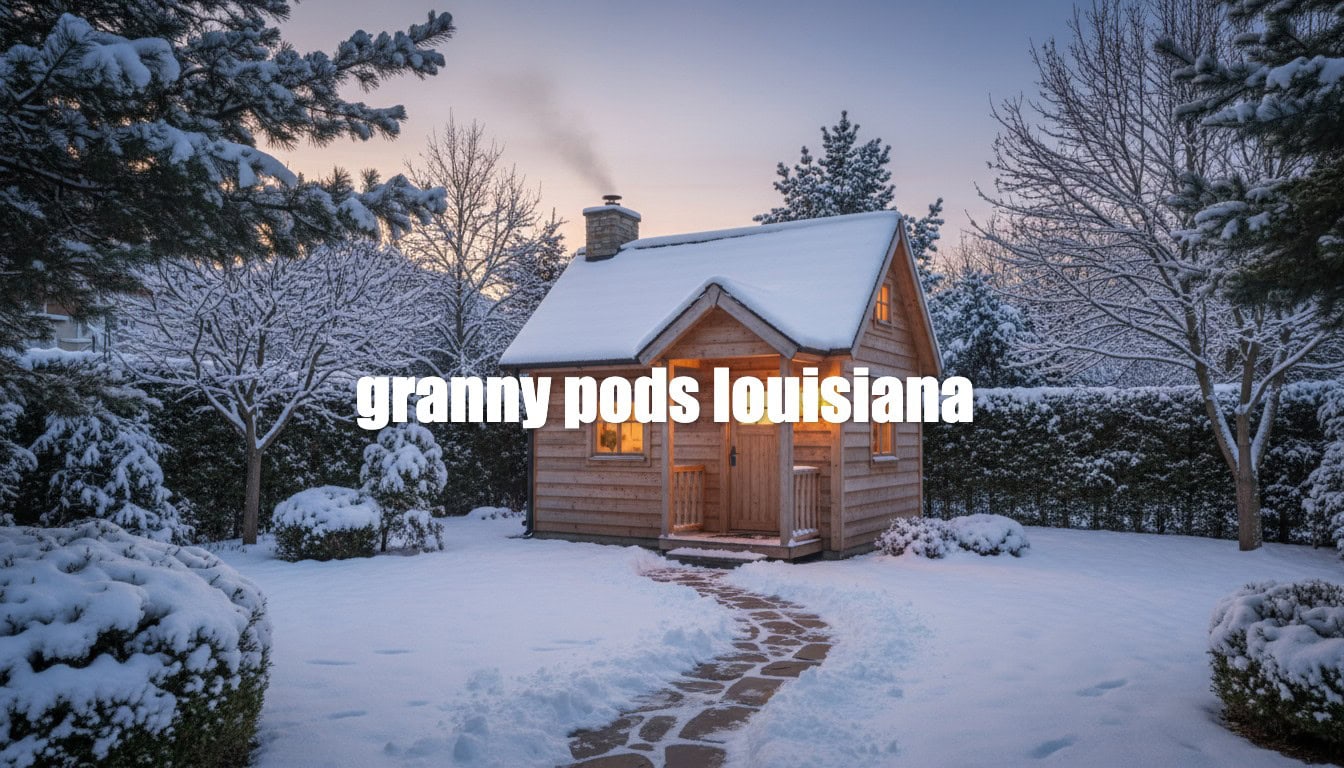
You might wonder what exactly granny pods are and why they’re catching on in Louisiana. Granny pods are small, detached dwelling units typically built on your property to house aging relatives. They enable your loved ones to live close to you for easy access to care and companionship, all while preserving their independence in a private space. In Louisiana, where family ties run deep and the cost of living can strain budgets, these pods are becoming popular as a way to keep elders integrated into family life without the expense of larger homes or facilities. Recent updates to local codes in urban areas have further encouraged their use by streamlining approval processes for family-oriented ADUs.
Picture a cozy, self-contained home just steps from your back door—complete with its own kitchenette, bathroom, and sleeping area. Great Lakes Tiny Homes offers granny pod-style tiny houses that you can customize with or without wheels. If you opt for wheels, the unit becomes more mobile and potentially easier to permit as an RV-like structure. Without wheels, it anchors permanently to your land. Additionally, choosing a model with RVIA certification classifies it as a park model, which often simplifies compliance with local codes in Louisiana’s varied jurisdictions. This flexibility makes them ideal for your family’s specific situation, whether you’re in humid New Orleans or rural Shreveport. For more on builders in specific areas, check out Tiny House Builder New Orleans.
The rise in popularity stems from Louisiana’s aging demographic and the desire for affordable, personalized care. With nursing home costs averaging over $7,000 per month in the state as of 2025, granny pods provide a one-time investment that pays dividends in emotional and financial well-being. As you plan, consider how these pods fit into your lifestyle, blending modern convenience with Southern charm. Emerging trends show increased adoption in coastal parishes due to post-hurricane rebuilding incentives that favor resilient, compact structures.
Inside the Modern Granny Pod: Features, Design, and Purpose
When you delve into granny pods, also called accessory dwelling units (ADUs), you’ll see they’re more than just tiny homes—they’re purpose-built for senior living. Typically ranging from 300 to 800 square feet, these units include essential amenities like a compact kitchen, full bathroom, bedroom, and living area. You can expect features such as energy-efficient appliances, ample storage, and durable flooring that withstands daily use. In Louisiana, designs increasingly incorporate flood-resistant materials and elevated foundations to meet state-mandated resilience standards.
Granny pods come in various types to suit your needs: prefab models arrive ready-to-assemble for quick setup, custom-built options let you tailor every detail, and converted structures repurpose sheds or garages into livable spaces. What sets them apart for elderly relatives is the focus on accessibility and safety. Unlike standard tiny homes geared toward young adventurers, granny pods incorporate zero-step entries to ease mobility, wider doorways for wheelchairs, non-slip surfaces, and built-in grab bars in bathrooms. You might also integrate medical monitoring systems, like smart sensors for fall detection or remote health check-ins, ensuring peace of mind as you monitor your loved one’s well-being from afar. These features align with Louisiana’s emphasis on aging-in-place initiatives promoted by the state department of health.
Design-wise, open floor plans maximize space, while natural light from large windows combats isolation. In Louisiana’s subtropical climate, you’ll appreciate insulation against humidity and storms. These elements make granny pods a thoughtful choice, transforming your property into a supportive haven where your family member thrives independently yet securely. Recent innovations include solar-ready roofing and battery storage systems, which help offset energy costs in areas prone to power outages during hurricane season.
Exploring further, consider loft spaces for extra storage or ground-level bedrooms to avoid stairs. Amenities like laundry hookups and climate control keep daily life comfortable. By prioritizing senior-friendly designs, granny pods address the physical and emotional needs of aging, setting them distinctly from recreational tiny homes. If you’re interested in available models, explore Tiny House For Sale Baton Rouge for local options.
Benefits of Granny Pods for Louisiana Families
For Louisiana families like yours, granny pods bring a host of advantages that resonate with the state’s close-knit culture and variable weather. First, they foster proximity for care—your elderly relative stays on your property, allowing you to offer daily support without constant travel. This is especially valuable in sprawling parishes where distances can challenge family bonds. Moreover, with the state’s senior population expected to grow by 20% over the next decade, granny pods help alleviate pressure on overburdened elder care facilities.
Independence remains key; your loved one enjoys privacy in their own space, complete with personal touches, reducing the institutional feel of care facilities. Financially, granny pods shine: compared to Louisiana’s assisted living costs, which average $4,000 monthly in 2026, a one-time build of $100,000 to $150,000—like those from Great Lakes Tiny Homes—offers long-term savings. Over five years, that’s potentially $240,000 saved versus facility fees. These savings are even more pronounced when factoring in potential property tax incentives for multigenerational housing in select parishes.
Property value also rises with a granny pod addition. Spending $100k to $150k on a quality unit inherently boosts your home’s appeal, as it adds versatile living space that retains value—unlike the ongoing drain of assisted living paths. In Louisiana, where over 800,000 residents are 65+, this investment aligns with the state’s 18% senior growth rate, per updated U.S. Census projections. Environmentally, compact designs reduce overall energy consumption, supporting Louisiana’s sustainability goals amid climate challenges.
Emotionally, keeping family close honors Louisiana’s traditions of multigenerational households, easing transitions amid cultural events like Mardi Gras or family crawfish boils. Climate-wise, pods with hurricane-resistant features protect against storms, while cultural adaptability ensures they blend with Creole or Cajun aesthetics. Ultimately, these benefits create a nurturing environment, enhancing quality of life for everyone involved. Studies from the AARP highlight how such arrangements improve mental health outcomes for seniors by 30% compared to institutional settings.
Statistics underscore the urgency: Louisiana’s elder care costs have risen 25% in recent years, making granny pods a savvy choice. They not only save money but also preserve dignity, allowing your family to age in place with the warmth of home. To see community examples, visit Best Tiny Home Communities in Louisiana.
Legal Considerations for Granny Pods in Louisiana
Disclaimer: This article is for informational purposes only and does not constitute legal advice. Laws, regulations, and zoning rules vary by location and may change over time. Always consult your local zoning office or a qualified land use/zoning attorney before making decisions based on this information.
Navigating the legal side of granny pods in Louisiana requires understanding the state’s framework, where regulations blend state guidelines with local variations. At the state level, Louisiana follows the 2021 International Building Code (IBC) and International Residential Code (IRC) for ADUs, but zoning laws differ by parish and municipality. You must check if your area classifies granny pods as ADUs, RVs, or accessory structures, as this impacts permitting. The Louisiana Uniform Construction Code, updated in 2023, emphasizes wind-load standards due to hurricane risks, requiring structures to withstand 130-150 mph winds in coastal zones.
Zoning typically allows ADUs in residential districts, but setbacks, lot coverage, and owner-occupancy rules apply. Building codes mandate compliance with health, safety, and environmental reviews. More accommodating areas include Orleans Parish (New Orleans), where ADUs are permitted with streamlined processes under the Comprehensive Zoning Ordinance, and East Baton Rouge Parish (Baton Rouge), supportive of family-oriented builds via conditional use permits. Stricter spots like Lafayette Parish may require variances or limit sizes to 500 sq ft, focusing on flood zone compliance.
Recent changes, such as 2023 updates to the Louisiana Uniform Construction Code, ease ADU approvals in urban areas to address housing shortages. Pending legislation in 2026 aims to standardize ADU rules statewide, potentially simplifying installations by reducing redundant reviews. RVIA certification proves beneficial here; park model RVs often bypass full building permits, treating them as temporary structures, which speeds approval in restrictive zones. This certification ensures quality and mobility, reducing legal hurdles for your project.
To get started, consult local planning offices. For additional resources on county-specific rules, refer to What Counties in Louisiana Allow Tiny Houses.
Which Louisiana Parishes Allow Granny Pods?
To help you decide where to install a granny pod, here’s a comprehensive overview of key Louisiana parishes. Focus on populated areas with defined rules; always verify with local authorities as regulations evolve. This table has been updated to reflect 2026 zoning trends, including post-2023 code revisions that promote ADUs for affordable housing.
| Parish Name | Granny Pod Status | Minimum Lot Size Requirements | Maximum Size Allowed | Key Requirements | Source |
|---|---|---|---|---|---|
| Orleans (New Orleans) | Allowed | 4,000 sq ft | 800 sq ft | Streamlined ADU permits; must connect to main home utilities. City code favors family dwellings; rear yard placement required. | New Orleans Comprehensive Zoning Ordinance |
| Jefferson | Allowed | 5,000 sq ft | 600 sq ft | Requires owner occupancy; hurricane-resistant designs mandatory; setbacks of 10 ft from property lines. | Local Parish Planning Department (verify locally) |
| East Baton Rouge (Baton Rouge) | Allowed | 6,000 sq ft | 1,000 sq ft | Supportive for seniors; variances available for larger lots. City allows detached units in most zones; conditional use permit needed. | Baton Rouge Unified Development Code Chapter 9 |
| Caddo (Shreveport) | Restricted | 1 acre | 400 sq ft | Case-by-case approvals; stricter in urban areas, easier rural; one per lot maximum. | Shreveport Unified Development Code |
| Lafayette | Case-by-Case | 7,200 sq ft | 500 sq ft | Zoning variances needed; focuses on flood zone compliance; limited to 25% of primary home size. | Local Parish Planning Department (verify locally) |
| Calcasieu (Lake Charles) | Allowed | 5,000 sq ft | 700 sq ft | Post-hurricane reforms ease builds; RVIA models preferred; accessory structures in rear yards only. | Lake Charles Zoning Ordinance |
| St. Tammany | Restricted | 1 acre | 600 sq ft | Environmental reviews for wetlands; suburban limits apply; no more than 40% of primary structure area. | Local Parish Planning Department (verify locally) |
This table highlights trends: urban parishes like Orleans are more permissive, while rural ones vary. For instance, in East Baton Rouge, city code permits ADUs up to 50% of the primary home’s size with rear yard placement. In Jefferson, Metairie suburbs enforce strict setbacks. Use this as a starting point for your research, and link to broader resources like What Counties in Louisiana Allow Tiny Houses for deeper insights. Disclaimer: Regulations can change; consult official sources for the latest details.
Granny Pods in Major Louisiana Cities
New Orleans (Orleans Parish)
In New Orleans, granny pods are embraced as a solution to housing challenges in this vibrant, densely populated city. The Comprehensive Zoning Ordinance allows ADUs in most residential districts, with a focus on preserving the historic character of neighborhoods like the Garden District or Bywater. Key requirements include connecting to the main home’s utilities and obtaining a streamlined permit through the City Planning Commission, which typically takes 4-6 weeks. Sizes up to 800 square feet are permitted on lots of at least 4,000 square feet, but flood elevation standards are strict due to the city’s vulnerability to hurricanes and sea-level rise.
Unique ordinances here emphasize aesthetic compatibility, requiring granny pods to match the primary structure’s style to maintain New Orleans’ architectural heritage. For seniors, accessibility features like ramps are encouraged, and some incentives offer fee reductions for multigenerational units. The Department of Safety and Permits handles applications; contact them at (504) 658-8200 or visit their office for site-specific advice. Recent 2025 updates have expanded allowances in non-residential zones adjacent to residential areas, promoting flexible family living amid the city’s recovery from past storms.
Local resources include the New Orleans Redevelopment Authority, which provides guidance on ADU financing through community development block grants. Families in flood-prone areas must ensure compliance with FEMA guidelines, often elevating units 3-5 feet above base flood levels. This blend of tradition and innovation makes New Orleans a forward-thinking location for granny pods, supporting the city’s 15% senior population growth.
Baton Rouge (East Baton Rouge Parish)
Baton Rouge supports granny pods through its Unified Development Code, permitting them in districts like A1-A5 single-family zones as conditional uses. One ADU per lot is allowed in rear yards, with minimum setbacks of 10 feet and sizes up to 1,000 square feet on 6,000 square foot lots. The Planning Commission requires a conditional use permit, involving public notice and review to ensure neighborhood compatibility. Hurricane-resistant construction is mandatory, aligning with state codes for wind speeds up to 140 mph.
The city’s senior-friendly policies include variances for accessibility modifications, such as wider doors and ground-floor layouts, to accommodate aging residents. Utility connections must tie into the main home’s systems, and environmental reviews are needed in flood zones along the Mississippi River. Contact the Department of Development at (225) 389-3000 for permit applications, which process in 6-8 weeks. In 2024, Baton Rouge expanded ADU approvals to address housing shortages, making it easier for families to build multigenerational spaces.
Official resources from the East Baton Rouge Parish Planning Commission offer free workshops on ADU zoning, helping navigate the process. Property owners benefit from potential tax abatements for energy-efficient builds, reducing long-term costs. With a growing retiree community drawn to the capital’s amenities, granny pods enhance Baton Rouge’s appeal as a hub for family-centered living.
Shreveport (Caddo Parish)
Shreveport’s approach to granny pods is more cautious, with restrictions in urban areas under the Unified Development Code requiring case-by-case approvals. ADUs are limited to 400 square feet on one-acre lots, primarily in rural or low-density zones to preserve suburban character. Permits involve the Metropolitan Planning Commission, including site plan reviews for setbacks and drainage, given the area’s flood risks from the Red River. Wheeled units classified as RVs may skirt some rules but cannot be permanent residences without foundation approval.
Key ordinances emphasize owner-occupancy and limit ADUs to rear lots, prohibiting them in historic districts like Highland. For elder care, basic accessibility is required, but advanced features like smart monitoring must meet electrical codes. Reach out to the Planning Department at (318) 673-6100 for guidance; approvals can take 8-12 weeks due to variance needs. A 2023 ordinance update allows more flexibility in rural Caddo, responding to demands for affordable senior housing.
The city’s Property Standards Division provides resources on compliance, including checklists for storm-resistant materials. Families can explore community grants for ADU construction through local nonprofits. Despite restrictions, Shreveport’s evolving policies reflect a commitment to supporting multigenerational families in northwest Louisiana’s cultural heartland.
Lafayette (Lafayette Parish)
In Lafayette, granny pods require zoning variances under the Unified Land Development Code, with case-by-case evaluations favoring family use. Maximum sizes are 500 square feet or 25% of the primary home, on lots of at least 7,200 square feet, to manage urban sprawl and flood concerns in Acadiana. The Parish Planning and Development Department oversees permits, mandating compliance with elevation rules in FEMA-designated zones and utility tie-ins.
Ordinances prioritize Cajun cultural integration, requiring designs that blend with local architecture like raised cottages. Accessibility for seniors is supported through waived fees for ramps and grab bars in approved builds. Contact the department at (337) 291-5060; the process spans 6-10 weeks, including public hearings for variances. 2024 reforms encouraged ADUs citywide, positioning Lafayette as a leader in modern zoning for housing diversity.
Resources from Lafayette Consolidated Government include online zoning maps and ADU webinars. Incentives like density bonuses for green builds help offset costs. This progressive stance aids the parish’s 16% senior demographic, fostering resilient family living in oil-rich south-central Louisiana.
Lake Charles (Calcasieu Parish)
Lake Charles permits granny pods as accessory structures under its Zoning Ordinance, with allowances up to 700 square feet on 5,000 square foot lots in residential districts. Post-Hurricane Laura reforms in 2021-2023 eased builds, favoring RVIA-certified models for quick deployment in recovery areas. The Planning and Development Department requires rear-yard placement and environmental reviews for wetlands, with permits processing in 4-8 weeks.
Unique to the area, ordinances mandate impact-resistant windows and metal roofing for storm resilience, reflecting lessons from frequent tropical events. Senior-focused features like non-slip flooring are standard in approvals. Call (337) 491-1291 for applications; the city offers expedited reviews for family ADUs. Expanded permissions in 2025 support workforce housing, benefiting multigenerational setups.
Official zoning documents provide detailed standards, and local builders associations offer compliance consultations. Grants from the Louisiana Housing Corporation aid construction in this petrochemical hub. Granny pods thus contribute to community recovery and family stability in southwest Louisiana.
Granny Pod Prices in Louisiana
Granny pod prices in Louisiana vary significantly based on several factors, reflecting the state’s diverse geography and regulatory environment. Size plays a primary role, with basic 300 square foot units starting lower than larger 800 square foot models that include more amenities. Foundation choices—permanent concrete slabs versus wheeled mobility—affect costs, as do RVIA certifications that classify units as park models for permitting ease. Utility hookups for water, septic, and electricity add expenses, particularly in rural parishes with limited infrastructure. Local codes influence pricing through requirements for hurricane reinforcements or flood elevations, potentially increasing material and labor outlays by 20-30% in coastal areas.
Site preparation and permitting fees further impact the total, with urban lots requiring more extensive surveys than rural ones. Energy-efficient features, essential in Louisiana’s humid climate, can raise upfront costs but yield long-term savings through lower utility bills. Overall, these variables ensure that budgets align with specific location needs, from New Orleans’ historic districts to Shreveport’s suburban zones. Families should factor in ongoing maintenance, like annual inspections for storm damage, estimated at $1,500-$3,000 yearly.
Great Lakes Tiny Homes Pricing
Great Lakes Tiny Homes offers granny pod-style builds in the $100,000 to $150,000 range, providing full-service, turnkey delivery across Louisiana. This pricing encompasses customization for accessibility and climate resilience, ensuring compliance with local codes without hidden fees. Their modular approach allows for efficient construction, reducing on-site labor and timelines to 4-6 weeks post-permit. Delivery includes professional setup, whether on foundation or wheels, with options for RVIA certification to navigate zoning hurdles.
Compared to state averages, where custom ADUs can exceed $200,000 due to specialized engineering, Great Lakes balances quality and affordability. Warranties cover structural integrity for 10 years, adding value for long-term family use. This range positions their offerings as a practical investment amid rising elder care expenses.
Great Lakes Tiny Homes Model Options
- Modular Homes – Ideal for permanent foundations in zoned residential areas, offering spacious layouts up to 800 sq ft.
- A-Frame – Compact and hurricane-resistant, suitable for elevated sites in flood-prone parishes.
- Cabin – Rustic designs blending with Louisiana’s natural settings, perfect for rural installations.
- Park Models – RVIA-certified for easier permitting as temporary structures in restrictive zones.
- Tiny House on Wheels – Mobile options for flexibility, ideal where zoning favors RVs over permanent builds.
Model choice should consider local zoning: permanent modular or cabin styles suit permissive parishes like Orleans, while park models or wheeled units fit restricted areas like Caddo. This alignment ensures regulatory compliance while meeting family needs.
Zoning impacts model selection profoundly, as wheeled units may avoid foundation permits but limit permanence. For expert advice on matching models to your parish’s rules, book a call with Great Lakes Tiny Homes specialists.
The Granny Pod Installation Process in Louisiana
Installing a granny pod in Louisiana follows a structured path tailored to the state’s regulations and environment. Here’s your step-by-step guide, updated for 2026 code efficiencies:
- Research Local Zoning Laws: Start by reviewing your parish’s zoning ordinances via the planning department. Check for ADU allowances, setbacks (often 5-10 ft from property lines), and flood zone rules. In Louisiana’s coastal areas, elevate structures to meet FEMA standards. Potential challenge: Varied parish codes—urban vs. rural differ greatly. Use online zoning maps for preliminary assessments.
- Obtain Necessary Permits: Submit plans to local building officials, including site plans and engineering specs. Expect 4-8 weeks for approval; fees range $500-$3,000. Include environmental impact assessments if near wetlands. Tip: Hire a local surveyor early to avoid delays. Digital submissions are now standard in most parishes.
- Site Preparation: Clear and level your lot, considering Louisiana’s clay soils and humidity. For non-wheeled units, pour a foundation resistant to subsidence—budget extra for drainage. Wheeled models require stable gravel pads. Challenge: Hurricane-prone areas need reinforced footings. Soil testing is recommended to prevent settling issues.
- Utility Connections: Connect to your main home’s systems or install independent ones. Prioritize insulated pipes for mild winters, but ensure storm shutters. Costs: $10,000 average. In rural spots, septic systems add complexity. Compliance with state health codes for water quality is essential.
- Delivery and Installation: Schedule transport; prefab units arrive in days, custom in weeks. Cranes set larger pods—timeline 1-2 weeks. Weather delays common during rainy seasons. Professional anchoring ensures stability against high winds.
- Final Inspections: Pass electrical, plumbing, and structural checks. Occupancy certificate follows, allowing move-in. Address any issues promptly to avoid fines. Post-installation, schedule annual maintenance to uphold warranties.
This process, spanning 2-6 months, demands patience but yields a durable addition. For smoother navigation, consider experts familiar with Louisiana’s terrain. Disclaimer: Permit timelines and requirements vary; consult local officials.
Design Considerations for Louisiana Granny Pods
Designing your granny pod for Louisiana means accounting for the state’s humid subtropical climate, with hot summers, mild winters, and hurricane threats. Weatherproofing is essential: use impact-resistant windows, metal roofing, and elevated foundations to combat flooding. Energy efficiency shines with LED lighting, solar panels, and high-SEER AC units to handle 90°F+ heat. Ventilation systems prevent mold in 80%+ humidity periods, crucial for senior health.
Accessibility features are non-negotiable—install zero-step entries, 36-inch doorways, lever handles, and adjustable-height counters for your aging relative. Grab bars in showers and ramps ensure safe movement. Smart home tech, like voice-activated lights or health monitors, adds convenience without overwhelming the space. In flood zones, incorporate breakaway walls for lower levels to meet FEMA standards.
Great Lakes Tiny Homes focuses on designs that incorporate these elements, providing options suited to your needs across various locations. You can review their models online to see how they adapt to local conditions. For builder insights in key cities, look at Tiny House Builder Lake Charles.
Utility integration requires seamless septic or sewer ties, plus electrical for medical devices. Aesthetically, match your main home with siding in earthy tones or shutters evoking Louisiana architecture. These choices create a pod that feels like an extension of your property, blending function with style. Sustainable materials like recycled steel reduce environmental impact, aligning with state green building incentives.
Finding Expert Guidance for Your Project
When embarking on a granny pod project in Louisiana, partnering with professionals who grasp local nuances is crucial. They handle everything from code compliance to climate adaptations, ensuring your build stands strong against bayou floods or nor’easters. Experienced builders navigate parish variances, saving time and avoiding costly revisions.
Great Lakes Tiny Homes emerges as a trusted resource, specializing in granny pod-style tiny houses that adhere to Louisiana’s building standards. Their deep knowledge of parish codes allows for seamless customization, from accessibility ramps to storm-ready features, all while crafting cozy spaces for your family members. With nationwide delivery, they ensure materials meet or exceed IRC requirements.
With options for wheeled or foundation-based units, they prioritize comfort and durability. If you’re ready to explore, scheduling a consultation helps tailor advice to your needs—think of it as a helpful conversation to clarify your path forward. For more support, consider reaching out through their website for guidance on your project. In areas like Shreveport, check Tiny House For Sale Shreveport for local availability.
FAQ
Are granny pods legal in all parts of Louisiana?
No, granny pods aren’t legal everywhere in Louisiana due to varying local regulations. Statewide, ADUs are permitted under building codes, but parishes enforce zoning specifics. Urban areas like New Orleans allow them readily with permits, while rural spots like St. Landry may restrict or require variances. Disclaimer: Verify with your local planning office, as factors include lot size, setbacks, and utility ties. Recent laws promote ADUs for housing needs, but flood zones add elevation rules.
Can I install a granny pod on any size property in Louisiana?
Not on every property size; Louisiana regulations tie installations to lot dimensions. Most parishes require at least 4,000-7,000 sq ft for ADUs, ensuring space for setbacks and utilities. Smaller urban lots in New Orleans might allow with variances, but rural one-acre minimums are common in places like Caddo Parish. Consider your terrain—flood-prone areas need larger, elevated sites. Wheeled units offer more flexibility on compact lots by skirting foundation rules. Check zoning maps and get a survey; if your property qualifies, permits follow.
Do I need special insurance for a granny pod?
Yes, you’ll likely need to update or add insurance for a granny pod in Louisiana. Standard homeowners policies may cover it as an accessory structure, but detached dwellings often require endorsements for full protection against wind, flood, and liability. Expect 10-25% premium hikes, depending on size and features. In hurricane-vulnerable areas, add windstorm coverage via the state plan. If occupied, consider separate renter’s insurance for your relative. Shop providers familiar with ADUs; some offer bundles. Consult an agent to assess risks like storm damage, ensuring your investment stays safeguarded.
Can I rent out my granny pod in Louisiana?
Renting a granny pod is possible in Louisiana but depends on local zoning and your intent. If built as an ADU for family, some parishes prohibit short-term rentals to preserve residential character. However, long-term leasing may be allowed with permits, especially in tourist-heavy areas like Jefferson Parish. Check for occupancy rules—owner must often live on-site. Platforms like Airbnb face restrictions in New Orleans. Tax implications include property tax reassessments and income reporting. For family-focused builds, renting could violate original approvals. Review ordinances and consider legal advice to align with your goals while complying with state and local laws.
What are the minimum size requirements for granny pods in Louisiana?
Minimum sizes for granny pods vary by parish but generally align with IRC standards for habitable spaces, often starting at 200-400 square feet for basic units. Larger minimums apply in restricted areas to ensure functionality, like 400 sq ft in Caddo Parish. These ensure adequate room for essential features like a bedroom and bathroom. Always confirm with local codes, as some urban zones require at least 300 sq ft for occupancy certification. For more on compliant designs, explore options in Best Tiny Home Communities in Louisiana.
Do granny pods require wheels or a foundation in Louisiana?
Granny pods can be built with or without wheels, depending on zoning preferences. Wheeled models, often RVIA-certified, are treated as RVs and may avoid permanent foundation permits in restrictive parishes. Foundation-based units are required for full ADU status in permissive areas like Orleans, providing stability against hurricanes. The choice impacts mobility and costs—wheels offer flexibility for relocation. Consult local planning for the best fit; for wheeled options, see Tiny House Builder New Orleans.
Conclusion: Creating a Supportive Home for Your Loved Ones
As you reflect on granny pods in Louisiana, remember they’re about more than shelter—they’re a bridge to preserving family bonds while honoring independence. In a state rich with community spirit, this choice lets your loved ones age with dignity, surrounded by the care only home can provide. It’s an investment in quality of life, blending practicality with heart.
In considering options, Great Lakes Tiny Homes stands out as a reliable choice, with experience in delivering turnkey modular and park model homes across the lower 48 U.S. states. Their focus on quality and compliance makes them a practical partner for your granny pod needs, no matter your location. If you’d like an expert second opinion on your specific situation, you can Book a call.