
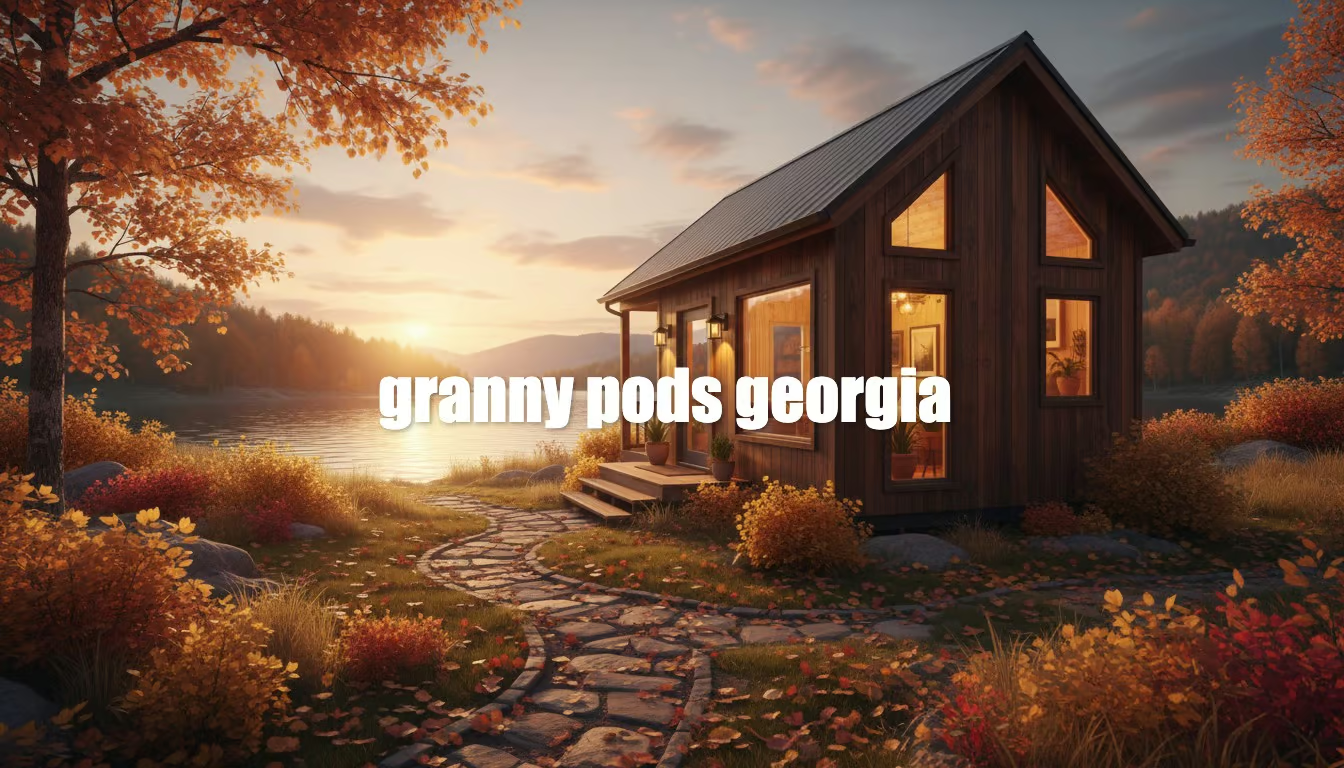
As you consider options for caring for aging family members in Georgia, granny pods emerge as a practical and compassionate solution. These compact living spaces allow your elderly relatives to stay nearby, offering the support they need without sacrificing their autonomy. In a state like Georgia, where family ties run deep and the population over 65 is projected to grow significantly by 2030, understanding granny pods can help you plan for the future effectively.
In the context of Georgia’s diverse landscapes and family-focused communities, granny pods align well with the need for flexible, nearby housing solutions. Their relevance grows as you seek ways to balance independence and care amid rising elder living costs. For credibility in this space, Great Lakes Tiny Homes provides insights into customizable tiny house-style options that meet Georgia’s building standards, drawing from established practices in modular and park model constructions.
What Are Granny Pods?
You might wonder what exactly granny pods are and why they’re gaining traction in Georgia. Granny pods, also known as backyard cottages or in-law suites, are small, detached dwelling units designed specifically for aging relatives. They enable your loved ones to live close to you while enjoying their own private space and independence. Typically, these structures range from 300 to 800 square feet, providing essential living areas without the sprawl of a full home.
In Georgia, the popularity of granny pods is rising due to the state’s aging demographic—over 1.2 million residents are 65 or older, according to recent census data—and the desire for affordable, family-centered care alternatives. As urban areas like Atlanta expand and rural communities value multigenerational living, you can see how these pods address both practical and emotional needs. They differ from traditional tiny homes by focusing on senior accessibility, but many builders offer granny pod-style tiny houses that you can customize. For more on local options, explore tiny house for sale Atlanta.
You have flexibility in your choice: opt for models on wheels for easier mobility or without for a more permanent setup. If you select RVIA certification, your granny pod qualifies as a park model, which often simplifies zoning compliance in Georgia’s varied counties. This certification ensures your unit meets rigorous safety standards, making it a smart pick for long-term family use.
Imagine installing one in your backyard in Savannah or Augusta—it’s not just housing; it’s a bridge to closer family bonds. As you explore options, consider how a granny pod aligns with your property’s layout and your relative’s daily routines, ensuring comfort in Georgia’s temperate climate. To learn about supportive areas, see our guide on what counties in Georgia allow tiny houses.
Inside the Modern Granny Pod: Features, Design, and Purpose
When you delve into the world of modern granny pods, you’ll find they serve a clear purpose: providing a safe, independent living space for elderly family members right in your backyard. Also called accessory dwelling units (ADUs), granny pods are compact homes usually spanning 300 to 800 square feet. You can equip them with essential amenities like a bedroom, bathroom, kitchenette, and living area, all tailored to promote ease of use.
What sets granny pods apart are their senior-friendly designs. Unlike standard tiny homes, which prioritize minimalism for adventurers, granny pods emphasize accessibility. You might include zero-step entries to avoid tripping hazards, wider doorways for wheelchair access, and grab bars in bathrooms. Many models incorporate medical monitoring capabilities, such as built-in alert systems or smart devices that connect to your home network, allowing you to keep an eye on your loved one’s well-being remotely.
Available types vary to suit your needs in Georgia. Prefab granny pods arrive ready-to-assemble, saving you time and reducing on-site disruption—ideal for busy Atlanta suburbs. Custom-built options let you personalize everything from layout to finishes, ensuring the pod matches your main home’s style. Converted structures, like shipping containers or sheds, offer budget-friendly alternatives but require careful retrofitting for safety. For builder recommendations, check tiny house builder Atlanta.
Senior-specific elements make these pods invaluable. Think non-slip flooring to prevent falls, lever-style handles for arthritic hands, and adjustable-height counters in the kitchen. Energy-efficient appliances keep utility costs low, while large windows maximize natural light, boosting mood in Georgia’s sunny environment. As you plan, focus on how these features support daily independence, from meal prep to relaxation, differentiating granny pods as a thoughtful choice for family care.
In essence, a granny pod isn’t just shelter; it’s a designed haven that respects your relative’s dignity while keeping them connected to you. Exploring models from builders experienced in these nuances ensures you get a space that’s both functional and welcoming.
Benefits of Granny Pods for Georgia Families
For Georgia families, granny pods offer a multitude of benefits that align with the state’s warm culture and emphasis on kinship. One key advantage is the proximity they provide: your aging relative lives just steps away, making it easy for you to offer daily support without constant oversight. This setup fosters independence, as they maintain their own routines in a private space, reducing feelings of burden.
Financially, granny pods shine compared to traditional elder care. In Georgia, the average cost of assisted living exceeds $3,500 per month, while nursing homes can top $7,000—figures from the Georgia Department of Community Health. A one-time granny pod investment, often between $100,000 and $150,000, pays off over time through avoided monthly fees. You could recoup costs in under five years, depending on your situation.
Property value also benefits; adding a granny pod enhances your home’s appeal in Georgia’s growing real estate market. Spending $100k to $150k on a quality unit inherently increases your property’s worth, as it adds versatile living space. This investment retains value far better than ongoing assisted living expenses, which can accumulate to hundreds of thousands over a decade.
Emotionally, keeping family close strengthens bonds, a value cherished in Southern traditions. Georgia’s aging population, comprising about 13% of residents and expected to reach 20% by 2040 per state projections, underscores the need for such solutions. In humid coastal areas like Savannah, pods with proper ventilation prevent discomfort, while in northern hills near Chattanooga, insulated designs handle cooler nights. For community ideas, visit best tiny home communities in Georgia.
Culturally, Georgia’s community-oriented lifestyle makes granny pods a natural fit, promoting peace of mind for you and dignity for your loved one. As you weigh options, consider how this choice not only saves money but enriches family life amid the state’s diverse climates.
Legal Considerations for Granny Pods in Georgia
Navigating the legal side of granny pods in Georgia requires your attention to state and local rules, as regulations can differ widely. At the state level, Georgia encourages ADUs through flexible zoning, but implementation falls to counties and cities. You’ll need to comply with the International Residential Code (IRC) for building standards, ensuring your pod meets safety requirements like electrical and plumbing codes.
Zoning laws typically classify granny pods as accessory structures, permitted in residential zones but often with setbacks from property lines. Permit processes involve submitting plans to your local building department, where fees range from $500 to $2,000. In more accommodating areas like Fulton County (Atlanta), ADUs are straightforward if under 800 sq ft and owner-occupied. However, stricter spots like some rural counties in south Georgia may require variances or prohibit detached units altogether.
Major cities vary: Atlanta’s progressive policies allow granny pods citywide with minimal lot size (4,000 sq ft), while Savannah emphasizes historic preservation, potentially needing design approvals. Recent changes, like House Bill 1383 in 2022, eased ADU restrictions in urban zones to address housing shortages, but pending bills could further standardize rules statewide.
RVIA certification adds legal advantages; park model granny pods can sidestep some foundation requirements, treating them like RVs for faster permitting in RV-friendly counties. This certification verifies quality, reducing inspection hurdles and insurance costs for you.
To move forward confidently, consult local officials early. Their guidance can clarify your path, and for additional resources on compliant builds, consider exploring builder options in your area.
Which Georgia Counties Allow Granny Pods?
Determining which Georgia counties permit granny pods involves reviewing local ordinances, as allowances vary. Below is a table focusing on populated counties with clear regulations. For broader tiny house info, check our guide on what counties in Georgia allow tiny houses.
| County Name | Granny Pod Status | Minimum Lot Size Requirements | Maximum Size Allowed | Special Notes |
|---|---|---|---|---|
| Fulton (Atlanta) | Allowed | 4,000 sq ft | 800 sq ft | City of Atlanta permits detached ADUs; must be owner-occupied. Historic districts require design review. |
| DeKalb | Allowed | 5,000 sq ft | 1,000 sq ft | Progressive policies; easy permitting for accessory units. Connects well to Atlanta metro utilities. |
| Cobb | Restricted | 1 acre | 600 sq ft | Only in agricultural zones; variances needed for suburban areas like Marietta. |
| Gwinnett | Case-by-Case | 7,200 sq ft | 750 sq ft | Board approval required; favorable for family ADUs but check HOA rules in Lawrenceville. |
| Chatham (Savannah) | Allowed | 6,000 sq ft | 900 sq ft | Coastal regulations emphasize flood-proofing; historic Savannah has aesthetic guidelines. |
| Bibb (Macon) | Restricted | 1 acre | 500 sq ft | Limited to rural zones; urban Macon requires special use permits. |
| Clayton | Allowed | 5,000 sq ft | 800 sq ft | Near Hartsfield-Jackson Airport; noise considerations but supportive of ADUs. |
This table highlights key areas; always verify with county planning departments. For tiny home builders in Georgia, explore tiny house builder Atlanta options to ensure compliance.
Cost of Building a Granny Pod in Georgia
Building a granny pod in Georgia involves various costs, but understanding them helps you budget wisely. Base prices for prefab models start at $80,000 for a 400 sq ft unit, while custom-built ones range from $120,000 to $200,000, depending on quality and size. Tiny house-style granny pods often fall in the $100,000 to $150,000 range, providing value with durable materials suited to Georgia’s weather.
Site preparation adds $5,000 to $15,000, including grading for your terrain. If your unit lacks wheels and requires a foundation—common for permanent installs—expect $10,000 to $20,000 for concrete slabs to handle Georgia’s clay soil and humidity. Wheeled models skip this, lowering upfront costs but potentially needing anchoring.
Utility connections cost $3,000 to $10,000: septic or sewer tie-ins, water lines, and electrical, crucial for Georgia’s variable climate. Permits run $1,000 to $3,000, varying by county. Ongoing maintenance, like HVAC servicing for humid summers, adds $500 annually.
Compared to Georgia’s elder care—$42,000 yearly for assisted living—a $150,000 pod saves significantly long-term. Financing options include home equity loans at 5-7% interest or personal loans; some qualify for Georgia’s energy-efficient tax credits up to $5,000. Insurance might increase your policy by 10-20%, but certified models often secure lower rates. Tax-wise, ADUs can boost assessments, but exemptions exist for family use.
For communities, see best tiny home communities in Georgia. As you calculate, factor in how a $100k-$150k investment outperforms escalating care fees.
The Granny Pod Installation Process in Georgia
Installing a granny pod in Georgia follows a structured process to ensure compliance and durability. First, research local zoning: use your county’s GIS maps to confirm ADU allowances, avoiding fines up to $1,000 daily in restrictive areas.
Next, obtain permits: submit blueprints and site plans to your building department, a process taking 4-8 weeks. Include engineering for Georgia’s seismic zone 2 standards.
Site preparation suits Georgia’s diverse terrain—clear vegetation and level ground, costing more in hilly north Georgia. For winter installs, schedule before December’s rains to prevent mud issues.
Utility connections are vital: trench for water and power, insulating pipes against freezes rare but possible in northern counties. Septic systems need health department approval if not on city sewer.
Delivery and installation: prefab units arrive via truck, set in 1-2 days; custom builds take 3-6 months. Anchor wheeled models securely.
Final inspections verify code adherence, issuing occupancy certificates. Challenges include permitting delays in urban Atlanta or flood zoning in coastal Chatham—budget extra time and consult pros.
For sales, view tiny house for sale Atlanta. This step-by-step approach minimizes stress for your Georgia project.
Design Considerations for Georgia Granny Pods
Designing your granny pod for Georgia means accounting for the state’s four seasons: hot, humid summers, mild winters, and occasional storms. Weatherproofing is key—use impact-resistant siding and elevated foundations in flood-prone areas like lowcountry Savannah to protect against hurricanes.
Energy efficiency saves on bills: install high-SEER AC units for 90°F+ heat and insulated walls for cooler nights. Solar panels qualify for Georgia Power rebates, reducing your carbon footprint.
Accessibility features ensure safety: zero-step entries, 36-inch doorways, and pre-installed grab bars accommodate mobility aids. Roll-in showers and voice-activated lights enhance independence.
Smart home tech, like fall-detection sensors or remote thermostats, integrates easily, connecting to your Wi-Fi for peace of mind.
Utility connections require planning: tie into your main lines or go off-grid with propane. Aesthetic harmony—matching rooflines or colors—blends the pod with your home, boosting curb appeal in neighborhood-friendly Georgia.
Finding Expert Guidance for Your Project
When embarking on a granny pod project in Georgia, partnering with experienced professionals is crucial to navigate unique local challenges. You need builders who grasp Georgia’s building codes, from wind-load requirements in coastal zones to energy standards statewide.
Options like Great Lakes Tiny Homes offer knowledge in crafting quality granny pods that comply with regulations. Their approach covers everything from custom layouts to senior-focused comforts, ensuring your space feels like home.
They prioritize understanding your needs, offering flexible customizations that fit Georgia’s climate while committing to durable, welcoming designs for aging loved ones. As a resource, they help demystify the process, from permits to installation.
Consider scheduling a consultation to explore your specifics—it’s a helpful step toward informed decisions. For more, book a call to discuss your project.
Conclusion: Creating a Supportive Home for Your Loved Ones
In wrapping up, granny pods in Georgia represent more than a housing choice—they’re a pathway to nurturing family while honoring independence. You invest in proximity for care, cost savings over facilities, and emotional closeness that enriches lives.
This goes beyond bricks and mortar; it’s about dignity, shared moments, and quality time amid Georgia’s vibrant communities. As you consider builders, Great Lakes Tiny Homes emerges as a reliable choice, with experience in delivering turnkey modular and park model homes across the lower 48 U.S. states, ensuring practical solutions tailored to your needs without the hassle of local limitations.
Take that first step today—research, consult, and build the supportive haven your family deserves. Your decision can transform daily life for the better.
Frequently Asked Questions About Granny Pods in Georgia
How Can Great Lakes Tiny Homes Help Me On My Granny Pod Journey
Great Lakes Tiny Homes supports your granny pod journey in Georgia by offering end-to-end guidance tailored to your needs. From initial consultations where you discuss design preferences and site specifics, to navigating local permits, their team leverages experience with Georgia’s regulations to ensure compliance.
You can choose from tiny house models suited as granny pods, with options for wheels, foundations, or RVIA certification for park models. They handle customization, incorporating accessibility features like ramps and smart tech, all while keeping costs in the $100k-$150k range.
Throughout, expect personal touches and ongoing support post-installation. Booking a call via their site connects you with experts ready to answer questions, making the process approachable and efficient for Georgia families.
Are granny pods legal in all parts of Georgia?
No, granny pods aren’t legal everywhere in Georgia due to varying local laws. Statewide, ADUs are permitted under IRC, but counties dictate details. Urban areas like Fulton County allow them readily on lots over 4,000 sq ft, while some rural southern counties restrict or ban detached units to preserve zoning.
You must check municipal codes—Atlanta embraces them for housing density, but places like Forsyth County require case-by-case approvals. Recent laws like HB 1383 have liberalized urban rules, but always verify with planning offices to avoid violations. RVIA-certified models can ease legality in RV-permissive zones.
Consulting professionals helps you identify feasible locations, ensuring your project aligns with Georgia’s diverse regulatory landscape.
Can I install a granny pod on any size property in Georgia?
Installation depends on your property size and local rules in Georgia. Most counties mandate minimum lot sizes, typically 4,000-7,200 sq ft for residential zones, to accommodate setbacks (e.g., 5-10 ft from boundaries).
In dense Atlanta suburbs, smaller lots qualify if zoned appropriately, but rural areas often require 1+ acres. HOAs may impose extra restrictions. For tiny lots, attached ADUs might be an alternative, but detached granny pods need space for utilities and access.
Assess your plot via county surveys; if undersized, variances are possible but involve hearings. Builders can advise on fitting designs, maximizing your Georgia property’s potential.
Do I need special insurance for a granny pod?
Yes, you’ll likely need to adjust your insurance for a granny pod in Georgia. Standard homeowners policies may cover it as an accessory structure, but occupancy requires a separate dwelling endorsement, adding $200-$500 annually depending on value and location.
Flood insurance is essential in coastal or riverine areas like Chatham County, via NFIP. Liability coverage protects against guest injuries, and builders risk policies during construction. Certified units might qualify for specialized RV insurance, often cheaper.
Notify your insurer early to avoid gaps; in Georgia’s storm-prone climate, comprehensive policies safeguard your investment and family.
Can I rent out my granny pod in Georgia?
Renting a granny pod in Georgia is possible but regulated. If intended for family, many counties allow it without issue, but short-term rentals (e.g., Airbnb) face strict rules—unpermitted in most residential zones to prevent neighborhood disruption.
Long-term rentals require zoning approval as an ADU, often limited to relatives in places like Atlanta. Tax implications include property tax hikes and income reporting. Check local ordinances; Savannah’s tourism zones are more lenient, but rural areas prohibit.
If renting, ensure habitability codes are met. For family-focused use, restrictions are minimal, preserving the pod’s supportive role.