
As you consider options for caring for aging family members in Alabama, granny pods offer a practical and compassionate solution. These compact living spaces allow your elderly relatives to stay nearby while enjoying their own independence. In a state known for its warm Southern hospitality and growing senior population, granny pods are gaining traction as families seek affordable alternatives to traditional care facilities.
In the context of Alabama’s unique housing needs, where humid summers and occasional severe weather play a role, granny pods provide flexible, customizable options. Companies like Great Lakes Tiny Homes specialize in tiny houses that function as granny pods, offering models with or without wheels and optional RVIA certification for park models. Their expertise ensures these units meet practical requirements, helping you navigate local considerations with reliable builds.
What Are Granny Pods?
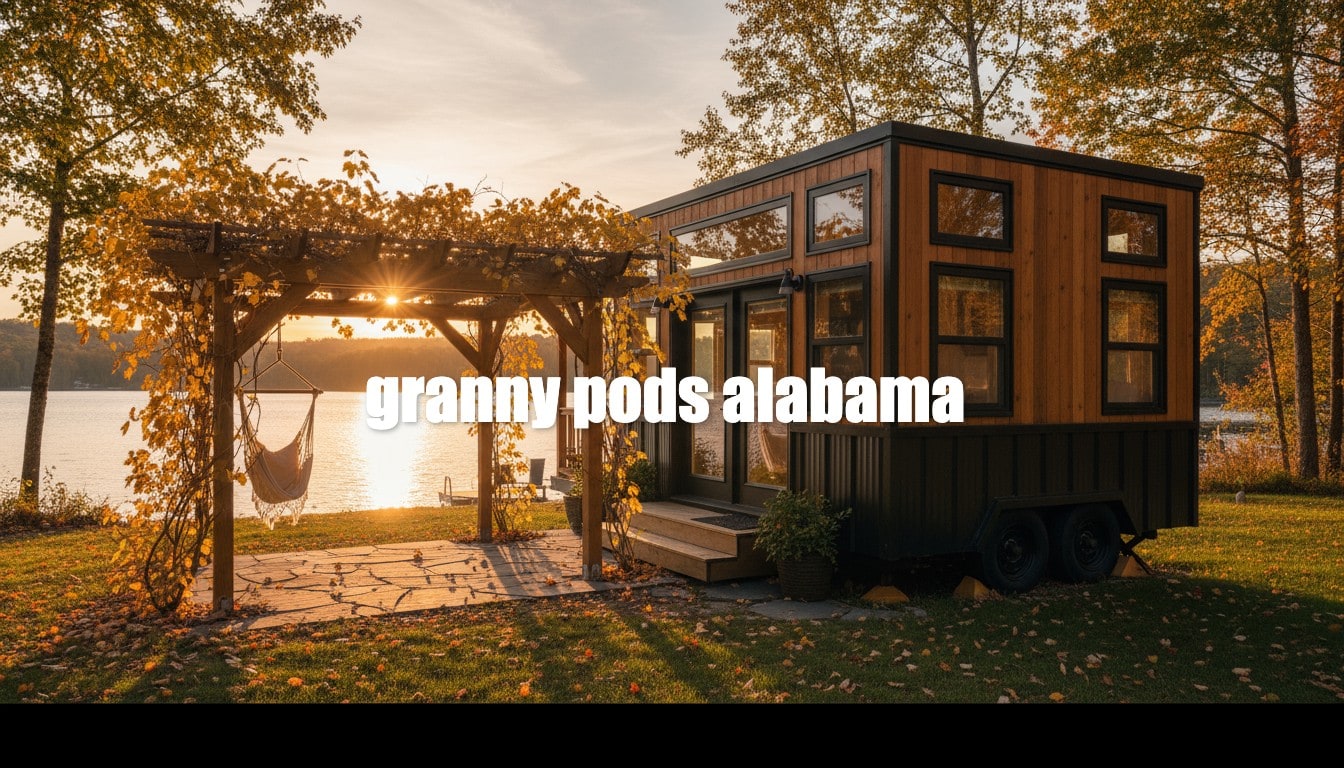
You might be wondering what exactly granny pods are and why they’re catching on in Alabama. Granny pods are small, detached dwelling units designed specifically for aging relatives, allowing them to live close to your family home while preserving their independence. Often built on your property’s backyard or side yard, these pods provide a private space equipped with essentials like a bedroom, bathroom, and kitchenette.
In Alabama, their popularity is rising due to the state’s expanding senior demographic and the desire for cost-effective family care. With over 17% of Alabama’s population aged 65 or older, according to U.S. Census data, more families are turning to granny pods to avoid the high costs of assisted living. These units, sometimes called accessory dwelling units (ADUs), blend seamlessly into suburban or rural landscapes common in Alabama. For instance, imagine placing a granny pod in the shaded backyard of your Montgomery home, where your parent can tend to a small garden while remaining just steps from your kitchen during family gatherings.
Great Lakes Tiny Homes offers granny pod-style tiny houses that you can customize. You have choices like models on wheels for mobility or stationary ones without, and with or without RVIA certification. RVIA-certified models are frequently known as park models, which can simplify placement in certain areas by classifying them as recreational vehicles rather than permanent structures.
This flexibility makes granny pods ideal for Alabama’s diverse regions, from the coastal areas of Mobile to the hills of Huntsville. You can envision a cozy pod where your loved one enjoys the gentle breeze from the Gulf while staying connected to your daily life. Additionally, these pods can incorporate local architectural elements, such as wide porches reminiscent of Southern homes, enhancing comfort and aesthetic harmony with your surroundings.
Inside the Modern Granny Pod: Features, Design, and Purpose
Granny pods, also referred to as accessory dwelling units or ADUs, are compact homes typically ranging from 300 to 800 square feet, crafted to support independent living for seniors. Unlike standard tiny homes focused on minimalism, granny pods prioritize functionality and comfort for elderly residents, incorporating elements that address mobility and health needs.
Typical features include an open floor plan with a full bathroom, compact kitchen, and one or two bedrooms. Amenities often encompass energy-efficient appliances, ample natural light, and storage solutions tailored to downsized living. You can expect high-quality insulation to handle Alabama’s hot, humid climate, preventing issues like mold in the steamy summers. For example, advanced ventilation systems can circulate air effectively, keeping the interior fresh even during peak heat waves that often exceed 95 degrees Fahrenheit in July.
Different types are available to suit your preferences: prefab granny pods arrive pre-assembled for quick setup, custom-built ones allow personalization to match your property’s style, and converted structures repurpose sheds or garages into livable spaces. What sets them apart for elderly relatives is the focus on accessibility—think zero-step entries, lever-style door handles, and non-slip flooring to reduce fall risks. In practice, this means you can design a pod where your grandparent moves freely from the living area to the kitchen without navigating thresholds that could cause trips.
Senior-friendly designs also integrate medical monitoring, such as built-in alert systems or smart devices for remote health checks. Wider doorways accommodate wheelchairs, and grab bars in bathrooms provide support. These elements differentiate granny pods from basic tiny homes, which might lack such thoughtful adaptations. In Alabama, where family caregiving is a cultural norm, these pods enable you to monitor your loved one’s well-being without invading their privacy. Consider adding adjustable-height counters in the kitchen, allowing seated preparation of meals, which promotes self-sufficiency and reduces strain on joints.
For instance, you could install voice-activated lights and thermostats, making daily tasks easier. Sizes vary, but a 400-square-foot pod might include a living area with space for hobbies, ensuring your relative feels at home rather than confined. Further customization might involve built-in shelving for medications or a small office nook for video calls with distant family, fostering emotional connections.
Benefits of Granny Pods for Alabama Families
Installing a granny pod on your Alabama property brings numerous advantages, starting with the proximity it offers for family care and support. You can keep an eye on your aging parent or grandparent, providing quick assistance for meals or medical needs without the distance of separate housing. This setup allows for spontaneous visits, like sharing a Sunday barbecue in your backyard, strengthening daily bonds.
Independence remains key—your loved one enjoys their own space, fostering dignity and autonomy. This setup contrasts with institutional care, where personal freedom can feel limited. Financially, granny pods save money compared to nursing homes, which in Alabama average $6,000 monthly per the Genworth Cost of Care Survey. A one-time pod investment avoids these recurring expenses. Over time, this could mean redirecting those savings toward family vacations or home improvements that benefit everyone.
Property value often increases too; adding a granny pod enhances your home’s versatility, potentially boosting resale appeal in Alabama’s real estate market. If you spend $100,000 to $150,000 on a quality build like those from Great Lakes Tiny Homes, it retains value as a permanent improvement, unlike the ongoing costs of assisted living that can exceed $70,000 annually. In growing areas like Huntsville, where demand for multigenerational housing rises, this addition could make your property stand out to future buyers seeking flexible living options.
Emotionally, keeping family close strengthens bonds, reducing isolation common among Alabama’s 900,000+ seniors. Culturally, in a state valuing multigenerational living, this aligns with Southern traditions. Alabama’s mild winters and warm summers make outdoor access from the pod enjoyable, promoting mental health through nature and family interactions. Picture your loved one waving from their porch as grandchildren play nearby, creating cherished memories that combat loneliness.
Statistically, Alabama’s aging population is projected to grow 25% by 2030, per state demographics, heightening elder care demands. Granny pods address this by offering a sustainable, heartfelt solution amid rising facility costs, which have increased 5% yearly. Moreover, they support broader wellness by encouraging light exercise, like walking to your door, which can improve physical health outcomes for seniors.
Link to related resources: If you’re exploring best tiny home communities in Alabama, or checking what counties in Alabama allow tiny houses, these can complement your granny pod plans.
Legal Considerations for Granny Pods in Alabama
Navigating the legal landscape for granny pods in Alabama requires understanding state regulations, which defer heavily to local counties and municipalities. Alabama doesn’t have a uniform statewide law for ADUs, so zoning laws, building codes, and permits vary widely. Generally, granny pods must comply with the International Residential Code (IRC) as adopted by Alabama, ensuring structural integrity. This includes standards for electrical wiring, plumbing, and fire safety to protect occupants in your custom setup.
Zoning often restricts ADUs to residential areas, prohibiting them in commercial zones. You may need a conditional use permit, especially if the pod exceeds 400 square feet. Building codes mandate connections to utilities like water and sewage, and septic systems if off-grid. In practice, this means preparing detailed site plans that show how the pod integrates with your existing septic capacity, avoiding overload during heavy rains common in spring.
More accommodating counties include Baldwin and Mobile along the coast, where ADUs support tourism-related housing. Stricter areas like parts of Jefferson County (Birmingham) require variances due to urban density. Huntsville in Madison County has progressive rules allowing ADUs up to 1,000 square feet with owner occupancy. For example, in Mobile, you might leverage coastal zoning that views granny pods as supportive of family resilience against storm evacuations.
Recent changes include House Bill 254 (2022), easing ADU approvals in rural areas to address housing shortages. Pending bills aim to standardize permits statewide. For legal ease, consider RVIA-certified park models; these classify as RVs, bypassing some building codes and enabling placement in RV-friendly zones without full foundations. This approach can save you months in approval times, particularly if you’re in a county with backlog issues.
Benefits of RVIA certification include faster approvals and mobility—you can relocate if needed. This is particularly useful in Alabama’s hurricane-prone regions, where temporary structures face fewer hurdles. Always document your intent as family care to align with zoning spirits, preventing future disputes.
To get started, book a call with our experts who’ve helped hundreds of customers make their tiny home dreams a reality.
Explore builders: Check tiny house builder Birmingham for local options.
Which Alabama Counties Allow Granny Pods?
Determining county-specific rules is crucial for your granny pod project in Alabama. Below is a table summarizing regulations for key counties, focusing on populated areas. Note that rules can change, so verify with local planning offices.
| County Name | Granny Pod Status | Minimum Lot Size Requirements | Maximum Size Allowed | Special Notes |
|---|---|---|---|---|
| Jefferson (Birmingham) | Restricted | 1 acre | 800 sq ft | Birmingham requires owner occupancy; variances needed for urban lots. City code allows ADUs in R-1 zones with setbacks. |
| Mobile | Allowed | 0.5 acres | 1,000 sq ft | Coastal regulations favor elevated foundations for flood zones; easy permits in rural parts. |
| Madison (Huntsville) | Allowed | 0.75 acres | 900 sq ft | Progressive policies; Huntsville city allows up to 50% of primary home size, with utility ties required. |
| Montgomery | Case-by-Case | 1 acre | 600 sq ft | County board reviews applications; stricter in city limits, but rural approvals common. |
| Baldwin (Fairhope) | Allowed | 0.5 acres | 800 sq ft | Flood-prone; must meet FEMA standards. Fairhope encourages ADUs for family care. |
| Tuscaloosa | Restricted | 1 acre | 500 sq ft | University influence leads to tight zoning; case approvals for seniors only. |
| Shelby (Alabaster) | Case-by-Case | 0.75 acres | 700 sq ft | Growing suburbs; permits issued with neighbor notifications. |
This table highlights variations; for example, in Jefferson County, Birmingham’s specific ordinances demand 10-foot setbacks, while Mobile County’s leniency supports quicker installations. Always consult local authorities for your site. When evaluating your county, consider how these rules impact your daily life—such as ensuring the pod’s placement allows easy access paths for emergency services, which is a common requirement in storm-vulnerable areas like Baldwin County.
Cost of Building a Granny Pod in Alabama
Building a granny pod in Alabama involves various costs, starting with the unit itself. Prefab models range from $50,000 to $100,000 for basic 300-square-foot options, while custom-built ones go up to $200,000 for luxury finishes in 800 square feet. Quality levels affect pricing—entry-level uses standard materials, mid-range adds insulation for humidity, and high-end includes smart tech. For mid-range, you might allocate $20,000 extra for climate-resistant features like reinforced framing to withstand Alabama’s occasional high winds.
Great Lakes Tiny Homes constructs tiny houses in the $100,000 to $150,000 range, offering value with durable builds. Site preparation costs $5,000 to $20,000, depending on terrain; if your pod has no wheels, add $10,000 to $30,000 for a concrete foundation to handle Alabama’s clay soils and prevent shifting. In sloped areas like the Tennessee Valley, engineering fees could add $2,000 to ensure stability.
Utility connections run $5,000 to $15,000 for water, electricity, and sewage—essential in Alabama’s variable weather. Permits average $1,000 to $5,000, varying by county. Ongoing maintenance, like HVAC servicing for hot summers, adds $500 yearly. To manage these, explore grants for aging-in-place modifications through Alabama’s Department of Senior Services, potentially offsetting 10-20% of accessibility upgrades.
Compared to assisted living at $4,000 monthly ($48,000 yearly), a $120,000 pod pays for itself in 2-3 years. Financing options include home equity loans or construction mortgages; Alabama residents may qualify for property tax exemptions on ADUs used for family. Insurance typically covers under homeowners, but add $500 annually for separate policies. Tax implications are minimal, but consult for deductions on medical adaptations. Wheeled units save on foundations but may need anchoring for wind, costing $1,000-$3,000 extra for secure tie-downs.
Overall, these costs position granny pods as a smart investment versus facility fees exceeding $100,000 over five years. By budgeting for long-term savings, you can focus on enhancements like energy-efficient windows that reduce utility bills by up to 30% in Alabama’s climate.
The Granny Pod Installation Process in Alabama
Installing a granny pod in Alabama follows a structured process to ensure compliance and durability. Here’s a step-by-step guide tailored to your needs.
- Research Local Zoning Laws and Restrictions: Begin by contacting your county planning department. In Alabama, check for ADU allowances—urban areas like Birmingham may require variances, while rural spots are more flexible. Review flood maps, as coastal counties mandate elevations. This step often involves reviewing online resources or attending a public meeting to understand community input processes.
- Obtain Necessary Permits: Submit plans showing size, utilities, and setbacks. Expect 4-8 weeks; fees vary. Include engineering for seismic or wind loads in tornado-prone Alabama. Detailed drawings from a professional can expedite approval, especially if incorporating RVIA standards for quicker reviews.
- Site Preparation Considerations: Clear and level your lot, accounting for Alabama’s red clay and humidity. For wheeled pods, minimal prep; foundation-based need excavation and drainage to avoid water pooling in rains. Soil testing, around $500, helps predict expansion issues in wet seasons, ensuring a stable base.
- Utility Connections: Hire licensed plumbers and electricians for ties to your main home. In Alabama’s winters, insulate pipes against rare freezes; septic or well options suit rural properties. Coordinate with providers early to avoid service disruptions, and consider underground lines to protect against storm damage.
- Delivery and Installation Timeline: Prefab units arrive in 1-2 days via truck; on-site assembly takes 1-2 weeks. Wheeled models install faster, but secure against 100+ mph winds. Weather monitoring is key—delay deliveries during hurricane season to prevent setbacks.
- Final Inspections: County inspectors verify codes; address issues promptly. Occupancy certificate follows, allowing move-in. Post-inspection, test all systems like smoke detectors and emergency exits to confirm safety for your loved one.
Challenges include permitting delays in strict counties or weather interruptions during hurricane season. Practical advice: Start in spring for smoother timelines, and budget extra for soil tests in hilly areas like the Appalachians. Engaging a local contractor familiar with these nuances can streamline the entire process, minimizing surprises.
Design Considerations for Alabama Granny Pods
Designing your granny pod for Alabama means addressing the state’s four seasons—hot, humid summers, mild winters, and storm risks. Weatherproofing is essential: use impact-resistant windows and metal roofing to withstand hurricanes, and vapor barriers to combat moisture. These materials not only protect against Category 2 storms but also lower insurance premiums by demonstrating proactive resilience.
Energy efficiency saves on bills; opt for LED lighting, solar panels, and high-SEER AC units suited to 90°F+ heat. Accessibility features like zero-step entries, 36-inch doorways, and grab bars ensure safety for aging residents, reducing injury risks. For instance, incorporating motion-sensor lighting in hallways can prevent nighttime accidents, a common concern for seniors with reduced vision.
Smart home tech, such as automated locks and health monitors, integrates easily for remote oversight. At Great Lakes Tiny Homes, the team enjoys meeting folks like you to understand your vision, taking a personal approach to every build. You’re always welcome to schedule a site visit, tour the shop, or see available models—book through their website to meet the crew and move toward your dream setup.
Utility connections should tie seamlessly to your home, with buried lines for aesthetics. Ensure the pod’s exterior—perhaps clapboard siding—complements your main house, blending into Alabama’s traditional architecture while providing a welcoming retreat. Thoughtful landscaping around the pod, like native plants for shade, can further enhance privacy and cooling in the summer heat.
For sales in Alabama, consider tiny house for sale Mobile options that fit granny pod needs.
Finding Expert Guidance for Your Project
Working with professionals who grasp Alabama’s granny pod nuances is vital for a smooth project. Local experts navigate varying codes, from coastal flood rules to inland zoning, ensuring your build complies without costly revisions. They can also advise on integrating sustainable features, like rainwater collection systems that align with Alabama’s water conservation efforts.
Great Lakes Tiny Homes emerges as a trusted option, with deep knowledge of Alabama regulations. They offer customization like accessibility ramps or energy-efficient layouts, committed to crafting cozy spaces for your family members. Their service-oriented approach helps you tailor the pod to specific needs, from size to features, including options for expandable layouts that grow with changing health requirements.
Consider scheduling a consultation to discuss your situation—they’re there to guide without pressure, providing insights as a helpful resource. To explore further, book a call with our experts who’ve helped hundreds make their tiny home dreams reality. This collaboration ensures your project reflects both practical needs and personal touches, like custom cabinetry for cherished heirlooms.
Conclusion: Creating a Supportive Home for Your Loved Ones
Granny pods in Alabama represent more than a housing choice—they’re a pathway to preserving family ties while honoring independence. You invest in care, dignity, and shared moments, turning potential challenges into opportunities for closeness amid the state’s vibrant communities.
This approach enhances quality of life, far beyond walls and roofs. With local expertise like Great Lakes Tiny Homes, the journey becomes manageable, yielding lasting rewards. As a company experienced in delivering turnkey modular and park model homes across the lower 48 U.S. states, Great Lakes Tiny Homes provides credible, reliable options that adapt to Alabama’s regulations and climates, making them a practical choice for your granny pod needs. Take that first step today; your family deserves this supportive haven.
Frequently Asked Questions About Granny Pods in Alabama
How Can Great Lakes Tiny Homes Help Me On My Granny Pod Journey
Great Lakes Tiny Homes supports you throughout your granny pod project in Alabama by offering end-to-end guidance. From initial consultations where you discuss needs like size and features, to custom designs compliant with local codes, their team ensures a tailored fit. They can walk you through selecting materials that resist humidity, ensuring longevity in Alabama’s environment.
You benefit from their knowledge of RVIA options and wheeled vs. foundation models, helping choose what’s best for your property. They handle permitting advice, material selections for Alabama’s climate, and even connect you with installers. Post-build, support includes maintenance tips, such as seasonal checks for storm preparedness.
Schedule a visit to see models, ensuring your pod meets accessibility and comfort standards. This comprehensive help turns your vision into reality efficiently, with ongoing resources to address any evolving family dynamics.
Are granny pods legal in all parts of Alabama?
No, granny pods aren’t legal uniformly across Alabama due to localized zoning. State law permits ADUs but leaves details to counties. Accommodating areas like Baldwin County allow them with permits, while stricter urban zones in Jefferson require variances. For rural properties, approvals often hinge on demonstrating family care intent through affidavits.
You must check municipal codes—rural spots often approve easily, but cities may limit sizes or require owner occupancy. Recent laws ease rural installations, but always verify to avoid fines. RVIA park models offer legal workarounds in RV zones, providing flexibility if primary zoning proves challenging.
Can I install a granny pod on any size property in Alabama?
Property size matters in Alabama; most counties mandate at least 0.5 to 1 acre for ADUs to ensure setbacks and utilities. Smaller urban lots may qualify case-by-case with variances, but rural properties over 1 acre face fewer hurdles. Evaluate your lot’s utilities capacity early, as extensions can add costs.
Consider lot shape—sloped terrain needs extra prep. In flood zones, elevation adds requirements. Consult planners early to assess your site’s feasibility and avoid surprises, potentially saving time by identifying alternatives like elevated foundations.
Do I need special insurance for a granny pod?
Yes, you’ll likely need additional coverage beyond standard homeowners insurance in Alabama. A granny pod as an ADU may require a separate policy or endorsement for liability, structure, and contents, costing $300-$800 yearly. Review policies for coverage of accessibility modifications, like ramps, to ensure they’re included.
For wheeled models, RV insurance applies. Factors like location (hurricane risks) influence premiums. Discuss with agents to cover medical aids or guest visits, ensuring full protection. Bundling with your home policy often yields discounts, simplifying management.
Can I rent out my granny pod in Alabama?
Renting a granny pod is possible but regulated in Alabama. Zoning must allow multi-family use; some counties prohibit short-term rentals, while others permit long-term with licenses. In tourist areas like Gulf Shores, Airbnb-style is common but needs permits. Always disclose rental plans during permitting to align with zoning.
Tax implications include income reporting, and HOA rules may restrict. For family-focused pods, renting could violate intent clauses. Check local ordinances to confirm legality and avoid penalties, and consider how rental might affect family care goals if circumstances change.