
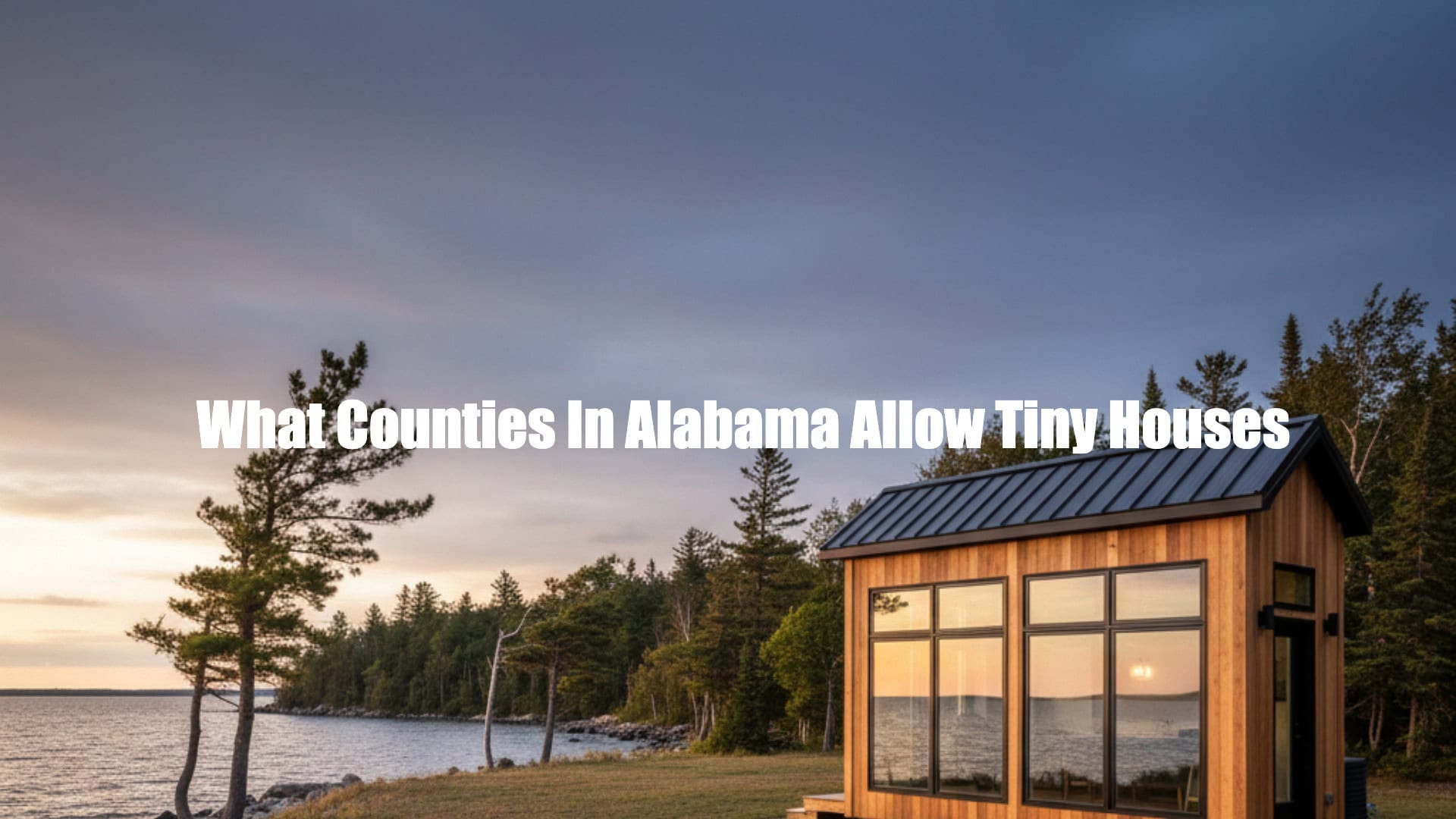
Tiny houses continue to gain traction across the United States as an affordable, sustainable housing option that promotes minimalist living and reduces environmental impact. In Alabama, the appeal of tiny homes is particularly strong due to the state’s diverse landscapes, from coastal areas to rural countryside, offering various opportunities for placement. However, navigating the regulations for tiny houses in Alabama can be complex, as there are no uniform statewide laws, leaving much to local counties and municipalities.
This comprehensive guide explores what counties in Alabama allow tiny houses, detailing key rules and regulations to help prospective owners make informed decisions. We cover zoning requirements, building codes, placement options, and community resources, drawing on the latest available information to ensure accuracy. Whether you’re planning to build on a foundation or use a mobile tiny house on wheels, understanding these local variations is essential for compliance and success.
Great Lakes Tiny Homes serves as a full-service manufacturer specializing in modular, park model, and tiny homes, delivering turnkey builds to all 48 lower U.S. states, including Alabama. We offer flexible options with or without wheels and with or without RVIA certification, where RVIA-certified models are often referred to as park models to meet specific zoning and mobility needs. If you’re considering a tiny home in Alabama, book a call with our experts to explore customized solutions that align with local regulations.
Disclaimer: This article is for informational purposes only and does not constitute legal advice. Laws, regulations, and zoning rules vary by location and may change over time. Always consult your local zoning office or a qualified land use/zoning attorney before making decisions based on this information.
Alabama lacks uniform statewide tiny house regulations, with rules varying significantly by county and municipality. Counties such as Baldwin, Jefferson, and Madison generally permit tiny houses as accessory dwelling units (ADUs) or under the International Residential Code’s Appendix Q, often requiring a minimum of 400 square feet for permanent structures built on foundations. Tiny houses on wheels are typically classified and regulated as recreational vehicles (RVs), restricting their use to temporary placements in RV parks or campgrounds rather than as primary residences.
What Counties in Alabama Allow Tiny Houses?
Alabama’s approach to tiny houses is decentralized, meaning that while the state does not impose overarching regulations, individual counties establish their own zoning and building codes. This variability allows for innovation in some areas but requires thorough research in others to ensure compliance. Prospective tiny home owners should start by contacting the local planning department to understand specific allowances for size, placement, and utilities. Many counties adopt elements of the International Residential Code (IRC), particularly Appendix Q, which provides guidelines for homes under 400 square feet, including loft requirements and emergency egress standards. However, interpretations can differ, so verifying with official sources is crucial. For those exploring options, examining county-specific policies can reveal welcoming environments for tiny living.
To provide a clear overview, the following table summarizes key counties in Alabama that allow tiny houses, including minimum square footage, zoning types, and primary requirements. This information is based on the most recent available data from official sources, but local rules can evolve, so direct verification is recommended.
| County/City | Min Sq Ft | Zoning Type | Key Requirements | Source | Verified |
| Jefferson County | 200 | ADU | Auxiliary housing units permitted in specific zones; must comply with general construction laws for accessory dwelling units. | Jefferson County Subdivision Regulations | Yes, as of 2024 |
| Baldwin County | 400 | Residential | Adopts 2018 IRC including Appendix Q for lofts, ceiling heights, and exit requirements in single-family units. | 2018 International Residential Code Appendix Q | Yes, as of 2024 |
| Madison County | 500 | ADU | ADUs must be 500-900 sq ft, not exceeding 60% of primary residence’s habitable area; one per lot. | Huntsville Code of Ordinances | Yes, as of 2024 |
| Mobile County | 400 | ADU | ADUs limited to two stories or height of principal dwelling; must meet lot coverage and setback rules. | City of Mobile Unified Development Code | Yes, as of 2024 |
| Shelby County | N/A | Unzoned Areas | Tiny homes with axles allowed on any legal lot in unincorporated areas per county regulations. | Shelby County Frequently Asked Questions | Yes, as of 2024 |
Disclaimer: This table is for informational purposes only and does not constitute legal advice. Regulations can change, so verify with local authorities.
Jefferson County stands out for its progressive stance on accessory dwelling units, allowing tiny houses up to 200 square feet in designated zones, which supports multigenerational living or rental income opportunities. This flexibility is governed by the county’s subdivision and land development regulations, emphasizing safety and integration with existing properties. Homeowners must ensure proper setbacks and utility connections to avoid violations. Baldwin County’s adoption of the 2018 IRC Appendix Q facilitates easier construction of tiny homes as primary residences, particularly in coastal areas where space is at a premium. Madison County’s ADU rules promote affordable housing by capping sizes relative to the main home, encouraging efficient land use in growing urban areas. Mobile and Shelby Counties offer additional options for mobile or unzoned placements, appealing to those seeking rural or flexible setups.
Tiny House Regulations And Rules In Alabama
Tiny house regulations in Alabama are primarily handled at the local level, with counties and cities enforcing their own zoning ordinances and building codes. Common requirements include minimum square footage of 400 square feet for permanent dwellings, though some areas allow smaller ADUs. Permits are typically needed for placement, covering aspects like zoning compliance, water supply, sewage disposal, and electrical systems. Variations exist based on whether the tiny house is on a foundation or wheels, with the latter often falling under RV classifications. Researching these rules early can prevent costly setbacks and ensure the structure qualifies as habitable. Local adoption of national codes like the IRC provides a baseline, but amendments by municipalities add layers of specificity.
Understanding the distinction between permanent and temporary structures is key to compliance in Alabama. Permanent tiny houses must meet rigorous standards to be considered safe residences, while temporary ones face mobility and duration limits. Transitional options bridge these categories but require clear documentation of intent. Utility hookups remain a universal concern, as inadequate systems can lead to health code violations. Engaging with local building inspectors during planning stages helps clarify expectations and streamlines approvals. Overall, Alabama’s framework supports tiny living when navigated thoughtfully.
Disclaimer: This article is for informational purposes only and does not constitute legal advice. Laws, regulations, and zoning rules vary by location and may change over time. Always consult your local zoning office or a qualified land use/zoning attorney before making decisions based on this information.
Permanent Structure Rules
Constructing a tiny house as a permanent structure in Alabama involves adhering to local interpretations of the International Residential Code (IRC), particularly Section R310 for emergency escapes in one- and two-family dwellings. Without a statewide building code, counties dictate standards for foundations, structural integrity, electrical wiring, and plumbing to ensure habitability. Inspections are mandatory at various construction stages to verify compliance, preventing issues like structural weaknesses or fire hazards. Materials must withstand Alabama’s humid climate, incorporating moisture barriers and ventilation. Property taxes apply based on assessed value, treating the tiny home as real property once affixed. This process, while thorough, affirms the home’s longevity and safety for full-time residency.
Foundational requirements often include concrete slabs or piers rated for local soil conditions, especially in flood-prone areas along the Gulf Coast. Electrical and plumbing must connect to approved municipal systems or approved septic/well setups in rural zones. Energy efficiency standards from the IRC encourage insulation and windows that reduce cooling needs in Alabama’s hot summers. Obtaining a certificate of occupancy post-inspection confirms the structure meets all codes. Homeowners benefit from these rules by gaining access to standard home insurance and financing. Consulting certified builders familiar with IRC ensures smoother navigation of these mandates.
Temporary Structure Rules
Temporary tiny houses, especially those on wheels, are often categorized as RVs or campers in Alabama, prohibiting their use as permanent residences in most residential zones. Placement is limited to RV parks, campgrounds, or private land with temporary permits, typically not exceeding six months. Utility connections for water, electricity, and sewage are essential, with many facilities providing hookups to maintain sanitation standards. Local ordinances may require registration and inspections to confirm roadworthiness if mobility is intended. In unzoned rural areas, flexibility increases, but environmental impacts like waste disposal must be addressed. These rules balance convenience with public safety, preventing makeshift housing in unsuitable locations.
Owners should verify park-specific policies, as some restrict tiny house dimensions or amenities to align with RV standards. De-wheeling a mobile unit to make it permanent triggers full building code compliance, shifting from temporary to fixed status. Insurance for temporary setups often falls under RV policies, covering travel and storage risks. Seasonal use in Alabama’s mild climate makes these options popular for vacationers or transitional living. Coordinating with county health departments ensures sewage systems prevent contamination. This category suits those testing tiny living before committing to permanence.
Transitional Structure Rules
Transitional tiny houses in Alabama serve as short-term solutions during relocations or renovations, blending elements of temporary and permanent regulations. Specific guidelines are sparse statewide, so counties treat them under general temporary housing rules, requiring utilities like sewage, power, and water connections. Duration limits, often 6-12 months, apply to avoid long-term residency assumptions. Placement on private property needs owner permission and zoning approval, emphasizing temporary intent through documentation. Local authorities provide the best guidance, as interpretations vary by jurisdiction. These structures support life’s transitions while upholding community standards.
Customization for transitional use might include portable utilities to facilitate easy relocation, aligning with Alabama’s emphasis on practical housing solutions. Health and safety inspections focus on immediate habitability, such as stable foundations and ventilation. Financing for transitional setups may involve short-term loans or rentals, distinct from permanent mortgages. In urban counties, proximity to services influences approval, promoting integration. Rural areas offer more leniency for off-grid features like solar panels. Engaging planners early clarifies requirements, ensuring smooth transitions without legal hurdles.
Financing and Insurance for Tiny Houses in Alabama
Securing financing for tiny houses in Alabama presents unique challenges due to their non-traditional classification, often requiring specialized lenders familiar with RV loans or personal loans rather than conventional mortgages. Banks may hesitate on tiny homes under 400 square feet, viewing them as less secure collateral, so options like chattel loans for wheeled models or home equity lines for ADUs become viable. State programs through the Alabama Housing Finance Authority occasionally support affordable housing initiatives that could encompass tiny homes, particularly in rural development zones. Interest rates typically range from 5-10%, influenced by credit scores and down payments of 20-30%. Prospective buyers should compare terms from credit unions and online lenders specializing in alternative housing. This landscape encourages creative financial planning to achieve ownership without excessive debt.
Insurance for tiny houses in Alabama varies by structure type, with permanent foundations qualifying for standard homeowners’ policies covering hazards like hurricanes and floods common in the state. Mobile tiny homes on wheels rely on RV insurance, which includes liability, comprehensive, and collision coverage but may exclude full replacement value if not RVIA-certified. Premiums average $800-1,500 annually, depending on location and features like storm-resistant roofing. Gaps in coverage arise for off-grid setups, necessitating add-ons for solar systems or composting toilets. The Alabama Department of Insurance offers resources for comparing providers and understanding endorsements. Building relationships with agents experienced in tiny homes ensures adequate protection against regional risks.
Tax implications add another layer, as site-built tiny homes are assessed as real property by county appraisers, potentially qualifying for homestead exemptions that reduce ad valorem taxes. Wheeled models might incur personal property taxes similar to vehicles, registered annually. Deductions for energy-efficient features under federal guidelines can offset costs, applicable in Alabama’s sunny climate for solar installations. Consulting the Alabama Department of Revenue helps clarify assessments based on market value and improvements. Budgeting for these ongoing expenses alongside initial financing maintains long-term affordability. Overall, informed navigation of financing and insurance empowers sustainable tiny living in Alabama.
In Alabama, Where Can I Build A Tiny House?
Selecting an appropriate location for your tiny house in Alabama is pivotal, influenced by zoning laws, land availability, and infrastructure access. Rural unzoned areas offer the most flexibility, allowing builds on private property with minimal oversight, ideal for off-grid enthusiasts. Urban-adjacent spots in permissive counties provide proximity to amenities while adhering to ADU rules. Environmental factors, such as flood zones near rivers or coastal erosion, necessitate site assessments to ensure stability. Hiring a qualified tiny house builder can streamline the process, handling permits and ensuring code compliance from inception. Preparation, including soil tests and utility planning, mitigates frustrations and aligns with Alabama’s diverse terrains.
Common sites include national parks and campgrounds for temporary setups, where tiny houses fit RV designations with provided hookups. Dedicated tiny house communities foster social connections and shared resources, easing entry into minimalist living. RV parks accommodate wheeled models seasonally, offering security and utilities without permanent commitments. Private properties, especially acreages in welcoming counties, enable custom foundations for long-term residency. Each option interacts with local regulations differently, requiring tailored strategies. Evaluating these locations against personal lifestyle goals ensures a fulfilling tiny house experience in Alabama.
- National Parks and campgrounds
- Tiny house communities
- RV parks
- Private properties
Alabama Tiny Home Communities
Alabama’s tiny home communities embody sustainable, community-oriented living, drawing residents who value reduced footprints and stronger social ties. These developments often feature shared green spaces, eco-friendly infrastructure, and events that build camaraderie among downsizers. In a state with abundant natural beauty, such communities leverage lakesides, forests, and farmlands for immersive experiences. Amenities like communal gardens and trails promote self-sufficiency and wellness. For those transitioning to tiny living, these enclaves provide support networks and practical insights. Exploring the best tiny home communities in Alabama reveals options tailored to various preferences.
Regulatory compliance is integral, with communities adhering to county zoning for cluster developments or ADUs. This setup minimizes individual permitting burdens while ensuring collective standards for utilities and safety. Economic benefits include lower maintenance costs through shared resources, appealing in Alabama’s variable economy. Diversity in community models—from eco-villages to resort-style—caters to families, retirees, and adventurers alike. Participation often involves covenants outlining lifestyle expectations, fostering harmony. These hubs not only house bodies but nurture intentional lifestyles amid Alabama’s charm.
Eagles Landing
Eagles Landing, transformed from a former seafood restaurant into a lakeside tiny home haven, exemplifies adaptive reuse in Alabama’s tiny living scene. Nestled near the water, it offers cottages with beach access, a swimming pool, BBQ areas, and picnic spots for relaxed gatherings. Private boat slips enhance recreational appeal, ideal for fishing or leisurely outings. The community’s evolution reflects growing interest in tiny culture, prioritizing proximity to nature. Residents enjoy a blend of privacy and communal perks, supporting sustainable practices. This spot attracts those seeking waterfront minimalism without isolation.
Management emphasizes eco-conscious maintenance, using local resources to minimize impact. Rental options allow trial periods before commitment, easing entry. Social events around the lake build lasting connections among diverse residents. Accessibility features ensure inclusivity for all ages. Eagles Landing’s unique backstory inspires visitors, highlighting tiny homes’ versatility. It’s a prime example of how former commercial spaces can rebirth as vibrant communities.
Harmony Woods Ecovillage
Established in 2021, Harmony Woods Ecovillage prioritizes environmental stewardship, with residents collaboratively managing land through a trust to slash carbon footprints. Each member receives a quarter-acre plot for self-sufficient tiny homes, built or bought to personal specs using local, free resources. Infrastructure like shared solar and water systems promotes sustainability in Alabama’s temperate climate. Governance involves democratic decisions on communal assets, ensuring equitable access. This model empowers individuals within a collective framework, fostering resilience. The ecovillage serves as a blueprint for eco-tiny living statewide.
Activities focus on permaculture and workshops, educating on low-impact techniques. Biodiversity thrives through native plantings and wildlife corridors. Economic sharing reduces costs, from tool libraries to bulk purchasing. Inclusivity draws varied backgrounds, enriching cultural exchanges. Challenges like weather resilience are met with innovative designs. Harmony Woods demonstrates tiny communities’ role in Alabama’s green future.
Tiny House Regulations in Major Alabama Cities
Major cities in Alabama present a mix of opportunities and restrictions for tiny houses, shaped by urban density and housing needs. Zoning often favors ADUs to address affordability, but minimum sizes and placement rules apply strictly. Official resources like city planning departments provide ordinances and contacts for guidance. Unique local factors, such as historic districts or flood risks, influence approvals. Inline citations link to verified municipal codes for transparency. These urban settings balance growth with regulations, supporting tiny homes as innovative solutions.
Engaging city officials early clarifies variances or incentives for tiny projects. Community input sometimes shapes policies, reflecting resident priorities. Utilities integration poses challenges in dense areas, requiring coordinated planning. Successful implementations showcase tiny houses enhancing neighborhood diversity. For builders, city-specific compliance ensures seamless execution. Exploring these regulations unlocks urban tiny living potential in Alabama.
Birmingham
In Birmingham, part of Jefferson County, tiny houses are allowed as ADUs in select zones but prohibited in single-family R-1 neighborhoods to preserve suburban character. Minimum sizes align with county standards, typically 200 square feet for auxiliaries, with requirements for setbacks and utility ties. The city’s Planning & Zoning Division oversees permits, emphasizing integration with existing homes to avoid visual disruptions. Historic areas may impose additional aesthetic guidelines. Flood-prone locations demand elevated foundations per local ordinances. Contacting the division at birminghamal.gov facilitates personalized advice.
Recent rezoning efforts aim to expand affordable options, potentially easing tiny home approvals in mixed-use districts. Inspections cover structural and safety elements, ensuring resilience against Alabama’s weather. Community gardens or shared spaces often accompany ADUs, boosting neighborhood vitality. Financing through local programs supports compliant builds. For tiny houses for sale in Birmingham, explore options at tiny house for sale in Birmingham. This framework supports urban tiny living while upholding standards.
Challenges include navigating layered city-county rules, but resources like public hearings aid transparency. Successful ADUs demonstrate multigenerational benefits, reducing housing costs. Insurance aligns with standard policies for attached structures. Long-term, these regulations evolve with population pressures. Birmingham’s approach fosters inclusive growth through thoughtful tiny integrations.
Mobile
Mobile’s regulations permit tiny houses as ADUs under the Unified Development Code, with no minimum beyond 400 square feet for primary-like uses, limited to two stories or the principal dwelling’s height. Lot coverage caps and setbacks ensure harmony with surroundings, particularly in historic districts. The city’s Planning Department handles applications, requiring site plans and utility proofs. Coastal flooding influences elevation mandates for safety. ADUs cannot exceed principal footprint percentages, promoting balanced development. Official contacts at cityofmobile.org streamline inquiries.
Emphasis on hurricane resilience shapes codes, incorporating impact-resistant materials. Temporary wheeled units are confined to RV zones, not urban lots. Community benefits include rental potential for affordability crises. For tiny house builders in Mobile, consider local experts via tiny house builder in Mobile. Inspections verify compliance at key stages. Mobile’s policies adapt to bayou lifestyles, enabling tiny homes amid maritime heritage.
Evolving ordinances reflect tourism and growth, potentially liberalizing placements. Shared amenities in ADU setups enhance livability. Tax assessments treat affixed units as real property. Challenges like humidity demand ventilation focuses. Overall, Mobile supports tiny innovations with structured guidance.
Huntsville
Huntsville in Madison County allows ADUs sized 500-900 square feet, not surpassing 60% of the primary home’s habitable area, one per lot to control density. Zoning requires rear-yard placement with setbacks, overseen by the city’s Planning Department. Minimums prevent overcrowding, while utilities must tie to mains or approved alternatives. Tech-hub growth spurs affordable housing pushes, including tiny options. Flood zones enforce specific elevations. Resources at huntsvilleal.gov aid navigation.
Ordinances prioritize family integration, banning separate sales of ADUs. Inspections ensure IRC adherence for safety. For best tiny home communities near Huntsville, check best tiny home communities in Alabama. Economic incentives may apply for compliant builds. Huntsville’s rules balance expansion with neighborhood preservation.
Community engagement shapes policy, with public forums influencing updates. Insurance covers standard risks in urban settings. Long-term viability hinges on maintenance. These regulations position Huntsville as tiny-friendly amid development.
Montgomery
Montgomery’s zoning code explicitly mentions tiny homes and cottage clusters in appropriate districts, with minimums around 400 square feet for standalone units. ADUs follow principal structure guidelines, requiring permits from the Planning Commission. Historic preservation overlays add design constraints in core areas. Utilities and setbacks are mandatory for approval. The Envision Montgomery 2040 plan integrates novel housing like tiny homes for affordability. Contacts via montgomeryal.gov provide details.
Focus on equitable development allows tiny clusters in multi-family zones. For tiny houses for sale in Montgomery, visit tiny house for sale in Montgomery. Inspections align with state-adopted codes. Montgomery’s approach fosters inclusive urban living.
Challenges include navigating updates from comprehensive plans. Insurance adapts to tiny scales. Community impacts highlight diversity benefits. Regulations evolve to meet housing demands.
Tiny House Prices in Alabama
Tiny house prices in Alabama fluctuate based on several factors, including overall size, whether built on a foundation or wheels, inclusion of RVIA certification for mobility and compliance, necessary utility hookups for water, electricity, and sewage, and adherence to local building codes and zoning variances. Smaller models around 200 square feet start at $30,000 for basic DIY kits, while custom 400-square-foot homes with full amenities can reach $100,000 or more, especially in coastal counties with elevated standards. Foundation-based structures incur higher costs due to permitting and inspections, averaging 20-30% above wheeled versions. RVIA certification adds $5,000-10,000 but eases placement in parks. Local material sourcing in Alabama helps moderate expenses, though hurricane-proofing inflates budgets in southern areas. Buyers should factor in land preparation and ongoing taxes, which treat permanent tiny homes as real property.
Market trends show increasing demand driving prices up 10-15% annually in permissive counties like Baldwin, where scenic locations command premiums. Wheeled tiny houses appeal for affordability and flexibility, often under $60,000 fully equipped, but resale values depend on condition and certification. Utility integrations, such as septic systems costing $10,000-15,000, significantly impact totals in rural setups. Zoning-friendly designs reduce modification expenses post-build. Comparing quotes from multiple builders reveals savings, particularly for modular prefabs delivered statewide. These variables underscore the need for detailed budgeting aligned with specific locations.
Great Lakes Tiny Homes Pricing
Great Lakes Tiny Homes offers builds ranging from $100,000 to $150,000, encompassing turnkey solutions with high-quality materials, customization, and delivery directly to Alabama sites. This pricing reflects comprehensive services, including design consultations, RVIA certification where applicable, and compliance checks for local codes. Turnkey delivery minimizes on-site labor costs, ensuring efficient setup on foundations or wheels. Options scale with features like premium insulation for Alabama’s climate or expanded lofts for space efficiency. Warranties and support post-delivery add value, protecting investments long-term. This range positions Great Lakes as a reliable choice for durable, regulation-ready tiny homes.
Customization within the pricing allows tailoring to zoning needs, such as ADU configurations for urban lots or mobile setups for rural flexibility. Delivery logistics cover transport to all Alabama counties, with setup teams handling connections. Financing partnerships facilitate payments, integrating with state programs where possible. Quality craftsmanship exceeds IRC standards, enhancing safety and comfort. Clients appreciate the transparency, avoiding hidden fees common in fragmented builds. Great Lakes’ model streamlines the path to ownership.
Great Lakes Tiny Homes Model Options
Selecting a model from Great Lakes Tiny Homes should consider Alabama’s zoning, where foundation models suit permanent ADU placements and wheeled options fit temporary or RV zones. Modular homes offer quick assembly for code-compliant builds, ideal for counties requiring inspections.
- Modular Homes – Prefabricated for efficient, customizable construction on-site.
- A-Frame – Steep roofs maximize space, suitable for snowy or rainy Alabama regions.
- Cabin – Rustic designs blend with rural settings, emphasizing natural materials.
- Park Models – RVIA-certified for community or park placements with luxury finishes.
- Tiny House on Wheels – Mobile for flexible zoning, easy relocation across counties.
Zoning impacts model choice significantly; for instance, permanent foundations in Jefferson County favor modular or cabin styles for stability, while Baldwin’s coastal rules suit elevated A-frames. Wheeled models provide versatility in transitional areas but may limit financing. Certification ensures broader acceptance, particularly in communities. Evaluating site specifics guides optimal selection. Great Lakes assists in matching models to regulations.
Local codes influence features like ventilation for humidity or storm reinforcements, integrated into designs. Budgets align models with needs, from basic cabins to feature-rich park models. Longevity depends on material choices suited to Alabama’s environment. Professional guidance refines decisions for compliance and satisfaction. This approach maximizes functionality within regulatory bounds.
Ultimately, zoning dictates feasibility, with permanent options excelling in stable areas and mobile in variable ones. If you’d like an expert perspective on selecting a model for your Alabama location, Book a call with our experts.
Explore tiny houses for sale in Alabama to see available options that fit local rules.
Tiny House Builders Near Me
Choosing a reliable tiny house builder in Alabama ensures your project meets local codes and withstands regional conditions like high humidity and storms. Great Lakes Tiny Homes provides nationwide delivery, eliminating the need for local searches while offering diverse plans. As an RVIA-certified manufacturer, we adhere to stringent standards for safety, quality, and legality. Our builds incorporate Alabama-specific adaptations, such as enhanced ventilation and flood-resistant bases. For tiny house builders in Alabama, tiny house builders in Alabama options include our comprehensive services. This approach guarantees a seamless experience from design to occupancy.
Certification from RVIA validates construction integrity, facilitating permits and insurance. Materials sourced for durability reduce long-term maintenance in Alabama’s climate. Customization tailors to zoning, whether ADU or mobile. Delivery and setup minimize disruptions. Partnering with experts like Great Lakes streamlines compliance.
Great Lakes Tiny Homes is also a manufacturer with the RV Industry Association (RVIA), driven to meet the highest manufacturing standards and strictly comply with the building, protection, and legal requirements specific to tiny homes.
Do I Need a Certified Builder?
Yes, engaging a certified builder is highly recommended for tiny house projects in Alabama to navigate complex local regulations and ensure structural safety. DIY approaches carry risks of code violations, costly rework, and safety hazards, particularly with utilities and foundations. Certified professionals, like those from RVIA members, deliver compliant, warrantied homes that qualify for financing and insurance. In Alabama’s varied climates, expertise prevents issues like mold or instability. Working with certified builders provides peace of mind and value retention. For reliable tiny house builders near you, consider certified options serving Alabama.
You could be thinking about doing it yourself, but the challenges and hazards are higher, from permitting delays to subpar craftsmanship. You can feel confident you’ll own a small house made in compliance with laws and regulations when you work with an RVIA-certified contractor like Great Lakes Tiny Homes. It also guarantees that the materials in your house are high-quality, long-lasting, and safe. Contracting with a qualified builder gives you better access to insurance and financing solutions. Your tiny house ensures a safe and livable space, provided it complies with RVIA regulations.
FAQs
Can You Make a Tiny House in Alabama Your Main Residence?
Yes, you can establish a tiny house as your primary residence in Alabama, provided it complies with local zoning and building codes in permissive counties. Structures on foundations meeting IRC standards qualify as permanent dwellings, allowing full-time occupancy with proper permits and inspections. Wheeled models are generally limited to temporary use, so foundation placement is key for residency status. Utility connections and habitability certifications are required to confirm livability. Researching county-specific allowances ensures eligibility without relocation issues. This option supports long-term tiny living when planned correctly.
Pay attention to local laws and guidelines. An efficient way to ensure that your small house complies with every law and ordinance, including inspection requirements, is to consult the zoning and municipalities. Take advantage of a more straightforward and environmentally friendly way of living in Alabama through research and working with licensed constructors.
In Alabama, Do I Need to Cover Property Taxes on My Tiny House?
Property taxes on tiny houses in Alabama depend on classification: permanent foundation models are taxed as real property based on assessed land and improvement values by county appraisers. Wheeled units may incur personal property taxes akin to vehicles, registered annually with the state. Homestead exemptions can reduce burdens for primary residences, applying up to certain value thresholds. Rates vary by locality, averaging 0.4-0.7% of assessed value statewide. The Alabama Department of Revenue provides guidelines for accurate filings. Consulting local assessors clarifies obligations and potential abatements.
In Alabama, the assessment of property taxes often depends on the property’s worth. If you are the owner, you can be responsible for property taxes on your tiny house. Usually, the market value of the land and any improvements—including the tiny house—are taken as evidence for the tax assessment. Nonetheless, Alabama’s counties and municipalities have different property tax rules and rates. Speak with the county revenue department or the local tax assessor’s agency to determine the exact rates and criteria for property taxes that apply to you. Appraisal of Tiny Houses – Alabama Department of Revenue.
Can I Construct and Place in My Backyard a Tiny House in Alabama?
Building and placing a tiny house in your backyard is feasible in Alabama counties permitting ADUs, but it requires foundation installation and zoning approval to qualify as compliant. Setbacks, size limits, and utility provisions must align with local ordinances, often restricting to rear yards. Permits from planning departments verify suitability, preventing neighbor disputes or violations. In unzoned rural backyards, flexibility increases, but safety standards apply. This setup supports accessory uses like guest housing when executed properly. Verifying with authorities confirms viability for your property.
Only counties and localities that allow tiny houses let you build and place one in your backyard. However, putting your tiny house on a foundation is one of the requirements to follow.
Conclusion
The increasing interest in tiny houses has prompted several Alabama counties, including Baldwin, Jefferson, and Madison, to adopt accommodating zoning and building rules that facilitate this housing style. These areas provide greater leeway in terms of size, location, and construction methods, making tiny living a viable option for many. Staying abreast of evolving policies through official channels is vital for success. By prioritizing compliance and expert input, individuals can embrace the advantages of simplified, eco-conscious residences.
Therefore, it is essential to do thorough research and consult with the relevant authorities before constructing or purchasing a tiny house in Alabama. By following the best practices and staying informed of the latest developments, you can enjoy the benefits of tiny living. To get personalized guidance on regulations and options, book a call with Great Lakes Tiny Homes experts.