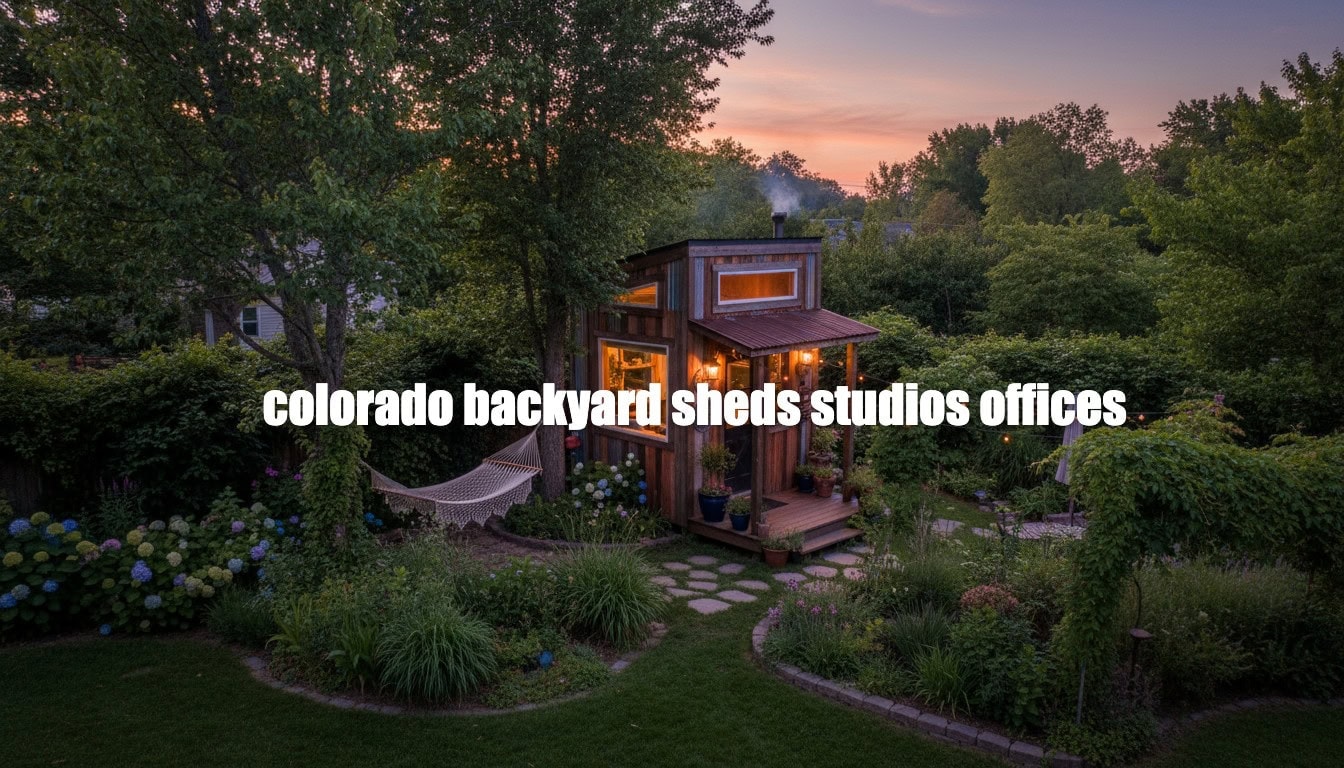
In the breathtaking landscapes of Colorado, where the Rocky Mountains meet vibrant urban centers, we’re seeing a surge in homeowners turning their backyards into multifunctional havens. Backyard sheds, studios, and offices have become essential extensions of living spaces, particularly with the rise of remote work that’s reshaped our daily routines. We appreciate how Colorado’s diverse climate—from sunny Front Range days to crisp alpine evenings—makes these structures not just practical but a year-round asset. They shield against variable weather while adding significant value to properties; studies from the National Association of Realtors indicate that outdoor living spaces can increase home values by up to 12% in mountainous states like ours.
Specifically in Colorado, demand for these backyard additions has skyrocketed, with a 35% increase in permits issued for accessory structures between 2020 and 2023, according to state building department reports. This trend reflects our collective desire for more space without the hassle of major renovations. In this ultimate guide, we’ll explore why Colorado homeowners are investing in these structures, the types available, design options, popular models, permits, costs, top providers, installation processes, functionality tips, maintenance advice, real-life transformations, and how to invest wisely in your backyard space.
As we delve into these topics, it’s worth noting the relevance of companies like Great Lakes Tiny Homes, which specialize in compact, efficient structures that align perfectly with Colorado’s emphasis on sustainable living and space optimization. Their focus on quality craftsmanship provides a credible foundation for anyone considering backyard enhancements that stand up to our unique environmental challenges.
Why Colorado Homeowners Are Investing in Backyard Structures
We’re witnessing a transformative shift among Colorado homeowners, who are increasingly investing in backyard sheds, studios, and offices to meet modern lifestyle demands. First, the pivot to remote work has created an urgent need for dedicated home office spaces; with over 40% of Coloradans working from home post-pandemic, per U.S. Census data, these structures offer quiet, inspiring environments away from household distractions.
Second, Colorado’s soaring housing costs—median home prices hit $550,000 in 2023, according to the Colorado Association of Realtors—make adding a backyard structure far more economical than relocating. Why spend on a new house when we can expand our current one for a fraction of the cost? Third, our state’s year-round mild climate, with more than 300 sunny days annually, renders outdoor structures practical and enjoyable throughout the seasons.
Additionally, well-designed backyard additions boost property values; a Zillow analysis shows that homes with accessory structures in Colorado sell for 8-10% more. The versatility of these spaces is another draw—they serve as home offices, creative studios, or guest accommodations, adapting to our evolving needs. Industry expert Sarah Thompson from the American Institute of Architects notes, “In Colorado, backyard structures are booming because they blend functionality with the outdoor lifestyle that defines our state.” Remote work trends further fuel this, with 25% growth in freelance professions here, per Upwork reports.
Types of Backyard Structures: Sheds, Studios & Offices Explained
When it comes to backyard structures in Colorado, we have a wide array to choose from, each tailored to specific purposes while accommodating our rugged terrain and weather patterns. Let’s break them down.
1. Storage Sheds: These are basic utility structures ideal for stashing tools, gardening equipment, and outdoor gear. Typical sizes range from 8×10 feet to 12×16 feet, with key features like durable metal or wood siding, sloped roofs for snow shedding, and secure locking doors. They’re perfect for Colorado homeowners dealing with seasonal sports equipment. In our markets, prices start at $2,000-$5,000, with popular features including shelving from local builders like Tuff Shed.
2. All-Purpose Sheds: More versatile than basic storage, these combine utility with added functions like workbenches or lofts. Sizes vary from 10×12 feet to 16×20 feet, featuring customizable interiors and ventilation for our dry climate. Ideal for hobbyists or as interim offices, they cost $4,000-$8,000 in Colorado, often with options like electrical prep from companies such as Heartland Sheds.
3. Studio Sheds: Designed for creativity, these spaces suit artists, musicians, and crafters. Ranging 10×12 to 14×16 feet, they include ample natural light via large windows, soundproofing, and built-in storage. In Colorado’s artistic communities like Denver, they’re popular for yoga or painting studios, priced at $6,000-$12,000, with features like skylights from Studio Shed prefab models.
4. Home Office Sheds: Tailored for productivity, these offer ergonomic setups with insulation, wiring for tech, and ergonomic lighting. Sizes from 8×12 to 12×16 feet make them compact yet efficient. Perfect for remote workers in Boulder or Fort Collins, costs run $7,000-$15,000, including desks and HVAC from local outfitters like Colorado Shed Company.
5. Luxury Studios: High-end options with premium finishes like hardwood floors and smart home integration. Typically 12×16 to 20×24 feet, they feature spa-like amenities or home theaters. Suited for upscale Colorado retreats, prices are $15,000-$30,000+, with earthquake-resistant framing from builders like Backyard Eichler.
6. ADUs (Accessory Dwelling Units): Larger living spaces for guests or rentals, 400-800 square feet, with full kitchens and baths. Key for multigenerational living in growing areas like Aurora, they cost $50,000-$100,000 in Colorado, compliant with state ADU laws and often built by specialists like Tiny House Builders in Colorado. For more on regulations, see what counties in Colorado allow tiny houses.
Design Options and Customization Features
Customizing backyard structures in Colorado allows us to blend form and function seamlessly with our natural surroundings. For exteriors, siding materials range from cedar for rustic appeal to fiber cement for low-maintenance durability against our high-altitude sun. Roof styles include gabled for snow load or flat for modern looks, while doors can be roll-up for storage or French for studios. Window configurations maximize views of the Rockies, with options like clerestory for light without heat gain.
Interiors offer flooring from laminate to cork for comfort, wall finishes like shiplap or drywall, built-in storage for efficiency, and LED lighting for energy savings. Architectural styles—modern with clean lines, mid-century for Boulder vibes, traditional ranch, or rustic log—impact aesthetics and cost; a modern design might add 20% to the price but enhances curb appeal.
Colorado-specific trends emphasize indoor-outdoor flow with sliding doors to patios, energy-efficient features like solar panels and insulation for our cold winters, and styles complementing adobe or Craftsman homes. Sustainable options are hugely popular here; we love eco-friendly choices like reclaimed wood siding, low-VOC paints, and rainwater harvesting systems that align with Colorado’s water conservation ethos. These not only reduce environmental impact but can qualify for state green building incentives.
Most Popular Backyard Structure Models in Colorado
To help us compare options, here’s a detailed table of popular models suited to Colorado’s climate, with features like wind-resistant framing and UV protection.
| Name | Manufacturer | Size Options | Price Range | Key Features | Best Use Case | Permits Required? |
|---|---|---|---|---|---|---|
| Studio Pod | Studio Shed | 8×10 to 14×16 ft | $8,000-$18,000 | Modular panels, insulation, large windows | Home office/studio | Yes, over 120 sq ft |
| Tuff Shed TR-800 | Tuff Shed | 10×12 to 16×20 ft | $4,500-$12,000 | Steel reinforcement, customizable doors | Storage/all-purpose | Yes, typically |
| Wellmade Signature | Wellmade Industries | 12×16 to 20×24 ft | $10,000-$25,000 | Energy-efficient, solar-ready | Luxury studio | Yes |
| Eichler Backyard | Backyard Eichler | 10×14 to 16×20 ft | $15,000-$30,000 | Mid-century design, earthquake bracing | Creative space | Yes |
| Heartland Belmont | Heartland Sheds | 8×12 to 12×16 ft | $3,500-$9,000 | Lofted storage, ventilation | All-purpose | No under 120 sq ft |
| Colorado Custom Shed | Local Builders | 10×10 to 14×18 ft | $6,000-$14,000 | Snow-load roof, local wood | Storage/office | Yes |
| Modern Pod Pro | Modern Shed | 12×16 to 18×24 ft | $12,000-$28,000 | Smart tech integration, flooring options | Office/ADU | Yes |
| Rustic Retreat | Outdoor Living Today | 10×12 to 16×20 ft | $7,000-$16,000 | Western red cedar, deck attachments | Studio/guest | Yes |
| EcoShed 200 | EcoShed | 8×10 to 12×14 ft | $5,500-$11,000 | Sustainable materials, passive solar | Versatile | No under 120 sq ft |
| Peak Performance | Peak Structures | 14×16 to 20×30 ft | $20,000-$40,000 | High-altitude engineering, HVAC | Luxury ADU | Yes |
Among these, the top models favored by Colorado homeowners include the Studio Pod for its prefab ease and insulation perfect for our winters; Tuff Shed TR-800 for affordable durability in windy areas like the Plains; Wellmade Signature for eco-conscious buyers in Boulder; and Eichler Backyard for mid-century fans in Denver suburbs. These stand out due to their adaptation to Colorado’s seismic and snow requirements, offering quick assembly and high resale value. For community options, explore the best tiny home communities in Colorado.
Colorado Permits and Regulations for Backyard Structures
Navigating permits in Colorado requires careful attention, as our state provides general guidelines but leaves much to local jurisdictions. Statewide, structures under 120 square feet often qualify for over-the-counter permits or exemptions if not attached to the main home, per the International Building Code adopted here. However, cities and counties vary—always check with your local building department.
Key aspects include setback requirements (typically 5-10 feet from property lines), height limits (under 15 feet for sheds), and utility connections needing licensed electricians for electrical or plumbers for any water lines. ADUs face stricter rules under HB21-1120, allowing them on single-family lots but requiring parking and size caps at 800 square feet. HOAs often impose additional aesthetic guidelines.
In major cities: Denver (permits over 200 sq ft mandatory, setbacks 3 feet), Colorado Springs (under 120 sq ft no permit, but zoning checks), Fort Collins (ADU approvals via planning board), and Aurora (height max 16 feet, utility inspections). Resources include the Colorado Department of Local Affairs website or city portals like denvergov.org/building. We strongly advise consulting locals before purchase to avoid fines up to $1,000.
Cost Analysis: What to Expect in Different Colorado Regions
Costs for backyard structures in Colorado fluctuate by region, influenced by labor rates, materials, and terrain. Base structure costs: economy (basic sheds) $2,000-$6,000 for 100-200 sq ft; mid-range $7,000-$15,000; premium $16,000+ with custom features.
Regional variations: Northern Colorado (e.g., Fort Collins) sees 10-15% higher prices due to demand ($8,000 average for 12×16), vs. Southern (Pueblo) at $6,500. Front Range vs. Western Slope: mild areas like Grand Junction add for wind resistance, mountains hike transport by 20%.
Site prep: $1,000-$5,000 for foundation/grading on rocky soil. Permits/inspections: $200-$800 in Denver metro, less in rural counties. Delivery/install: $500-$2,000, higher in remote areas. Interior finishing: $3,000-$10,000 for insulation/drywall/electrical. Add-ons like HVAC ($2,000-$5,000) or plumbing ($1,500+).
Long-term ROI: These can recoup 70-90% upon sale, per appraisals. Budget tips: Prioritize essentials, shop sales, get multiple quotes. Financing options include Colorado-specific home equity loans from local credit unions or state energy efficiency grants for green builds.
Top Colorado Backyard Structure Providers
We’ve compiled a list of leading providers serving Colorado, balancing national reach with local expertise.
- Tuff Shed: HQ in Colorado, serves statewide. Specialties: sheds/offices. Price: $3,000-$20,000. USP: On-site building, 10-year warranty. Ratings: 4.5/5. Installation included.
- Studio Shed: HQ Denver, CO. Service: All regions. Specialties: studios/ADUs. Price: $8,000-$40,000. USP: Prefab for quick setup, climate-adapted. Ratings: 4.7/5. 5-year warranty.
- Wellmade Industries: HQ California, serves CO. Specialties: Eco-sheds. Price: $10,000-$30,000. USP: Sustainable materials for high desert. Ratings: 4.6/5. Testimonials: “Transformed our backyard oasis,” – Denver resident.
- Backyard Eichler: HQ CA, CO presence. Specialties: Luxury studios. Price: $15,000-$35,000. USP: Mid-century designs with seismic features. Ratings: 4.4/5. 7-year warranty.
- Colorado Shed Company: HQ Littleton. Service: Front Range. Specialties: Custom offices. Price: $5,000-$18,000. USP: Local sourcing. Ratings: 4.8/5. Testimonial: “Professional from start to finish,” – Boulder homeowner.
- The Shed Shop: HQ Fort Collins. Service: Northern CO. Specialties: All-purpose. Price: $4,000-$12,000. USP: DIY kits. Ratings: 4.3/5.
Top testimonials: For Tuff Shed, “Durable against Colorado winds—highly recommend!” For Studio Shed, “Our office shed is a productivity dream.” These providers excel in wildfire-resistant materials and installation tailored to our elevation.
The Installation Process: What to Expect
Installing a backyard structure in Colorado involves several steps to ensure stability on our varied soils.
- Site Selection and Preparation: Choose level ground away from trees; clear and grade for drainage, considering slope in foothills.
- Foundation Options: Concrete piers for expansive clay soils in Denver, slabs for stable Western Slope; gravel for sheds under 120 sq ft.
- Delivery Methods: Pre-built via truck for urban areas, panelized for remote mountain sites to navigate narrow roads.
- Typical Timeline: 1-3 days for prefab, 1-2 weeks for custom.
- Utility Connections: Hire pros for electrical (GFCI outlets), plumbing if ADU, fiber internet trenching.
- Inspection Process: Local officials check setbacks, foundations post-install.
- Interior Finishing: Add insulation, paint; DIY for basics.
- Landscaping Integration: Blend with paths, native plants for erosion control.
DIY differs by requiring self-transport and basic tools, but pros handle complexities like earthquake anchoring in seismic zones or fire-resistant skirting in wildfire-prone areas like Colorado Springs. Pitfalls: Ignoring soil tests leading to settling. Seasonal tips: Avoid winter installs in snowy mountains; summer in deserts for dry conditions. Manage by scheduling inspections early and weather-proofing during setup.
Maximizing the Functionality of Your Backyard Structure
To get the most from our Colorado backyard structures, we focus on smart adaptations to our diverse climates.
1. Climate Control: In mild Durango, use cross-ventilation; deserts like Grand Junction need AC and reflective roofs; mountains require radiant heating. Recommend mini-splits from Mitsubishi.
2. Space-Saving Solutions: Murphy beds, wall-mounted desks; IKEA’s IVAR shelving for storage.
3. Multi-Purpose Designs: Foldable partitions for office-to-gym switches.
4. Technology Integration: Nest thermostats, Ring security for smart control.
5. Indoor-Outdoor Flow: Bi-fold doors to decks, enhancing views.
6. Soundproofing: Mass-loaded vinyl for studios, reducing echo in small spaces.
7. Lighting: Skylights with shades, LED strips to harness sunlight without summer glare.
Examples: A Denver family turned a shed into a hybrid office/playroom with modular furniture. Expert tip from designer Lisa Green: “Layer zones vertically to double utility in Colorado’s compact lots.”
Maintenance Tips for Colorado’s Climate Conditions
Our varied climates demand targeted maintenance to keep backyard structures thriving.
1. Western Slope near rivers: Combat moisture with annual vinyl siding washes; roof care via moss removal; ventilation fans; seal against pests like carpenter ants. Use eco-products like Method cleaners.
2. Desert Regions (e.g., near Grand Junction): UV-protectant sealants yearly; dust filters on vents; heat-reflective paints; rodent traps. Extend life with drought-resistant landscaping.
3. Mountain/Forest Areas (e.g., Aspen): Clear snow from roofs quarterly; wildfire prep with defensible space, fire-retardant treatments; ventilation for humidity; termite inspections biannually.
4. Urban Environments (e.g., Denver): Pollution rinse biannually; secure locks; graffiti-resistant coatings.
Long-term: Annual pro inspections, seasonal deep cleans. Maintain efficiency with weather-stripping in winter, shade sails in summer. Eco-products like Seventh Generation align with our standards.
Real-Life Examples: Colorado Backyard Transformations
We’ve gathered inspiring stories from across our state.
Example 1: Front Range Office (Denver): Homeowner goal: Remote workspace. Chose 12×16 home office shed from Studio Shed, customized with desk and windows. Challenges: Permit delays overcome by consultant. Results: Boosted productivity, added $20K value. Quote: “It’s our sanctuary—check zoning first!” Before: Cluttered yard; after: Sleek retreat.
Example 2: Southern CO Art Studio (Pueblo): Goal: Creative space. Selected 10×14 studio with skylights. Custom: Rustic siding. Challenges: Budget, solved by DIY interior. Results: Daily inspiration. Quote: “Worth every penny for my painting.” Before: Empty lot; after: Vibrant atelier.
Example 3: Central ADU (Greeley): Goal: Guest quarters. 600 sq ft ADU, kitchenette added. Challenges: Setbacks, navigated via redesign. Results: Family visits easier, rental income. Quote: “Transformed our lifestyle—hire pros for utilities.” Before: Underused space; after: Cozy unit.
Example 4: Mountain Retreat (Boulder): Goal: Yoga studio. 14×16 luxury model, soundproofed. Challenges: Soil instability, fixed with piers. Results: Wellness hub. Quote: “Blends with nature perfectly.” Before: Rocky patch; after: Serene pavilion.
Example 5: Urban Storage-to-Office (Colorado Springs): Goal: Versatile shed. 10×12 all-purpose, electrical upgrade. Challenges: HOA rules, approved with plans. Results: Home value up 10%. Quote: “Multi-use magic—plan ahead.” Before: Tool clutter; after: Organized office.
Frequently Asked Questions
Important Note: The information in this FAQ section provides general guidance on Colorado backyard sheds, studios, and offices based on common trends and data; answers may not cover unique local variations, so verify details with your specific municipality or a professional advisor.
What types of backyard structures are popular in Colorado?
Colorado homeowners favor a range of structures including storage sheds for tools and gear, all-purpose sheds with workbenches, studio sheds for creative pursuits like art or yoga, home office sheds equipped for remote work, luxury studios with premium features, and ADUs for guest living. These options, sized from 8×10 to 20×24 feet, are designed to handle the state’s diverse climate with features like sloped roofs for snow and ample ventilation.
Why are backyard structures a good investment for Colorado properties?
With remote work on the rise—over 40% of Coloradans working from home—and median home prices at $550,000, backyard structures offer affordable space expansion without major renovations. They boost property values by 8-12%, provide versatile use as offices or studios, and thrive in Colorado’s 300+ sunny days, making them practical year-round additions that align with the outdoor lifestyle.
How much do backyard sheds and studios cost in Colorado?
Costs vary by type and size: basic storage sheds start at $2,000-$5,000, all-purpose sheds at $4,000-$8,000, studio sheds at $6,000-$12,000, home office sheds at $7,000-$15,000, and luxury studios or ADUs from $15,000-$30,000+. Prices reflect features like insulation and electrical prep, with regional differences influenced by Colorado’s terrain and demand surge of 35% in permits since 2020.
Do I need permits for installing a backyard structure in Colorado?
Yes, most backyard structures require permits in Colorado, especially for sizes over 120 square feet or those with electrical/plumbing. Regulations vary by city and county, so check with local building departments; the 35% permit increase from 2020-2023 highlights growing oversight to ensure compliance with zoning and safety standards in areas like the Front Range or mountains.
Conclusion: Investing in Your Colorado Backyard Space
As we wrap up, investing in a Colorado backyard shed, studio, or office unlocks myriad benefits, from elevating property values by 8-12% to enhancing our quality of life through dedicated, flexible spaces. These structures thrive in our year-round usability, supported by progressive regulations like expanded ADU allowances that encourage innovative living.
Looking ahead, trends point to smarter, greener designs with solar integration and modular adaptability, meeting Coloradans’ needs for sustainability and remote lifestyles. We encourage you to evaluate your backyard’s potential—measure space, review local regs, and envision how a custom structure could redefine your daily routine and home’s appeal.
For those exploring options like ADUs or tiny home-inspired structures, Great Lakes Tiny Homes offers a trustworthy choice with their experience in delivering turnkey modular and park model homes across the lower 48 U.S. states. Their commitment to quality and sustainability makes them a practical resource for Colorado residents seeking reliable backyard solutions.