

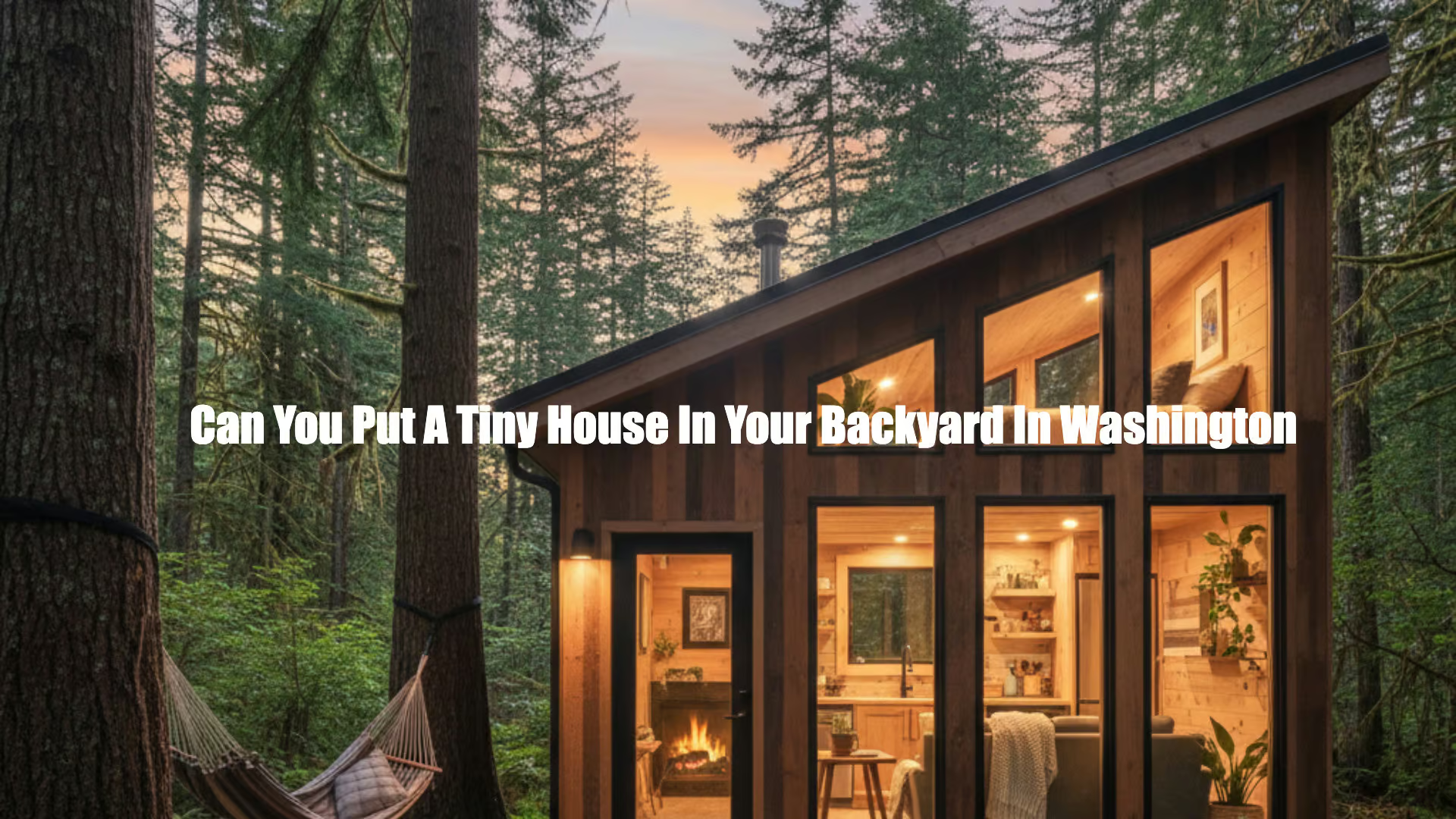
Washington allows tiny houses in backyards as accessory dwelling units (ADUs) in many counties, with sizes typically ranging from 150 to 1,000 square feet depending on local zoning. Permanent foundation tiny houses must comply with the Washington State Building Code, including Appendix Q of the IRC for structures under 400 square feet. Tiny houses on wheels are generally restricted to temporary use and classified as RVs, requiring placement in approved parks or lots with utility connections.
Are we considering adding a tiny house to our backyard in Washington? The idea of creating a compact, efficient living space right at home appeals to many of us seeking affordable housing solutions or additional guest quarters. With the rising interest in minimalism and sustainable living, understanding whether we can put a tiny house in our backyard in Washington becomes essential. This guide explores the legalities, practicalities, and steps involved, helping us navigate the process with confidence. Tiny houses represent more than just small dwellings; they embody a lifestyle choice that aligns with environmental consciousness and financial prudence, especially in a state like Washington where land values are high and urban sprawl challenges traditional housing models.
In Washington, where housing costs continue to climb, tiny houses offer a versatile option for our expanding needs. As experts in compact living solutions, we at Great Lakes Tiny Homes have seen how these structures fit into diverse lifestyles, from family expansions to rental opportunities. Our experience underscores the relevance of local regulations in making such projects viable, building credibility through code-compliant designs tailored to the Pacific Northwest’s unique climate and rules. We specialize in full-service manufacturing of modular, park model, and tiny homes, delivering turnkey builds to all 48 lower U.S. states, with options with or without wheels and with or without RVIA certification—our models with RVIA certification are often called Park Models. To get started on our journey, we invite you to book a call with our experts for personalized insights.
Disclaimer: This article is for informational purposes only and does not constitute legal advice. Laws, regulations, and zoning rules vary by location and may change over time. Always consult your local zoning office or a qualified land use/zoning attorney before making decisions based on this information.
Understanding Washington’s Legal Framework for Backyard Tiny Houses
We begin by examining Washington’s approach to regulating tiny houses, which sets the stage for more localized decisions. At the state level, Washington does not have comprehensive tiny house-specific laws but relies heavily on county and municipal authorities to enforce regulations. This decentralized system means our options vary significantly depending on where we live, but it also allows for flexibility as communities adapt to growing demand. For instance, the state’s emphasis on local control stems from its diverse geography, from urban Seattle to rural eastern counties, each facing unique housing pressures. The Washington State Building Code Council has adopted Appendix Q of the 2018 International Residential Code (IRC), effective July 1, 2021, which provides specific standards for tiny houses of 400 square feet or less, including requirements for ceiling heights, lofts, and emergency egress. This adoption, stemming from House Bill 5383 passed in 2019, defines tiny houses as dwellings for permanent housing with provisions for living, sleeping, eating, cooking, and sanitation, built to state building codes.
A key distinction lies between tiny houses on wheels (THOWs) and those on permanent foundations. THOWs, often classified as recreational vehicles (RVs), can be more mobile but face stricter limits on permanent residency, typically allowing only seasonal use to prevent them from becoming de facto homes without proper oversight. Permanent foundation tiny houses, on the other hand, are treated as fixed structures, subjecting them to full building codes. Washington’s State Building Code, based on the International Residential Code (IRC), applies to these permanent builds, requiring compliance with standards for safety and habitability. Appendix Q of the IRC, adopted in Washington, specifically addresses tiny houses under 400 square feet, easing some requirements for smaller dwellings like loft access and reduced ceiling heights, which makes it easier for us to design space-efficient interiors without compromising safety. For off-site built tiny houses, the Department of Labor & Industries (L&I) requires plan approval and inspections, including an insignia for compliance, ensuring structures meet standards before placement.
Some counties in Washington have gone further, enacting ordinances tailored to tiny houses. For instance, rural areas may permit them as accessory dwelling units (ADUs), providing a clear legal pathway for backyard placement. ADUs allow us to add secondary housing on our property, often for aging parents or income generation, as long as they meet zoning and size criteria. This pathway is particularly beneficial in a state grappling with an aging population and multigenerational living trends. Recent legislative developments, like House Bill 2731 in 2024, aim to standardize ADU approvals across the state, reducing barriers in urban areas by limiting fees and streamlining reviews. Cities such as Seattle and Olympia show growing acceptance, with pilot programs testing tiny house villages and relaxed codes, signaling a shift toward embracing alternative housing amid affordability challenges. These programs often involve community input sessions, where residents like us can voice support for tiny house integrations, fostering a collaborative regulatory environment. Best Tiny Home Communities in Washington often emerge from such initiatives, offering models for compliant backyard setups.
This evolving framework encourages us to research thoroughly, as state support for tiny living grows. By aligning with these guidelines, we can ensure our backyard tiny house enhances our property without legal hurdles. Understanding the historical context, Washington’s regulations have evolved from strict post-war zoning to more inclusive policies influenced by the tiny house movement’s rise in the 2010s, reflecting broader national trends toward sustainable development. For detailed state building code information, refer to the Washington State Department of Labor & Industries Tiny Houses page.
Disclaimer: This article is for informational purposes only and does not constitute legal advice. Laws, regulations, and zoning rules vary by location and may change over time. Always consult your local zoning office or a qualified land use/zoning attorney before making decisions based on this information.
Zoning Laws and Local Regulations: What You Need to Know
Zoning laws form the backbone of whether we can successfully place a tiny house in our Washington backyard. These regulations dictate land use, ensuring compatibility with surrounding areas. In Washington, residential zones like R1 (single-family) or R2 (two-family) commonly apply, but their allowances for accessory structures differ. For example, R1 zones might permit ADUs up to a certain size, while denser R2 areas could allow multiple units, accommodating higher population densities in growing suburbs. These classifications often include sub-variations, such as R1-6 for larger lots, which provide more leeway for backyard additions. Local governments adopt the International Building Code (IBC) with amendments, like Seattle’s SBC, which tailors rules to urban needs including seismic and flood protections.
Setback requirements—distances from property lines—typically mandate 5-10 feet from sides and rear, preserving privacy and access. Lot coverage ratios limit how much of our land we can build on, often capping at 35-50%, preventing overcrowding and maintaining green spaces essential for Washington’s environmental ethos. Height restrictions, usually 15-35 feet for accessory buildings, ensure our tiny house doesn’t overshadow neighbors, with additional considerations for sloped roofs common in rainy regions to handle snow loads. Development standards also cover parking, landscaping, and lighting, which can complicate small lots but encourage thoughtful designs like permeable surfaces for stormwater management. For zoning details, check resources like the Nolo guide on land-use laws for tiny houses in Washington.
Navigating these requires checking with our local planning department early. Permits are non-negotiable; skipping them risks fines or removal orders. Homeowners associations (HOAs) add another layer, as their rules can supersede zoning if stricter, banning tiny houses outright in some cases or requiring aesthetic matches to the main home. We recommend always consulting local authorities before any project, verifying current ordinances through official channels or tools like the What Counties in Washington Allow Tiny Houses resource. This proactive step safeguards our investment and aligns with community standards. In practice, we might start by attending a zoning board meeting to gauge attitudes, or using online GIS maps to visualize our property’s constraints, turning abstract rules into actionable insights. Covenants, Conditions, and Restrictions (CC&Rs) in subdivisions can impose even stricter standards, so reviewing these documents is crucial for HOA-governed properties.
Understanding these elements empowers us to proceed informed, turning potential obstacles into manageable steps. Real-world examples abound, such as families in suburban King County who successfully added tiny houses by layering zoning compliance with neighbor consultations, demonstrating how thorough preparation yields positive outcomes. For further reading on zoning controls, the Nolo article on local zoning regulations provides a solid overview of development codes in places like Vancouver and Spokane County.
Disclaimer: This article is for informational purposes only and does not constitute legal advice. Laws, regulations, and zoning rules vary by location and may change over time. Always consult your local zoning office or a qualified land use/zoning attorney before making decisions based on this information.
Washington Counties That Allow Backyard Tiny Houses
Washington’s counties exhibit diverse policies on tiny houses, with many permitting backyard placement under ADU or accessory structure rules. We focus here on those with favorable regulations, highlighting specifics to guide our decisions. Always confirm with county offices, as policies evolve. This variation reflects Washington’s blend of progressive urban policies and conservative rural approaches, influenced by factors like population density and infrastructure capacity. The table below summarizes key counties, drawing from official sources for accuracy.
| County | Min Sq Ft | Zoning Type | Key Requirements | Source | Verified |
|---|---|---|---|---|---|
| King County | 150 | R-1 (Single-Family) | Permanent foundation required; max 1,000 sq ft or 40% of primary home; owner-occupied lot; utilities connection mandatory | King County Department of Natural Resources and Parks – ADU Guidelines | Yes |
| Pierce County | 400 | Rural/Urban Residential | Foundation for permanent; THOWs temporary only; engineering report; setbacks 10 ft; septic approval | Pierce County Planning and Public Works – Accessory Dwelling Units | Yes |
| Snohomish County | 400 | Residential (R) | Appendix Q compliant; land use approval; foundation and utilities; environmental review | Snohomish County Tiny House FAQ | Yes |
| Spokane County | 200 | Agricultural/Residential | Foundation required; max 800 sq ft; urban growth area preferred; parking provisions | Spokane County Tiny Homes Guide | Yes |
| Thurston County | 400 | Rural Residential | Zoning district compliance; density requirements; ADUs in unincorporated areas; inspections via L&I | Thurston County Building Development Center | Yes |
| Clark County | 300 | Urban Residential | Attached/detached ADUs; max 900 sq ft; health department septic approval; height 18 ft | Clark County Public Works – ADUs | Yes |
These counties represent opportunities, but we link to broader insights like Best Tiny Home Communities in Washington for community options. For sales, explore Tiny House For Sale Seattle. Expanding on these, each county’s policies often stem from local housing needs, with urban counties prioritizing density solutions and rural ones focusing on agricultural compatibility. Rural counties like those in eastern Washington may offer more flexibility for off-grid setups, but all require compliance with state energy codes for insulation and ventilation to handle varying climates from wet west to dry east.
Disclaimer: This article is for informational purposes only and does not constitute legal advice. Laws, regulations, and zoning rules vary by location and may change over time. Always consult your local zoning office or a qualified land use/zoning attorney before making decisions based on this information.
Major Washington Cities and Their Tiny House Policies
Seattle
Seattle embraces ADUs via updated 2023 codes; permits cost $2,500-$4,000, application through SDCI portal (8-12 weeks). Recent pilot for tiny house ADUs speeds approvals by waiving certain fees for low-income projects. Advice: Attend community meetings to build official rapport; prepare detailed plans to navigate bureaucracy, including 3D renderings that visualize neighborhood fit. The city’s Middle Housing Bill (2023) further eases restrictions, allowing up to four units on single-family lots in select zones, promoting density without sprawl. For builder options, consider Tiny House Builder Seattle. Seattle’s focus on equity includes incentives for affordable ADUs, with programs like the ADU Accelerator providing technical assistance for low-income households.
Tacoma
Tacoma allows detached ADUs up to 800 sq ft; fees $1,800, process 6 weeks via planning department. Policy change in 2022 removed owner-occupancy for some, opening doors for investment properties. Tip: Engage early with inspectors; join local advocacy for smoother relations, such as participating in city workshops on sustainable building. Tacoma’s 2024 updates reduce setbacks to 4 feet in urban zones, facilitating backyard placements. Explore Tiny House For Sale Tacoma for available options. The city’s emphasis on infill development supports tiny houses as solutions to housing shortages, with streamlined reviews for pre-approved designs.
Spokane
Spokane permits tiny houses as ADUs; costs $1,200, 4-6 weeks. Pilot program for affordable units offers fee waivers and expedited timelines for qualifying builds. Strategy: Document neighborhood support letters to expedite reviews, emphasizing how tiny houses contribute to community resilience. Spokane’s urban growth boundary encourages ADUs in core areas, with height limits at 20 feet to preserve skyline views. Check Tiny House Builder Spokane for local expertise. Recent ordinances allow THOWs in designated zones for up to 90 days, bridging temporary and permanent needs.
Vancouver
Vancouver is supportive with max 1,000 sq ft ADUs; $2,000 fees, 5-7 weeks. 2024 updates ease setbacks to 4 feet in some zones, promoting backyard utilization. Advice: Use city workshops to connect with officials, fostering positive interactions through questions on code interpretations. Vancouver’s proximity to Portland influences progressive policies, including shared utility allowances for ADUs. For communities, see Best Tiny Home Communities in Washington. The city’s focus on family housing includes provisions for multigenerational ADUs with reduced parking requirements.
Olympia
Olympia permits ADUs up to 1,200 sq ft in residential zones; fees $1,500, process 4-6 weeks. As the state capital, it aligns closely with legislative changes like HB 2731 for standardized approvals. Tip: Leverage state resources for environmental reviews, especially for wetland-adjacent properties. Olympia’s sustainability goals favor energy-efficient tiny houses, offering rebates for solar integrations. Explore Tiny House For Sale Olympia. Pilot projects test tiny house clusters, providing models for scalable backyard solutions.
Disclaimer: This article is for informational purposes only and does not constitute legal advice. Laws, regulations, and zoning rules vary by location and may change over time. Always consult your local zoning office or a qualified land use/zoning attorney before making decisions based on this information.
Permanent Foundation vs. Tiny Houses on Wheels: Legal Differences
Weighing permanent foundation tiny houses against THOWs is crucial for our Washington project. Permanent ones, anchored to the ground, qualify as ADUs, demanding adherence to full building codes like Washington’s IRC. This includes insulation for wet winters, seismic reinforcements, and minimum 400 sq ft for habitability in many areas, offering long-term security but higher upfront costs. The foundation process involves concrete footings tested for load-bearing, ensuring stability against the state’s frequent earthquakes. Permanent structures must also meet local septic and water requirements, often necessitating percolation tests and engineered designs approved by health departments.
THOWs, trailer-mounted, are often RV-classified, allowing temporary use (under 180 days in some counties) without foundations. They bypass some codes but can’t serve as primary residences permanently, limiting utility hookups and financing. Pros of permanent: Equity building, full amenities; cons: Immobility, stricter permits. THOW pros: Mobility, lower initial permits; cons: Resale challenges, weather vulnerability, especially to Washington’s heavy rains that can cause trailer corrosion. For THOWs, L&I regulates off-site builds as Factory-Assembled Structures, requiring insignias for transport and placement.
Utility connections favor permanents for seamless integration, while THOWs may need RV parks. For legal security, permanents win in Washington, as they qualify for property tax assessments that recognize added value. Real-world analysis shows permanents appreciate faster in resale markets, while THOWs suit nomadic lifestyles but face insurance gaps for full-time use. Great Lakes Tiny Homes specializes in code-compliant permanent structures for Washington residents, ensuring durability. Ready to decide? Book a call with our experts who’ve guided many toward their tiny home visions. For more on THOW regulations, see the L&I Tiny Houses Program.
Disclaimer: This article is for informational purposes only and does not constitute legal advice. Laws, regulations, and zoning rules vary by location and may change over time. Always consult your local zoning office or a qualified land use/zoning attorney before making decisions based on this information.
Building Permits and Code Compliance Requirements
Securing permits is our roadmap to a compliant backyard tiny house in Washington. Step 1: Research zoning via county portals, gathering preliminary data on lot eligibility. Step 2: Submit application with site plans, elevations, and engineer stamps—documentation proving code adherence, often including energy modeling for Washington’s strict efficiency standards. Step 3: Pay fees ($1,000-$5,000) and await review (4-12 weeks), during which we might need to revise for compliance. Step 4: Schedule inspections for foundation, framing, electrical, plumbing, and final occupancy, with each stage documented for records. For off-site construction, L&I handles plan reviews and multiple inspections, costing around $1,500 if approved on first try.
Washington’s code mandates 2×6 framing for energy efficiency, GFCI outlets, PEX plumbing, and smoke detectors. Structural standards address earthquakes with shear walls; fire codes require 10-ft separations and non-combustible materials near wildland interfaces. Septic needs health approval if not on sewer, involving percolation tests and design certifications. Certified builders ensure compliance, protecting values and safety—non-permitted builds can void insurance and complicate sales. Best practices include phased inspections to catch issues early, saving time and money. Electrical work requires L&I permits by licensed contractors, with exceptions for owner-built on personal residences.
Utility ties demand licensed pros. Great Lakes Tiny Homes verifies all builds meet Washington standards and aids permitting, streamlining our process through pre-submission reviews that align with local nuances. For permit forms, visit the L&I Tiny House Plan Approval Form. Plumbing must be by licensed plumbers, and general contractors may be needed depending on scope, as per L&I guidelines.
Disclaimer: This article is for informational purposes only and does not constitute legal advice. Laws, regulations, and zoning rules vary by location and may change over time. Always consult your local zoning office or a qualified land use/zoning attorney before making decisions based on this information.
Utility Connections and Infrastructure Considerations
Connecting utilities transforms our tiny house into a livable space. For electricity, we can extend from the main panel (under 200 amps, $1,000-$3,000) or install a sub-meter ($2,500+), with trenching considerations for buried lines to avoid surface disruptions. Water options include tying to the home’s system ($500-$2,000) or new lines; sewer via municipal or septic ($5,000-$15,000 for install), where soil type dictates feasibility in clay-heavy areas. All connections must meet National Electrical Code and Uniform Plumbing Code standards, enforced by L&I or local authorities.
Internet and cable run via existing conduits ($200-$500), with fiber optics increasingly available for high-speed needs. Off-grid solar/wells are viable in rural counties but require variances, adding $10,000-$20,000 and environmental permits. Costs vary by site; planning ensures compliance and comfort, avoiding fines— for example, improper electrical can lead to overload risks in stormy weather. In Washington’s variable weather, insulated lines prevent issues, and backup generators add resilience. Comprehensive planning involves utility company consultations early, mapping out easements to prevent future conflicts. For rural placements, well and septic approvals from local health departments are essential, often involving hydrogeological assessments.
Great Lakes Tiny Homes integrates utility-ready designs, ensuring seamless hookups compliant with state codes. For more on infrastructure, the L&I Electrical Inspections page outlines permit processes. Backup systems like propane for heating are common in colder areas, with venting requirements to meet fire safety codes.
Disclaimer: This article is for informational purposes only and does not constitute legal advice. Laws, regulations, and zoning rules vary by location and may change over time. Always consult your local zoning office or a qualified land use/zoning attorney before making decisions based on this information.
HOA Restrictions and Neighborhood Considerations
Even if zoning permits, HOAs can block our tiny house. We review covenants for size/aesthetic bans, seeking board approval pre-build, often through formal applications with mockups. Strategies: Present plans highlighting value-adds like eco-features; address concerns via meetings, using data on how ADUs stabilize neighborhoods. HOAs may require matching exteriors or limit occupancy to family, reflecting community standards.
Architectural reviews need scaled drawings and material samples. As good neighbors, we screen views with fencing, minimize noise with soundproofing, and share benefits like reduced urban sprawl. Positive relations sustain community harmony, with examples of HOAs evolving rules after successful tiny house demos that prove minimal impact. In Washington, CC&Rs can prohibit THOWs entirely, favoring permanent structures to maintain property values.
Consult HOA documents early; if restrictive, explore non-HOA areas. For builder support in navigating these, Tiny House Builder Vancouver offers compliant designs. Successful cases often involve mediation, turning potential conflicts into endorsements through transparent communication.
Disclaimer: This article is for informational purposes only and does not constitute legal advice. Laws, regulations, and zoning rules vary by location and may change over time. Always consult your local zoning office or a qualified land use/zoning attorney before making decisions based on this information.
Tiny House Prices in Washington
State-Level Pricing Context
Tiny house prices in Washington vary significantly based on several key factors that influence overall costs and feasibility. Size plays a primary role, with structures under 400 square feet generally costing less due to reduced materials and labor, while larger ADUs approaching 1,000 square feet can escalate expenses. Foundation choices are critical: permanent foundations add $5,000-$15,000 for concrete and engineering, essential for compliance in most counties, whereas wheels enable mobility but limit permanent residency and may require RVIA certification for $2,000-$5,000 extra. Utility hookups further impact budgets, with electrical extensions at $1,000-$3,000, septic systems up to $15,000 in rural areas, and water lines varying by site accessibility. Local codes and zoning add layers, as urban areas like Seattle impose higher permit fees ($2,500+) compared to rural counties, where streamlined processes might save thousands but demand off-grid adaptations like solar panels costing $10,000-$20,000. These variables ensure that while base builds start at $50,000, total investments often reach $100,000-$200,000, reflecting Washington’s emphasis on durable, code-compliant construction suited to its seismic and climatic challenges.
Market trends in Washington also affect pricing, with demand in high-cost areas like King County driving up custom builds by 20-30% due to specialized features like earthquake-resistant framing. Prefabricated options from manufacturers can reduce costs by 15-25% through factory efficiency, but transportation to remote sites adds $1,000-$3,000 per load. Zoning impacts are profound: ADU-friendly counties lower long-term expenses via property value increases (10-20% appreciation), while restrictive areas necessitate legal consultations at $500-$2,000. Energy efficiency mandates, such as R-21 insulation for walls, add $3,000-$5,000 but qualify for state rebates up to $2,000, offsetting initial outlays. Ultimately, budgeting should account for these interconnected elements, with tools like cost calculators from L&I helping estimate permit-related fees based on square footage and location specifics.
Great Lakes Tiny Homes Pricing
At Great Lakes Tiny Homes, our pricing for Washington deliveries ranges from $100,000 to $150,000 for turnkey builds, encompassing design, manufacturing, and delivery across the lower 48 states. This range covers modular and park model options tailored to state codes, including Appendix Q compliance for structures under 400 square feet. Factors like customizations—such as enhanced insulation for Washington’s wet climate or seismic reinforcements—can adjust costs within this bracket, ensuring value through durable, ready-to-occupy homes. We prioritize transparency, providing detailed quotes that break down materials, labor, and compliance certifications without hidden fees. Delivery to urban hubs like Seattle adds minimal surcharges due to our efficient logistics, while rural placements may include site prep consultations at no extra cost. Our focus on full-service solutions means clients receive a complete package, from initial zoning guidance to final inspections, making the investment straightforward and reliable.
Great Lakes Tiny Homes Model Options
- Modular Homes: Factory-built sections assembled on-site, ideal for permanent foundations in ADU-zoned areas, offering scalability for Washington’s varying lot sizes.
- A-Frame: Steep-roofed designs suited to snowy regions, compliant with height restrictions and providing loft space for efficient use in compact backyards.
- Cabin: Rustic yet modern styles that blend with Washington’s natural aesthetics, perfect for rural counties emphasizing environmental harmony.
- Park Models: RVIA-certified options for semi-permanent setups, fitting temporary zoning allowances while allowing future foundation conversion.
- Tiny House on Wheels: Mobile units for flexible placement, best in RV-friendly zones but adaptable to permanent residency with proper permitting.
Choosing a model depends on local zoning: permanent options like modular homes suit strict ADU rules, while wheeled models offer versatility in transitional areas. We recommend aligning selections with county requirements to avoid retrofits, ensuring seamless integration.
Reinforced by zoning impacts, selecting the right model optimizes costs and compliance in Washington. If you’d like an expert second opinion on your specific situation, you can book a call with the Great Lakes Tiny Homes team.
Disclaimer: This article is for informational purposes only and does not constitute legal advice. Laws, regulations, and zoning rules vary by location and may change over time. Always consult your local zoning office or a qualified land use/zoning attorney before making decisions based on this information.
Practical Tips for Successfully Adding a Tiny House to Your Backyard
For Washington success, select sunny, level sites with drainage—avoid flood zones using FEMA maps. Partner with licensed contractors vetted for local experience; manage permits proactively with checklists. Timeline: 3-6 months planning, 2-4 build, factoring seasonal delays like winter rains. Engage neighbors early to preempt concerns, sharing plans that highlight shared benefits like increased property values.
Avoid mistakes like undersizing utilities or ignoring soil tests—always conduct geotechnical surveys. Lessons: Buffer for delays with contingency funds. Prep with grading ($1,000-$3,000), access paths, and erosion control. Choose designs with rain-resistant roofs, energy-efficient windows for our climate, incorporating passive solar for heating. Great Lakes Tiny Homes’ local knowledge sidesteps pitfalls, delivering smooth projects via detailed project management. For sales in key areas, view Tiny House For Sale Spokane.
Explore builders at Tiny House Builder Tacoma. Best practices include virtual walkthroughs for design tweaks, ensuring alignment with regulations. Post-construction, maintain records for resale, as compliant tiny houses enhance marketability in Washington’s competitive housing landscape.
Disclaimer: This article is for informational purposes only and does not constitute legal advice. Laws, regulations, and zoning rules vary by location and may change over time. Always consult your local zoning office or a qualified land use/zoning attorney before making decisions based on this information.
Future Outlook: Washington’s Evolving Tiny House Landscape
Washington’s tiny house scene advances with affordability driving change. Bills like SB 5161 propose statewide ADU standards, potentially capping review times at 60 days; pilots in Bellingham test clusters with shared amenities. Momentum grows via groups like Tiny House Northwest—join for updates, newsletters, and advocacy events. This legislative push addresses the state’s housing shortage, projected to need 55,000 new units annually, with tiny houses filling gaps in urban infill.
This means easier access for us, with projections of 20% more ADU approvals by 2026. Great Lakes Tiny Homes leads in Washington’s market, adapting to trends through innovative, compliant designs that anticipate regulatory shifts. Emerging trends include net-zero tiny houses, qualifying for green building incentives up to $5,000. For community insights, explore Best Tiny Home Communities in Washington. As policies liberalize, backyard tiny houses could become standard, supported by data showing 15-20% property value boosts.
Disclaimer: This article is for informational purposes only and does not constitute legal advice. Laws, regulations, and zoning rules vary by location and may change over time. Always consult your local zoning office or a qualified land use/zoning attorney before making decisions based on this information.
Tiny House FAQs in Washington
Is it legal to put a tiny house in my backyard in Washington?
Yes, tiny houses are legal in many Washington counties as accessory dwelling units (ADUs), provided they comply with local zoning laws and building codes. Regulations vary by jurisdiction, so it’s essential to check with your county or city planning department for specific allowances. Note: This is general information; always consult local authorities or a zoning professional for advice tailored to your property, as rules can change.
What is the difference between tiny houses on wheels and those on permanent foundations in Washington?
Tiny houses on wheels (THOWs) are typically classified as recreational vehicles (RVs) and restricted to temporary or seasonal use, often requiring placement in approved RV parks with utility hookups. In contrast, tiny houses on permanent foundations are treated as fixed structures, subject to the full Washington State Building Code, including Appendix Q of the IRC for units under 400 square feet. This distinction affects long-term residency options and compliance requirements.
What is the minimum size for a tiny house in Washington?
Washington does not mandate a strict minimum size, but tiny houses must meet habitability standards under the state building code, with Appendix Q applying to structures of 400 square feet or less. Local zoning often requires ADUs to be at least 150 square feet to ensure adequate living space for sleeping, cooking, and sanitation. For precise requirements, refer to your local zoning ordinances, as they may impose additional size thresholds.
Where can I place a tiny house on my property in Washington?
Tiny houses can generally be placed in backyards as ADUs on the same lot as the primary residence, subject to setback requirements and lot coverage limits defined by local zoning. Placement must avoid flood zones or environmentally sensitive areas, and in urban areas like Seattle, additional restrictions may apply to preserve neighborhood character. See the legal framework section for details on state and local variations.
What permits and utilities are required for a backyard tiny house in Washington?
Building permits are required for permanent tiny houses, involving plan reviews and inspections by the Department of Labor & Industries, along with compliance to the IRC. Utilities must connect to existing water, sewer, or septic systems, and electrical setups need approval to meet safety codes. Disclaimer: Requirements differ by location; verify with your local building department to ensure all necessary approvals are obtained before construction.
Conclusion: Our Path to Backyard Tiny House Success in Washington
Placing a tiny house in our Washington backyard is feasible with diligence on laws, zoning, and permits. We emphasize local checks, professional aid. Contact planning offices and consult Great Lakes Tiny Homes for guidance. With preparation, Washington’s opportunities flourish, rewarding our efforts with sustainable living.
As we explore this path, Great Lakes Tiny Homes stands as a reliable partner, offering turnkey modular and park model homes delivered across the lower 48 states. Our focus on code compliance and customizable designs makes us a practical choice for Washington residents pursuing tiny living. To discuss your project, book with our experts today. For available properties, check Tiny House For Sale Vancouver or connect with Tiny House Builder Olympia.