

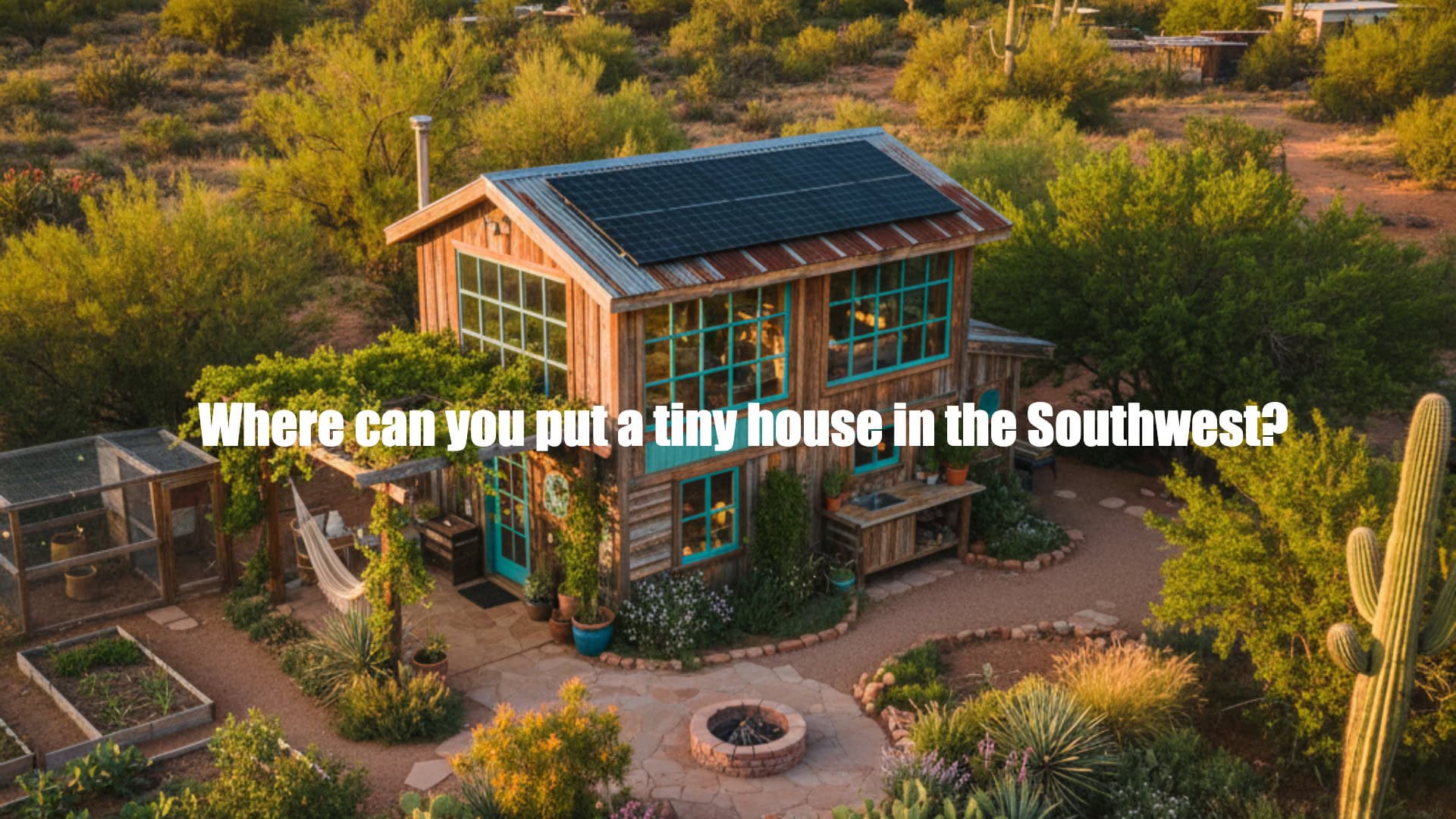
Where Can You Put a Tiny House in the Southwest? Your Complete Guide
The tiny house movement is experiencing unprecedented growth across the Southwest, with thousands seeking affordable, sustainable living solutions in Arizona, New Mexico, Nevada, Utah, Colorado, and Texas. If you’re wondering where you can legally put a tiny house in the Southwest, this comprehensive guide covers every legal placement option across these six states.
We’ll explore established tiny house communities, private land opportunities, RV parks, and zoning requirements while addressing common concerns about legality and building codes. This guide provides practical solutions for successful tiny house placement throughout the Southwest region.
At Great Lakes Tiny Homes, we understand the unique challenges of tiny house placement in the Southwest. As a full-service manufacturer of modular and park model tiny homes, we deliver turnkey builds to all 48 lower U.S. states. Whether you choose a home with wheels or without wheels, with or without RVIA certification, our expertise helps navigate the complex regulatory landscape across southwestern states.
Ready to turn your tiny house dreams into reality? Book a call with our experts who have helped hundreds of customers make their tiny home dreams a reality.
Legal Placement Options for Tiny Houses in the Southwest
Understanding your legal placement options is crucial for successful tiny house living in the Southwest. We’ve identified six primary pathways that offer legitimate, long-term solutions across Arizona, New Mexico, Nevada, Utah, Colorado, and Texas.
Tiny House Communities and Villages represent the most straightforward option. These purpose-built communities handle permitting, utilities, and compliance issues while offering amenities and social connections.
Private Land with Proper Zoning provides maximum flexibility for customization and privacy. Rural agricultural zones often allow tiny homes as accessory dwelling units or farm worker housing.
RV Parks That Accept Tiny Homes offer immediate placement solutions, especially for RVIA-certified tiny houses. Many southwestern RV parks welcome tiny homes for both short-term and extended stays.
Backyard ADUs on Family Property allow tiny house placement on existing residential lots as accessory dwelling units, requiring compliance with local ADU regulations.
Rural Agricultural Land often provides the most permissive environment, with agricultural zoning typically allowing various housing types including tiny homes for farm operations.
Temporary Camping Permits offer short-term solutions while securing permanent placement. Many counties allow temporary residence for 30-180 days with proper permits.
State-by-State Tiny House Regulations in the Southwest
Each southwestern state approaches tiny house regulations differently, creating a complex patchwork requiring careful navigation.
Arizona Tiny House Regulations
Arizona allows tiny houses under several scenarios, with regulations varying between counties. The state follows the International Residential Code (IRC) with local modifications. Tiny houses on foundations must meet minimum square footage requirements, typically 200-600 square feet. RVIA-certified tiny houses on wheels are often classified as RVs. For those seeking tiny houses for sale in Arizona, understanding these regulations is essential.
New Mexico Tiny House Laws
New Mexico takes a relatively permissive approach, particularly in rural areas. The state allows tiny houses on foundations meeting IRC requirements, with minimum sizes typically starting at 120 square feet for sleeping areas. Many counties allow tiny houses as accessory dwelling units. Those interested in what counties in New Mexico allow tiny houses will find varying local regulations.
Nevada Tiny House Regulations
Nevada’s approach varies dramatically between urban and rural areas. Las Vegas and Reno have strict building codes requiring standard residential compliance, while rural counties offer more flexibility. RVIA-certified tiny houses are permitted in RV parks and campgrounds.
Utah Tiny House Laws
Utah has embraced tiny houses more than many states, with several counties creating specific ordinances. The state allows tiny houses on foundations meeting IRC requirements and permits tiny houses on wheels in appropriate zones. Minimum square footage requirements vary from 300-600 square feet.
Colorado Tiny House Regulations
Colorado has some of the most progressive tiny house laws in the Southwest, with several municipalities creating specific ordinances. Building codes follow IRC standards with local modifications. Denver allows tiny houses as ADUs with minimum 400 square feet. For comprehensive information, explore best tiny home communities in Colorado.
Texas Tiny House Laws
Texas approaches tiny houses through local control, with regulations varying significantly between 254 counties. The state allows tiny houses under various zoning classifications. Building codes follow IRC standards with local modifications. Rural counties often allow tiny houses under agricultural exemptions.
Best Tiny House Communities in the Southwest
The Southwest hosts innovative tiny house communities offering turnkey solutions with established amenities and regulatory compliance.
Escalante Village – Durango, Colorado
Escalante Village welcomes tiny houses from 120-600 square feet, offering rental and purchase options. Lot rental costs range from $400-600 monthly, including utilities and community amenities. Residents enjoy access to Durango’s outdoor recreation opportunities.
Tiny House Block – Austin, Texas
Austin’s Tiny House Block offers urban tiny house living with city amenities access. Homes range from 250-400 square feet, with monthly costs varying from $800-1,200. The community emphasizes sustainability and community engagement.
WeeCasa Tiny House Resort – Lyons, Colorado
WeeCasa offers vacation rentals and long-term living opportunities in the Colorado foothills. Long-term residents enjoy hiking trails and community events, with monthly rates ranging from $1,000-1,500.
Placing Your Tiny House on Private Land
Private land placement offers maximum flexibility but requires careful attention to zoning laws, building codes, and utility requirements.
Zoning Verification is your first critical step. Contact local planning departments to verify land use compliance with zoning regulations. Agricultural zones often provide the most flexibility.
Utility Connections require significant investment. Water connections may involve drilling wells or connecting to municipal systems. Electrical service requires professional installation, with costs varying based on infrastructure distance.
Building Permits may be required depending on design and local regulations. Homes on permanent foundations typically require permits, while tiny houses on wheels may be exempt in some jurisdictions.
Understanding Zoning Laws and Permit Requirements
Navigating zoning laws requires understanding fundamental differences between zoning classifications and building code requirements.
Residential Zoning typically requires compliance with minimum square footage requirements and standard building codes. Single-family zones may allow tiny houses as primary residences if meeting size requirements.
Agricultural Zoning often provides the most flexibility, typically allowing farm worker housing and caretaker residences with reduced building code requirements.
Building Codes follow the International Residential Code in most southwestern jurisdictions. RVIA certification provides an alternative pathway for tiny houses on wheels.
RV Parks and Campgrounds That Accept Tiny Houses
RV parks across the Southwest increasingly welcome tiny houses, providing immediate placement solutions with established utilities.
Arizona RV Parks offer diverse options from desert resorts to mountain retreats. McDowell Mountain Regional Park accepts RVIA-certified tiny houses with monthly rates around $800-1,200.
Colorado RV Parks offer mountain living with four-season recreation access. Monthly rates range from $700-1,500, with significant seasonal variations in tourist areas.
Texas RV Parks provide diverse options from coastal areas to hill country retreats, with competitive monthly rates ranging from $400-1,000.
Costs and Financial Considerations for Tiny House Placement
Understanding complete cost structures helps make informed decisions and budget appropriately for Southwest tiny house placement.
Land Purchase and Rental Costs vary dramatically. Rural land may cost $1,000-5,000 per acre, while mountain property can exceed $50,000 per acre. Community lots typically rent for $300-800 monthly.
Utility Connection Costs represent significant upfront investments. Electrical service connections range from $2,000-15,000. Well drilling costs $3,000-15,000. Septic systems cost $3,000-10,000.
At Great Lakes Tiny Homes, we offer a variety of park models, cabins, and tiny homes on wheels designed for comfort and style. Prices start around $61,000 for smaller models like The Pinnacle Tiny House on Wheels, while larger park models like the A-Frame Luxe start at about $155,000. All homes can be customized with finishes and features to fit your lifestyle.
Ready to explore your options? Book a call with our experts who have helped hundreds of customers make their tiny home dreams a reality. View our completed projects at our portfolio page.
Utilities and Infrastructure Requirements
Establishing utilities requires careful planning and understanding of regional considerations affecting costs and requirements.
Water Connections vary between urban and rural placements. Municipal systems provide reliable service with connection fees ranging from $500-3,000. Rural areas often require private wells costing $3,000-15,000.
Electrical Hookups require professional installation. Urban areas typically cost $1,000-5,000, while rural areas may exceed $15,000. Solar power systems provide off-grid alternatives costing $10,000-25,000.
Internet and Communications are crucial for remote work. Urban areas have multiple options, while rural areas may rely on satellite internet like Starlink with monthly costs around $100-150.
Southwest Climate Considerations for Tiny House Living
The Southwest’s diverse climate zones present unique challenges requiring specific design considerations.
Extreme Heat Management is crucial in desert areas where summer temperatures exceed 110°F. Tiny houses need adequate electrical capacity for air conditioning and robust cooling systems.
Solar Power Benefits make the Southwest ideal for solar energy systems. High solar irradiance provides excellent potential for energy independence through properly sized solar systems.
Water Conservation is essential due to ongoing drought conditions. Low-flow fixtures, greywater recycling, and rainwater collection reduce water usage where legally permitted.
Common Challenges and How to Overcome Them
Placing tiny houses in the Southwest presents challenges requiring careful planning and creative solutions.
Navigating Complex Zoning Laws
Contact local planning departments early in planning. Request specific information about tiny house regulations and obtain written confirmation of regulatory interpretations. Consider hiring local professionals familiar with tiny house regulations.
Finding Suitable Land or Communities
Work with real estate agents familiar with alternative housing. Use online resources like Tiny House Listings and specialized forums. Visit potential locations to assess access, utilities, and neighborhood compatibility.
Meeting Building Code Requirements
Work with builders experienced in tiny house construction and local codes. Consider RVIA certification for tiny houses on wheels as an alternative pathway to building code compliance.
Frequently Asked Questions About Tiny House Placement in the Southwest
Can I live in a tiny house year-round in the Southwest?
Yes, you can live year-round in tiny houses that meet building codes and zoning requirements. Rural agricultural areas often provide the most flexibility for permanent living.
What’s the difference between tiny houses and RVs legally?
RVIA-certified tiny houses are classified as recreational vehicles and can be placed in RV parks. Non-certified tiny houses are subject to building codes like traditional homes.
How much does it cost to place a tiny house?
Community lots rent for $300-800 monthly, RV spaces cost $400-1,500 monthly. Private land setup including utilities can cost $10,000-50,000.
Your Next Steps to Tiny House Living in the Southwest
The Southwest offers incredible opportunities for tiny house living, from desert communities to mountain retreats. Your journey begins with research and planning, identifying preferred locations and lifestyle priorities.
Start by contacting local planning departments to understand specific regulations in target areas. Visit existing communities and talk to residents about their experiences. Budget for land costs, utility connections, and ongoing expenses.
Work with professionals who understand tiny house regulations and construction requirements. Their expertise saves time and prevents costly mistakes.
Ready to take the next step? Book a call with our experts who have helped hundreds of customers make their tiny home dreams a reality.
How Great Lakes Tiny Homes Supports Southwest Placement
Successfully placing a tiny house in the Southwest requires working with experienced professionals who understand the unique regulatory landscape and construction requirements across this diverse region.
At Great Lakes Tiny Homes, we bring extensive experience building quality tiny homes that meet the Southwest’s diverse regulatory requirements. Our understanding of building codes across Arizona, New Mexico, Nevada, Utah, Colorado, and Texas ensures your home complies with local standards while meeting your lifestyle needs.
We offer comprehensive customization options addressing Southwest-specific challenges like extreme heat, high altitude conditions, and varying utility requirements. Our homes can be designed with enhanced insulation, efficient cooling systems, and solar-ready electrical systems.
Whether you choose a home with wheels for flexibility or permanent foundation for stability, we provide expert guidance throughout the placement process. Our team understands RVIA certification, building code compliance, and zoning requirements affecting tiny house placement across the Southwest.
Ready to explore how Great Lakes Tiny Homes can support your Southwest placement goals? Book a call with our experts who have helped hundreds of customers make their tiny home dreams a reality.