
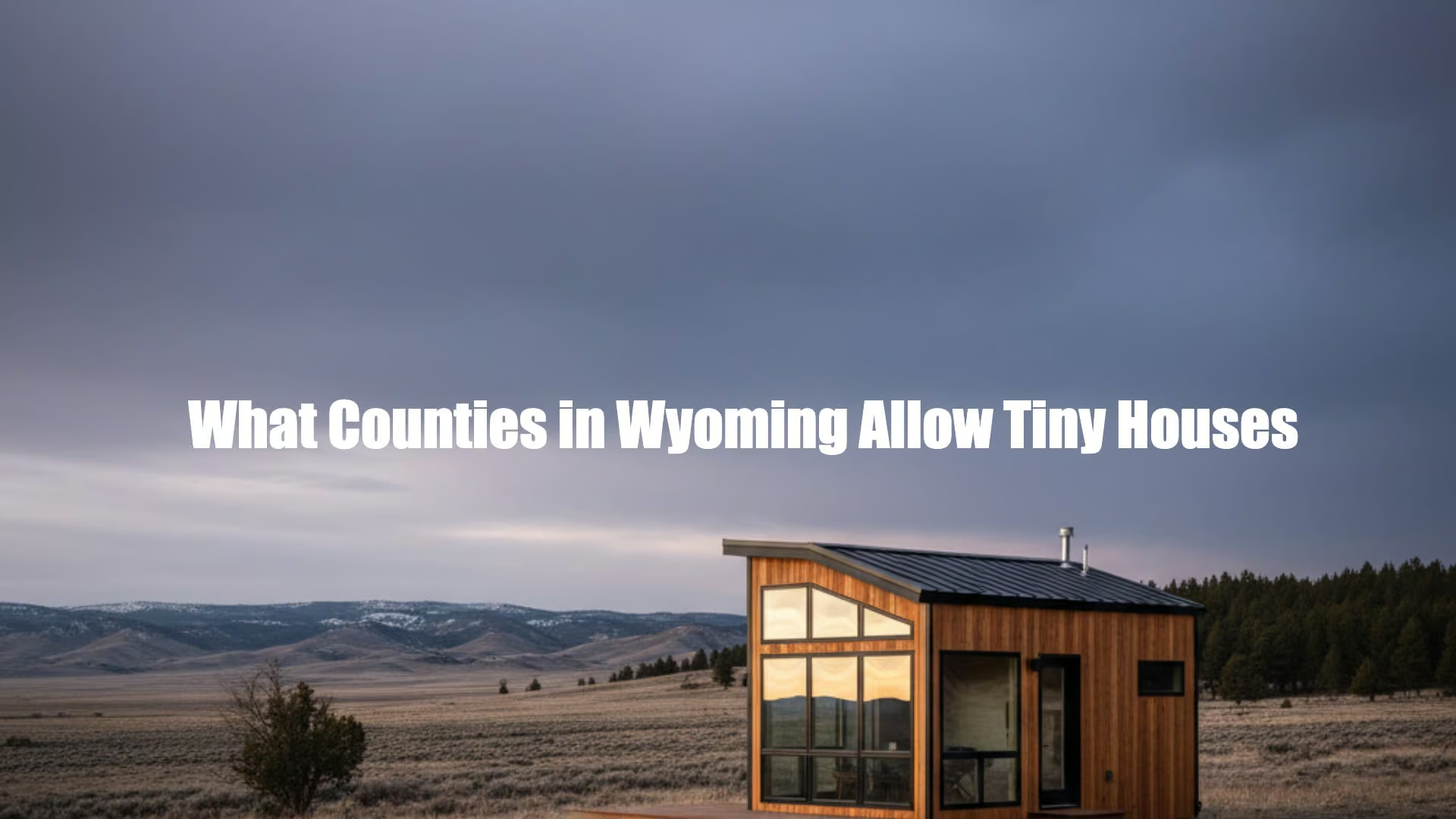
Wyoming maintains lenient regulations for tiny houses statewide, establishing it as a highly tiny house-friendly state. Local counties and cities develop and enforce their own building codes and zoning ordinances, leading to variations across jurisdictions. Most areas permit tiny homes on foundations or wheels, with Natrona County mandating a minimum of 220 square feet for foundation-based structures.
Tiny houses continue to gain traction as affordable, sustainable housing alternatives, yet understanding the regulatory landscape remains essential for successful implementation. In Wyoming, tiny house rules differ by county, necessitating thorough research into local zoning and building codes before proceeding. While many counties welcome tiny house living, others impose restrictions that could complicate placement and construction.
Wyoming’s regulatory framework emphasizes property rights and local decision-making, fostering opportunities for tiny house enthusiasts while requiring location-specific diligence. The absence of uniform statewide building codes empowers counties to tailor regulations to community needs, balancing innovation with safety standards. This approach supports diverse tiny house projects but demands careful verification of local requirements.
Great Lakes Tiny Homes specializes in modular, park model, and tiny home manufacturing, delivering complete solutions across the lower 48 states. We provide options with or without wheels and RVIA certification, where certified models qualify as park models. Navigating Wyoming’s regulations helps determine the optimal tiny home type for your site and objectives. Book a call with our experts to explore your Wyoming tiny house plans and confirm regulatory alignment.
Disclaimer: This article serves informational purposes only and does not provide legal advice. Regulations, zoning rules, and laws vary by location and evolve over time. Consult your local zoning office or a qualified land use attorney before acting on this information.
Wyoming Tiny House Laws and Regulations
Wyoming upholds flexible policies for tiny homes across its regions, positioning the state as welcoming to alternative housing. Counties and municipalities independently establish building codes and zoning rules, resulting in diverse requirements from one area to the next. Without a centralized statewide code targeting tiny houses, local authorities hold primary oversight, enabling tailored approaches to small-scale dwellings.
Most Wyoming communities recognize tiny houses’ role in promoting affordability and sustainability, often integrating them into broader housing strategies. The state’s rural ethos and focus on individual freedoms contribute to this supportive environment, though prospective owners must investigate jurisdiction-specific standards meticulously. This localized system offers flexibility but underscores the importance of due diligence in planning.
Wyoming differentiates between foundation-based tiny houses, governed by the International Residential Code (IRC) and local adaptations, and wheeled versions treated as recreational vehicles (RVs) or mobile homes. Certain counties incorporate Appendix Q of the IRC, offering dedicated provisions for tiny houses up to 400 square feet. As interest in tiny living grows, local governments increasingly refine codes to support safe, compliant development.
The evolving regulatory scene in Wyoming highlights the need for ongoing awareness of policy shifts. Communities facing housing pressures are updating ordinances to facilitate tiny houses while upholding quality and safety benchmarks. This dynamic landscape encourages tiny house advocates to engage with local officials for the latest guidance on permissible projects.
Wyoming Counties That Allow Tiny Houses
Nearly all of Wyoming’s 23 counties accommodate tiny houses to varying degrees, though specifics on size, placement, and construction differ widely. Identifying these county variations is vital for anyone eyeing a tiny house in the state, as permissions in one area may not extend to adjacent regions. The table below summarizes regulations for key Wyoming counties.
Disclaimer: County rules update regularly. Confirm current details with the relevant county planning and zoning office prior to any commitments.
| County/City | Min Sq Ft | Zoning Type | Key Requirements | Source | Verified |
| Natrona County | 220 sq ft | Efficiency Dwelling Units | Permit required, foundation-based, additional 100 sq ft per occupant | Natrona County Planning Department | 2026 |
| Park County | Varies by zone | RV/ADU classification | THOW as RVs, ADU exceptions available | Park County Planning and Zoning Department | 2026 |
| Laramie County | 400 sq ft | Single-family/RV parks | THOW in RV parks, foundations as single-family | Laramie County Land Use Regulations | 2026 |
| Teton County | 750 sq ft | Residential zones | Higher minimum due to resort area regulations | Teton County Land Development Regulations | 2026 |
| Albany County | No specific minimum | Varies by location | Generally permissive, case-by-case review | Albany County Planning Department | 2026 |
| Campbell County | 300 sq ft | Residential/Agricultural | Permits required, utility connections mandatory | Campbell County Planning and Zoning Division | 2026 |
Numerous rural Wyoming counties lack formal building codes, especially in low-density regions. These include Carbon, Converse, Crook, Fremont, Goshen, Hot Springs, Johnson, Lincoln, Niobrara, Platte, Sheridan, Sublette, Sweetwater, Uinta, Washakie, and Weston counties. In such areas, tiny houses primarily adhere to state health guidelines for septic and water systems, appealing to off-grid enthusiasts.
The lack of codes in rural counties does not imply unregulated construction. Owners must still follow state environmental laws, health standards for utilities, and any subdivision or HOA restrictions. Incorporated towns within these counties may enforce separate rules, so comprehensive checks are necessary for full compliance.
Major Wyoming Cities Tiny House Regulations
Wyoming’s principal cities have crafted distinct tiny house policies, often more detailed than county-level rules. These municipal guidelines are critical for projects within city boundaries, influencing placement, construction, and utilities. The sections below outline regulations in Wyoming’s key urban centers.
Cheyenne, Wyoming Tiny House Regulations
As Wyoming’s capital and largest city, Cheyenne aligns with Laramie County codes but adds zoning layers affecting tiny house locations. Foundation-based tiny houses qualify as single-family units in suitable residential zones, needing at least 400 square feet for primary living space. This ensures compatibility with neighborhood standards and infrastructure capacity.
Wheeled tiny houses in Cheyenne count as RVs, subject to parking limits outside designated parks—usually 30 days maximum without permits. Permanent installations demand municipal utility hookups for water, sewer, and power. For tiny houses for sale in Cheyenne, these rules guide feasible options and compliance needs.
All Cheyenne tiny house builds require permits, adhering to IRC standards for safety and durability. The planning department evaluates applications for zoning fit, setbacks, and aesthetic harmony. Reach the Cheyenne Planning and Development Department at (307) 637-6280 for project-specific advice and streamlined approvals.
Disclaimer: Municipal rules evolve, potentially including variances. Verify details with the Cheyenne Planning and Development Department before advancing your tiny house initiative.
Casper, Wyoming Tiny House Regulations
Casper, Wyoming’s second-largest city under Natrona County codes, adopts a progressive stance on tiny houses. It designates foundation tiny houses as efficiency dwelling units, starting at 220 square feet plus 100 square feet per extra occupant. This framework supports compact, efficient living while upholding essential safety measures.
Permits are mandatory for construction, ensuring IRC compliance in areas like egress, ceilings, and utilities. Wheeled units suit RV parks or temporary private sites with approvals. Casper’s accommodating policies attract tiny house seekers balancing urban access with flexible rules.
Permanent setups need water, sewer, and electrical connections, with inspections verifying code adherence. The building department collaborates with builders on small-scale adaptations. Call the Casper Building Division at (307) 235-8311 for permit details and fees. Local tiny house builders in Casper know these nuances well.
Jackson, Wyoming Tiny House Regulations
In Teton County’s Jackson, resort status drives stringent tiny house rules to preserve values and aesthetics. Residential zones demand 750 square feet minimum, limiting standard tiny houses. This protects community character amid high tourism pressures.
ADUs on existing properties allow smaller units, with designs matching primary homes and neighborhoods. Wheeled tiny houses restrict to RV parks for short stays, not permanent use. The Land Development Regulations detail ADU criteria, including size and utility mandates.
High-value Jackson projects often need professional designs for compliance. The planning department scrutinizes residential proposals thoroughly. Contact Jackson Planning at (307) 733-2842 for tiny house feasibility assessments.
Laramie, Wyoming Tiny House Regulations
Laramie’s university presence shapes tiny house rules, addressing affordability for students and professionals. Foundation tiny houses serve as single-family dwellings in residential zones, requiring 400 square feet minimum. This matches Albany County’s supportive housing stance.
The city views tiny houses as affordability aids, permitting wheeled units in RV areas or temporarily on private land. Planning collaborates on tiny-friendly zoning in targeted spots. Pre-application meetings clarify processes for owners.
Permits ensure IRC compliance for permanent builds, covering safety and utilities. Laramie’s Planning Division at (307) 721-5207 offers consultations and forms.
Gillette, Wyoming Tiny House Regulations
Gillette in Campbell County adopts practical tiny house policies suiting its workforce housing needs. Permanent dwellings need 300 square feet minimum, following standard codes for systems and safety. This reflects the area’s emphasis on accessible living.
Wheeled houses fit RV parks or short-term private placements with permits. The city responds to development requests in manufactured or mixed zones. Building permits and inspections maintain quality standards.
Utility links are required for permanents, with the department guiding code navigation. Gillette’s approach appeals to energy sector residents. Call (307) 686-5202 for requirements.
Tiny House Building Codes and Safety Requirements
Wyoming’s tiny house codes hinge on foundation versus mobility, impacting compliance and safety protocols. Distinguishing these is key for lawful, secure builds. Adopting areas use IRC bases, with some adding Appendix Q for tiny specifics.
Permanent Foundation Tiny House Requirements
Foundation tiny houses follow IRC for structure, electrical, plumbing, and fire safety. Foundations suit local soils and weather, with insulation against moisture. This durability supports long-term residency.
Licensed electricians install NEC-compliant systems with grounding. Plumbing meets state codes for venting and disposal. Fire features include egress, detectors, and possible suppressions.
Ceilings require 7 feet in living spaces, 6 feet 8 inches in baths/kitchens; lofts allow less but need safe access via stairs or ladders.
Tiny Houses on Wheels Requirements
THOWs regulate as RVs or mobiles, needing RVIA standards for travel integrity. Weight distribution and road features ensure safe transport. These handle movement stresses effectively.
Mobile electrical secures components with disconnects. Plumbing protects against freezes, propane follows safety norms. Weights stay under 26,000 pounds, with proper axles and brakes.
Engineers often certify THOWs for dual build/transport compliance.
Utility Connections and Off-Grid Systems
Utility rules vary by locale and type. Permanents connect to municipals where possible; rural areas permit alternatives like wells and septics. This accommodates Wyoming’s vast landscapes.
Off-grid solar/wind needs code safety for batteries and ventilation. Generators observe noise/emissions. Water options include municipals, wells, or rain collection; greywater recycling aids conservation.
Waste follows health rules via sewers, septics, or alternatives, supporting sustainable tiny living.
Tiny House Communities and Developments
Wyoming’s tiny house communities are emerging, tackling regulatory hurdles through pre-zoned sites and shared infrastructure. These address placement challenges for individuals, offering approved locations with amenities. They suit various lifestyles and budgets.
Driven by affordability and sustainability, communities feature shared spaces, utilities, and eco-practices like renewables and conservation. This fosters communal, low-impact living. Wyoming’s developments span RV-style to permanent planned setups.
Options include private/co-op models for diverse groups. Rules, fees, and amenities vary; evaluation is key. For tiny house communities in Wyoming, explore regional fits.
Regulatory progress supports these, with governments crafting frameworks for tiny developments.
Permits, Inspections, and Approval Process
Tiny house permitting in Wyoming differs by area and type, affecting timelines and costs. Knowing this ensures compliance without delays. Processes involve plans, issuance, inspections, and occupancy approval.
Applications need construction/site plans and system specs. Engineered drawings may apply for unique methods. Reviews last days to weeks based on complexity.
Inspections cover foundations, framing, rough-ins, insulation, and finals; scheduling and passes are required. Failures need fixes and re-checks.
Fees range $100-$1,000+, varying by value and location. Include review/inspection costs in budgets.
Disclaimer: Requirements and fees shift; confirm with local building departments pre-project.
Tiny House Prices in Wyoming
Wyoming tiny house costs fluctuate with size, type, certification, utilities, and codes. Budgeting accounts for these, as foundations raise site/prep expenses while wheels add mobility costs. Local rules influence engineering/material needs.
Stricter areas demand upgrades, hiking prices; rural spots allow economical builds, though access/utilities add costs. RVIA boosts wheeled values for financing/insurance.
Foundation homes qualify for mortgages if code-compliant; wheeled ones use RV/personal loans.
Great Lakes Tiny Homes Pricing
Great Lakes Tiny Homes delivers $100,000-$150,000 turnkey solutions to Wyoming. Services cover design, permitting aid, build, and delivery for quality compliance. This range uses premium materials and pro techniques.
Turnkey handles logistics, especially remote, readying homes for occupancy. It streamlines vs. separate contractors, ensuring uniformity.
Investment covers structure and Wyoming regulatory navigation expertise.
Great Lakes Tiny Homes Model Options
Great Lakes offers models fitting Wyoming zones and uses. Selection aligns with regulations and preferences.
- Modular Homes – Factory sections for IRC foundation sites
- A-Frame – Mountain/rec suitable architecture
- Cabin – Rural/natural blending designs
- Park Models – RVIA for parks/temporary
- Tiny House on Wheels – Mobile for THOW rules
Model choice ties to zoning; foundations for strict codes, wheels for flexible. A-Frame/Cabin enhance aesthetics. Team advises on fits. Book a call with our experts for Wyoming-suited options.
Financing and Insurance Considerations
Tiny house financing/insurance in Wyoming differs from standard homes, demanding tailored strategies. These aspects safeguard investments amid evolving lender options. Foundation homes access mortgages if compliant; wheeled ones use RV loans.
Mortgages suit code-meeting foundations; sub-minimums need alternatives. Wheeled: RV loans for certified, personal for others with varying rates.
Insurance: Homeowners for foundations (possible endorsements); RV/specialized for wheels combining coverage.
Environmental and Sustainability Considerations
Wyoming’s climate—winters, winds, UV—shapes tiny house designs for durability/efficiency. Materials, insulation, structure address extremes. Energy efficiency counters temps/costs via insulation/windows/HVAC.
Renewables like solar/wind cut impacts; batteries need safety. Water/waste: municipals or alternatives; greywater/recycling conserve in rural spots.
Resources enable geothermal/solar/local materials for savings/sustainability, aligning with Wyoming values.
How to Verify Tiny House Rules in Your County
Wyoming tiny rules demand verification due to county variances. This process uncovers zoning, sizes, details for informed planning.
- Research the County Zoning Code: Visit county site under planning/zoning; review ordinances for uses, types, restrictions. Search “residential zoning,” “alternative housing,” “small dwellings.”
- Check Minimum Dwelling Size Requirements: Find residential provisions; note IRC/Appendix Q references. Calculate for occupants, e.g., Natrona’s 220 sq ft base.
- Examine ADU Provisions: Review ADU rules for secondary units; check sizes, setbacks, occupancy.
- Determine Treatment of Tiny Houses on Wheels: Classify as RV/park/mobile; verify certification, permanence, standards.
- Contact the Local Planning Department: Call/email/visit for property/use specifics; get forms, inspector contacts.
This takes hours/days, enabling confident decisions. Re-verify yearly or pre-build.
Frequently Asked Questions
Are tiny houses legal in Wyoming?
Yes, tiny houses are legal in Wyoming, but regulations vary by county and city. Most counties allow tiny homes on foundations or wheels, with local building codes and zoning laws determining specific requirements. Wyoming’s decentralized approach makes it a tiny house-friendly state overall.
What counties in Wyoming allow tiny houses?
The majority of Wyoming’s 23 counties permit tiny houses, including Natrona, Park, Laramie, Teton, Albany, and Campbell counties. Rural counties like Carbon, Fremont, and Sheridan often have no building codes, making them particularly accommodating for tiny homes. Always check local zoning for your specific area.
What is the minimum square footage for tiny houses in Wyoming?
Minimum square footage requirements vary by county and city. For example, Natrona County requires at least 220 square feet for efficiency dwelling units, while Teton County mandates 750 square feet in residential zones. Some rural areas have no minimum, but structures must meet safety standards.
Can I build a tiny house on wheels in Wyoming?
Yes, tiny houses on wheels (THOWs) are allowed in Wyoming, often classified as RVs. They can be parked in designated RV parks or on private property with permits, but permanent residency rules vary by locality. RVIA certification is recommended for compliance and mobility.
Do I need a permit to build a tiny house in Wyoming?
Permits are typically required in counties with building codes, such as Natrona and Laramie. Rural counties without codes may only need health department approval for septic and water systems. Contact your local planning department to confirm requirements for your property.
Has Wyoming adopted Appendix Q for tiny houses?
Wyoming does not have a statewide adoption of Appendix Q from the International Residential Code, but some counties and cities incorporate it into local building codes. This appendix provides guidelines for tiny houses under 400 square feet as permanent dwellings. Check with your county for adoption status.
Can tiny houses be used as ADUs in Wyoming?
Yes, many Wyoming counties allow tiny houses as accessory dwelling units (ADUs) on properties with existing homes, subject to zoning approval. For instance, Park County permits ADUs with exceptions to standard minimums. Local regulations will dictate size, placement, and utility connections.
What are the building code requirements for tiny homes in Wyoming?
Tiny homes must comply with the International Residential Code (IRC) in adopting jurisdictions, covering structural integrity, electrical, plumbing, and fire safety. Key requirements include proper ceiling heights (minimum 7 feet in living areas), egress windows, and utility connections where available. Off-grid options are common in rural areas.
Conclusion
Wyoming’s tiny house framework prioritizes property rights and local control, cultivating a supportive setting for small dwellings with location-specific attention. The county-centric system demands targeted research but opens doors to fitting jurisdictions for diverse projects. This balance aids innovation while prioritizing safety.
Distinctions between foundation and mobile types offer varied benefits/challenges, aligning with regulations and lifestyles. Wyoming’s rural nature and light codes favor creative, budget-friendly endeavors. As alternative housing gains ground amid affordability issues, tiny-friendly policies and opportunities expand.
Keeping abreast of changes is key for success. Growing acceptance signals more supportive developments. For Wyoming tiny house navigation, book a call with our experts to align your project with requirements.