
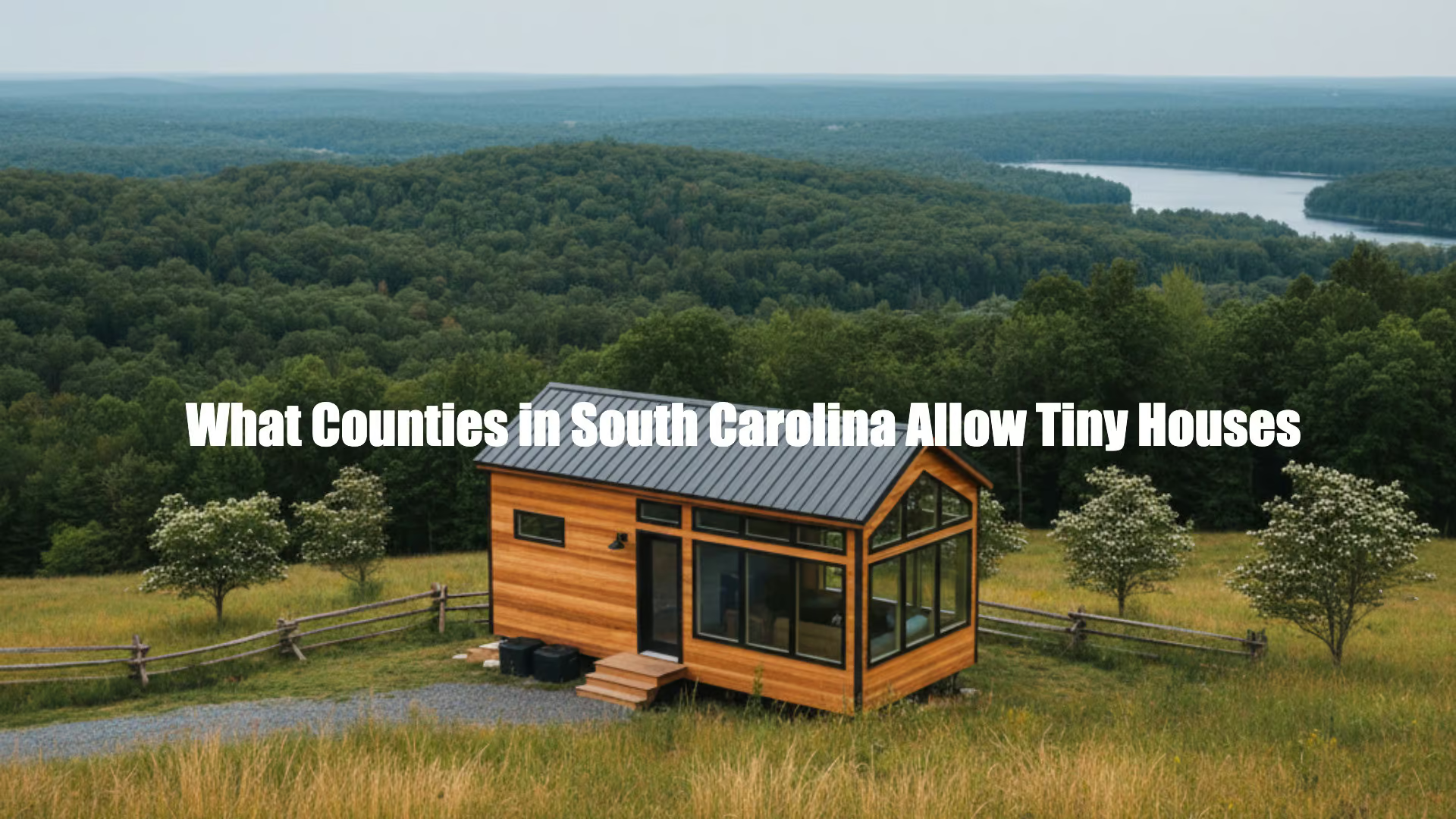
South Carolina permits tiny houses in various counties including Horry, Greenville, and Charleston, though regulations differ by location. Permanent tiny houses require compliance with International Residential Code standards and permanent foundations, whereas tiny houses on wheels are generally limited to RV parks or mobile home communities.
The tiny house movement has gained significant traction nationwide, and South Carolina stands out as a welcoming state for those pursuing a simpler, more sustainable lifestyle. With its mild climate, relatively affordable land, and increasing openness to innovative housing, the Palmetto State appeals to many tiny home advocates. Yet, the path to establishing a tiny house involves navigating a maze of local zoning laws, building codes, and permitting processes that can vary widely from one area to another.
Knowing which South Carolina counties support tiny houses and understanding their unique rules is vital for anyone eyeing this housing option. Requirements range from foundation mandates to guidelines for temporary setups, and each locality enforces its own standards to ensure safety and compatibility with community needs. This updated guide delves into the latest regulatory environment, details county-specific policies, and examines the financial and practical aspects of tiny house living in South Carolina.
Great Lakes Tiny Homes specializes in manufacturing modular, park model, and tiny homes, offering complete solutions delivered to all 48 contiguous U.S. states. Our lineup includes options with or without wheels and RVIA certification, where certified models are often classified as Park Models. Whether you need a fixed-foundation home or a mobile unit, our specialists can guide you through regulations and help select the ideal design. Book a call with our experts to review your circumstances and discover suitable options.
Disclaimer: This article provides general information only and is not legal advice. Zoning laws, building codes, and regulations differ by jurisdiction and evolve over time. Consult your local planning department or a qualified zoning attorney for personalized guidance before proceeding.
What Counties in South Carolina Allow Tiny Houses?
South Carolina’s tiny house policies differ markedly across counties and cities, as local governments set their own standards for safety, health, and orderly development, provided they align with state laws. These variations stem from local housing demands, available resources, and community values, making it essential for prospective owners to research thoroughly. As interest in compact, efficient living grows, more areas are adapting their rules to accommodate tiny homes while safeguarding neighborhood integrity.
The rising popularity of tiny houses in select counties arises from escalating housing prices, heightened environmental awareness, and the appeal of cost-effective alternatives. Progressive counties view tiny homes as a remedy for affordability issues and a promoter of eco-friendly growth, whereas conservative ones impose stricter limits. This dynamic regulatory scene is shifting, with ongoing discussions reflecting broader societal shifts toward sustainable housing.
Numerous South Carolina counties have outlined explicit rules for tiny house building and siting, attracting enthusiasts to these areas. These jurisdictions prioritize safety alongside flexibility, crafting policies that support innovative living without compromising standards. Still, even permissive counties may see added municipal layers of oversight, so diligence in verification remains key.
| County/City | Min Sq Ft | Zoning Type | Key Requirements | Source | Verified |
| Horry County | No more than 750 sq ft | Multi-Residential Districts (MRDs) | Maximum 25 feet height, single-family homes | Horry County Government | Yes |
| Greenville County | Varies by zoning | Traditional residential zoning | Permanent foundation, proper permits required | Greenville County | Yes |
| Charleston (ADUs) | Maximum 850 sq ft | All base zoning districts | Owner occupancy, one ADU per lot | City of Charleston | Yes |
Disclaimer: Local regulations update regularly. Confirm the latest details with county or city planning offices prior to any tiny house initiative.
Horry County
Horry County leads South Carolina in progressive tiny house policies, classifying them as valid single-family dwellings in designated zones up to 750 square feet and 25 feet tall. Permitted in multi-residential districts (MRDs), these homes appeal to those desiring coastal vibes with straightforward compliance. This policy fosters tiny house adoption by aligning with broader housing goals without excessive barriers.
Tiny houses here must adhere to standard residential codes, encompassing robust electrical, plumbing, HVAC, fire safety, and structural elements. Permits are mandatory pre-construction, with inspections at key stages to verify quality. Connections to approved utilities are required, though exceptions for alternatives exist in select cases, promoting both safety and adaptability.
Horry’s framework benefits communities by enhancing housing diversity while upholding values and infrastructure limits. It addresses density concerns thoughtfully, creating a model for balanced growth. For buyers eyeing tiny houses for sale in Myrtle Beach areas, this clarity simplifies legal residency.
Greenville County
Greenville County regulates tiny houses akin to standard residences, mandating permanent foundations and zone-specific size minima to blend with surroundings. This ensures seamless integration into neighborhoods, respecting established aesthetics and development norms. The approach prioritizes enduring community contributions over transient setups.
Permits involve thorough reviews, from plans to final occupancy, aligning with South Carolina’s adopted International Residential Code. Inspections cover foundations, framing, utilities, and more, alongside setbacks, parking, and service standards. This rigorous process guarantees reliability and compliance.
Emphasizing permanence safeguards values and durability, treating tiny homes as lasting assets. For planners using tiny house builders in Greenville, grasping these rules aids budgeting and execution.
Major Cities Tiny House Regulations
Major South Carolina cities tailor tiny house rules atop county bases, tackling urban issues like density and infrastructure. Often stricter than rural policies, these reflect nuanced planning needs. Grasping city codes is crucial for urban tiny home projects.
Charleston
Charleston supports tiny houses via Accessory Dwelling Unit (ADU) rules across all zones, aiding affordability while honoring historic scales. This ordinance frames development to harmonize housing gains with community preservation. It limits units to promote compatibility.
ADUs cap at 850 square feet, featuring full living amenities, with owner occupancy required for primary or ADU to prioritize locals over rentals. One ADU per lot keeps totals at two units max, curbing overdevelopment. Utilities, parking, and designs must match neighborhood norms.
Connections to municipal services and code adherence ensure viability. For tiny houses for sale in Charleston, ADUs offer prime urban access.
Columbia
Columbia regulates tiny houses cautiously, stressing safety, permits, and utilities to bolster neighborhoods. As capital, it upholds high construction benchmarks via code compliance. This fosters reliable tiny home integration.
International Residential Code adherence demands permits, reviews, and inspections spanning 4-6 weeks across departments. Utility ties are standard, with alternatives for remote spots. Zoning permits in residential areas with setbacks and limits.
Clear rules aid planning; for tiny house builders in Columbia, predictability streamlines efforts.
Tiny House Regulations And Rules In South Carolina
South Carolina incorporates International Code Council tiny house standards statewide, standardizing safety while permitting local tweaks. This balances uniformity with autonomy in zoning. Distinctions between mobile and fixed types dictate pathways, each with tailored codes.
Categories include permanent, temporary, and transitional, each with unique construction, siting, and use rules. Selection influences codes, zoning, and permits profoundly. Awareness guides compliant projects.
Disclaimer: Codes evolve; engage local officials and experts pre-construction.
Permanent Structure Rules
Permanent tiny homes follow ICC guidelines on foundations, mirroring traditional homes in codes and zoning. This classification demands full safety compliance for lasting residency. Foundations enable stable utilities, signaling community commitment.
Charleston’s ADUs exemplify, requiring complete facilities within 850 square feet per South Carolina’s Residential Code. Systems cover structure to mechanics, ensuring habitability. Limits prevent excess while suiting needs.
One ADU per lot, owner occupancy, and no short-term rentals focus on locals. This sustains stability, using tiny homes for affordability.
Temporary Structure Rules
Temporary tiny homes align with RV rules, wheeled for mobility but bound by safety and zoning. Challenges include suitable parking in parks with infrastructure. Facilities must support residency compliantly.
Electrical setups use 30-50 amp feeds with secure caps for safe, disconnectable power. This accommodates transience without risks. Inspections verify integrity.
Plumbing and mechanics are temporary, with axles intact for mobility. This preserves flexibility alongside standards.
Transitional Structure Rules
Transitional tiny homes bridge categories, aiding homelessness via shelters around 192 square feet. Projects like Greer’s Daily Bread faced zoning hurdles but highlight social value. Councils may override for community benefit.
Indefinite use follows guidelines for transitional aims. Compact sizes control costs and land use. Success relies on support, funding, and adaptive compliance.
In South Carolina, Where Can I Build A Tiny House?
Location selection shapes experience and rules, from codes to utilities. Experts ease navigation. Systematic planning clarifies options.
Settings vary: communities offer amenities, private land flexibility. Matching to goals is key. Proper pros ensure success.
Tiny home communities in South Carolina suit many:
- RV Parks: Utilities for temporary stays under RV rules
- National Parks and Campgrounds: Scenic but short-term
- Tiny Home Communities: Tailored with shared features
- Private Properties: Custom, zone-dependent
South Carolina Tiny House Communities
South Carolina’s climate and hospitality nurture tiny communities with amenities and bonds. They mitigate space limits via shared resources. Popularity signals acceptance.
Amenities include gardens, recreation, and workspaces, cutting costs. This model enhances sustainability.
Creek Walk
Creek Walk delivers affordability at $450 monthly covering utilities, taxes, WiFi, starting homes at $80,000. This all-in fee simplifies ownership. It targets budget-conscious buyers.
Gardens, BBQs, fishing, trails, and campfires build community. Swamp Rabbit Trail access blends nature and activity. Design prioritizes balance.
Proximity to trails and pits fosters engagement. Thoughtful layout succeeds in tiny living.
West Oaks
West Oaks in Columbia offers urban access near amenities for pros. One- and two-bedroom options suit diverse needs. Central spot aids work-life.
Play areas and dog parks cater to families and pets. Culture and outdoors enrich life. Variety dynamics community.
Features acknowledge family needs in compact settings. Columbia’s vibrancy complements.
Lake Walk Community
Lake Walk in Greer merges mountains and jobs like BMW. Trails, docks, greens leverage nature. Economy supports careers.
Cultural and historical access enhances. Mountains offer recreation. Blend rounds experience.
Proximity to arts and parks enriches. Ideal for balanced living.
Tiny House Prices in South Carolina
Pricing hinges on size, type, certification, utilities, codes. Larger or fixed homes cost more via materials and prep. Wheels offer mobility trade-offs.
RVIA boosts options but raises costs. Hookups vary by site; rural adds expense. Codes may require extras.
Great Lakes Tiny Homes Pricing
Great Lakes prices $100,000-$150,000 for turnkey builds with delivery. Quality materials and controls justify value. Full service eases logistics.
Transport, setup, guidance included. Team ensures code fit. Transparency aids planning.
Warranties and support sustain investment.
Great Lakes Tiny Homes Model Options
Diverse models fit needs and rules: Modular Homes for foundations, A-Frame for vacations, Cabin for rural, Park Models for RVs, Tiny House on Wheels for mobility.
Choices align with zoning and use. Modular suits neighborhoods; wheels parks. Flexibility key.
Team advises on fits.
Zoning Considerations and Guidance
Zoning shapes models; experts recommend compliant ones. State trends inform navigation. Insights prevent issues.
Evolving landscape needs pros. Book a call with our experts for tailored plans.
Tiny House Builders Near Me
Great Lakes Tiny Homes delivers nationwide, understanding SC nuances. RVIA accreditation ensures standards. Experience guarantees outcomes.
Certification aids finance, insurance. Full support from consult to setup. Pros simplify.
Do I Need a Certified Builder?
Yes, certification like RVIA ensures compliance, quality. It verifies materials, techniques. Benefits include easier approvals.
Lenders favor certified; simplifies permits. Audits maintain excellence. Investment yields safety, durability.
Great Lakes provides certified assurance.
Frequently Asked Questions
Can You Make a Tiny House in South Carolina Your Main Residence?
Yes, South Carolina allows full-time tiny house residency as primary homes. Local variations necessitate location-specific research. Consult authorities for inspections, compliance. Licensed builders facilitate eco-friendly living.
Does My South Carolina Tiny Home Require Me to Pay Property Taxes?
Taxes depend on foundation, site, policies. Variations exist locally; understand area rules. Wheels may count as personal property; foundations trigger real estate taxes. Laws clarify applications.
What Is the South Carolina Minimum Square Footage Required for a House?
No statewide tiny home minimum exists, offering flexibility. Mobile units range 60-400 sq ft; foundations up to 1000, often 500 standard. County ordinances dictate; tailor to needs.
Conclusion
South Carolina supports tiny living in counties like Horry, Greenville via ICC standards and categories. Evolution aids affordability, sustainability.
From Horry’s progress to Charleston’s ADUs, acceptance grows. Careful rule adherence key.
Certified pros navigate complexities. Great Lakes aids from plan to setup. Book a call with our experts for compliant dreams.