
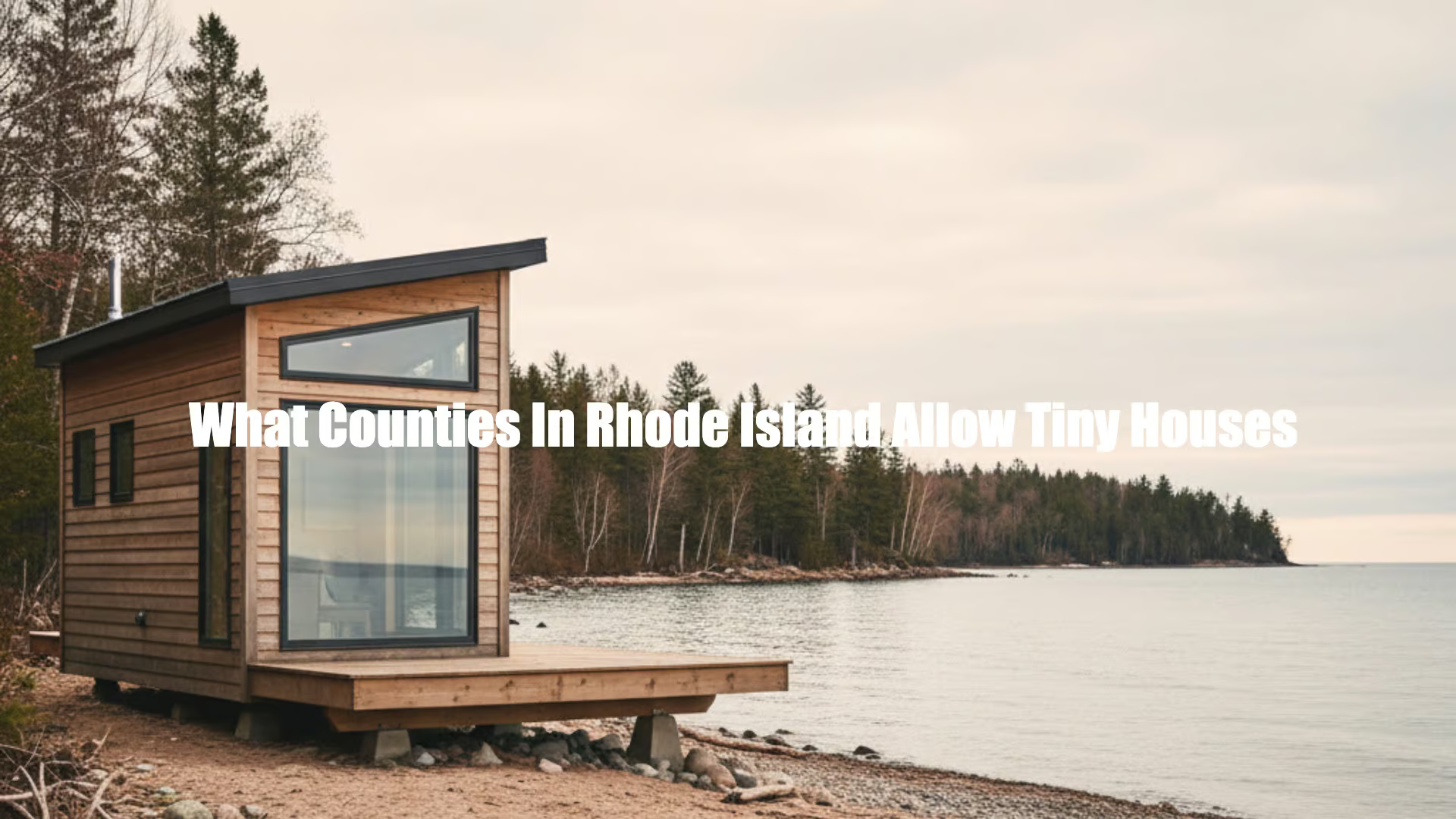
Rhode Island allows tiny houses primarily as Accessory Dwelling Units (ADUs) in all five counties, with maximum sizes of 900 square feet for one-bedroom units and 1,200 square feet for two-bedroom units, or 60% of the principal dwelling’s floor area, whichever is less. Tiny houses on wheels are often classified as RVs and restricted for permanent residency, requiring registration and placement in approved zones like RV parks. Compliance with the International Residential Code (IRC) Appendix Q is mandatory for permanent structures, and local zoning dictates foundations, setbacks, and utility connections.
Are you dreaming of simplifying your life and downsizing to a tiny house in the beautiful state of Rhode Island? Before you start planning your minimalist dream home, it’s essential to understand the rules and regulations surrounding tiny houses in the different counties of the state. From zoning laws to building codes, various factors must be considered when seeking to settle down in a tiny house. With the right knowledge and preparation, you can navigate the process smoothly and avoid potential pitfalls.
Rhode Island has embraced tiny homes as a viable option for affordable and sustainable housing, particularly through the framework of Accessory Dwelling Units (ADUs). This article explores which counties in Rhode Island allow tiny houses, the specific regulations you need to follow, and practical advice for building or placing your tiny home. Whether you’re interested in permanent foundations or mobile options, local ordinances play a crucial role in determining feasibility.
At Great Lakes Tiny Homes, we are a full-service manufacturer specializing in modular, park model, and tiny homes that deliver turnkey builds to all 48 lower U.S. states. Our options come with or without wheels and include RVIA certification where needed—our models with RVIA certification are often referred to as Park Models. We ensure compliance with local codes to make your tiny house journey seamless. If you’d like personalized guidance, book a call with our experts.
Disclaimer: This article is for informational purposes only and does not constitute legal advice. Laws, regulations, and zoning rules vary by location and may change over time. Always consult your local zoning office or a qualified land use/zoning attorney before making decisions based on this information
What Counties in Rhode Island Allow Tiny Houses?
Rhode Island is addressing the growing interest in tiny homes as sustainable and affordable housing alternatives. The state has five counties—Providence, Kent, Washington, Bristol, and Newport—each with its own municipalities enforcing zoning laws. While there is no statewide prohibition on tiny homes, they are typically permitted as ADUs under recent legislation that mandates their inclusion in affordable housing counts. This approach helps combat housing shortages by allowing secondary units on single-family lots. Potential tiny home owners must review local ordinances, as variations exist in foundation requirements, size limits, and placement rules. For instance, coastal areas may impose additional environmental protections due to flood zones and wind standards.
Recent updates to Rhode Island’s zoning laws, including bills passed in 2024 and 2025, have streamlined ADU approvals to promote housing density without overburdening infrastructure. These changes require municipalities to allow ADUs by right in residential zones, subject to basic standards like owner occupancy in the primary dwelling. Tiny homes on foundations must adhere to the state’s adoption of the 2018 IRC, including Appendix Q for tiny houses under 400 square feet. Mobile tiny homes face stricter scrutiny, often limited to temporary use or RV-compliant parks. Consulting the Rhode Island Zoning Atlas provides a visual overview of district-specific allowances across counties. Always verify with local planning departments, as enforcement can differ between towns within the same county.
To help clarify options, the following table summarizes key regulations by county. Note that these are general guidelines; town-level rules may apply additional restrictions.
| County | Min Sq Ft | Zoning Type | Key Requirements | Source | Verified |
| Providence County | 120 sq ft (habitable) | ADU in residential zones | Max 1,200 sq ft; owner-occupied primary dwelling; IRC Appendix Q; setbacks per local code | RIHousing ADU Guide | Yes |
| Kent County | 120 sq ft (habitable) | ADU by right | Foundation required for permanent; max 900-1,200 sq ft; utility connections; no short-term rentals in some towns | HousingWorks RI ADU Overview | Yes |
| Washington County | 120 sq ft (habitable) | ADU in single-family zones | 127 mph wind rating; environmental impact assessment; max size per state law; flood zone considerations | Narragansett ADU Mandates (example town) | Yes |
| Bristol County | No min specified | Permanent foundation required | No mobile homes; land planner for adjacent properties; building permit; zoning setbacks | RI Building Code Commission | Yes |
| Newport County | 120 sq ft (habitable) | ADU for family or rental | Owner occupancy; max 1,200 sq ft; no short-term rentals under 30 days in residential zones; coastal regulations | Newport Zoning | Yes |
Disclaimer: Regulations can vary by municipality within counties. Verify with local authorities for the most current information.
Narragansett (Washington County)
Narragansett, a coastal town in Washington County, permits tiny homes with specific restrictions designed to protect the environment and ensure structural integrity. While a permanent foundation is not always required, structures must meet height minimums of at least seven feet and withstand 127 mph winds, common in hurricane-prone areas. Environmental impact assessments are mandatory to prevent harm to local ecosystems, particularly near wetlands or beaches. Before construction, applicants submit two sets of construction plans and three site plans to the building department for review. This process helps maintain the town’s aesthetic and safety standards while accommodating affordable housing needs. Tiny homes here often serve as ADUs, supporting family members or providing rental income under state guidelines.
Recent state mandates have expanded ADU allowances in Narragansett, increasing the maximum size to 950 square feet in some cases, though towns can opt for more. These units must align with single-family home rules, avoiding stricter setbacks or fees. For tiny houses on wheels, placement is limited to approved RV areas, as permanent residency requires foundation compliance. Homeowners should contact the Narragansett Planning Department early to discuss lot coverage and utility hookups. This proactive approach minimizes delays and ensures adherence to flood elevation requirements prevalent in the area. Overall, Narragansett balances tiny home innovation with coastal preservation efforts.
Bristol County
In Bristol County, tiny homes must be built on a permanent foundation, prohibiting mobile variants for residential use. This requirement stems from zoning aimed at integrating small dwellings seamlessly into established neighborhoods. There are no explicit minimum square footage guidelines at the county level, offering flexibility for compact designs. Building inspectors are typically not needed if properties maintain sufficient spacing from neighbors, but adjacent lots may require a land planner to verify boundaries. This setup promotes orderly development while respecting property rights. Tiny homes here qualify as ADUs, contributing to affordable housing inventories as per state law.
Local municipalities in Bristol County, such as Bristol and Warren, enforce these rules through building permits and zoning boards. Utility connections to public systems or private septic are essential, with inspections ensuring code compliance. For those considering a tiny home addition, reviewing the county’s comprehensive plan reveals incentives for sustainable builds. Short-term rentals face restrictions, prioritizing long-term residency. Engaging a certified builder early can streamline approvals and address any site-specific challenges like soil stability. Bristol County’s approach fosters community integration without compromising safety standards.
Tiny House Regulations and Rules in Rhode Island
Rhode Island is adapting to the popularity of tiny homes by integrating them into its housing framework, emphasizing sustainability and simplicity. These compact dwellings must navigate a regulatory landscape that includes state building codes and local zoning. This overview covers rules for permanent, temporary, and transitional tiny homes, ensuring safe and legal placement. Recent legislative efforts, such as the 2024 ADU law, have clarified definitions and streamlined approvals, counting tiny homes toward affordable housing goals. Builders and owners benefit from the state’s adoption of IRC Appendix Q, which tailors standards for homes under 400 square feet. However, variations by municipality require diligent research to avoid violations.
The Rhode Island Building Code Standards Committee oversees statewide enforcement, mandating compliance with national models while allowing local adaptations. Tiny homes promote efficient land use, but they must address challenges like utilities and emergency access. Educational resources from the state housing office help demystify the process, encouraging eco-friendly designs. For communities exploring tiny home developments, pilot programs in select towns demonstrate viable models. Staying informed through official channels prevents costly rework and supports the state’s housing initiatives. Ultimately, these regulations balance innovation with public welfare.
Disclaimer: This article is for informational purposes only and does not constitute legal advice. Laws, regulations, and zoning rules vary by location and may change over time. Always consult your local zoning office or a qualified land use/zoning attorney before making decisions based on this information.
Permanent Structure Rules
Tiny houses classified as permanent structures in Rhode Island must adhere to rigorous standards to qualify as habitable dwellings. These include a fixed foundation, minimum size requirements under local zoning, and full compliance with the International Residential Code (IRC). Appendix Q specifically addresses tiny homes, allowing lofts for sleeping and storage while ensuring ceiling heights and egress windows meet safety thresholds. A building permit is required for all fixed-foundation tiny homes, involving plan reviews for structural integrity and energy efficiency. Connection to public utilities or approved private systems is mandatory, with inspections verifying plumbing, electrical, and HVAC installations. Zoning laws may impose additional consents based on lot size, location, and district type, such as residential or agricultural zones.
Permanent tiny homes, often under 400 square feet, serve as primary residences or ADUs, boosting affordability in high-demand areas. State law now requires municipalities to permit ADUs by right, eliminating discretionary approvals in many cases. This shift, effective from 2024, caps sizes at 1,200 square feet maximum and ties them to the primary dwelling’s footprint. Environmental considerations, like stormwater management, are integrated into permits to protect Rhode Island’s waterways. Owners should budget for ongoing compliance, including annual inspections in flood-prone zones. Partnering with certified builders ensures these homes withstand the state’s variable climate, from coastal winds to inland freezes.
Temporary Structure Rules
Rhode Island’s regulations for temporary tiny house structures prioritize safety and limited duration to prevent makeshift housing. Chapter 31 of the RI Building Code classifies these as special constructions, requiring permits for hygienic conditions, ventilation, fire safety, and structural strength. Temporary permits are valid for one year or less, suitable for construction sites or events, but not indefinite residency. Tiny houses used temporarily can occupy sites for up to 180 days annually, often in campgrounds or RV parks. Light, sanitation, and occupancy limits are enforced to maintain public health standards. These rules allow flexibility for seasonal living while curbing urban encampments.
Municipalities may extend temporary allowances for disaster relief or workforce housing, subject to zoning board approval. Ventilation systems must prevent moisture buildup, critical in humid summers, and fire suppression features like extinguishers are non-negotiable. Site plans detail access roads and emergency routes, ensuring quick response times. For tiny homes on wheels serving temporary roles, RV registration suffices, but structural ties-downs are required in windy areas. This framework supports tourism in Rhode Island’s coastal regions without permanent infrastructure strain. Monitoring local extensions through town halls keeps users compliant amid evolving needs.
Transitional Structure Rules
Transitional tiny houses in Rhode Island bridge permanent and temporary uses, often mobile while awaiting site approval. Chapter 31 of the 2021 RI Building Code governs relocatable buildings, applying to those with temporary foundations or wheels. While not explicitly defined, regulations mirror RV standards, requiring licensing and annual inspections. Tiny homes on wheels must register as RVs or mobile homes, adhering to trailer towing limits and roadworthiness checks. Placement in transitional zones, like private lots during permitting, demands setback compliance and neighbor notifications. These structures facilitate housing mobility in a state with tight land availability.
State initiatives encourage transitional tiny homes for homeless support or aging-in-place solutions, integrating them into ADU pathways. Utility hookups remain provisional, with full connections needed for extended stays. Zoning variances may allow transitional use on agricultural land, promoting rural revitalization. Safety features, including smoke detectors and secure anchoring, are paramount to prevent accidents during relocation. Collaboration with nonprofits aids navigation of these rules, offering model ordinances for towns. As Rhode Island’s housing crisis persists, transitional options evolve to meet diverse needs without overwhelming local services.
Recent Changes in Rhode Island Tiny Home Legislation
Rhode Island has seen significant legislative advancements in tiny home regulations since 2024, aimed at alleviating the state’s housing shortage. House Bill 7062 and subsequent 2025 measures mandate ADU permissions in all residential zones, defining tiny homes explicitly and requiring their inclusion in affordable housing quotas. These laws cap ADU sizes at 900 square feet for studios or one-bedrooms and 1,200 for two-bedrooms, while prohibiting towns from imposing harsher rules than those for primary homes. This uniformity reduces bureaucratic hurdles, enabling faster builds in urban areas like Providence. Environmental safeguards remain, ensuring tiny homes incorporate energy-efficient designs under updated IECC standards. The changes reflect a broader push for density, with mixed-use overlays allowing tiny home integrations in commercial districts.
Companion bills, such as H 5949, amend zoning ordinances to prioritize accessory units for family accommodations or income generation, with short-term rental bans in residential areas to preserve neighborhood character. The Executive Office of Housing partners with municipalities to develop model codes, including streamlined permitting portals launched in 2025. These tools digitize applications, cutting approval times from months to weeks and incorporating checklists for IRC compliance. Coastal counties benefit from tailored flood-resilient provisions, mandating elevated foundations in vulnerable zones. Advocacy from groups like HousingWorks RI has influenced these reforms, highlighting tiny homes’ role in equity. As implementation unfolds, annual reviews ensure adaptability to emerging challenges like climate impacts.
These updates also address utility and financing barriers, incentivizing solar integrations and low-interest loans for compliant builds. Towns like Warwick and Newport have piloted ADU programs, demonstrating reduced vacancy rates and increased multigenerational living. For builders, certification under RVIA aligns with transitional rules, easing certifications for park models. Public education campaigns via the RI Building Code Commission demystify processes, offering webinars on setbacks and variances. Overall, these changes position Rhode Island as a leader in innovative housing, balancing growth with community values. Prospective owners should track the RI Legislature for ongoing bills, as further expansions are anticipated by 2026.
Major Cities in Rhode Island for Tiny Houses
Rhode Island’s major cities offer diverse opportunities for tiny home living, shaped by urban density and local priorities. Providence, the capital, leads with progressive ADU policies, while coastal Newport emphasizes family-oriented units. These metros balance historic preservation with modern needs, requiring tiny homes to fit seamlessly into established fabrics. Zoning boards in each city review applications holistically, considering traffic, utilities, and aesthetics. Official resources, like city planning departments, provide ordinance texts and contact info for pre-submission consultations. This section details rules for the state’s largest cities, highlighting unique aspects.
Urban challenges like lot sizes influence feasibility, with incentives for infill development encouraging tiny homes on underutilized parcels. Short-term rental restrictions promote stable residency, aligning with state goals. Builders must navigate historic district overlays in places like Newport, preserving architectural harmony. Community input often shapes approvals, fostering inclusive planning. For comprehensive guidance, the RI Zoning Atlas maps district allowances citywide. Engaging early with departments ensures alignment with evolving codes.
Providence
Providence has embraced tiny homes through its 2024 ADU guide, permitting units up to 1,200 square feet in residential zones as of right for owner-occupants. The city prohibits short-term rentals for ADUs to maintain housing stock, enforcing a 30-day minimum. Zoning compliance includes setbacks of 10 feet from rear lines and utility tie-ins to municipal systems. The Planning Department offers resources like checklists for IRC Appendix Q adherence. Historic neighborhoods require design reviews to match prevailing styles, blending tiny homes into the urban landscape. This approach supports Providence’s density goals amid rising costs.
Applications process through the online portal, with fees scaled by size and inspections at key stages. Environmental reviews apply in flood zones along the Providence River, mandating elevated foundations. Community benefits include counting ADUs toward inclusionary zoning quotas. For family units, reasonable accommodations waive some restrictions for disabled relatives. Contact the Providence City Plan Commission at (401) 680-8400 for specifics. Tiny homes here enhance affordability without straining infrastructure.
Warwick (Kent County)
Warwick permits tiny homes as ADUs in single-family districts, with maximums aligned to state law at 900-1,200 square feet. Permanent foundations are required, and mobile options limited to RV parks like Breezy Knoll. Key ordinances emphasize lot coverage under 30% and septic approvals for rural edges. The Warwick Zoning Board reviews variances, prioritizing sustainable features like rainwater harvesting. Short-term rentals are capped, favoring long-term use. This framework integrates tiny homes into Warwick’s suburban character.
Building permits involve engineering stamps for wind loads, given the area’s exposure. The Development Review Team coordinates multi-department approvals, streamlining timelines. Incentives via the housing trust fund offset costs for first-time builders. Contact Warwick Planning at (401) 734-7600 for ordinance details. Tiny homes support Warwick’s growth management plan, addressing workforce housing needs.
Cranston
Cranston allows ADUs by right on lots over 7,200 square feet, capping sizes at 60% of the primary home’s floor area. Foundations must comply with IRC, and utilities connect to city mains. Zoning Type R-10 districts suit most placements, with setbacks of 20 feet front and 10 rear. The Cranston Building Department handles permits, requiring site plans and energy calculations. Floodplain rules elevate bases in western areas. This setup promotes accessory units for aging parents or rentals.
Inspections cover electrical and plumbing, with final occupancy certificates. Community workshops educate on ADU benefits, reducing NIMBY concerns. Contact (401) 780-3175 for guidance. Cranston’s policies align with state mandates, enhancing housing diversity.
Newport
Newport restricts tiny homes to ADUs for primary residents or family, banning short-term rentals under 30 days in residential zones. Max size 1,200 square feet, with coastal setbacks of 25 feet from water. Historic District Commission reviews designs for compatibility. The Zoning Office enforces IRC standards, including seismic bracing. This preserves Newport’s charm while adding units.
Permits process via online system, with fees around $500. Environmental assessments check erosion impacts. Contact (401) 845-5340. Newport’s rules balance tourism with residency.
Woonsocket
Woonsocket permits ADUs in R-1 zones, max 900 sq ft, requiring owner occupancy. Foundations permanent, utilities municipal. Zoning emphasizes neighborhood fit, with 15-foot setbacks. Building Department oversees compliance. This aids Woonsocket’s revitalization.
Variances available for unique lots. Contact (401) 762-6600. Policies support affordable options.
In Rhode Island, Where Can I Build a Tiny House?
Finding the right location for your tiny house in Rhode Island involves evaluating zoning compatibility and site suitability. Licensed builders assist with paperwork, ensuring code adherence from the start. Common sites include RV parks for mobile homes, national parks or campgrounds for seasonal use, emerging tiny house communities, and private properties as ADUs. Each option requires permit verification to avoid fines. For example, private land demands owner consent and boundary surveys. This strategic placement maximizes enjoyment of Rhode Island’s landscapes.
RV parks like Fishermen’s Memorial State Park accommodate wheels-based tiny homes temporarily. Tiny house communities, though nascent, cluster in rural Kent County for shared amenities. Private properties suit permanent ADUs, enhancing family estates. National sites limit durations to 14 days. Builders like those specializing in tiny house builders in Rhode Island navigate these venues efficiently. Selecting based on lifestyle—urban access or nature retreat—guides decisions.
Tiny House Communities in Rhode Island
While dedicated tiny house communities remain limited in Rhode Island, initiatives are gaining traction to foster clustered living. Projects in Providence and South County explore communal models, emphasizing shared green spaces and utilities. These developments align with state ADU expansions, allowing multiple units on larger parcels. For now, interim options like RV resorts serve as proxies. Exploring best tiny home communities in Rhode Island reveals potential growth areas.
Providence City Councilman David Salvatore proposed tiny houses on school parking in Wanskuck, aiming for affordability. Though not yet realized, it highlights urban potential. Rural Washington County hosts informal clusters on farms. State grants support pilot communities, focusing on sustainability. Joining online forums connects enthusiasts. As demand rises, more formalized villages are expected by 2027.
Providence City Councilman David Salvatore
Councilman Salvatore’s initiative targeted Veazie Street Elementary School’s lot for tiny homes, addressing homelessness and costs. The plan envisioned 10-15 units with basic amenities, integrated into neighborhood fabric. Community feedback shaped designs, prioritizing low-impact builds. Though delayed, it influenced broader ADU policies. Salvatore’s advocacy underscores tiny homes’ social benefits. Contacting his office updates on progress.
Tiny House Builders Near Me
Finding reliable tiny house builders in Rhode Island simplifies compliance and quality assurance. Great Lakes Tiny Homes offers nationwide delivery, with models tailored to RI codes. Their RVIA-certified builds meet stringent standards for safety and durability. Explore tiny houses for sale in Rhode Island from certified experts. Local options complement, but national firms provide customization.
Builders handle permits and inspections, reducing owner stress. RVIA certification eases financing and insurance. In Rhode Island, focus on those familiar with coastal winds. Great Lakes’ portfolio includes ADU-compliant designs. Vetting via references ensures reliability.
Do I Need a Certified Builder?
Yes, a certified builder is essential for Rhode Island tiny homes to mitigate risks and ensure longevity. DIY approaches often overlook code nuances, leading to denials or retrofits. RVIA-certified professionals, like Great Lakes Tiny Homes, guarantee materials’ strength and legal adherence. This certification facilitates loans and coverage, promising a secure habitat. In variable climates, expertise prevents issues like moisture intrusion. Choosing certified streamlines the entire process.
Certification verifies training in IRC Appendix Q and local variances. It also builds buyer confidence through warranties. For ADUs, pros navigate owner-occupancy rules. Insurance providers favor certified work, lowering premiums. Ultimately, it transforms a complex project into a rewarding one.
Tiny House Prices in Rhode Island
Tiny house prices in Rhode Island fluctuate based on several factors, reflecting the state’s diverse geography and regulatory environment. Size plays a primary role, with basic models starting under 200 square feet costing less than larger 400-square-foot units. Foundation choices—permanent versus wheels—affect expenses, as fixed bases require more engineering for soil and wind loads. RVIA certification adds value for mobile or park models, ensuring compliance in RV-friendly zones. Utility hookups, like septic or solar, vary by rural versus urban placement, while local codes influence material selections for energy efficiency. Overall, these elements create a range from budget-friendly to premium builds tailored to coastal resilience.
Market trends show average costs rising with demand for ADUs, but incentives like state grants offset some expenses. Custom features, such as lofts or eco-materials, elevate prices without compromising compactness. Delivery fees within Rhode Island remain modest due to proximity, but site prep for foundations can add significantly. Comparing quotes from multiple builders reveals savings through modular prefabrication. Economic factors, including lumber fluctuations, impact final tallies. Buyers should factor in permitting costs, averaging $1,000-$3,000 per municipality.
Great Lakes Tiny Homes Pricing
Great Lakes Tiny Homes offers competitive pricing for Rhode Island deliveries, ranging from $100,000 to $150,000 for turnkey builds. This includes full customization, RVIA certification options, and compliance with state ADU standards. Their full-service model covers design, construction, and transport, minimizing on-site disruptions. Modular components speed assembly, ideal for tight zoning timelines. Energy-efficient features like insulated panels reduce long-term utility bills. This pricing positions them as a reliable choice for quality without excess.
Turnkey packages encompass foundation prep consultations and utility integrations, ensuring seamless placement. Financing partnerships ease upfront costs for qualified buyers. Compared to local alternatives, their nationwide scale offers broader model selections. Warranties protect investments against Rhode Island’s weather extremes. Detailed quotes via consultation clarify inclusions.
Great Lakes Tiny Homes Model Options
- Modular Homes – Ideal for permanent ADUs on foundations, assembled quickly to meet zoning deadlines.
- A-Frame – Compact and stylish, suitable for sloped lots in rural counties like Kent.
- Cabin – Rustic designs fitting historic districts in Newport, with wood exteriors for blend-in appeal.
- Park Models – RVIA-certified for transitional or community placements, perfect for Bristol’s RV parks.
- Tiny House on Wheels – Mobile flexibility for temporary sites, registered as RVs under state rules.
Model selection should align with local zoning—permanent options for ADUs in Providence, wheels for parks in Washington County. This ensures regulatory fit and avoids variances.
Zoning profoundly influences model viability; for instance, wheels-based homes suit temporary rules but not full-time in residential zones. Consulting experts clarifies best fits. If considering a build, Book a call with Great Lakes Tiny Homes for tailored advice.
FAQs
Can You Make a Tiny House in Rhode Island Your Main Residence?
Yes, tiny houses can serve as primary residences in Rhode Island if classified as ADUs or single-family dwellings under local zoning. They must meet IRC standards, including minimum habitable space of 120 square feet and full utilities. Owner occupancy is often required for ADUs, with inspections verifying safety. Consult municipal planners to confirm district allowances, as urban areas like Providence prioritize them for affordability. Certified builds enhance approval chances and livability.
Can I Construct a Tiny Home in Rhode Island and Place It in My Backyard?
Backyard tiny homes are feasible as ADUs if zoning permits and lot size supports it, typically requiring 7,200 square feet minimum. Setbacks, foundations, and utility connections must comply with codes, avoiding impacts on neighbors. Some cities allow detached units by right, while others need variances. Environmental reviews apply in sensitive areas. Always secure permits first to prevent removal orders.
What Is the Rhode Island Minimum Square Footage Required for a House?
Statewide, the IRC mandates 120 square feet of habitable space for tiny homes, but local zoning often sets higher minima around 1,000 square feet for primary dwellings. ADUs cap at 1,200 square feet maximum, with no strict minimum beyond IRC. Lofts count conditionally toward totals. Variations by county reflect density goals. Verify with town ordinances for precise figures.
How to Verify Tiny House Rules in Your County
Important Note: The verification steps outlined in this section offer a general guide for checking local tiny house regulations; procedures can vary by county, so directly consult official planning resources for precise, current details specific to your area.
Navigating tiny house regulations in Rhode Island requires thorough verification at the county level, as rules can differ significantly between Providence, Kent, Washington, Bristol, and Newport counties. This step-by-step process will help you confirm compliance before proceeding with your build or placement. Aim to document everything for your records.
- Access the County Zoning Code: Start by visiting your county’s official website or the Rhode Island Division of Statewide Planning portal at planning.ri.gov. Search for the comprehensive zoning ordinance PDF or online database, focusing on residential and accessory structure sections to identify allowances for tiny homes.
- Check Minimum Dwelling Size Requirements: Within the zoning code, locate minimum habitable space rules—Rhode Island generally mandates at least 120 square feet for living areas. For tiny houses under 400 square feet, ensure provisions reference the International Residential Code (IRC) Appendix Q for reduced size standards.
- Examine ADU Provisions: Review sections on Accessory Dwelling Units (ADUs), which are the primary pathway for tiny homes in RI. Note size caps (e.g., 900-1,200 sq ft max), lot coverage limits, and requirements like proximity to the primary residence or owner occupancy.
- Determine Treatment of Tiny Houses on Wheels: Search for RV or mobile home classifications in the code. Tiny houses on wheels are often treated as recreational vehicles, limiting permanent use to designated parks or requiring conversion to a foundation for residency approval.
- Contact the Local Planning Department: Find contact info on your county’s site (e.g., providenceri.gov for Providence) or via the RI Municipal Directory. Email or call with specific questions about your property’s zoning district, and request a pre-application meeting to clarify interpretations.
Completing these steps typically takes a few hours to a day and empowers you to make informed decisions. If needed, engage a local zoning consultant for complex cases.
Conclusion
Navigating tiny house regulations in Rhode Island’s counties requires attention to local nuances and state advancements, ensuring your build aligns with both affordability and safety goals. From ADU expansions to zoning flexibilities, the landscape favors innovative housing solutions. Thorough due diligence with officials paves the way for success. As policies evolve, staying updated maintains compliance. For expert insights on models suited to Rhode Island, consider booking a call with Great Lakes Tiny Homes specialists.