
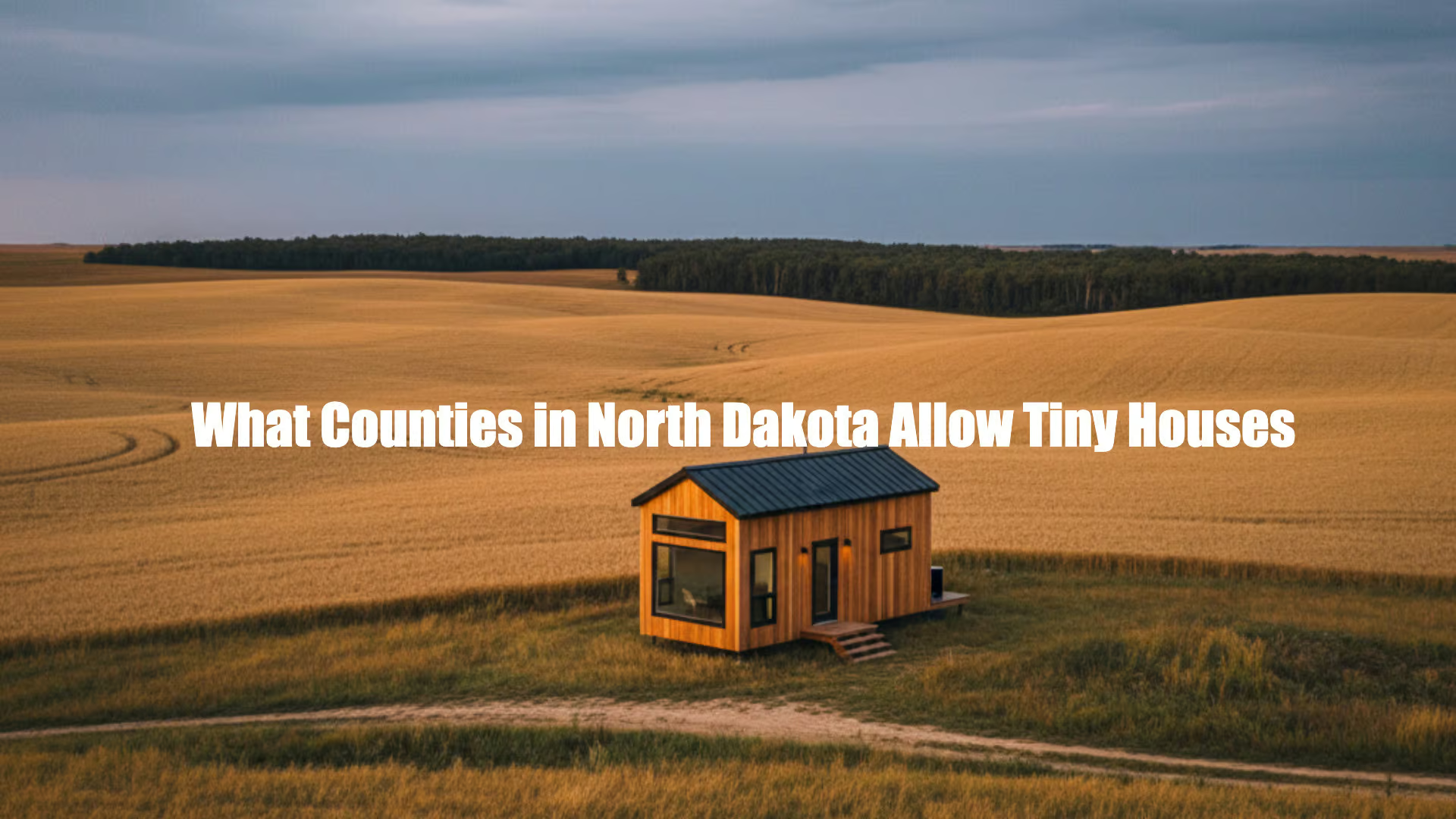
North Dakota lacks statewide tiny house regulations, so rules are determined by individual counties and municipalities. Grand Forks and Burleigh Counties remain among the most accommodating, permitting tiny houses with appropriate permits and utility hookups. Tiny houses on wheels are generally treated as RVs and must follow recreational vehicle standards.
The tiny house movement continues to grow nationwide, drawing interest from those seeking affordable, sustainable living options in North Dakota. Known as the Peace Garden State, it offers low land costs, fewer building restrictions in rural areas, and increasing openness to alternative homes. For anyone eyeing North Dakota for a tiny house, grasping the local regulatory framework is vital to avoid surprises.
Tiny house rules in North Dakota differ widely across counties and cities, with some areas embracing the trend and others imposing stricter limits or outright bans on certain types. This varied landscape underscores the importance of detailed local research before settling on a site. North Dakota’s local-control model empowers communities to tailor building codes and zoning to their needs, reflecting a commitment to resident-driven governance.
Great Lakes Tiny Homes specializes in modular, park model, and tiny homes, delivering complete builds to all 48 contiguous U.S. states, including North Dakota. We handle options with or without wheels, including RVIA-certified park models. Whether tackling Grand Forks County’s guidelines or Burleigh County’s options, our experts know the ins and outs of local rules. For tailored advice on your project and location, book a call with our experts to explore your tiny house plans and compliance needs.
Disclaimer: This article provides general information only and is not legal advice. Zoning laws and regulations change and vary by location. Consult your local zoning office or a qualified land use attorney before acting on this content.
What Counties in North Dakota Allow Tiny Houses?
North Dakota’s tiny house policies emphasize local authority, without uniform statewide rules for small dwellings. This setup results in a diverse array of regulations across cities and counties, requiring careful navigation. Most permitting areas adopt the International Residential Code (IRC), particularly Appendix Q, which sets minimum safety and structural benchmarks for tiny homes. These standards form a foundation, while locals add layers based on community priorities like density and infrastructure.
The state’s rural focus and property rights tradition often lead to more lenient rules in less urban areas compared to denser states. Yet, this leniency demands diligence from tiny house seekers to verify site-specific rules. Differences can range from simple permits in permissive zones to rigorous reviews elsewhere. Knowing these nuances is key when considering tiny house builders in North Dakota or moving an existing unit.
Grand Forks County
Grand Forks County leads in tiny house friendliness in North Dakota, adopting progressive policies to support affordable, eco-conscious housing. Officials have collaborated with advocates to craft rules that ensure safety without stifling innovation. This includes clear paths for construction and siting, appealing to diverse tiny home setups. The county’s efforts highlight a balance between modern needs and traditional standards.
Support covers both fixed and movable tiny homes, fostering tiny home communities in North Dakota. Requirements focus on secure utilities like water, sewage, and power, promoting reliable living. The permit system is user-friendly, with staff assistance to streamline approvals. This has built a vibrant network of tiny house supporters in the area.
Burleigh County
Burleigh County welcomes tiny houses through defined rules that address their distinct features while upholding safety. These guidelines open doors for placements in rural and suburban spots alike. The county’s policies adapt to evolving housing demands, showing foresight in community planning. This makes it a prime choice for tiny living enthusiasts.
Key mandates include permanent foundations for wheeled units to boost stability and code adherence. Essential services—water, power, gas, and waste—must be accessible, matching conventional home setups. Zoning allows tiny homes on farmland, expanding rural options. Such provisions ease integration into the landscape.
Burleigh’s rules differentiate by land scale, per county ordinances and state codes. Accessory units face limits, but tiny homes on over 40-acre parcels get exemptions. This accounts for rural expanses’ lower density concerns. It offers freedom for spacious, secluded tiny living.
County Regulations Comparison
| County/City | Min Sq Ft | Zoning Type | Key Requirements | Source | Verified |
| Grand Forks County | 120 sq ft (one room) | Residential/Agricultural | Utility connections, building permits, IRC compliance | International Residential Code | ✓ |
| Burleigh County | 120 sq ft (one room) | Residential/Agricultural | Foundation required, utility access, 40+ acre exemptions | Burleigh County Ordinance | ✓ |
| Cass County | Varies by municipality | Municipal discretion | Contact local zoning office | Local zoning departments | ✓ |
| Ward County | Varies by municipality | Municipal discretion | Contact local zoning office | Local zoning departments | ✓ |
Important: Rules evolve often. Confirm latest details with local zoning offices prior to any tiny house plans.
Tiny House Regulations And Rules In North Dakota
Without dedicated statewide tiny house laws, North Dakota’s framework relies on local zoning and codes, creating a mosaic of standards. Tiny owners must dissect these to fit their builds into permitted categories. Challenges arise from square footage minima in some spots, but others welcome tiny homes with code-compliant utilities. Success hinges on preemptive local checks for construction or moves.
Regulations sort tiny houses into three main types—permanent, temporary, and transitional—each with tailored rules on permits and sites. Grasping these helps align your home with legal paths, respecting safety and zoning. This system supports variety while safeguarding residents. It mirrors North Dakota’s blend of innovation and caution in housing.
Permanent Structure Rules
North Dakota follows the International Residential Code (IRC) for fixed tiny homes, covering energy, fire, and build integrity. Appendix Q tailors these to small spaces, adopted widely for safe, viable dwellings. It details engineering, wiring, and pipes, ensuring tiny homes match larger ones in essentials. This upholds livability amid compact designs.
Permanent rules prioritize space and access: main rooms need 120 square feet minimum, paths 3 feet wide for safety. Lofts require escape windows and stairs; ceilings hit 7 feet in core areas, with allowances elsewhere. These foster functional, secure interiors. They adapt standards to tiny scales without compromise.
Local zoning demands permits, plans, surveys, and phased inspections for structure, systems, and utilities. Setbacks from boundaries ensure harmony with surroundings. Septic or sewer ties complete compliance. This thoroughness integrates tiny homes responsibly into communities.
Temporary Structure Rules
Wheeled tiny homes count as temporary, under RV or mobile home rules, not full residential codes. This affects siting and residency duration, suiting their portability. Limits curb permanent urban use, prioritizing mobility. Clarity on these aids in choosing compliant spots.
Registration mandates RV standards for build, safety, and transport, often via RVIA checks. Inspections confirm certifications; stays may cap time in one place to preserve temp status. This keeps units road-ready and basic-habitable. It suits nomads while regulating fixed setups.
Sites limit to RV parks, camps, or zoned private lands; neighborhoods often bar long-term RV living. Hosts need permits for property use. Rules prevent infrastructure strain, allowing flexible housing. They balance freedom with community fit.
Transitional Structure Rules
Transitional tiny homes—semi-fixed like skid-based—straddle categories, needing case-by-case local input. Duration, foundation, and zoning shape treatment as permanent or temp. No state rules mean direct official talks clarify paths. Early dialogue averts issues.
Approvals hinge on use length, support type, and site zone; some equate long stays to fixed rules. Permits, engineering, or uses may apply. Show no neighbor harm for nods. This flexibility suits evolving needs.
Details on intent, timeline, and methods aid reviews; variances possible for benefits. Tiny house builders in North Dakota versed in locals smooth approvals. Proactive steps ensure smooth, code-abiding builds.
Where Can I Build A Tiny House in North Dakota?
Choosing a tiny house spot in North Dakota involves zoning, utilities, and acceptance checks. From farms to communities, options abound; licensed builders aid navigation. They manage docs and codes for seamless execution. Location choice shapes experience profoundly.
Beyond land, assess ordinances, services, soil for waste, and access to jobs or care. Review area growth for future viability. Seasonal visits reveal weather effects on access and comfort. Holistic evaluation secures lasting fit.
Popular sites include long-term RV parks, extended campgrounds, tiny enclaves with perks, and approved private plots. Each brings pros like amenities or solitude, cons like costs or rules. Match to lifestyle for optimal results. Planning eases the build journey.
Tiny House Communities in North Dakota
North Dakota’s tiny communities are emerging, though fewer than in busier states, offering shared facilities and support. They suit communal tiny living with utilities and peers. Growth stems from developer-local ties for compliant, green setups. Bonds form over shared values.
These spots prioritize sustainability via solar, conservation, and low waste, echoing tiny ethos. Partnerships drive legal, eco homes. Community vibe enhances lifestyle, blending independence with connection. They showcase housing evolution.
St. Mary Village
Near Glacier National Park’s east entrance, St. Mary Village features ten eco-tiny homes for summer immersion in nature and minimalism. Close to trails and roads, it blends stays with sustainability lessons. Guests enjoy compact, efficient spaces amid scenery. It educates on tiny benefits.
St. Mary Village‘s green tech—like efficient appliances and water systems—cuts impact while keeping comforts. It models adaptable practices for North Dakota. Coastal humidity parallels some challenges, solved via smart design. This inspires broader adoption.
Families find tiny living bonds them closer, spurring outdoor fun and interactions. Proximity to hikes and views enriches stays. It proves tiny communities boost stewardship and joy. A gem for experiential living.
Tiny Town Extended
In nearby Spearfish, South Dakota, Tiny Town Extended Stay Campground models long-term tiny options for regional folks, including North Dakotans. It caters to wheeled homes with monthly sites and amenities. Balances mobility and roots appeal to seasonal users. Infrastructure supports stable tiny life.
Full hookups for water, power, waste, plus Wi-Fi and laundry meet needs simply. Eases daily hassles, focusing on lifestyle joys. Services mirror home conveniences scaled down. Ideal for transitions or trials.
Neighbors share tips on maintenance and adventures, building ties. Design fosters chats without intrusion. Shows tiny groups nurture support and variety. Valuable for North Dakota insights.
Major Cities Tiny House Regulations
North Dakota’s key cities vary in tiny rules, mirroring growth, needs, and values. Urban codes are detailed for safety and fit, but offer utility perks. Balance innovation with density concerns. Research city specifics for urban tiny aims.
Fargo Tiny House Regulations
As the state’s hub, Fargo’s rules align tiny homes with standard codes for fixed builds, including size and utilities in zones. Department aids navigation for unique designs. Ensures neighborhood harmony via setbacks. Supports diverse housing.
Permits involve plans, surveys, and inspections for systems and sites. Accessory units allowed with criteria. Streamlines while verifying quality. Integrates tiny into fabric.
Wheeled units as RVs limit to parks or short driveway stays; long-term needs approvals. Manages urban constraints like parking. Permits for temp uses possible. Fits city dynamics.
Bismarck Tiny House Regulations
Capital Bismarck measures tiny rules per IRC, stressing safety and utilities for fixed homes. Zoning permits accessories in select areas with standards. Planning team explores innovations. Maintains balanced growth.
Connections to city services required; inspections cover all phases. Guidelines on setbacks, parking, and greenspace aid blends. Ensures contributions to infrastructure. Thorough yet supportive.
Mobile units to parks; residential long-term restricted, with permit exceptions. Commission reviews for variances showing gains. Adapts to needs while planning wisely.
Grand Forks City Tiny House Regulations
Building on county progress, Grand Forks city embraces tiny via tailored codes for safety. Partners with stakeholders for accessible rules. Streamlines for small-scale builds. Leads in acceptance.
Permits guide applicants; pre-consults clarify paths. Meets IRC but eases for tiny traits. Supports legal, valued homes.
Zoning allows accessories with compatibles; eyes tiny developments. Policies model forward thinking. Enhances community via innovation.
Tiny House Prices in North Dakota
Costs in North Dakota fluctuate with size, type, certification, and codes. Larger or fixed units hike via materials and sites. RVIA adds upfront but aids finance and sales. Local winters demand robust insulation, upping builds. Land affordability offsets some.
Market values function over flash; rural wells/septics vary from urban ties. Weather prep essential for efficiency. Budget holistically for viability.
Great Lakes Tiny Homes Pricing
Our $100,000-$150,000 packages cover turnkey North Dakota delivery, using premium crafts for codes. Includes guidance on regs. Tailors to needs and budgets. Delivers worry-free quality.
Full service from design to setup handles complexities. Pros manage all for occupancy-ready homes. Optimizes for local fits.
Transparent breakdowns avoid surprises; consults refine values. Ensures aligned investments.
Great Lakes Tiny Homes Model Options
Diverse models suit prefs and rules: Modular Homes for permanent, customizable factory builds. Efficient for codes.
A-Frame sheds snow well; Cabin ties to outdoors. Modern-rustic blends.
Park Models RVIA for flex; Tiny House on Wheels for moves. Choices per goals. Book a call for guidance.
Tiny House Builders Near Me
Great Lakes Tiny Homes serves North Dakota via national delivery, skipping local hunts. RVIA-certified for standards. Protects via quality in climates.
Cert ensures safety, durability; aids finance/insurance. Rigorous processes for longevity.
Post-sale support, warranties, tips on challenges. For tiny houses for sale in North Dakota, we guide fully.
Do I Need a Certified Builder?
Certified builders are crucial in North Dakota; DIY risks costs, safety, regs. Pros know codes, systems for compliant, comfy homes. Complexity demands expertise.
RVIA like Great Lakes guarantees standards via inspections. Boosts value, insurability.
Quality materials weatherproof; warranties protect. Finance/permits easier with certs. Essential for smart investments.
Frequently Asked Questions
Can You Make a Tiny House in North Dakota Your Main Residence?
Yes, many areas allow tiny homes as primary dwellings, but check local variances. Research county/city rules for inspections, zoning. Consult officials early. Certified builders ensure compliance for sustainable living.
In North Dakota, What Is the Minimum Size Requirement for Tiny Houses?
No state minimum; locals set from none to 400+ sq ft. Verify with building departments. Aligns with IRC Appendix Q baselines. Prevents surprises in planning.
Does My North Dakota Tiny Home Require Me to Pay Property Taxes?
Fixed ones tax like homes; mobiles as RVs may not, but land does. Varies by site; ask tax offices. Classifications impact obligations.
What Utilities Can I Connect to My Tiny House in North Dakota?
Standard—power, water, sewer, gas—per availability. Urban municipal; rural private. Codes require pro installs. Check sites for options.
Are There Financing Options Available for Tiny Houses in North Dakota?
Varies: RV loans for certified, mortgages for fixed. Specialized programs exist. Certs aid lenders. Builders like us provide docs.
Conclusion
North Dakota favors tiny living variably, with Grand Forks and Burleigh progressive. Local patchwork needs navigation, but flexibility aids. Research, pros key to success.
Trends toward affordability, green living grow acceptance. Evolving rules support thoughtful builds. Choose per needs for fulfillment.
Great Lakes Tiny Homes experts navigate for quality results. Book a call to start your journey.