
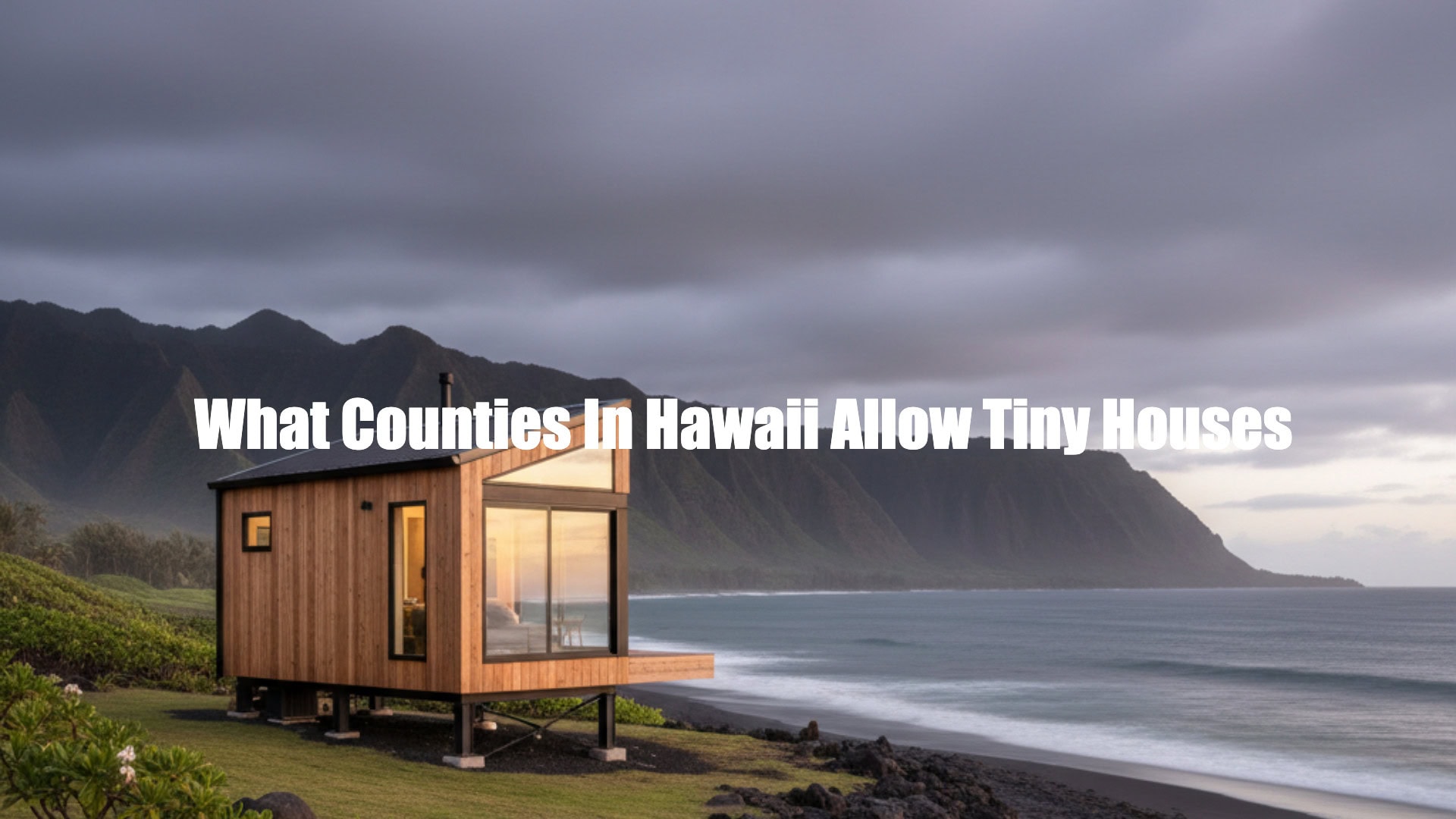
Hawaii lacks statewide tiny house regulations, with rules varying by county. Hawaii County and Maui County allow tiny houses as permanent structures or farm dwellings starting at 120-220 square feet, subject to building permits and zoning compliance. Tiny houses on wheels are often treated as RVs with parking limits outside designated parks. Always verify with local planning departments for the latest requirements.
Dreaming of embracing tiny house living amid Hawaii’s stunning landscapes? Understanding the rules and regulations for tiny houses in Hawaii is essential before embarking on this minimalist lifestyle. As the Aloha State grapples with housing affordability and land use challenges, each of its four counties—Hawaii (Big Island), Maui, Honolulu (Oahu), and Kauai—maintains distinct approaches to permitting tiny homes, whether on foundations or wheels. This guide explores county-specific allowances, zoning considerations, building codes, and practical steps to ensure your tiny house project complies with local laws.
From agricultural zones where small farm dwellings are permitted to urban areas treating tiny houses as accessory dwelling units (ADUs), opportunities exist across the islands. However, navigating these regulations requires careful research, as minimum size requirements, utility connections, and permit processes can differ significantly. For those ready to build, Great Lakes Tiny Homes serves as a full-service manufacturer of modular, park model, and tiny homes, delivering turnkey builds to all 48 lower U.S. states, including Hawaii. We offer options with or without wheels and with or without RVIA certification—our RVIA-certified models are often classified as park models to align with zoning needs. If you’re exploring designs that fit Hawaii’s codes, book a call with our experts for tailored guidance.
Disclaimer: This article is for informational purposes only and does not constitute legal advice. Laws, regulations, and zoning rules vary by location and may change over time. Always consult your local zoning office or a qualified land use/zoning attorney before making decisions based on this information.
What Counties in Hawaii Allow Tiny Houses?
Hawaii’s regulatory framework for tiny houses emphasizes local control, allowing counties to tailor rules to their unique geographic and economic needs. While no uniform statewide policy exists, tiny homes are generally permitted as long as they meet building codes and zoning designations, often in agricultural or residential zones. For instance, small houses on farms must typically include essential living spaces like a kitchen and bathroom, ensuring habitability standards are upheld. This county-by-county variation encourages prospective builders to engage early with planning departments to avoid setbacks.
Recent legislative pushes, including expansions in ADU allowances, have opened more pathways for tiny living, particularly in response to housing shortages. Counties like Hawaii and Maui have been proactive in integrating tiny houses into affordable housing strategies, while urban areas like Honolulu focus on ADUs to maximize existing lots. Understanding these nuances helps align your project with sustainable development goals across the islands.
Hawaii County
Hawaii County, encompassing the Big Island, regulates tiny houses through its building code and zoning ordinances, treating them similarly to mobile homes or permanent dwellings. Tiny houses on wheels (THOWs) fall under Chapter 5A of the County Building Code, which limits parking outside licensed mobile home parks to 30 days. Permanent tiny homes require adherence to the International Residential Code (IRC) Appendix Q, adopted locally, ensuring structural integrity and safety features like proper egress and ventilation. Hawaii County Ordinance 2020-061 explicitly references tiny house requirements, mandating inspections for compliance.
To overcome THOW restrictions, owners may seek variances or place units in approved parks, though this demands upfront planning. Agricultural zones offer flexibility for farm worker housing, where tiny homes of at least 220 square feet can support rural economies. As housing demands grow, the county continues updating codes to balance preservation with affordability—consult the Planning Department for site-specific advice. Disclaimer: Regulations may evolve; verify with local authorities.
Tiny house builders in Hilo can help navigate these rules for compliant designs.
Maui County
Maui County distinguishes between permanent and mobile tiny homes, providing clear pathways for both in residential and agricultural districts. Permanent structures need a building permit from the Department of Public Works and must total at least 120 square feet, excluding bathrooms, with a seven-foot ceiling height minimum. This ensures compliance with habitability standards while accommodating the island’s emphasis on sustainable building practices. Tiny homes are treated as standard dwelling units under zoning rules, following the same density and setback requirements as larger homes.
For THOWs, dimensions are capped at nine feet wide, 14 feet high, and 45 feet long; off-grid setups with composting toilets and solar power may bypass some permits, but utility connections require county approval. Recent FAQs from the county clarify that multiple tiny homes on a property must adhere to overall lot coverage limits. With Maui’s focus on environmental protection, builders often incorporate eco-friendly materials to meet code. Maui County FAQ on Tiny Homes provides essential guidance. Disclaimer: Always confirm with the Department of Planning.
County-by-County Breakdown
This table summarizes key tiny house regulations across Hawaii’s counties, highlighting minimum sizes, zoning allowances, and permit needs. Data is drawn from official county codes and should be verified for your specific property, as variances and updates can apply. Note that flood zone considerations and utility requirements add layers of compliance in vulnerable areas.
| County | Min. Sq Ft | Zoning Allowed | Key Requirements | Source | Verified |
| Hawaii County (Big Island) | 220 sq ft (farm dwellings) | Agricultural, Mobile Home Parks | Building permit required, 30-day parking limit for THOWs, IRC Appendix Q compliance | Hawaii County Ordinance 2020-061 | 2026 |
| Maui County | 120 sq ft (permanent) | Residential, Agricultural | 7ft ceiling height, building permit for permanent structures, treated as dwelling units | Maui County FAQ on Tiny Homes | 2026 |
| Honolulu County (Oahu) | Varies by zone (often 400 sq ft for ADUs) | Limited residential zones, ADU-focused | ADU regulations apply, permit required, affordable housing incentives | Honolulu DPP Affordable Housing | 2026 |
| Kauai County | Under review (ADUs min 300 sq ft) | Limited allowances in residential/ag | Case-by-case basis, variance permits may be required, online ADU processing | Kauai Planning ADU Page | 2026 |
Disclaimer: Table data is for general reference; consult county planning for property-specific rules.
Hawaii Tiny House Regulations Explained
Hawaii’s tiny house rules prioritize safety, sustainability, and community integration, drawing from the IRC with local amendments. Before construction, review zoning for setbacks, lot coverage, and utility mandates, as non-compliance can lead to costly revisions. Floodplain regulations require anchoring to prevent flotation, especially on low-lying islands. HOAs may impose additional restrictions, so early verification is key.
Statewide, the Department of Business, Economic Development & Tourism supports innovative housing, but enforcement remains county-level. Recent 2026 updates include expanded kauhale tiny home villages for homelessness initiatives, influencing private builds. These developments highlight tiny houses’ role in addressing affordability, yet they underscore the need for code adherence.
Permanent Structure Rules
Permanent tiny houses in Hawaii must comply with rigorous building standards to qualify as habitable dwellings, often requiring a solid foundation and full utility hookups. Minimum living areas start at 70 square feet per room, with overall sizes typically 220 square feet for farm uses, including separate kitchen and bath facilities. Anchoring prevents movement in high-wind or flood areas, a critical measure given Hawaii’s vulnerability to natural disasters. Permits from the county building division ensure electrical, plumbing, and structural integrity meet IRC Appendix Q.
Counties enforce these to maintain property values and public safety, with inspections at key stages like foundation pouring and final occupancy. In agricultural zones, tiny homes support workforce housing without subdividing land, promoting efficient use. However, urban densities may limit placements, favoring ADUs on existing lots. Builders should anticipate 3-6 months for permitting, factoring in environmental reviews.
Disclaimer: Permanent structures involve complex compliance; seek professional zoning advice.
Temporary Structure Rules
Temporary tiny houses, including THOWs, are registered as RVs by the state Department of Transportation, subjecting them to size limits of 13.5 feet high, 8.5-10 feet wide, and 40 feet long. They must achieve 3,500 pounds per axle for towing stability and cannot park in public recreation areas except emergencies. Off-grid features like solar panels and composting toilets allow flexibility, but connections to county systems demand permits.
Parking on private land is capped at 30 days in many counties to prevent makeshift communities, though variances exist for agricultural uses. These rules balance mobility with oversight, ensuring temporary setups don’t become permanent without approval. In practice, owners rotate locations or use RV parks, but long-term residency requires reclassification. Hawaii’s tropical climate necessitates durable materials to withstand humidity and storms.
Transitional Structure Rules
Transitional tiny houses, often used in kauhale villages for temporary housing, must meet floodplain management standards if in flood-prone areas, including elevation and anchoring. While not explicitly defined in codes, they align with RV regulations for mobility and temporary status. Counties like Hawaii have expanded these through 2026 initiatives, opening 25 villages with plans for 30 more, providing models for private transitional builds.
These structures support recovery efforts post-disasters, emphasizing quick deployment and minimal environmental impact. Permits focus on safety rather than permanence, but utilities like water catchment are encouraged for sustainability. As transitional options evolve, they bridge gaps in affordable housing, though conversion to permanent requires full rezoning. Community input often shapes these rules, reflecting Hawaii’s aloha spirit.
In Hawaii Where Can I Build A Tiny House?
Strategic site selection is crucial for tiny house success in Hawaii, prioritizing zones that accommodate small footprints while accessing utilities and services. Common locations include RV parks for mobile units, national campgrounds for short-term stays, and private properties zoned residential or agricultural. Tiny house communities foster shared resources, reducing individual costs and enhancing social ties.
Agricultural land offers leeway for farm dwellings, but subdivision rules limit density. Urban lots suit ADUs, maximizing space in high-demand areas like Oahu. Always assess soil stability, flood risks, and access roads early. Best tiny home communities in Hawaii provide established options for seamless integration.
Major City Requirements in Hawaii
Hawaii’s major cities enforce tiny house rules through their county frameworks, with unique emphases on density, affordability, and environmental protection. Urban pressures drive ADU expansions, while rural cities focus on agricultural integrations. Contacting departments early clarifies variances and incentives.
Honolulu (Oahu)
Honolulu’s dense landscape limits standalone tiny houses, favoring ADUs on existing residential properties under the Land Use Ordinance. Minimum sizes vary but often reach 400 square feet for full compliance, with incentives for affordable units comprising 80% of projects. Building permits from the Department of Planning and Permitting require utility plans and setbacks adherence. High land costs make community models rare, but recent updates support multi-ADU allowances.
- Contact: Department of Planning and Permitting – (808) 768-8000
- Key Requirements: ADU ordinances, electrical/plumbing permits
- Unique Considerations: Flood zone elevations, HOA approvals
Tiny houses for sale in Honolulu align with these urban constraints. Disclaimer: Verify with DPP for Oahu-specific ordinances.
Hilo (Big Island)
Hilo follows Hawaii County rules but adds flood zone scrutiny due to its coastal location, requiring elevated foundations for tiny homes. Agricultural zones permit 220-square-foot dwellings for farm use, with building permits ensuring seismic resilience. The Planning Department offers consultations for variances in flood-prone areas.
- Contact: Hawaii County Planning Department – (808) 961-8288
- Key Requirements: Elevation certificates, utility connections
- Opportunities: Affordable rural land nearby
Local tiny house builders in Hilo specialize in resilient designs.
Kahului (Maui)
Kahului’s commercial hub status streamlines tiny house permits in residential zones, treating them as dwellings with 120-square-foot minimums. The Department of Public Works handles applications, emphasizing ceiling heights and ventilation for tropical climates. Established processes support quick approvals for compliant builds.
- Contact: Maui County Department of Public Works – (808) 270-7745
- Key Requirements: Building permits, septic approvals
- Advantages: Proximity to utilities and services
Disclaimer: Rules may vary by parcel; consult county resources.
Lihue (Kauai)
Lihue enforces Kauai’s conservative approach, allowing tiny houses primarily as ADUs with online permitting for units over 300 square feet. Zoning prioritizes rural character, limiting densities in agricultural areas. The Planning Department processes variances case-by-case, focusing on environmental impacts.
- Contact: Kauai County Planning Department – (808) 241-4050
- Key Requirements: SMA reviews, water permits
- Unique Considerations: Preservation of green spaces
Tiny house options in Lihue fit Kauai’s guidelines.
Tiny House Communities in Hawaii
Tiny house communities in Hawaii blend minimalist living with island culture, offering shared amenities and eco-focused designs. These enclaves address housing costs while preserving natural beauty, often in agricultural or rural settings. Participation builds community bonds, with collective utilities reducing overheads.
State initiatives like kauhale villages have spurred growth, providing blueprints for private developments. By 2026, 30 such villages aim to add 1,000 beds, influencing private communities to adopt similar sustainable models. Selecting a community involves reviewing covenants and zoning compatibility.
Explore the best tiny home communities in Hawaii for vetted options.
Cinderland Eco Village
Cinderland on the Big Island embodies off-grid living through permaculture and organic farming, accommodating tiny homes, yurts, and buses on three acres. Residents commit to communal values, sharing responsibilities for sustainability and education. This setup suits those seeking self-reliance amid volcanic landscapes.
Housing diversity includes natural builds like clay structures, fostering creativity and low-impact living. Community events enhance interpersonal growth, making it a holistic choice for tiny house enthusiasts.
Kalani Mua Community
Kalani Mua promotes abundance and well-being on Hawaii Island, offering yoga, wellness, and permaculture for residents. Tiny homes integrate with cultural honors and events, supporting diverse lifestyles. Visitors and long-term dwellers benefit from seminars and group activities.
The center’s focus on sacred sites ensures respectful development, aligning tiny living with Hawaiian traditions. Amenities like spa treatments complement minimalist setups.
Kauhale Tiny Home Villages
Hawaii’s kauhale initiative represents a statewide push for transitional tiny housing, with 25 villages operational by early 2026 and 30 planned by year-end. These modular communities target homelessness and affordability, featuring compact units with shared facilities. Private builders can draw from this model for compliant designs.
Located strategically near services, kauhales emphasize rapid deployment and cultural sensitivity. Their success highlights tiny houses’ scalability for broader housing solutions, influencing county policies.
How to Legally Build a Tiny House in Hawaii
Legal tiny house construction in Hawaii demands methodical steps to align with county codes and secure approvals. Begin with property zoning verification to confirm allowances for your intended type—permanent or mobile. Engage certified professionals early to mitigate risks and streamline processes.
Budget for inspections and potential variances, as Hawaii’s environmental reviews add time. Sustainable features like rainwater harvesting can expedite permits in water-scarce areas. Experienced tiny house builders in Honolulu guide through these hurdles.
Step 1: Choose Your County and Research Local Laws
Select a county based on lifestyle and land availability, then access the planning portal for zoning maps and code chapters. Contact departments for interpretations, as oral advice can inform applications. Track changes, like 2026 ADU expansions, via official newsletters.
Step 2: Determine Your Tiny House Type
- Foundation-Built: Needs full building permits, treated as residences under IRC
- Tiny House on Wheels: RV classification limits residency, requires DOT registration
Step 3: Secure Appropriate Land
- Zoned residential or ag parcels
- Tiny home communities in Hawaii
- Mobile parks for THOWs
- Farm land for worker housing
Step 4: Obtain Necessary Permits
- Building and zoning permits
- Electrical, plumbing, septic approvals
Disclaimer: Permitting timelines vary; professional consultation recommended.
Tiny House Prices in Hawaii
Tiny house prices in Hawaii reflect the state’s high construction costs and import logistics, ranging from $223 to $575 per square foot depending on materials and location. Factors like size (100-400 square feet typical), foundation versus wheels, RVIA certification for mobility, utility hookups for permanence, and local code compliance significantly influence totals. Island-specific challenges, such as shipping fees and eco-materials, elevate baselines compared to mainland states.
Buyers must account for land preparation, permits (adding 10-20% to budgets), and ongoing taxes, which vary by county. Agricultural zones may offer lower entry points but require farm-use justifications. Selecting models that match zoning—permanent for residential lots, mobile for parks—optimizes value and avoids retrofits.
Great Lakes Tiny Homes Pricing
Great Lakes Tiny Homes provides full-service builds priced between $100,000 and $150,000, encompassing custom designs, quality materials, and turnkey delivery to Hawaii. This range covers various sizes and features, ensuring compliance with RVIA standards where needed for park model certification. Delivery includes site preparation guidance, helping offset island logistics.
Our transparent pricing avoids hidden fees, focusing on durable, energy-efficient constructions suited to tropical climates. Options scale with add-ons like solar integration, aligning with Hawaii’s sustainability goals.
Great Lakes Tiny Homes Model Options
- Modular Homes – Ideal for permanent foundations in residential zones, assembled on-site for quick compliance.
- A-Frame – Compact and sturdy, fitting agricultural setbacks with sloped roofs for rain runoff.
- Cabin – Rustic designs for rural lots, emphasizing natural ventilation for humid conditions.
- Park Models – RVIA-certified for mobile parks, under 400 square feet to meet THOW limits.
- Tiny House on Wheels – Mobile flexibility for transitional uses, towable and code-compliant.
Model choice hinges on zoning: foundations for long-term residency, wheels for mobility. This ensures your investment withstands Hawaii’s regulatory landscape. Explore tiny houses for sale in Hawaii tailored to local rules. If zoning impacts your selection, book a call with our experts for insights. Disclaimer: Prices fluctuate with market and customizations; obtain quotes for accuracy.
How to Verify Tiny House Rules in Your County
Navigating tiny house regulations requires direct verification from local authorities, as rules can change and vary widely. Follow this step-by-step process to ensure your project complies with county-specific guidelines, avoiding potential fines or delays.
- Review the County Zoning Code: Visit your county’s official website or planning department portal to access the zoning ordinance. Search for sections on residential, agricultural, or accessory dwelling units (ADUs) to identify permitted structures and land use categories where tiny houses are allowed.
- Check Minimum Dwelling Size Requirements: Look for building code references, often based on the International Residential Code (IRC) Appendix Q. Counties typically specify minimum habitable square footage, such as 120-400 square feet, excluding garages or porches, to qualify as a legal dwelling.
- Examine ADU Provisions: Many counties treat tiny houses as ADUs on existing properties. Confirm allowances for size, setbacks, and lot coverage ratios, including any recent updates for affordable housing initiatives.
- Determine Treatment of Tiny Houses on Wheels (THOWs): Inquire if THOWs are classified as recreational vehicles (RVs). This affects parking limits, registration needs, and whether they can serve as permanent residences outside RV parks—often restricted to 30 days on private land.
- Contact the Local Planning Department: Call or email your county’s planning or building division for personalized advice. Provide your property address for site-specific zoning confirmation, and request any required variance or permit applications. Most departments offer free consultations to guide your inquiry.
This process empowers you to build confidently. Always document responses for your records, and consider consulting a local zoning attorney for complex cases.
Tiny House FAQs in Hawaii
Are tiny houses legal in Hawaii?
Yes, tiny houses are legal in Hawaii but regulated at the county level without statewide uniformity. They must comply with local zoning and building codes, often as ADUs or farm dwellings. Disclaimer: Consult your county planning office for specifics, as rules evolve.
What’s the difference between tiny houses on wheels and foundation-built in Hawaii?
Tiny houses on wheels are classified as RVs, facing 30-day parking limits outside parks and requiring DOT registration. Foundation-built units are permanent dwellings needing full building permits and utility connections. Wheels offer mobility but restrict residency, while foundations enable long-term living.
What are the minimum size requirements for tiny homes in Hawaii?
Minimums vary: 220 square feet in Hawaii County for farm uses, 120 square feet in Maui for permanents. Rooms need at least 70 square feet, per IRC Appendix Q adopted locally. Exclusions apply to lofts and bathrooms.
Where can I place a tiny house in Hawaii?
Placements include agricultural zones, RV parks, private residential lots as ADUs, or tiny home communities in Hawaii. Avoid floodplains without elevations. Verify zoning to prevent violations.
What permits and utilities are needed for tiny houses in Hawaii?
Building, electrical, and plumbing permits are standard, plus septic approvals for off-grid. Utilities like water and power must connect to county systems or use approved alternatives like solar. Processing takes 1-3 months. Disclaimer: Requirements differ by site; professional review advised.
How much do tiny houses cost in Hawaii?
Costs range $100,000-$150,000 for turnkey builds, higher than mainland due to shipping and codes. Factors include size, wheels, and hookups. Tiny houses for sale in Kahului offer competitive options.
Conclusion
Tiny houses present a viable path to affordable, sustainable living in Hawaii, navigating county-specific rules with informed planning. From Big Island farms to Oahu ADUs, opportunities abound for those prioritizing compliance and community. As 2026 brings ADU expansions and kauhale growth, the landscape favors innovative housing solutions.
Thorough research and expert input ensure your project thrives amid the islands’ beauty. For personalized advice on designs fitting Hawaii’s regulations, Book a call with Great Lakes Tiny Homes experts.