
Delaware’s three counties—New Castle, Kent, and Sussex—all permit tiny houses, primarily as permanent structures on foundations that comply with the International Residential Code (IRC) Appendix Q. Tiny houses on wheels (THOWs) are generally classified as recreational vehicles and restricted to RV parks or temporary use, not permanent residency. Local zoning varies, so consulting county planning departments is essential for site-specific approvals. Recent updates, including New Castle’s 2024 ADU expansions and Sussex’s June 2024 ordinance, have made tiny homes more accessible statewide.
Tiny houses represent a compact, sustainable living solution that’s increasingly popular across the United States, including in Delaware. As more people embrace minimalist lifestyles amid rising housing costs, navigating local regulations becomes essential for prospective owners. This guide examines which counties in Delaware allow tiny houses, outlining zoning laws, building codes, and practical considerations for compliance. Whether considering a foundation-built home or a mobile tiny house on wheels, understanding these rules helps avoid potential pitfalls and ensures a smooth process.
Delaware’s tiny house regulations are influenced by its three counties, each adopting distinct approaches to housing density and land use. From the urban density of New Castle to the rural expanses of Sussex, these areas balance affordability needs with community standards. Great Lakes Tiny Homes, a leading manufacturer of modular, park model, and tiny homes, provides turnkey solutions delivered to all 48 lower U.S. states, with options for wheels or foundations and RVIA certification where needed—often referred to as park models. Our experience assists clients in aligning builds with local requirements. For tailored advice on your project, book a call with our experts.
Disclaimer: This article is for informational purposes only and does not constitute legal advice. Laws, regulations, and zoning rules vary by location and may change over time. Always consult your local zoning office or a qualified land use/zoning attorney before making decisions based on this information.
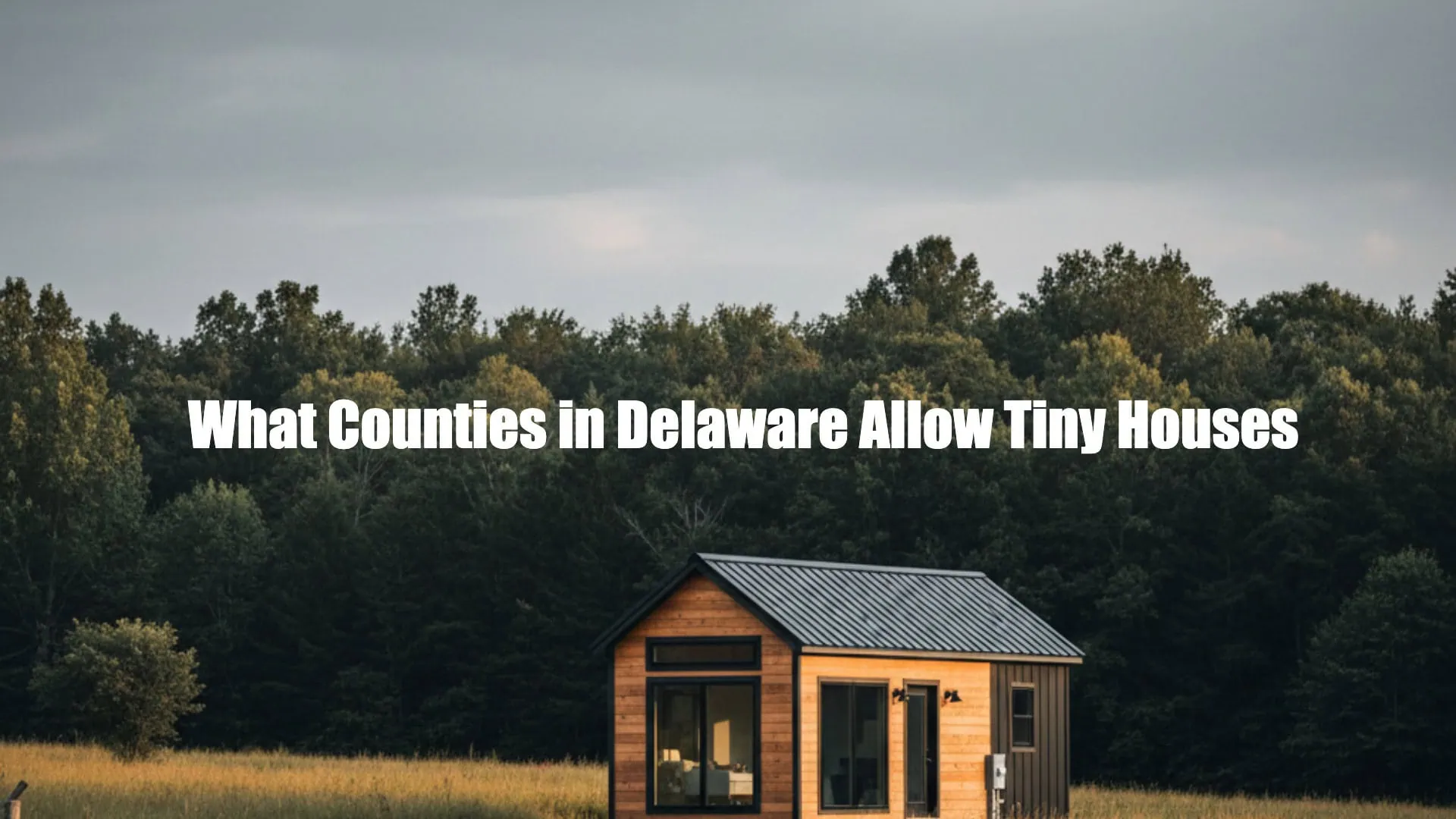
What Counties in Delaware Allow Tiny Houses?
Variations in tiny home regulations across Delaware’s counties stem from factors like population density, housing demands, and community preferences. Rural areas often feature more lenient rules to encourage affordable options, while urban zones impose stricter controls to manage growth and protect property values. Most counties incorporate the International Residential Code (IRC) Appendix Q, offering guidelines for homes under 400 square feet to promote safe, uniform construction. This framework supports tiny living but demands adherence to county-specific interpretations for successful implementation.
Potential owners should thoroughly review zoning districts, as agricultural or rural classifications typically provide greater flexibility than suburban residential ones. Community feedback and environmental factors, such as flood risks in Sussex’s coastal regions, play key roles in approval decisions. By grasping these details, individuals can choose properties that support their vision while staying within legal bounds, fostering sustainable tiny house communities.
Sussex County
Sussex County enforces tighter zoning in historic residential areas to maintain their character, yet it welcomes tiny houses on foundations as accessory dwelling units (ADUs) or main residences in suitable zones, as long as they satisfy building codes. The Sussex County Tiny Home Requirements detail aspects like minimum loft dimensions and ceiling heights under the 2021 IRC, ensuring structural safety. The tiny home trend is surging here, particularly among retirees downsizing to coastal properties for cost-effective beach proximity. A June 2024 ordinance further broadened ADU allowances, permitting up to 1,000 square feet with full kitchens for independent living.
Tiny houses on wheels remain limited, generally restricted to RV parks due to their mobile nature. Sussex’s planning officials prioritize eco-friendly elements, like efficient insulation, to lessen impacts in this environmentally vital area. For community explorations, Sussex hosts developing tiny home options near Rehoboth Beach, ideal for those seeking integrated lifestyles. Recent projects, such as Little Living’s Georgetown initiative, highlight growing support for affordable tiny developments.
New Castle County
Local laws in New Castle County mandate that tiny dwellings rest on foundations and meet size criteria, aligning with state housing standards that require at least 150 square feet for one occupant plus 100 square feet per additional resident, per the Delaware State Housing Code. Efforts like the NCC2050 Housing Initiatives now explicitly allow small single-family homes, including tiny houses, as ADUs to tackle affordability challenges. Ordinance 24-087, adopted in September 2024, lowered the minimum lot size for detached ADUs from 2 acres to 0.5 acres, enhancing accessibility in suburban areas.
RVs cannot serve as permanent residences, so tiny houses on wheels fall into this category and are barred from year-round use. New Castle’s high density calls for rigorous setbacks and utility integrations, but it pioneers progressive housing policies. Builders familiar with these codes, such as those in tiny house builders in Wilmington, can streamline compliance for urban projects.
Kent County
Tiny house living holds legal status in Kent County, subject to certain constraints. Small homes must feature foundations and conform to defined size parameters under the International Residential Code (IRC). The Kent County Tiny House Requirements specify standards for habitable units of 400 square feet or less, excluding lofts, including emergency escapes and minimum dimensions of 170 square feet base plus 100 square feet per extra person.
THOWs are allowable in designated RV parks but not for ongoing residency. Kent’s central positioning attracts commuters, and rezoning initiatives now include tiny homes in cottage developments to boost workforce housing. Availability can be found through tiny houses for sale in Dover, supporting diverse living arrangements.
Disclaimer: This article is for informational purposes only and does not constitute legal advice. Laws, regulations, and zoning rules vary by location and may change over time. Always consult your local zoning office or a qualified land use/zoning attorney before making decisions based on this information.
Delaware Tiny House Regulations and Rules
Tiny houses fall under local zoning and building codes in Delaware, differing by county or municipality, with rules covering minimum square footage, foundations, and land utilization. As tiny house popularity rises, discussions continue on refining regulations to better support this housing alternative, especially via ADU expansions. The state’s embrace of IRC Appendix Q standardizes core elements, though counties add layers for safety and visual harmony, promoting resilient builds.
The Delaware State Housing Code sets foundational upkeep standards for tiny homes, while environmental protections, like those in Chapter 66 Wetlands, may limit sites near sensitive areas. Keeping abreast of these developments enables owners to incorporate tiny living into Delaware’s varied terrains, from coastal dunes to inland fields, effectively.
Permanent Structure Rules
Permanent tiny house builds adhere to traditional home regulations, encompassing permits and size minima, constructed on stable foundations per IRC for durability. Counties set starting sizes at 150 square feet, with lofts adding usable area outside the core footprint. Essential utility links for water, sewage, and power demand inspections from planning and zoning offices, verifying system reliability.
These homes excel as ADUs on expansive lots, accommodating extended family or rental opportunities while enhancing property utility. Adherence guarantees year-round livability amid Delaware’s fluctuating weather, from steamy summers to chilly winters. Rural builds may necessitate soil evaluations for foundation viability, ensuring long-term stability against local conditions.
Temporary Structure Rules
Tiny houses on wheels in Delaware count as recreational vehicles, bound by zoning and code rules, treated as transient with limits to RV parks. Larger units might classify as mobile homes, requiring road safety compliance like timely titling. Annual stay caps, frequently 180 days, curb permanent occupancy in most districts, prioritizing temporary flexibility.
RVIA certification enhances THOW mobility and value, though it doesn’t supersede zoning limits on fixed placement. Coastal Sussex permits seasonal THOWs near campsites, but inland options are scarcer. Distinct insurance for THOWs underscores the importance of specialized policies tailored to mobile risks.
Transitional Structure Rules
Tiny houses in Delaware serve as transitional structures under targeted rules, encompassing size caps, zoning needs, and codes that link permanent and temporary uses for ADUs or interim housing. Researching these before projects ensures alignment, with transitional formats like park models in communities offering adaptability for trial tiny living prior to fixed commitments. Counties may enforce partial IRC compliance, allowing for potential permanence in designs.
This classification aids creative endeavors, including tiny villages for unhoused individuals, as in Sussex’s ongoing efforts. Comprehensive records, from site layouts to utility diagrams, are vital for planning board endorsements, streamlining approvals.
| County | Min Sq Ft | Zoning Type | Key Requirements | Source | Verified |
| New Castle | 150 sq ft (first occupant) + 100 sq ft each additional | Foundation-built or ADU in residential/agricultural zones | IRC Appendix Q compliance; permanent foundation; utility hookups; ADU ordinance 24-087 | NCC2050 Housing Initiatives | Yes |
| Kent | 170 sq ft base + 100 sq ft each additional; up to 400 sq ft total | Foundation in rural/residential; THOWs in RV parks | Habitable unit standards; lofts excluded; emergency egress | Kent County Tiny House Requirements | Yes |
| Sussex | 120 sq ft living + 70 sq ft non-sleeping; lofts min 35 sq ft | Foundation or ADU; flexible in rural/coastal | 2021 IRC; ceiling height 6’8″; handrails for lofts | Sussex County Tiny Home Requirements | Yes |
Disclaimer: This article is for informational purposes only and does not constitute legal advice. Laws, regulations, and zoning rules vary by location and may change over time. Always consult your local zoning office or a qualified land use/zoning attorney before making decisions based on this information.
Major Cities in Delaware for Tiny Houses
Wilmington (New Castle County)
Wilmington, Delaware’s bustling largest city, aligns with New Castle’s forward-thinking policies on tiny houses, especially as ADUs to ease housing pressures. Residential zoning permits foundation tiny homes if they stay under 50% of the main structure’s size and feature distinct entries. The planning department stresses energy conservation, syncing with state green objectives. Strict property line setbacks preserve neighborhood appearances in this dense setting.
THOWs prove impractical for lasting use due to urban constraints, though backyard temporary spots might work via variances. The Wilmington Community Development Department handles permits efficiently. Options abound in tiny houses for sale in Wilmington, catering to city dwellers.
Dover (Kent County)
Dover, the state capital within Kent County, endorses tiny houses via county codes, preferring foundation units in suburban and farm zones. Sizes match IRC minima, but local rules demand septic nods for rural off-grid configurations. The planning commission assesses applications comprehensively, factoring in traffic and services. Recent rezoning facilitates tiny clusters in employee housing ventures, promoting inclusivity.
THOWs confine to adjacent RV sites, underscoring the city’s stable community emphasis. The Dover Planning and Zoning Department offers variance insights. Compliant designs from tiny house builders in Dover simplify execution.
Newark (New Castle County)
Newark, hosting the University of Delaware, allows tiny houses as ADUs in single-family zones under New Castle guidelines, aiding academic housing. Units cap at 20 feet high with fire safeguards like sprinklers in connected setups. The zoning board focuses on historic district harmony, mandating aesthetic evaluations. Off-street parking remains required, even for small footprints.
Mobile tiny homes face discouragement, favoring permanent blends. The Newark Planning and Zoning Division details specifics. Local sales via tiny houses for sale in Newark support educational communities.
Tiny House Communities and Placement Options in Delaware
Tiny house communities in Delaware are on the rise, especially in Sussex and Kent, where ample land enables grouped setups with shared facilities like gardens and play areas, attracting sustainability-focused residents. Regulations stipulate community blueprints cover utilities and access, reviewed by county engineers for viability. As acceptance grows, planned enclaves integrate modular tiny homes to suit varied preferences, enhancing social bonds.
Beyond communities, placements span private plots, campsites, and state parks, each needing zoning checks. Cape Henlopen State Park accommodates seasonal THOWs, while Kent farms provide extended leases. Learn about best tiny home communities in Delaware for cohesive experiences. HOA constraints in developed zones pose hurdles, but green build incentives spur progress.
Upcoming trends include wider ADU permissions, boosting community creation. Groups like Little Living pioneer budget tiny villages, combating homelessness under transitional guidelines. Site selection demands soil checks and flood reviews, given Delaware’s topography, for secure placements.
Building Permits and Processes for Tiny Houses in Delaware
Securing building permits for tiny houses in Delaware entails filing comprehensive plans with the county’s land use or planning office. Submissions often feature site analyses, designs, and reports confirming code fits. Costs span $500 to $2,000 based on scale, with 4-8 week reviews. Sussex expedites IRC-aligned plans, but lofts need extra safety checks.
THOW registrations as RVs skip some permits but require zoning okay for sites. Checks encompass electrical, plumbing, and builds, affirming all-season suitability. Incomplete utility submissions cause delays, so initial engineer talks help. Post-permit, compliance verifies standards, shielding from risks.
Legislative advances, like HB 135 on alternative interiors, widen permit ranges. Owners should log steps for sales, as certified homes boost appeal. Teaming with pros eases bureaucracy, cutting mistakes and hastening nods.
Tiny House Prices in Delaware
Tiny house costs in Delaware fluctuate by dimensions, with sub-200 square foot units from $50,000 and up to 400 square feet reaching $120,000 sans land. Foundation setups add 20-30% for prep and approvals, elevating totals. THOWs start cheaper but accrue mobility and storage charges. RVIA certification raises 10-15% for compliance and coverage, vital in regulated spots. Mandated utilities inflate figures, notably New Castle’s $10,000 averages. Coastal seismic needs in Sussex hike prices, rendering rural spots more economical.
Selections like steel for strength or wood for charm, plus solar add-ons, affect budgets. Demand near Rehoboth inflates, but off-peak construction saves. Plan for taxes scaled to size and upkeep in humid climes, ensuring holistic affordability.
Great Lakes Tiny Homes Pricing
Great Lakes Tiny Homes delivers $100,000–$150,000 builds, full-service and regulation-ready for Delaware. Pricing covers premium materials, personalization, and IRC Appendix Q alignment for easy permits. Choices span foundation modulars or wheeled, statewide delivery included. Packages manage design to setup, curbing owner burdens and surprises.
Great Lakes Tiny Homes Model Options
- Modular Homes – Perfect for fixed bases in Kent suburbs.
- A-Frame – Versatile for Sussex slopes.
- Cabin – Fits New Castle rural codes.
- Park Models – Certified for parks anywhere.
- Tiny House on Wheels – For flexible temp use.
Pick per zoning—bases for stability, wheels for movement—stressing code fits. Zoning queries? Book a call with our experts.
View listings at tiny houses for sale in Delaware.
Do I Need a Certified Builder?
Absolutely, partnering with certified firms like Great Lakes Tiny Homes guarantees RVIA-aligned construction per rules. It secures robust, safe, enduring materials for longevity. Plus, experienced teams unlock financing and insurance ease. Compliant homes provide assured living spaces. They adeptly handle Delaware permits, averting holdups. Local pros via tiny house builder in Delaware add value.
How to Verify Tiny House Rules in Your County
Confirming tiny house rules in Delaware demands careful steps to match your plans with laws. This methodical approach uncovers allowed spots, permits, and limits from trusted sources, dodging planning issues.
- Review the County Zoning Code: Head to your county’s site (New Castle, Kent, Sussex) and find planning/zoning areas. Locate the ordinance detailing district uses. Seek residential, ag, rural zones for tiny allowances as mains or accessories. Note lot minima and setbacks affecting sites.
- Check Minimum Dwelling Size Requirements: Scan adopted codes, focusing IRC Appendix Q for under-400 sq ft. Align with State Housing Code’s 150 sq ft start +100 per person. County tweaks may tighten; grab current docs or use county tools.
- Investigate ADU Provisions: Codes often greenlight tiny as ADUs with primaries. Probe size limits (50% main), occupancy, utilities. New Castle’s NCC2050 expands; check fresh ordinances.
- Determine Treatment of Tiny Houses on Wheels (THOWs) as RVs: THOWs as RVs bar permanent stays, to parks/temp. Review RV sections for year-round bans, Sussex/New Castle exceptions.
- Contact the Local Planning Department: Call/email/visit for custom input on site, type, use. Sussex (302-855-7779), New Castle (302-395-5400) clarify. Pre-app meetings aid variances.
Record findings, seek pros as rules shift.Conclusion
Delaware’s counties vary in tiny policies, empowering local rule-setting. Small homes generally ok, with distinct temp/permanent/transitional paths. Thorough law probes avert issues; advocates push updates for tiny support. Ongoing reforms signal promising affordable, eco living statewide.
Explore Delaware-compliant choices? book a call with Great Lakes Tiny Homes experts for custom help.
FAQs
Can You Make a Tiny House in Delaware Your Main Residence?
Q: Can You Make a Tiny House in Delaware Your Main Residence?
A: In Delaware, it is possible to live permanently in a tiny home. On the other hand, adhere to all pertinent municipal laws and ordinances. The best thing to do is find out whether your tiny house conforms with all applicable regulations, particularly inspection requirements, by contacting local zoning and government agencies. You will see the rewards if you investigate the advantages of working with Delaware-licensed builders and leading a simpler, greener lifestyle. Foundation-built models qualify most readily, while THOWs require special approvals.
Q: In Delaware, What Types of Tiny Homes Are Allowed?
A: Although Delaware does not have a set definition for the term tiny house, it considers buildings that are between 120 and 400 square feet and qualify as Park Trailers, Custom Built Homes on Trailers, Manufactured Homes, and Factory-Built Homes. A tiny home built on a foundation qualifies as a permanent residence. However, the home is a Tiny Home on Wheels (THOW) if it is on wheels, which comes with extra standards and considerations. ADUs and modular units are increasingly favored for their compliance ease.
Q: How Tiny Does a Home Get In Delaware?
A: Delaware has several minimum sizes for tiny houses that are allowed. For a precise measure, consult the county ordinances. Generally speaking, the inside of your tiny home must be at least 120 square feet. Variations exist by county, with lofts providing flexible space. Always verify with the latest IRC adoption for your area.
Conclusion
In summary, all three counties in Delaware—New Castle, Kent, and Sussex—allow tiny houses under specific zoning and building regulations, with foundation-based structures being the most straightforward option for permanent living. While tiny homes on wheels face restrictions as RVs, opportunities for ADUs and transitional housing are expanding to support affordable, sustainable living. As Delaware’s laws continue to evolve, thorough research into local codes and requirements remains essential for prospective owners to ensure compliance and success in their tiny house journey.
If you’re ready to navigate Delaware’s tiny house regulations and explore compliant options, book a call with our experts at Great Lakes Tiny Homes for personalized guidance tailored to your needs.