
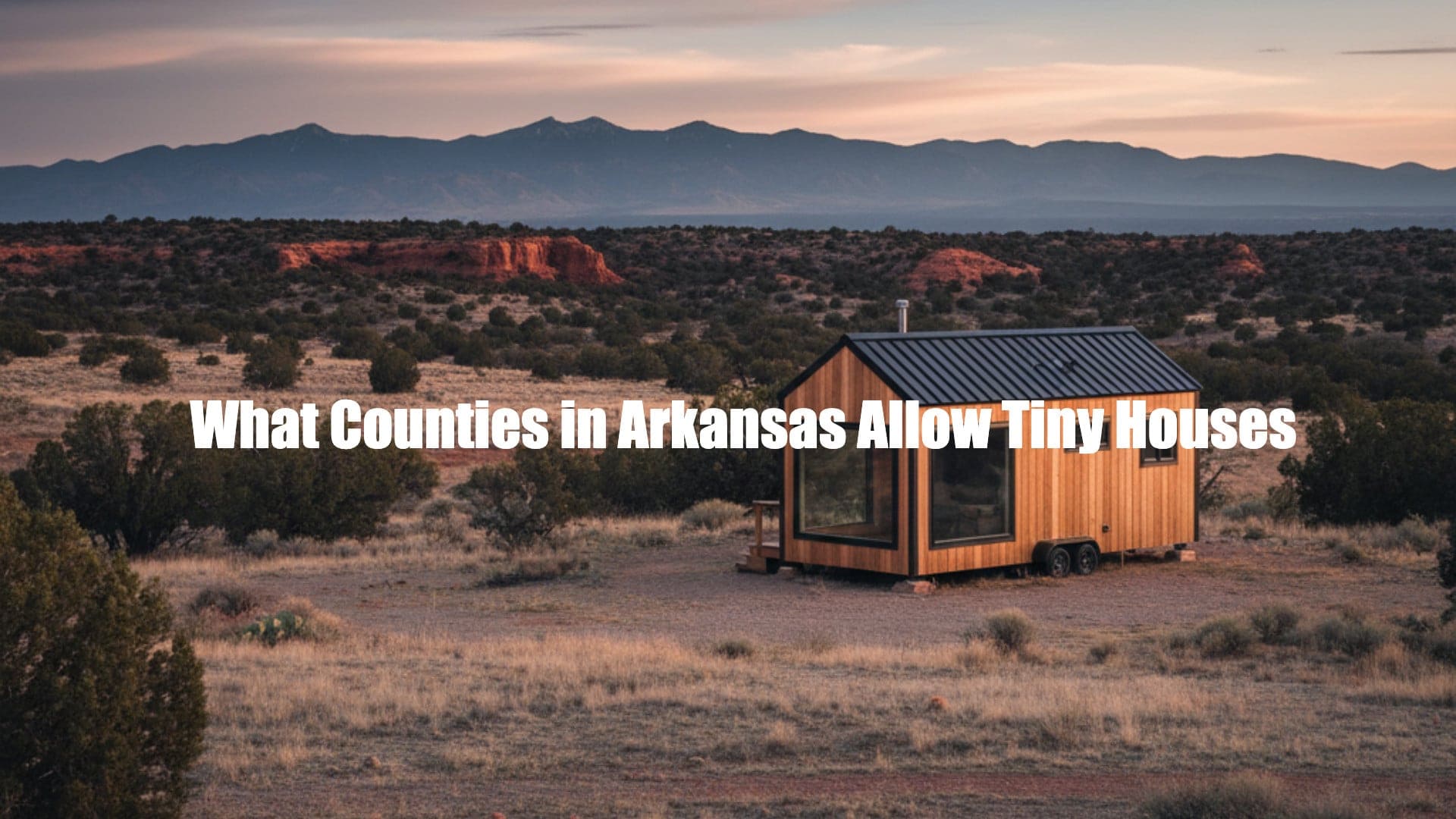
Arkansas lacks statewide tiny house laws, so regulations vary by county. Washington County permits tiny homes with a minimum of 120 square feet, while Lawrence County restricts dwellings under 600 square feet. Most counties mandate building permits and adherence to local zoning ordinances.
Arkansas presents an appealing destination for tiny house enthusiasts, featuring breathtaking natural scenery, budget-friendly land, and a laid-back rural atmosphere. From the rugged Ozark Mountains to the fertile Arkansas River Valley, the state’s varied terrain supports off-grid and eco-conscious lifestyles. Yet, prospective tiny house owners must diligently research local rules, as Arkansas tiny house regulations differ across its 75 counties, each with distinct zoning and building codes.
Before buying a tiny house in Arkansas or choosing a building site, it’s vital to grasp these local requirements. Great Lakes Tiny Homes specializes in modular, park model, and tiny home manufacturing, providing complete solutions delivered to all 48 contiguous U.S. states. We offer configurations with or without wheels and RVIA certification—Park Models are our RVIA-certified variants. Our knowledgeable team can guide you through Arkansas’s regulatory complexities.
This detailed guide covers Arkansas tiny house laws, county-specific rules, building standards, and zoning essentials to aid your decision-making. Schedule a consultation with our specialists to explore your project and ensure local compliance.
Disclaimer: This guide serves informational purposes and does not provide legal advice. Regulations and zoning can vary and evolve; consult your local zoning authority or a qualified land use attorney for personalized guidance.
Are Tiny Houses Legal in Arkansas?
Tiny houses are indeed legal in Arkansas, though their permissibility hinges on county and municipal rules rather than uniform state legislation. With no overarching tiny house statute, the state’s 75 counties independently set policies on minimum sizes, zoning categories, and construction standards. This decentralized approach allows flexibility but demands thorough local investigation.
The International Residential Code (IRC) Appendix Q outlines standards for homes 400 square feet or less, yet counties must opt into these provisions. Progressive areas have adopted tiny house accommodations, whereas conservative ones uphold larger minimums that may exclude smaller structures. Tiny houses generally fall into permanent foundation builds, mobile units on wheels, or transitional setups, each with unique compliance needs.
Building codes and zoning evolve regularly, so verification with local officials is essential before land acquisition or construction begins. Staying informed prevents potential setbacks and ensures your project aligns with current standards.
Arkansas Counties That Allow Tiny Houses
The table below outlines tiny house policies in select Arkansas counties. Variations are common, and counties without explicit tiny house rules apply broader building and zoning frameworks.
| County | Min Sq Ft | Zoning Type | Key Requirements | Source | Verified |
| Washington County | 120 sq ft | Residential | Must be non-mobile, pitched roof required, architectural standards; no building permits required for single-family homes in unincorporated areas | Washington County Planning | 2026 |
| Faulkner County | No minimum | Varies by subdivision | County has no size limits, but subdivisions may impose restrictions; general zoning applies | Faulkner County Government | 2026 |
| Lawrence County | 600 sq ft | Residential | Restrictive ordinance limits homes under 600 sq ft; tiny homes under this size generally not permitted | Lawrence County Planning | 2026 |
| Benton County | 120-400 sq ft | Municipal dependent | Tiny homes defined as permanent structures 120-400 sq ft; acceptance varies by municipality; proposals to not restrict single tiny homes on property | Benton County Regulation Proposals | 2026 |
| Pulaski County | Varies (under review) | ADU potential | Developing ADU ordinances, tiny homes may qualify as ADUs; municipal variations, e.g., Little Rock min lot 7,000 sq ft for single family | Pulaski County Government | 2026 |
Important: This table offers general guidance only. Contact the specific county planning department for current, detailed requirements before making any commitments.
Major Arkansas Cities and Tiny House Regulations
Little Rock
As the state’s capital and most populous city, Little Rock is advancing Accessory Dwelling Unit (ADU) ordinances that could facilitate tiny house integration. Aligned with Pulaski County standards, the city is pursuing more accommodating policies to tackle housing affordability. Recent state laws prohibit outright ADU bans, opening avenues for tiny house advocates.
Little Rock mandates building permits for new builds and adheres to the International Building Code with amendments. Tiny houses need utility connections where feasible and must satisfy setback rules. The planning commission evaluates applications individually, considering community impact.
Fayetteville
In Washington County, Fayetteville boasts some of Arkansas’s most supportive tiny house policies. The city permits homes starting at 120 square feet, contingent on architectural features like pitched roofs and fixed foundations. Mobile units are barred as primary dwellings in urban zones.
The planning department collaborates with builders to verify code adherence. Fayetteville has greenlit multiple tiny house initiatives and is refining rules to harmonize innovation with neighborhood preservation.
Rogers
Rogers has allocated zones near Bella Vista Lake Park for tiny house projects. Structures must use permanent foundations and follow residential codes. The city proactively designates tiny house zones while upholding design guidelines to protect community aesthetics.
Pine Bluff
Pine Bluff’s planning commission is crafting detailed tiny house frameworks. Viewing them as affordable housing, the city is defining codes and classifications. Proposed rules would confine tiny houses to R4 zones pending commission approval.
Mayor Shirley Washington champions tiny houses for their housing potential. The city aims to support tiny house neighborhoods with quality benchmarks.
Bentonville
Bentonville adheres to Benton County rules but welcomes tiny houses in suitable zones. Compliance with building codes and utilities is required. The planning team assesses proposals based on lot suitability, neighborhood fit, and infrastructure readiness.
Arkansas Tiny House Building Codes and Requirements
Permanent Foundation Requirements
Counties permitting tiny houses usually demand permanent foundations for main residences. Standards encompass concrete slabs, crawl spaces, or basements; compliance with frost lines; drainage measures; septic or sewer links; and NEC-compliant electrical. The IRC Appendix Q details tiny house specs like ceiling heights, egress, and lofts. Adopting counties enforce 6’8″ ceilings in main areas, 6’4″ in utilities, egress windows, 70 sq ft rooms, and 35 sq ft lofts with exits.
Tiny Houses on Wheels (THOWs)
THOWs encounter stricter oversight in Arkansas. Counties often deem them RVs or mobile homes, restricting use to parks, temporary stays (30-180 days), accessory roles, or farm permits. RVIA-certified THOWs gain placement advantages via federal RV compliance, though permanent residency remains limited.
Utility and Infrastructure Requirements
Codes generally require approved utilities: municipal water or wells; sewer or septic per health standards; grid or off-grid electrical per NEC; and permitted gas systems. Rural areas may permit off-grid setups with inspections. The Arkansas Department of Health oversees septic and water quality.
Safety Note: Licensed professionals must handle electrical, plumbing, and gas work, with inspections mandatory.
Accessory Dwelling Units (ADUs) in Arkansas
New state laws have expanded tiny house prospects via ADUs. Municipalities cannot ban ADUs outright, though they regulate size, location, and style. ADU rules differ by county, often capping at 50% of the main home or 800-1,200 sq ft; setbacks; one parking space; owner occupancy; and design harmony.
In Washington County, ADUs need 20 ft rear, 10 ft side, and 25 ft front setbacks. These can affect small-lot placements. Experienced Arkansas tiny house builders assist with these changes.
Tiny House Communities and Developments in Arkansas
Eagle Homes (Monte Ne)
Near Rogers, Eagle Homes is Arkansas’s pioneering tiny house neighborhood. Launched in 2021, it includes 50 units around 400 sq ft each, with one bedroom, bath, and parking. Shared facilities and utilities support individual ownership.
Sanctuary Escala (Pine Bluff)
This intentional community emphasizes sustainability, farming, and diverse housing like tiny homes, yurts, and buses. Options include rentals, purchases, or work trades.
Northwest Arkansas Tiny House Community
This online network links enthusiasts in Northwest Arkansas, offering resources, updates, and advocacy for policy improvements.
For zoned communities, consider Arkansas tiny house communities with ready infrastructure.
Permits and Approval Process
Pre-Application Research
- Verify zoning compliance for intended use
- Confirm minimum square footage requirements
- Review setback and lot coverage requirements
- Check utility availability and connection requirements
Building Permit Application
- Completed application forms
- Site plan showing structure placement and setbacks
- Construction drawings and specifications
- Structural engineering calculations (if required)
- Septic system design (for rural properties)
Inspection Process
- Foundation inspection
- Framing and structural inspection
- Electrical rough-in inspection
- Plumbing rough-in inspection
- Insulation inspection
- Final inspection and certificate of occupancy
Fees range $200-$1,000 by county. The process lasts 4-8 weeks based on complexity.
Financing and Insurance Considerations
Financing Options
- Personal loans: Unsecured loans for smaller projects
- RV loans: For RVIA-certified tiny houses on wheels
- Construction loans: For site-built tiny houses on permanent foundations
- Cash purchases: Most common due to financing limitations
Insurance Considerations
- Homeowners insurance: Available for foundation-built tiny houses
- RV insurance: For certified tiny houses on wheels
- Specialty tiny house insurance: Emerging market with specialized coverage
Specialized lenders and insurers for alternative housing improve options.
Tiny House Prices in Arkansas
Costs depend on size, type, foundation, certification, utilities, and codes. Arkansas’s low living expenses aid affordability, though compliance adds expense. Great Lakes Tiny Homes delivers turnkey units from $100,000-$150,000, including design, permitting help, build, and transport.
Models suit Arkansas zones:
- Modular Homes: For permanent structure counties
- A-Frame: For Washington County’s designs
- Cabin: For rural areas
- Park Models: For RV/temporary sites
- Tiny House on Wheels: For mobile allowances
Model selection ties to county rules, use, and goals. Experts align choices with regulations for compliance.
Mastering Arkansas’s rules is key for tiny projects. Zoning affects models, sites, and costs. Consult our team for your location and compliant plan.
Future of Tiny House Regulations in Arkansas
Regulations evolve as counties see tiny houses’ value. Trends include IRC Appendix Q adoption, ADU growth, community support, and permitting efficiency. Housing needs and rural goals favor tiny houses, though local variations persist.
Frequently Asked Questions
Q: Can I legally live in a tiny house in Arkansas?
A: Yes, you can legally live in a tiny house in Arkansas, but it depends on your county’s specific regulations. Counties like Washington County allow tiny homes with a minimum of 120 square feet, while others like Lawrence County require at least 600 square feet. Always check with your local planning department before making any commitments.
Q: What’s the smallest tiny house I can build in Arkansas?
A: The minimum size varies by county. Washington County allows tiny homes as small as 120 square feet, while Faulkner County has no minimum size requirement at the county level. However, individual subdivisions may impose their own restrictions. Some counties follow the IRC Appendix Q standard of 400 square feet or smaller.
Q: Do I need a building permit for a tiny house in Arkansas?
A: Yes, most Arkansas counties require building permits for tiny houses intended as permanent residences. The permit process typically includes site plans, construction drawings, and multiple inspections. Permit fees range from $200-$1,000 depending on the county and project size.
Q: Which Arkansas counties are most tiny house-friendly?
A: Washington County (including Fayetteville) and Faulkner County are among the most tiny house-friendly jurisdictions in Arkansas. Washington County allows 120+ square foot homes with architectural standards, while Faulkner County has no minimum size requirements at the county level.
Q: How much does it cost to build a tiny house in Arkansas?
A: Tiny house costs in Arkansas vary based on size, foundation type, RVIA certification, utility connections, and local code compliance. Professional builds typically range from $100,000-$150,000 for turnkey delivery, while DIY projects may cost $50,000-$80,000 depending on materials and labor.
How to Verify Tiny House Rules in Your County
Important Note: The steps in this section offer a general guide for checking county-specific tiny house regulations; procedures and requirements can vary, so verify directly with your local authorities to ensure compliance.
Navigating tiny house regulations in Arkansas starts with thorough verification at the county level, as rules aren’t uniform statewide. Follow this step-by-step process to confirm what’s allowed in your desired location, helping you avoid costly surprises during planning or construction.
- Research the County Zoning Code: Visit your county’s official website or planning department portal to access the zoning ordinance. Search for sections on residential dwellings, minimum size standards, and alternative housing. Download or review the full code to understand permitted uses in rural, urban, or agricultural zones.
- Check Minimum Dwelling Size Requirements: Look for stipulations on habitable space, often listed under building codes or zoning. Some counties enforce a 400 sq ft minimum based on IRC Appendix Q, while others may require more; note any exceptions for tiny homes or modular units.
- Review ADU Provisions: If considering a tiny house as an accessory dwelling unit on existing property, examine rules for secondary structures. Check setbacks, lot coverage limits, and whether owner-occupancy is required—ADUs can be a workaround in restrictive areas.
- Determine Treatment of Tiny Houses on Wheels (THOWs): Investigate if THOWs are classified as RVs, mobile homes, or permanent dwellings. RV zoning might limit them to parks or temporary use, while foundation conversions could allow residency; confirm utility hookups and duration rules.
- Contact the Local Planning Department: Call or email the county planning or zoning office for clarification—provide your parcel details for tailored advice. Schedule a pre-application meeting if available, and ask about recent updates or variances for tiny homes.
By systematically following these steps, you’ll gain a clear picture of feasibility. Document everything and consult professionals for complex cases. (178 words)
Conclusion
Arkansas provides ample prospects for tiny house living, though achievement demands adept handling of local rules. Absent statewide tiny house laws, numerous counties have crafted practical systems for placement and building. Washington County, Faulkner County, and various cities stand out as accommodating areas with defined regulatory paths.
Success in Arkansas tiny house endeavors rests on diligent research, prompt local authority involvement, and collaboration with seasoned experts familiar with the rules. Whether pursuing a foundation-based build, RVIA-certified unit, or community site, knowing local stipulations is fundamental.
As Arkansas advances its alternative housing strategies, tiny houses emerge as key to affordable, green living. The state’s scenic allure, economical land, and rising tolerance for novel homes position it well for tiny house advocates prepared to meet regulatory demands.
Interested in tiny house life in Arkansas? Connect with our specialists to review your project, assess local rules, and craft a compliant strategy.