
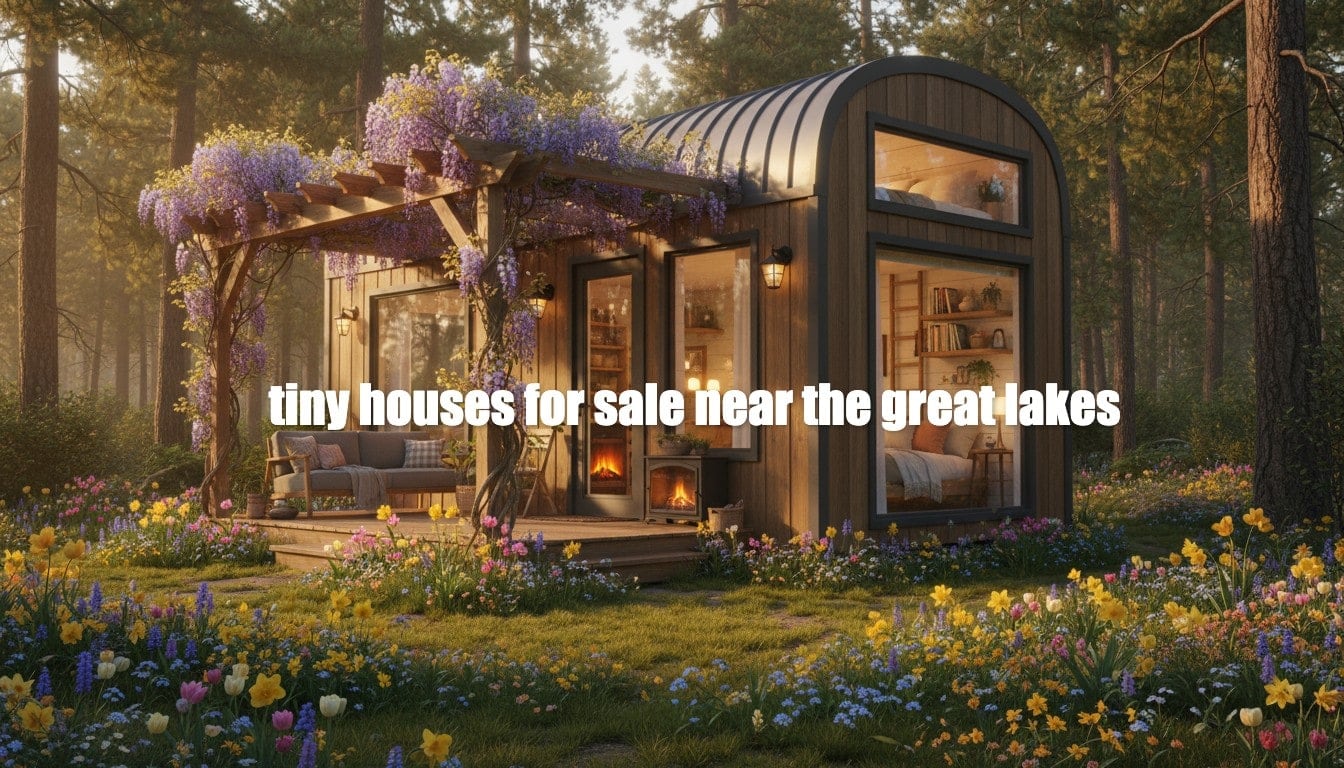
Discovering Tiny Houses for Sale in the Great Lakes: Your Complete Guide
The tiny house movement has taken the Great Lakes region by storm, offering an exciting alternative to traditional housing that combines affordability, sustainability, and a connection to some of North America’s most beautiful landscapes. We’ve seen a remarkable 40% increase in tiny house interest across Michigan, Wisconsin, Minnesota, and other Great Lakes states over the past three years. For those seeking tiny houses for sale near the Great Lakes, the options have never been more diverse or accessible.
Living small doesn’t mean sacrificing comfort, especially in this region where the changing seasons and natural beauty create the perfect backdrop for intentional living. Whether you’re looking for a permanent residence, vacation property, or investment opportunity, tiny homes offer versatility that traditional housing simply can’t match.
At Great Lakes Tiny Homes, we’re passionate about connecting people with their perfect tiny living solutions. Our team has spent years researching the tiny house market across the Great Lakes region, from custom builders to park model RVs, helping countless individuals navigate their journey toward simplified living.
Why Choose Tiny Houses in the Great Lakes: Climate and Lifestyle Advantages
When considering tiny houses for sale near the Great Lakes, we’ve found that this region offers distinct advantages that make it particularly well-suited for tiny living:
- Four-Season Living Opportunities
The Great Lakes area offers true four-season living that tiny houses can be perfectly designed to accommodate. Modern tiny houses near the Great Lakes often feature snow-load rated roofs, thermal windows, and even heated floors – making them cozy retreats during the region’s famous winters while still allowing owners to enjoy the spectacular summer months.
- Significant Cost Savings
While conventional homes in desirable Great Lakes communities can easily exceed $400,000, quality tiny houses in the same areas typically range from $60,000 to $150,000. This represents potential savings of 60-85% on purchase price alone. Additionally, tiny homeowners report average utility costs of just $35-100 per month compared to $250-400 for conventional homes.
- Abundant Land Opportunities
The Great Lakes region offers exceptional land availability compared to coastal areas, with rural parcels often available at $5,000-$15,000 per acre in many areas of Michigan’s Upper Peninsula, northern Wisconsin, and parts of Minnesota. Property taxes in these areas are typically 30-50% lower than in more densely populated regions.
- Growing Tiny Home Communities
The Great Lakes states have embraced the tiny house movement with numerous communities developing across Michigan, Wisconsin, Minnesota, and other surrounding states. These communities offer the perfect balance of independence and connection, with shared amenities like gardens, lakefront access, and community spaces.
- Sustainability Benefits
The Great Lakes region has a strong environmental consciousness, making it a natural fit for the sustainability aspects of tiny living. We’ve documented how tiny houses in this region typically use 7-10% of the energy of conventional homes. Many Great Lakes tiny homes incorporate solar panels, rainwater collection systems, and composting toilets that align perfectly with the region’s environmental values.
- Strategic Positioning
The mobility advantage of many tiny houses (particularly THOWs – Tiny Houses On Wheels) creates unique opportunities in the Great Lakes region. Owners can position their homes to enjoy Michigan’s colorful fall foliage, Wisconsin’s summer lake activities, or Minnesota’s pristine wilderness areas as the seasons change.
For those considering what counties in Michigan allow tiny houses or exploring options in other Great Lakes states, we’ve found that the combination of natural beauty, affordability, and growing acceptance of alternative housing makes this region one of the most promising areas for tiny living in the entire country.
Most Popular Tiny House Models in the Great Lakes: Features and Pricing
When exploring tiny houses for sale near the Great Lakes, we’ve identified several standout models that are particularly well-suited to the region’s climate, lifestyle, and aesthetic preferences:
- The North Woods Cabin
Square Footage: 320-400 sq ft
Price Range: $85,000-$110,000
Key Features: Exceptional cold-weather performance with R-30 wall insulation, triple-pane windows, high-efficiency wood stove, and a covered porch. The pitched roof handles heavy snow loads, while the interior showcases locally-sourced pine and cedar. Available with first-floor bedroom or loft sleeping area. - The Superior
Square Footage: 280-340 sq ft
Price Range: $75,000-$95,000
Key Features: Excels in extreme weather conditions with steel roof, spray foam insulation package, and specialized arctic insulation. Features clever storage solutions, including a staircase with integrated drawers and cabinets, plus a mud room entry – essential for Great Lakes winters. - The Mackinac
Square Footage: 400-450 sq ft
Price Range: $120,000-$150,000
Key Features: Premium model with cedar shake siding, metal roof, and generous wraparound porch. Interior features custom cabinetry, full-sized appliances, and first-floor master bedroom. Includes four-season sunroom and comprehensive smart home system. - The Erie Cottage
Square Footage: 350-400 sq ft
Price Range: $90,000-$115,000
Key Features: Ingenious expanding design with slide-out living room section. Features first-floor bedroom plus spacious loft, kitchen peninsula with seating for four, and specialized weatherproofing package for Great Lakes climate. - The Huron
Square Footage: 240-280 sq ft
Price Range: $65,000-$85,000
Key Features: Emphasizes sustainability with solar package, rainwater collection, composting toilet, and super-efficient mini-split heating/cooling. Built with reclaimed materials from deconstructed barns and factories throughout Michigan and Wisconsin.
For those interested in exploring tiny house builders in Detroit or other Great Lakes cities, many of these manufacturers offer showroom tours where potential buyers can experience these models firsthand before making a purchase decision.
Tiny House Communities and Developments Across the Great Lakes
The Great Lakes region has embraced the tiny house movement with numerous communities developing across Michigan, Wisconsin, Minnesota, Illinois, and other surrounding states.
Michigan Tiny House Communities
Traverse Bay Tiny Village – Located just outside Traverse City, this community features 45 tiny house lots ranging from 2,500-3,500 square feet, with monthly lot leases averaging $350-450. Amenities include community gardens, a shared clubhouse, high-speed internet, and private beach access on Grand Traverse Bay.
Detroit Tiny Living Collective – This urban tiny house community in Detroit includes 28 tiny homes on permanent foundations. Lot prices for purchase start at just $5,000, with complete tiny homes selling for $60,000-90,000. The community features shared solar arrays, community composting, and an urban farm.
Wisconsin Tiny House Communities
Canoe Bay ESCAPE Village – Located in northwest Wisconsin near Rice Lake, this 100-acre property features pristine lakes, hiking trails, and woodland settings. The community offers both purchase options (tiny homes with land starting at $150,000) and short-term rentals for those wanting to test tiny living.
Madison Tiny Home Village – This innovative community near Madison features 30 tiny homes arranged around a central green space. Lot leases run $300-400 monthly, with homes priced between $70,000-110,000.
Minnesota Tiny House Communities
North Shore Tiny Haven – Located near Duluth with spectacular Lake Superior views, this development has 35 tiny house lots starting at $45,000 for land only. The community features shared lake access, hiking trails, and a community building with laundry facilities and gathering spaces.
Twin Cities Tiny – This suburban Minneapolis development offers 40 homes with prices ranging from $85,000-130,000 (including land). Monthly HOA fees of $200 cover maintenance of common areas, snow removal, and community amenities.
Benefits of Community Living vs. Private Property
We’ve observed several key advantages to choosing an established tiny house community:
- Pre-approved zoning and permits, eliminating many legal hurdles
- Shared amenities that would be costly for individual homeowners
- Built-in social connections and community support
- Shared maintenance costs for infrastructure
- Enhanced security through community presence
However, private property placement offers its own benefits, including greater privacy, no HOA fees, and complete control over your surroundings.
Legal and Zoning Considerations for Tiny Houses in Great Lakes States
Navigating the legal landscape for tiny houses in the Great Lakes region requires careful research and planning:
- Research State-Specific Tiny House Regulations
Each Great Lakes state has its own approach to tiny house regulation. Michigan primarily regulates at the local level, with a minimum requirement of 120 square feet for a dwelling. Wisconsin has adopted more tiny-house-friendly amendments to its building code, including provisions for houses under 400 square feet. Minnesota follows the International Residential Code (IRC) with some modifications, including Appendix Q which specifically addresses tiny houses.
For the most current information, we recommend checking with organizations like the Michigan Tiny House Association or the Wisconsin Tiny Home Alliance.
- Understand Local County and City Zoning Laws
While state regulations provide the framework, local zoning ordinances ultimately determine where you can place a tiny house. We’ve researched extensively which areas are most accommodating to tiny homes throughout the Great Lakes region. For example, several counties in Michigan’s Upper Peninsula have minimal restrictions on dwelling size.
Urban areas typically have more restrictions, though cities like Grand Rapids, Madison, and Duluth have created pilot programs or special zoning districts for tiny houses.
- Differentiate Between Tiny Houses on Wheels vs. Foundation Requirements
Tiny houses on permanent foundations are generally treated as accessory dwelling units (ADUs) or small single-family homes, subject to building codes but with more placement options.
Tiny houses on wheels (THOWs) face more complex regulations. In Michigan, THOWs are often classified as RVs and may be restricted from full-time occupancy in many jurisdictions. Wisconsin has some counties that permit THOWs as permanent residences if they’re connected to utilities and meet certain anchoring requirements.
- Navigate Building Codes and Minimum Square Footage Requirements
Building codes present one of the most significant challenges for tiny houses in the Great Lakes region. Michigan’s building code requires habitable rooms to have a minimum of 70 square feet. Wisconsin has adopted the IRC Appendix Q, which provides specific guidelines for tiny houses under 400 square feet.
Minimum square footage requirements vary widely across the region. Rural areas generally have more flexibility, with some townships having no minimum size requirements at all.
- Understand Utility Hookup Regulations
Water and sewer connections are typically regulated at the county level, with health departments overseeing well and septic approvals. Many rural areas in the Great Lakes region allow composting toilets and greywater systems as alternatives to traditional septic systems.
Electrical connections generally must meet state electrical codes, with inspections required before occupancy. In colder Great Lakes climates, special attention must be paid to water line depth and insulation to prevent freezing.
Working with local authorities is essential when navigating tiny house regulations in the Great Lakes region. For complex situations, consulting with an attorney specializing in land use or a tiny house consultant familiar with what counties in Illinois allow tiny houses or regulations in other Great Lakes states can save significant time and prevent costly mistakes.
Financing and Insuring Your Tiny House in the Great Lakes
Securing financing and insurance for tiny houses in the Great Lakes region presents unique challenges and opportunities:
Financing Options for Great Lakes Tiny Houses
RV Loans for Tiny Houses on Wheels
For tiny houses on wheels (THOWs), RV loans often provide the most accessible financing option with these typical terms:
- Down payment requirements: 10-20%
- Interest rates: 4-7% (as of publication)
- Loan terms: 10-15 years
- Requirements: RVIA certification often necessary
Notable Great Lakes lenders offering RV loans for certified tiny houses include Lake Michigan Credit Union, Summit Credit Union (Wisconsin), and Wings Financial Credit Union (Minnesota).
Personal Loans
Personal loans provide flexibility for financing both custom-built and pre-owned tiny houses:
- Loan amounts: Typically up to $100,000
- Interest rates: 6-36% (highly dependent on credit score)
- Loan terms: 2-7 years
- Benefits: No collateral required, faster approval process
Regional banks like Huntington Bank and Fifth Third Bank offer personal loans that can be used for tiny house purchases, as do online lenders like LightStream and SoFi.
Builder Financing Programs
Many tiny house builders serving the Great Lakes region offer in-house financing options:
- Michigan Tiny Homes: Offers 5-10 year financing with 15-20% down
- Wisconsin Tiny Living: Partners with local credit unions to offer specialized financing packages
- Great Lakes Tiny Builders: Provides rent-to-own options with 24-36 month terms
Insurance Options for Great Lakes Tiny Houses
Stationary Tiny House Insurance
For tiny houses on foundations in the Great Lakes region, several insurance options exist:
- Modified Homeowners Policies: Companies like State Farm and Allstate have begun offering modified homeowners policies
- Dwelling Fire Policies: Often used for tiny houses that don’t qualify for standard homeowners insurance
- Tiny House Specialty Policies: Companies like Strategic Insurance and Foremost offer policies specifically designed for tiny homes
Coverage considerations specific to the Great Lakes region include enhanced coverage for snow load damage, water damage protection, freeze protection for plumbing systems, and wind damage coverage for lakefront properties.
Mobile Tiny House Insurance
For tiny houses on wheels, insurance options include:
- RV Insurance: Companies like Progressive and Good Sam offer policies for RVIA-certified tiny houses
- Specialty Tiny House Insurance: Providers like American Modern and American Family have developed specific products for THOWs
- Trip Transit Coverage: Essential for moving your tiny house between locations
Insurance costs for tiny houses in the Great Lakes region typically range from $500-$1,200 annually for foundation-based homes and $800-$1,500 annually for tiny houses on wheels.
We recommend working with insurance agents who have specific experience with tiny houses in the Great Lakes region. Companies like Tiny House Insurance Agency in Traverse City and Midwest Tiny Living Insurance Group have developed specialized knowledge of the unique insurance needs of tiny homeowners in northern climates.
Step-by-Step Guide to Buying a Tiny House in the Great Lakes
Purchasing a tiny house in the Great Lakes region involves several unique considerations due to the climate, regulations, and available options:
- Determine Your Needs and Budget
Before beginning your search, clarify your requirements and financial parameters:
- Establish your maximum budget (including land if needed)
- Decide between a tiny house on wheels (THOW) or foundation-based home
- Determine minimum square footage needed for comfort
- List must-have features (full bathroom, separate bedroom, etc.)
- Consider climate-specific needs (insulation values, heating systems)
For Great Lakes tiny homes, we’ve found that allocating 60-70% of your budget to the house itself and 30-40% to land and site preparation creates a balanced approach.
- Research Builders and Models
The Great Lakes region has numerous tiny house builders specializing in homes designed for our northern climate:
- Research builders within 200 miles of your intended location
- Review online portfolios and customer testimonials
- Check Better Business Bureau ratings and online reviews
- Compare standard features, customization options, and base pricing
- Verify warranty terms (particularly important for harsh winters)
Pay special attention to builders who specialize in cold-weather construction techniques, including enhanced insulation packages, specialized plumbing protection, and efficient heating systems.
- Visit Showrooms and Tiny Home Communities
Nothing replaces firsthand experience when evaluating tiny houses:
- Schedule visits to builder showrooms and model homes
- Attend tiny house festivals and events throughout the Great Lakes region
- Arrange overnight stays in tiny house rentals to test livability
- Tour established tiny house communities to understand lifestyle options
When visiting during winter months, pay attention to how comfortable the homes feel, how well heating systems perform, and whether any condensation issues are visible.
- Understand Customization Options
Most tiny house builders offer customization options that can be particularly valuable for Great Lakes living:
- Enhanced insulation packages (we recommend minimum R-values of R-30 for walls, R-40 for roofs)
- Upgraded windows (triple-pane often worth the investment)
- Alternative heating systems (mini-splits with heat pumps, radiant floor heating)
- Snow-load rated roofing with appropriate pitch
- Freeze-protected plumbing systems
- Secure Financing
Several options exist for funding your tiny house purchase:
- Begin by checking with local credit unions familiar with tiny house lending
- Compare personal loan options from multiple sources
- Investigate builder financing if available
- Consider RV loans for certified tiny houses on wheels
We recommend applying with multiple lenders to compare terms and securing pre-approval before finalizing your tiny house selection.
- Choose Land or a Community
If you don’t already have land, this decision runs parallel to selecting your tiny house:
- Research counties in Michigan that allow tiny houses or similar information for other Great Lakes states
- Investigate established tiny house communities and their requirements
- Consider proximity to amenities, employment, and recreational opportunities
- Evaluate seasonal access (particularly important for remote properties)
- Check utility availability or requirements for off-grid systems
For Great Lakes properties, we recommend paying special attention to drainage, snowplow access, and southern exposure for passive solar benefits during winter months.
- Navigate Zoning and Permits
This critical step requires thorough research and often professional assistance:
- Contact county and township zoning departments to verify tiny house regulations
- Determine required permits (building, septic, well, electrical, etc.)
- Understand minimum square footage requirements and potential variances
- Verify setbacks, height restrictions, and other zoning parameters
We’ve found that scheduling in-person meetings with zoning officials often yields better results than phone or email inquiries, as tiny houses may require interpretation of existing codes.
- Prepare for Delivery and Setup
Site preparation is particularly important in the Great Lakes region:
- Arrange for site clearing and grading if needed
- Install a suitable foundation (frost-protected foundations recommended)
- Prepare utility connections (with appropriate freeze protection)
- Ensure delivery access for large vehicles
- Schedule delivery during favorable weather conditions (avoiding spring thaw)
For winter deliveries, we recommend having snow removal equipment available and ensuring that the site is accessible regardless of weather conditions.
- Connect Utilities
Establishing utilities requires careful planning in the Great Lakes climate:
- Arrange for electrical connection and inspection
- Install propane tanks if using gas appliances (sized appropriately for winter usage)
- Complete water and sewer/septic connections with proper insulation and heat tape
- Consider backup power options for winter storm outages
We strongly recommend burying water lines below the frost line (typically 42-60 inches in the Great Lakes region) or using alternative protection methods like heat tape and insulation for above-ground installations.
- Move In and Adapt to Tiny Living
The final step involves thoughtful planning for comfortable tiny living:
- Downsize possessions before moving day
- Develop storage systems for seasonal items
- Create outdoor living spaces for summer use
- Establish maintenance routines specific to tiny houses
- Prepare for seasonal transitions (particularly winter weatherization)
Frequently Asked Questions
What makes the Great Lakes region ideal for tiny house living?
The Great Lakes area provides four-season living opportunities with tiny houses designed for harsh winters, featuring snow-load rated roofs and heated floors. It also offers significant cost savings, with tiny homes priced 60-85% lower than traditional houses, plus abundant affordable land and growing sustainable communities that align with the region’s environmental values.
How much do tiny houses cost near the Great Lakes?
Quality tiny houses in the Great Lakes region typically range from $60,000 to $150,000, depending on size and features. For example, popular models like the North Woods Cabin start at $85,000, offering substantial savings compared to conventional homes that often exceed $400,000 in desirable areas.
What are some popular tiny house models suited for the Great Lakes climate?
Standout models include the North Woods Cabin (320-400 sq ft, $85,000-$110,000) with R-30 insulation and a wood stove for cold weather, the Superior (280-340 sq ft, $75,000-$95,000) featuring arctic insulation and a mud room, and the Mackinac (400-450 sq ft, $120,000-$150,000) with premium cedar siding and a wraparound porch for seasonal enjoyment.
Why has interest in tiny houses grown in the Great Lakes states?
Tiny house interest has surged 40% over the past three years in states like Michigan, Wisconsin, and Minnesota due to their affordability, sustainability, and connection to natural landscapes. The versatility of tiny homes for permanent residences, vacations, or investments, combined with lower utility costs and land availability, makes them an attractive option for intentional living.
Note: The answers in this FAQ section are based on general trends and examples from the Great Lakes tiny house market; individual experiences may vary, so research current local options for your specific needs.
Conclusion: Key Takeaways for Finding Your Perfect Great Lakes Tiny Home
As we’ve explored throughout this guide, tiny houses for sale near the Great Lakes offer a unique opportunity to embrace simplified living while enjoying one of North America’s most beautiful regions. The Great Lakes tiny house market continues to evolve, with more builders, communities, and financing options emerging each year.
Before you embark on your tiny house journey, we want to leave you with these essential takeaways:
- Climate Considerations Are Paramount – When evaluating tiny houses for sale near the Great Lakes, prioritize models designed specifically for our four-season climate with superior insulation, efficient heating systems, and thoughtful design elements.
- Location Research Is Critical – Take time to thoroughly investigate what counties in Michigan allow tiny houses or similar information for other states in the region. Zoning regulations vary dramatically, and finding the right location is as important as selecting the right tiny house.
- Community Options Provide Advantages – The growing number of tiny house communities throughout the Great Lakes states offers an alternative to individual land placement, often solving zoning challenges while providing amenities and social connections.
- Financing Is Becoming More Accessible – While financing tiny houses still presents challenges, we’ve seen significant improvements in available options throughout the Great Lakes region, with more lenders developing specific programs for tiny homes.
- Professional Guidance Saves Time and Money – Working with builders, real estate agents, and consultants who specialize in tiny houses in the Great Lakes region can significantly streamline your journey and help you avoid costly mistakes.
- Seasonal Planning Affects Success – The timing of your tiny house purchase, delivery, and setup can significantly impact the process. Planning these activities during favorable weather conditions will make for a smoother transition to tiny living.
We encourage you to use this guide as a reference throughout your tiny house journey. Whether you’re drawn to the shores of Lake Michigan, the forests of northern Wisconsin, or the wilderness areas of Minnesota’s North Shore, there’s a tiny house solution waiting for you in the Great Lakes region.
For the most current information on tiny houses for sale near the Great Lakes, including new models, communities, and regulatory changes, we recommend bookmarking this guide and checking back regularly as you progress in your tiny house journey.
Happy tiny house hunting!