
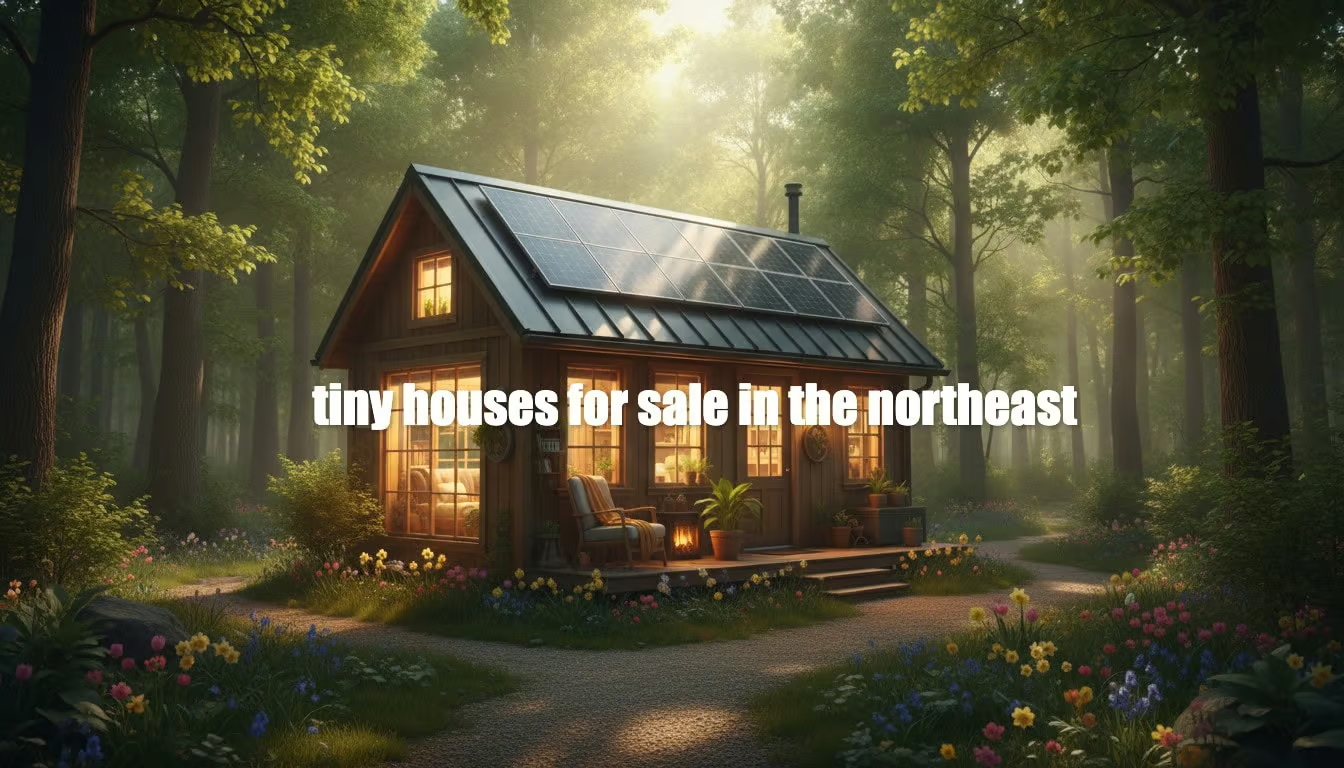
Discovering Tiny Houses for Sale in the Northeast: Your Complete Guide
The tiny house movement continues to gain momentum across the Northeast, with more people than ever seeking affordable, sustainable living options in this vibrant region. When searching for tiny houses for sale in the Northeast, prospective buyers are discovering a world of innovative designs specifically adapted to the region’s distinct four-season climate. According to recent industry data, the Northeast has seen a 34% increase in tiny home interest over the past two years, with states like Maine, Vermont, and New Hampshire leading the charge.
In this comprehensive guide, we’ll explore everything you need to know about finding and purchasing the perfect tiny home in the Northeast. From popular builders and standout models to legal considerations and financing options, we’ve compiled the essential information to help you navigate this unique housing market with confidence.
At Great Lakes Tiny Homes, we understand the growing appeal of downsized living in the Northeast region. Our experience with tiny home enthusiasts has given us valuable insights into what buyers are looking for in these compact, efficient dwellings. We’re excited to share this knowledge as we explore the diverse options available across New England and the Mid-Atlantic states.
Why Choose Tiny Houses in the Northeast: Climate and Lifestyle Advantages
The Northeast offers unique advantages for tiny house living that set it apart from other regions. We’ve compiled the most compelling reasons why tiny houses in the Northeast are becoming increasingly popular choices for homeowners:
- Four-Season Climate Adaptability
Unlike the consistently warm climates of southern states, the Northeast experiences all four seasons distinctly. Tiny houses here are specifically designed with superior insulation, efficient heating systems, and durable exteriors to withstand heavy snow loads and freezing temperatures. Many feature cozy wood stoves that create an unmatched ambiance during picturesque winters. Well-designed tiny homes in the Northeast can reduce heating costs by up to 60% compared to conventional homes.
- Significant Cost Savings in Expensive Housing Markets
The Northeast contains some of the nation’s most expensive housing markets, with median home prices in areas like Boston ($700,000+), New York suburbs ($500,000+), and coastal Connecticut ($450,000+) far exceeding national averages. Tiny homes for sale in Northeastern states typically range from $50,000 to $150,000, representing savings of 70-85% compared to traditional housing. Beyond purchase price, the reduced utility costs create substantial ongoing savings that enable financial freedom.
- Strategic Land Opportunities
The Northeast offers a unique combination of rural affordability and proximity to major cultural centers. In rural areas of Maine, New Hampshire, Vermont, and upstate New York, land can be purchased for as little as $1,000-$5,000 per acre, while still being within 2-3 hours of major metropolitan areas. Property taxes in these rural Northeastern communities are often 40-60% lower than in suburban areas.
- Established and Emerging Tiny Home Communities
The Northeast is home to some of the nation’s most progressive tiny house communities and eco-villages. We’re seeing established communities in places like Massachusetts, New York, and Vermont that offer shared resources, community gardens, and collaborative living environments. These communities often feature shared workshops, community centers, and co-working spaces that extend the functional living area beyond the tiny house itself.
- Environmental Sustainability and Reduced Carbon Footprint
The Northeast’s commitment to environmental protection aligns perfectly with tiny house values. The average tiny home in the Northeast produces 5,500 fewer pounds of carbon dioxide annually compared to conventional homes. Many incorporate locally-sourced materials like regional timber species that reduce transportation emissions and support local economies.
- Rich Cultural and Recreational Access
The Northeast’s compact geography offers tiny home dwellers exceptional access to diverse experiences within short distances. Tiny homeowners can position themselves within easy reach of the region’s abundant cultural institutions, historic sites, and educational opportunities. The Northeast’s extensive public lands system—including the Appalachian Trail, Adirondack Park, Green Mountain National Forest, and Acadia National Park—provides unparalleled recreational access.
Most Popular Tiny House Models in the Northeast: Features and Pricing
We’ve carefully selected the most sought-after tiny house models available throughout the Northeast region. These designs have proven particularly popular due to their thoughtful adaptation to the region’s climate, aesthetic preferences, and practical needs:
- The Catskill Cabin by Hudson River Tiny Homes
This 280-square-foot model has become one of the most recognizable tiny houses for sale in the Northeast due to its perfect blend of rustic charm and modern functionality. Built with thermally efficient SIPs and featuring R-30 wall insulation and R-40 roof insulation, it excels in Northeastern winters. The standout feature is its cathedral ceiling with exposed beams and large south-facing windows that maximize solar gain during cold months. Priced between $85,000-$95,000, it represents the mid-range market for quality tiny homes in the region.
- The Vermont Haven by Green Mountain Tiny Homes
At 320 square feet, this slightly larger tiny home has gained tremendous popularity in the Northeast for its exceptional cold-weather performance. The defining feature is its super-insulated shell (R-32 walls, R-50 roof) and triple-pane windows that maintain interior comfort even during the harshest New England winters. Priced between $95,000-$110,000, it represents the upper-mid range of the market but delivers exceptional value through its energy performance.
- The Berkshire by Massachusetts Tiny Living
This compact 220-square-foot model has become the entry-level favorite for Northeastern tiny house buyers seeking affordability without sacrificing quality. Despite its smaller footprint, the thoughtful design incorporates a surprisingly spacious feel through multi-functional furniture and clever storage solutions. Priced between $65,000-$75,000, it represents the most accessible price point for new, professionally-built tiny homes in the Northeast market.
- The Adirondack by Upstate Tiny Homes
This 300-square-foot model has developed a strong following in the Northeast for its exceptional durability and rustic luxury aesthetic. Built on a reinforced trailer rated for heavy snow loads, it features a metal roof with snow breaks and enhanced structural support throughout. The defining feature is its substantial covered porch that creates usable outdoor living space even during light precipitation. Priced between $90,000-$105,000, it occupies the upper-mid market segment.
- The Coastal Cottage by New England Tiny Homes
This 260-square-foot model has captured the hearts of Northeastern coastal community buyers with its nautical-inspired design and exceptional resistance to salt air and coastal conditions. Its signature feature is the rooftop deck that maximizes views and outdoor living space without increasing the home’s footprint. Priced between $80,000-$90,000, it represents a specialized design for coastal environments.
Tiny House Communities and Developments Across the Northeast
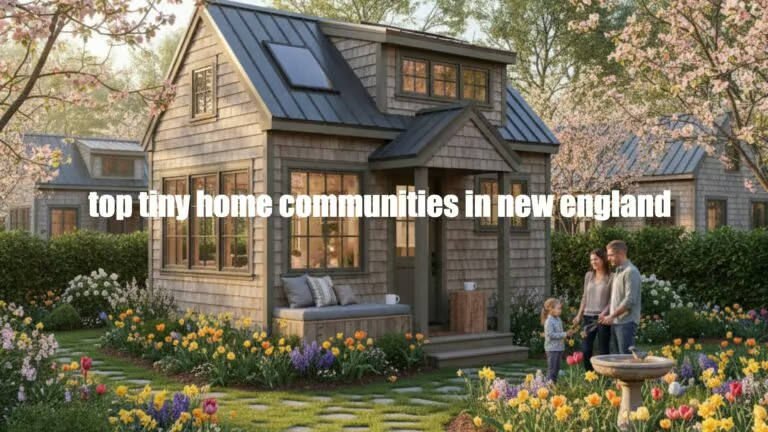
The Northeast has emerged as a leader in developing innovative tiny house communities that combine affordability with strong social connections and environmental sustainability. We’ve researched the most established and promising tiny house communities across the region to help prospective buyers understand their options beyond individual land placement.
Established Communities
Green Bridge Eco-Village – Western Massachusetts
Located in the Berkshires, this pioneering community has become a model for sustainable tiny house living in the Northeast. The community features 24 tiny homes arranged around shared green spaces and community facilities. Residents own their tiny houses while leasing land through a community land trust model that keeps costs affordable long-term. Monthly land lease fees range from $300-400 and include access to a 3,000-square-foot common house with expanded kitchen facilities, workshop space, laundry, and guest accommodations.
Seacoast Tiny Village – Coastal New Hampshire
This unique coastal community has created an innovative model for tiny house living that addresses the extremely high property values of New England’s coastline. Located just three miles from the Atlantic Ocean, the community consists of 18 tiny houses on foundations and 12 THOW (Tiny Houses on Wheels) sites arranged around a central green space. The community operates under a cooperative ownership structure where residents collectively own the 5-acre property.
Hudson Valley Tiny Cooperative – Hudson Valley, New York
This community has pioneered the integration of tiny houses into the historic and artistic character of the Hudson Valley. Located on 12 acres of former farmland, the community features 30 tiny house sites arranged in neighborhood clusters. The community operates under a limited equity cooperative model that balances affordability with resident control.
Emerging Communities and Developments
Maine Woods Tiny Community – Central Maine
This new development is creating an innovative model for rural tiny house living with a focus on outdoor recreation and self-sufficiency. Located on 40 acres of woodland with a small lake, the community will eventually include 35 tiny houses with a mix of permanent foundations and THOW sites. The development operates under a land lease model with 99-year renewable leases.
Urban Tiny Row – Providence, Rhode Island
This innovative urban development represents the cutting edge of integrating tiny houses into city environments. Located in a revitalizing neighborhood near downtown Providence, this infill development features 16 foundation-based tiny houses arranged along a pedestrian-friendly street with shared green space.
Community vs. Private Land Placement
We find that Northeastern tiny house owners face a fundamental choice between community living and private land placement. Each option offers distinct advantages:
Community Benefits:
- Shared infrastructure costs for utilities, road maintenance, and snow removal
- Built-in social connections and support networks
- Access to expanded amenities and shared spaces
- Often located in areas with established tiny house-friendly zoning
Private Land Advantages:
- Greater autonomy and privacy
- Ability to develop land according to personal preferences
- Potential for greater appreciation in land value over time
- No community fees or governance structures
Legal and Zoning Considerations for Tiny Houses in Northeastern States
Navigating the legal landscape for tiny houses in the Northeast requires careful research and planning. We’ve compiled this essential guide to help you understand the regulatory environment across Northeastern states.
- Research State-Specific Tiny House Regulations
Each Northeastern state has taken a different approach to tiny house regulation. Vermont has emerged as one of the most tiny house-friendly states in the region, with state-level guidance that encourages municipalities to accommodate tiny homes as part of affordable housing solutions. Maine has also made significant progress, with the Maine Uniform Building and Energy Code (MUBEC) including provisions for tiny houses as small as 400 square feet. New Hampshire has adopted appendix Q of the International Residential Code, which provides building standards specifically for tiny houses on foundations.
In contrast, Massachusetts, Connecticut, and Rhode Island have less explicit state-level guidance, leaving more regulatory authority to local jurisdictions.
- Understand Local County and Municipal Zoning
Local zoning regulations ultimately determine where and how you can place a tiny house in the Northeast. Rural counties in northern Maine, Vermont, and the Adirondack region of New York often have the most flexible regulations. At the municipal level, towns like Brattleboro (VT), Portland (ME), and Great Barrington (MA) have adopted progressive zoning amendments that specifically accommodate tiny houses.
- Differentiate Between Tiny Houses on Wheels vs. Foundations
The legal classification of your tiny house fundamentally affects where and how you can place it in the Northeast. Tiny houses on permanent foundations are generally regulated as standard dwellings under building codes. Tiny Houses on Wheels (THOWs) face more complex regulation and may be classified as recreational vehicles, accessory structures, or temporary structures depending on local regulations.
- Navigate Building Codes and Minimum Square Footage
Building codes present significant challenges for tiny houses in the Northeast, with requirements that sometimes conflict with tiny house design principles. Minimum habitable space requirements remain one of the most significant barriers, with many Northeastern jurisdictions requiring minimum total square footage (often 700-1,000 square feet) and minimum room dimensions.
Financing and Insuring Your Tiny House in the Northeast
Securing appropriate financing and insurance for a tiny house in the Northeast presents unique challenges and opportunities. We’ve researched the options available specifically for Northeastern tiny home buyers.
Financing Options for Northeastern Tiny Houses
RV Loans for RVIA-Certified Tiny Houses on Wheels
For tiny houses built by RVIA-certified manufacturers, RV loans offer one of the most accessible financing paths in the Northeast. These loans typically feature:
- Terms of 10-15 years (shorter than traditional mortgages)
- Interest rates ranging from 5-8% depending on credit score and market conditions
- Down payment requirements of 10-20%
- Loan amounts up to $100,000 or more for high-end models
Personal Loans for Custom and Self-Built Tiny Houses
For custom-built tiny houses or those from non-RVIA builders, personal loans provide a flexible if somewhat more expensive option. In the Northeast market, these typically feature:
- Terms of 5-7 years (occasionally up to 12 years for excellent credit)
- Interest rates ranging from 7-12% for well-qualified borrowers
- Loan amounts typically capped at $50,000-$75,000
Local Credit Unions with Tiny House Programs
Credit unions across the Northeast have been at the forefront of developing specialized tiny house lending programs:
- Vermont State Employees Credit Union – Offers “VGreen” loans specifically applicable to energy-efficient tiny houses
- Maine Federal Credit Union – Provides specialized “Alternative Housing Loans” with terms up to 20 years
- Alternatives Federal Credit Union (New York) – Offers progressive lending programs for non-traditional housing
Insurance Options for Northeastern Tiny Houses
Insurance for Stationary Tiny Houses
For tiny houses on foundations or permanently placed on land, several insurance options exist:
- Dwelling Fire Policies: Offered by companies like Vermont Mutual, MMG Insurance, and Union Mutual specifically for the Northeast market.
- Homeowners Policies: Some Northeastern insurers like Amica, Concord Group, and Patriot Insurance offer modified HO-3 policies for tiny houses that meet certain building code requirements.
Insurance for Tiny Houses on Wheels
Mobile tiny houses require specialized insurance approaches:
- RV Insurance: For RVIA-certified tiny houses, companies like Progressive, National General, and Good Sam offer specialized RV policies.
- Specialty Tiny House Insurance: Companies like Strategic Insurance Agency and Darrell Grenz Insurance have developed programs specifically for non-RVIA tiny houses on wheels.
Coverage Considerations for Northeastern Climate
The Northeast’s distinct seasonal challenges require specific insurance coverages:
- Winter Weather Protection: Policies should explicitly cover snow load damage, freezing pipes, ice dam formation, and heating system failure.
- Flood Insurance: Standard policies don’t cover flooding, a significant risk in many Northeastern locations.
- Wind Coverage: In coastal areas vulnerable to hurricanes and nor’easters, wind coverage may require a separate policy or rider.
Step-by-Step Guide to Buying a Tiny House in the Northeast
Purchasing a tiny house in the Northeast requires careful planning and consideration of the region’s unique climate, regulatory environment, and housing market. We’ve created this comprehensive guide to help you navigate each stage of the buying process.
- Determine Your Needs and Budget
Create a detailed requirements document that includes minimum and ideal square footage, must-have features for Northeastern climate, preferred layout, storage requirements for seasonal items, mobility needs, and utility requirements. For budgeting, account for the base tiny house cost ($50,000-150,000), land costs if purchasing, site preparation, permits and fees, delivery costs, and winter preparation costs specific to the Northeast.
- Research Builders and Models
The Northeast has developed a robust ecosystem of tiny house builders specializing in designs appropriate for the region’s climate challenges. Research at least 5-7 builders serving the Northeast market, comparing their construction methods, particularly insulation values (minimum R-25 walls and R-40 roof for Northeastern climate). Key Northeastern builders include B&B Micro Manufacturing (Massachusetts), Tiny House Northeast (New Hampshire), Liberation Tiny Homes (Pennsylvania), and Hudson River Tiny Homes (New York).
- Visit Showrooms and Tiny Home Communities
Attend Northeastern tiny house festivals and events, schedule visits to builder showrooms, arrange stays in tiny house rentals, and visit established tiny house communities to understand community living options. Ask about heating system performance during winters, winterization procedures, and storage solutions for seasonal items.
- Choose Land or a Community
Research zoning regulations in your target municipalities, identify tiny house-friendly communities, and evaluate land for southern exposure, wind protection, drainage, road access during winter conditions, and utility availability. Northeastern regions with more favorable tiny house regulations include rural areas of Vermont, coastal Maine communities, the Berkshires region of Massachusetts, and the Upper Hudson Valley in New York.
- Navigate Zoning and Permits
Meet with local building officials early in the process, submit professionally prepared plans that meet local building codes, apply for any necessary variances or special permits, and understand the inspection process and timeline. Key permits typically required in Northeastern jurisdictions include building permits, zoning permits, electrical permits, plumbing permits, and septic permits for rural locations.
- Prepare for Delivery and Setup
Schedule site work during the building season (typically May-October), prepare the foundation or pad well in advance of delivery, ensure utilities are ready for connection, and create all-weather access for delivery vehicles. For foundation-based tiny houses, site preparation includes excavation and frost-protected foundation, utility trenching at appropriate depth, and drainage systems to manage spring thaw.
- Connect Utilities and Move In
Work with licensed professionals familiar with cold-climate installations, install water lines below the frost line with appropriate insulation, and consider heat trace systems for vulnerable plumbing. When moving in, downsize progressively, create seasonal storage solutions, establish systems for daily living in a compact space, and prepare for your first winter with adequate supplies and backup systems.
Frequently Asked Questions
Important Note: The responses in this FAQ section offer general insights into tiny houses for sale in the Northeast based on current trends and data; they are not personalized advice and may vary by location or situation. Consult local builders, real estate professionals, or authorities for specifics relevant to your needs.
What are the key advantages of choosing a tiny house in the Northeast?
The Northeast provides unique benefits for tiny house living, including adaptability to the four-season climate with features like superior insulation and efficient heating that can cut costs by up to 60%. It also offers significant savings in high-cost housing markets, where tiny homes range from $50,000 to $150,000, alongside affordable rural land opportunities near urban centers and access to established communities and environmental perks like reduced carbon footprints.
How has interest in tiny houses grown in the Northeast?
Recent industry data shows a 34% increase in tiny home interest over the past two years in the Northeast, driven by states like Maine, Vermont, and New Hampshire. This surge reflects the appeal of affordable, sustainable options tailored to the region’s climate and lifestyle, with innovative designs from builders like Great Lakes Tiny Homes catering to downsized living enthusiasts.
What features make tiny houses suitable for the Northeast’s climate?
Tiny houses in the Northeast are designed with superior insulation, such as R-30 walls and R-40 roofs, durable exteriors for snow loads, and efficient systems like wood stoves to handle freezing temperatures. These adaptations not only ensure comfort during harsh winters but also maximize energy efficiency, reducing heating costs compared to traditional homes.
Why consider tiny house communities in the Northeast?
The region hosts progressive tiny house communities and eco-villages in states like Massachusetts, New York, and Vermont, offering shared resources such as community gardens, workshops, and co-working spaces. These setups enhance sustainable living by extending functional space beyond the individual home and fostering collaborative environments close to cultural and recreational opportunities.
Conclusion: Key Takeaways for Finding Your Perfect Northeastern Tiny Home
As we’ve explored throughout this guide, tiny houses for sale in the Northeast offer unique opportunities for affordable, sustainable living in one of America’s most beautiful and diverse regions. The growing tiny house movement across New England and the Mid-Atlantic states reflects a shift toward intentional living that embraces both the challenges and rewards of the Northeast’s distinctive character.
Essential Takeaways
- Climate-Appropriate Design is Non-Negotiable – When shopping for tiny houses for sale in the Northeast, prioritize models with superior insulation, efficient heating systems, and structural designs that can handle snow loads and freeze-thaw cycles.
- Location Research is Critical – The Northeast’s patchwork of regulations means your tiny house’s legal status depends heavily on location. Invest time in researching zoning regulations and building codes before committing to land or a specific house design.
- Community Options Provide Valuable Alternatives – The region’s established and emerging tiny house communities offer paths of less resistance for placement while providing social connections and shared resources.
- Financing is Increasingly Accessible – Specialized lenders and progressive Northeastern credit unions have created financing pathways specifically for tiny houses, making ownership more accessible than ever before.
- Four-Season Adaptability Requires Planning – Successful tiny living in the Northeast means embracing seasonal changes with appropriate storage solutions, indoor-outdoor living spaces, and systems designed for year-round comfort.
Whether you’re drawn to a woodland tiny house in the mountains of Vermont, a coastal cottage in Maine, or an urban tiny home in one of the region’s progressive cities, the Northeast offers diverse opportunities to create a tiny living experience aligned with your values and lifestyle.
The path to tiny house ownership in the Northeast may present challenges, but the rewards are substantial: financial freedom in one of the nation’s most expensive housing markets, sustainable living in a region known for environmental consciousness, and the opportunity to create a home perfectly sized for your needs in an area of remarkable natural beauty and cultural richness.