
Introduction to Tiny Home Living in Northern California
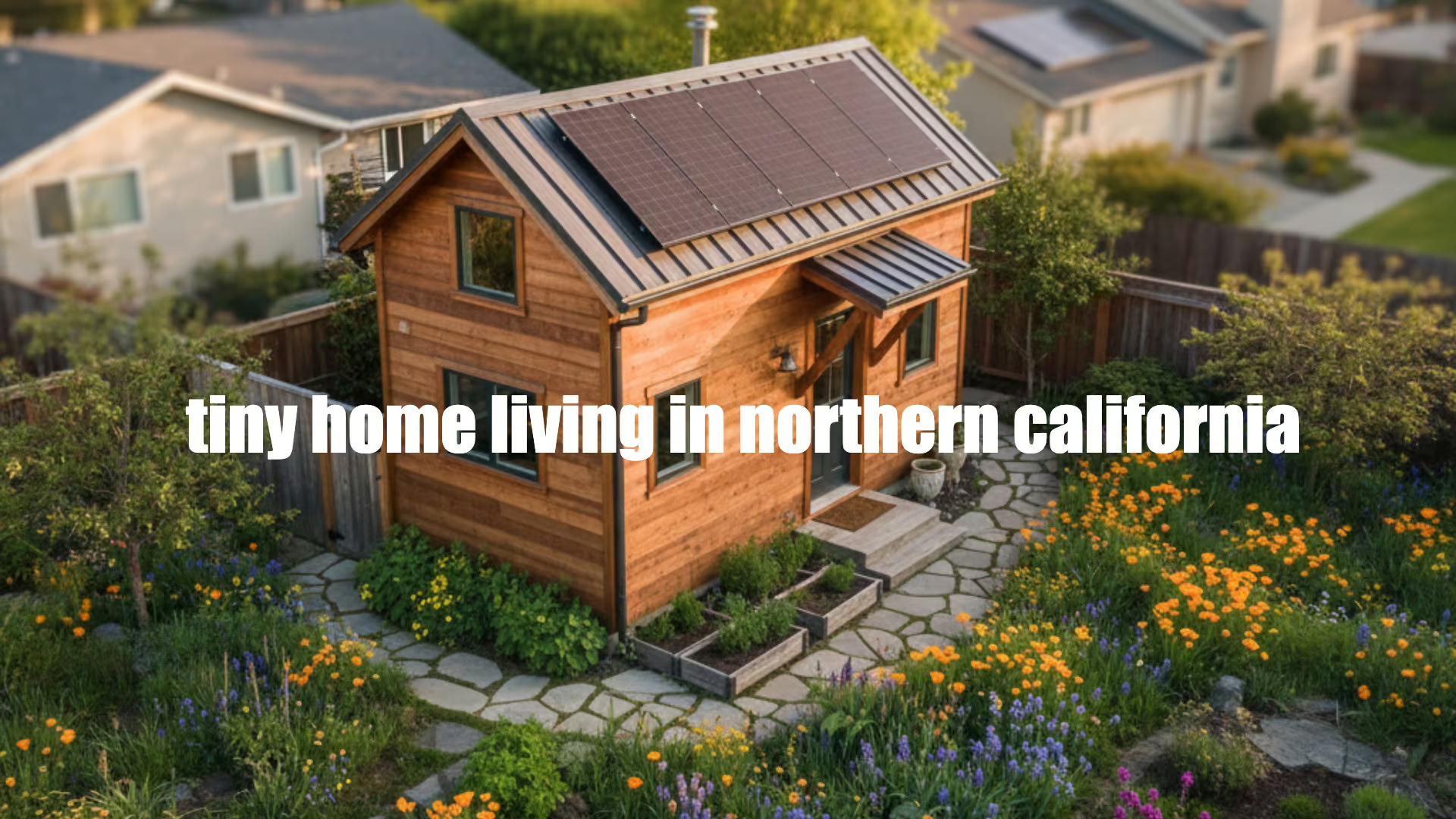
Tiny home living in Northern California continues to gain momentum as a practical response to the region’s escalating housing costs and desire for sustainable lifestyles. This approach appeals to a wide range of individuals, from young professionals navigating high rents to retirees seeking simplified living arrangements. The area’s stunning natural environments, including coastal redwoods, inland valleys, and proximity to urban centers like San Francisco and Sacramento, make it an attractive destination for those embracing minimalism.
Northern California’s temperate climate supports year-round outdoor activities, enhancing the appeal of compact living spaces that encourage connection with nature. Progressive policies around accessory dwelling units (ADUs) and alternative housing have further facilitated this trend, allowing more people to realize their vision of affordable, eco-friendly homes. As communities evolve, tiny homes are increasingly integrated into both rural retreats and suburban backyards.
At Great Lakes Tiny Homes, we specialize in crafting modular and park model tiny homes that comply with California’s diverse regulations. Our builds are delivered across the lower 48 states, with options for RVIA certification or foundation-based installations tailored to Northern California’s unique needs. Whether you’re drawn to the financial benefits or the environmental ethos, our team can assist in transforming your ideas into a functional reality. For personalized advice on starting your journey, consider reaching out to our experts.
Is tiny home living viable in this region? Yes, with proper planning and adherence to local rules, it offers a fulfilling alternative to conventional housing. This guide explores the essentials, from legal considerations to community options, to help you navigate the process effectively.
The Benefits of Tiny Home Living in Northern California
Adopting tiny home living in Northern California yields multifaceted advantages that extend well beyond immediate financial relief. The lifestyle promotes intentional living, where every square foot serves a purpose, fostering creativity in space utilization. Residents often report reduced stress from lower maintenance demands, allowing more time for pursuits like hiking in the coastal ranges or exploring wine country.
Environmentally, tiny homes align with California’s sustainability goals by minimizing energy consumption and material use. These structures typically require 60-70% less electricity than standard homes, supporting the state’s renewable energy initiatives. Additionally, their smaller footprint reduces urban sprawl, preserving the natural beauty that defines Northern California.
Financially, the shift can dramatically lower living expenses, with many owners eliminating mortgage payments entirely. This freedom enables investments in experiences, such as weekend getaways to Lake Tahoe or local farm-to-table dining. Socially, tiny home communities build strong networks, where shared values around simplicity and ecology create lasting connections.
Mobility remains a standout feature, particularly for wheeled models, allowing adaptation to seasonal changes or job relocations within the region. Overall, this lifestyle enhances well-being by prioritizing quality over quantity in both possessions and experiences.
Navigating Tiny Home Regulations in Northern California
California’s regulatory framework for tiny homes emphasizes safety and compliance, with Northern California counties adopting nuanced approaches to state guidelines. The 2022 California Residential Code, particularly Appendix Q, outlines standards for tiny houses, including minimum room sizes and ceiling heights to ensure habitability. Local variations mean that what works in Sonoma County might require adjustments in Alameda County.
RVIA certification plays a pivotal role for mobile units, classifying them as recreational vehicles that bypass some traditional permitting hurdles. These certified homes can often be sited in RV parks or as temporary dwellings, though long-term residency may need additional approvals. For permanent installations, ADU laws under AB 670 and SB 13 provide pathways for backyard placements, streamlining the process for homeowners.
Foundational tiny homes must adhere to seismic and fire safety codes prevalent in this earthquake-prone area, incorporating reinforced structures and non-combustible materials. Wheeled options offer flexibility but face parking restrictions in urban zones, often limited to designated areas. Consulting county planning departments early helps identify site-specific requirements, such as utility connections and setbacks.
Permits are generally required for any fixed installation, involving inspections for electrical, plumbing, and structural integrity. At Great Lakes Tiny Homes, we assist clients in selecting the optimal certification path to align with their location and lifestyle goals.
Top Tiny Home Communities in Northern California
Northern California boasts a variety of established tiny home communities that cater to different preferences, from coastal serenity to inland convenience. These enclaves provide not just parking spaces but also communal facilities that enrich daily life.
Park Delta Bay RV & Tiny House Resort: Located in the California Delta near Isleton, this 15-acre community is Northern California’s first legal tiny house village. It features 13 owner-occupied tiny homes alongside RV sites, with amenities including a swimming pool, tennis courts, clubhouse, and river access for fishing and boating. Full hookups for water, sewer, and electricity are standard, with monthly fees covering common area maintenance. The relaxed atmosphere suits full-time residents seeking proximity to Sacramento and the Bay Area.
Tiny Tranquility at The Redwoods: Nestled in Hiouchi near Crescent City, this eco-focused retreat offers spacious sites amid old-growth redwoods. Tiny homes here benefit from proximity to Jedediah Smith Redwoods State Park, with community perks like shared outdoor spaces and easy access to local markets. Long-term rentals start around $800 monthly, appealing to nature enthusiasts wanting off-grid options with modern conveniences.
Dillon Beach Village: On Sonoma County’s coastline, this 40-acre village provides oceanfront tiny home sites with clubhouse facilities, laundry, and beach access. It accommodates both wheeled and foundational units, fostering a tight-knit community through events and gardens. Fees range from $1,200 to $1,800, including utilities, making it ideal for those balancing rural peace with urban accessibility.
Emerald Village in the Sierra Foothills: This sustainable 60-acre community in the mountains emphasizes permaculture and solar power. Residents participate in workshops and farm activities, with tiny homes integrated into forested lots. Monthly costs of $900 to $1,400 support cooperative governance and eco-initiatives, attracting those committed to green living.
Other notable spots include Bay Area Tiny House Resort for urban-adjacent options and private Mendocino arrangements for seclusion. Each community reflects Northern California’s blend of innovation and natural harmony.
Costs and Financing Options for Tiny Homes in Northern California
The financial aspects of tiny home living in Northern California reveal substantial long-term savings, though initial investments vary by design and location. Modular builds from reputable manufacturers like Great Lakes Tiny Homes generally range from $100,000 to $160,000, encompassing high-quality materials and custom features suited to the region’s climate.
Site-related expenses depend on the setup: community lot fees average $700 to $1,600 monthly, often including utilities and amenities. Private land placements might involve one-time permitting costs of $5,000 to $15,000, plus ongoing property taxes if classified as an ADU. Transportation for wheeled models adds $2,000 to $5,000, depending on distance from the build site.
Financing avenues have expanded, with options tailored to tiny homes’ unique status. RV loans for certified units offer terms up to 20 years at rates around 6-8%, while personal loans suit cash purchases up to $100,000. For foundational ADUs, home equity lines or construction loans provide competitive financing, especially valuable in high-equity markets like the Bay Area.
Comparing overall costs highlights the appeal:
| Expense Category | Tiny Home (Monthly) | Traditional Home (Monthly) |
|---|---|---|
| Housing Payment | $800-1,600 | $3,800-6,500 |
| Utilities | $60-160 | $220-450 |
| Maintenance | $100-250 | $350-700 |
| Insurance | $50-120 | $160-350 |
| Property Taxes | $0-250 | $900-2,200 |
| Total | $1,010-2,376 | $5,430-10,200 |
These figures underscore potential annual savings of $50,000 or more, factoring in current market trends.
How to Choose and Build Your Tiny Home in Northern California
Selecting and constructing a tiny home in Northern California demands a structured approach to align with personal goals and regulatory realities. Start by defining your priorities: mobility for frequent relocations or permanence for family use? Assess space needs, considering lofts for sleeping and multi-functional furniture for daily living.
Partnering with an experienced builder ensures compliance and quality. Great Lakes Tiny Homes excels in creating durable structures that withstand the area’s occasional seismic activity and coastal fog. Our process involves detailed consultations to customize layouts, from solar integrations to efficient insulation, all while meeting RVIA or building code standards.
Permitting follows design finalization, where we coordinate with local authorities to secure approvals efficiently. For ADU conversions, this includes site plans and utility assessments; for mobile units, DMV registration suffices in many cases. Budget for inspections, which verify safety features like egress windows and smoke detectors essential in this fire-aware region.
Climate adaptations are crucial: incorporate passive solar design for energy efficiency and ventilation systems to manage humidity near the coast. Post-construction, establish a maintenance routine covering seasonal checks on foundations or trailer axles. This comprehensive strategy guarantees a seamless transition to tiny living.
We invite you to schedule a consultation with our team to discuss your specific needs and explore how we can help bring your tiny home vision to life.
Key Takeaways for Tiny Home Living in Northern California
Tiny home living in Northern California offers a compelling blend of affordability, sustainability, and lifestyle enhancement amid challenging housing markets. The region’s supportive policies, diverse communities, and natural assets make it a prime location for this movement. Key to success is thorough regulatory research and professional guidance to avoid common pitfalls.
Financial benefits are profound, with drastically reduced costs enabling greater life flexibility. Environmentally, these homes contribute to California’s green objectives through lower resource use. Communities foster belonging, turning neighbors into networks of shared purpose.
From coastal villages to foothill retreats, options abound for every preference. Professional builds ensure longevity and compliance, maximizing your investment. As the trend grows, early adopters enjoy both practical rewards and pioneering satisfaction.
Ready to take the next step toward tiny home living in Northern California? Our team at Great Lakes Tiny Homes has helped hundreds of customers make their tiny home dreams a reality. Book a call with our experts today to discuss your specific needs and explore how we can help you join the growing community of satisfied tiny home residents throughout Northern California.
Frequently Asked Questions About Tiny Home Living in Northern California
Is tiny home living legal in Northern California? Yes, with variations by location. The 2022 California Building Code supports tiny homes via Appendix Q, while ADU laws facilitate backyard units. RVIA-certified models fit RV park regulations, but always verify county specifics for permanent residency.
What’s the average cost of a tiny home in Northern California? Builds range from $100,000 to $160,000, plus $20,000-40,000 for setup and permits. Monthly expenses total $1,000-2,500, far below traditional housing’s $5,000+ average, yielding significant savings over time.
Where are the best places to park a tiny home in Northern California? Prime spots include Park Delta Bay for Delta living, Tiny Tranquility for redwood immersion, and Dillon Beach Village for coastal vibes. Rural counties like Mendocino offer private options, while RV resorts suit mobile lifestyles.
Can I finance a tiny home purchase? Absolutely, through RV loans (6-8% rates, up to 20 years), personal loans, or ADU-specific financing. We collaborate with lenders to match options to your build type and credit profile for accessible funding.
How do I find tiny home communities in Northern California? Explore resources like tiny home communities in California, local planning offices, and online forums. Our insights from regional projects can recommend fits based on amenities, costs, and vibe.
What’s the difference between tiny homes and RVs? Tiny homes prioritize residential comfort with superior insulation and fixtures, unlike RVs’ travel focus. Certified hybrids combine both, easing placement while delivering home-like quality for extended living.
How do tiny homes handle Northern California winters? Mild conditions require basic heating, but we add efficient systems and insulation for comfort. Coastal fog demands moisture controls, while inland areas benefit from solar backups during rainy seasons.
How can Great Lakes Tiny Homes help with my project? We offer end-to-end support: design, permitting navigation, construction, and installation. Our California expertise ensures code compliance and tailored features. Contact us to discuss your timeline and requirements.