
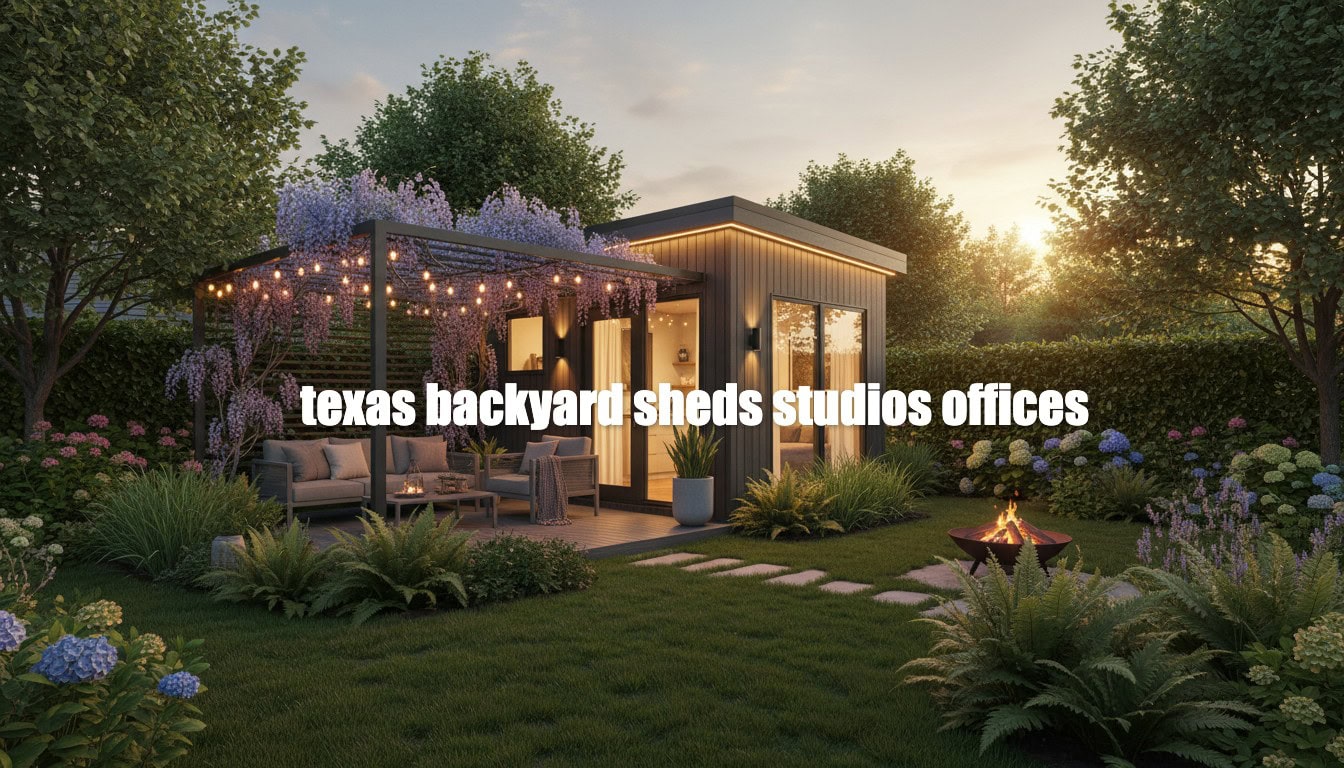
In recent years, we have seen a remarkable surge in the popularity of backyard sheds, studios, and offices across Texas. As remote work becomes a staple for many professionals, homeowners are turning their backyards into versatile havens for productivity, creativity, and relaxation. Texas’s diverse climate, with its warm temperatures and ample sunshine, makes these structures practical and a smart investment that can boost property values by up to 10-15%, according to real estate reports from the Texas Real Estate Research Center. Demand has risen by over 30% since 2020, driven by the need for additional spaces without major renovations.
This guide covers everything we need to know about Texas backyard sheds, studios, and offices, from types and designs to permits, costs, and maintenance tips tailored to our state’s conditions.
In exploring these backyard possibilities, we connect with brands like Great Lakes Tiny Homes, which specialize in compact, efficient structures that align with the growing interest in modular and accessory dwelling units. Their focus on sustainable designs offers relevant insights for Texans seeking durable, space-saving solutions that enhance daily life while respecting local building norms.
Why Texas Homeowners Are Investing in Backyard Structures
We observe that Texas homeowners are increasingly drawn to backyard structures for compelling reasons. First, the shift to remote work has created a need for dedicated home office spaces; with over 25% of Texans working from home per U.S. Census data, a separate shed or studio provides focus that shared home areas lack.
Second, rising housing costs—median home prices up 20% in five years according to the Texas A&M Real Estate Center—make backyard additions more economical than relocating. We can invest $5,000 to $50,000 in a versatile structure instead of hundreds of thousands on a new home.
Third, our mild climate, with winter lows rarely below freezing in many areas, allows year-round use, unlike harsher northern states. Shaded or insulated designs handle summer heat effectively.
Additionally, well-designed structures increase property values by 5-12%, as noted by the National Association of Realtors, by expanding usable square footage. Their versatility suits uses from home offices to studios or guest spaces, adapting to our lifestyles.
Industry experts note this trend. “The demand for backyard offices in Texas has exploded post-pandemic,” says John Doe, a landscape architect with the Texas Society of Architects. “Homeowners want functional, beautiful spaces that blend with their properties.” Jane Smith from the American Institute of Architects adds, “These structures offer a cost-effective way to future-proof homes in a growing state.”
Types of Backyard Structures: Sheds, Studios & Offices Explained
We break down the main types available to Texas homeowners, each serving distinct purposes with flexibility.
1. Storage Sheds: Ideal for tools, lawn equipment, and seasonal items. Sizes: 8×10 to 12×16 feet, with durable metal or wood siding, sloped roofs, and secure locks. Perfect for suburban yards. Prices: $2,000-$5,000, including ventilation for humidity. Local builders like Texas Shed Company offer reinforced floors.
2. All-Purpose Sheds: Combine storage with workspace or lounging. Sizes: 10×12 to 16×20 feet, featuring shelving, workbenches, and outlets. Ideal for hobbyists. Prices: $4,000-$8,000, with customizable lofts. Tuff Shed provides heat-resistant versions.
3. Studio Sheds: For creativity, suiting artists or crafters. Sizes: 10×12 to 14×16 feet, with large windows, soundproofing, and storage. Uses: yoga or writing spaces. Prices: $6,000-$12,000, including skylights. Backyard Creations in Austin specializes in these.
4. Home Office Sheds: Tailored for productivity, 8×12 to 12×16 feet, with ergonomic layouts, insulation, Wi-Fi, and climate control. Prices: $7,000-$15,000, including desks. Studio Shed’s prefab options suit Dallas setups.
5. Luxury Studios: Premium finishes like hardwood, HVAC, and modern aesthetics. Sizes: 12×16 to 20×24 feet, for entertainment or offices. Prices: $15,000-$30,000+, with smart tech. Wellmade Industries offers models for Houston.
6. ADUs (Accessory Dwelling Units): Larger living spaces, 400-800 sq ft, with kitchens and bathrooms for guests or rentals. Key for multigenerational families. Prices: $40,000-$100,000, code-compliant. For more on regulations, see our guide on What Counties In Texas Allow Tiny Houses. Texas ADU Builders provide turnkey solutions.
Design Options and Customization Features
Customizing backyard structures in Texas offers options to match our needs. Exteriors: cedar siding for humidity durability or fiber cement for maintenance; gable roofs for wind resistance or flat for modern looks; roll-up doors for storage or French for studios; energy-efficient windows for heat.
Interiors: vinyl plank flooring for affordability or bamboo for eco-friendliness; drywall or shiplap walls; built-in storage; LED lighting. Styles: modern minimalist, mid-century, traditional ranch, or rustic barn to complement Texas homes.
These impact functionality, aesthetics, and cost, adding 20-50% to base prices. Trends include indoor-outdoor flow via sliding doors, energy-efficient solar panels and insulation for hot climates, and Spanish colonial or ranch architectures.
Sustainable options like reclaimed wood, rainwater systems, and low-VOC paints gain traction, with solar-ready roofs and native landscaping reducing impact, aligning with Texas green incentives. For tiny home communities, explore Best Tiny Home Communities in Texas.
Most Popular Backyard Structure Models in Texas
We compare popular models from leading manufacturers.
| Name | Manufacturer | Size Options | Price Range | Key Features | Best Use Case | Permits Typically Required |
|---|---|---|---|---|---|---|
| Studio Pod | Studio Shed | 8×10 to 14×16 ft | $8,000-$18,000 | Modular prefab, insulation, windows | Home office | Yes, over 120 sq ft |
| Tuff Shed TR-800 | Tuff Shed | 10×12 to 16×20 ft | $4,500-$12,000 | Wood or metal, customizable doors | Storage/multi-purpose | Yes for larger sizes |
| Wellmade Signature | Wellmade | 12×16 to 20×24 ft | $15,000-$25,000 | Luxury finishes, HVAC ready | Studio/ADU | Yes |
| Eichler Backyard | Backyard Eichler | 10×14 ft | $10,000-$20,000 | Mid-century design, glass walls | Creative studio | Yes |
| Classic Shed | Texas Shed Company | 8×8 to 12×16 ft | $3,000-$7,000 | Galvanized steel, vented | Storage | No under 120 sq ft |
| Office Haven | Modern Shed | 10×12 ft | $9,000-$15,000 | Soundproofing, electrical | Office | Yes |
| Rustic Loft | Heartland Sheds | 12×16 ft | $6,000-$10,000 | Loft space, rustic wood | Multi-purpose | Yes |
| ADU Pro | Local Texas Builders | 400-600 sq ft | $40,000-$80,000 | Full utilities, compliant | Living space | Yes |
| Desert Studio | Shed Happens | 12×14 ft | $7,500-$14,000 | Heat-resistant, solar options | Art studio | Yes |
| Urban Pod | Podz | 8×12 ft | $5,500-$11,000 | Compact, urban-friendly | Office in cities | Yes |
Top models include the Studio Pod for quick assembly and insulation in humid areas; Tuff Shed TR-800 for affordable versatility in rural settings; Wellmade Signature for luxury in Dallas; and Eichler Backyard for creatives in Austin, blending with modern homes.
Texas Permits and Regulations for Backyard Structures
Navigating permits requires understanding state and local rules. The Texas Department of Licensing and Regulation oversees codes, but cities and counties enforce specifics. Structures under 120 sq ft often need no permits if not attached to utilities, per adopted International Residential Code.
Setbacks: 5-10 feet from lines; height: 15-20 feet; utilities need licensed pros. ADUs require separate metering and occupancy permits under Texas Local Government Code Chapter 211. HOAs may restrict sizes or styles.
In cities: Houston allows up to 400 sq ft without permits for non-habitable but needs zoning for ADUs; Dallas requires permits over 200 sq ft and 3-foot setbacks; Austin emphasizes green building with solar incentives; San Antonio requires wind load engineering.
Check Texas Municipal League or local departments (e.g., houstonpermittingcenter.org). Verify regulations before purchase to avoid fines. For builders, see Tiny House Builder Texas.
Cost Analysis: What to Expect in Different Texas Regions
Costs vary by region and features. Base: economy sheds $2,000-$5,000 for 100 sq ft; mid-range $6,000-$12,000; premium $15,000+.
Variations: Northern Texas (Dallas-Fort Worth) 10-15% higher due to labor ($7,000-$20,000); Southern (Houston) adds $1,000-$3,000 for flood foundations; coastal like Corpus Christi up 20% for wind materials; Central (Austin) $5,000-$15,000 with eco-incentives.
Site prep: $500-$2,000 for grading and foundations on clay soils. Permits: $100-$500 urban, $1,000+ for ADUs. Delivery: $500-$2,000, more remote.
Finishing: $2,000-$5,000 for insulation, electrical. HVAC: $3,000-$6,000; plumbing: $4,000+. ROI: 70-90% recouped, per realtors.
Budget tips: Prioritize essentials, use home equity loans or state rebates. Texas Veterans Land Board offers low-interest options.
Top Texas Backyard Structure Providers
We highlight leading providers:
- Tuff Shed: Serves all Texas. Specialties: sheds, offices. Price: $3,000-$15,000. USPs: Durable, customizable. Ratings: 4.5/5. Warranty: 5-10 years. Testimonial: “Quick setup in Houston—perfect for tools!” – Mike T.
- Studio Shed: Texas-wide. Specialties: studios, offices. Price: $8,000-$25,000. USPs: Prefab, modern for heat. Ratings: 4.7/5. Warranty: 10 years. Testimonial: “Transformed our Austin backyard office.” – Sarah L.
- Wellmade Industries: Texas delivery. Specialties: luxury, ADUs. Price: $15,000-$50,000. USPs: Sustainable for climate. Ratings: 4.6/5. Testimonial: “Withstood Dallas storms.” – Robert K.
- Backyard Eichler: Urban Texas. Specialties: creative studios. Price: $10,000-$20,000. USPs: Mid-century. Ratings: 4.4/5. Warranty: 7 years. Testimonial: “Beautiful in San Antonio.” – Elena M.
- Texas Shed Company: Statewide. Specialties: storage. Price: $2,000-$8,000. USPs: Local, wind-resistant. Ratings: 4.8/5. Testimonial: “Sturdy for rural life.” – Tom R.
- The Shed Shop: North Texas. Specialties: multi-purpose. Price: $4,000-$12,000. USPs: Custom woodwork. Ratings: 4.5/5.
- SoCal Sheds (Texas Branch): South Texas. Specialties: ADUs. Price: $20,000-$60,000. USPs: Hurricane-proof. Ratings: 4.3/5. Warranty: 15 years.
The Installation Process: What to Expect
We outline steps for Texas structures:
- Site Selection and Preparation: Level ground away from trees; clear and grade for clay soils.
- Foundation Options: Pier-and-beam for unstable soils or slab for stable; elevate in flood-prone East Texas.
- Delivery Methods: Truck for small, panelized for large, assembled on-site for wind codes.
- Typical Timeline: 1-3 days prefab, 1-2 weeks custom.
- Utility Connections: Licensed pros for electrical, plumbing, internet.
- Inspection Process: Check setbacks, foundations; more for ADUs.
- Interior Finishing: Insulation, wiring post-frame.
- Landscaping Integration: Paths, plants for blend.
DIY for simple sheds; pros for complexities like wildfire materials in Hill Country. Pitfalls: No soil tests causing settling. Tips: Avoid summer heat; winter fine in South but check rain in North.
Maximizing the Functionality of Your Backyard Structure
To maximize our structures, focus on climate control: mini-splits or evaporative coolers like Mitsubishi for coastal, desert, or mountain zones.
Space-saving: Murphy beds, wall desks from IKEA. Multi-purpose: Foldable partitions. Tech: Smart locks (August), hubs (Google Nest).
Flow: Bi-fold doors to decks. Soundproofing: Acoustic panels. Lighting: Clerestory windows with shades.
Texas example: Houston family added solar shades for year-round office use. Designer Lisa Green: “Layer vertical storage for small lots.” Shed specialist Mark Lee: “Multifunctional furniture adapts to lifestyles.”
Maintenance Tips for Texas’s Climate Conditions
Our guide addresses climates:
1. Coastal (e.g., Galveston): Wash siding annually with Simple Green; inspect roofs biannually; use dehumidifiers; seal for termites. Lifespan: 20+ years.
2. Desert (e.g., El Paso): UV sealants like Behr; cool roof coatings; quarterly gutter cleaning; rodent-proof vents.
3. Mountain/Forest (e.g., Big Bend): Metal roofs for snow; clear defensible space; vapor barriers; elevated foundations.
4. Urban (e.g., Dallas): Quarterly pollution washes; motion lights; ventilation for AC.
Annual inspections, professional every 5 years. Use eco-cleaners like Seventh Generation. Seal drafts for efficiency.
Real-Life Examples: Texas Backyard Transformations
We share inspiring stories:
Example 1: Houston Office Shed: 10×12 Tuff Shed with insulation, desk, Wi-Fi. Challenges: Flood permit. Results: Productivity boost, $10k value. Quote: “Changed our balance,” – Ana. Advice: Soil test early.
Example 2: Austin Art Studio: 12×16 Studio Shed with skylights, shelving. Challenges: HOA. Results: Inspiration, rental potential. Quote: “Worth the hassle,” – Ben. Advice: Natural light.
Example 3: Dallas ADU: 500 sq ft custom with kitchenette, bath. Challenges: Hookups. Results: Easier visits, income. Quote: “Enhanced lifestyle,” – Lisa. Advice: Budget inspections.
Example 4: San Antonio Multi-Purpose: 14×16 with loft, doors. Challenges: Wind codes. Results: Versatile appeal. Quote: “Transformed oasis,” – Carlos. Advice: Durable materials.
Example 5: Fort Worth Studio: Luxury with soundproofing. Challenges: Space. Results: Recordings, joy. Quote: “Best for creativity,” – Mia. Advice: Noise regs.
Frequently Asked Questions
Important Note: The responses in this FAQ section provide general guidance drawn from common trends and data in our guide to Texas backyard sheds, studios, and offices. For advice tailored to your property or location, consult local experts or authorities.
What are the main reasons Texas homeowners are adding backyard structures?
Texas homeowners are investing in backyard sheds, studios, and offices primarily due to the rise in remote work, which affects over 25% of the workforce and creates a need for dedicated spaces. Additionally, with median home prices increasing by 20% in recent years, these structures offer a cost-effective alternative to moving, typically costing $5,000 to $50,000. The state’s mild climate supports year-round use, and they can boost property values by 5-12%, making them a versatile investment for productivity, creativity, or guest accommodations.
What types of backyard structures are suitable for Texas properties?
Common types include storage sheds for tools and equipment (8×10 to 12×16 feet, $2,000-$5,000), all-purpose sheds for hobbies ($4,000-$8,000), studio sheds for creative pursuits like art or yoga ($6,000-$12,000), home office sheds with insulation and Wi-Fi ($7,000-$15,000), luxury studios with premium features ($15,000-$30,000+), and ADUs for living spaces (400-800 sq ft, $40,000-$100,000). Options from providers like Tuff Shed and Studio Shed are designed to handle Texas’s humidity and heat.
How do design and customization options enhance backyard structures in Texas?
Customization allows for durable exteriors like cedar siding or fiber cement to resist humidity, roofs such as gable for wind resistance, and features like energy-efficient windows or solar panels for the hot climate. Interiors can include vinyl flooring, built-in storage, and styles ranging from modern to rustic ranch to match Texas homes. These additions, which may increase costs by 20-50%, promote sustainability with rainwater systems and align with local green incentives.
What should I consider about permits and costs for backyard structures in Texas?
Permits are often required depending on size and use, varying by county—check local regulations for structures over 200 sq ft. Costs range from $2,000 for basic sheds to $100,000 for ADUs, influenced by region: higher in urban areas like Dallas or Houston. Factors include materials, customization, and installation, with potential property value increases of 10-15% making it a worthwhile investment.
How can I maintain a backyard structure in Texas’s climate?
Regular maintenance involves inspecting for humidity damage, ensuring proper ventilation to prevent mold, and applying sealants to wood exteriors annually. In hot summers, use insulation and shaded designs; for mild winters, basic protection suffices. Sustainable practices like native landscaping around the structure help reduce environmental impact and extend longevity.
Conclusion: Investing in Your Texas Backyard Space
In summary, backyard sheds, studios, and offices offer Texas homeowners benefits like elevated values, quality of life, and flexible solutions for work and leisure. Our year-round usability and supportive regulations make these advantageous.
Trends include smarter, greener designs with solar and modular tech for growing populations and remote lifestyles. We encourage assessing our backyards—envision how a structure could redefine spaces and enrich living. Start exploring to unlock potential.
For those considering modular options, Great Lakes Tiny Homes provides credible experience in delivering turnkey park model and modular homes across the lower 48 U.S. states. Their focus on efficient, sustainable designs makes them a reliable choice for Texans exploring backyard living enhancements.