
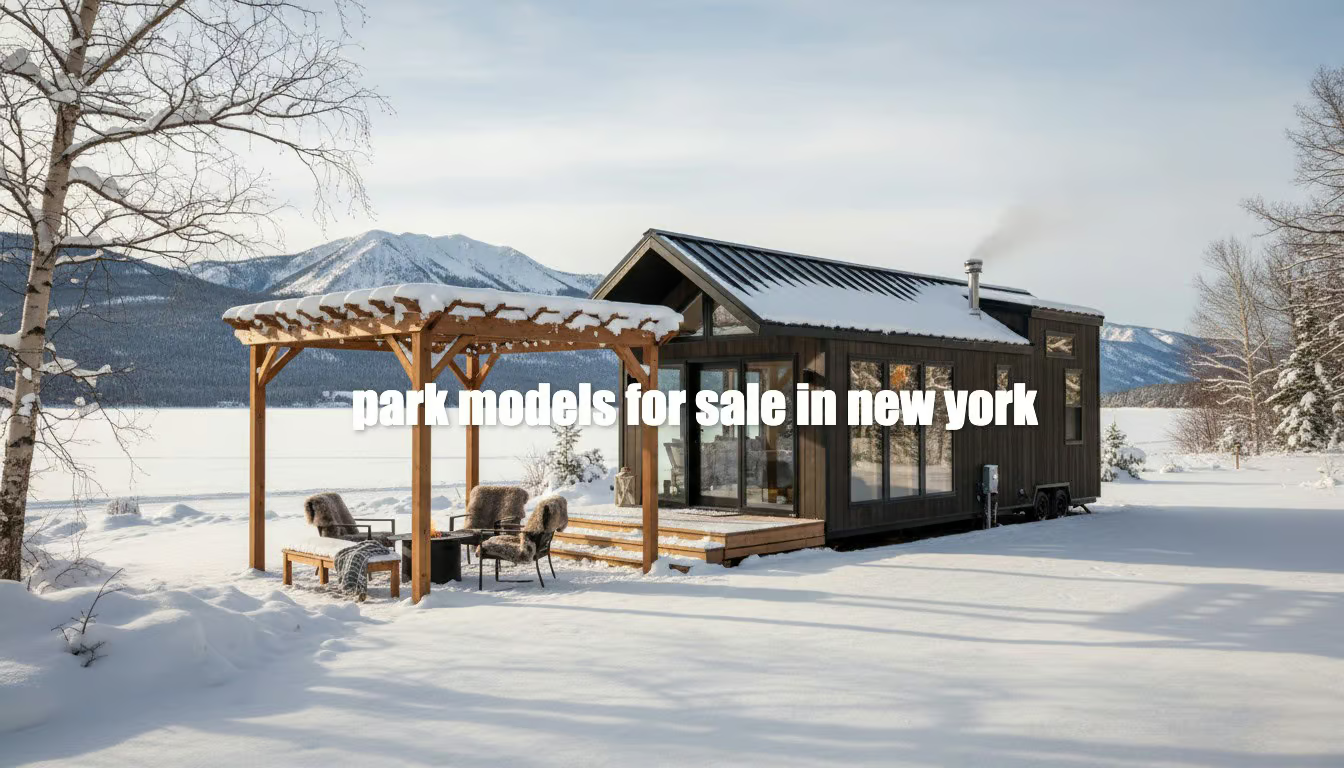
We’re excited to share our comprehensive guide to park models for sale in New York, a housing option transforming how we think about affordable, flexible living. Park models are small, mobile recreational units typically under 400 square feet that combine the mobility of an RV with the comfort of a traditional home. In New York, we’re seeing tremendous popularity for these homes as affordable housing alternatives, vacation retreats, and rental investments across the Adirondacks, Finger Lakes, Catskills, and Long Island.
The tiny home movement has been growing steadily, and park models represent a practical entry point into this lifestyle. New York’s diverse geography—from lakeside retreats to mountain settings—creates unique opportunities for park model owners. As we navigate this world, we’ve found that working with experienced builders who understand our region makes all the difference. Great Lakes Tiny Homes has established a reputation for crafting park models that combine durability, thoughtful design, and customization options perfectly suited to our climate—from harsh winters to humid summers.
What Are Park Models? Understanding These Compact Homes
Park models are recreational vehicles designed to provide temporary accommodation for recreation, camping, or seasonal use. They’re built to be towable and are typically 400 square feet or less, which is the maximum size allowed under RV classification standards. Unlike manufactured homes, park models are built to ANSI A119.5 standards rather than HUD code, which affects how we can use them, where we can place them, and how they’re titled and taxed in New York.
Our park models feature residential-style construction with full kitchens, complete bathrooms, sleeping areas that can include separate bedrooms or lofts, living spaces with residential furniture, and heating and cooling systems suitable for extended stays. Common floor plans include studio layouts, one-bedroom designs, loft configurations, and two-bedroom models for families or guests.
While designed to be moved, park models aren’t intended for frequent travel. We typically transport them to a location where they remain for extended periods—often years. In New York’s climate, durability is critical. Quality park models are built to withstand our cold winters and humid summers. We should expect a well-maintained park model to last 30-50 years or more, especially when properly winterized and maintained.
Benefits of Owning a Park Model Home in New York
Affordability: While traditional homes in desirable New York locations cost $300,000-$500,000 or more, we can purchase a quality park model for $40,000-$100,000, depending on size and features.
Lower Maintenance Costs: The compact size means we spend less on utilities, repairs, and upkeep. Heating and cooling 400 square feet costs a fraction of a traditional home.
Flexibility in Location: We can place park models in RV parks throughout New York, in campgrounds that allow extended stays, on private property with proper zoning, in tiny home communities, and in seasonal communities near lakes or mountains.
Rental Income Potential: New York’s robust tourism industry creates excellent opportunities for rental income. Locations near the Adirondacks, Finger Lakes, Catskills, and Long Island beaches can command strong nightly rates, potentially generating $15,000-$40,000 or more annually.
Tax Advantages: Because park models are classified as RVs rather than real estate, we typically don’t pay property taxes on the park model itself. When placed in RV parks or on leased land, we avoid substantial property taxes associated with traditional homeownership.
Popular Park Model Types
Great Lakes Tiny Homes offers us a stunning collection of park models designed to suit different lifestyles:
A-Frame Luxe: Measuring 14′ x 43′, this model combines distinctive style with exceptional functionality, ideal as a full-time residence, vacation getaway, or rental property.
Nova: Our 1 bedroom/1 bathroom model features sleek metal siding with cedar accents, painted birch plywood walls, quartz countertops, and a large U-shaped kitchen. The included mini-split system ensures year-round comfort in New York’s varied climate.
Twilight: At 396 square feet, the Twilight offers 2 bedrooms and 1 bathroom with metal siding and cedar accents. Bedrooms are positioned on opposite ends, perfect for small families or hosting guests while maintaining privacy.
Grizzly: Our longest park model at 388 square feet features 1 bedroom, 1 bathroom, a full kitchen, and an impressive 8-foot porch—perfect for weekend getaways or downsizing.
Firefly: Bringing authentic cabin charm with 396 square feet, 2 bedrooms, and 1 bathroom, the Firefly features half log siding and tongue and groove pine walls—absolutely perfect for lakeside or mountain getaways.
Aspen: Measuring 12′ x 26′ (278 square feet), the Aspen offers 1 bedroom plus a loft and 1 bathroom. We’ve found this model particularly popular as a seasonal Airbnb rental.
We encourage you to explore our park models in detail to find the perfect fit for your New York lifestyle.
Best Locations for Park Models in New York
Adirondack Region: The Adirondacks offer stunning natural beauty and strong tourism markets. We find excellent RV parks near Lake George, Lake Placid, and Saranac Lake. Lot rental fees range from $3,000-$8,000 annually, with exceptional rental potential during summer and ski season.
Finger Lakes Region: The wine country appeal and beautiful lakes create year-round tourism. Communities around Seneca Lake, Cayuga Lake, and Canandaigua Lake offer strong demand from wine tourists and boaters. Lot fees typically range from $4,000-$9,000 annually.
Catskills Region: The Catskills’ proximity to New York City (2-3 hours) creates strong rental demand year-round. Lot costs typically range from $3,500-$10,000 annually.
Long Island: Coastal living opportunities exist, though competition is intense and costs are higher—often $8,000-$15,000+ annually. However, summer rental income potential can be substantial.
Thousand Islands Region: Along the St. Lawrence River, we discover excellent waterfront access and strong summer tourism. Lot rental fees typically range from $3,000-$7,000 annually.
We’ve found that certain counties are more welcoming to park models and tiny homes than others. Rural counties generally have more flexible zoning, while suburban areas often have stricter restrictions.
Legal and Zoning Considerations for New York Park Models
In New York, park models are classified as recreational vehicles provided they meet specific criteria: 400 square feet or less, built to ANSI A119.5 standards, designed to be towable, and used for recreational or temporary accommodation purposes.
Where Park Models Can Legally Be Placed: We can place park models in licensed RV parks and campgrounds without special permits, on private property zoned for RV or agricultural use (with restrictions), and in some cases as accessory dwelling units where local law permits. Most residential zones prohibit park models as primary residences on standard residential lots.
Full-Time Residency: Because park models are classified as RVs for temporary use, many municipalities prohibit full-time residence. However, in licensed RV parks where rules permit it, and on properly zoned private property, full-time living may be allowed. We should check local zoning ordinances before planning full-time residence.
Title and Registration: We title park models through the Department of Motor Vehicles as recreational vehicles, not through the county clerk as with real estate. We need to register with the DMV and obtain a title in our name.
Tax Implications: Because they’re classified as personal property rather than real property, we typically don’t pay property taxes on the park model itself. If we own the land, we pay property taxes on the land but not the structure. If renting a lot in an RV park, we pay no property taxes at all.
Financing Your New York Park Model Home
RV Loans: The most common financing method is through RV loans. Typical terms include interest rates of 5-9%, loan terms of 10-20 years, down payments of 10-20%, and qualification based on credit score and debt-to-income ratio. Credit unions often offer the most competitive rates.
Personal Loans: For smaller park models or with excellent credit, personal loans are an option with higher interest rates (7-15%) but faster approval and less documentation.
Manufacturer Financing: Great Lakes Tiny Homes works with financing partners to help us secure competitive rates, sometimes with promotional rates or streamlined approval processes.
Why Traditional Mortgages Don’t Apply: We cannot use conventional mortgages because mortgages are secured by real property, while park models are classified as personal property that can be easily moved.
Tips for Improving Approval: We can increase approval chances by maintaining a credit score of 680+ (700+ for best rates), reducing debt-to-income ratio below 43%, saving for a larger down payment (20% or more), and shopping multiple lenders to compare offers.
Customizing Your Park Model: Making It Your Own
Interior Customization: We have extensive choices including flooring options (luxury vinyl plank, engineered hardwood, tile), cabinetry selections (various wood species, stains, and styles), appliance packages from standard to premium, and fixture selections for faucets, lighting, and hardware.
Exterior Customization: Siding materials include vinyl, metal, log or half-log, and board and batten. Roofing options include metal roofing in various colors and architectural shingles. We can also select exterior colors, trim details, window styles, and door options.
Outdoor Living: We can add covered porches, open decks, screened porches, and pergolas—particularly valuable in New York where we want to maximize enjoyment of pleasant weather.
Great Lakes Tiny Homes Customization: Great Lakes Tiny Homes offers extensive customization including modified floor plans, premium finishes, custom built-ins, and personal touches. Their experience building for climates similar to New York’s means they can recommend options that enhance comfort and durability.
Energy-Efficient Upgrades: Options include upgraded insulation, energy-efficient windows, LED lighting, Energy Star appliances, tankless water heaters, and high-efficiency mini-split heat pumps—all valuable given New York’s climate and energy costs.
Delivery and Setup Process for Park Models in New York
Site Preparation: Before our park model arrives, we need to clear and level the area, ensure adequate drainage, provide a stable foundation, confirm access for delivery trucks, and arrange for utility connections.
Transportation Logistics: Park models are transported on their own chassis, towed by specialized trucks. This involves route planning to avoid obstacles, obtaining oversize load permits, and coordinating delivery timing. Delivery costs typically range from $2-$5 per mile, meaning $1,000-$4,000 for most New York deliveries.
Utility Connections: We need to connect water (municipal or well), sewer (municipal, septic, or dump station), electrical service (100-200 amp), and optionally propane. Licensed professionals must handle electrical connections, plumbing connections to municipal systems, and propane installation.
Foundation and Blocking: Options include concrete piers, pressure-treated wood blocking, steel jack stands, or full gravel pads. In New York, we need to consider frost heave and ensure our foundation extends below the frost line or uses methods that accommodate ground movement.
Skirting: Skirting encloses the space beneath our park model, providing insulation and pest protection. Options include vinyl, metal, wood, and rock or brick facades. In New York’s climate, insulated skirting helps protect plumbing and reduces heating costs.
Total Setup Costs: Beyond delivery fees, setup costs typically range from $3,000-$10,000 depending on site conditions, utility requirements, and how much we do ourselves versus hiring contractors.
Maintaining Your Park Model Home in New York’s Climate
Seasonal Maintenance: New York’s diverse geography means different priorities by location. In mountain regions, we prioritize winterization and snow load management. In the Hudson Valley and Finger Lakes, we balance winter preparation with humidity control. On Long Island, we focus on salt air corrosion prevention and moisture management.
Spring Maintenance: Our spring checklist includes inspecting the roof for winter damage, cleaning gutters, examining skirting, testing utilities after winter shutdown, inspecting windows and doors, checking for water damage, and servicing the HVAC system.
Fall Maintenance: Preparing for winter is critical. Our fall tasks include cleaning gutters, inspecting and servicing heating systems, checking insulation, sealing gaps, inspecting the roof, draining exterior water sources, and checking skirting.
Winter Maintenance: During cold months, we remove snow from the roof when accumulation exceeds 12-18 inches, monitor for ice dams, keep skirting vents clear, maintain heat to prevent freezing, and monitor humidity levels.
Weatherproofing: We ensure proper caulking around all windows and doors, maintain weather stripping, apply water-repellent treatments to wood surfaces, ensure proper roof ventilation, and consider heat tape for vulnerable plumbing.
Plumbing Considerations: In New York’s cold climate, we insulate all exposed pipes, use heat tape on vulnerable sections, know how to drain the system if needed, and maintain proper heat even when away.
Estimated Maintenance Costs: Annual costs typically include $200-$500 for HVAC service, $300-$800 for exterior treatments, $200-$400 for minor repairs, $100-$300 for pest control, and $500-$1,500 for periodic major maintenance. Total annual costs typically range from $1,000-$3,000.
Park Models as Investment Properties in New York
Vacation Rental Opportunities: New York’s diverse attractions draw millions of tourists annually, creating strong demand for unique accommodations. Park models in desirable locations can generate substantial rental income through platforms like Airbnb and VRBO.
Typical Rental Rates: In prime Adirondack locations during summer or ski season, we might charge $150-$300+ per night. Finger Lakes wine country can command $125-$250 per night. Catskills locations can achieve $100-$225 per night. Coastal locations during summer can reach $175-$350 per night.
Return on Investment: Consider this example: We purchase a park model for $75,000, spend $10,000 on delivery and setup, and pay $5,000 annually for lot rental. If we achieve $25,000 in annual rental income, subtract $8,000 in operating expenses, we net $12,000 annually—about a 14% return on initial investment. Many of us see payback periods of 5-8 years.
Management Considerations: Successfully managing a rental requires handling guest communications, coordinating cleaning, performing maintenance, managing supplies, and maintaining positive reviews. Many of us hire property management companies for 20-30% of rental income.
Legal Requirements: We typically need to register with the state tax department and collect occupancy taxes, comply with local zoning ordinances, maintain proper insurance, follow safety requirements, and potentially obtain a business license.
Tax Implications: We report rental income on Schedule E, can deduct expenses including lot rent, utilities, maintenance, insurance, and depreciation, and must collect and remit state and local occupancy taxes. We should consult with a tax professional to optimize our tax situation.
Frequently Asked Questions
Important Note: The responses in this FAQ section offer general insights into park models for sale in New York based on common scenarios; individual circumstances may differ, so verify details with local experts or authorities for your specific needs.
What are park models, and how do they differ from traditional RVs or manufactured homes?
Park models are compact, towable recreational vehicles under 400 square feet designed for temporary or seasonal use, blending RV mobility with home-like comforts such as full kitchens and bathrooms. Unlike standard RVs built for frequent travel, park models are meant for longer stays in one location and follow ANSI A119.5 standards rather than HUD code for manufactured homes, impacting their placement, titling, and taxation in New York.
What are the main benefits of owning a park model in New York?
Owning a park model in New York provides affordability with prices from $40,000 to $100,000 compared to traditional homes costing $300,000 or more, lower maintenance and utility costs due to their small size, location flexibility in RV parks, campgrounds, or tiny home communities, potential rental income of $15,000-$40,000 annually from tourism hotspots, and tax advantages as they are classified as RVs without property taxes on the unit itself.
Where are the best locations to place a park model in New York?
Popular spots include the Adirondack region near Lake George and Lake Placid for natural beauty and tourism, the Finger Lakes area for lakeside retreats, the Catskills for mountain settings, and Long Island for beach access. These locations offer RV parks with annual lot fees of $3,000-$8,000 and strong seasonal rental opportunities.
Can park models be customized, and how durable are they in New York’s climate?
Yes, park models from builders like Great Lakes Tiny Homes can be customized with features suited to New York’s weather, such as enhanced insulation for harsh winters and humid summers. Well-built models last 30-50 years or more with proper maintenance, including winterization, making them ideal for the state’s diverse geography from the Adirondacks to Long Island.
What should I consider for financing and legal aspects of a park model in New York?
Financing options treat park models like RVs, often through personal loans or RV-specific lenders, with costs varying by model and features. Legally, check zoning for placement on private land or in communities, as they must comply with RV standards; consult local regulations to ensure suitability for your intended use, whether as a vacation home, rental, or alternative housing.
Finding Your Perfect New York Park Model: Next Steps
We’ve covered extensive ground in this guide to park models for sale in New York. Park models offer us a unique opportunity to enjoy New York’s diverse environments—from the Adirondacks to the Finger Lakes, from the Catskills to Long Island—at a fraction of the cost of traditional real estate.
The benefits are compelling: affordability in a challenging housing market, flexibility in location and lifestyle, reduced maintenance and environmental impact, potential for rental income, and the opportunity to embrace simplified living without sacrificing comfort.
As we move forward, we recommend these next steps: First, clarify our goals—are we looking for personal use, rental income, or both? Second, research locations by exploring tiny houses for sale in New York and visiting RV parks in our areas of interest. Third, explore financing options by checking our credit score and getting pre-approved with RV lenders. Fourth, visit dealers and manufacturers—there’s no substitute for seeing park models in person. Finally, plan for the complete process including site preparation, delivery logistics, and ongoing maintenance.
We strongly encourage visiting display models in person before making our final decision. Great Lakes Tiny Homes welcomes us to tour their models and discuss how they can create the perfect park model for our New York lifestyle. Their understanding of the challenges and opportunities presented by climates similar to ours—from harsh winters to humid summers—ensures that we’re investing in homes built to last in our specific environment. Whether we’re dreaming of weekend getaways in the Adirondacks, wine country living in the Finger Lakes, a coastal retreat on Long Island, or a rental investment that generates income while providing personal enjoyment, park models offer us a path to make those dreams reality.