

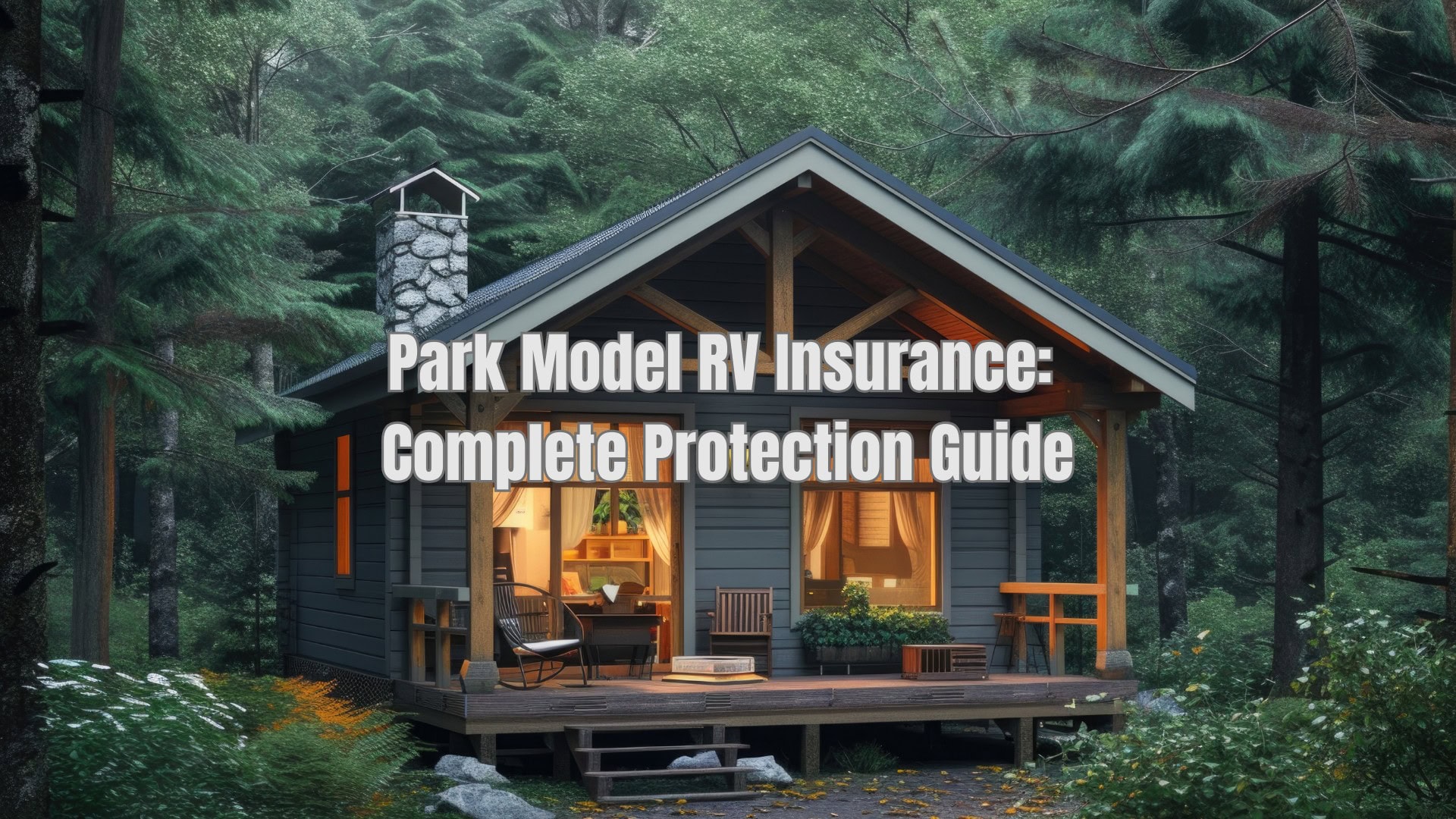
Protecting your park model RV requires comprehensive insurance tailored to its unique characteristics as both a recreational vehicle and a semi-permanent dwelling. These structures blend elements of mobile homes and RVs, necessitating coverage that addresses their specific risks and usage patterns. Standard auto or homeowners policies often leave gaps in protection for park models, making specialized insurance essential for financial security. This updated guide covers the latest insights on park model RV insurance, helping you navigate options, costs, and best practices to safeguard your investment effectively in today’s market.
What Is a Park Model RV?
Park model RVs represent a versatile housing option in the modern market, typically limited to 400 square feet or less and constructed on a single chassis with wheels for transport. Although equipped for mobility, these units are primarily intended for stationary living in RV parks, resorts, campgrounds, or private lots, serving as seasonal retreats, vacation homes, or even primary residences for some owners. Their design emphasizes comfort and functionality within a compact footprint, often featuring full kitchens, bathrooms, and sleeping areas that rival traditional tiny homes.
Park models adhere to standards set by the Recreation Vehicle Industry Association (RVIA), distinguishing them from HUD-code manufactured homes that require permanent foundations. This classification affects everything from construction quality to regulatory compliance and insurance needs. Owners appreciate their affordability and ease of relocation compared to site-built homes, while the wheeled chassis allows for occasional moves without the complexities of full demolition and rebuilding. As interest in minimalist living grows, park models continue to gain popularity for their blend of portability and home-like amenities.
Exploring Park Models with Great Lakes Tiny Home
For individuals considering park models, Great Lakes Tiny Home provides a range of customizable options designed to meet diverse lifestyles, from weekend getaways to year-round living. Their models balance the need for easy transport with spacious, efficient interiors that maximize every square foot. Built with high-quality materials, these park models withstand various weather conditions and offer modern features like energy-efficient appliances and smart home integrations.
Great Lakes Tiny Home focuses on craftsmanship and personalization, allowing buyers to select floor plans, finishes, and add-ons that align with their preferences and budget. This approach ensures the final product not only looks appealing but also functions optimally for long-term use. Whether placed in a scenic RV community or on family land, their park models deliver durability and style that enhance the overall living experience. Consulting with their team can help prospective owners understand how these features influence insurance considerations and maintenance.
Why You Need Specialized Park Model RV Insurance
Conventional homeowners or automobile insurance policies are ill-equipped to fully protect park model RVs due to their hybrid status, which combines elements of fixed residences and transportable vehicles. Homeowners coverage assumes a stationary, foundation-secured structure, while auto policies prioritize road risks over dwelling protection, leaving park model owners exposed to uncovered perils like storm damage or theft during storage. Specialized insurance bridges these divides by accounting for the unit’s potential mobility, custom builds, and semi-permanent placement.
In an era of increasing natural disasters and property values, tailored park model policies offer peace of mind through comprehensive safeguards for the structure, contents, and liability. They cover scenarios unique to these dwellings, such as damage from high winds in RV parks or vandalism in remote locations, ensuring owners aren’t burdened with unexpected repair costs. By selecting the right coverage, you can focus on enjoying your park model without worrying about financial vulnerabilities from unforeseen events.
How Park Model Insurance Differs from Other Insurance Types
Park model insurance stands apart from standard homeowners policies by accommodating the occasional relocation of these wheeled units, which influences risk assessments and premium calculations in ways fixed-home coverage does not. Unlike policies for permanently affixed homes, park model options often include provisions for transport-related incidents, recognizing that owners might move their units between sites seasonally or for upgrades. This flexibility is crucial in regions with varying zoning laws or climate considerations.
In contrast to traditional RV insurance, which emphasizes collision and towing coverage for frequent travelers, park model policies shift focus toward structural integrity against environmental threats like hail, fire, or flooding in stationary settings. RV policies might undervalue the home-like features of park models, such as built-in cabinetry or plumbing systems, leading to inadequate payouts. Park model coverage ensures these elements are properly valued, with claims handled by adjusters familiar with RVIA-compliant builds.
The claims handling process for park models also benefits from specialized expertise, as insurers trained in these units can more accurately assess damages to chassis, roofing, and interior fixtures. This reduces disputes and speeds up resolutions compared to generic policies where adjusters might misclassify the structure. Overall, the tailored approach minimizes out-of-pocket expenses and maximizes recovery for owners facing losses.
Essential Coverage Options for Park Model RVs
Physical Damage Coverage
At the heart of park model insurance lies physical damage coverage, which shields the unit’s structure from a wide array of perils, including fire, windstorms, hail, falling debris, vandalism, and theft. This protection is vital for maintaining the integrity of the chassis, walls, roof, and systems like electrical and plumbing. Policyholders can choose between actual cash value (ACV), which accounts for depreciation based on age and condition, or replacement cost value (RCV), which reimburses for new equivalents without deductions.
ACV policies appeal to budget-conscious owners of older models, offering lower premiums but potentially resulting in reduced claim amounts that reflect wear and tear over time. For instance, a 10-year-old park model damaged by a tree might receive payout based on its current market value rather than full rebuild costs. This option suits occasional users but may not fully cover extensive repairs.
RCV provides superior protection by covering the cost to restore the park model to its pre-loss condition using current materials and labor rates, making it ideal for newer units or those with recent renovations. While premiums are higher—often 20-30% more than ACV—the long-term financial benefits outweigh the cost, especially in high-risk areas prone to severe weather. Many insurers now offer hybrid options to balance affordability and coverage depth.
Liability Protection
Liability coverage serves as a critical safeguard against legal and financial repercussions if someone sustains injury on your park model property or if your unit causes damage to others, such as during a rare move or from a structural failure. This protection extends to legal fees, medical expenses, and settlements, preventing personal savings from being depleted in lawsuits. In today’s litigious environment, where slip-and-fall claims are common in communal RV settings, robust liability limits are non-negotiable.
Experts advise securing at least $300,000 in liability coverage, with $500,000 to $1 million recommended for owners with substantial assets or high-traffic properties like rentals. The additional premium for these higher limits is minimal—typically just a few dollars per month—yet the protection is invaluable against potentially devastating judgments. Pairing this with an umbrella policy can further extend coverage for extraordinary claims.
Personal Property Coverage
Personal property coverage protects the belongings inside your park model, from everyday essentials like clothing and furniture to valuables such as electronics, appliances, and heirlooms, against theft, fire, or storm damage. This ensures that your lifestyle isn’t disrupted by the loss of irreplaceable items accumulated over time. Coverage limits are usually a percentage of the dwelling amount, often 50-70%, but can be increased to match your inventory.
For high-value possessions like fine jewelry, artwork, or custom furnishings, standard limits may apply sub-limits, necessitating scheduled personal property endorsements for full valuation. These add-ons provide agreed-value settlements, bypassing depreciation and offering replacement with similar quality items. Regularly inventorying contents and appraising valuables helps tailor this coverage accurately, avoiding underinsurance surprises during claims.
Additional Living Expenses
Additional living expenses (ALE) coverage steps in when a covered loss makes your park model unlivable, reimbursing costs above your normal budget for temporary accommodations, meals, and storage of belongings during repairs. This is especially relevant for full-time residents who rely on the unit as their sole home, preventing financial strain from extended hotel stays or rental fees. Policies typically cover 12-24 months of expenses, aligned with average rebuild timelines.
Understanding ALE details is key, as some policies cap daily amounts or exclude certain costs like pet boarding unless specified. For seasonal users, this coverage might extend to alternative site fees in RV parks. Selecting adequate limits—often 20-30% of dwelling coverage—ensures comprehensive support, allowing focus on recovery rather than immediate housing worries.
Optional Coverages Worth Considering
In addition to core protections, several endorsements enhance park model insurance for specific risks prevalent in various locations and usage scenarios. These add-ons address exclusions in base policies, providing layered defense against uncommon but costly events. Evaluating your park model’s environment and habits helps determine which options merit the extra premium investment.
Flood insurance is indispensable in flood-prone areas, as standard policies exclude water damage from rising waters or sewer backups; obtain it separately via the National Flood Insurance Program (NFIP) or private carriers for up to $250,000 in structure coverage. Coastal or riverine placements heighten this need, where even moderate rains can lead to substantial losses.
Earthquake coverage safeguards against seismic activity in vulnerable zones like California or the Midwest, excluded from basic policies but available as endorsements covering foundation shifts, cracks, and related damages. Premiums vary by fault-line proximity, but the protection is crucial for chassis stability.
Transportation coverage protects during towing or relocation, covering road hazards like collisions or overturns that could compromise the unit’s integrity en route to a new site.
Additional structures coverage extends to attached or detached features such as decks, awnings, sheds, or landscaping, which might otherwise fall outside dwelling limits and require separate valuation.
Factors That Affect Park Model RV Insurance Costs
Insurance premiums for park models are influenced by a combination of location-specific risks, unit characteristics, and owner choices, reflecting the insurer’s evaluation of potential claims. Understanding these elements empowers you to make informed decisions that optimize coverage without overpaying. Premiums can range from $500 to $2,500 annually, depending on variables like those outlined below.
Location is a primary driver, with higher rates in disaster-vulnerable areas such as hurricane alleys in the Southeast or wildfire zones in the West, where claims frequency elevates costs. Urban settings with theft risks contrast with secure, rural RV communities that may earn discounts for on-site security and low crime stats.
Value, age, and condition directly correlate with replacement costs; high-end, recently built models command higher premiums due to expensive materials and tech features, while well-maintained older units might qualify for adjustments based on inspections showing no deferred maintenance.
Security and safety features like monitored alarms, deadbolts, fire suppression systems, and hurricane straps can lower rates by 5-20%, signaling reduced liability to underwriters. Upgrades such as impact-resistant windows in storm-prone areas further demonstrate proactive risk management.
Deductible choices allow customization, where opting for $1,000-$2,500 deductibles reduces premiums by 15-25% but requires emergency funds for claims; balancing this with your financial profile prevents premium shocks or claim denials.
Tips for Lowering Your Park Model Insurance Premium
- Bundle your policies with one provider for multi-policy discounts, often 10-25%, covering auto, boat, or umbrella alongside your park model for streamlined management and savings.
- Improve security and safety features by adding smart locks, surveillance cameras, automatic fire alarms, and carbon monoxide detectors, which can yield 5-15% reductions through verified risk mitigation.
- Raise your deductible strategically if your savings allow, as moving from $500 to $1,000 can cut costs by 10-20%, but assess your ability to cover it during a claim.
- Maintain good credit, since many states permit credit-based scoring that influences rates; regular financial health checks can indirectly support lower premiums over time.
- Ask about discounts for affiliations like AARP, military status, or RVIA membership, which recognize lower-risk profiles and can shave 5-10% off quotes.
- Consider usage-based discounts for part-time or stored units, where telematics or seasonal declarations adjust rates to match actual exposure levels.
- Pay annually to bypass monthly fees, saving 5-10% and demonstrating financial reliability to insurers.
- Review and update coverage annually to eliminate outdated protections, like excess personal property after downsizing, ensuring rates reflect current realities.
Top Insurance Companies for Park Model RVs
Navigating the insurance market for park models benefits from providers experienced in this niche, offering policies that align with RVIA standards and owner needs. These companies stand out for their reliability, customizable options, and efficient claims handling in 2023 and beyond.
Foremost Insurance Group, part of Farmers, leads in park model specialization with policies featuring replacement cost options, full-timer endorsements, and transport coverage. Their nationwide network ensures local adjusters familiar with regional risks, streamlining claims for faster resolutions.
Progressive delivers robust park model plans through RV-focused underwriters, including vacation liability and personal effects coverage up to $50,000. Known for digital quoting tools and 24/7 support, they cater to both novice and seasoned owners with competitive multi-year rates.
National General excels in flexible coverage for seasonal and full-time use, with perks like diminished value protection and roadside assistance bundles. Their policies accommodate custom upgrades, making them suitable for personalized park models.
American Modern, under Munich Re, specializes in challenging risks like older or high-value units, offering endorsements for rentals and earthquakes. Their expertise in non-standard properties ensures accessible coverage where others might decline.
Special Considerations for Different Park Model Situations
Park Models as Rental Properties
Converting a park model into a rental demands a shift to landlord-specific policies, as personal-use coverage often voids or limits business activities, exposing owners to heightened liabilities from tenant interactions. These policies must cover income loss from vacancies due to covered events, alongside standard perils.
Liability risks amplify with renters, necessitating $500,000-$1 million limits to handle potential injuries or property disputes in shared spaces. Requiring tenants to carry their own renters insurance adds a protective layer, covering their belongings and providing secondary liability.
Loss of rental income endorsements reimburse projected earnings during uninhabitability, calculated from lease history or market rates, ensuring cash flow stability. Compliance with local short-term rental laws also influences policy availability and costs.
Regular inspections and clear lease terms outlining maintenance responsibilities help mitigate claims, while platforms like Airbnb may offer supplemental host guarantees that complement primary insurance.
Seasonal vs. Full-Time Use
Seasonal and full-time park model usage trigger distinct insurance needs, with seasonal policies suiting units occupied under six months annually and focusing on vacancy risks during off-seasons. Full-time policies, conversely, mirror primary residence coverage with broader personal property and ALE provisions.
Full-timers require extensive contents protection since all possessions reside in the unit, often with scheduled items for valuables, and ALE that covers long-term displacements without home alternatives. Premiums reflect this elevated exposure, typically 20-40% above seasonal rates.
Seasonal owners benefit from vacancy clauses that maintain coverage during unattended periods, provided winterization and periodic checks are documented to prevent issues like frozen pipes. Some insurers mandate security measures or limit coverage duration for extended vacancies.
Transitioning between uses may necessitate policy riders; consulting an agent ensures seamless adjustments without lapses, aligning coverage with evolving lifestyles.
How to File a Park Model Insurance Claim
- Document the damage immediately with detailed photos, videos, and notes from multiple angles, including timestamps and weather conditions, to build a strong evidentiary record before any alterations.
- Make emergency repairs if necessary to avert worsening, such as tarping roofs or boarding windows, while retaining receipts and photos of the pre-repair state for reimbursement eligibility.
- Contact your insurance company promptly within 24-48 hours, providing policy details, incident description, and initial documentation to initiate the claim and receive guidance on next steps.
- Meet with the insurance adjuster on-site, walking them through all affected areas and supplying your compiled evidence to facilitate an accurate damage assessment.
- Obtain repair estimates from at least two licensed, RV-specialized contractors, comparing bids for materials, labor, and timelines to inform settlement negotiations.
- Review the settlement offer against policy terms, estimates, and depreciation schedules, questioning any discrepancies with supporting data for potential adjustments.
- Appeal if necessary by submitting supplemental evidence like independent appraisals or expert reports, escalating to state insurance departments if resolutions stall.
- Complete repairs using approved vendors if required, tracking all expenditures for final reimbursements and closing the claim efficiently.
Common Questions About Park Model RV Insurance
Is my park model covered during transportation? Base policies may exclude or cap transport risks, so explicit endorsements for towing by licensed haulers are advisable, covering up to the policy limit for road incidents.
Are my deck, porch, and other attachments covered? Standard dwelling coverage might include minor additions, but larger structures like elevated decks require separate limits or endorsements to avoid claim denials.
Do I need different coverage in different states? State regulations on RV classifications and perils vary, so interstate moves demand policy reviews for compliance, potentially adding riders for regional hazards like earthquakes.
How does insurance handle depreciation for park models? ACV applies depreciation via age and condition formulas, but RCV avoids it for like-new replacements; hybrids offer partial protection for customized features.
Can I insure an older park model? Yes, through specialists like American Modern, though inspections may be required, and premiums could rise 10-20% for units over 15 years due to higher repair risks.
Key Takeaways: Protecting Your Park Model Investment
Specialized insurance is indispensable for park models, as generic policies overlook their mobile-yet-stationary nature and unique vulnerabilities. Prioritizing RCV over ACV ensures fuller recovery, particularly for modern builds with advanced features.
Annual reviews adapt coverage to changes like additions or usage shifts, preventing underinsurance amid rising construction costs and climate risks. Collaborating with RV-savvy agents uncovers tailored options and discounts.
Claims success hinges on documentation and experienced providers; selecting insurers with strong park model track records minimizes post-loss hassles. Ultimately, proactive coverage choices preserve your lifestyle and asset value long-term.
Embracing these strategies positions you to enjoy your park model confidently, backed by robust protection against today’s diverse threats.