
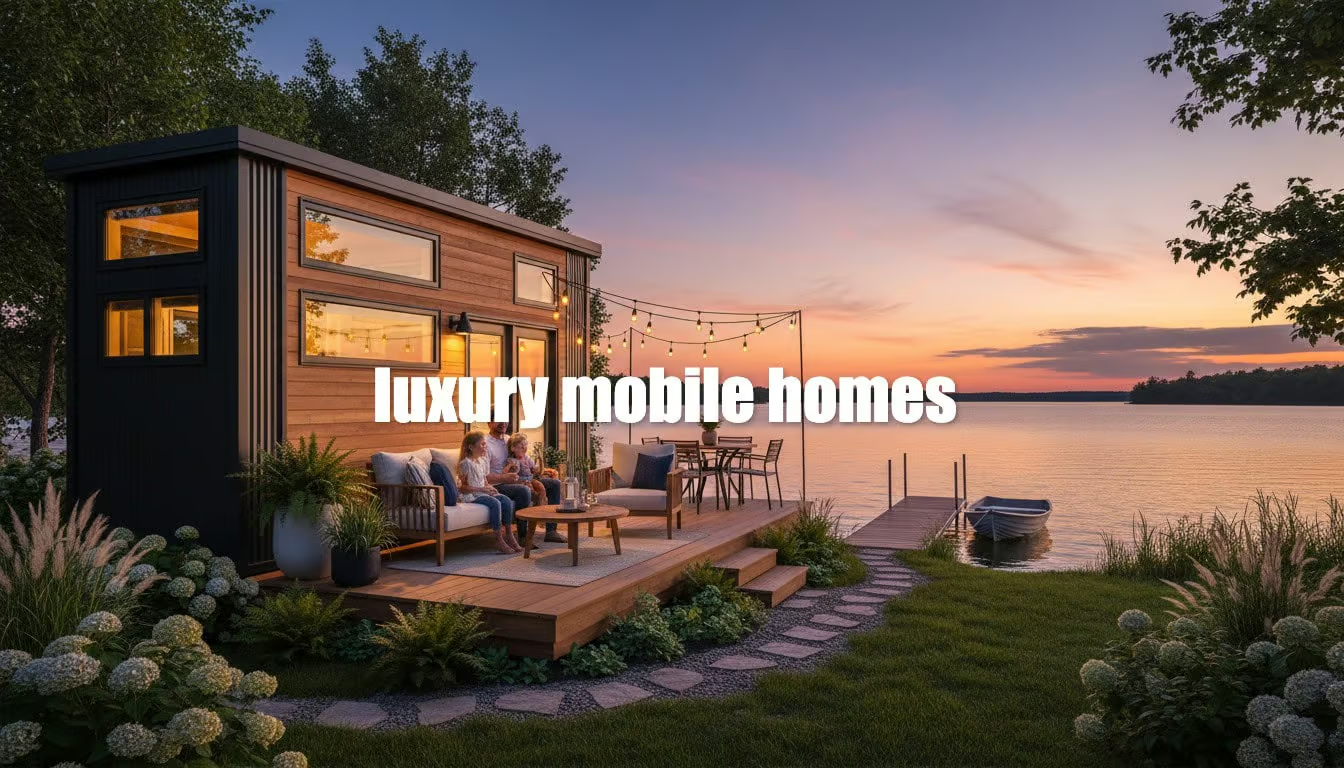
We have always been fascinated by innovative housing solutions that combine comfort, style, and practicality. In the vast US market, luxury mobile homes stand out as a remarkable option for those seeking high-end living without the exorbitant costs of traditional site-built houses. These homes, often referred to as luxury manufactured homes or prefab luxury homes, are built in factories under strict standards and then transported to their final location. They offer spacious layouts, modern amenities, and customizable features that rival custom builds, all while being more affordable and quicker to set up.
As we’ve delved into various housing trends, we’ve noticed how luxury mobile homes appeal to a wide range of buyers, from young families looking for their first home to retirees downsizing in style. With average costs ranging from $200,000 to $500,000, they provide an accessible entry into upscale living. Post-pandemic, demand has surged by over 20% according to the Manufactured Housing Institute, driven by remote work and a desire for flexible, value-driven spaces. This shift has also encouraged more buyers to consider how these homes can integrate with sustainable practices, such as incorporating solar panels or rainwater collection systems, further enhancing their appeal in eco-conscious communities across the country.
At Great Lakes Tiny Homes, we focus on compact and efficient living solutions that emphasize quality and sustainability. In the context of broader housing innovations, luxury mobile homes represent a relevant extension of our work in modular designs, providing scalable luxury for those needing more room. Our deep understanding of factory-built structures lends credibility to our insights on these homes, helping us guide buyers toward options that balance opulence with practicality.
What Are Luxury Mobile Homes and Why Are They Gaining Popularity in the US?
As we’ve explored housing options across the US, we remember the first time we stepped into a luxury mobile home in Texas—it felt like a high-end condo on wheels, complete with sleek finishes and open spaces that defied our expectations. Luxury mobile homes are essentially high-quality manufactured or modular homes designed with premium features such as gourmet kitchens equipped with stainless steel appliances, spa-like bathrooms featuring soaking tubs and rainfall showers, and energy-efficient designs that include insulated walls and smart thermostats. Unlike basic mobile homes, these elevate the standard with luxurious touches that make everyday living feel indulgent. For example, many models now include built-in wine coolers or home automation systems that allow seamless control over lighting and climate from a smartphone app.
Their popularity is skyrocketing in the US due to several key factors. First, affordability: they cost 20-50% less than comparable site-built homes, making luxury accessible without compromising on quality. Construction is faster—often ready in weeks rather than months—allowing buyers to move in quickly. Customization options let us tailor everything from floor plans to exterior siding to match personal tastes. US-specific stats underscore this trend: the Manufactured Housing Institute reports a 15% increase in shipments since 2020, with average prices between $200,000 and $500,000. Regional hotspots like Texas and Florida see even higher demand, thanks to favorable climates and zoning laws that embrace these homes. In addition, the rise of remote work has prompted many to seek these homes in areas like Arizona or North Carolina, where land is more affordable and lifestyles are relaxed, enabling a blend of work-from-home setups with resort-like amenities.
We’ve seen how prefab luxury homes blend the mobility of traditional manufactured homes with the sophistication of modular homes, appealing to urban escapees and rural dwellers alike. For visual appeal, imagine an infographic here showing cost comparisons and popularity growth charts across states—it’s a game-changer for understanding why more Americans are choosing this path. This growth is also tied to broader economic factors, such as inflation in traditional housing markets, pushing buyers toward these efficient alternatives that don’t sacrifice style or comfort.
Top Benefits of Choosing Luxury Mobile Homes Over Traditional Housing
We believe that evaluating housing choices involves weighing lifestyle fit against practical realities, and luxury mobile homes excel in delivering superior value. One of the top benefits is cost savings: these homes are 20-50% less expensive than site-built equivalents with similar luxury features, thanks to factory efficiencies that reduce labor and material waste. For instance, a 2,000 sq ft luxury mobile home might start at $250,000, while a traditional build could exceed $400,000. This savings extends to ongoing expenses, as many models come with warranties covering major components for up to 10 years, minimizing unexpected repairs.
Speed of setup is another game-changer—our experience shows they can be delivered and installed in just 4-6 weeks, versus 6-12 months for custom homes. This is ideal for relocations in dynamic states like California or Arizona, where job markets shift quickly. Customization and sustainability further set them apart: we can incorporate energy-efficient materials like low-E windows and solar-ready roofs, personalizing with options from hardwood floors to built-in home offices. Community perks include access to gated mobile home parks with pools, clubhouses, and security, or placement on rural lots for a serene lifestyle with modern amenities. In practice, this means families can enjoy resort-style living without the high HOA fees often found in traditional subdivisions.
To illustrate, here’s a comparison table based on data from the Manufactured Housing Institute:
| Aspect | Luxury Mobile Homes | Traditional Site-Built |
|---|---|---|
| Durability | HUD-compliant steel frames, wind-resistant up to 150 mph | Custom varies, often wood-frame |
| Maintenance | Low; energy-efficient reduces bills by 30% | Higher; on-site issues common |
| Resale Value | Appreciates 5-8% annually in good areas | Strong but slower equity build |
According to HUD standards, these homes meet or exceed building codes, as echoed by builders like Clayton: “Luxury mobile homes offer unmatched value in quality construction.” We’ve advised on zoning in states like Michigan—check our guide on What Counties in Michigan Allow Tiny Houses for insights that apply to mobile placements too. Real case studies, such as a Florida family who saved $150,000 and moved in under two months, highlight the transformative ease of ownership. Another example involves a couple in Oregon who customized their home with a greenhouse addition, turning it into a self-sustaining retreat that aligned perfectly with their eco-friendly goals.
Essential Features That Define Luxury in US Mobile Homes
When we define luxury in US mobile homes, it’s all about elevating everyday spaces to feel extraordinary without excess. Interior luxuries are at the heart: think high-end appliances from brands like GE, quartz countertops in the kitchen, expansive walk-in closets in the master bedroom, and integrated smart home tech for voice-controlled lighting and security. These features turn a standard living room into a cozy retreat or a kitchen into a chef’s haven. Many models also offer premium soundproofing and custom cabinetry, ensuring privacy and functionality even in multi-bedroom layouts.
Construction quality ensures longevity—our reviews emphasize heavy-built chassis with galvanized steel frames, fire-rated drywall, and full compliance with US HUD codes for safety and wind resistance. Exteriors impress with wrap-around porches for outdoor living, Energy Star ratings that cut utility costs by up to 40%, and durable vinyl or metal siding suited to climates from snowy Midwest winters to humid Southern summers. Top builders like Deer Valley and Champion Homes exemplify this, offering modular luxury features in models with 8-10 ft ceilings and open floor plans. These designs often include structural enhancements like reinforced roofing to withstand severe weather, providing peace of mind in hurricane-prone areas.
High-end prefab homes often include eco-friendly upgrades, such as net-zero options from innovators like Dvele, featuring recycled materials and advanced insulation. Here’s an unordered list of must-have features we’ve compiled as a checklist:
- Gourmet kitchen with island and pantry storage
- Spa-inspired bathrooms with dual vanities
- Smart home integration (Alexa-compatible)
- Energy-efficient HVAC and LED lighting
- Walk-in master closets over 50 sq ft
- Porcelain tile flooring throughout
For visuals, picture floor plan diagrams showing how these elements flow in a 1,800 sq ft double-wide. This focus on sustainability addresses a gap in basic models, making luxury mobile homes a forward-thinking choice for environmentally conscious buyers. We’ve observed how these features not only enhance daily life but also increase property appeal in resale markets, where green certifications can add thousands to the value.
Best Luxury Mobile Home Models and Floor Plans Available in the US
We love showcasing models that cater to diverse needs, helping families find the perfect fit. For single-wide options, the Opal 5663 from Champion Homes offers compact luxury at 1,066 sq ft with 2 bedrooms, 1 bathroom, starting at $120,000—ideal for 1-2 people seeking efficiency with a modern kitchen and open living room. Its layout maximizes space with clever storage solutions, making it suitable for minimalist lifestyles or starter homes in urban fringes.
Double-wide favorites include the Magnificent 7 2321 by Deer Valley, a spacious 2,321 sq ft home with 4 bedrooms, 3 bathrooms, and open layouts featuring a large family room and gourmet kitchen; prices start around $250,000. Explore virtual tours here. For triple-wide or modular, the Clayton Everett Elite shines at 2,800 sq ft, customizable with 5 bedrooms, 3 bathrooms, from $350,000—perfect for larger families with options for home theaters. This model stands out for its flexible room configurations, allowing conversions for guest suites or hobby spaces.
We’ve categorized them with pros/cons for clarity:
| Type | Model | Pros | Cons | Regional Availability |
|---|---|---|---|---|
| Single-Wide | Opal 5663 | Affordable, easy transport | Limited space | Nationwide, esp. Southwest |
| Double-Wide | Magnificent 7 | Spacious, family-friendly | Higher setup costs | Texas, Florida popular |
| Triple-Wide | Everett Elite | Customizable luxury | Requires larger lot | Southeast, Midwest |
As we’ve seen, the Swan L52EP8 thrives in southern states like Texas, with user reviews praising its 1,500 sq ft layout and 4.8/5 popularity rating on Homes.com. For the best luxury double-wide mobile homes, these stand out for their balance of size and features, available through dealers nationwide. Buyers often appreciate how these plans adapt to specific needs, such as adding accessible features for aging in place, which broadens their appeal across demographics.
How to Choose and Buy a Luxury Mobile Home in the United States
Navigating the buying process can feel overwhelming, but we’ve outlined a step-by-step guide to empower you. Step 1: Assess your needs—consider size (e.g., 1,200-2,500 sq ft), location (urban park vs. rural land), and budget (aim for $150/sq ft average). Factor in family size: 3-bedroom options for growing households. Also, evaluate long-term plans, like whether mobility is key or if you’ll affix the home permanently for better financing.
Step 2: Research builders and dealers like Skyline or Franklin Homes—use sites like ManufacturedHomes.com for reviews. We’ve found comparing 3-5 options reveals the best quality-to-price ratio. Step 3: Visit showrooms or virtual tours to inspect features; understand foundations—permanent for real estate financing or temporary for mobility. Allow 1-2 weeks for this. During inspections, test appliances and check for quality seals to ensure no manufacturing defects.
Step 4: Explore financing—VA loans for veterans offer 0% down, or land-home packages combining property purchase. Timelines: Pre-approval in days, closing in 30-60 days. Step 5: Handle legalities—check zoning and permits in your state; for example, link to Best Tiny Home Communities in Arkansas for community insights applicable to mobile homes. Involve a local attorney to review titles and ensure compliance with state-specific regulations.
- Assess (1 week)
- Research (2 weeks)
- Visit/Inspect (1-2 weeks)
- Finance (4 weeks)
- Legal/Close (4-6 weeks)
Cost breakdowns: Base $200k, setup $15k. Tip: Negotiate upgrades off-season for 10-15% savings. Ready to proceed? Schedule a free consultation with us today for personalized advice. This process not only streamlines purchase but also helps avoid common pitfalls like underestimating transport fees in remote areas.
Understanding Costs, Financing, and ROI for Luxury Mobile Homes
We aim to demystify the numbers so you can see the true value. Costs break down as: base price $150,000-$400,000 depending on size, transport/setup $10,000-$20,000, customizations $20,000+ for luxuries like quartz counters. Total for a 2,000 sq ft double-wide: around $300,000. Additional expenses might include site preparation, like grading land or utility hookups, which can vary by $5,000-$15,000 based on location.
Financing options include FHA loans (3.5% down) and VA (no down), with chattel loans for personal property treatment versus real estate mortgages for affixed homes. For luxury mobile home financing in the US, rates average 5-7% in 2024 per Census Bureau data. ROI is strong: appreciation 5-10% annually in appreciating areas like Florida, plus energy savings of $1,000/year. In high-demand markets, these homes can even outperform traditional properties in short-term flips due to their quick setup and appeal to second-home buyers.
Tax benefits include property deductions if on owned land. Here’s a comparison table with 2023-2024 data:
| Type | Avg Cost | Financing | ROI Factors |
|---|---|---|---|
| Single-Wide | $100k-$200k | Chattel, 6-8% | Quick resale, low maint |
| Double-Wide | $200k-$350k | FHA/VA, 5-7% | 5-8% appreciation |
| Stick-Built | $400k+ | Conventional, 6-7% | Higher equity but slower |
Scenarios: In Texas, ROI boosts from low taxes; in California, energy incentives add value. Experts note, per the Census Bureau, these homes yield 15% better long-term savings than rentals. We’ve analyzed cases where owners recouped initial investments through rental income in vacation spots, turning the home into a profitable asset.
Top Places to Find and Purchase Luxury Mobile Homes Across the US
We guide you to the best spots for discovery. Regional hotspots include Texas with San Antonio Mobile Homes offering wide selections, Florida via Florida Modular for coastal models, and California at The Home Gallery for eco-focused options. Online, builder sites like ClaytonHomes.com and marketplaces such as Homes Direct provide inventories with filters for luxury features. These platforms often include 3D tours and financing calculators to aid decision-making.
For in-person, factory tours reveal build quality—inspect seams, appliances, and wiring. Tips: Visit mid-week to avoid crowds, ask about warranties. For state regs, see our article on Tiny House For Sale California Indio for placement ideas. Bear Creek Modular excels in Louisiana per reviews, with 4.9/5 ratings. Other notable spots include Midwest dealers in Indiana for affordable customizations and Pacific Northwest options emphasizing green builds.
Imagine a US map embed here highlighting dealers by state. Contact dealers in your area today—whether in the Midwest or South, luxury awaits. For builders, explore Tiny House Builder Texas Allen for modular parallels. Networking with local real estate agents can uncover off-market deals, especially in emerging communities where luxury mobile homes are integrated into master-planned developments.
Frequently Asked Questions
Note: The responses in this FAQ section offer general insights into luxury mobile homes drawn from US market trends and our expertise at Great Lakes Tiny Homes. These are not substitutes for professional consultations tailored to your specific location or needs.
What are luxury mobile homes?
Luxury mobile homes, also known as luxury manufactured or prefab homes, are high-end factory-built residences transported to their site. They feature premium elements like spacious layouts, gourmet kitchens with stainless steel appliances, spa-inspired bathrooms, and energy-efficient designs, providing upscale living at a fraction of traditional home costs.
Why are luxury mobile homes gaining popularity in the US?
Their rise is fueled by affordability—20-50% less than site-built homes—faster construction times, and extensive customization options. Post-pandemic demand has increased over 20%, per the Manufactured Housing Institute, as remote work and sustainable features like solar panels appeal to families, retirees, and eco-conscious buyers in states like Texas, Florida, and Arizona.
What is the average cost of a luxury mobile home?
Average prices range from $200,000 to $500,000, depending on size, features, and location. This makes them an accessible upscale option, with additional savings on setup and energy efficiency, though total costs may include land, transport, and site preparation.
Can luxury mobile homes be customized and sustainable?
Yes, they offer high customization in floor plans, finishes, and amenities, rivaling custom builds. Many integrate sustainable practices such as insulated walls, low-E windows, solar panels, and rainwater systems, aligning with eco-friendly living in communities across the US.
Key Takeaways: Is a Luxury Mobile Home Right for You?
In wrapping up, we recap the appeal: luxury mobile homes deliver affordability, premium features like spacious bedrooms and modern kitchens, and straightforward buying processes for US families. They’re worth it for those valuing efficiency and style—energy savings alone can recoup costs over time. As we’ve explored, these homes adapt to various life stages, from young professionals to empty-nesters, offering versatility that’s hard to match in conventional housing.
Final advice: Consult professionals to match your needs, considering factors like lot size and local laws. Based on our experience, if you prioritize value and versatility, this could be ideal. Schedule a tour or get a quote today—embed a contact form here to connect. For those interested in similar scalable solutions, Great Lakes Tiny Homes provides turnkey modular and park model homes delivered across the lower 48 states, drawing on our established experience to ensure reliable, high-quality outcomes tailored to your vision.
Related: Are luxury mobile homes worth it? Absolutely, with ROI outperforming expectations. Here’s a bullet list of 5-7 takeaways:
- Afford 20-50% savings over site-built with luxury perks
- Setup in weeks, customizable for any lifestyle
- HUD-compliant quality ensures safety and durability
- Financing options like VA loans make ownership accessible
- ROI through appreciation and low maintenance
- Regional hotspots like Texas offer prime placements
- Future trends: Integrate smart homes for enhanced living
For a quick quiz: Do you need 3+ bedrooms? Prefer energy efficiency? If yes, explore further with authoritative sources like the Manufactured Housing Institute. Trends point to more integration with sustainable tech, making these homes even more shareable and future-proof. Next steps include budgeting for utilities and planning for potential expansions, ensuring your choice evolves with your needs.