
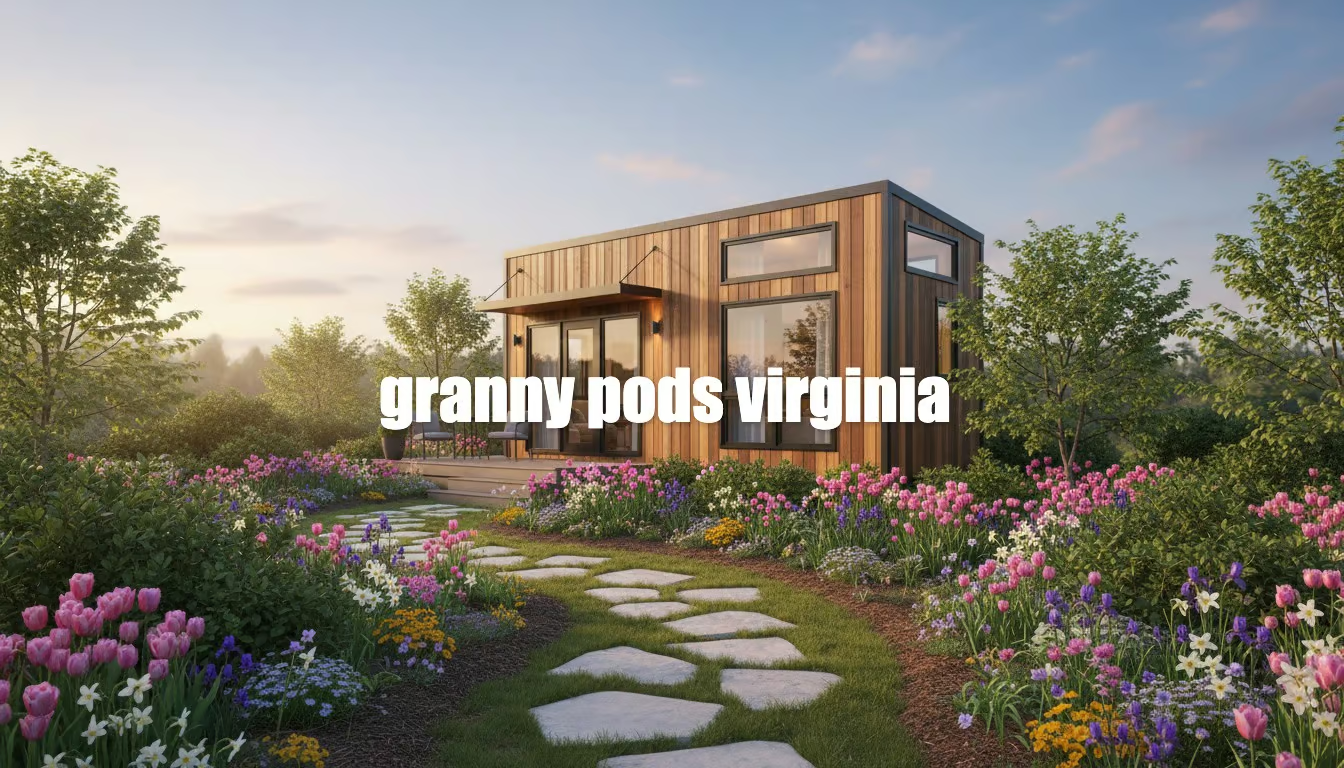
Virginia permits granny pods, known as accessory dwelling units (ADUs), in many localities under local zoning ordinances, with no statewide mandate but supportive legislation like Senate Bill 305 from 2024 defining ADUs as independent units on residential lots. Regulations vary by county and city, often requiring minimum lot sizes of 7,500 to 43,560 square feet, maximum sizes up to 800 square feet, and owner occupancy. Tiny house-style granny pods on wheels may qualify as park models with RVIA certification in some areas, but permanent foundations are typically needed for full compliance; always verify with local planning offices.
As families in Virginia grapple with the needs of aging loved ones, granny pods offer a practical, compassionate housing solution that keeps relatives close while preserving their independence. These compact, detached units, often built in backyards, provide essential amenities like bedrooms, bathrooms, and kitchenettes, fitting seamlessly into the state’s diverse settings from urban Northern Virginia to rural Appalachian areas. With Virginia’s population of seniors projected to exceed 2 million by 2030, granny pods align with growing trends in multigenerational living and affordable elder care.
This comprehensive guide explores granny pods in Virginia, covering definitions, benefits, legal requirements, county-specific rules, costs, installation processes, and design tips tailored to the state’s climate and regulations. Whether you’re in Fairfax County or along the Tidewater coast, understanding these elements helps ensure your project complies with local codes and meets family needs. For expert guidance, Great Lakes Tiny Homes serves as a full-service manufacturer of modular, park model, and tiny homes, delivering turnkey builds to all 48 lower U.S. states with options featuring or excluding wheels and RVIA certification—where certified models function as compliant park models.
If you’re ready to explore customized solutions for your property, book a call with our experts to discuss Virginia-specific options.
Disclaimer: This article is for informational purposes only and does not constitute legal advice. Laws, regulations, and zoning rules vary by location and may change over time. Always consult your local zoning office or a qualified land use/zoning attorney before making decisions based on this information.
What Are Granny Pods?
Granny pods, commonly referred to as accessory dwelling units (ADUs), are small, independent living spaces designed for elderly family members, enabling them to reside near relatives while maintaining personal privacy. Typically situated on the same property as the primary home, these units include vital features such as a bedroom, full bathroom, and compact kitchen, ranging from 300 to 800 square feet to balance functionality with space efficiency. In Virginia, where family ties run deep amid an aging demographic—over 1.5 million residents aged 65 or older as of recent census figures—granny pods address the rising demand for affordable, home-based elder care alternatives to costly nursing facilities.
The surge in popularity stems from Virginia’s emphasis on sustainable housing and community support, allowing families to monitor health needs without disrupting daily independence. Great Lakes Tiny Homes specializes in adaptable tiny house models that double as granny pods, offering wheeled versions for potential mobility or stationary park models with RVIA certification to ease permitting in compliant areas. These designs incorporate senior-focused elements like wide doorways and accessible layouts, ensuring safety in Virginia’s varied weather conditions from humid summers to occasional winter snows.
Customization plays a key role, with options for prefab assembly to accelerate setup on diverse terrains, from flat coastal lots to sloped mountain properties. As you consider a granny pod, evaluate how it integrates with your lifestyle, particularly in regions with stringent zoning that may favor permanent installations over mobile ones.
Inside the Modern Granny Pod: Features, Design, and Purpose
Modern granny pods, or ADUs, fulfill a crucial role in Virginia’s evolving family structures, where multigenerational homes are on the rise to support aging populations. Sized between 300 and 800 square feet, these units boast complete setups including living rooms, bedrooms, kitchens, and bathrooms, optimized for comfort without excess space. Their senior-centric design distinguishes them, featuring elements like ramped entrances for wheelchair access, 36-inch-wide hallways to facilitate movement, and slip-resistant flooring to minimize fall risks in daily routines.
Beyond basics, many incorporate health-oriented amenities such as pre-wired outlets for medical devices, smart thermostats for temperature control in Virginia’s fluctuating climate, and integration with home monitoring apps for remote family oversight. Energy-saving features like insulated walls, efficient HVAC systems, and solar-compatible roofing help manage utility bills, especially important in areas prone to high summer humidity or chilly mountain winters. Types vary from prefabricated units that arrive nearly complete for quick installation to bespoke builds that match local aesthetics, such as colonial-style facades in historic neighborhoods.
Converted options, including repurposed sheds or containers, provide economical entry points but demand thorough habitability upgrades to meet Virginia’s building codes. Unlike recreational tiny homes, granny pods prioritize longevity and accessibility, often including therapeutic additions like natural light wells or private patios for outdoor therapy. In Virginia’s expansive landscapes, from Arlington’s suburbs to Shenandoah’s countryside, these designs ensure harmonious property integration while promoting resident well-being.
For those in urban settings like Richmond, selecting a model that complies with setback rules enhances curb appeal and neighbor relations. Thoughtful planning around these features not only complies with regulations but also fosters a nurturing environment for loved ones.
Benefits of Granny Pods for Virginia Families
Granny pods deliver profound advantages for Virginia households, foremost by enabling close-proximity caregiving that allows prompt response to elderly relatives’ needs without the logistics of distant care facilities. This arrangement cultivates stronger familial connections through everyday interactions, resonating with Virginia’s cultural value on kinship and community in settings from Norfolk’s vibrant neighborhoods to Roanoke’s quieter enclaves. Moreover, the privacy afforded by a separate unit respects seniors’ autonomy, reducing stress and enhancing mental health amid the state’s 20% rate of isolated seniors over 65, as noted in AARP reports.
Economically, granny pods prove cost-effective, with initial investments of $100,000 to $150,000 from reputable builders like Great Lakes Tiny Homes offsetting the $50,000+ annual expense of assisted living facilities, according to updated Genworth data. Over time, this setup can appreciate property values by 10-20% in ADU-friendly markets, turning a care solution into a financial asset. Environmentally, compact designs promote sustainability, aligning with Virginia’s green initiatives and lowering overall household energy use through shared utilities.
Emotionally, the reduced isolation combats loneliness, a prevalent concern as Virginia’s senior population grows toward 2 million by 2030. Outdoor-friendly features encourage activities in the state’s mild climate, from gardening in spring to porch gatherings in fall. For families, this translates to reassurance, making granny pods a strategic choice in an era of healthcare challenges. To explore suitable models, consider options available through tiny house builders in Richmond.
Disclaimer: This article is for informational purposes only and does not constitute legal advice. Laws, regulations, and zoning rules vary by location and may change over time. Always consult your local zoning office or a qualified land use/zoning attorney before making decisions based on this information.
Legal Considerations for Granny Pods in Virginia
Virginia supports granny pods through state-level policies like Senate Bill 305 (2024), which defines ADUs as independent units on residential lots complete with living, sleeping, cooking, and sanitary facilities, but implementation falls to local jurisdictions with diverse zoning frameworks. The Virginia Uniform Statewide Building Code mandates safety compliance for all habitable structures, including electrical, plumbing, and structural standards to protect occupants. Zoning typically categorizes granny pods as accessory uses, requiring the primary residence to remain the main structure and often mandating owner-occupancy to prevent unauthorized rentals.
Permitting involves submitting site plans, engineering assessments, and environmental reviews, with processing times of 4-12 weeks depending on the locality. Progressive areas like Arlington County streamline approvals for ADUs up to 800 square feet on lots over 7,500 square feet, while rural Southwest Virginia counties may enforce stricter lot coverage limits or agricultural zoning exclusions. Recent reforms, including House Bill 2169 (2020) and ongoing 2025 proposals, aim to standardize permissions, particularly in urban centers to boost affordable housing stock.
RVIA-certified park models offer a workaround in RV-tolerant zones, aligning with recreational vehicle codes to sidestep some residential hurdles, though permanent utility ties are usually required. For detailed county insights, refer to what counties in Virginia allow tiny houses, as many overlap with granny pod allowances. Book a call with our experts for personalized regulatory navigation.
Disclaimer: This article is for informational purposes only and does not constitute legal advice. Laws, regulations, and zoning rules vary by location and may change over time. Always consult your local zoning office or a qualified land use/zoning attorney before making decisions based on this information.
Which Virginia Counties Allow Granny Pods?
Granny pod permissions in Virginia hinge on local ordinances, with no uniform statewide rule, making it essential to review county-specific zoning for feasibility on your property. The table below details regulations for key populated counties, including minimum lot sizes, maximum unit dimensions, and unique stipulations; note that cities within counties may have overriding municipal codes, such as Fairfax City’s more lenient variances. This overview draws from official sources to aid initial assessments, but direct verification with planning departments is advised due to potential updates.
| County Name | Granny Pod Status | Minimum Lot Size Requirements | Maximum Size Allowed | Special Notes | Source |
|---|---|---|---|---|---|
| Fairfax County (incl. Fairfax City) | Allowed | 1 acre | 800 sq ft | Administrative permit required; owner-occupancy mandatory; interior ADUs preferred over detached. Cities like Falls Church allow up to 1,000 sq ft with variances. | Fairfax County Zoning Ordinance – Accessory Living Unit |
| Prince William County | Restricted | 2 acres | 600 sq ft | No full ADUs with separate kitchens permitted; accessory structures allowed but limited to non-independent use; Manassas City offers faster approvals for compliant setups. | Prince William County AfDU Ordinance |
| Loudoun County | Restricted | 5 acres | 500 sq ft | Affordable Dwelling Unit program focuses on new developments; individual ADUs limited in residential zones with environmental reviews; Leesburg allows case-by-case in select areas. | Loudoun County ADU Program |
| Chesterfield County (incl. Richmond) | Allowed with Permit | 1 acre | 750 sq ft | Conditional use permit needed for detached ADUs; Richmond City streamlines for flood-prone areas near James River; setbacks from property lines enforced. | Chesterfield County ADU Presentation to Virginia Housing Commission |
| Henrico County | Case-by-Case | 1.5 acres | 700 sq ft | Board approval via conditional use permit; no family occupancy requirement, allowing rentals; historic districts stricter; utilities tied to main home. | Henrico County Accessory Dwellings Guidelines |
| Virginia Beach City (independent) | Allowed | 7,500 sq ft | 800 sq ft | Coastal and flood elevation requirements; hurricane-resistant builds encouraged; no wheels for permanent units; updated zoning in 2024 eases lot compliance. | Virginia Beach Zoning Regulations |
| Norfolk City (independent) | Allowed | 5,000 sq ft | 800 sq ft | By-right in most zones post-2025 updates; max 50% of primary residence size; tidal flood risks require elevated foundations; urban renewal supportive. | Norfolk ADU Updates Development Notice |
| Montgomery County | Restricted | 3 acres | 400 sq ft | No county-wide ADU policy; special use permits near Virginia Tech; conflicts with student housing; Blacksburg allows with planning approval. | Montgomery County Building Guidelines |
While this table covers major areas, regulations evolve— for instance, 2024-2025 legislative pushes seek broader ADU access. Explore best tiny home communities in Virginia for supportive environments. In coastal spots like Norfolk, check tiny houses for sale in Norfolk that adapt to local rules.
Disclaimer: This article is for informational purposes only and does not constitute legal advice. Laws, regulations, and zoning rules vary by location and may change over time. Always consult your local zoning office or a qualified land use/zoning attorney before making decisions based on this information.
Major Cities in Virginia for Granny Pods
Virginia’s major cities present unique opportunities and challenges for granny pods, influenced by urban density, coastal vulnerabilities, and progressive housing policies. In these hubs, local ordinances often prioritize family care units while addressing infrastructure strains, providing models for statewide trends.
Richmond, the state capital, facilitates ADUs through streamlined permitting in Chesterfield and Henrico-adjacent zones, allowing up to 750 square feet on one-acre lots with conditional approvals. The city’s focus on historic preservation requires designs that blend with colonial architecture, while flood considerations near the James River mandate elevated foundations. Contact the Richmond Planning Department at (804) 646-3527 for site-specific guidance, ensuring compliance with updated 2024 codes that encourage multigenerational housing.
Virginia Beach, a coastal powerhouse, updated its zoning in 2024 to permit granny pods on 7,500-square-foot lots up to 800 square feet, emphasizing hurricane resilience with reinforced structures and elevation standards. Beachfront properties face stricter setbacks to protect against erosion, but the city’s growth supports family-oriented builds. Reach the Virginia Beach Planning Department via their website for permit applications, highlighting how ADUs aid senior aging-in-place amid rising sea levels.
Norfolk, with its naval heritage and tidal risks, adopted 2025 reforms allowing by-right ADUs up to 800 square feet or 50% of the primary home’s size on 5,000-square-foot lots. Urban renewal districts promote these units for affordable care, requiring flood-proofing and separate utilities. The Norfolk Department of City Planning, accessible at (757) 664-4253, offers resources for navigating these changes, making it a forward-thinking locale for granny pods.
Chesapeake, spanning rural and suburban landscapes, treats granny pods as accessory uses in residential districts, with maximums around 600 square feet on larger parcels to accommodate wetlands. The city’s environmental reviews ensure minimal impact on waterways, while owner-occupancy rules foster family stability. For inquiries, contact Chesapeake Planning at (757) 382-6650, exploring how these regulations balance growth with preservation in this expansive area.
Arlington, near the nation’s capital, exemplifies liberal ADU policies, permitting units up to 800 square feet on qualifying urban lots with expedited processes under county codes. High-density neighborhoods benefit from attached or detached options, prioritizing accessibility for seniors. The Arlington County Planning Division, reachable at (703) 228-3525, provides detailed ordinances, positioning the city as a leader in innovative elder housing solutions.
Granny Pod Prices in Virginia
Granny pod costs in Virginia fluctuate based on several factors, including unit size from 300 to 800 square feet, foundation type—permanent concrete for stability or wheeled for flexibility—RVIA certification for park model compliance, utility integrations like septic and electrical hookups, and adherence to local zoning variances. In urban counties like Fairfax, premiums arise from stringent codes and site prep on smaller lots, while rural areas like Shenandoah offer savings through simpler permitting but higher transport fees. Overall, expect a range of $50,000 to $200,000 for complete installations, influenced by material choices such as energy-efficient insulation suited to Virginia’s humid subtropical climate.
Site-related expenses add layers, with foundation work costing $10,000 to $20,000 in clay-heavy Piedmont soils versus sandy coastal bases, and utility connections averaging $5,000 to $15,000 for winterized lines. Permitting fees span $1,000 to $5,000, varying by jurisdiction—higher in progressive cities like Norfolk with environmental assessments. Compared to assisted living at $54,000 annually per Genworth’s 2024 report, a mid-range granny pod recoups investment within 2-4 years, factoring in property value boosts of 10-15% in ADU-permissive markets. Financing via home equity loans at 6-8% or state aging-in-place grants further accessibility.
Insurance adjustments for detached structures run $500-1,000 yearly, with tax benefits like abatements in supportive counties. These elements underscore the long-term affordability of granny pods over institutional care.
Great Lakes Tiny Homes Pricing
Great Lakes Tiny Homes delivers high-quality granny pod solutions in the $100,000 to $150,000 range, encompassing turnkey modular and park model builds customized for Virginia’s regulations and climates. This pricing includes durable craftsmanship, accessibility features, and delivery across the lower 48 states, ensuring compliance with RVIA standards where applicable for easier zoning navigation. Their models emphasize value, with options for wheeled mobility or permanent setups that integrate seamlessly on diverse properties, from Northern Virginia suburbs to Tidewater coasts.
Budgeting within this bracket allows for essentials like insulated exteriors against humidity and smart systems for health monitoring, without compromising on safety or comfort. As a full-service provider, they handle from design to installation, minimizing surprises in variable local costs.
Great Lakes Tiny Homes Model Options
- Modular Homes – Ideal for permanent foundations in zoning-strict areas, offering quick assembly and customization for accessibility.
- A-Frame – Charming, space-efficient designs suited to sloped terrains, with loft options for added sleeping areas.
- Cabin – Rustic yet modern builds blending with Virginia’s natural landscapes, emphasizing cozy interiors for seniors.
- Park Models – RVIA-certified for regulatory ease, perfect for semi-permanent setups in RV-friendly counties.
- Tiny House on Wheels – Mobile alternatives for flexible placement, though zoning may require anchoring for residency.
Model selection should align with local zoning—permanent options for residential districts, wheeled for transitional uses—impacting both cost and compliance. For tailored advice on how these fit Virginia rules, book a call with our experts.
Disclaimer: This article is for informational purposes only and does not constitute legal advice. Laws, regulations, and zoning rules vary by location and may change over time. Always consult your local zoning office or a qualified land use/zoning attorney before making decisions based on this information.
The Granny Pod Installation Process in Virginia
The installation of a granny pod in Virginia commences with thorough zoning research via county planning portals or the Virginia Department of Housing and Community Development, pinpointing constraints on setbacks, heights, and coverage ratios—often capping at 10-15% of lot area in suburban zones. Applications demand detailed blueprints, geotechnical soil reports, and neighborhood impact analyses, with urban timelines of 4-6 weeks contrasting rural extensions due to environmental scrutiny in wetland-prone East Virginia. Fees range from $500 to $3,000, potentially including variances for non-conforming sites.
Site readiness accounts for the state’s topography, involving land clearing, grading to avert drainage issues in rainy regions, and foundation pouring—frost-resistant piers for wheeled units or full slabs for permanence against freeze-thaw cycles. Utility linkages, essential for year-round habitability, require certified contractors for insulated water pipes, grounded electricity, and septic evaluations in unincorporated areas. Coastal installations in places like Virginia Beach incorporate elevation for flood protection, adding resilience layers.
Prefab deliveries unfold in 1-3 weeks, with cranes maneuvering units onto prepared pads, while custom projects extend to 2-4 months amid inspections for code adherence. Challenges like seasonal delays from winter rains or community objections in dense Arlington necessitate proactive surveyor involvement and documentation. This methodical approach culminates in a compliant, enduring family asset. For builder support in Fairfax, visit tiny house builder in Fairfax.
Design Considerations for Virginia Granny Pods
Virginia granny pod designs must withstand the commonwealth’s climatic diversity, from Richmond’s steamy summers exceeding 90°F to Blue Ridge snowfalls, incorporating robust weatherproofing like wind-rated siding in hurricane-vulnerable Tidewater and moisture barriers against 70%+ humidity. High-efficiency windows with R-5 insulation and ENERGY STAR appliances curb energy costs, qualifying for state rebates under Virginia’s clean energy programs. Layouts emphasize universal accessibility, with zero-threshold entries, 32-inch minimum doorways, and reinforced bathroom walls for grab bar retrofits to support mobility aids.
Smart integrations, including automated lighting, sensor-based fall alerts, and app-controlled HVAC, enhance safety without complexity, linking to the main home’s network for family peace of mind. Aesthetic harmony involves matching primary residence styles—perhaps brick veneers in colonial-heavy areas—while underground utilities preserve views. Patios or decks with non-slip surfaces promote outdoor engagement in Virginia’s temperate springs and falls.
Budgeting for these elements ensures durability; for instance, solar panels offset grid reliance in sunny Southern regions. In Chesapeake’s mixed terrains, elevated designs address flood zones per FEMA guidelines. These thoughtful adaptations create secure, inviting spaces tailored to local realities. Explore sales in the area via tiny house for sale in Chesapeake.
Finding Expert Guidance for Your Project
Undertaking a granny pod in Virginia demands collaboration with professionals versed in the state’s patchwork regulations and site-specific challenges, from seismic considerations in the Piedmont to coastal erosion protocols. Local experts streamline variances, climate adaptations, and code interpretations, averting delays or fines that could inflate budgets by 20-30%.
Great Lakes Tiny Homes emerges as a premier partner, crafting compliant granny pods with Virginia-focused customizations like humidity-resistant materials and accessible layouts for medical needs. Their RVIA-certified options navigate permitting hurdles efficiently, while turnkey services cover delivery and setup across counties. With a commitment to quality, they guide families through zoning nuances, ensuring durable, personalized outcomes.
Consultations provide clarity on models suiting your lot, from modular for quick urban installs to cabins for rural charm. For community insights, see best tiny home communities in Virginia. Book a call with our experts to advance your project confidently.
FAQ
Are granny pods legal in all parts of Virginia?
Granny pods are not universally legal across Virginia, as permissions depend on local zoning ordinances without a statewide mandate, though supportive laws like SB 305 (2024) define them favorably. Urban areas such as Arlington and Alexandria allow them outright on qualifying lots up to 800 square feet, while rural counties like Highland often restrict or ban due to agricultural priorities. Coastal cities including Virginia Beach impose flood-related conditions; consult your municipal planner for current rules, as 2025 bills seek standardization.
Can I install a granny pod on wheels versus a foundation in Virginia?
Wheeled granny pods, often as RVIA-certified park models, are viable in some Virginia jurisdictions treating them under recreational vehicle codes, avoiding full residential permits but requiring registration and anchoring for permanence. Foundation-based units comply better in strict zoning for long-term residency, with concrete piers or slabs essential against freeze-thaw in northern counties. Local rules dictate—e.g., no wheels in Virginia Beach for stability; verify with planning offices to match your property’s needs.
What is the minimum size for a granny pod in Virginia?
Virginia lacks a uniform minimum size for granny pods, but local codes typically require at least 300 square feet to include essential living, cooking, and sanitary facilities per the Uniform Building Code. Some counties like Fairfax mandate 190 square feet for efficiency units, while others cap at 35% of the primary home’s area. These thresholds ensure habitability; always reference your county’s zoning ordinance for precise measurements.
Where can I place a granny pod on my Virginia property?
Placement of granny pods in Virginia follows setback rules, generally 5-10 feet from property lines and rear yards, with front placements rare to maintain residential character. On lots over one acre in places like Chesterfield, backyards suit detached units, but wetlands or slopes demand engineering reviews. HOAs may add restrictions; site plans submitted to planning departments confirm viability, prioritizing safety and neighbor impacts.
What permits and utilities are needed for a granny pod in Virginia?
Permits for granny pods in Virginia include zoning approvals, building inspections, and utility connections, varying by locality—e.g., conditional use in Henrico or by-right in Norfolk. Electrical, plumbing, and septic ties must meet state codes, often costing $5,000-15,000 and requiring licensed pros. Environmental permits apply in sensitive areas; start with your county’s planning office for a checklist to ensure full compliance.
How much does a granny pod cost in Virginia?
Granny pod costs in Virginia range from $50,000 for basic prefabs to $200,000 for custom builds, factoring size, features, and site work like foundations at $10,000-20,000. Utility hookups and permits add $6,000-18,000, with Great Lakes Tiny Homes offering turnkey options at $100,000-150,000. These investments yield savings over assisted living’s $54,000 yearly average; budgeting tools from local builders aid planning.
Conclusion: Creating a Supportive Home for Your Loved Ones
Granny pods in Virginia represent a forward-looking approach to elder care, merging family proximity with personal dignity amid the state’s regulatory landscape and demographic shifts. By addressing legal, design, and financial aspects, these units not only comply with local codes but also enrich lives through sustainable, accessible living. With resources like county tables and model options, families can confidently pursue this path.
Great Lakes Tiny Homes facilitates seamless implementation with expert builds tailored to Virginia’s needs. For personalized insights, book a call with our experts to transform your vision into reality.