
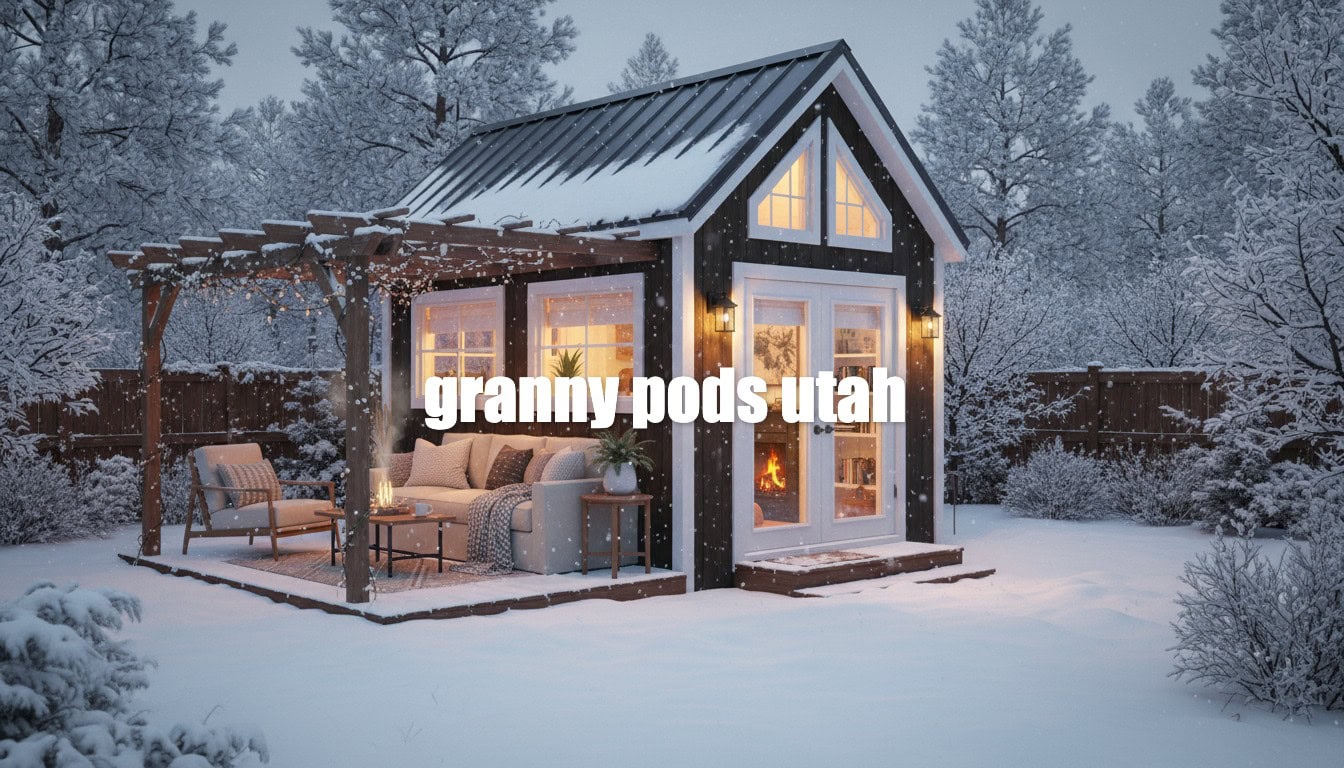
Utah permits granny pods as accessory dwelling units (ADUs) in most residential zones under state law, with recent legislation like House Bill 289 easing restrictions to promote affordability. Local rules vary by county and city, often requiring owner-occupancy, size limits up to 1,200 square feet, and compliance with building codes for seismic and energy efficiency. Detached units are allowed in areas like Salt Lake County, but always verify with local zoning authorities for specific setbacks and permits.
As families in Utah navigate the challenges of caring for aging loved ones, granny pods present a compassionate and efficient housing option. These small, independent living spaces, often built as accessory dwelling units (ADUs), enable seniors to remain close to family while retaining their autonomy and privacy. With Utah’s senior population projected to grow significantly—reaching 15% over age 65 by 2030—understanding granny pods in Utah becomes essential for planning multigenerational living arrangements that suit the state’s diverse climates and family values.
Granny pods align seamlessly with Utah’s emphasis on strong family ties and community support, offering a cost-effective alternative to traditional care facilities amid rising housing costs. They can be customized to meet individual needs, from accessibility features to energy-efficient designs that withstand the state’s variable weather, including cold winters in the north and hot summers in the south. Great Lakes Tiny Homes stands out as a full-service manufacturer specializing in modular, park model, and tiny homes that serve as ideal granny pods, delivering turnkey builds to all 48 lower U.S. states with options featuring or omitting wheels and RVIA certification—where certified models function as park models for easier zoning compliance.
This comprehensive guide explores the features, benefits, legal considerations, and practical steps for implementing granny pods in Utah, drawing on the latest regulations and real-world examples. Whether you’re in urban Salt Lake City or rural Cache County, these insights will help you evaluate how a granny pod can enhance family well-being. For personalized advice on designs that fit your property and needs, consider booking a call with our experts at Great Lakes Tiny Homes.
Disclaimer: This article is for informational purposes only and does not constitute legal advice. Laws, regulations, and zoning rules vary by location and may change over time. Always consult your local zoning office or a qualified land use/zoning attorney before making decisions based on this information.
What Are Granny Pods?
Granny pods, commonly known as accessory dwelling units (ADUs), are compact, self-contained homes designed for elderly family members to live near their relatives while maintaining independence. In Utah, these units typically range from 300 to 800 square feet and include essential amenities like a bedroom, bathroom, kitchenette, and living area, all tailored for senior living. The concept has gained popularity due to the state’s aging demographic, with over 11% of residents aged 65 or older as per recent U.S. Census data, and a cultural preference for keeping family close rather than relying on distant care facilities.
These structures can be detached backyard cottages, attached additions to the main home, or conversions of existing spaces like garages, providing flexibility for Utah’s varied landscapes from the Wasatch Mountains to the deserts of Washington County. Great Lakes Tiny Homes offers granny pod solutions in the form of tiny houses, available with wheels for mobility or on foundations for permanence, and RVIA-certified options that qualify as park models to streamline permitting processes. For those exploring options in urban areas, consider searching for a tiny house for sale in Salt Lake City, where these units can integrate well into family properties.
Historically rooted in affordable housing movements, granny pods have evolved to incorporate modern features like smart home technology for health monitoring and energy-efficient systems suited to Utah’s climate extremes. Families in places like Provo have successfully used them to support grandparents recovering from health issues, allowing for easy access to care without disrupting daily life. As you assess this option, envision how a granny pod could blend into your backyard, perhaps with a porch overlooking the mountains, fostering stronger intergenerational connections.
Disclaimer: This article is for informational purposes only and does not constitute legal advice. Laws, regulations, and zoning rules vary by location and may change over time. Always consult your local zoning office or a qualified land use/zoning attorney before making decisions based on this information.
Inside the Modern Granny Pod: Features, Design, and Purpose
Modern granny pods prioritize functionality and accessibility, serving as dedicated spaces for seniors to age in place close to family support. Sized between 300 and 800 square feet, they include core elements such as a full bathroom, compact kitchen, sleeping quarters, and a cozy living area, all optimized for efficient use of space. In Utah, where multigenerational households are common, these units address the growing need for elder care solutions that avoid the emotional and financial strain of institutional living.
Senior-specific designs feature zero-step entrances, wide doorways for wheelchair access, lever handles, and non-slip floors to enhance safety and mobility. Grab bars in bathrooms and hallways, along with adjustable counter heights, allow for adaptations as needs change over time. For instance, many Utah installations incorporate fall-detection sensors and remote monitoring apps, enabling family members to respond quickly to emergencies without compromising privacy, which has been shown to reduce hospital visits in similar setups nationwide.
Types of granny pods vary to suit different preferences and sites: prefabricated models assemble quickly to bypass lengthy construction timelines, custom builds allow personalization for specific health requirements, and conversions repurpose existing structures sustainably. In Utah’s permitting environment, prefab options from builders like Great Lakes Tiny Homes prove advantageous, often halving installation time compared to traditional methods. This efficiency is particularly beneficial in areas with seasonal weather challenges, ensuring faster occupancy for those in need.
Additional enhancements include ample natural lighting to alleviate winter blues in northern Utah, soundproofing for personal space, and robust insulation against temperature swings from snowy Cache County winters to arid St. George summers. Unlike recreational tiny homes, granny pods emphasize durability with fire-resistant materials and integration with the main property’s utilities. A typical 400-square-foot unit might feature a loft for sleeping and a small therapy nook, supporting at-home rehabilitation and daily wellness routines.
As planning progresses, aligning features with family dynamics ensures the pod supports long-term independence. In Ogden, for example, families have added voice-activated systems for hands-free operation, improving usability for those with limited mobility. Overall, the purpose centers on dignity, health, and familial proximity, transforming backyards into supportive ecosystems.
Benefits of Granny Pods for Utah Families
Granny pods offer Utah families enhanced proximity for caregiving, allowing quick check-ins and shared activities without the hassle of travel to remote facilities. In sprawling regions like the Salt Lake Valley, this setup promotes emotional well-being by facilitating spontaneous interactions, aligning with the state’s kinship-focused culture. Studies indicate that such arrangements can decrease senior isolation, which impacts about 25% of Utah elders, leading to better mental health outcomes through regular social engagement.
Preserving independence, granny pods let seniors uphold routines in a familiar setting, minimizing relocation stress and associated health declines. Financially, they provide substantial savings; according to Genworth’s latest Cost of Care Survey, Utah nursing homes average $7,500 monthly, while assisted living costs $4,500, compared to a one-time granny pod investment of $100,000-$150,000 from providers like Great Lakes Tiny Homes that offsets expenses within four years. This approach not only cuts ongoing fees but also boosts property values by 10-20% in Utah’s competitive market, where multigenerational homes are increasingly sought after.
Climate-adapted benefits include superior insulation for energy savings in extreme weather, from sub-zero temperatures in Logan to triple-digit heat in St. George, potentially reducing utility bills by 30%. With Utah’s senior population expansion, granny pods represent a proactive investment in family resilience and sustainability, incorporating low-water fixtures amid statewide conservation efforts. Families in rural Washington County have noted improved holiday caregiving and reduced medical travel, highlighting the practical advantages of this housing form.
For community-oriented living, exploring the best tiny home communities in Utah can inspire integrated designs that extend family support networks. Environmentally, these units promote efficient land use, preserving Utah’s natural beauty while addressing housing shortages. Ultimately, granny pods deliver peace of mind, economic prudence, and deepened bonds, making them a vital asset for Utah households.
Disclaimer: This article is for informational purposes only and does not constitute legal advice. Laws, regulations, and zoning rules vary by location and may change over time. Always consult your local zoning office or a qualified land use/zoning attorney before making decisions based on this information.
Legal Considerations for Granny Pods in Utah
Utah’s legal framework for granny pods treats them as ADUs under Utah Code Title 10, Chapter 9a, permitting them in most residential zones while local governments handle details. Statewide, House Bill 289 from 2023 further streamlined approvals to boost housing affordability, mandating allowances on single-family lots. However, compliance with the International Residential Code (IRC) is required, including seismic reinforcements due to Utah’s fault lines and energy standards for efficiency.
Zoning typically demands primary home owner-occupancy and caps ADU size at 50% of the main dwelling, with permits needing site plans, engineering, and health approvals for utilities. For insights into overlapping rules, refer to resources on what counties in Utah allow tiny houses. RVIA-certified park models on wheels can sidestep some codes by classifying as RVs, facilitating temporary or mobile installations in Utah’s RV-tolerant areas.
Recent updates, including proposed 2026 legislation, aim to standardize processes further, reducing barriers in urban and rural settings alike. In practice, families in Davis County have leveraged these flexibilities for quicker setups during health transitions. Early consultation with planners is key to navigating variations, ensuring your project meets community standards.
To advance your plans, book a call with our experts for guidance on compliance tailored to your site.
Disclaimer: This article is for informational purposes only and does not constitute legal advice. Laws, regulations, and zoning rules vary by location and may change over time. Always consult your local zoning office or a qualified land use/zoning attorney before making decisions based on this information.
Which Utah Counties Allow Granny Pods?
Granny pod permissions in Utah hinge on county-specific zoning, with state law encouraging ADUs but locals enforcing details like lot sizes and setbacks. The table below outlines regulations for key populated counties, based on current ordinances—always confirm with authorities as rules evolve. For example, urban counties like Salt Lake offer broader allowances, while rural ones provide flexibility in agricultural zones.
| County Name | Granny Pod Status | Minimum Lot Size Requirements | Maximum Size Allowed | Special Notes | Source |
|---|---|---|---|---|---|
| Salt Lake County (Salt Lake City) | Allowed | 7,000 sq ft | 1,200 sq ft | Permits required; no separate utility meters; streamlined process for caregiver ADUs; complies with 2024 ordinance reducing restrictions. | Salt Lake County ADU Ordinance |
| Utah County (Provo) | Allowed | 8,000 sq ft | 1,000 sq ft | Family occupant priority; detached units with 5-ft setbacks; seismic reinforcements; owner-occupied primary dwelling required. | Provo Accessory Dwelling Unit Requirements |
| Davis County (Layton) | Restricted | 10,000 sq ft | 800 sq ft | Case-by-case approval; design review for neighborhood aesthetics; height and setback compliance mandatory. | Utah ADU Guidelines (Davis Reference) |
| Weber County (Ogden) | Case-by-Case | 9,000 sq ft | 900 sq ft | Special use permit; favors attached ADUs but allows detached with variance; 300-800 sq ft for detached. | Ogden ADU Application |
| Washington County (St. George) | Restricted | 12,000 sq ft | 800 sq ft | Water conservation rules; setbacks and height limits; detached up to 800 sq ft in rear yards. | Washington County Community Development |
| Cache County (Logan) | Allowed | 7,500 sq ft | 1,000 sq ft | Easy permitting in rural areas; supports agricultural zones; no separate sale of ADU. | Logan City ADU Factsheet |
| Summit County (Park City) | Case-by-Case | 1 acre | 600 sq ft | Environmental assessments for terrain; deed restrictions for workforce housing; zoning district specific. | Summit County Land Use Code |
This overview aids initial planning; for Salt Lake County, high density supports multigenerational setups, whereas Cache County’s rural leniency suits larger lots. Cross-check with city codes, as Provo differs from Orem within Utah County. Regulations influence designs, like smaller units in restricted zones for faster approvals.
Disclaimer: This article is for informational purposes only and does not constitute legal advice. Laws, regulations, and zoning rules vary by location and may change over time. Always consult your local zoning office or a qualified land use/zoning attorney before making decisions based on this information.
Major Cities for Granny Pods in Utah
Salt Lake City
In Salt Lake City, granny pods are permitted as ADUs in residential zones with a streamlined process under the 2024 county ordinance, allowing up to 1,200 square feet on lots over 7,000 square feet. Key requirements include no separate utility meters and compliance with fire and health codes, with zero-step entries encouraged for accessibility. The city’s planning department offers standard plans and handbooks for guidance, making it feasible for urban backyards amid the Wasatch Front’s growth.
Unique ordinances focus on neighborhood integration, requiring designs that match existing aesthetics and minimal setbacks of 5 feet. Contact the Salt Lake City Building Services at slc.gov/buildingservices for permits, which typically take 4-6 weeks. Families here benefit from proximity to medical facilities, enhancing the pod’s role in aging-in-place strategies.
Provo
Provo in Utah County allows detached granny pods up to 1,000 square feet on 8,000-square-foot lots, prioritizing family caregivers with owner-occupancy mandates. Regulations emphasize seismic standards and 5-foot setbacks, with no more than one ADU per property to maintain single-family character. The city’s 2024 updates repealed special use permits, simplifying approvals through administrative review.
Local rules prohibit short-term rentals, ensuring pods serve long-term family needs, and require engineering reports for foundations. Reach out to Provo City Community Development at provo.gov for applications, often processed in 4-8 weeks. This setup supports Brigham Young University-area families balancing education and elder care.
Ogden
Ogden’s case-by-case approach in Weber County permits granny pods up to 900 square feet with special use variances for detached units, favoring attached options in residential districts. Minimum lot size is 9,000 square feet, with standards including 300-square-foot minimums and compliance with height limits of 25 feet. The city records ADU certificates to enforce occupancy rules.
Ordinances stress design compatibility and parking provisions, with applications via the Ogden City Planning Department at ogdencity.com. Processing can extend to 8 weeks due to reviews. Ogden’s industrial history informs durable builds, ideal for northern Utah’s snowy conditions.
St. George
In Washington County’s St. George, restricted granny pods cap at 800 square feet on 12,000-square-foot lots, with emphasis on water conservation and desert climate adaptations like low-flow fixtures. Detached units require rear-yard placement and special permits, adhering to 25-foot height maximums. The county’s 2025 application instructions detail development review processes.
Unique to the area, irrigation rules and environmental impacts influence approvals, with building permits following planning sign-off. Contact Washington County Community Development at washco.utah.gov for guidance, typically 6-10 weeks total. This supports southern Utah’s retiree influx with sustainable living options.
Logan
Logan’s Cache County rules allow granny pods up to 1,000 square feet on 7,500-square-foot lots, with easy rural permitting and no separate ADU sales permitted. Standards include parking beyond single-family minimums and compliance with 2023 ordinance amendments for floor plans and elevations. The city’s factsheet outlines department contacts for holistic approvals.
Agricultural zone flexibility aids larger properties, with processing around 4 weeks. Logan’s community development at loganutah.gov assists, focusing on family-oriented designs. Utah State University’s presence highlights educational resources for pod planning.
Disclaimer: This article is for informational purposes only and does not constitute legal advice. Laws, regulations, and zoning rules vary by location and may change over time. Always consult your local zoning office or a qualified land use/zoning attorney before making decisions based on this information.
The Granny Pod Installation Process in Utah
The installation of a granny pod in Utah begins with zoning research via county websites, confirming allowances for setbacks and coverage in locales like Utah County. This foundational step avoids redesigns by aligning with seismic and flood-prone area codes early on. For builder insights, local experts like those offering tiny house builders in Provo can provide site-specific advice.
Permitting follows, submitting detailed plans to departments; expect 4-8 weeks in Salt Lake, including engineering for stability. Professional drawings accelerate reviews in high-demand zones. Site prep involves clearing and leveling, accounting for Utah’s rocky soils and erosion controls in southern deserts, often requiring surveyor input for utility avoidance.
Utility hookups demand licensed professionals for plumbing and electrical, ensuring freeze protection in Weber County winters. Coordination with services meets code for reliable systems. Delivery for prefab units takes 1-2 days, with cranes for non-wheeled models; total timeline spans 2-6 months, scheduling around weather like St. George monsoons.
Final inspections verify adherence, addressing delays from snow or backlogs in Davis County. Successful passes enable prompt move-in, easing caregiving burdens. Spring starts, HOA checks, and documentation for incentives optimize the process; project managers streamline multi-step coordination.
Design Considerations for Utah Granny Pods
Utah’s four distinct seasons necessitate robust designs for granny pods, featuring high R-value insulation, snow-shedding metal roofs, and UV-protective siding for high-altitude sun in Park City. These protect against dry air, wildfires, and temperature extremes, ensuring year-round comfort. Passive solar elements can harness sunlight for heating, qualifying for state rebates on energy-efficient builds.
Accessibility remains paramount, with zero-step entries, 36-inch doorways, grab bars, and roll-in showers facilitating aging in place. Ramps or lifts suit sloped terrains common in the Wasatch Range. Smart tech like automated thermostats and health alerts integrates seamlessly, allowing remote oversight via apps for peace of mind.
At Great Lakes Tiny Homes, designs emphasize personal touches, from site visits to 3D renderings, understanding your vision for Utah’s unique environments. Utility lines bury aesthetically, with facades like stone complementing local architecture. Native landscaping with drought-tolerant plants boosts curb appeal and sustainability.
Energy systems, including solar panels, minimize grid dependence during peak seasons, while soundproofing preserves privacy. In practice, Logan’s installations often include large windows for mountain views, enhancing resident well-being through nature connection.
Finding Expert Guidance for Your Project
Engaging Utah-savvy professionals ensures granny pod projects navigate codes from Salt Lake urban permits to rural variances efficiently. Experts handle soil tests in seismic zones, preventing costly issues and optimizing timelines. For construction details, consider tiny house builders in Salt Lake City familiar with local materials.
Great Lakes Tiny Homes provides trusted expertise in compliant, accessible granny pods across Utah’s terrains, from customizations to climate adaptations. Their portfolio showcases successful family integrations, backed by transparent consultations. Schedule a session to explore fits beyond initial ideas.
If ready, book a call with our experts for hundreds of satisfied customers’ proven support. This often reveals innovative solutions aligned with your goals.
Granny Pod Prices in Utah
Granny pod prices in Utah fluctuate based on size, with smaller 300-square-foot units starting lower and larger 800-square-foot models commanding premiums for added features. Foundation-based builds cost more than wheeled options due to engineering needs, while RVIA certification adds value by easing zoning but increases upfront expenses. Utility hookups vary by site remoteness, and local codes influence material choices for seismic compliance, impacting overall budgets in areas like Summit County.
Incorporate energy-efficient elements like insulation for Utah’s climate to qualify for rebates, potentially offsetting 10-20% of costs through state programs. Detached units average higher than attached conversions, but prefab efficiencies reduce labor in urban settings. Recent 2026 market data shows detached ADUs ranging $200,000-$400,000, though specialized tiny home providers offer competitive alternatives.
Great Lakes Tiny Homes Pricing
Great Lakes Tiny Homes delivers turnkey granny pods priced between $100,000 and $150,000, encompassing high-quality construction suited to Utah’s conditions and full-service support from design to delivery across the lower 48 states. This range covers customizable features like accessibility ramps and smart monitoring, ensuring compliance with local codes without hidden fees. Compared to broader market averages, their models provide affordability while maintaining durability for long-term family use.
Financing options, including home equity loans at current 6-8% rates, make these investments accessible, with potential property tax benefits for ADUs under Utah law. Insurance adjustments add 10-20% to premiums, but the overall savings versus annual care costs—exceeding $50,000—prove compelling. Families recoup through reduced utilities and fewer medical trips enabled by proximity.
Great Lakes Tiny Homes Model Options
- Modular Homes – Ideal for permanent foundations in zoned residential areas, offering quick assembly and customization for Utah’s seismic standards.
- A-Frame – Steep roofs shed snow effectively in northern counties, with cozy interiors suited for senior comfort.
- Cabin – Rustic designs blend with Utah’s natural settings, incorporating durable materials for wildfire-prone regions.
- Park Models – RVIA-certified for easier permitting as RVs, perfect for temporary or community placements.
- Tiny House on Wheels – Mobile options for flexibility in rural zoning, allowing relocation if family needs change.
Model selection should consider local zoning; for instance, wheeled park models suit restricted counties, while modular fits allowed urban lots. This zoning alignment prevents permit delays and ensures seamless integration.
Zoning profoundly affects model and pricing choices, from foundation requirements in Salt Lake to mobility needs in Cache. To navigate these for your property, book a call with our experts at Great Lakes Tiny Homes for tailored recommendations.
Conclusion: Creating a Supportive Home for Your Loved Ones
Granny pods in Utah offer a balanced path to family care, merging independence with proximity in settings that honor the state’s scenic diversity and cultural values. By addressing legal, design, and cost factors, families can craft spaces that elevate senior quality of life and strengthen bonds.
With expertise from Great Lakes Tiny Homes, including turnkey modular and park model options delivered nationwide, your project gains reliability and personalization. Their commitment to quality supports enduring family solutions. For the next step, book a call with our experts to discuss your vision.
FAQ
Are granny pods legal in all parts of Utah?
Granny pods are legal as ADUs in most Utah residential zones per state code, but local variations apply—Salt Lake allows broadly, while Iron County limits to attached units. Recent laws like HB 289 expanded access, yet HOAs or flood zones may restrict. Consult local planners for your site’s compliance.
Urban areas like Provo permit detached with conditions, rural spots classify flexibly. Environmental reviews near Great Salt Lake could add steps. For details, check official county resources.
Can I install a granny pod on any size property in Utah?
Most counties require 7,000-10,000 square feet for detached granny pods to accommodate setbacks, though smaller urban lots may use attached designs or variances. Utah County mandates 8,000 square feet, rural Box Elder fewer. Sloped sites need engineering assessments.
Under thresholds, wheeled park models offer alternatives. Expert site evaluations, including soil tests, confirm viability. Always verify with zoning offices.
Do I need special insurance for a granny pod?
Yes, update homeowner’s insurance or add a policy for granny pods, covering detached structures over 400 square feet with dwelling and liability endorsements. Premiums may rise 10-25%, averaging $500-$1,500 yearly, higher in wildfire areas like Washington County. RV-certified models might use RV policies if mobile.
Include seismic and flood riders common in Utah. Compare quotes and review annually as needs evolve. Discuss with agents for setup-specific coverage.
Can I rent out my granny pod in Utah?
Renting is restricted; ADUs are for family, with short-term bans in Salt Lake but long-term possible in Provo via licenses. Rural counties allow more income flexibility. Compliance avoids fines; primary family use may need variances for occasional lets.
Property taxes adjust for rentals. Review ordinances for area rules. This can supplement while prioritizing family.
How much does a granny pod cost in Utah?
Costs range $100,000-$250,000 based on size and type, with prefab at lower ends and custom higher; add $10,000-$30,000 for foundations and utilities. Great Lakes Tiny Homes offers $100,000-$150,000 turnkey options. Versus $50,000+ yearly care, savings accrue quickly.
Financing via loans or grants aids affordability. Factor zoning for extras like certifications. For quotes, consult builders.