
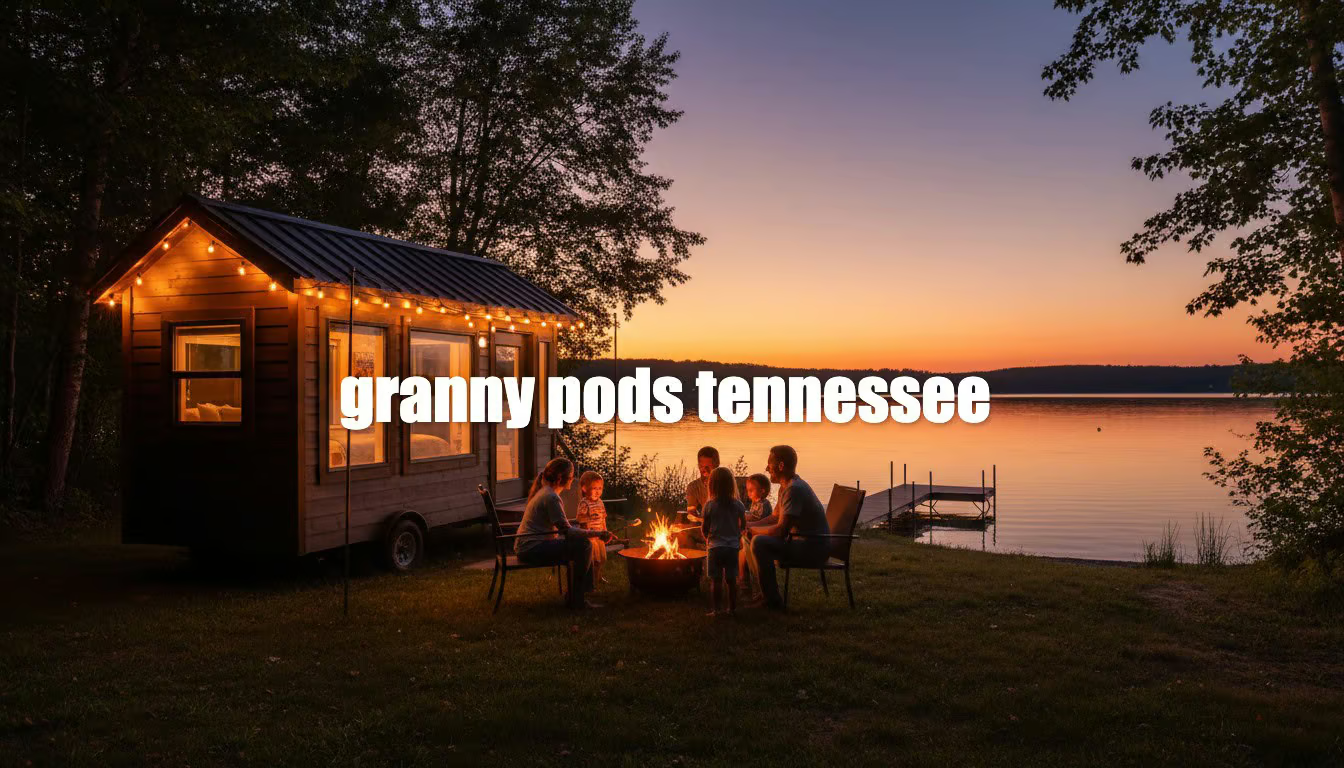
As you consider ways to care for aging family members without sacrificing their independence, granny pods in Tennessee emerge as a practical and heartfelt solution. These compact living spaces, often tucked into your backyard, allow elderly relatives to stay nearby for support while enjoying their own private haven. With Tennessee’s growing emphasis on family-centric living and multigenerational households, granny pods are gaining traction as an affordable alternative to traditional elder care options.
In the context of Tennessee’s diverse landscapes—from the rolling hills of East Tennessee to the urban bustle of Nashville—granny pods offer a relevant way to adapt your property for long-term family needs. Companies like Great Lakes Tiny Homes provide credible insights and customizable tiny house solutions that align with these pods, ensuring you get structures built to last in the Volunteer State’s varied weather. Their focus on quality and compliance helps families navigate the process seamlessly.
What Are Granny Pods?
You might wonder what exactly granny pods entail as you explore options for your elderly parents or grandparents in Tennessee. Granny pods are small, detached dwelling units designed specifically for aging relatives, allowing them to live close to family while maintaining a sense of independence. Typically ranging from 300 to 800 square feet, these pods function as accessory dwelling units (ADUs) on your property, providing a private space equipped with essentials like a bedroom, bathroom, and kitchenette.
In Tennessee, granny pods are becoming increasingly popular due to the state’s aging population and the desire for cost-effective elder care. According to recent census data, over 16% of Tennessee residents are aged 65 or older, a figure that’s rising steadily. This trend, combined with the high costs of assisted living—averaging $4,000 per month in the state—makes granny pods an appealing choice for families like yours who want to keep loved ones nearby without the emotional strain of separation.
What sets granny pods apart is their adaptability. Great Lakes Tiny Homes offers a type of granny pod in the form of tiny houses, which you can customize with or without wheels for mobility. If you opt for wheels, the unit can be classified as an RV, potentially easing zoning hurdles. Without wheels, it becomes a more permanent structure requiring a foundation. Additionally, models with RVIA certification are often called park models, which comply with recreational vehicle standards and can simplify permitting in certain Tennessee counties. These options ensure your granny pod fits seamlessly into your lifestyle and local regulations.
As you delve deeper, you’ll see how these pods blend functionality with comfort, making them ideal for Tennessee’s family-oriented culture. Whether you’re in Knoxville or Memphis, the rise of granny pods reflects a broader movement toward sustainable, intergenerational living.
Inside the Modern Granny Pod: Features, Design, and Purpose
When you step inside a modern granny pod, you’ll find a thoughtfully designed space that prioritizes comfort and accessibility for your aging loved ones. Also known as accessory dwelling units (ADUs), granny pods typically span 300 to 800 square feet, offering enough room for one or two occupants without overwhelming your property. Standard features include a compact kitchen with energy-efficient appliances, a full bathroom, a cozy bedroom, and a living area that maximizes natural light through large windows.
Amenities go beyond basics to enhance daily living: think climate-controlled environments with HVAC systems suited to Tennessee’s humid summers and chilly winters, built-in storage solutions to keep clutter at bay, and durable, low-maintenance flooring like vinyl or laminate. What truly distinguishes granny pods from standard tiny homes is their focus on senior-friendly elements. Accessibility features such as zero-step entries, wider doorways (at least 36 inches), lever-style handles, and reinforced walls for grab bars ensure safe navigation for those with mobility challenges.
Medical monitoring capabilities add another layer of purpose. Many designs incorporate smart tech like emergency call buttons connected to your home’s Wi-Fi, voice-activated lighting, and even integrated health sensors that alert family members to falls or irregularities. These elements make granny pods a proactive choice for preventive care, differing from generic tiny homes that might prioritize minimalism over health-specific adaptations.
You have several types to choose from: prefab granny pods arrive nearly ready-to-assemble, offering quick installation in as little as a week; custom-built options allow you to tailor every detail to your relative’s needs, though they take longer (3-6 months); and converted structures, like shipping containers or sheds, provide budget-friendly alternatives if you’re handy. In Tennessee, where properties vary from rural acreages to suburban lots, these designs ensure your granny pod complements your home while serving its core purpose: fostering independence within the family unit.
Exploring these features, you’ll appreciate how granny pods evolve with your family’s needs, blending modern convenience with timeless care.
Benefits of Granny Pods for Tennessee Families
Imagine the peace of mind you’ll gain by having your elderly parent just steps from your back door in Tennessee—that’s one of the primary benefits of granny pods. These units promote proximity for everyday care and support, allowing you to monitor health without constant intrusion, while giving your loved one the independence to manage their routine. In a state where family ties run deep, this setup aligns perfectly with Southern hospitality and multigenerational living traditions.
Financially, granny pods offer substantial savings over nursing homes or assisted living facilities. In Tennessee, the average annual cost for assisted living exceeds $50,000, whereas a granny pod typically ranges from $100,000 to $150,000—a one-time investment that pays off over years. This not only reduces ongoing expenses but also potentially increases your property value. Adding a granny pod enhances your home’s versatility, making it more attractive to future buyers seeking adaptable spaces; studies show such additions can boost resale value by 10-20%, far outweighing the initial outlay compared to the cumulative costs of institutional care.
Emotionally, the benefits are profound. Keeping family close combats isolation, a common issue for Tennessee’s over-1 million seniors, and strengthens bonds through shared moments. Tennessee’s climate adds unique advantages: mild springs and falls allow outdoor enjoyment from the pod’s deck, while insulated designs handle humid summers and occasional snow, ensuring year-round comfort without the disconnection of distant facilities.
Statistically, Tennessee’s aging population is projected to grow by 25% by 2030, per state health reports, amplifying the need for affordable solutions like granny pods. Culturally, in communities from Chattanooga to Jackson, these pods support the value of familial duty, letting you provide dignified care on your terms. As you weigh options, consider how this investment retains value—your $100k-$150k spend on a durable tiny house pod becomes an appreciating asset, unlike the depreciating expense of assisted living paths that can total hundreds of thousands over a decade.
Overall, granny pods empower Tennessee families to blend care, cost-efficiency, and closeness seamlessly.
Legal Considerations for Granny Pods in Tennessee
Navigating the legal landscape for granny pods in Tennessee requires careful attention, as regulations blend state guidelines with local variations. At the state level, Tennessee encourages ADUs through its building codes, which align with the International Residential Code (IRC), but implementation differs by county and municipality. Zoning laws typically classify granny pods as accessory structures, permitted in residential zones, yet you’ll need to check for setbacks (often 5-10 feet from property lines) and occupancy limits.
Building codes mandate compliance with safety standards, including electrical, plumbing, and structural integrity, especially for seismic and wind resistance in tornado-prone areas. Permit requirements involve submitting site plans, engineering reports, and sometimes environmental assessments; fees range from $500 to $2,000 depending on the county. More accommodating areas include Davidson County (Nashville), where urban density policies favor ADUs, and Knox County (Knoxville), with streamlined approvals for family caregiver units. Stricter spots like rural parts of Sullivan County may require variances or prohibit detached units altogether.
Major cities vary: Nashville’s Metro Code explicitly allows granny pods up to 1,000 sq ft on lots over 5,000 sq ft, while Memphis in Shelby County offers incentives for affordable housing ADUs but enforces strict inspections. Chattanooga in Hamilton County is progressive, permitting them in most zones with health department approval. Recent changes include House Bill 1897 (2022), which eased ADU restrictions in urban areas to address housing shortages, and pending bills in 2024 aiming to standardize statewide permitting—monitor the Tennessee General Assembly for updates.
For smoother compliance, consider RVIA-certified park models. These meet federal RV standards, often bypassing full building permits in RV-friendly zones and qualifying as temporary structures, which can reduce red tape in Tennessee. Benefits include faster approvals, lower costs, and mobility if regulations shift. As you plan, remember that consulting local experts early can prevent delays.
Which Tennessee Counties Allow Granny Pods?
To help you determine feasibility, here’s a comprehensive overview of Tennessee counties’ stances on granny pods/ADUs. This table focuses on the most populated counties with clear regulations, based on current zoning data. Always verify with local planning offices, as rules can evolve.
| County Name | Granny Pod Status | Minimum Lot Size Requirements | Maximum Size Allowed | Special Notes |
|---|---|---|---|---|
| Shelby (Memphis) | Allowed | 7,000 sq ft | 1,200 sq ft | Memphis city code permits with utility connections; owner-occupancy required for primary home. Link to what counties in Tennessee allow tiny houses for more details. |
| Davidson (Nashville) | Allowed | 5,000 sq ft | 1,000 sq ft | Streamlined permits via Metro Nashville; incentives for caregiver units. Nashville-specific regs favor urban lots. |
| Knox (Knoxville) | Allowed | 10,000 sq ft | 800 sq ft | Easy approvals in city zones; rural areas case-by-case. Check tiny house builder Knoxville options. |
| Hamilton (Chattanooga) | Restricted | 15,000 sq ft | 600 sq ft | Permitted with variances; Chattanooga allows in historic districts with design review. |
| Williamson (Franklin) | Case-by-Case | 1 acre | 750 sq ft | Suburban focus; approvals tied to septic systems. Growing support for ADUs. |
| Rutherford (Murfreesboro) | Allowed | 8,000 sq ft | 900 sq ft | Family-oriented policies; quick permitting for attached/detached units. |
| Summner (Hendersonville) | Restricted | 20,000 sq ft | 500 sq ft | Limited to agricultural zones; environmental reviews common. |
| Montgomery (Clarksville) | Allowed | 6,000 sq ft | 1,000 sq ft | Military family exemptions; Clarksville code supports modular builds. |
For major counties like these, city regulations often overlay county rules—e.g., in Franklin County (not listed but notable), Columbus-area policies mirror urban allowances but require floodplain checks. If you’re eyeing a tiny house for sale Nashville, factor in these local nuances to ensure your project proceeds smoothly.
Cost of Building a Granny Pod in Tennessee
Budgeting for a granny pod in Tennessee involves breaking down multiple factors to get a clear picture of your investment. Base costs for the unit itself vary: prefab models start at $80,000 for 300 sq ft, while custom-built options reach $200,000+ for 800 sq ft with premium finishes. Quality levels influence pricing—basic setups with standard appliances hover around $100/sq ft, mid-range with accessibility features at $150/sq ft, and high-end custom at $250/sq ft.
Great Lakes Tiny Homes specializes in tiny houses in the $100,000-$150,000 range, offering value through durable construction. When evaluating, consider if the unit has wheels (adding $5,000-$10,000 for chassis but saving on foundation) or no wheels, which necessitates a concrete slab or pier foundation costing $10,000-$20,000 in site prep. Site preparation in Tennessee’s terrain—think clay soils in Middle TN or rocky East TN—can add $5,000-$15,000 for grading and drainage to handle heavy rains.
Utility connections are crucial: hooking up to your home’s septic, water, and electric runs $8,000-$15,000, more in rural areas needing wells. Permits and inspections tally $1,000-$3,000, while ongoing maintenance like roof sealing for humid conditions adds $500/year. Total project costs often land between $120,000-$250,000.
Compared to Tennessee nursing homes (averaging $100,000/year) or assisted living ($50,000/year), a granny pod yields long-term savings—potentially $300,000+ over five years. Financing options include home equity loans (rates ~6%), personal loans, or grants for caregiver housing via Tennessee’s Aging Programs. Insurance typically folds into your homeowner’s policy ($500-$1,000 extra annual premium), but separate coverage may apply for detached structures. Tax implications are favorable: ADUs can qualify for property tax abatements in counties like Davidson, and energy-efficient builds earn federal credits up to $3,200.
As you crunch numbers, remember that a wheeled, RVIA-certified pod from Great Lakes can minimize upfront costs while maximizing flexibility.
The Granny Pod Installation Process in Tennessee
Installing a granny pod in Tennessee follows a structured path tailored to your location’s quirks. Step 1: Research local zoning laws and restrictions. Start by contacting your county planning department—use tools like the best tiny home communities in Tennessee resources for insights. In urban areas like Nashville, expect fewer hurdles; rural spots may need variances. Allow 2-4 weeks.
Step 2: Obtain necessary permits. Submit applications with blueprints, site surveys, and impact statements. Tennessee requires IRC compliance; fees and reviews take 4-8 weeks. Practical tip: Hire a local surveyor early to avoid resubmissions.
Step 3: Site preparation, considering Tennessee’s climate and terrain. Clear and level the area, accounting for slopes in the Appalachians or flood risks in West TN. For non-wheeled units, pour a foundation resilient to freeze-thaw cycles—budget for frost-proof footings. Wheeled models skip this but need stable gravel pads. Challenges include permitting delays from wet springs; aim for dry seasons.
Step 4: Utility connections, vital for Tennessee’s winters. Link to your septic (or install a new one for $10,000+), water lines insulated against 20°F lows, and electrical with GFCI outlets. Professional plumbers ensure code adherence; this step spans 1-2 weeks but can snag on utility approvals.
Step 5: Delivery and installation timeline. Prefab units arrive via flatbed truck; cranes for placement cost $2,000-$5,000. Full process: 1-3 months post-permits. In Chattanooga’s hilly areas, access roads pose challenges—plan routes ahead.
Step 6: Final inspections. County officials check safety and zoning; pass rates improve with pre-inspections. Once approved, your granny pod is ready. Throughout, anticipate weather delays from TN’s variable conditions, and consult pros to streamline.
Design Considerations for Tennessee Granny Pods
Designing your granny pod for Tennessee means prioritizing elements that withstand the state’s four distinct seasons. Weatherproofing is key: use metal roofing and insulated siding to combat 90°F summers and 20°F winters, with vapor barriers to prevent mold in high humidity. Energy efficiency shines through high R-value insulation, Energy Star windows, and solar-ready panels—potentially slashing utility bills by 30% in sunny Middle TN.
Accessibility for aging residents is non-negotiable. Incorporate zero-step entries to avoid slips on rainy days, 36-inch doorways for wheelchair access, and pre-installed grab bars in bathrooms. Roll-in showers with non-slip tiles and adjustable-height counters enhance safety. Smart home tech options like automated thermostats, fall-detection cameras, and app-controlled locks provide peace of mind, integrating easily with your home’s system.
Utility connections demand foresight: ensure septic tie-ins handle TN’s soil percolation, and electrical setups support medical devices. Aesthetically, match your main home with siding colors and rooflines to blend seamlessly—think Craftsman style for Nashville suburbs or rustic for Gatlinburg cabins.
Finding Expert Guidance for Your Project
When embarking on a granny pod project in Tennessee, partnering with experienced professionals ensures you avoid pitfalls and meet unique state requirements. Look for builders versed in local codes, from seismic reinforcements in East TN to flood zoning in the west. Their expertise in customization—tailoring layouts for mobility or incorporating TN-specific energy rebates—can transform your idea into a functional reality.
Great Lakes Tiny Homes stands out as a trusted option, with deep knowledge of Tennessee regulations and a track record in crafting quality granny pods. They understand nuances like RVIA compliance for easier permitting and offer customization to create comfortable, senior-focused spaces that prioritize dignity and ease. Their commitment to detail means your pod not only complies but elevates your property.
For your specific needs, consider scheduling a consultation with Great Lakes Tiny Homes—they’re a valuable resource ready to discuss designs, timelines, and budgets in a no-pressure way. This step can clarify options and build confidence in your decision.
Conclusion: Creating a Supportive Home for Your Loved Ones
As you reflect on granny pods in Tennessee, envision the warmth of having your family together, supporting each other through life’s stages. These intimate spaces honor independence while weaving care into daily life, far beyond mere housing—they safeguard dignity, foster connections, and enhance quality of life in ways institutional options can’t match.
Investing in a granny pod is a testament to your commitment, promising lasting value for your property and peace for your heart. With local expertise like that from Great Lakes Tiny Homes, the journey becomes manageable and rewarding. Great Lakes Tiny Homes offers credible experience in delivering turnkey modular and park model homes across the lower 48 U.S. states, making them a practical and reliable choice for your granny pod needs. Take that first step today; your family’s future self will thank you for choosing closeness and compassion.
Frequently Asked Questions About Granny Pods in Tennessee
Got questions about granny pods in Tennessee? This FAQ covers the essentials to help you decide.
How Can Great Lakes Tiny Homes Help Me On My Granny Pod Journey
Great Lakes Tiny Homes can guide you every step of the way on your granny pod journey in Tennessee. From initial consultations where you discuss your vision—whether a wheeled tiny house for flexibility or a foundation-based park model—they provide tailored advice on designs that fit TN’s climate and your budget ($100k-$150k range). Their team handles permitting navigation, ensuring RVIA certification if needed for legal ease, and oversees custom features like accessibility ramps or smart monitoring.
You’ll benefit from their local knowledge of counties like Davidson or Knox, plus options for site visits to see builds in progress. They emphasize collaboration, helping you select finishes that match your home and integrate utilities seamlessly. Ultimately, they turn your granny pod dream into a compliant, comfortable reality, supporting you from blueprint to inspection with responsive service that feels personal and reliable.
Are granny pods legal in all parts of Tennessee?
No, granny pods aren’t legal uniformly across Tennessee—regulations vary widely. Statewide, the IRC supports ADUs, but local zoning dictates feasibility. Urban counties like Davidson (Nashville) and Shelby (Memphis) generally allow them with permits, often up to 1,000 sq ft on qualifying lots. Rural areas, such as parts of East Tennessee’s Cocke County, may restrict or ban detached units due to septic limitations or agricultural zoning.
Municipalities enforce specifics: Chattanooga permits with design reviews, while smaller towns might require case-by-case variances. Recent laws like HB 1897 have liberalized urban rules, but always check your county’s planning office. Opting for RVIA-certified models can help in restrictive areas by classifying as RVs. Consulting a local expert ensures your project aligns with current ordinances.
Can I install a granny pod on any size property in Tennessee?
Not on any size property—minimum lot sizes apply in Tennessee to ensure space for setbacks and utilities. Most counties require at least 5,000-10,000 sq ft for residential zones; for example, Nashville mandates 5,000 sq ft, while rural Hamilton County needs 15,000 sq ft or more. Smaller urban lots may qualify under density bonuses, but agricultural properties often demand 1+ acres.
Challenges arise on tiny lots under 4,000 sq ft, where variances are needed, potentially adding time and cost. Site specifics like soil type (e.g., TN’s clay) and slope factor in—flat, accessible spots are ideal. If your property is undersized, consider attached ADUs or community lots. A survey and zoning check early on will confirm viability for your setup.
Do I need special insurance for a granny pod?
Yes, you’ll likely need to adjust your insurance for a granny pod in Tennessee, as it’s a separate structure. Standard homeowner’s policies may cover it under “other structures,” but detached dwellings with kitchens/bathrooms often require endorsements for full protection against perils like TN’s storms or fires. Expect an additional $500-$1,500 annual premium, depending on size and value.
For occupied pods, separate dwelling fire policies or landlord insurance (if rented) might apply, covering liability up to $300,000. RVIA-certified wheeled units could fall under RV policies, which are cheaper (~$800/year). Factors like flood-prone locations (common in West TN) necessitate FEMA-backed flood insurance. Shop quotes from providers like State Farm, familiar with TN regs, and disclose occupancy to avoid claim denials. Bundling with your main home saves money.
Can I rent out my granny pod in Tennessee?
Renting out a granny pod in Tennessee is possible but regulated. Primarily intended for family, many counties allow short-term rentals (e.g., Airbnb) if zoned for it, but long-term requires compliance with housing codes. Nashville permits ADU rentals on owner-occupied properties, capping at 30% of main home size, while Memphis restricts to family use without variances.
State law doesn’t prohibit, but local ordinances govern: obtain business licenses ($100-$500), pass habitability inspections, and report income for taxes. In tourist-heavy areas like Gatlinburg, short-term is viable, generating $1,000+/month, but HOA rules or noise ordinances may limit. For non-family rentals, ensure utility metering and parking. Always verify with your municipality to avoid fines—renting can offset costs if done legally.