
As Ohio’s population ages and families seek compassionate solutions for elder care, we’re seeing a remarkable shift in how we approach multigenerational living. Granny pods—small, detached dwelling units designed specifically for aging relatives—are transforming backyards across the Buckeye State into supportive family compounds. These innovative housing solutions allow our loved ones to maintain their independence while staying close enough for us to provide care and companionship.
At Great Lakes Tiny Homes, we’ve witnessed firsthand how granny pods are changing lives across Ohio. Our experience building custom tiny homes and accessory dwelling units has given us deep insight into what makes these structures work for families navigating the complexities of elder care. We understand the regulations, the design considerations, and most importantly, the emotional significance of keeping our families together while respecting everyone’s need for personal space.
What Are Granny Pods?
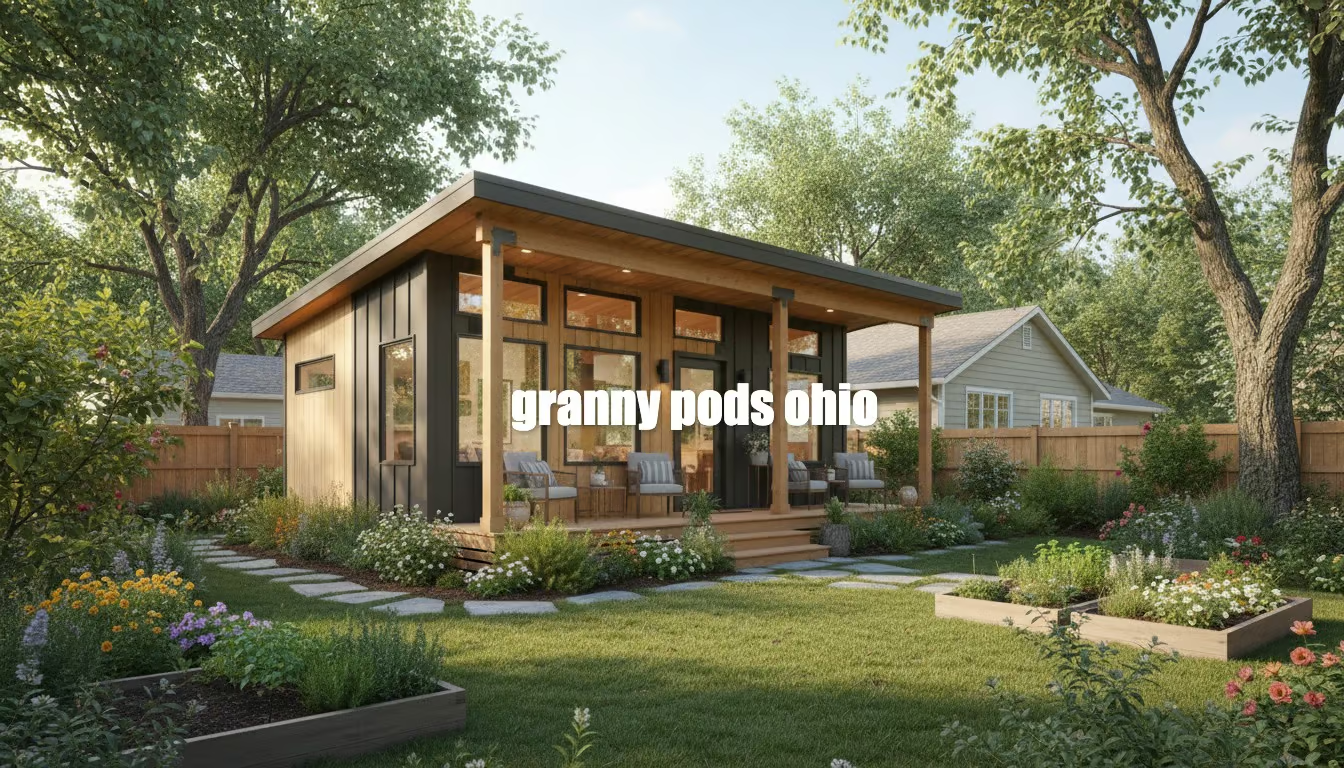
Granny pods are small, self-contained dwelling units typically placed in the backyard of a family home to house aging relatives. These structures, also known as accessory dwelling units (ADUs) or “MedCottages,” provide a perfect balance between independence and proximity. We’re seeing them become increasingly popular in Ohio as families recognize the limitations and costs of traditional nursing homes and assisted living facilities.
The concept behind granny pods is beautifully simple: instead of moving our elderly parents or grandparents to a distant facility, we bring a comfortable, accessible home to them—right in our own backyard. This arrangement allows us to check in regularly, provide meals, assist with medical needs, and simply spend quality time together without the logistical challenges of traveling to a care facility.
These structures differ from standard tiny homes in their specific focus on senior living. While tiny homes emphasize minimalism and efficient living for people of all ages, granny pods prioritize accessibility, safety features, and medical accommodations that our aging relatives need.
Inside the Modern Granny Pod: Features and Design
Modern granny pods are sophisticated living spaces that combine the efficiency of tiny home design with specialized features for senior living. We typically see these units ranging from 300 to 800 sq ft, providing enough space for comfortable living without overwhelming our elderly relatives with unnecessary square footage to maintain.
The typical granny pod includes a bedroom, bathroom, kitchenette or full kitchen, and living area—all designed with accessibility in mind. We ensure that every element serves a purpose, from wider doorways that accommodate wheelchairs and walkers to strategically placed grab bars and non-slip flooring throughout.
Prefab granny pods are among the most popular options we see in Ohio. These factory-built units arrive largely complete and can be installed relatively quickly. They offer standardized floor plans with proven designs, and their controlled construction environment ensures consistent quality.
Custom-built granny pods allow us to tailor every aspect of the structure to our specific needs and our loved one’s preferences. At Great Lakes Tiny Homes, we specialize in these personalized approaches, working closely with families to create spaces that truly feel like home.
What sets granny pods apart are the senior-specific features we incorporate. Medical monitoring capabilities, including emergency call systems and health monitoring technology, provide peace of mind. We often include reinforced flooring to support medical equipment, specialized lighting to prevent falls, and climate control systems that maintain consistent temperatures—crucial for our seniors’ health.
Accessibility features are paramount in our granny pod designs. Zero-step entries eliminate tripping hazards, while wider doorways (minimum 36 inches) accommodate mobility devices. We install grab bars in bathrooms and along hallways, use lever-style door handles instead of knobs, and ensure light switches and thermostats are at accessible heights. Roll-in showers with built-in seating, raised toilets, and adjustable-height countertops make daily activities safer and more manageable.
Benefits of Granny Pods for Ohio Families
The advantages of granny pods extend far beyond simple housing—they fundamentally transform how we care for our aging family members while preserving everyone’s quality of life.
Proximity for care and support is perhaps the most significant benefit we experience with granny pods. Instead of driving across town to check on our elderly parents, we simply walk across the backyard. This proximity allows us to provide immediate assistance during emergencies, help with daily tasks like medication management, and offer companionship that combats the isolation many seniors face.
Independence and dignity remain intact when our loved ones live in their own space. Unlike moving into our main home, where they might feel like they’re imposing, a granny pod gives them their own front door, their own kitchen, and their own private retreat. We’ve found this separation is healthy for everyone—our relatives maintain their sense of self, and we preserve our household routines while still being available when needed.
Cost savings compared to institutional care are substantial. In Ohio, nursing home costs average $7,000-$9,000 per month, while assisted living facilities typically run $3,500-$5,500 monthly. Over just a few years, these expenses far exceed the cost of installing a granny pod. We’re making a one-time investment that serves our family for years, rather than paying ongoing facility fees that can deplete our relatives’ savings.
According to recent data, Ohio’s population aged 65 and older is projected to increase by over 30% by 2030. With this aging population, the demand for nursing home beds and assisted living spaces is outpacing supply, driving costs even higher and making alternatives like granny pods increasingly attractive.
Property value considerations also factor into our decision-making. A well-designed granny pod can increase our property’s value by adding functional square footage and appealing to multigenerational buyers. Even after our immediate need for the structure passes, we can repurpose it as a home office, rental unit (where local regulations allow), guest house, or studio space.
Emotional and psychological benefits cannot be overstated. We maintain daily connections with our aging relatives, sharing meals, celebrating milestones, and creating memories together. Our children grow up with their grandparents nearby, fostering relationships that enrich everyone’s lives. For our elderly relatives, being part of the daily family rhythm contributes significantly to their mental health and overall well-being.
Legal Considerations for Granny Pods in Ohio
Navigating the legal landscape for granny pods in Ohio requires our careful attention to state regulations, county ordinances, and municipal codes. Unlike some states with uniform ADU laws, Ohio leaves much of the regulatory authority to local jurisdictions, creating a patchwork of rules we must understand before proceeding.
At the state level, Ohio doesn’t have specific legislation addressing granny pods or ADUs comprehensively. Instead, we work within the framework of existing building codes and zoning regulations. The Ohio Building Code, based on the International Residential Code, sets minimum standards for construction, but local amendments can make requirements more stringent.
Zoning laws present our biggest challenge and vary dramatically across Ohio’s 88 counties and hundreds of municipalities. Some jurisdictions explicitly allow accessory dwelling units, others prohibit them entirely, and many fall into a gray area where approval depends on specific circumstances and variance requests.
Key zoning considerations we encounter include:
- Lot size requirements: Many jurisdictions require minimum lot sizes before allowing an ADU, often ranging from 5,000 to 10,000 sq ft or more
- Setback requirements: We must maintain specific distances from property lines, typically 5-10 feet for accessory structures
- Maximum size restrictions: Local codes often limit ADU size to a percentage of the main dwelling or a specific square footage cap
- Occupancy restrictions: Some areas require that either the main home or the ADU be owner-occupied, or that occupants be related by blood or marriage
- Parking requirements: Additional parking spaces may be mandated for the ADU
Permit requirements are another critical consideration we must address. Beyond standard building permits, we may need zoning permits, electrical permits, plumbing permits, mechanical permits for HVAC systems, and septic permits if we’re not connected to municipal sewer.
We’ve found that some Ohio counties and cities are more accommodating to granny pods than others. Urban areas like Columbus, Cleveland, and Cincinnati have been gradually updating their codes to allow ADUs more readily. Franklin County and the City of Columbus, for example, have made strides in recent years to permit ADUs under specific conditions.
For those of us considering what counties in Ohio allow tiny houses, it’s important to understand that granny pods face similar regulatory challenges. The distinction between a tiny home and a granny pod can sometimes work in our favor, as some jurisdictions are more sympathetic to structures explicitly designed for elder care.
We strongly recommend consulting with local planning departments early in our process. Many counties offer pre-application meetings where we can discuss our plans and understand requirements before investing significant time and money.
Which Ohio Counties Allow Granny Pods?
Understanding which Ohio counties permit granny pods is essential for our planning process. We’ve compiled information on the most populated counties to help guide our decision-making. However, we must always verify current regulations with local authorities, as codes change and interpretations can vary.
| County Name | Granny Pod Status | Minimum Lot Size | Maximum Size Allowed | Special Notes |
|---|---|---|---|---|
| Franklin County (Columbus) | Allowed with restrictions | 5,000-7,000 sq ft | 800-1,000 sq ft | Columbus city limits allow ADUs; must be owner-occupied |
| Cuyahoga County (Cleveland) | Case-by-case | Varies by municipality | Typically 50% of main dwelling | Cleveland and some suburbs allow with special permits |
| Hamilton County (Cincinnati) | Allowed with restrictions | 6,000 sq ft minimum | 800 sq ft typical | Cincinnati permits ADUs in certain zones; family occupancy often required |
| Montgomery County (Dayton) | Case-by-case | Varies by jurisdiction | Varies | Dayton city and some townships allow with conditional use permits |
| Lucas County (Toledo) | Allowed with restrictions | 5,000 sq ft minimum | 750 sq ft | Toledo allows ADUs in residential zones with proper permits |
| Lake County | Allowed with restrictions | 7,500 sq ft typical | 600-800 sq ft | Some lakefront communities allow; others restrict to preserve property values |
| Mahoning County (Youngstown) | Allowed with restrictions | 5,000 sq ft minimum | 800 sq ft | Youngstown permits ADUs; economic factors make city more accommodating |
Within major counties, city-specific regulations add another layer of complexity we must navigate. Columbus has made progress in allowing ADUs, particularly in areas zoned for single-family residential use. We must ensure our property meets minimum lot size requirements, and either our main home or the granny pod must be owner-occupied.
Cleveland’s regulations allow ADUs in certain residential districts, but we need to obtain proper permits and meet setback requirements. Suburban cities like Lakewood, Shaker Heights, and Cleveland Heights each have distinct codes.
Cincinnati permits ADUs in specific zoning districts, with requirements for owner occupancy and family relationship in many cases. The city recognizes the value of granny pods for elder care and has provisions that can make approval more straightforward when we’re housing family members.
For those of us exploring options across the state, checking resources about best tiny home communities in Ohio can provide additional context about where alternative housing solutions are more readily accepted.
Before proceeding with our granny pod project, we should contact our specific county or municipal planning department, request current zoning regulations and ADU policies in writing, ask about recent code changes or pending legislation, and inquire about the variance process if our area has restrictions.
Cost of Building a Granny Pod in Ohio
Understanding the financial investment required for a granny pod helps us make informed decisions and plan appropriately. In Ohio, costs vary significantly based on the type of structure we choose, its size, features, and our specific site conditions.
Prefab Granny Pod Costs: Factory-built prefab units typically range from $40,000 to $120,000 depending on size and quality. A basic 300-400 sq ft prefab granny pod with standard features might cost $40,000-$60,000. Mid-range options in the 400-600 sq ft range with better finishes typically run $60,000-$90,000. High-end prefab units of 600-800 sq ft with premium materials and smart home technology can reach $90,000-$120,000 or more.
Custom-Built Granny Pod Costs: When we choose custom construction, we’re looking at $80,000-$200,000+ depending on our specifications. At Great Lakes Tiny Homes, we work with families to create custom granny pods that meet their exact requirements while respecting their budget constraints. Our typical custom granny pod projects in Ohio range from $100,000-$150,000 for a well-appointed 500-700 sq ft unit with full accessibility features.
Additional Costs We Must Consider:
Site Preparation: Before our granny pod arrives or construction begins, we need to prepare the site. This includes clearing and leveling the area ($1,000-$5,000), creating a foundation ($3,000-$15,000 depending on type and size), and ensuring proper drainage ($500-$3,000). Ohio’s clay-heavy soil in many areas and freeze-thaw cycles require solid foundation work to prevent settling and structural issues.
Utility Connections: Connecting our granny pod to essential utilities represents a significant expense. Electrical connection and panel upgrades typically cost $2,000-$8,000. Plumbing connections for water and sewer run $3,000-$10,000. HVAC installation for heating and cooling—critical in Ohio’s climate—costs $3,000-$8,000 for a properly sized system. Internet and cable connections add another $500-$2,000.
Permits and Fees: We should budget $1,500-$5,000 for various permits, including building permits, electrical permits, plumbing permits, and potential zoning variance fees if required.
Landscaping and Access: Creating pathways between our main home and the granny pod, adding lighting for safety, and landscaping around the new structure typically costs $2,000-$8,000.
Furnishing and Equipment: Basic furniture and appliances run $5,000-$15,000, while medical equipment, monitoring systems, and accessibility aids can add $2,000-$10,000 depending on our relative’s needs.
Ohio Climate-Specific Costs: Our state’s weather extremes require additional considerations. Enhanced insulation beyond standard requirements costs $1,500-$4,000 but pays dividends in energy savings and comfort. Snow load-rated roofing and structural reinforcement add $1,000-$3,000. Weatherproofing and moisture barriers cost $1,000-$2,500. A backup heating source for power outages runs $500-$2,000.
Total Investment Range: When we add everything together, a complete granny pod project in Ohio typically costs:
- Budget-conscious prefab option: $55,000-$85,000
- Mid-range prefab or small custom build: $85,000-$130,000
- High-end custom granny pod: $130,000-$200,000+
Comparing to Institutional Care Costs: These figures become more palatable when we compare them to ongoing care facility expenses. In Ohio, nursing homes average $7,500 per month ($90,000 annually), while assisted living facilities cost approximately $4,000-$5,000 monthly ($48,000-$60,000 annually). Even a $150,000 granny pod investment breaks even compared to nursing home care in less than two years.
Ongoing Maintenance Costs: We should budget for regular maintenance and utilities. Monthly utilities (electric, water, gas) typically run $100-$200. Annual maintenance and repairs average $500-$1,500. Property tax increases from the added structure typically add $300-$800 annually. Insurance for the granny pod adds approximately $300-$600 per year to our homeowner’s policy.
For those exploring various housing options, comparing costs with tiny houses for sale in Ohio can provide additional perspective on the investment required for different types of small dwelling solutions.
The Granny Pod Installation Process in Ohio
Successfully installing a granny pod in Ohio requires careful planning and execution through several key phases. We’ve outlined the step-by-step process to help guide our journey from concept to completion.
Step 1: Research Local Zoning Laws and Restrictions
Our first action is contacting our local planning or zoning department to understand what’s permitted on our property. We should ask specifically about whether ADUs or accessory structures for family members are allowed in our zoning district, minimum lot size requirements, maximum size restrictions, setback requirements, height restrictions, parking requirements, and occupancy restrictions.
Step 2: Obtain Necessary Permits
Once we understand what’s allowed, we begin the permitting process. This typically involves submitting a site plan showing our property, existing structures, and the proposed granny pod location with setback measurements, providing building plans or manufacturer specifications, and applying for building, electrical, plumbing, and mechanical permits.
The permitting process in Ohio typically takes 2-8 weeks depending on our jurisdiction’s workload and the complexity of our project.
Step 3: Site Preparation for Ohio’s Climate and Terrain
Ohio’s diverse terrain and climate extremes require thoughtful site preparation. We choose a location that provides easy access from our main house, preferably visible from our windows for monitoring our relative’s safety. We clear vegetation, remove obstacles, and grade the site to ensure proper drainage.
Ohio’s freeze-thaw cycles require foundations that extend below the frost line (typically 32-42 inches deep in Ohio) to prevent heaving and settling. Our options include concrete slab foundation, pier foundation, or basement foundation.
Step 4: Utility Connections for Ohio Winter Conditions
Connecting utilities requires special attention to Ohio’s harsh winters. Electrical lines should be buried below frost depth (typically 18-24 inches minimum). Water and sewer lines must be buried below the frost line (42 inches or deeper) to prevent freezing. We insulate pipes in any exposed areas and consider heat tape for additional protection in extreme cold.
Ohio’s temperature extremes—from below zero in winter to 90°F+ in summer—require robust climate control. We install a properly sized heating and cooling system, often a mini-split heat pump or a small furnace and air conditioner.
Step 5: Delivery and Installation Timeline
For prefab granny pods, delivery and installation typically take 6-7 weeks total. Custom-built granny pods follow a longer timeline of 16-18 weeks. We should plan our timeline around Ohio’s weather, starting construction in late spring or early summer to complete the project before winter weather complicates work.
Step 6: Final Inspections
Before our relative can move in, we must pass several inspections including building inspection, electrical inspection, plumbing inspection, mechanical inspection, and final inspection. We schedule these inspections in the proper sequence—rough inspections during construction, then final inspections upon completion.
Working with experienced builders like those at Great Lakes Tiny Homes who understand Ohio’s specific challenges can help us navigate these issues smoothly. We’ve completed numerous granny pod and tiny home projects across the state and know how to anticipate and address Ohio-specific installation challenges.
Design Considerations for Ohio Granny Pods
Designing a granny pod for Ohio requires us to balance aesthetic appeal, functionality, accessibility, and climate resilience. Our goal is creating a comfortable, safe space that our aging relatives will love while ensuring it withstands Ohio’s demanding weather conditions.
Weatherproofing for Ohio’s Four Seasons
Ohio’s climate presents unique challenges we must address in our granny pod design. We need robust insulation throughout—walls should have R-19 to R-21 insulation, ceilings R-38 to R-49, and floors R-19 minimum. We use high-quality windows with low-E coatings and at least double-pane construction to minimize heat loss. Our roof design should handle snow loads typical for our region of Ohio.
For summer cooling, we include proper attic ventilation to prevent heat buildup, install energy-efficient air conditioning sized appropriately for the space, and consider ceiling fans to improve air circulation. For moisture management, we install proper gutters and downspouts to direct water away from the foundation and use moisture-resistant materials in areas prone to dampness.
Energy Efficiency Considerations
Energy-efficient design reduces operating costs and improves comfort. We install Energy Star-rated appliances, use LED lighting throughout, consider a mini-split heat pump system, install a programmable or smart thermostat, and ensure the water heater is properly sized and energy-efficient.
Accessibility Features for Aging Residents
Designing for accessibility ensures our relatives can age in place safely. We create zero-step entries with ramps that have gentle slopes (1:12 ratio maximum) and non-slip surfaces. All doorways should be at least 36 inches wide. We use lever-style door handles instead of knobs.
The bathroom requires special attention for safety. We install a roll-in or low-threshold shower with a built-in or fold-down seat, use non-slip flooring throughout, install grab bars near the toilet, in the shower, and by the sink, use a comfort-height toilet (17-19 inches), and ensure the sink has knee clearance if our relative uses a wheelchair.
In the kitchen and living areas, we install countertops at varying heights (some at 32-34 inches for seated use), use pull-out shelves and drawers instead of deep cabinets, ensure appliances are at accessible heights, and provide adequate maneuvering space (60-inch turning radius for wheelchairs).
Smart Home Technology Options
Technology can enhance safety and convenience for our aging relatives. We can integrate medical alert systems, smart locks, video doorbells and cameras, voice-controlled assistants, smart thermostats, automated lighting, medication reminders, and fall detection sensors.
At Great Lakes Tiny Homes, we love meeting the people we build for and understanding their unique needs and preferences. We believe that the best granny pods are those designed collaboratively, where we combine our building expertise with our clients’ intimate knowledge of their loved ones’ needs. We always welcome potential customers to schedule site visits, tour our shop or available models, and meet our team.
For those interested in exploring various design options, looking at tiny house builders in Ohio can provide inspiration and connect us with professionals experienced in creating accessible, climate-appropriate small dwellings.
Making the Right Decision for Your Ohio Granny Pod
As we’ve explored throughout this comprehensive guide, granny pods represent a meaningful solution for Ohio families seeking to care for aging relatives with dignity, proximity, and independence. The decision to install a granny pod involves careful consideration of multiple interconnected factors, each important to the success of our project and the well-being of our loved ones.
The benefits of granny pods for our aging family members are substantial. We provide them with their own private space where they can maintain independence and dignity while knowing we’re just steps away when they need assistance. From a financial perspective, granny pods offer compelling long-term value compared to nursing homes and assisted living facilities. While the initial investment of $55,000 to $200,000+ may seem significant, it pales in comparison to the ongoing costs of institutional care that can exceed $90,000 annually in Ohio.
The legal considerations in Ohio require our diligent attention, as regulations vary significantly across our state’s counties and municipalities. We must thoroughly research our local zoning laws, understand permit requirements, and ensure our project complies with all applicable building codes.
Climate considerations specific to Ohio—from harsh winters requiring robust insulation and heating systems to humid summers demanding effective cooling and moisture control—must inform our design decisions. Accessibility features tailored to our relative’s specific needs ensure they can age in place safely, while smart home technology can enhance both their independence and our peace of mind.
Next Steps in Your Granny Pod Journey
If we’re seriously considering a granny pod for our Ohio property, following a structured approach will help us move forward confidently:
1. Research Local Zoning Laws and Regulations
Our first action should be contacting our county or municipal planning department to understand what’s permitted on our property. We should request information about ADU or accessory structure regulations, ask about minimum lot size requirements, setback rules, and maximum size restrictions, and get all information in writing for our records.
2. Consult with Family Members
This decision affects our entire family, so we should have open, honest conversations with everyone involved. We should discuss our aging relative’s needs, preferences, and concerns, talk with our spouse and children about how the granny pod will impact our household, and address potential concerns about privacy, boundaries, and daily routines.
3. Set a Realistic Budget
We need to understand the full financial picture before proceeding. We should calculate the total project cost including the granny pod itself, site preparation, utility connections, permits, and furnishings, factor in ongoing costs like utilities, maintenance, insurance, and property tax increases, and compare these costs to what we would pay for assisted living or nursing home care.
4. Explore Financing Options
Once we know our budget, we can investigate financing sources including home equity loans or lines of credit, construction loans, FHA Title 1 loans, personal loans, or family contributions.
5. Contact Reputable Builders for Consultations
With our research complete and our budget established, we’re ready to talk with builders. We should identify builders in Ohio with experience in granny pods, ADUs, or accessible tiny homes, schedule consultations with at least three builders to compare approaches and pricing, and ask about their experience with Ohio building codes and local regulations.
Finding Expert Guidance for Your Project
The success of our granny pod project depends significantly on working with experienced professionals who understand the unique requirements of building for aging relatives in Ohio’s challenging climate and complex regulatory environment.
Great Lakes Tiny Homes has established itself as a trusted local option for Ohio families seeking quality granny pods that meet all regulatory requirements while exceeding expectations for comfort and functionality. Our team’s deep understanding of Ohio’s building codes means we design and build structures that pass inspections smoothly, avoiding costly delays and modifications.
What sets us apart is our commitment to customization and personalization. We recognize that every family’s situation is unique—our relatives have different mobility levels, medical needs, and personal preferences. We work closely with families to create granny pods that address these specific requirements.
We invite Ohio families considering a granny pod to schedule a consultation with Great Lakes Tiny Homes to discuss their specific needs and explore how we can help bring their vision to life. We can reach out through our website to schedule a call or site visit, or contact us directly to begin the conversation.
Conclusion: Creating a Supportive Home for Your Loved Ones
As we conclude this comprehensive exploration of granny pods in Ohio, we return to the fundamental truth that drives this housing solution: our deep commitment to caring for our aging family members with dignity, love, and respect. A granny pod is more than a structure in our backyard—it’s a tangible expression of our values, a bridge between independence and support, and a way to honor our relatives’ contributions to our lives.
The decision to install a granny pod reflects our recognition that institutional care, while sometimes necessary, isn’t the only or best option for many of our aging relatives. When we can provide an alternative that keeps our family close while respecting everyone’s need for personal space, we create an arrangement that benefits everyone involved.
This investment is about more than housing—it’s about preserving family bonds, creating daily opportunities for connection and care, and ensuring our loved ones feel valued and included in our lives. The financial savings compared to nursing homes and assisted living facilities are significant, but the emotional and relational benefits are truly priceless.
Local expertise, like that offered by Great Lakes Tiny Homes and other experienced Ohio builders, can make our process smoother and more successful. Professionals who understand our state’s regulations, climate challenges, and the specific needs of granny pod construction can help us avoid pitfalls and create a structure that serves our family well for years to come.
As we consider taking the first step toward this family solution, we should remember that thousands of Ohio families have successfully navigated this path before us. The growing popularity of granny pods reflects a broader cultural shift toward multigenerational living and family-centered elder care.
We encourage every Ohio family considering this option to move forward thoughtfully but decisively. Research our local regulations, have honest family conversations, set a realistic budget, and connect with experienced professionals who can guide us. The journey may have challenges, but the destination—a loving, supportive home for our aging relatives—is well worth every effort.
Frequently Asked Questions About Granny Pods in Ohio
Are granny pods legal in all parts of Ohio?
No, granny pods are not universally legal throughout Ohio. Regulations vary significantly by county and municipality. Some jurisdictions explicitly allow accessory dwelling units (ADUs) like granny pods, others prohibit them entirely, and many evaluate them on a case-by-case basis. We must check with our local planning or zoning department to understand what’s permitted on our specific property.
How much does a typical granny pod cost in Ohio?
The total cost of a granny pod project in Ohio typically ranges from $55,000 to $200,000+ depending on size, type, and features. A basic prefab unit might cost $55,000-$85,000 including installation. Mid-range options typically run $85,000-$130,000. High-end custom granny pods can exceed $150,000-$200,000. These figures include the structure itself, site preparation, utility connections, permits, and basic furnishings.
Can I install a granny pod on any size property in Ohio?
No, most Ohio jurisdictions have minimum lot size requirements for properties that can accommodate granny pods. These requirements vary widely but commonly range from 5,000 to 10,000 sq ft, with some rural areas requiring even larger lots. Beyond lot size, we must also meet setback requirements, ensure adequate space for parking, and maintain appropriate distances from the main dwelling.
Do I need special insurance for a granny pod?
Yes, we need to update our homeowner’s insurance to cover our granny pod. Most insurance companies will add the granny pod as an additional structure on our existing homeowner’s policy, typically increasing our premium by $300-$600 annually. Our coverage should include the structure itself, the contents and personal property inside, liability coverage for our relative living there, and any specialized medical equipment.
How do utilities work for a granny pod in Ohio?
Granny pods in Ohio typically connect to the main house’s utilities, though some jurisdictions allow or require separate utility meters. For electricity, we usually run a line from our main electrical panel or install a subpanel. Water and sewer connections typically tap into our existing lines. All utility lines must be buried below Ohio’s frost line (typically 32-42 inches deep) to prevent freezing damage.
How long does it take to install a granny pod in Ohio?
The timeline for granny pod installation in Ohio varies based on the type of structure and our local permitting process. For prefab granny pods, we can typically complete the project in 6-10 weeks. Custom-built granny pods take longer, typically 16-20 weeks. Ohio weather can impact these timelines—we should avoid starting major work in late fall or winter when weather delays are more likely.