
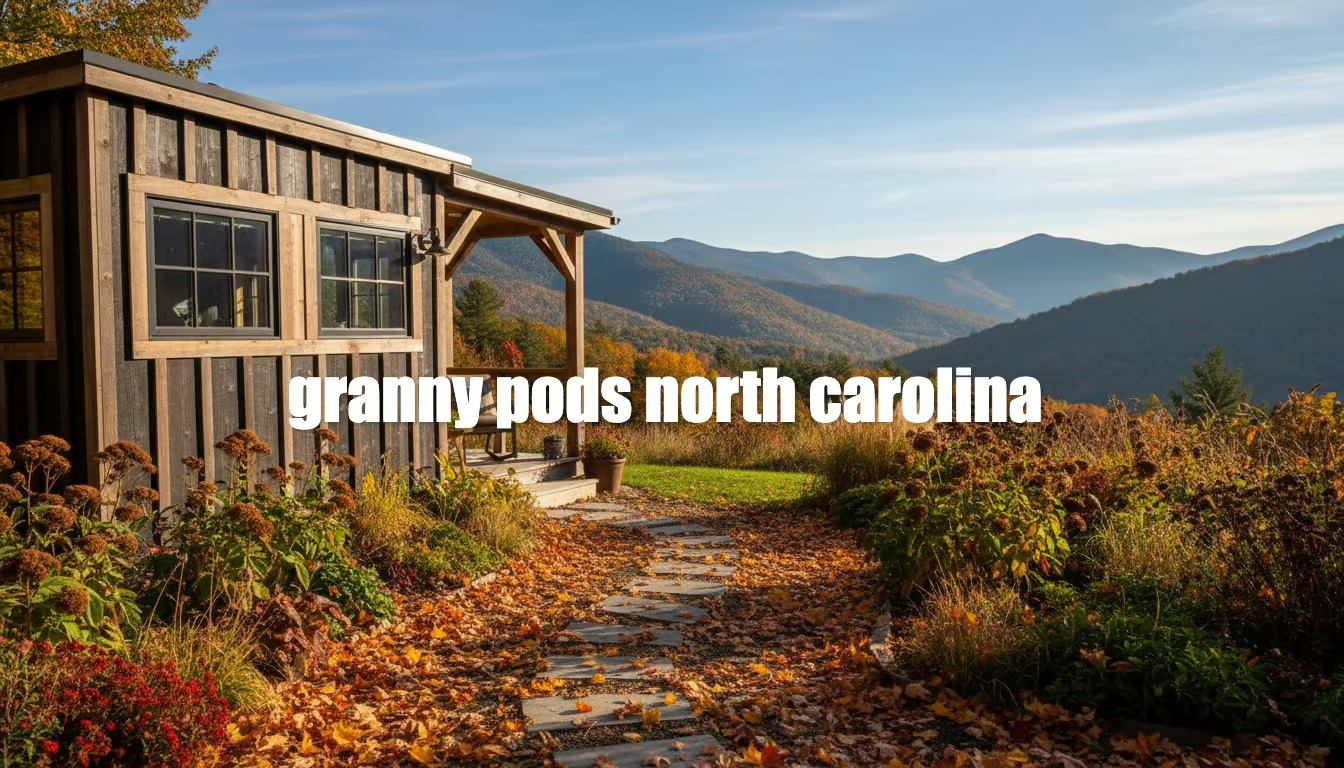
As you consider ways to care for aging loved ones without sacrificing their independence, granny pods in North Carolina offer a practical solution. These compact spaces allow elderly relatives to stay nearby, fostering family bonds in a state with diverse landscapes from mountains to coast. With over 2 million residents aged 65 and older, per recent census data, you might explore affordable, accessible options. Granny pods, resembling tiny homes, provide private retreats on your property, equipped for daily living while keeping support close.
In this context, resources like Great Lakes Tiny Homes become relevant as they specialize in customizable tiny house options that meet granny pod requirements. Their models, with or without wheels and RVIA certification for park model use, show adaptability to regulations and lifestyles, helping you picture a setup for your family.
What Are Granny Pods?
You may wonder what a granny pod entails in North Carolina’s housing landscape. These small, detached units are designed for aging relatives, enabling close family living with independence. As accessory dwelling units (ADUs), they range from 300 to 800 square feet, featuring a bedroom, bathroom, kitchenette, and living area. Their popularity rises with the state’s aging demographic and multigenerational preferences.
With seniors projected to grow 25% in the next decade, per state reports, granny pods tackle elder care challenges amid rising costs. They create self-contained spaces for routines without burdening family. Great Lakes Tiny Homes offers tiny houses as granny pods, with wheeled or stationary options and RVIA certification for park models, suiting North Carolina’s terrains from Raleigh lots to mountain properties.
Unlike traditional homes, granny pods focus on simplicity and proximity, reducing isolation while respecting privacy. Integrate them into your backyard with pathways for visits. Their benefits include lower maintenance and peace of mind, aligning with North Carolina’s family values.
Inside the Modern Granny Pod: Features, Design, and Purpose
Exploring granny pods, or ADUs, reveals versatile structures for elderly comfort, spanning 300 to 800 square feet. Expect open floor plans, full bathrooms with walk-in showers, compact kitchens with efficient appliances, and cozy sleeping areas. Amenities include climate control, natural light via large windows, and storage for mobility aids.
Types include prefab models for quick setup with insulated siding for humid summers, custom builds for personalization like medical alerts, and converted structures for sustainability. Senior-friendly designs feature zero-threshold entries, 36-inch doorways, non-slip flooring, and smart tech for monitoring without intrusion. Accessibility includes ramps, adjustable counters, and grab bars.
In North Carolina’s climate, reinforced roofs handle storms, and efficient windows manage heat and cold. The purpose is independence with nearby support, turning caregiving positive. Designs prioritize health and ease, fostering dignity in contemporary or rustic styles.
Benefits of Granny Pods for North Carolina Families
Having your aging parent nearby for chats or aid brings relief—that’s a key benefit of granny pods. You can monitor health subtly, respond quickly, and share meals easily, while they enjoy private space to combat loneliness, as North Carolina’s seniors exceed 17% of the population, per Census data.
Financially, they outperform nursing homes or assisted living, averaging $6,000-$8,000 monthly in North Carolina, per Genworth. A $100,000-$150,000 investment from builders like Great Lakes Tiny Homes saves long-term, recouping via avoided fees. Property value rises, appealing to multigenerational buyers.
Emotionally, closeness nurtures bonds, reducing stress in a culture of Southern hospitality. With care costs up 15%, granny pods adapt to local weather for comfort. AARP studies show 20% lower depression rates in seniors. This solution honors traditions for a connected future. For more on communities, explore the best tiny home communities in North Carolina.
Legal Considerations for Granny Pods in North Carolina
Legal navigation for granny pods in North Carolina involves state frameworks and local variations. The state recognizes ADUs under the IRC-aligned building code, but zoning differs by county. Check for residential zones permitting accessory units, often owner-occupied or tied to the primary home. Codes require safety compliance for electrical, plumbing, and structural needs, including wind loads in hurricane areas.
Permits need site plans, engineering, and setbacks (5-10 feet). Wake (Raleigh) and Mecklenburg (Charlotte) accommodate ADUs up to 1,000 sq ft. Rural mountain counties may require larger lots. Asheville incentivizes eco-pods; Wilmington focuses on flood zones. House Bill 448 (2023) eases restrictions for affordability.
RVIA certification for park models simplifies permitting as RVs, reducing costs. Consult local planners early. To learn about counties, see what counties in North Carolina allow tiny houses. For guidance, book a call with our experts.
Which North Carolina Counties Allow Granny Pods?
Here’s an overview of North Carolina counties’ ADU stances; verify with locals as rules change.
| County Name | Granny Pod Status | Minimum Lot Size Requirements | Maximum Size Allowed | Special Notes |
|---|---|---|---|---|
| Wake (Raleigh) | Allowed | 0.5 acres | 1,000 sq ft | Permits in residential zones; match primary style. No short-term rentals. |
| Mecklenburg (Charlotte) | Allowed | 7,000 sq ft | 800 sq ft | Encourages density; owner occupancy. Connect utilities to main. |
| Guilford (Greensboro) | Case-by-Case | 1 acre | 600 sq ft | Reviews setbacks; favorable for caregivers. Urban environmental assessments. |
| Forsyth (Winston-Salem) | Restricted | 2 acres | 400 sq ft | Limited to attached; variances for detached. Expansion pilots. |
| Cumberland (Fayetteville) | Allowed | 0.75 acres | 900 sq ft | Military-friendly; easy near bases. Flood rules. |
| Buncombe (Asheville) | Allowed | 0.25 acres | 750 sq ft | Promotes sustainable; green incentives. Mountain considerations. |
Durham or Orange are case-by-case with progressive rules. Urban counties have overlays, like Raleigh’s 2022 ordinance. This aids targeting viable spots. For tiny houses in Raleigh, visit tiny house for sale Raleigh.
Cost of Building a Granny Pod in North Carolina
Budgeting for a granny pod involves factors yielding savings. Prefab starts at $80,000 for 300 sq ft, up to $150,000 for custom 800 sq ft. Great Lakes Tiny Homes offers $100,000-$150,000 tiny houses with quality. Prefab saves 20-30% on labor; custom adds ramps.
Site prep: $5,000-$20,000 for terrain like clay or sands. Foundations: $10,000-$15,000 for non-wheeled; wheeled skip this. Utilities: $3,000-$10,000. Permits: $1,000-$3,000; maintenance $500 yearly. Versus $7,000 monthly assisted living ($300,000+ in five years), savings are clear. Finance via loans or grants; insurance $500-$1,000 annually. Tax hikes offset by 10-15% value increase.
Wheeled reduce foundations; permanent add stability. For builders in Charlotte, see tiny house builder Charlotte. Invest wisely for durability.
The Granny Pod Installation Process in North Carolina
Installation requires structure. Step one: Research zoning via county portals (2-4 weeks), noting floodplain rules. Step two: Permits with blueprints (30-60 days in urban areas). Site prep: Clear and level (1-2 weeks), higher for slopes.
Utilities: Trench for essentials, freeze-proof for winters; elevate coastal. Delivery: Crane prefab (1-3 days); tow wheeled. Inspections: 1-2 weeks. Challenges: Delays or weather. Tips: Hire local, document, plan 3-6 months. This ensures smooth addition.
Design Considerations for North Carolina Granny Pods
Design for North Carolina’s climate: Impact-resistant siding, metal roofs for 70 mph winds. Energy efficiency with insulation, LEDs, solar; drainage for 50 inches rain. Accessibility: Zero-steps, 32-inch doors, lever handles, grab bars, open layouts.
Smart tech for monitoring. Utility ties for efficiency; blend aesthetics like cedar for coast or stone for mountains. These ensure endurance and enhanced life. At Great Lakes Tiny Homes, book a call to discuss.
Finding Expert Guidance for Your Project
Professionals versed in North Carolina’s codes streamline granny pods. They handle variances, climate adaptations like foundations or barriers. Great Lakes Tiny Homes specializes in compliant granny pods, from RVIA park models to stationary, with durable, senior-friendly designs for independence.
They offer permit insights and consultations. Book a call for tailored advice, turning complexity to confidence.
Conclusion: Creating a Supportive Home for Your Loved Ones
Reflecting on granny pods in North Carolina, picture your loved ones thriving independently yet connected—a care embodiment. This invests in dignity, unity, and quality amid welcoming communities. Addressing legal, design, costs thoughtfully builds support legacy.
Great Lakes Tiny Homes positions as a trustworthy option, with experience delivering turnkey modular and park model homes across the lower 48 states. Their credibility in customization and compliance makes them reliable for your exploration of this living style. Take the first step: Research your county, consult pros for a secure family dynamic.
Frequently Asked Questions About Granny Pods in North Carolina
Granny pods raise questions in North Carolina’s regulations. We address common ones.
How Can Great Lakes Tiny Homes Help Me On My Granny Pod Journey
Great Lakes Tiny Homes aids with end-to-end expertise for North Carolina. Consultations assess needs, recommending wheeled or foundation models, RVIA options, and accessibility customizations like smart tech.
Site visits, design sessions, permitting guidance, installation oversight, and maintenance tips follow. Budgeting $100k-$150k with financing, their projects show reliability. Book a call for a smooth journey.
Are granny pods legal in all parts of North Carolina?
No; legality varies by local zoning. State code permits ADUs, but counties differ. Urban Wake, Mecklenburg allow with permits (800-1,000 sq ft, owner ties). Rural mountains restrict detached units.
Charlotte’s 2021 ordinances streamline; coastal add flood mandates. 2023 bills increase leniency, but HOAs hinder. Check planning offices or maps. RVIA aids as RV. Consult pros to avoid $500 daily fines.
Can I install a granny pod on any size property in North Carolina?
Size matters; minimums 0.5-1 acre for setbacks, utilities. Urban Raleigh allows 7,000 sq ft in R-10 zones; rural 2+ acres. Undersized under 0.25 acres need variances; coastal scrutiny for erosion.
Consider attached or subdividing. Use GIS tools; experts maximize via compact designs. Verify locally for NC land-use alignment.
Do I need special insurance for a granny pod?
Yes; adjust homeowners for ADU, adding $300-$800 yearly—higher coastal for wind. Wheeled use RV ($500/year); permanent needs builders risk, then liability ($1M recommended).
Cover habitability, contents; NC FAIR Plan for risks. Bundles offset mods; disclose to avoid denials. Insure early for storm/accident protection.
Can I rent out my granny pod in North Carolina?
Possible but regulated; often limited to family long-term, not short-term. Zoning restricts to relatives; Mecklenburg allows if tied, Wake for income (50% main size).
Coastal stricter; secure license, codes, taxes (4.75% + local). HOAs may block. Variances in Asheville pilots. Review for legal use without risks.