
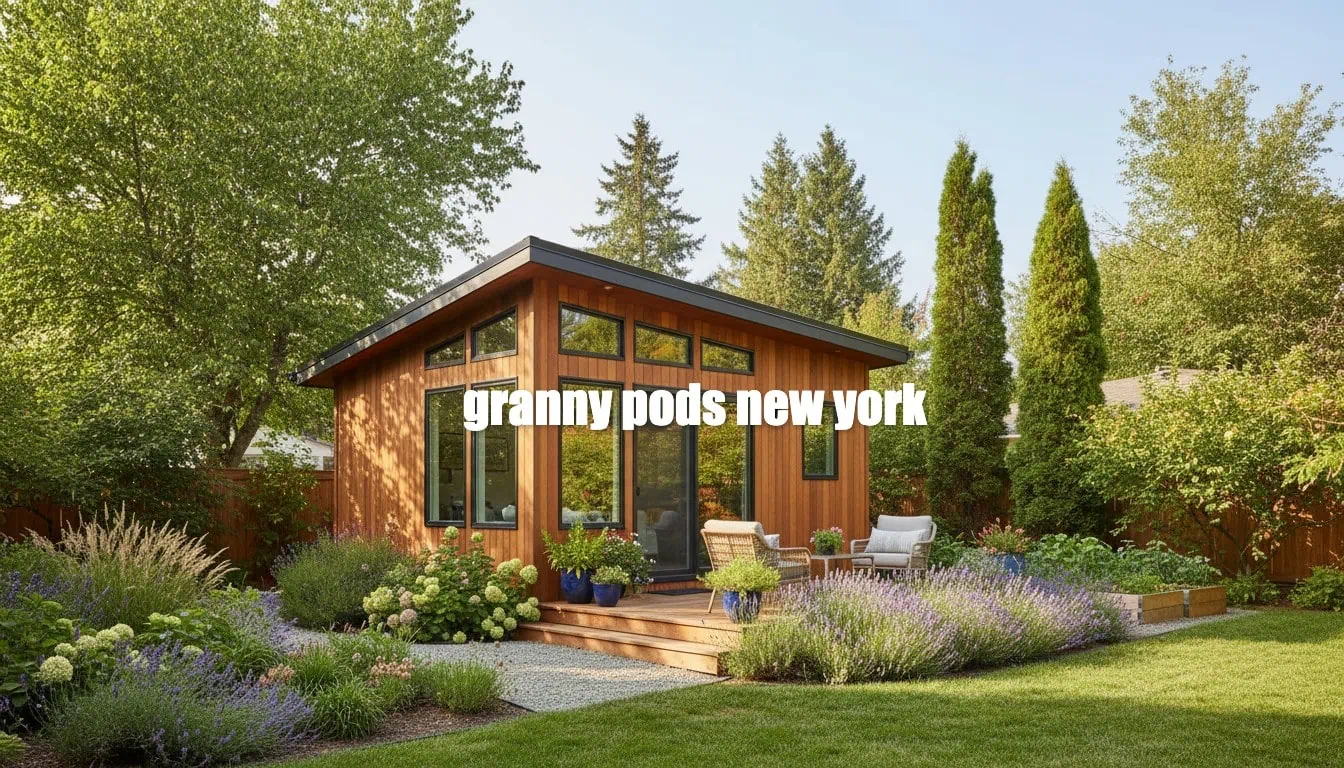
As our loved ones age, we face one of life’s most challenging decisions: how to provide the care and support they need while honoring their independence and dignity. For New York families, granny pods are emerging as a compassionate solution that bridges the gap between institutional care and family support. These small, detached dwelling units allow aging relatives to live close to family while maintaining their autonomy, creating a living arrangement that benefits everyone involved.
At Great Lakes Tiny Homes, we understand that choosing the right housing solution for aging family members is about more than just square footage—it’s about creating spaces where dignity, independence, and family connection thrive together. We bring this understanding to every granny pod project we undertake, ensuring that our builds meet both the practical needs of New York’s regulations and the emotional needs of the families we serve.
What Are Granny Pods?
Granny pods are small, detached dwelling units specifically designed to house aging relatives on the same property as their family members. These compact homes, also known as accessory dwelling units (ADUs) or elder cottages, typically range from 300 to 800 square feet and are equipped with everything an elderly person needs to live comfortably and independently.
In New York, granny pods are becoming increasingly popular as families seek alternatives to expensive nursing homes and assisted living facilities. The concept allows adult children to provide care and support for their aging parents while giving everyone involved the privacy and independence they need. The growing popularity reflects broader demographic trends—New York has one of the largest aging populations in the country, and the cost of institutional elder care continues to rise dramatically.
Inside the Modern Granny Pod: Features, Design, and Purpose
Modern granny pods are far more sophisticated than simple backyard cottages. We design these units with the specific needs of elderly residents in mind, incorporating features that promote safety, accessibility, and comfort. A typical granny pod includes a bedroom, bathroom, kitchenette, and living area, all configured to maximize functionality within a compact footprint.
We offer several types of granny pods to meet different needs and budgets. Prefabricated granny pods arrive largely complete and can be installed relatively quickly, making them a cost-effective option for families who need a solution fast. Custom-built granny pods, which we specialize in at Great Lakes Tiny Homes, allow for complete personalization to match the specific needs of the resident and the aesthetic of the main property.
What truly distinguishes granny pods from standard tiny houses for sale in New York are the senior-friendly design elements we incorporate. We install zero-step entries to eliminate tripping hazards, widen doorways to accommodate wheelchairs and walkers, and include grab bars in bathrooms and other strategic locations. Flooring is non-slip, lighting is bright and evenly distributed to prevent falls, and we design layouts to minimize the distance between frequently used areas.
Many of our granny pod projects also incorporate medical monitoring capabilities. We can install emergency call systems, medication reminders, and even remote health monitoring equipment that allows family members and healthcare providers to check on residents without being intrusive. Smart home technology enables voice-activated controls for lighting, temperature, and entertainment, which is particularly helpful for residents with limited mobility.
Benefits of Granny Pods for New York Families
The advantages of granny pods extend far beyond simple convenience. For New York families, these units offer a comprehensive solution to the challenges of elder care that addresses financial, emotional, and practical concerns simultaneously.
Proximity to family stands out as the primary benefit we hear about from our clients. When aging parents live in a granny pod on the same property, adult children can provide daily support, monitor health conditions, and respond quickly to emergencies. This arrangement offers peace of mind that’s simply impossible when loved ones live across town or in a distant facility. At the same time, granny pods preserve the independence that’s so important to our elderly loved ones. They maintain their own space, their own routines, and their own sense of autonomy.
The financial benefits of granny pods are substantial, particularly in New York where elder care costs are among the highest in the nation. The average cost of a nursing home in New York exceeds $150,000 per year, while assisted living facilities typically run $60,000 to $80,000 annually. In contrast, a granny pod represents a one-time investment that typically ranges from $50,000 to $150,000, depending on size and features. Even accounting for utilities and maintenance, the long-term savings are significant.
The emotional benefits of keeping family close cannot be overstated. Grandchildren grow up with daily access to their grandparents, creating memories and relationships that wouldn’t be possible if grandparents lived in a facility across town. We share family dinners, celebrate holidays together, and provide the kind of intergenerational support that strengthens families.
Legal Considerations for Granny Pods in New York
Navigating the legal landscape for granny pods in New York requires careful attention to multiple layers of regulation. We need to understand that New York State provides a framework for accessory dwelling units, but individual counties and municipalities have significant authority to create their own rules and restrictions.
Zoning laws represent the first hurdle we’ll encounter. Many New York municipalities have zoning codes that restrict the number of dwelling units allowed on a single property, the minimum lot size required for an ADU, and where on the property the unit can be located. Some areas require that the property owner live in either the main house or the ADU, while others prohibit ADUs entirely in certain zoning districts.
Building codes in New York are generally based on the New York State Uniform Fire Prevention and Building Code, but local jurisdictions can adopt amendments and additional requirements. We need to ensure our granny pod meets all applicable codes for structural integrity, electrical systems, plumbing, heating and cooling, and fire safety.
Permit requirements vary significantly across New York. At minimum, we’ll typically need a building permit, and depending on the scope of work, we may also need electrical, plumbing, and mechanical permits. Some jurisdictions require special use permits or variances for ADUs, which involve public hearings and can extend the timeline considerably.
For those exploring what counties in New York allow tiny houses, it’s important to understand that regulations for granny pods (as permanent ADUs) may differ from those for tiny houses on wheels. We need to clarify with local officials which category our planned structure falls into and what specific requirements apply.
Which New York Counties Allow Granny Pods?
Understanding which New York counties are most accommodating to granny pods helps us make informed decisions about where and how to proceed with our projects. We’ve compiled information on the most populated counties and those with clearer regulations regarding accessory dwelling units.
| County Name | Granny Pod Status | Minimum Lot Size | Maximum Size Allowed | Special Notes |
|---|---|---|---|---|
| Nassau County | Case-by-Case | Varies by municipality | Typically 800 sq ft | Individual towns have different regulations; Hempstead and Oyster Bay have specific ADU provisions |
| Suffolk County | Case-by-Case | Varies by municipality | Typically 800-1,000 sq ft | Some towns like Brookhaven have adopted ADU-friendly policies; others remain restrictive |
| Westchester County | Case-by-Case | Varies by municipality | Typically 800 sq ft | Cities like Yonkers and White Plains have specific ADU regulations; many suburban towns allow with special permits |
| Erie County (Buffalo) | Allowed with restrictions | Varies by municipality | 800-1,000 sq ft | Buffalo city has been updating codes to be more ADU-friendly; suburban towns vary |
| Monroe County (Rochester) | Allowed with restrictions | Varies by municipality | 800 sq ft typical | Rochester city allows ADUs in many zoning districts; suburban towns have varying requirements |
| Onondaga County (Syracuse) | Allowed with restrictions | Varies by municipality | 800 sq ft typical | Syracuse city permits ADUs in residential zones; county towns have individual regulations |
| Albany County | Case-by-Case | Varies by municipality | Typically 800 sq ft | City of Albany allows ADUs with permits; suburban towns vary in their approach |
| Dutchess County | Allowed with restrictions | Often 1+ acre | 800-1,000 sq ft | Many towns allow ADUs on larger lots; Poughkeepsie has specific provisions |
We strongly recommend contacting the local building department and zoning office in our specific municipality before proceeding with any granny pod plans. The regulations change periodically, and local officials can provide the most current information about what’s permitted in our area.
Cost of Building a Granny Pod in New York
Understanding the full cost picture for a granny pod in New York helps us budget appropriately and make informed decisions about our project. We need to consider not just the initial construction or purchase price, but also the many additional expenses that come with installing and maintaining these units.
For prefabricated granny pods, we typically see prices ranging from $50,000 to $100,000 for basic models. Mid-range prefab units with better materials and more customization options generally cost $100,000 to $150,000. High-end prefab granny pods with premium finishes, advanced accessibility features, and smart home technology can exceed $150,000.
Custom-built granny pods, like those we create at Great Lakes Tiny Homes, typically start around $80,000 for smaller, simpler designs and can range up to $200,000 or more for larger units with extensive customization and high-end finishes. The advantage of custom builds is that we can tailor every aspect of the design to meet the specific needs of our aging relative and ensure the unit complements our existing property aesthetically.
Beyond the base cost of the unit itself, we need to budget for several additional expenses specific to New York installations. Site preparation is a significant consideration—we need to prepare a foundation, which might be a concrete slab, pier foundation, or crawl space depending on our property’s terrain and local building codes. In New York, where we experience freeze-thaw cycles, proper foundation work is essential and typically costs $5,000 to $15,000.
Utility connections represent another major expense. We’ll need to run electrical service, water lines, and sewer or septic connections to the granny pod. In New York’s climate, we must ensure water lines are buried below the frost line to prevent freezing, which can add to excavation costs. Depending on the distance from the main house and the complexity of the connections, we should budget $10,000 to $30,000 for utilities.
Permit fees in New York vary by municipality but typically range from $1,000 to $5,000 for a granny pod project. Ongoing maintenance costs for a granny pod in New York include heating and cooling, which can be substantial given our climate. A well-insulated 400-square-foot granny pod might cost $100 to $200 per month to heat in winter and $50 to $100 per month to cool in summer.
When we compare these costs to institutional elder care in New York, the financial advantage of granny pods becomes clear. Nursing homes in New York average $150,000 to $180,000 per year, with facilities in the New York City metro area often exceeding $200,000 annually. Assisted living facilities typically cost $60,000 to $90,000 per year. Even if we invest $150,000 in a granny pod and spend $5,000 annually on utilities and maintenance, we break even compared to assisted living in less than two years.
Financing options for granny pods include home equity loans or lines of credit, which allow us to borrow against the equity in our main residence. Personal loans are another option, though interest rates may be higher. We should consult with financial advisors to determine the best approach for our situation.
The Granny Pod Installation Process in New York
Successfully installing a granny pod in New York requires careful planning and attention to each step of the process. We’ve developed a comprehensive approach that helps our clients navigate the journey from initial concept to move-in day.
Our first step is researching local zoning laws and restrictions. We start by contacting our municipal building department and zoning office to understand what’s permitted on our property. We need to ask specific questions: Are ADUs allowed in our zoning district? What are the setback requirements from property lines? Is there a minimum lot size? Getting clear answers to these questions early prevents costly mistakes later.
Once we’ve confirmed that a granny pod is feasible on our property, we move to the design phase. This is where we determine the size, layout, and features that will best serve our aging relative’s needs. We consider current mobility and health requirements as well as how these might change over time. Working with experienced tiny house builders in New York who understand both the construction requirements and the specific needs of elderly residents makes this phase much smoother.
Obtaining necessary permits comes next. We’ll need to submit detailed plans to our local building department, including site plans showing where the granny pod will be located on our property, architectural drawings of the structure, and specifications for all systems. The review process can take several weeks to several months depending on our municipality and the complexity of our project.
Site preparation is particularly important in New York given our climate and terrain. We need to ensure proper drainage to prevent water from pooling around the foundation, which is especially critical during spring thaws and heavy rains. Foundation work must account for New York’s freeze-thaw cycles. We need foundations that extend below the frost line, which is typically 3 to 4 feet deep in most of New York.
Utility connections require careful planning in New York’s climate. Water lines must be buried below the frost line and properly insulated. We recommend installing heat tape on water lines as an additional precaution against freezing. Electrical service should be sized appropriately for the granny pod’s needs, including heating and cooling systems.
The delivery and installation timeline varies depending on whether we’re using a prefab unit or building custom on-site. Prefab units can often be delivered and set in place in a single day, though site preparation and utility connections still take time. Custom builds typically take 2 to 6 months from groundbreaking to completion, depending on size and complexity.
Final inspections are required before anyone can occupy the granny pod. Building inspectors will verify that all work meets code requirements, including structural, electrical, plumbing, and mechanical systems. Once we receive our certificate of occupancy, the granny pod is officially ready for our loved one to move in.
Design Considerations for New York Granny Pods
Designing a granny pod for New York’s unique climate and environment requires thoughtful attention to several key factors. We need to create a space that’s comfortable year-round, accessible for aging residents, and aesthetically pleasing.
Weatherproofing for New York’s four distinct seasons is essential. Our granny pods must withstand hot, humid summers, cold winters with significant snowfall, and the temperature swings of spring and fall. We prioritize high-quality insulation—typically R-30 or better in walls and R-49 or better in ceilings—to maintain comfortable temperatures efficiently. Windows should be double or triple-pane with low-E coatings to minimize heat loss in winter and heat gain in summer.
The exterior materials we choose must stand up to New York weather. We often recommend fiber cement siding, which resists moisture, doesn’t rot, and handles freeze-thaw cycles well. Metal roofing is excellent for shedding snow and has a long lifespan. Proper roof pitch is important for snow load—we typically design roofs with at least a 4:12 pitch to prevent excessive snow accumulation.
Energy efficiency is both an environmental and financial consideration. In New York’s climate, heating and cooling costs can be significant, so we invest in efficient systems. Mini-split heat pumps work exceptionally well in granny pods, providing both heating and cooling in a compact, efficient package. We also incorporate LED lighting throughout, energy-efficient appliances, and programmable thermostats to minimize energy consumption.
Accessibility features are paramount in granny pod design. We ensure zero-step entries, which means the entrance is at ground level or has a gentle ramp rather than stairs. Interior doorways are widened to 36 inches to accommodate wheelchairs and walkers comfortably. In the bathroom, we install walk-in or roll-in showers with built-in seating, grab bars strategically placed near the toilet and in the shower, and non-slip flooring throughout.
Smart home technology can significantly enhance safety and convenience for elderly residents. We can install voice-activated controls for lighting, temperature, and entertainment systems, which is particularly helpful for residents with limited mobility. Emergency call systems allow residents to summon help quickly if needed.
At Great Lakes Tiny Homes, we love meeting the people we build for. This personal connection helps us understand not just the technical requirements of a project, but the human needs behind it. We welcome potential customers to schedule site visits, tour our shop or available models, and meet our team. These visits give families a chance to see our craftsmanship firsthand and discuss their specific needs in detail.
The granny pod’s exterior design should complement the main home’s aesthetic. We work with families to choose materials, colors, and architectural details that create visual harmony between the structures. This attention to design not only looks better but can also help with property values and neighborhood acceptance of the ADU.
Interior design should prioritize both function and comfort. We use durable, easy-to-clean materials that can withstand daily use. Flooring should be non-slip but also comfortable to walk on—luxury vinyl plank is an excellent choice that mimics hardwood while providing better slip resistance. We create layouts that minimize the distance between frequently used areas, reducing the amount of walking required for daily activities.
Making the Right Decision for Your New York Granny Pod
As we’ve explored throughout this guide, granny pods offer New York families a comprehensive solution to the challenges of elder care. We’ve examined the many benefits these units provide—keeping family close while preserving independence, offering significant cost savings compared to institutional care, and creating living arrangements that honor our aging relatives’ dignity and autonomy.
We’ve also navigated the legal landscape of granny pods in New York, understanding that while regulations vary significantly by county and municipality, many areas of our state are becoming more accommodating to these accessory dwelling units. The key is doing our homework, researching local requirements thoroughly, and working with experienced professionals who understand both the regulatory environment and the construction challenges specific to New York.
The financial aspects of granny pods represent a significant investment, but one that typically pays for itself quickly when compared to the ongoing costs of nursing homes or assisted living facilities. Beyond the direct financial savings, we gain the intangible benefits of having our loved ones nearby, being able to provide daily support and companionship, and maintaining the family connections that enrich all our lives.
Next Steps in Your Granny Pod Journey
If we’re seriously considering a granny pod for our New York property, we should follow these practical steps to move forward:
1. Research Local Zoning Laws and Regulations: We start by contacting our municipal building department and zoning office to understand what’s permitted on our property. We should ask specific questions about ADU regulations, setback requirements, lot size minimums, and any restrictions on size or use.
2. Consult with Family Members: This decision affects everyone in the family, so we need to have open, honest conversations about needs, preferences, and expectations. We should discuss our aging relative’s current and anticipated future needs, how much assistance they’ll require, and how the family will share caregiving responsibilities.
3. Set a Realistic Budget: We should calculate not just the cost of the granny pod itself, but all associated expenses including site preparation, utility connections, permits, and ongoing maintenance. We need to be honest about what we can afford and build in a contingency fund for unexpected expenses.
4. Explore Financing Options: We should meet with lenders to understand our financing options, whether that’s a home equity loan, construction loan, or other financing vehicle. Consulting with a financial advisor can help us make the best decision for our situation.
5. Contact Reputable Builders for Consultations: We should reach out to several builders who have experience with granny pods and ADUs in New York. We want to see examples of their work, check references, and get detailed quotes that break down all costs.
Finding Expert Guidance for Your Project
Working with experienced professionals who understand the unique requirements of granny pods in New York makes the entire process smoother and more successful. We need builders who not only have the technical skills to create quality structures, but who also understand the specific needs of aging residents and the regulatory environment in our state.
Great Lakes Tiny Homes brings exactly this combination of expertise to every granny pod project we undertake. Our team has extensive experience building custom tiny homes and accessory dwelling units that meet New York’s building codes and zoning requirements. We understand the challenges of building in our climate—from proper insulation and weatherproofing to foundation work that withstands freeze-thaw cycles.
What sets us apart is our commitment to understanding the people we build for. We know that a granny pod isn’t just a construction project—it’s a home for someone we love. We take time to learn about our clients’ specific situations, their aging relatives’ needs and preferences, and their vision for how the granny pod will function within their family dynamic.
Our customization options allow us to create granny pods that perfectly match each family’s needs. Whether we’re incorporating specific accessibility features, matching the architectural style of the main home, or including special amenities that will make our aging relative’s life more comfortable, we have the flexibility and expertise to bring these visions to life.
If we’re considering a granny pod for our New York property, we invite you to schedule a consultation with Great Lakes Tiny Homes. We can discuss your specific needs, explore design options, and provide detailed information about the process and costs. Our goal is to be a resource and partner throughout this journey, helping you create a comfortable, safe, and dignified home for your aging loved one.
Conclusion: Creating a Supportive Home for Your Loved Ones
The decision to build a granny pod represents far more than a construction project or real estate investment. We’re making a choice about how we want to care for our aging loved ones, how we define family, and what values we want to embody in our daily lives. By choosing to keep our elderly relatives close while respecting their independence, we’re honoring both our connections and their dignity.
Granny pods allow us to provide the support and care our aging parents or relatives need without requiring them to give up the autonomy that’s so important to their sense of self. We can be there for medical appointments, help with daily tasks, and respond quickly in emergencies, all while allowing them to maintain their own space, their own routines, and their own lives.
The financial advantages of granny pods are significant, but the emotional and relational benefits are even more valuable. We gain precious time with our loved ones, our children develop close relationships with their grandparents, and we create the kind of multigenerational family connections that enrich all our lives.
Throughout this guide, we’ve seen that while building a granny pod in New York requires navigating regulations, managing costs, and making many decisions, the process is entirely manageable with proper planning and expert guidance. Local expertise—like that offered by Great Lakes Tiny Homes—can make the journey smoother, helping us avoid pitfalls and create a final product that truly serves our family’s needs.
We encourage you to take that first step. Whether it’s researching your local regulations, having conversations with family members, or reaching out to builders for consultations, each action moves you closer to a solution that can transform your family’s experience of aging and caregiving.
Frequently Asked Questions About Granny Pods in New York
Are granny pods legal in all parts of New York?
Granny pods are not universally legal throughout New York. The legality depends on local zoning regulations, which vary significantly by county and municipality. Some areas explicitly allow accessory dwelling units (ADUs) in residential zones, while others restrict or prohibit them. We need to check with our specific municipal building department and zoning office to determine what’s permitted on our property.
How much does a typical granny pod cost in New York?
The cost of a granny pod in New York typically ranges from $50,000 to $200,000 or more, depending on size, features, and whether we choose a prefab or custom-built unit. Basic prefab models start around $50,000 to $80,000, while custom-built granny pods generally range from $80,000 to $200,000 or more. Beyond the unit itself, we need to budget for site preparation ($5,000-$15,000), utility connections ($10,000-$30,000), and permits ($1,000-$5,000).
Can I install a granny pod on any size property in New York?
No, most New York municipalities have minimum lot size requirements for properties that want to add an accessory dwelling unit. These requirements vary widely—some areas require lots of at least one acre, while others allow ADUs on smaller suburban lots. We also need to consider setback requirements, which dictate how far the granny pod must be from property lines, the main house, and other structures.
Do I need special insurance for a granny pod?
Yes, we need to inform our homeowner’s insurance company about the granny pod and will likely need to increase our coverage. The granny pod represents additional property value and potential liability, so our existing policy may not provide adequate protection. The additional insurance cost is typically modest, often $200 to $500 per year.
How do utilities work for a granny pod in New York?
Granny pods typically connect to the same utilities as the main house—electricity, water, and sewer or septic. We run electrical service from the main panel or install a subpanel specifically for the granny pod. Water lines connect to the main house’s water supply, and we must ensure these lines are buried below the frost line (typically 3-4 feet deep in New York) to prevent freezing.
Can I rent out my granny pod in New York?
The ability to rent out a granny pod depends on local regulations. Many municipalities that allow ADUs have restrictions on how they can be used—some require that either the main house or the ADU be owner-occupied, which would prevent us from renting both structures. We need to check our local zoning code and any ADU-specific regulations to understand what’s permitted.
How do granny pods handle New York winters?
Well-designed granny pods handle New York winters very effectively when built with proper insulation, heating systems, and weatherproofing. We ensure walls have R-30 or better insulation and ceilings have R-49 or better. Windows should be double or triple-pane with low-E coatings to minimize heat loss. Water lines must be buried below the frost line and properly insulated, with heat tape as an additional precaution.
What’s the difference between a granny pod and a tiny house in New York?
The main difference is that granny pods are permanent accessory dwelling units built on foundations, while tiny houses are often built on wheels and considered temporary structures. Granny pods must meet all local building codes and zoning requirements for permanent structures, require building permits, and are assessed as part of the property for tax purposes. For those exploring both options, we recommend reviewing information about the best tiny home communities in New York to understand the full range of small-dwelling options available in our state.
How long does it take to install a granny pod in New York?
The timeline for installing a granny pod in New York varies depending on several factors. The permit approval process alone can take anywhere from a few weeks to several months. Once we have permits, prefab granny pods can often be delivered and set in place in a single day, though site preparation and utility connections add several weeks to the overall timeline. Custom-built granny pods typically take 2 to 6 months from groundbreaking to completion. From initial planning to move-in, we should expect the entire process to take 6 months to a year or more.
Will a granny pod increase my property taxes in New York?
Yes, a granny pod will likely increase our property taxes because it adds value to our property. The exact increase depends on the assessed value of the granny pod and our local tax rate. While this is an additional ongoing cost to consider, it’s still far less than the annual cost of institutional elder care. We should contact our local tax assessor’s office to understand how ADUs are assessed in our area.