
New Mexico allows granny pods as accessory dwelling units (ADUs) under the state building code, with legislation like HB 260 streamlining permitting in urban areas since 2019. Regulations vary by county and city, often requiring minimum lot sizes of 5,000 to 7,000 square feet in urban zones and maximum unit sizes up to 1,000 square feet. Compliance involves zoning approvals, setbacks, and utility connections; always verify with local planning offices for current rules.
As families in New Mexico seek innovative ways to support aging loved ones while maintaining independence, granny pods emerge as a versatile solution tailored to the state’s diverse landscapes and cultural emphasis on multigenerational living. These compact accessory dwelling units (ADUs) enable elderly relatives to reside nearby, fostering daily connections without encroaching on primary home space. With New Mexico’s aging population projected to exceed 25% by 2030, granny pods in New Mexico address rising elder care demands amid economic pressures and expansive rural terrains.
In this guide, we explore the essentials of granny pods in New Mexico, from definitions and designs to legal considerations, costs, and installation processes. Whether in bustling Albuquerque or serene Santa Fe, these units adapt to local climates, from desert heat to mountain chills. Great Lakes Tiny Homes stands as a full-service manufacturer of modular, park model, and tiny homes, delivering turnkey builds to all 48 lower U.S. states with options featuring or excluding wheels and RVIA certification—where certified models function as park models for enhanced zoning flexibility. If you’re considering this path, book a call with our experts to discuss tailored solutions.
Disclaimer: This article is for informational purposes only and does not constitute legal advice. Laws, regulations, and zoning rules vary by location and may change over time. Always consult your local zoning office or a qualified land use/zoning attorney before making decisions based on this information.
What Are Granny Pods?
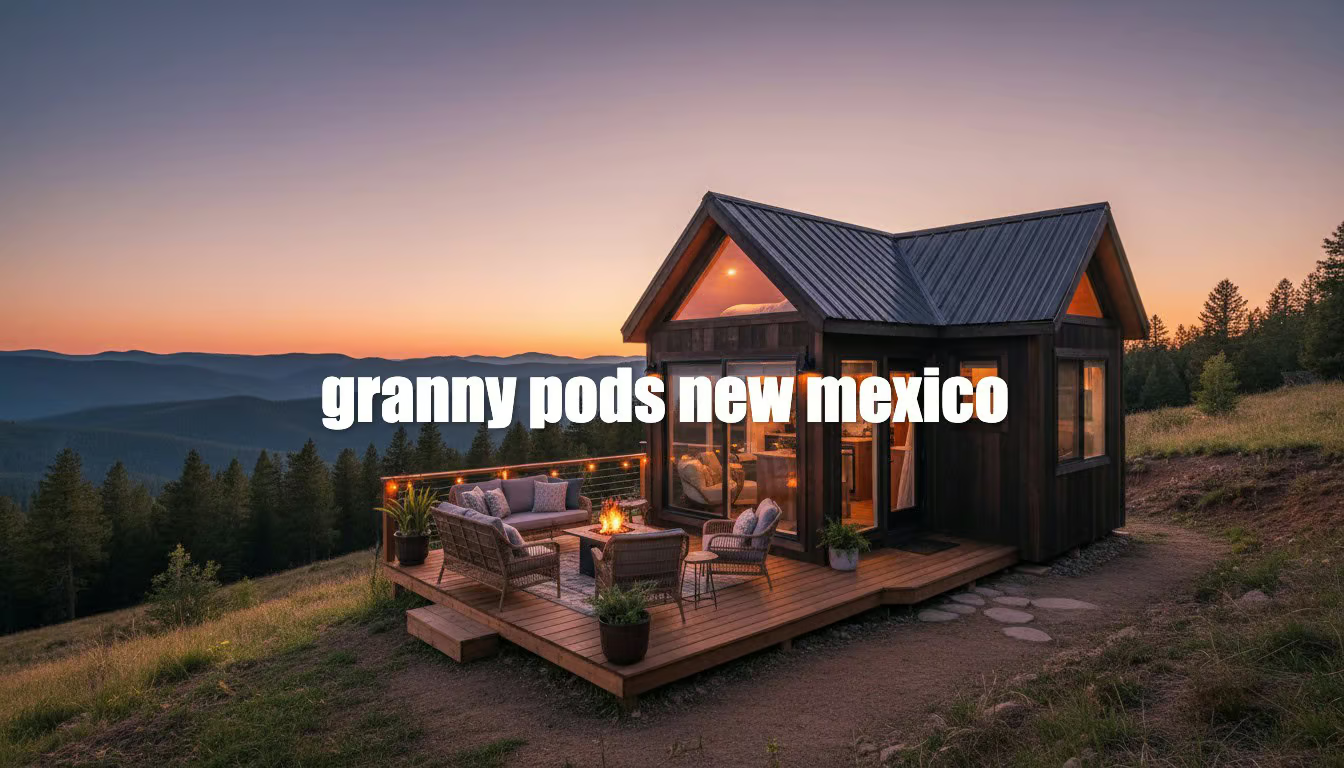
Granny pods, commonly referred to as accessory dwelling units (ADUs), are small, independent living spaces designed for elderly family members, allowing them to stay close to relatives while retaining autonomy. In New Mexico, these units typically measure between 300 and 800 square feet and incorporate vital amenities such as a bedroom, bathroom, and kitchenette, all situated on the same property as the main residence. Their rise in popularity reflects the state’s family-centric traditions and the pressing need for cost-effective senior housing options amid housing shortages in both urban hubs like Albuquerque and rural expanses.
Granny pods in New Mexico benefit from flexible configurations offered by builders like Great Lakes Tiny Homes, including wheeled versions for mobility or stationary park models with RVIA certification that may ease zoning classifications as recreational vehicles. This adaptability suits the varied geography, from the Llano Estacado’s plains to the Sangre de Cristo Mountains’ rugged slopes. Evolving from 1980s backyard cottages, modern iterations in New Mexico draw on local adobe aesthetics and sustainable practices, harmonizing with the desert ecosystem while delivering contemporary conveniences like energy-efficient systems.
Envision installing a granny pod in a Las Cruces backyard: its modest footprint simplifies upkeep, and solar-compatible roofing supports New Mexico’s renewable energy initiatives, cutting ongoing expenses and ecological footprint. Such placements not only meet practical needs but also enhance emotional ties, aligning with the state’s blend of urban vitality and rural tranquility.
Inside the Modern Granny Pod: Features, Design, and Purpose
Granny pods, or ADUs, fulfill a vital role by offering self-sufficient housing for seniors directly on family property, functioning as compact homes that emphasize accessibility, comfort, and practicality. Ranging from 300 to 800 square feet, they boast open layouts with essentials like a kitchen, bathroom, bedroom, and modest living space. Unlike broader tiny home trends, granny pods prioritize age-in-place features to support long-term residency.
Standard inclusions feature efficient appliances, abundant natural lighting via expansive windows, and clever storage for streamlined living. Senior-oriented designs distinguish them, incorporating zero-threshold entrances to prevent falls, broadened doorways for wheelchair maneuverability, and slip-resistant floors. In New Mexico’s fluctuating weather, enhanced insulation and durable materials ensure resilience against temperature extremes.
Varieties span prefab units for swift setup and affordability, custom builds for personalized touches, and conversions of existing structures like garages for economical retrofits. Accessibility shines through elements like bathroom grab bars, lever handles, and height-adjustable counters, while smart integrations such as fall sensors provide remote monitoring for reassurance. This focus on safety and simplicity contrasts with adventure-driven tiny homes, underscoring granny pods’ dedication to secure, effortless living.
These designs promote self-reliance, enabling routines without full-time aid, yet proximity allows prompt family assistance—crucial in New Mexico’s kinship-driven society. For high-elevation spots like Taos, added insulation combats frosts; desert zones employ heat-reflective exteriors for cooling. Outdoor additions like patios boost well-being, letting residents savor New Mexico’s vistas and temperate climate within protected bounds.
Furthermore, incorporating native landscaping around the pod conserves water through xeriscaping while offering low-effort greenspaces that encourage light activity for seniors, blending functionality with the region’s natural beauty.
Benefits of Granny Pods for New Mexico Families
Granny pods on New Mexico properties offer profound advantages, beginning with convenient oversight of senior well-being without the burden of distant care facility commutes. This arrangement upholds independence through private quarters while leveraging family proximity for support. In a state where over 15% of seniors live alone per census data, this combats isolation effectively.
Economically, they outperform nursing homes or assisted living, where New Mexico averages surpass $50,000 annually according to AARP reports; a $100,000 to $150,000 granny pod investment, such as those from Great Lakes Tiny Homes, yields savings over time by sidestepping recurring charges. Property enhancement follows, with added value potentially reaching 20-30% in suitable locales, building equity unlike depleting institutional costs. For more on available options, explore tiny houses for sale in Albuquerque.
Culturally resonant with Hispanic and Native American extended family norms, granny pods strengthen intergenerational bonds and preserve traditions. New Mexico’s mild southern winters in areas like Las Cruces facilitate easier outdoor engagement for those with mobility limits, complemented by efficient designs managing dry summers. As the senior demographic swells to 800,000 by 2030, these units proactively tackle care shortages, cutting travel and stress while future-proofing homes.
In rural settings with limited medical access, immediate responsiveness can prove critical, far exceeding setup efforts. A Santa Fe family, for instance, noted better dynamics and lower health expenses post-installation, with fewer emergencies and more shared pursuits like climate-friendly gardening, highlighting transformative potential.
Legal Considerations for Granny Pods in New Mexico
Disclaimer: This article is for informational purposes only and does not constitute legal advice. Laws, regulations, and zoning rules vary by location and may change over time. Always consult your local zoning office or a qualified land use/zoning attorney before making decisions based on this information.
Addressing legal aspects for granny pods in New Mexico involves grasping state frameworks that classify them as ADUs per the New Mexico Building Code. HB 260, enacted in 2019, promotes ADUs by easing urban permitting, though application differs across counties and cities. Zoning generally permits ADUs in residential districts, subject to setbacks of 5-10 feet and owner-occupancy stipulations in some areas.
Building standards follow the International Residential Code (IRC) for plumbing, electrical, and structural elements, necessitating permits with site plans, engineering, and septic approvals if applicable. More lenient jurisdictions like Bernalillo County permit ADUs up to 1,000 square feet with few hurdles, while Santa Fe County backs them for housing affordability. Stricter spots, such as Doña Ana County, demand individual reviews due to flood risks; rural Taos offers zoning flexibility but environmental scrutiny.
Updates like Senate Bill 378 in 2022 broadened HOA allowances, with proposals to cut fees pending. RVIA-certified park models under 400 square feet sidestep certain codes as RVs, suiting temporary placements in diverse terrains. Early local planning consultations ensure compliance; for expert navigation, tiny house builders in Albuquerque provide guidance on accessible designs that may expedite approvals and access incentives.
Variance applications succeed by showing community benefits, a tactic effective in forward-thinking Albuquerque. Detailed plans emphasizing senior features align with aging-in-place priorities, potentially qualifying for rebates.
Which New Mexico Counties Allow Granny Pods?
To assist in site selection for your granny pod, the following table details regulations across key New Mexico counties, emphasizing policies for major areas. Focus on ADU allowances, with city-specific notes where relevant. For broader tiny house insights, see what counties in New Mexico allow tiny houses.
| County Name | Granny Pod Status | Minimum Lot Size Requirements | Maximum Size Allowed | Special Notes | Source |
|---|---|---|---|---|---|
| Bernalillo (Albuquerque) | Allowed | 7,000 sq ft | 1,000 sq ft | Permissive in residential zones; no owner-occupancy needed. HOA checks advised. City limits casitas to 750 sq ft. | Bernalillo County Casitas Amendment |
| Santa Fe | Allowed | 5 acres rural, 5,000 sq ft urban | 800 sq ft (50% of primary) | Eco-design incentives; development permit required. | Santa Fe County ADU Checklist |
| Doña Ana (Las Cruces) | Allowed by right | 1 acre | 1,800 sq ft | ADUs permitted in residential zones; utility ties to main home; flood elevation in prone areas. | Doña Ana County Zoning Regulations |
| San Juan (Farmington) | Restricted | 2 acres | 400 sq ft | Detached units limited; additional rules near tribal lands. | N/A (Consult local planning) |
| Sandoval (Rio Rancho) | Allowed | 6,000 sq ft | 900 sq ft | Streamlined permits; RVIA models without foundation accepted. | Sandoval County Zoning Ordinance |
| Chaves (Roswell) | Case-by-Case | 1 acre | 500 sq ft | Agricultural flexibility; septic approvals consider water rights. | N/A (Consult local planning) |
| Cibola (Grants) | Restricted | 5 acres | 300 sq ft | Soil tests in mining zones; urban limits apply. | N/A (Consult local planning) |
In Bernalillo, expedited reviews for sub-800 square foot ADUs prevail, while Santa Fe’s green incentives can rebate up to 10% for solar integrations. Restricted counties like San Juan benefit from local advocacy to address federal-tribal overlaps, respecting cultural aspects alongside standards.
Granny Pods in New Mexico’s Major Cities
Albuquerque
In Albuquerque, granny pods thrive under progressive policies within Bernalillo County, permitting one casita per lot in zones like R-A and R-1, capped at 750 square feet citywide or 1,000 in unincorporated areas. Setbacks require at least 10 feet from structures or fire-rated walls, with no more than 25% yard occupancy. These rules support multigenerational setups amid the city’s growth, easing elder care logistics. For local builds, consider a tiny house builder in Albuquerque familiar with casita ordinances.
Permitting involves site plans and utility proofs, often processed in 4-6 weeks via the Planning Department. Incentives for energy-efficient designs align with Albuquerque’s sustainability goals, potentially offsetting costs through rebates. Families appreciate how these units integrate into neighborhoods, enhancing property utility without altering community aesthetics, and providing quick access to medical hubs like UNM Hospital.
Challenges include HOA variances, but successes abound for compliant projects emphasizing accessibility, turning backyards into supportive havens.
Santa Fe
Santa Fe’s regulations for granny pods emphasize cultural harmony and affordability, allowing ADUs up to 50% of the primary home’s size in residential zones, typically not exceeding 800 square feet. County checklists mandate development permits, sealed plans per New Mexico codes, and owner-occupancy covenants in city limits. This framework suits the area’s artistic, historic vibe, promoting units that blend with adobe styles.
Urban lots need 5,000 square feet minimum, rural 5 acres, with eco-features like water harvesting encouraged for rebates. The process includes environmental reviews to preserve viewsheds, taking 6-8 weeks. Residents value how granny pods foster family closeness in a city where seniors comprise 20% of the population, reducing isolation while accessing cultural amenities.
For sales in the area, view tiny houses for sale in Santa Fe, ensuring compliance with local historic preservation if applicable.
Las Cruces
Las Cruces permits granny pods as ADUs by right across residential zones in Doña Ana County, with sizes up to 1,800 square feet and one-acre minimums, though flood zones demand elevations. The Land Use Code supports multi-family elements, requiring main-home utility connections and zoning verification. This openness aids southern New Mexico’s warm climate, ideal for outdoor-integrated units.
Permits via the Community Development Department involve impact fees and septic if off-grid, processed in 4-8 weeks. Affordable housing initiatives prioritize ADUs, offering streamlined reviews for senior-focused builds. Families benefit from proximity to NMSU medical resources, minimizing travel for care while enjoying Mesilla Valley lifestyles.
Explore options with tiny houses for sale in Las Cruces to match local codes.
Rio Rancho
In Sandoval County’s Rio Rancho, granny pods are allowed up to 900 square feet on 6,000-square-foot lots, with permissive zoning and foundation-optional for RVIA models. The Comprehensive Zoning Ordinance requires permits aligning with state IRC, emphasizing safe integrations. This facilitates growth in the fast-expanding suburb, supporting diverse family structures.
Applications include engineering for seismic considerations, approved in 4-6 weeks. Utility hookups to mains are standard, with incentives for efficient designs. Proximity to Albuquerque appeals, offering suburban peace with urban access for senior care.
Local builders can guide, similar to tiny house builders in Rio Rancho.
Farmington
Farmington in San Juan County restricts granny pods to 400 square feet on two-acre lots, limited to detached in certain zones with tribal land sensitivities. Case-by-case reviews ensure compliance, focusing on water and environmental impacts. These constraints reflect the area’s rural, resource-driven economy, prioritizing sustainable placements.
Permitting through planning demands detailed plans, extending to 8-10 weeks. Families adapt by using mobile options, enhancing care in remote settings near Four Corners resources. This setup maintains independence amid limited services.
For viable options, check best tiny home communities in New Mexico for regional fits.
The Granny Pod Installation Process in New Mexico
The installation of a granny pod in New Mexico proceeds methodically to guarantee adherence and longevity, starting with zoning research via county sites to confirm ADU viability amid arroyo landscapes. Permits follow, submitted with blueprints and assessments, typically 4-8 weeks. Site prep entails clearing rocky soils; wheel-less units need monsoon-resistant foundations.
Utility links are critical, insulating against northern freezes. Prefab delivery and setup span 1-2 weeks, custom longer. Inspections verify codes, with delays from dust or water issues possible. For community ideas, visit best tiny home communities in New Mexico.
Post-permit, soil tests prevent erosion in monsoons, electrical grounding suits lightning zones, and pre-occupancy testing avoids remote disruptions. This rigor ensures seamless family benefits.
Design Considerations for New Mexico Granny Pods
Granny pod designs in New Mexico must withstand seasonal variances, from Taos chills to Chihuahuan heat, featuring R-30 insulated walls and hail-resistant metal roofs. Energy efficiency via solar cuts bills by 50% in sunny conditions. Accessibility includes zero-steps, 36-inch doors, and grab bars; smart tech like voice lights adds convenience.
Great Lakes Tiny Homes personalizes builds, inviting site visits and consultations to capture your narrative. Utility ties save costs, aesthetics matching adobe in Santa Fe or modern in Albuquerque. For Santa Fe options, see tiny houses for sale in Santa Fe.
Passive cooling with shading combats summer, radiant heating winters in Jemez fluctuations for steady comfort. Native xeriscaping conserves water, fostering senior exercise in low-maintenance yards.
Finding Expert Guidance for Your Project
Engaging New Mexico-savvy professionals is crucial for granny pod success, handling code variances from Bernalillo urban to rural water norms. Great Lakes Tiny Homes excels in state compliance, customizing comfort-focused units with durable, climate-suited materials.
Consultations clarify needs, from wheeled flexibility to park models. Book a call with our experts who’ve realized hundreds of tiny home visions. They advise on adaptable features like modular interiors for evolving care.
Granny Pod Costs in New Mexico
Granny pod expenses in New Mexico fluctuate based on size, foundation or wheels, RVIA certification, utility integrations, and local codes. Prefab basics start at $50,000 for 300 square feet, customs reach $250,000 for 800 square feet premium. Site work adds $5,000-$20,000, utilities $10,000-$30,000 higher rurally, permits $1,000-$5,000.
Maintenance like desert HVAC runs $1,000 yearly. Versus $72,000 annual nursing homes, a $120,000 unit saves $300,000+ over five years. Durable sidings and rebate-eligible windows lower nets; financing via equity loans at 5-7% or aging grants available. Insurance rises 10-20%, taxes deductible for care. In remote Chaves, septic adds $15,000, but equity builds long-term value. For Albuquerque expertise, contact a tiny house builder in Albuquerque.
Great Lakes Tiny Homes Pricing
Great Lakes Tiny Homes delivers quality granny pods in the $100,000-$150,000 range, encompassing turnkey modular and park model constructions suited to New Mexico zoning. This pricing covers customization for accessibility and climate resilience, with delivery across the lower 48 states ensuring hassle-free setup. Compared to full customs, their approach balances affordability and durability, often qualifying for state incentives on energy features.
Great Lakes Tiny Homes Model Options
- Modular Homes – Ideal for permanent foundations in zoned areas, offering quick assembly and compliance.
- A-Frame – Charming, space-efficient designs fitting rural setbacks with aesthetic appeal.
- Cabin – Rustic yet modern, perfect for New Mexico’s mountainous terrains and cultural vibes.
- Park Models – RVIA-certified for easier permitting as RVs, under 400 square feet for flexibility.
- Tiny House on Wheels – Mobile options for testing sites or lenient rural zoning without foundations.
Model selection hinges on zoning—wheels suit temporary or RV-friendly spots, foundations permanent urban installs. Zoning profoundly influences choices, dictating certifications and placements. If zoning impacts your model, book a call with our experts for personalized zoning-aligned recommendations.
Conclusion: Creating a Supportive Home for Your Loved Ones
Granny pods in New Mexico enable nurturing spaces where connections flourish and autonomy endures, transcending mere shelter to uphold dignity and vitality against stunning backdrops. Local specialists like Great Lakes Tiny Homes simplify the path with compliant, bespoke solutions. Embark on this supportive journey today. Their nationwide delivery of modular and park models ensures practical, location-specific outcomes without logistical strains.
To explore further, book a call with Great Lakes Tiny Homes experts.
FAQ
Disclaimer: This article is for informational purposes only and does not constitute legal advice. Laws, regulations, and zoning rules vary by location and may change over time. Always consult your local zoning office or a qualified land use/zoning attorney before making decisions based on this information.
How Can Great Lakes Tiny Homes Help Me On My Granny Pod Journey
Great Lakes Tiny Homes supports every phase of your granny pod in New Mexico, from vision consultations on wheeled or park model designs compliant with state rules. They assist with permitting insights for county variances and supervise builds for accessibility and efficiency. Customization includes smart tech and senior adaptations, plus post-setup maintenance for local climates. For instance, they suggest dust-resistant ventilation to avert Southwest respiratory concerns and seismic reinforcements for safety. Overall, they streamline to bolster family bonds.
Are granny pods legal in all parts of New Mexico?
Granny pods as ADUs are supported statewide but not uniformly legal due to local variations; Bernalillo broadly allows, San Juan restricts by zoning. State laws facilitate, yet HOAs or flood zones complicate. Verify with municipalities—urban more lenient than remote. Recent reforms ease, but pre-application meetings uncover needs like environmental checks in arid zones, avoiding revisions.
Can I install a granny pod on any size property in New Mexico?
No, minimums apply: 5,000-7,000 square feet urban, 1+ acres rural. Smaller may variance if setbacks met; Albuquerque accepts 7,000, Taos more for septic. County sites detail—undersized need utility studies for approval. Success hinges on demonstrating no overburden.
Do I need special insurance for a granny pod?
Yes, amend homeowner’s for the structure, hiking premiums 10-25% by size. Detached may need separate if rented, but family endorsements work. Agents cover liability, wind/hail in NM weather. Bundle flood in Doña Ana; shop for savings. Standard excludes some perils, ensuring full safeguard.
Can I rent out my granny pod in New Mexico?
Possible but regulated; many allow as owner-occupied ADU with income caps in affordability zones. Albuquerque licenses short-term, Santa Fe limits nights. Report rental income taxes; zoning must multi-family. Ordinances prevent fines—viable cost offset. Review Airbnb compliance, tax deductions for upkeep as family asset.
What are the minimum size requirements for granny pods in New Mexico?
Minimums vary, often 300 square feet per IRC for habitability, but locals set floors like 400 in restricted San Juan. Albuquerque casitas start viable at 200 with utilities. Codes ensure safe spaces; consult for bedroom/bath minima. This supports compact, efficient senior living without excess.
Wheels vs. foundation: Which is better for granny pods in New Mexico?
Wheeled (THOW) offer mobility for rural testing, RVIA as park models bypassing foundations in lenient zones. Foundations suit permanent urban, meeting full codes for longevity. Choice depends on zoning—wheels flexible short-term, foundations equity-building. NM terrains favor wheels for seismic ease, but consult for site stability.
Where can I place a granny pod on my property in New Mexico?
Placement follows setbacks: 5-10 feet from lines, rear/side yards, not front. Rear preferred for privacy, avoiding main views. Flood/arroyo zones elevate; utilities dictate proximity. Plans show integration; HOAs may restrict. This optimizes access while complying.
What permits and utilities are needed for a granny pod in New Mexico?
Permits include zoning, building, septic if off-grid, 4-8 weeks. Utilities tie to mains for water/sewer/electric, or independent with approvals. Health dept. septic, fire ratings near structures. Costs vary rural; inspections ensure code. Early coordination prevents delays in variable climates.