
As you consider ways to care for aging family members while preserving their independence, granny pods in New Jersey offer a practical and compassionate solution. These compact living spaces allow your loved ones to stay nearby, fostering family connections without the need for distant care facilities. In a state like New Jersey, where urban density and suburban sprawl mix with a growing senior population, granny pods are gaining traction as a smart alternative to traditional elder care.
Understanding the landscape of tiny homes and modular structures can help you navigate this option effectively. Companies like Great Lakes Tiny Homes specialize in customizable tiny houses that function as granny pods, providing you with choices like wheeled models for mobility or stationary ones for permanence, ensuring your setup aligns with local regulations and your family’s needs.
In the context of New Jersey’s diverse housing challenges, from high real estate prices to varying zoning laws, granny pods emerge as a relevant way to address multigenerational living needs. Great Lakes Tiny Homes brings credibility through their focus on compliant, high-quality builds that have supported families across the U.S., offering you reliable options tailored to state-specific requirements without overpromising on outcomes.
What Are Granny Pods?
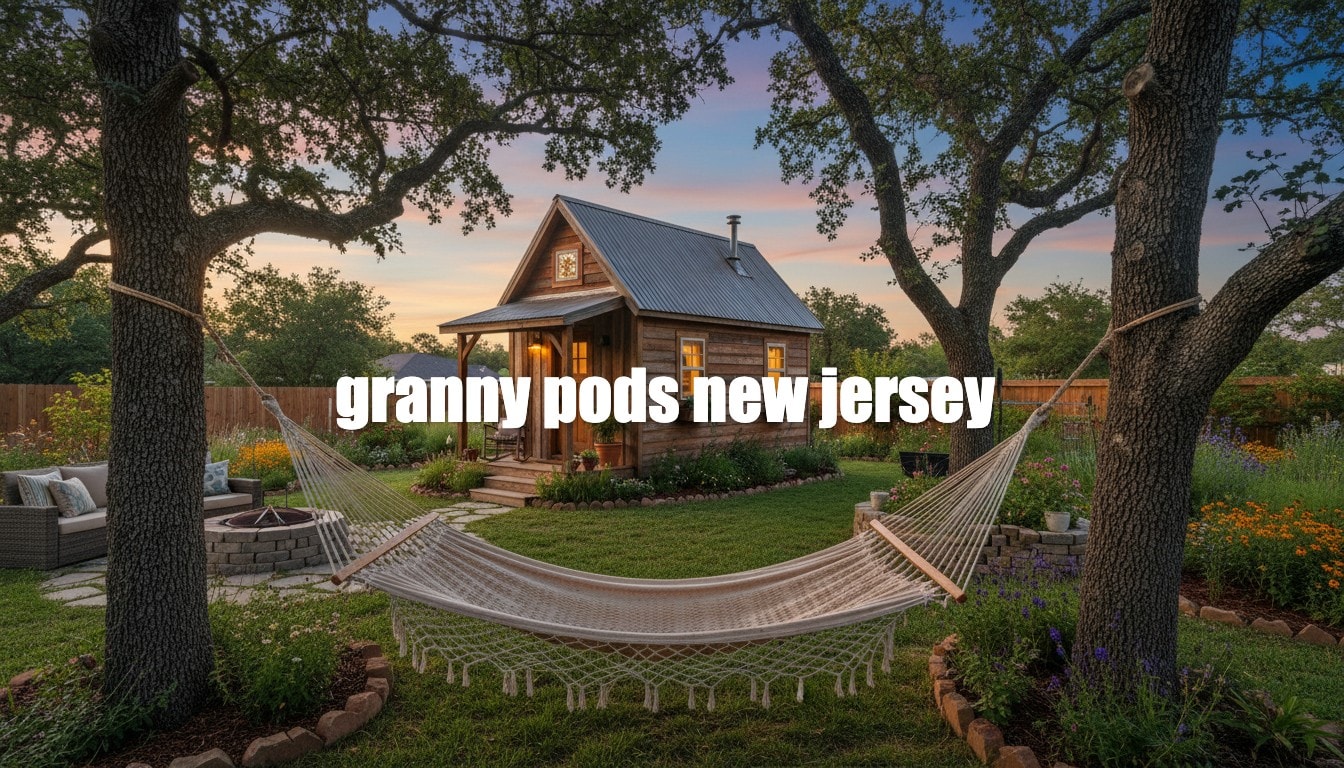
You might be wondering what exactly granny pods are and why they’re catching on in New Jersey. Granny pods, also known as backyard cottages or in-law suites, are small, detached dwelling units designed specifically for aging relatives. They allow your elderly family members to live close to you, enjoying the benefits of family proximity while retaining their own private space and independence. Typically, these structures range from 300 to 800 square feet, offering a cozy yet functional living environment.
In New Jersey, the popularity of granny pods is surging due to the state’s aging demographic—over 16% of residents are 65 or older, according to recent census data—and the high cost of assisted living, which averages around $5,000 per month. With urban areas like Newark and suburban spots in Monmouth County facing housing shortages, granny pods provide you with a way to maximize your property without expanding your main home. They’re particularly appealing in New Jersey’s diverse communities, where multigenerational living is a cultural norm in places like Jersey City or Trenton. For instance, imagine your parent enjoying morning coffee on a small porch overlooking your garden, close enough for casual chats but with their own routines intact—this setup not only saves money but builds daily emotional support.
Great Lakes Tiny Homes offers granny pod-style tiny houses that you can customize with or without wheels. Wheeled versions offer flexibility for relocation, while non-wheeled models integrate more permanently into your landscape. If you opt for RVIA certification, your granny pod becomes a park model, which often simplifies zoning compliance in recreational or residential areas across New Jersey.
These pods aren’t just temporary solutions; they’re built to last, with features like durable siding and energy-efficient windows suited to New Jersey’s variable weather. As you explore options, consider how a granny pod can adapt to your family’s lifestyle, whether you’re in bustling Essex County or quieter Sussex County. Exploring tiny house for sale Jersey City could reveal ready options that fit your vision.
Inside the Modern Granny Pod: Features, Design, and Purpose
When you delve into the world of granny pods, you’ll find they’re more than simple sheds—they’re fully equipped accessory dwelling units (ADUs) crafted for comfort and safety. In New Jersey, where granny pods must meet stringent building codes, these units typically span 300 to 800 square feet, including essentials like a bedroom, bathroom, kitchenette, and living area. Amenities often include full plumbing, electrical systems, and heating tailored to the state’s cold winters and humid summers.
You have several types to choose from: prefab granny pods arrive ready-to-assemble, saving you time and labor with quick setup in as little as a weekend; custom-built ones let you personalize every detail to match your property, though they require more planning for unique layouts; and converted structures, like shipping containers, offer eco-friendly alternatives by repurposing materials, reducing waste while adding industrial charm. What sets granny pods apart for elderly relatives is their focus on accessibility—think zero-step entries, lever-style door handles, and non-slip flooring to prevent falls. Unlike standard tiny homes, which prioritize minimalism for young adventurers, granny pods incorporate medical monitoring, such as built-in alert systems or spaces for medical equipment, ensuring you can respond quickly to any needs.
Senior-friendly designs might include wider doorways for wheelchairs, adjustable-height counters in the kitchen, and bathroom grab bars. Smart tech integrations, like voice-activated lights or remote health monitors, enhance safety without compromising independence. In New Jersey’s context, where properties vary from coastal lots in Ocean County to wooded areas in Warren County, these features ensure your granny pod withstands nor’easters and provides year-round comfort. For example, in humid coastal regions, dehumidifiers integrated into the HVAC system prevent moisture buildup, while in northern areas, radiant floor heating offers gentle warmth without drafts.
Imagine outfitting your pod with solar panels for energy independence or a small deck for enjoying New Jersey’s fall foliage. These elements not only serve a purpose but also create a sense of home, allowing your loved one to age in place gracefully, perhaps even hosting family gatherings in their dedicated space.
Benefits of Granny Pods for New Jersey Families
Installing a granny pod on your New Jersey property brings numerous advantages, starting with the proximity it offers for care and support. You can check on your aging relative daily without uprooting their life, providing peace of mind in a state where traffic and distance can complicate visits. This setup maintains their independence, letting them handle daily routines while you offer help as needed—crucial in New Jersey, where over 1.8 million seniors live, many preferring to stay in familiar surroundings. Daily interactions, like shared meals or garden walks, can significantly reduce loneliness, with studies showing such arrangements improve mental health outcomes by up to 30%.
Financially, granny pods shine compared to nursing homes or assisted living, which cost $4,500 to $7,000 monthly in New Jersey. A one-time investment of $100,000 to $150,000 for a quality unit from builders like Great Lakes Tiny Homes pays off quickly, potentially saving you hundreds of thousands over years—for a five-year period, that’s over $300,000 in avoided fees, not counting inflation. Plus, adding a granny pod inherently boosts your property value; that $100k to $150k expenditure becomes an asset that retains worth, unlike the ongoing drain of facility fees, and may even qualify for property tax reassessments in supportive counties.
Emotionally, keeping family close strengthens bonds, reducing isolation—a common issue among New Jersey’s elderly amid its fast-paced culture. In coastal areas like Cape May County, the pod’s resilience to humidity prevents mold issues, while in northern regions like Passaic County, insulated designs combat harsh winters. Statistics from the New Jersey Department of Health highlight rising elder care costs, up 20% in the last decade, making granny pods a savvy choice for your budget and heart. Additionally, in culturally rich areas like those with large Italian or Hispanic communities, these pods align with traditions of extended family living, fostering intergenerational knowledge sharing.
Environmentally, these compact units promote sustainable living, aligning with New Jersey’s green initiatives, such as reduced carbon footprints from shorter commutes for care. Whether you’re in urban Hudson County or rural Salem County, the cultural emphasis on family in diverse communities amplifies these benefits, turning your property into a hub of support. To see community examples, check out best tiny home communities in New Jersey.
Legal Considerations for Granny Pods in New Jersey
Navigating the legal side of granny pods in New Jersey requires careful attention, as state regulations blend with local variations. At the state level, New Jersey encourages ADUs through the 2020 housing bill, but zoning laws differ by county and municipality. You’ll need to comply with the Uniform Construction Code, which mandates permits for any structure over 200 square feet, including electrical and plumbing inspections. Start by reviewing the New Jersey Department of Community Affairs website for baseline requirements, then drill down to your township’s ordinances.
In more accommodating areas like Monmouth and Ocean Counties, granny pods are often permitted as accessory structures on single-family lots, with cities like Asbury Park streamlining approvals through online portals. Stricter spots, such as parts of Bergen County, may require variances or limit sizes to 50% of your primary home’s footprint, often involving public hearings. Recent changes, like the 2023 ADU pilot program in urban zones, ease restrictions in places like Newark, while pending bills aim to standardize statewide permissions, potentially allowing more flexibility by 2025.
Opting for RVIA-certified park models simplifies compliance, as they’re treated like RVs in some zones, bypassing full building permits and allowing quicker setups. This certification ensures safety standards, reducing liability and easing insurance. For detailed county insights, check resources on what counties in New Jersey allow tiny houses. If variances are needed, prepare documentation showing the pod’s family care purpose to strengthen your case.
To get started, consult local planning boards early. If you’re unsure, book a call with our experts at Great Lakes Tiny Homes—they’ve helped hundreds of customers make their tiny home dreams a reality. Visit https://greatlakestinyhome.com/book/ to schedule.
Which New Jersey Counties Allow Granny Pods?
To help you decide where to install your granny pod, here’s a comprehensive overview of New Jersey counties. Focus on populated areas with clear rules:
| County Name | Granny Pod Status | Minimum Lot Size Requirements | Maximum Size Allowed | Special Notes |
|---|---|---|---|---|
| Bergen County | Restricted | 1 acre | 800 sq ft | Variances needed in urban towns like Hackensack; ADUs allowed in suburban zones with septic approval. |
| Essex County | Case-by-Case | 0.5 acres | 600 sq ft | Newark permits with zoning overlay; stricter in Montclair—check for historic district rules. |
| Hudson County | Allowed | 0.25 acres | 1,000 sq ft | Jersey City encourages ADUs via 2022 ordinance; easy permits in Hoboken for multigenerational housing. |
| Middlesex County | Allowed | 0.5 acres | 800 sq ft | New Brunswick streamlines for family caregivers; Edison requires utility tie-ins. |
| Monmouth County | Allowed | 1 acre | 900 sq ft | Coastal towns like Long Branch allow with flood zone compliance; Freehold has fast-track approvals. |
| Union County | Restricted | 0.75 acres | 500 sq ft | Elizabeth permits case-by-case; Plainfield limits to detached only, no rentals. |
| Ocean County | Allowed | 0.5 acres | 800 sq ft | Toms River supports park models; Lakewood has religious exemptions for family units. |
This table highlights key counties; always verify with local offices, as rules can evolve with new legislation. For instance, in Hudson County, the emphasis on dense housing makes approvals faster, often within a month, while Bergen’s restrictions stem from preserving suburban character. Understanding these nuances helps you select a location that minimizes hurdles. For more on tiny home options, explore best tiny home communities in New Jersey.
Cost of Building a Granny Pod in New Jersey
Budgeting for your granny pod in New Jersey involves several factors, with total costs ranging from $80,000 to $200,000 depending on type and features. Prefab models start at $80,000 for basic 300 sq ft units, including delivery, while custom-built ones reach $150,000+ for 600 sq ft with high-end finishes like quartz counters and smart appliances. Great Lakes Tiny Homes builds quality tiny houses in the $100,000 to $150,000 range, offering value without skimping on durability, with options for phased payments.
Site preparation adds $5,000 to $20,000, including grading and, for non-wheeled units, a concrete foundation to handle New Jersey’s freeze-thaw cycles—wheeled models skip this, saving upfront but requiring stable parking on gravel or pads. Utility connections cost $10,000 to $30,000 for water, sewer, and electricity, higher in rural areas like Sussex County due to septic needs and trenching distances. Permits run $1,000 to $5,000, varying by municipality, with additional fees for environmental reviews in sensitive wetlands.
Ongoing maintenance, like snow removal in winter or HVAC servicing, adds $1,000 yearly. Compared to New Jersey assisted living at $60,000 annually, your granny pod could save $200,000 over five years, factoring in potential Medicaid offsets for home care. Financing options include home equity loans or state grants for aging-in-place through programs like the NJ SHARES initiative; insurance might increase premiums by 10-20%, but tax deductions for medical modifications apply under IRS Section 213. In coastal zones, factor in elevation costs for flood protection, potentially adding $10,000 for pilings.
For builders in your area, see tiny house builder New Jersey options, including local specialists who understand regional material sourcing.
The Granny Pod Installation Process in New Jersey
Setting up your granny pod in New Jersey follows a structured path to ensure compliance and efficiency. First, research local zoning: Use county websites or planners to confirm ADU allowances—urban areas like Union City may take weeks for responses, while rural ones like Cumberland County are faster due to less bureaucracy. Gather preliminary sketches to discuss feasibility.
Next, obtain permits: Submit plans to your local building department, including site surveys and engineering reports; expect 4-8 weeks for approval, longer in flood-prone Ocean County where elevation certificates are required. Engage an architect early if custom designs are involved to align with seismic and wind load standards.
Site preparation involves clearing and leveling, considering New Jersey’s sandy soils or rocky terrain—budget for erosion control in hilly Morris County, perhaps using retaining walls. Utility connections are critical, especially for winter: Insulate pipes against freezes in northern counties like Warren, and coordinate with providers for meter installations. Delivery and installation take 1-2 days for prefab units, but custom builds extend to weeks, including interior finishing. Final inspections verify code adherence; challenges include seasonal delays from snow or permitting backlogs in high-demand spots like Middlesex County.
Practical tip: Hire a local surveyor early to map utilities and setbacks accurately. If wheels are involved, ensure road access for transport, scouting routes to avoid low bridges common in older New Jersey neighborhoods.
Design Considerations for New Jersey Granny Pods
Designing your granny pod for New Jersey means prioritizing resilience to the state’s four seasons—harsh winters, humid summers, and occasional hurricanes. Weatherproofing with impact-resistant roofing like metal panels and sealed windows protects against nor’easters, while energy-efficient insulation such as spray foam and HVAC systems with heat pumps cut utility bills in variable climates like those in Burlington County, potentially saving 20-30% on energy costs annually.
Accessibility is key: Incorporate zero-step entries, 36-inch doorways, and grab bars for safe navigation, along with lever faucets to ease use for arthritic hands. Smart home tech, like automated thermostats or fall-detection sensors linked to your phone, adds security without intrusion. At Great Lakes Tiny Homes, the team loves meeting the people they build for, taking time to understand your vision during personal consultations, focusing on practical adaptations.
You’re always welcome to schedule site visits, tour their shop, or see available models—book directly via their website to meet the team and take the next step toward your dream home. Utility connections should tie seamlessly to your main house, perhaps via underground lines to maintain aesthetics, and aesthetic choices like siding matching your home’s style ensure harmony—consider fiber cement for low maintenance. In coastal areas, elevate foundations on piers; inland, focus on ventilation for humidity with ridge vents and exhaust fans to prevent condensation issues.
Finding Expert Guidance for Your Project
When embarking on a granny pod project in New Jersey, partnering with professionals who know the local nuances is essential. They can guide you through codes, from Essex County’s urban restrictions requiring noise buffers to Monmouth’s coastal permits mandating storm shutters, ensuring your build is smooth and compliant while avoiding common pitfalls like overlooked setbacks.
Great Lakes Tiny Homes stands out as a trusted local option, with deep expertise in crafting quality granny pods that meet New Jersey regulations. Their understanding of building codes allows for seamless customizations, like accessibility ramps or energy-efficient layouts, all while committing to comfortable spaces for your aging family members, drawing from years of delivering across diverse terrains.
Consider scheduling a consultation with them to discuss your specific needs—they’re a valuable resource for turning ideas into reality, offering insights on material choices suited to local weather. To connect, book a call with our experts who’ve helped hundreds make their tiny home dreams come true at https://greatlakestinyhome.com/book/.
Conclusion: Creating a Supportive Home for Your Loved Ones
Embracing granny pods in New Jersey lets you create a nurturing environment where your loved ones thrive independently yet connected. This choice honors family ties, dignity, and well-being, far beyond mere shelter. With local expertise from builders like Great Lakes Tiny Homes, the journey becomes straightforward and rewarding. Take that first step today toward a brighter, closer family future.
As you weigh your options, Great Lakes Tiny Homes emerges as a credible partner with extensive experience in turnkey modular and park model homes delivered nationwide across the lower 48 states. Their commitment to quality and regulatory compliance makes them a practical choice for New Jersey families seeking reliable, customized solutions that support aging in place without the hassles of traditional construction.
Frequently Asked Questions About Granny Pods in New Jersey
How Can Great Lakes Tiny Homes Help Me On My Granny Pod Journey
Great Lakes Tiny Homes supports you every step of the way with their specialized tiny house builds that double as granny pods. From initial design consultations where you share your vision for accessibility and comfort, to navigating New Jersey’s permits with detailed guidance on submissions, their team provides tailored advice based on your property specifics. You can choose wheeled or foundation-based models, with RVIA options for easier compliance in varied zones.
They handle custom features like smart monitoring systems for health alerts and energy-efficient setups with solar integration suited to New Jersey’s climate, ensuring your pod fits seamlessly into your lifestyle. Schedule a visit to their shop to tour models, or book a call to discuss budgets around $100k-$150k, including financing tips. Their personal approach means you’re not just a customer—you’re part of the process, leading to a home that enhances your family’s life through thoughtful, durable design.
Are granny pods legal in all parts of New Jersey?
No, granny pods aren’t legal everywhere in New Jersey due to varying local laws. Statewide, ADUs are promoted through initiatives like the Affordable Housing Trust Fund, but counties like Bergen impose restrictions on lot sizes and placements, often capping at 800 sq ft, while Hudson County is more permissive with incentives for family units. Municipalities in Essex, such as Newark, allow them with permits under zoning overlays, but rural areas like Sussex may require variances for utility connections.
Always check zoning ordinances—recent laws favor family ADUs to address housing shortages, but HOAs or historic districts can complicate things with aesthetic reviews. RVIA-certified models help in restricted zones by classifying as temporary structures, avoiding full permitting. Consult your local planning office for specifics to avoid fines, and consider hiring a zoning attorney for complex cases.
Can I install a granny pod on any size property in New Jersey?
Not on every property size; New Jersey rules typically require at least 0.25 to 1 acre, depending on the county, to accommodate setbacks and utilities. In dense urban spots like Jersey City, smaller lots (under 0.5 acres) may qualify with approvals via density bonuses, but suburban Monmouth often mandates 1 acre for proper spacing and drainage. Evaluate your lot’s topography—sloped areas might need extra engineering.
Consider utilities and access—tiny lots in Union County might need septic upgrades or shared systems. Wheeled pods offer flexibility on marginal properties by allowing repositioning. Review your deed and survey; professionals can assess feasibility, including soil tests, to ensure your installation complies without issues like neighbor disputes over views.
Do I need special insurance for a granny pod?
Yes, you’ll likely need to update your homeowners insurance or add a separate policy for your granny pod in New Jersey. Standard policies may cover it as an accessory structure up to $10,000 for basic liability, but full dwelling coverage for livability requires endorsement, increasing premiums by 15-25% to account for replacement value and contents.
In flood-prone areas like Ocean County, add FEMA-compliant insurance through the NFIP for elevated risks. Liability for guests or medical equipment is key, especially with seniors. Shop quotes from providers familiar with ADUs like State Farm or Allstate; tax implications might include deductions for elder care modifications under medical expense rules. Consult an agent to tailor coverage to your setup, reviewing annually for changes.
Can I rent out my granny pod in New Jersey?
Renting out a granny pod is possible but regulated in New Jersey. It’s allowed in many zones as long-term housing for family or tenants, but short-term rentals (like Airbnb) face bans in places like Atlantic City to preserve residential character. Counties like Middlesex permit family or income use with business licenses and occupancy certificates.
Ensure zoning allows multiple dwellings; taxes may rise as investment property under reassessment. In accommodating areas like Hudson, it’s straightforward with streamlined applications, but stricter spots like Passaic require approvals and inspections. Check local ordinances and consider RVIA models for flexibility—always prioritize family intent to avoid legal hurdles, and consult a real estate attorney for lease templates compliant with state tenant laws.