
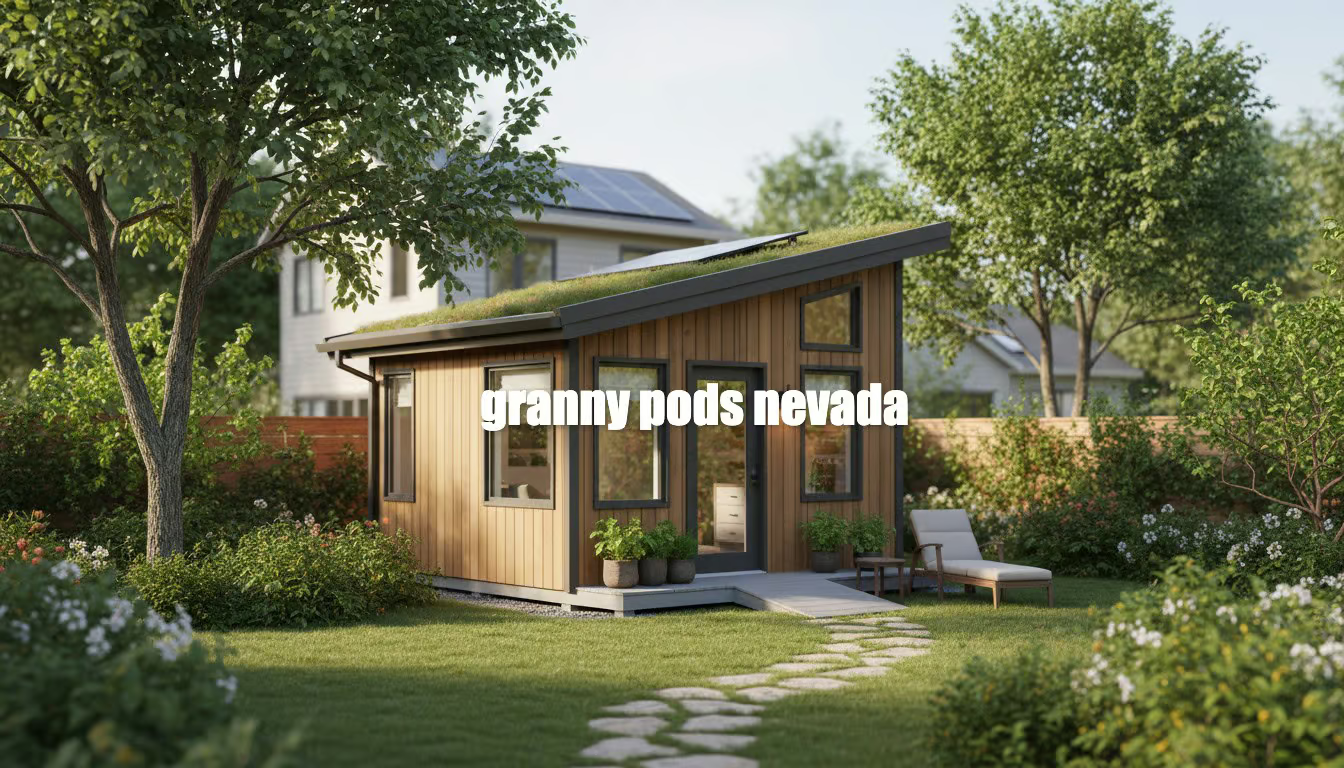
As Nevada’s population ages and housing costs rise, we’re seeing more families explore granny pods as a practical solution for caring for elderly loved ones. These compact, purpose-built dwelling units offer Nevada families a way to keep aging relatives close while maintaining privacy and dignity.
At Great Lakes Tiny Homes, we understand that choosing the right housing solution for aging family members is about more than square footage—it’s about creating a space where dignity, independence, and family connection thrive together. Our experience building custom granny pods and accessory dwelling units has shown us that Nevada families value quality craftsmanship, thoughtful design, and builders who understand the unique needs of multi-generational living.
What Are Granny Pods?
Granny pods are small, detached dwelling units specifically designed to house aging relatives on the same property as their family members. These specialized structures, also known as accessory dwelling units (ADUs) or “MEDCottages” when equipped with medical monitoring systems, provide a perfect balance between independence and proximity to care.
In Nevada, granny pods are becoming increasingly popular as families seek alternatives to expensive assisted living facilities and nursing homes. Instead of sending aging parents or grandparents to institutional care settings, we can create a comfortable, accessible living space right in our own backyards. This allows family members to maintain independence and dignity while remaining close enough for daily check-ins, meals together, and immediate assistance when needed.
These structures typically range from 300 to 800 square feet and can be either permanently installed or designed to be temporary, depending on local regulations and family needs. For Nevada families dealing with extreme temperature variations—from scorching summers to cold winters in northern regions—modern granny pods come equipped with efficient HVAC systems, proper insulation, and weatherproofing that makes them comfortable year-round.
Inside the Modern Granny Pod: Features and Design
Granny pods are purpose-built living spaces designed with the specific needs of elderly residents in mind. A typical granny pod includes a bedroom, bathroom, kitchenette or full kitchen, and living area—all configured for maximum accessibility and safety.
We categorize granny pods into several types. Prefabricated granny pods arrive largely complete and can be installed relatively quickly, making them excellent for Nevada families who need a solution implemented rapidly. Custom-built granny pods offer maximum flexibility in design and can be tailored to match your main home’s aesthetic and your family member’s specific needs.
What truly distinguishes granny pods from standard tiny houses for sale in Nevada are the senior-friendly design elements. We’re talking about zero-step entries that eliminate tripping hazards, wider doorways (typically 36 inches) to accommodate wheelchairs and walkers, and reinforced bathroom walls with grab bars installed near toilets and in showers. Flooring is typically non-slip, and lighting is designed to be bright and evenly distributed to help aging eyes navigate safely.
Many modern granny pods also incorporate medical monitoring capabilities. These can range from simple emergency call buttons to sophisticated systems that monitor vital signs, detect falls, and alert family members or medical professionals to potential health issues. For Nevada families caring for relatives with conditions like diabetes, heart disease, or dementia, these technological features provide invaluable peace of mind.
Bathroom design in granny pods includes walk-in or roll-in showers with built-in seating, handheld showerheads, and thermostatic mixing valves to prevent scalding. Kitchen areas feature lowered countertops or adjustable-height sections, pull-out shelving for easy access, and appliances positioned to minimize bending and reaching.
Benefits of Granny Pods for Nevada Families
The advantages of granny pods extend far beyond simple convenience. For Nevada families, these structures represent a comprehensive solution to the complex challenge of elder care.
First and foremost, granny pods allow us to provide proximity to family for care and support. When aging parents or grandparents live just steps away from our main home, we can check on them multiple times daily, share meals together, and respond immediately to emergencies. This proximity is especially valuable in Nevada’s more isolated rural areas, where the nearest neighbor might be miles away and emergency services may take longer to arrive.
At the same time, granny pods preserve the independence and dignity that our elderly family members value. They maintain their own space, their own routines, and their own sense of autonomy. This independence has been shown to contribute to better mental health outcomes and a higher quality of life for seniors.
The financial benefits of granny pods are substantial. The average cost of a nursing home in Nevada exceeds $8,000 per month, while assisted living facilities average around $4,500 per month. Over just a few years, these costs can easily exceed $100,000 to $200,000. In contrast, a quality granny pod might cost between $50,000 and $150,000 to purchase and install—a one-time investment that can serve your family for decades.
Beyond direct cost savings, granny pods can potentially increase your property value. A well-designed, permitted accessory dwelling unit adds functional square footage to your property and can be attractive to future buyers. In Nevada’s competitive real estate markets, particularly in the Las Vegas and Reno areas, this added versatility can be a significant selling point.
The emotional and psychological benefits of keeping family close cannot be overstated. Grandchildren grow up with daily access to their grandparents, creating bonds and memories that wouldn’t be possible if grandma or grandpa were in a facility across town.
Legal Considerations for Granny Pods in Nevada
Understanding the legal landscape for granny pods in Nevada is crucial before we invest time and money into a project. The regulatory environment for accessory dwelling units in Nevada is complex, varying significantly by county and municipality.
At the state level, Nevada has been relatively progressive in recognizing the need for accessory dwelling units. However, the state largely defers to local jurisdictions on specific regulations, which means that what’s allowed in Clark County might be quite different from what’s permitted in Washoe County or rural Nevada counties.
Nevada’s building codes require that all permanent structures, including granny pods, meet current International Residential Code (IRC) standards. This includes requirements for structural integrity, electrical systems, plumbing, HVAC, and fire safety.
Zoning laws are where we encounter the most variation across Nevada. Zoning regulations determine whether accessory dwelling units are permitted in specific areas, what size they can be, where on the property they can be located, and whether they can be rented to non-family members.
In Clark County, which includes Las Vegas, Henderson, and surrounding communities, accessory dwelling units are permitted in many residential zones, but specific requirements vary by municipality. The City of Las Vegas has been working to make ADU regulations more permissive, recognizing their potential to address housing needs.
Washoe County, home to Reno and Sparks, has also been evolving its ADU policies. The City of Reno has made efforts to encourage ADU development as part of its housing strategy, though specific requirements regarding lot size, setbacks, and design standards still apply.
Rural Nevada counties often have different considerations. In less densely populated areas, we might find more flexibility regarding placement and size, but we may also encounter challenges with utility connections and septic system requirements.
Permit requirements typically include submitting detailed plans for review, paying permit fees, and scheduling inspections at various stages of construction. Depending on the jurisdiction, approval can take anywhere from a few weeks to several months.
One important legal consideration specific to granny pods is whether they’re classified as temporary or permanent structures. Some jurisdictions allow temporary medical hardship exemptions that permit granny pods for elderly or disabled family members even in areas where permanent ADUs aren’t normally allowed.
We should also be aware of homeowners association (HOA) rules if our property is part of an HOA. Even if local zoning allows granny pods, our HOA’s covenants, conditions, and restrictions (CC&Rs) might prohibit them or impose additional requirements.
Which Nevada Counties Allow Granny Pods?
To help Nevada families understand where granny pods are most feasible, we’ve compiled information about regulations in the state’s major counties. This table provides a general overview, but we strongly recommend contacting local planning departments for the most current and specific information for your property.
| County Name | Granny Pod Status | Minimum Lot Size Requirements | Maximum Size Allowed | Special Notes |
|---|---|---|---|---|
| Clark County (Las Vegas) | Allowed | Varies by municipality; typically 5,000-7,000 sq ft | Up to 50% of primary dwelling or 1,200 sq ft | City of Las Vegas and Henderson have specific ordinances; owner occupancy may be required |
| Washoe County (Reno) | Allowed | Typically 6,000 sq ft minimum | 800-1,200 sq ft depending on zone | City of Reno has streamlined ADU approval process; design standards apply |
| Carson City | Allowed | 6,000 sq ft minimum | 1,000 sq ft or 75% of primary dwelling | Independent city-county; requires conditional use permit in some zones |
| Lyon County | Case-by-Case | Varies by zoning district | Typically limited to 1,000 sq ft | Rural areas may have more flexibility; septic system capacity is a consideration |
| Douglas County | Restricted | Typically 1 acre minimum | Limited to 800 sq ft | Strict design standards; must match primary dwelling architecture |
| Elko County | Case-by-Case | Varies widely by location | No specific maximum in many areas | Rural county with varied regulations; utility access can be challenging |
| Nye County | Allowed | Varies by zoning; often minimal in rural areas | Generally permissive | Large rural county; regulations vary significantly by area; well and septic considerations |
| Churchill County | Case-by-Case | Varies by zone | Typically 1,000 sq ft or less | Fallon has specific city ordinances; county areas have different rules |
For the most current information, we recommend checking with your local planning department or working with professionals familiar with what counties in Nevada allow tiny houses and accessory dwelling units.
Cost of Building a Granny Pod in Nevada
Understanding the full cost of a granny pod project is essential for Nevada families planning this investment. We need to consider not just the purchase price of the unit itself, but also site preparation, utility connections, permits, and ongoing costs.
For prefabricated granny pods, we typically see prices ranging from $50,000 to $150,000 depending on size, quality, and features. A basic 300-square-foot prefab unit with standard finishes might start around $50,000-$70,000, while a larger 600-800 square foot unit with premium finishes, accessibility features, and smart home technology could reach $120,000-$150,000 or more.
Custom-built granny pods offer more design flexibility but typically cost more. We’re looking at $100,000 to $250,000 or higher for a custom-built unit, depending on size, materials, and complexity.
Site preparation costs vary widely depending on our property’s current condition. If we’re placing the granny pod on a level area with good drainage and easy access, site prep might cost $5,000-$15,000. However, if our Nevada property has challenging terrain, poor soil conditions, or difficult access, site preparation could cost $20,000-$40,000 or more.
Utility connections represent a significant cost component. Running electrical service to the granny pod typically costs $1,000-$5,000 depending on distance from the main panel. Plumbing connections can range from $2,000-$10,000 depending on distance and whether we’re connecting to municipal systems or need to upgrade a septic system.
HVAC installation is particularly important in Nevada’s climate. A quality mini-split heat pump system appropriate for a granny pod typically costs $3,000-$7,000 installed. We want to invest in efficient, reliable climate control because our elderly family member’s comfort and safety depend on it.
Permit fees in Nevada vary by jurisdiction but typically range from $500-$3,000 for a granny pod project. We should also budget for any required engineering reports, surveys, or other professional services needed for permit approval, which might add another $1,000-$5,000.
When we add up all these costs, a complete granny pod project in Nevada typically ranges from $75,000 to $200,000 or more. To put these costs in perspective, nursing home care in Nevada averages about $8,500 per month or $102,000 per year. Even at the higher end of granny pod costs, we’re looking at an investment that pays for itself in 2-4 years compared to institutional care.
The Granny Pod Installation Process in Nevada
Successfully installing a granny pod in Nevada requires careful planning and execution across multiple phases.
Step 1: Research Local Zoning Laws and Restrictions
Our first step is to thoroughly research the zoning regulations in our specific Nevada county and municipality. We need to contact our local planning or building department to confirm that granny pods or ADUs are permitted on our property.
Step 2: Assess Our Property and Determine Placement
Once we’ve confirmed that a granny pod is legally feasible, we need to evaluate our property to determine the best location. We should consider proximity to the main house, access to utilities, drainage patterns, sun exposure, and views.
Step 3: Develop a Budget and Explore Financing
With a clear understanding of what we want to build and where, we can develop a comprehensive budget that includes the granny pod itself, site preparation, utility connections, permits, and a contingency fund for unexpected costs.
Step 4: Choose a Granny Pod and Builder
We need to decide whether we want a prefabricated unit or custom construction, and select a reputable builder or manufacturer. For Nevada families, it’s important to work with builders who understand our climate challenges and local building codes.
Step 5: Obtain Necessary Permits
With our plans finalized, we submit permit applications to the appropriate Nevada jurisdiction. The review process can take several weeks to several months depending on the jurisdiction and complexity of the project.
Step 6: Site Preparation
Once we have permits approved, site preparation can begin. This includes clearing and grading the site, installing the foundation, and preparing utility trenches. In Nevada, we need to pay special attention to drainage to handle our occasional intense rainstorms.
Step 7: Utility Connections
Before or during granny pod installation, we need to complete utility connections. This includes running electrical service, connecting water supply lines, and connecting to sewer or septic systems.
Step 8: Granny Pod Delivery and Installation
For prefabricated units, delivery and installation typically takes one to three days. The granny pod is positioned on the prepared foundation, leveled, and secured. For custom-built units, construction on-site will take several weeks to several months.
Step 9: Final Connections and Finishing
After the granny pod is in place, final utility connections are completed, interior finishing touches are added, and any exterior landscaping or pathways are installed.
Step 10: Inspections and Approval
Before our granny pod can be occupied, it must pass final inspections from the local building department. Once we receive final approval and a certificate of occupancy, the granny pod is ready for our family member to move in.
The timeline from initial planning to move-in typically ranges from three to nine months for prefab units and six to twelve months or more for custom construction.
Design Considerations for Nevada Granny Pods
Designing a granny pod for Nevada’s unique climate and the specific needs of elderly residents requires careful attention to multiple factors.
Weatherproofing for Nevada’s Climate
Nevada’s climate varies significantly from north to south, but throughout the state we experience extreme temperature swings, intense sun exposure, low humidity, and occasional severe weather. In southern Nevada, where summer temperatures regularly exceed 110°F, we need exceptional insulation and reflective roofing materials to keep cooling costs manageable. We recommend minimum R-30 insulation in walls and R-49 in ceilings, along with high-quality windows with low-E coatings to reduce heat gain.
Northern Nevada faces different challenges, with cold winters requiring heating systems that can maintain comfort when temperatures drop below freezing. We need to ensure adequate insulation, seal all air leaks, and install efficient heating systems.
Energy Efficiency Considerations
Energy efficiency is crucial both for managing utility costs and for environmental comfort. We recommend mini-split heat pump systems for Nevada granny pods because they provide both heating and cooling efficiently, can be zoned for different areas, and don’t require ductwork that can leak conditioned air.
Accessibility Features for Aging Residents
The accessibility features we incorporate into our granny pod design directly impact our family member’s safety, independence, and quality of life. We should include zero-step entries with ramps if needed, ensuring the entrance is level and easy to navigate with walkers or wheelchairs. Interior doorways should be at least 36 inches wide to accommodate wheelchairs and walkers comfortably.
In the bathroom, we need a roll-in or walk-in shower with a built-in or fold-down seat, grab bars strategically placed near the toilet and in the shower, a handheld showerhead with adjustable height, and non-slip flooring throughout.
Smart Home Technology Options
Modern technology can significantly enhance safety and convenience in granny pods. We can install smart thermostats that allow remote monitoring and adjustment, video doorbells and security cameras, medical alert systems, fall detection devices, and medication reminder systems. Voice-activated assistants can help elderly residents control lights, thermostats, and entertainment systems without needing to physically access switches or remotes.
At Great Lakes Tiny Homes, we love meeting the people we build for and understanding their unique needs and visions. We know that every family’s situation is different, and we’re committed to creating granny pods that truly serve our clients’ specific requirements. We welcome potential customers to schedule site visits, tour our shop and available models, and meet our team. You can book calls or visits directly through our website, and we’re always eager to help you take the next step toward creating the perfect home for your loved one.
Making the Right Decision for Your Nevada Granny Pod
As we’ve explored throughout this guide, granny pods represent a significant decision that touches on family dynamics, financial considerations, legal requirements, and practical logistics.
The benefits of granny pods are substantial. We can provide our aging family members with independence and dignity while keeping them close for care and support. The financial advantages compared to institutional care are compelling, with potential savings of tens of thousands of dollars per year.
However, we must also carefully consider the legal landscape in our specific Nevada location. Regulations vary significantly by county and municipality, and we need to ensure our project complies with all applicable zoning laws, building codes, and permit requirements.
The financial aspects require thorough planning. While granny pods are cost-effective compared to institutional care over time, the upfront investment is significant—typically $75,000 to $200,000 or more for a complete project.
Design considerations are crucial for creating a space that truly serves our family member’s needs. We must address Nevada’s challenging climate with appropriate insulation, efficient HVAC systems, and weatherproofing. Accessibility features should be incorporated from the beginning, not added as afterthoughts.
Next Steps in Your Granny Pod Journey
If you’re seriously considering a granny pod for your Nevada property, we recommend following these practical steps to move forward:
1. Research Local Zoning Laws and Regulations
Contact your local planning or building department to confirm that granny pods or ADUs are permitted on your property. Ask specific questions about size limitations, setback requirements, permit processes, and any recent changes to regulations.
2. Consult with Family Members
Have honest, thorough conversations with all stakeholders, including the family member who would live in the granny pod. Discuss expectations about privacy, care responsibilities, daily routines, and long-term plans.
3. Set a Realistic Budget
Based on your research, develop a comprehensive budget that includes the granny pod itself, site preparation, utility connections, permits, landscaping, furnishings, and a contingency fund of at least 10-15% for unexpected costs.
4. Explore Financing Options
If you need financing, research your options early. Contact your bank or credit union about home equity loans, home equity lines of credit, or specialized ADU financing programs.
5. Contact Reputable Builders for Consultations
Reach out to several builders or manufacturers who specialize in granny pods or ADUs. For Nevada families, it’s particularly important to work with builders who understand our climate challenges and can design granny pods that will be comfortable and energy-efficient year-round. Look for builders who can show you previous projects in Nevada and provide references from satisfied customers in our state.
Finding Expert Guidance for Your Project
The success of your granny pod project depends significantly on working with experienced professionals who understand the unique requirements of building for elderly residents in Nevada’s challenging climate.
Great Lakes Tiny Homes brings exactly this kind of specialized expertise to granny pod projects. With extensive experience building custom tiny homes, ADUs, and granny pods, we understand the unique needs of Nevada families caring for aging relatives. Our team is well-versed in Nevada building codes and regulations, and we’ve successfully navigated the permitting process in multiple Nevada jurisdictions.
What sets us apart is our commitment to customization and quality. We don’t believe in one-size-fits-all solutions. Instead, we work closely with each family to understand their specific needs, preferences, and budget, then design and build a granny pod that perfectly serves those requirements.
Our understanding of Nevada’s climate means we design granny pods with appropriate insulation, efficient HVAC systems, and weatherproofing that keeps residents comfortable year-round while managing energy costs. We incorporate the accessibility features and safety elements that make granny pods suitable for elderly residents, from zero-step entries and wide doorways to accessible bathrooms and smart home technology.
If you’re considering a granny pod for your Nevada property, we invite you to schedule a consultation with Great Lakes Tiny Homes. We’ll discuss your specific needs, answer your questions, and help you understand what’s possible for your property and budget. You can reach us through our website to book a call or schedule a visit to see our work firsthand.
Conclusion: Creating a Supportive Home for Your Loved Ones
As we conclude this comprehensive guide to granny pods in Nevada, we want to emphasize what this decision is really about. Yes, there are practical considerations—zoning laws, budgets, construction timelines, and utility connections. These details matter, and we’ve covered them thoroughly because getting them right is essential for a successful project.
But at its heart, choosing to build a granny pod is about something much more profound. It’s about honoring our commitment to family, about ensuring our aging parents or grandparents can live with dignity and independence while remaining connected to the people who love them. It’s about creating a living arrangement where our children can grow up with daily access to their grandparents, where family meals can be shared, where help is just steps away when needed, and where our elderly family members remain integrated in the rhythms of family life rather than isolated in institutional settings.
The financial benefits are real and significant. The potential savings compared to nursing homes or assisted living facilities can be substantial, and the granny pod remains a valuable asset on your property. But the true value goes far beyond dollars and cents. It’s measured in shared moments, in the peace of mind that comes from knowing your loved one is safe and comfortable, in the relationships that deepen when family members live in close proximity, and in the example we set for our children about how we care for the people we love.
For Nevada families, we have the additional advantage of living in a state with diverse communities, beautiful landscapes, and a growing recognition of the value of accessory dwelling units. While regulations vary across our state, the overall trend is toward making granny pods more accessible and feasible.
Working with experienced professionals who understand both the technical requirements and the deeper purpose of granny pods makes this journey smoother and more successful. At Great Lakes Tiny Homes, we’ve had the privilege of helping many families create these special spaces, and we’ve seen firsthand the positive impact they have on family dynamics and quality of life.
If you’re considering a granny pod for your Nevada property, we encourage you to take that first step. Do your research, have those important family conversations, explore your options, and reach out to professionals who can help you navigate the process. This is a significant decision, but it’s also an opportunity to create something truly meaningful—a home where your loved one can age with dignity, independence, and the irreplaceable comfort of family nearby.
Frequently Asked Questions About Granny Pods in Nevada
Are granny pods legal in all parts of Nevada?
Granny pods are not universally legal throughout Nevada. Regulations vary significantly by county and municipality. Larger urban areas like Las Vegas, Henderson, and Reno have ordinances that permit accessory dwelling units (ADUs) in many residential zones, though specific requirements apply. Before proceeding with a granny pod project, we must contact our local planning or building department to confirm that ADUs are permitted on our specific property and understand all applicable requirements.
How much does a typical granny pod cost in Nevada?
The total cost of a granny pod project in Nevada typically ranges from $75,000 to $200,000 or more, depending on size, quality, features, and site conditions. A basic prefabricated unit might cost $50,000-$70,000 for the structure itself, while larger or custom-built units can cost $100,000-$250,000. In addition to the granny pod itself, we need to budget for site preparation, utility connections, permits, and other costs. For comparison, nursing home care in Nevada averages over $100,000 per year, so even at the higher end of granny pod costs, the investment typically pays for itself within 2-4 years.
Can I install a granny pod on any size property in Nevada?
No, most Nevada jurisdictions have minimum lot size requirements for properties with accessory dwelling units. These requirements vary by location but typically range from 5,000 to 7,000 square feet in urban areas, with some jurisdictions requiring larger lots. We need to check with our local planning department to confirm the specific requirements for our property.
Do I need special insurance for a granny pod?
Yes, we need to inform our homeowners insurance company about the granny pod and ensure we have adequate coverage. Some insurance companies treat ADUs as part of the main dwelling and simply increase the coverage amount on our existing policy, typically resulting in a premium increase of $200-$500 annually. We should contact our insurance agent before starting the project to understand coverage options and costs.
How do utilities work for a granny pod in Nevada?
Granny pods typically connect to the same utility services as the main house, though the specific configuration depends on local requirements and our property’s setup. For electricity, we usually run a dedicated circuit or subpanel from the main house’s electrical panel to the granny pod. Water supply is typically tapped from the main house’s water line. For sewer, we connect to the existing sewer line or septic system. In Nevada, we need to pay special attention to protecting water lines from freezing in northern regions by burying them below frost depth.
Can I rent out my granny pod in Nevada?
The ability to rent out a granny pod in Nevada depends on local regulations, which vary significantly by jurisdiction. Many Nevada municipalities allow ADUs to be rented to non-family members, seeing them as a way to increase housing availability. However, some jurisdictions require that either the main house or the ADU be owner-occupied. We need to check our local zoning ordinances and any conditions attached to our building permit to understand what’s allowed.
How do granny pods handle Nevada winters?
Modern granny pods can handle Nevada winters very effectively when properly designed and constructed. The key is appropriate insulation, efficient heating systems, and protection of utilities from freezing. In northern Nevada, we recommend minimum R-30 insulation in walls and R-49 in ceilings, along with high-quality windows to prevent heat loss. Mini-split heat pump systems are popular for Nevada granny pods because they provide efficient heating and cooling. Water lines must be buried below the frost line and insulated where they enter the structure.
What’s the difference between a granny pod and a regular tiny home?
While granny pods and tiny homes share some similarities in size, granny pods are specifically designed for elderly residents and include features that standard tiny homes typically don’t have. Granny pods emphasize accessibility with zero-step entries, wider doorways, accessible bathrooms with roll-in showers and grab bars, and single-floor layouts that eliminate stairs. They often include medical monitoring capabilities and emergency call systems. For Nevada families, tiny home builders in Nevada who specialize in granny pods understand these important distinctions and can create spaces specifically suited to elderly residents’ needs.
How long does it take to install a granny pod in Nevada?
The timeline for a granny pod project in Nevada varies depending on whether we choose a prefabricated or custom-built unit. For prefabricated units, the timeline from initial planning to move-in typically ranges from three to nine months. This includes time for researching regulations, obtaining permits, site preparation, and delivery and installation. Custom-built granny pods take longer, typically six to twelve months or more. The permitting phase can be the most unpredictable part of the timeline, as review times vary significantly between Nevada jurisdictions.
Will a granny pod increase my property taxes in Nevada?
Yes, adding a granny pod will likely increase your property taxes in Nevada because it adds value to your property. The county assessor will reassess your property value to account for the additional structure, and your property taxes will be calculated based on this new assessed value. We recommend contacting our county assessor’s office to understand how ADUs are assessed in our specific area and what impact we can expect on our property taxes. While the tax increase is a real cost to consider, it’s typically modest compared to the overall benefits and cost savings of having a granny pod versus paying for institutional care.